


Commercial HVAC Installation: How to Decide Between Repair and Replacement
How unit age and repair cost decide it, when a rooftop unit is worth fixing, and when replacement is the better use of the money.
What’s Covered on This Page
- The Short Answer: Unit Age and Repair Cost Usually Decide It
- The Factors That Decide Repair or Replace
- When Repair Is the Right Call
- When Replacement Makes More Sense
- What a Commercial Replacement Costs and What’s Included
- Related Links
- What is the one-third rule you use to decide?
- Does the quote include hauling away the old unit?
- Our building has added tenants since the system went in. Does that change the answer?
- Can you tell us repair or replace over the phone?
- The repair quote on our 16-year-old rooftop unit is low. Should we just take it?
The Short Answer: Unit Age and Repair Cost Usually Decide It
Here’s the plain version. If your rooftop unit or commercial system is under 10 years old and the repair bill comes in under a third of what a new install would cost, we fix it. If the unit is past 12 to 15 years, or the repair is a big-ticket item like a compressor or a cracked heat exchanger, replacement is usually the smarter move for a business. Age matters. Parts get harder to source as a unit ages out, and efficiency drops year over year on older equipment.
Cost is the other half of it. A standard Commercial HVAC installation job, using existing connections with no major modifications, typically runs $28,000 to $64,000 for equipment, professional installation, startup, and testing. That range moves based on tonnage, efficiency rating, brand and model, how hard the unit is to access, the condition of your existing ductwork or electrical, any code upgrades required, and permits. We do a cooling load calculation and AC system consultation before quoting anything. The number you get reflects your building, not a generic estimate. Older retail and warehouse buildings around Sunnyvale and Mesquite often carry rooftop units sized for a tenant who moved out years ago, which is why that calculation matters more than the age printed on the data plate.
A low repair estimate on a 16-year-old rooftop unit can still be a bad deal. What if that unit is one failure away from needing a second repair next season? We’d rather walk you through both numbers side by side than just patch something and see you again in six months.
- Unit age: under 10 years leans repair, over 12 to 15 years leans replace
- Repair cost versus install cost: under one-third of replacement cost usually favors repair
- Type of failure: electrical or sensor issues favor repair, compressor or coil failure favors replace
- Efficiency and code upgrades: older low-efficiency units often cost more to keep running long term
- Building use: a business that can’t afford downtime may value the reliability of a new system sooner
We walk through these same factors on our Commercial HVAC installation page. We break down what’s included in a typical install and what can add to the cost.
The Factors That Decide Repair or Replace
It comes down to three things: how old the unit is, what the repair costs against a new install, and how much downtime your business can absorb. A rooftop unit past 12 to 15 years with a major compressor or heat exchanger problem usually points to replacement. A younger unit with a bad capacitor or a control board issue usually points to repair.
Age matters, but it’s not the whole answer. We look at repair cost as a share of what a new system would run. If a repair is closing in on a third of a replacement’s cost, and the unit is already past mid-life, replacement is the better use of your money. If the unit is newer and the fix is contained, repair keeps you running without a big spend.
- Equipment size and capacity, and whether the current tonnage even matches the building’s load
- Efficiency rating (SEER2) against what current equipment can deliver on the same energy use
- Brand and model availability for parts on an aging system
- How accessible the unit is for a crew (rooftop units on older buildings can add labor time)
- Condition of the existing ductwork, wiring, or plumbing tied into the system
- Whether code upgrades or permits come into play with either option
A standard commercial install, using existing connections with no major modifications, typically runs 28,000 to 64,000 dollars depending on those factors. Full commercial jobs across all scopes range from about 10,000 to 100,000 dollars. Tonnage and site conditions drive most of that spread. That price covers the equipment, professional installation, standard connections, startup, testing, and hauling away the old unit. It excludes duct, electrical, or plumbing modifications, code corrections, or permits unless we’ve already scoped those in writing.
A diagnostic visit runs a call-out fee of 26 to 99 dollars. We credit that toward the job if you move forward with us. If replacement is the right call, financing is available on qualifying installations. The decision doesn’t have to hinge on cash on hand that week.
You can walk through the full scope, equipment options, and what’s included on our Commercial HVAC Installation in Sunnyvale page. It covers what a like-for-like install looks like start to finish.
We won’t push a full replacement on a unit that’s got real life left in it just to sell a bigger job. And we won’t recommend another patch on equipment that’s going to keep failing on you at the worst possible time for a business that depends on it running.
When Repair Is the Right Call
Repair makes sense when a rooftop unit or commercial system has a single failed part and the rest of the equipment is sound. A bad compressor, a failed control board, or a refrigerant leak on a unit that’s still within its expected service life usually gets fixed, not torn out.
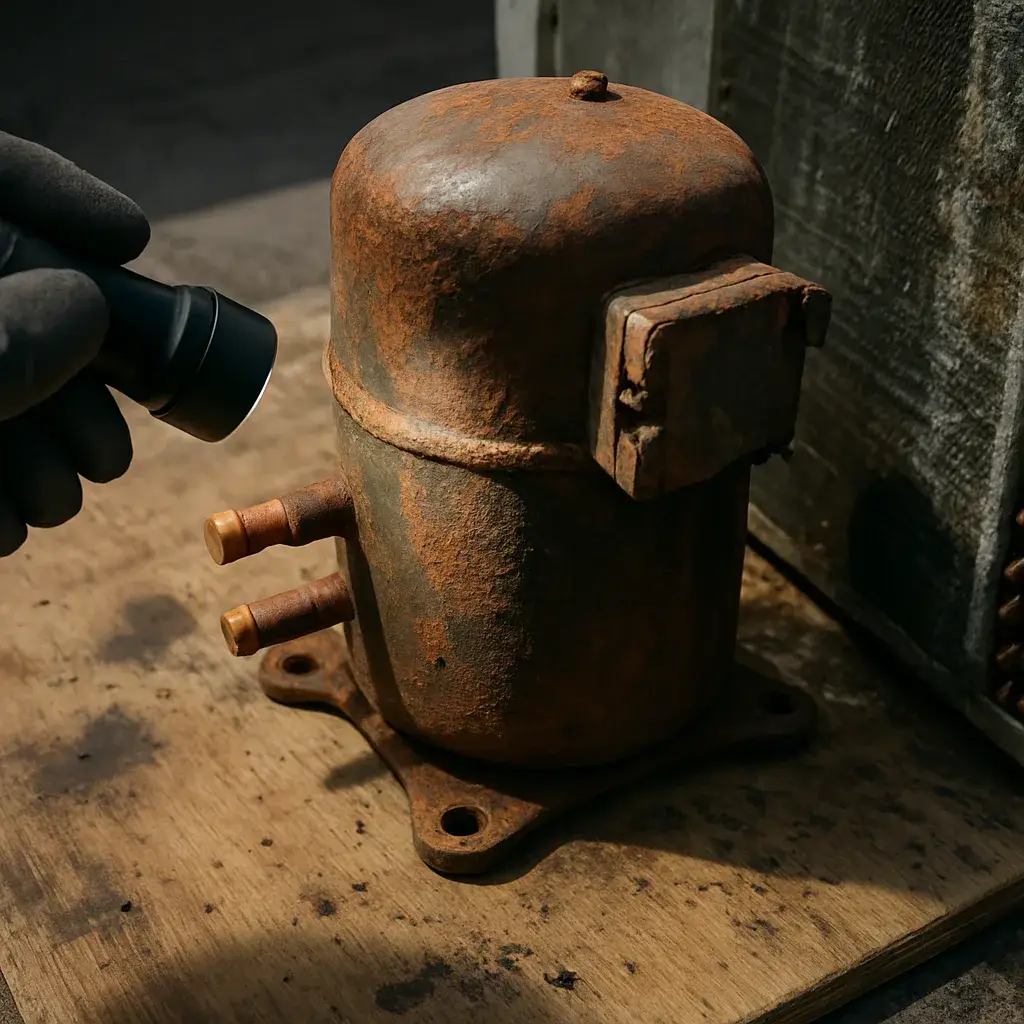
We start every call with a diagnostic visit for a $26 to $99 service call fee. That fee gets credited toward the repair if you move forward with us. A technician finds the actual cause of the problem, not a guess, and explains it in plain terms before anything gets written up.
Before any work starts, you get a written, flat-rate quote. For a repair, that quote lays out the part, the labor, and the total cost. You’re deciding with real numbers in front of you instead of an estimate that changes later.
- The unit is under 10 to 12 years old and has no history of repeat failures
- The failure is isolated to one component like a compressor, capacitor, or blower motor
- The building’s ductwork and electrical infrastructure are still in good working condition
- Replacement parts are still available for the equipment brand and model
- The repair cost is a fraction of what a new Commercial HVAC installation would run
Where it gets less clear-cut is equipment sitting right at the edge of its service life. A unit that’s 12 to 15 years old with a major component failure puts you in a real judgment call. Repairing it might buy a few more years. But it could also be the second or third big repair in a short stretch, and at that point the math starts favoring replacement.
We won’t push a repair on equipment that’s clearly on its way out just to make a smaller sale. And we won’t push a full installation when a repair genuinely solves the problem. The quote you get reflects what the equipment needs, not a standard script.
If you want to see how full replacement pricing compares, our Commercial HVAC installation page breaks down the ranges and what drives the cost up or down.
Need help with Commercial HVAC installation?
Call Today, Get Service Today. Xtreme Air Services is ready to help.
When Replacement Makes More Sense
Replacement makes more sense once the unit is working against you instead of for you. A standard like-for-like commercial installation using existing connections runs $28,000 to $64,000 for most buildings. The full range lands between $10,000 and $100,000 depending on tonnage and scope. That’s real money. The decision should come down to concrete factors, not a guess.
- The rooftop unit or system is undersized or oversized for the current building load, so it short-cycles or can’t keep up no matter what gets repaired
- The equipment runs on an older refrigerant or efficiency rating that’s driving up utility bills compared to current SEER2-rated systems
- Repairs are hitting major components (compressor, condenser coil) rather than smaller parts, and the unit is past the age where that investment pays off
- The building has changed (more square footage, a new kitchen, added tenants), so the load calculation the original system was sized for isn’t accurate anymore
- Ductwork or electrical connected to the unit needs modification anyway, since that work often gets folded into an install project instead of done twice
Cost matters here too, in both directions. A commercial install price includes the equipment, professional installation, standard connections, startup, and testing, plus haul-away of the old unit. It excludes duct, electrical, or plumbing modifications, code corrections, or permits unless we’ve scoped those in ahead of time. That’s the part that catches people off guard on older buildings, where the ductwork behind the wall hasn’t been touched since the building went up.
We won’t tell you a five-year-old rooftop unit needs to come out just because one component failed. Replacement gets recommended when the numbers support it (size, age, efficiency, and what the building needs now, not what it needed when the system went in). If financing makes the timing easier, that’s available on qualifying installations. And if a technician comes out for a service call first, that call-out fee gets credited toward the work if you move forward.
This decision usually gets made after someone looks at the actual equipment and does a cooling load calculation for the space, not from a phone estimate. That’s part of what our Commercial HVAC installation process covers before any number goes on paper.
What a Commercial Replacement Costs and What’s Included
A standard replacement, swapping out equipment on connections that are already in place, usually runs $28,000 to $64,000. That covers the new unit, professional installation, startup, and testing. Across every commercial job we take on, from a single rooftop unit to a larger mechanical retrofit, total project costs land between $10,000 and $100,000. Tonnage and scope decide where you fall in that range. We walk you through that math before we quote anything.
- Equipment size and efficiency rating (meaning tonnage, SEER2, or AFUE depending on the system)
- Brand and model of the equipment you choose
- How easy or hard the unit is to access (rooftop, mechanical room, or tight mezzanine space)
- The condition of your existing ductwork, wiring, or plumbing
- Any code upgrades required for the new install
- Permits and custom fabrication work, if your building needs it
A standard quote includes the equipment and materials, the installation labor, standard connections, startup and testing, and hauling away the old unit. Duct, electrical, or plumbing modifications, code corrections, and permits are excluded unless we’ve written those into the quote up front. If your building needs any of that, we say so in the number before you sign anything, not after.
We charge a $26 to $99 service call fee for the consultation and load calculation. That gets credited toward your project if you move forward with us. Financing is available on qualifying installations and larger jobs for businesses that don’t want to pay for a rooftop unit or a boiler system out of pocket in one shot. If you want to see how this compares against repairing your current system, our Commercial HVAC installation page walks through both paths side by side.
Frequently Asked Questions
Common questions about Commercial HVAC installation
What is the one-third rule you use to decide?
It is the comparison we run before telling you which way to go. If your unit is under 10 years old and the repair bill comes in under a third of what a new install would cost, we fix it. Once a repair closes in on a third of replacement cost and the unit is already past mid-life, replacement is the better use of your money. We weigh any repair bill against the $28,000 to $64,000 a standard installation runs.
Does the quote include hauling away the old unit?
Yes. A standard quote covers the equipment and materials, the installation labor, standard connections, startup and testing, and hauling away the old unit. What it excludes is duct, electrical, or plumbing modifications, code corrections, and permits, unless we have written those into the quote up front. If your building needs any of that, the number says so before you sign, not after.
Our building has added tenants since the system went in. Does that change the answer?
It can change it a lot. If the building has grown, added a kitchen, or taken on more tenants, the load calculation the original system was sized for is not accurate anymore. A unit that is undersized or oversized for the current load will short-cycle or fail to keep up no matter what gets repaired, and that is one of the clearest cases where replacement beats another fix.
Can you tell us repair or replace over the phone?
No. This decision gets made after someone looks at the actual equipment and runs a cooling load calculation for the space, not from a phone estimate. That is part of what happens before any number goes on paper. The diagnostic visit carries a $26 to $99 call-out fee, and we credit it toward the job if you move forward with us.
The repair quote on our 16-year-old rooftop unit is low. Should we just take it?
Maybe not. A low repair estimate on a 16-year-old rooftop unit can still be a bad deal if that unit is one failure away from needing a second repair next season. Parts also get harder to source as a unit ages out, and efficiency drops year over year. We would rather walk you through both numbers side by side than patch something and see you again in six months.
Ready to Get Started?
Call 972-288-2263 Today, Get Service Today.