


When Is Boiler Installation Not the Right Call?
When a full boiler installation is the wrong call, who we are not the best fit for, and what we would tell you to do instead.
What’s Covered on This Page
- When Boiler Installation Isn’t the Right Call
- Who We’re Not the Best Fit For
- What We’d Tell You to Do Instead
- Related Links
- When is boiler installation the wrong choice for my home?
- Who shouldn’t hire us for boiler installation?
- What should I do instead, and who should I call?
- What if my home has ductwork but no radiators?
When Boiler Installation Isn’t the Right Call
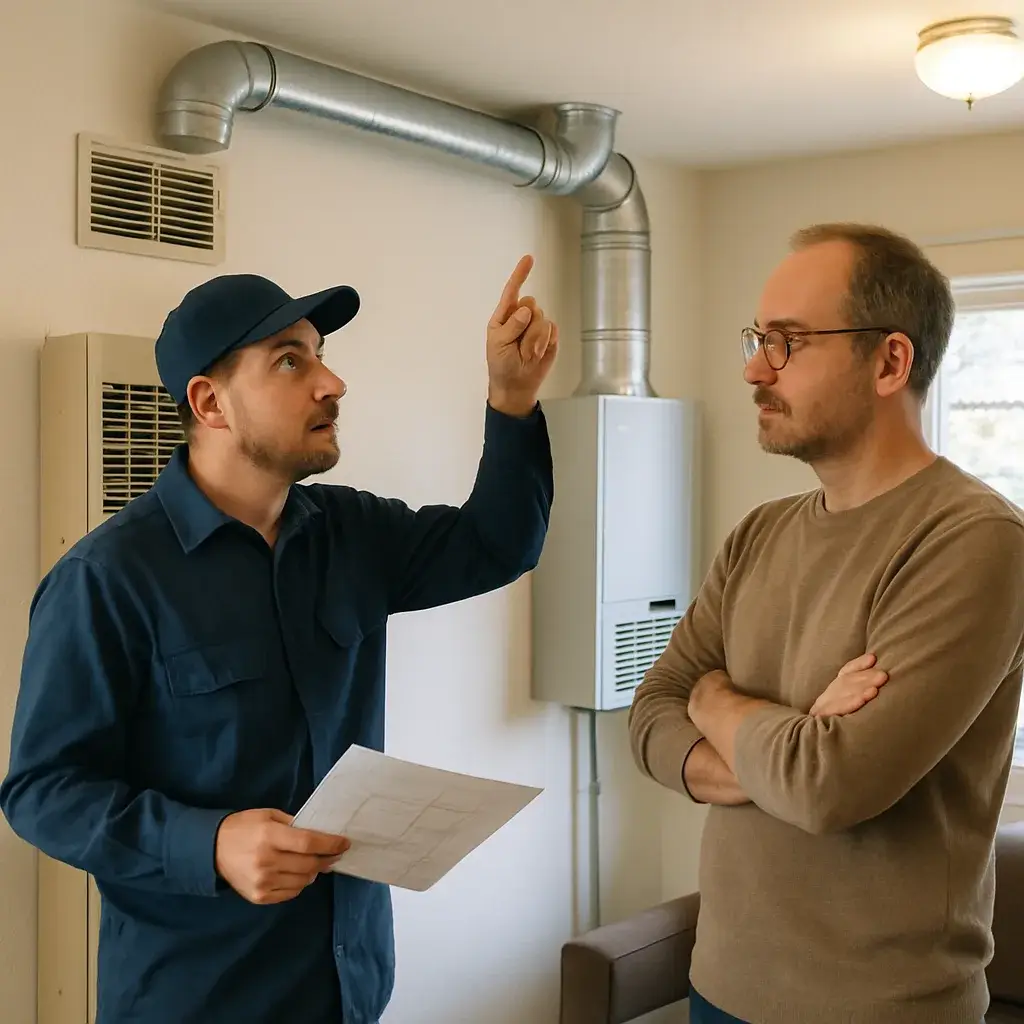
A boiler doesn’t push warm air through ducts like a furnace. Instead, it heats water and sends it through pipes. These go to radiators, baseboard units, or radiant floor loops. This is a completely different distribution system than forced air. It means a boiler really only makes sense where that plumbing already exists. Or where it can be added without major work. Many older Sunnyvale homes, especially those built before central air, might have this hydronic groundwork. Newer homes or those with existing ductwork usually don’t. That changes everything.
Sizing is another area where boiler installation can go wrong. A basic square-footage estimate might work for a small home. But larger homes, multi-unit buildings, and commercial spaces need an actual heat-loss calculation. This looks at insulation, window count, ceiling height, and how much of the building is exposed. Skipping this step is a common reason a boiler ends up mismatched. It might cycle too often because it’s oversized. Or struggle to keep up because it’s undersized.
- Existing radiators, baseboard units, or radiant floor loops already in the building
- Accessible piping that can carry hot water without major structural work
- A heat-loss calculation instead of just a square-footage estimate, especially for bigger or commercial spaces
- Whether the current system is forced-air. Converting to hydronic heating adds real cost and complexity.
If a building doesn’t already have hydronic pipes, a furnace or heat pump is often more practical. It’s usually more cost-effective, too. You avoid the expense of installing new piping or radiant loops. This page isn’t trying to diagnose any single home or business. We just want to flag the factors worth thinking about. Don’t assume a boiler is the default replacement for whatever system you have.
Once you confirm a boiler is the right fit, cost is the next thing. Our Boiler installation pricing page explains what makes the price go up or down. That includes equipment size and piping condition. So you’ll have no surprises once you decide.
Who We’re Not the Best Fit For
Good boiler installation depends on being able to show up again. Maybe for a warranty check, a startup adjustment, or a follow-up inspection. That means we tell you upfront which jobs and customers we’re equipped to serve well. We don’t stretch ourselves too thin to say yes to everyone.
- Properties outside our roughly 60-mile service radius around Sunnyvale and the greater Dallas-Fort Worth Metroplex
- Anyone looking for unpermitted, off-the-books, or code-skipping installation work
- Requests for a labor-only install of a boiler purchased through another retailer or supplier
Our service area covers Sunnyvale and the surrounding Metroplex. This includes Dallas, Fort Worth, Plano, Frisco, Allen, Irving, Carrollton, and nearby communities. If your address is outside that area, we’ll tell you. We won’t send a truck that can’t realistically return for warranty service. Or for annual maintenance, or a mid-winter no-heat call. A boiler needs a contractor who can be there when things come up, not just on install day.
Every boiler we install is done to code. We pull the proper City of Sunnyvale or applicable municipal permits. And we schedule inspections when required. Our technicians hold current Texas licensing. We follow manufacturer specifications for venting, gas line sizing, condensate handling, and combustion safety. If you ask us to skip permits or install outside code to save time or money, that’s not a job we’ll take. The risks can be serious, from voided insurance coverage to safety hazards like flue gas leaks.
We also generally don’t do labor-only installation. This is for a boiler you’ve already bought elsewhere. Our workmanship guarantee connects to equipment we source, inspect, and verify. We do this before it goes into your home or building. This includes confirming it hasn’t been damaged. It also confirms it matches the existing system’s venting and sizing. And that it’s properly registered for manufacturer warranty coverage. Installing an unknown unit means we can’t stand behind that work the way we want to.
What We’d Tell You to Do Instead
Not every situation needs the same solution. We’d rather point you to the right decision than talk you into a job that doesn’t fit. If you’re outside our normal Sunnyvale service radius, the smarter move is finding a licensed contractor closer to you. Boilers need maintenance. If something goes wrong a couple of winters from now, you want someone who can show up that same week. You don’t want someone who has to drive across the Metroplex for a warranty call.
If part of the appeal of a certain contractor is skipping the permit process, that’s worth reconsidering. It doesn’t matter who does the work. Sunnyvale and Dallas County require permits and inspections for boiler installations. Gas lines, venting, and combustion safety directly affect the people in the home. An unpermitted install can also complicate a future sale. Many buyers’ inspectors flag mechanical work never signed off by the city.
- Ask any contractor how their workmanship guarantee applies if you supply your own boiler. Many installers won’t fully warranty labor on equipment they didn’t source or verify.
- Get the manufacturer’s warranty terms in writing before buying a unit online. Some warranties are voided or reduced if installed by anyone other than an authorized dealer.
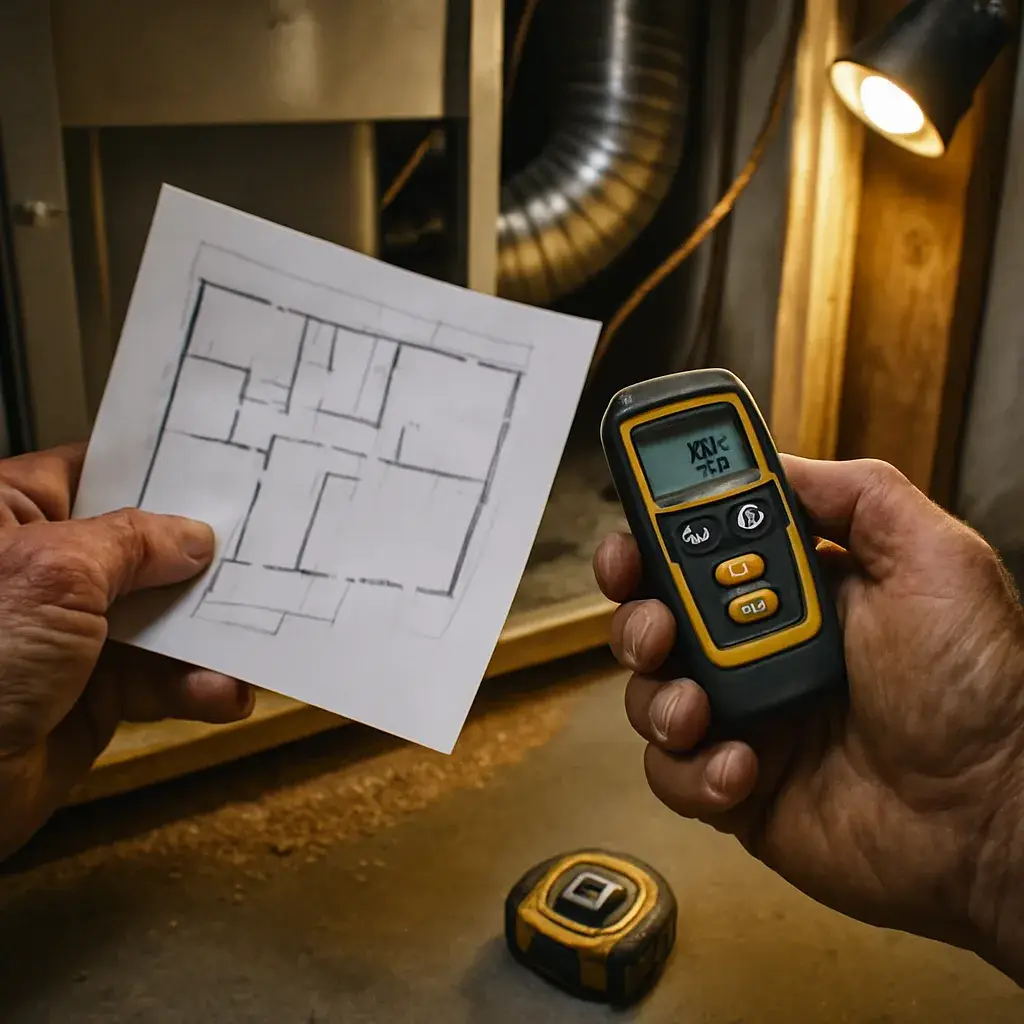
- Have your piping, radiators, and existing heat distribution system evaluated before buying equipment. This is especially true in older Sunnyvale homes where original systems might be undersized for a new boiler.
- Confirm whether your home has hydronic infrastructure at all. Some properties were converted to forced-air decades ago. They no longer have the radiators or piping a boiler requires.
That last point trips people up the most. A boiler is only as good as the distribution system it feeds. Buying a high-efficiency unit for a house with corroded piping just moves the problem downstream. Before spending money on equipment, have someone look at what’s already in the walls and garage.
None of this is about steering you to a specific outcome. We just want to make sure whatever path you take, holds up. Whether it’s with us or another licensed contractor. It needs to hold up under inspection, under warranty, and under an actual North Texas winter.
Frequently Asked Questions
Common questions about Boiler installation
When is boiler installation the wrong choice for my home?
A boiler is the wrong choice when your home doesn’t already have radiators, baseboard units, or radiant floor loops. Boilers heat water and send it through pipes, not air through ducts. If your Sunnyvale home has ductwork and no hydronic piping, adding a boiler means installing all new plumbing, which adds real cost and complexity. A furnace or heat pump usually makes more sense in that case and costs less to install. We’ll tell you this upfront rather than push a boiler into a system it wasn’t built for.
Who shouldn’t hire us for boiler installation?
We’re not the right fit for three types of jobs. Properties outside our roughly 60-mile service radius around Sunnyvale and the Dallas-Fort Worth Metroplex are too far for us to return for warranty checks or a mid-winter no-heat call. We also turn down unpermitted or code-skipping installation requests, since Sunnyvale and Dallas County require permits and inspections for boiler work. And we generally don’t do labor-only installs on boilers bought through another retailer, since we can’t verify or stand behind equipment we didn’t source ourselves.
What should I do instead, and who should I call?
If you’re outside our service radius, look for a licensed contractor closer to home who can respond quickly for maintenance or a winter no-heat call. If a contractor offers to skip permits, that’s worth reconsidering, since unpermitted mechanical work can complicate a future home sale. And if you already own a boiler and only need labor, ask any installer in writing how their workmanship guarantee applies to equipment they didn’t source, since many won’t fully warranty that work.
What if my home has ductwork but no radiators?
If your home already has ductwork and no hydronic piping, a furnace or heat pump is usually the more practical option. Converting a forced-air system to boiler heating means adding radiators, baseboard units, or radiant floor loops from scratch, which adds real cost and time. Many older Sunnyvale homes built before central air already have that piping in place, but newer homes and homes with existing ductwork typically don’t. We’d rather point this out before you commit to equipment that doesn’t fit your existing system.
Ready to Get Started?
Call 972-288-2263 Today, Get Service Today.