


What Are the Most Common Heating System Repair Problems?
A furnace that never fires, air that runs but stays cool, new clicking, banging or squealing, and one room colder than the rest – what each symptom usually traces back to.
What’s Covered on This Page
The Furnace Problems We’re Called About Most
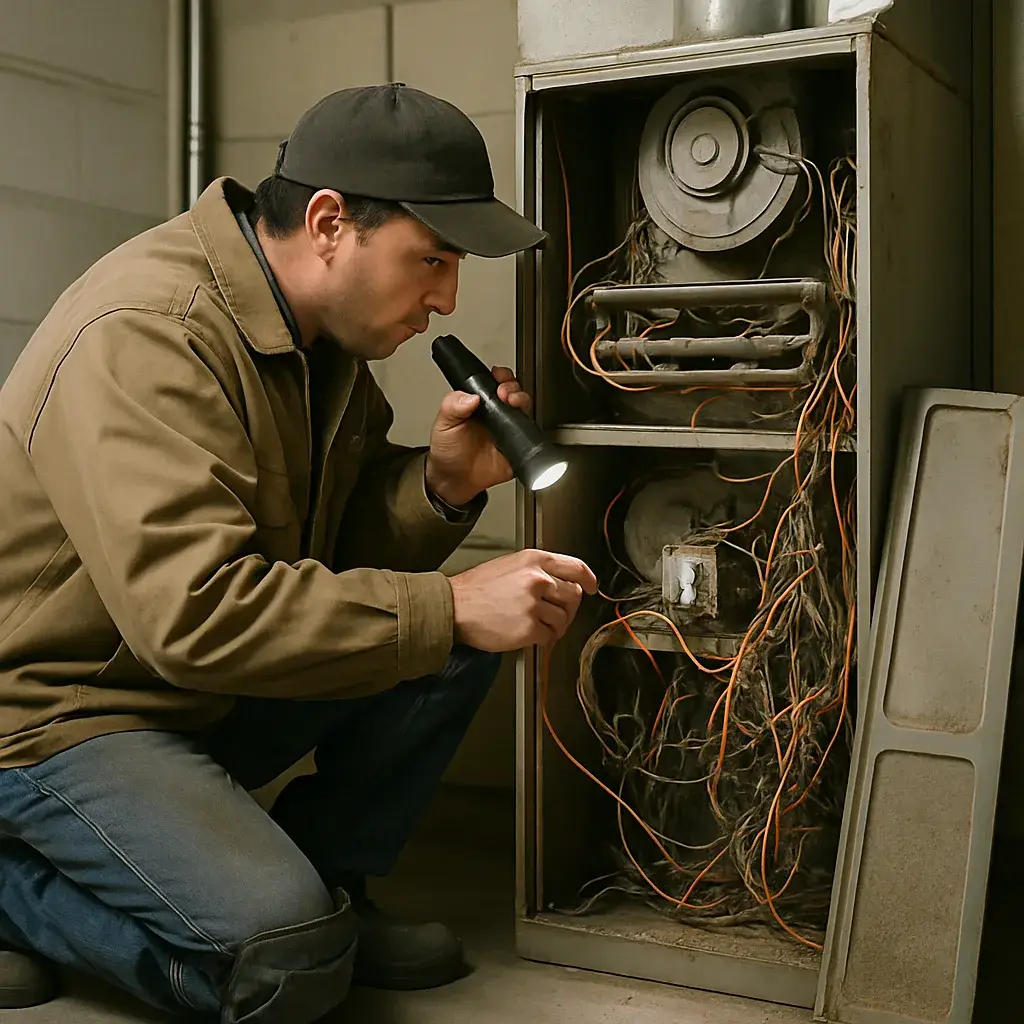
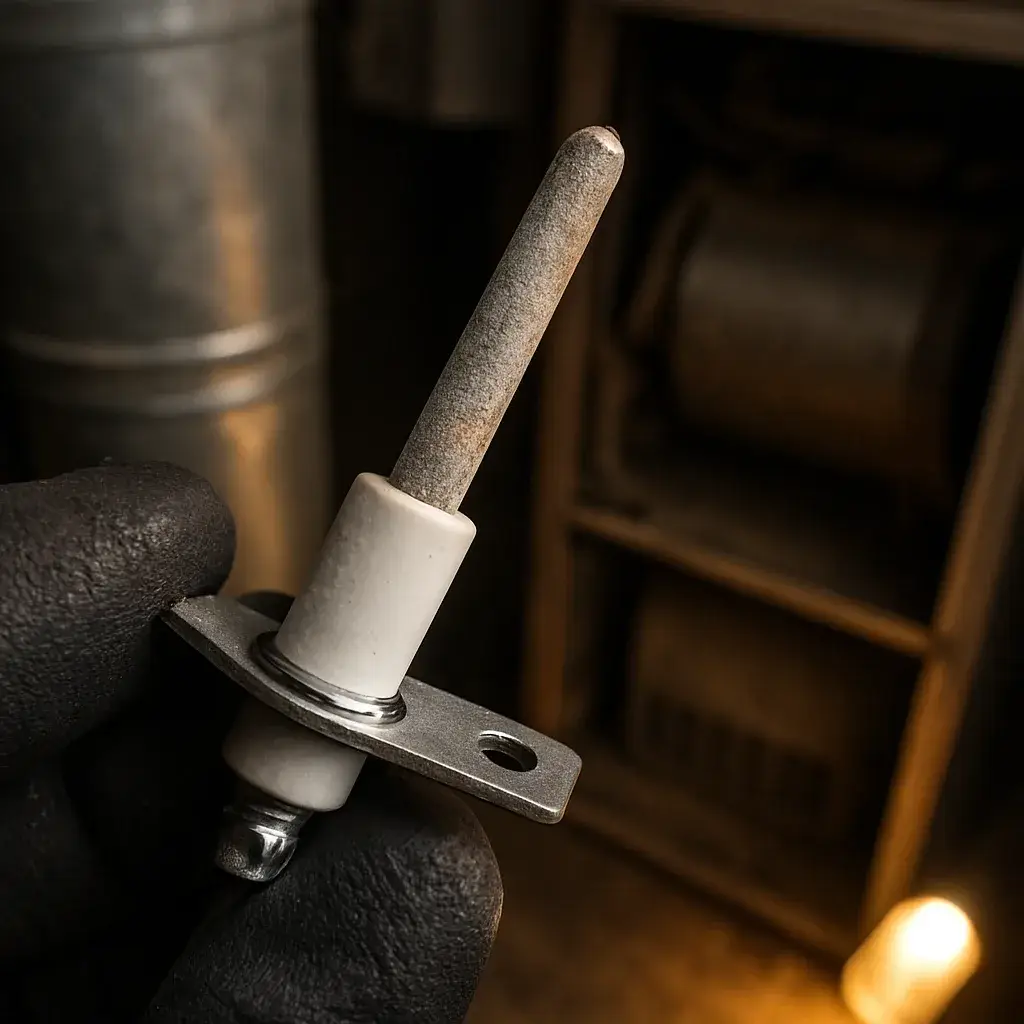
A furnace that won’t fire up is the call we hear most during a cold snap. Many times, it’s an ignitor that’s cracked or just worn out. Or it’s a flame sensor with a thin layer of carbon. This stops the system from knowing there’s a flame. Both are common for furnaces that sit unused all through a Texas summer, then get asked to work hard on the first cold night.
Short cycling, where the furnace kicks on and off in quick bursts, is another common concern. It’s often a dirty air filter choking airflow. Maybe a limit switch is reacting to that restricted airflow. Or a thermostat might be sending confusing signals. We check the whole system, not just guess at one part.
Uneven heat between rooms comes up constantly in the older slab homes around Sunnyvale and Mesquite. Ductwork there was sized for a smaller system decades ago. Weak insulation or a duct leak in the attic can pull warm air away before it reaches the vent. A blower motor that’s losing strength shows up as weak airflow at the registers. Sometimes you’ll get a burning-dust smell the first time the system runs each season. That’s usually just dust burning off the heat exchanger and clears on its own within a few minutes.
Carbon monoxide concerns are also asked about often. We take them seriously. A cracked heat exchanger or a blocked flue can let combustion gasses back into your home. That’s why a carbon monoxide test and a visual inspection of the heat exchanger are part of how we look at any gas furnace.
Control board failures are less common. But they’re the ones that really stump people. The furnace looks fine but never gets the signal to start. We trace the fault back to the actual board or wiring. We don’t just swap parts on a guess.
- Furnace won’t ignite: often a worn ignitor or a flame sensor needing cleaning
- Short cycling: usually airflow restriction, a limit switch, or thermostat wiring
- Weak or uneven heat: blower motor wear or attic duct leaks in older homes
- Burning smell on first use: typically dust on the heat exchanger, clearing within minutes
- Carbon monoxide questions: checked with testing and a heat exchanger inspection
- No response at all: traced to the control board or its wiring, not assumed
We look at furnace repair problems as part of the same visit that gets your heating system inspection done. If a repair turns into a bigger conversation about replacement, our heating system repair page walks through how we handle that decision. You can find full pricing details for common furnace repairs on our pricing page.
No Heat At All
This is the most common call we get in Sunnyvale. You adjust the thermostat, but the furnace never kicks on. The house just stays cold. Sometimes there’s a click and nothing else happens, sometimes no sound at all. But it’s the main reason people look for heating system repair.
A furnace that won’t start usually comes down to just a few parts. A dirty flame sensor stops the burner from staying lit. The system shuts itself off as a safety measure. A failed ignitor means the gas never lights up. A tripped breaker or a control board issue can cut power to the whole system before it even tries to run. For older units, a control board replacement is sometimes the real fix, not just a reset.
- Flame sensor is dirty or worn, so the burner shuts off right after lighting
- Ignitor failed, meaning the burner never gets a spark or glow to light
- Control board issue cutting power or scrambling the start sequence
- Blower motor isn’t running, so a lit furnace can’t push warm air
- Gas supply or electrical supply problem upstream from the furnace itself
When we visit, a technician checks the gas or electric supply first. Then we walk through the ignition sequence to find where it’s failing. We test for carbon monoxide as part of a safety inspection any time the furnace has been fully down. A no-heat furnace can sometimes point to a venting or combustion issue we rule out. You get a plain explanation of what’s happening before anything gets fixed.
A flame sensor cleaning or ignitor swap is usually a same-day fix. A control board replacement can take longer if the part has to be ordered for your specific furnace model. We’ll tell you which situation you’re in once the diagnostic is done. We won’t guess.
If you want the full rundown on how furnace and heat pump repairs work, our main heating system repair page walks through the whole process. (It’s a lot more than just replacing parts, by the way.)
Furnace Runs But the Air Isn’t Warm
This is one of the most common calls we get once the weather turns. You hear the furnace kick on and the blower runs. But the air from your vents feels cool. Or maybe it’s just barely warm. A technician can figure out what’s going on, and it’s rarely just one problem.
- A dirty filter restricts airflow. This makes a working furnace feel weak.
- A flame sensor needs cleaning. It can cause your unit to short-cycle.
- A failing ignitor lights the burners inconsistently.
- Thermostat settings might call for fan-only operation instead of heat. This can be a wiring issue.
- Ductwork leaks in the attic lose heated air before it reaches the room.
- A blower motor might run at the wrong speed for your home’s size.
Homes around Sunnyvale and the rest of North Texas run their furnace hard. We get short stretches of cold, even ice, then weeks of nothing. This on-and-off pattern wears out ignitors and flame sensors. And attic ductwork (carrying heated air through hot summers and freezing nights) can develop leaks over time. It makes sense, right?
On a diagnostic visit, our technician checks the filter. We test the flame sensor and ignitor. We also inspect the blower and look at duct connections in your attic. We explain what we find in plain language. You’ll get our recommendation before anything starts. Some fixes are quick. Others, like a duct leak repair or a blower motor replacement, take more time and parts.
Cost depends on the parts involved. It also changes if more than one issue is happening at once. We keep specific ranges on our pricing page rather than guessing here.
We cover diagnosis and repair for furnace airflow and heating issues. This is part of our regular heating system repair work. We also handle furnace blower motor repair, ignitor replacement, and flame sensor cleaning.
Ready when you are – get in touch today.
Call Today, Get Service Today. Xtreme Air Services is ready to help.
Clicking, Banging, or Squealing Noises
A furnace always makes some noise when it runs. A soft click at startup or a low hum from the blower is normal, you expect that. What customers usually call us about is something new-a sharp bang when the heat kicks on, a metal-on-metal squeal, or a rapid clicking that won’t stop. Each of these sounds points to a different part of your heating system.
- Repeated clicking with no flame: This means the ignitor or flame sensor is trying to start the burner and failing. Or a control board might be sending the wrong signal.
- A bang or boom when the heat starts: Often, this is delayed ignition. Gas builds up for a second before it lights. It can also be ductwork expanding as air moves through it.
- A high-pitched squeal: This is almost always the blower motor. It could be a worn bearing or a belt that’s slipping.
- A rattling or knocking sound while running: This suggests loose panels, a failing blower wheel, or a part that’s come loose inside the cabinet.
Delayed ignition bangs are a real concern for us. Gas building up before it lights means the ignition system isn’t working right. Squealing belts and worn bearings affect comfort and equipment life more than safety. But they won’t fix themselves, and tend to get louder over a few weeks.
On a call for a noise complaint, our technician runs the system and listens. Then we open the cabinet. We look at the ignitor, flame sensor, blower assembly, and control board. We don’t just guess from the sound. Once we identify the part, we give you a flat-rate price. You’ll see the total cost before any repair starts. If the noise turns out to be a bigger issue (like a cracked heat exchanger or a failed control board), we’ll tell you that plainly. We’ll lay out your repair and replacement options side by side.
Not every noise means a costly repair. Some are a quick fix, like tightening a panel screw or clearing debris from a blower wheel. We’d rather tell you that on the phone or at your door than talk you into more than the job needs. You’ll find what these repairs typically run on our heating system repair page. We break down the ranges by job type there.
Uneven Heat Between Rooms
A back bedroom that’s always chilly while the living room feels warm is a common heating complaint. It’s usually not one single problem. Instead, it’s often a mix of ductwork, insulation, and how the system was put in years ago.
Many DFW homes were built on a slab between the 1960s and 1990s, with ductwork run through the attic. Attic temperatures swing wildly here – over 130 degrees in July and near freezing in winter. That swing really affects how much heat gets from the furnace, through the duct, and out the vent by the time it reaches a far room.
Duct length and layout matter, too. The room closest to the furnace usually gets the most airflow. A bedroom at the far end of a long duct run loses some heat along the way. That happens a lot if the duct insulation has thinned over the years or a joint came loose.
- Closed or partly blocked vents (sometimes furniture is over them)
- A single thermostat for the whole house instead of individual rooms
- Duct leaks or disconnected sections in the attic
- Undersized or poorly routed ductwork feeding one part of the house
- Additions or remodeled rooms tied into a duct system meant for a smaller space
When we look at a heating system for uneven temperatures, we check airflow at the vents. We also look for duct leaks or disconnects. And we see if the system size and layout still match how you use your home today. Sometimes a duct repair is all it takes. Other times, we talk about zoning system installation. This lets you run different areas of the house at different temperatures instead of fighting one thermostat.
Not every uneven heat problem has a single, easy fix. A house with a duct system built for its original layout, then added onto twice since, sometimes needs more than a simple patch. We’ll tell you that upfront. We don’t want to sell a small fix as a full solution for your Sunnyvale home.
Costs vary a lot for this kind of work. It depends on whether it’s a duct repair, a sealing job, or a larger zoning setup. So we keep specific numbers on our pricing page instead of guessing here.
Ready to Get Started?
Call 972-288-2263 Today, Get Service Today.