


A/C System Installation in Dallas: Sized Right, Permitted Right
New AC systems sized to your Dallas home and installed right – with an honest look at whether a repair still makes sense.
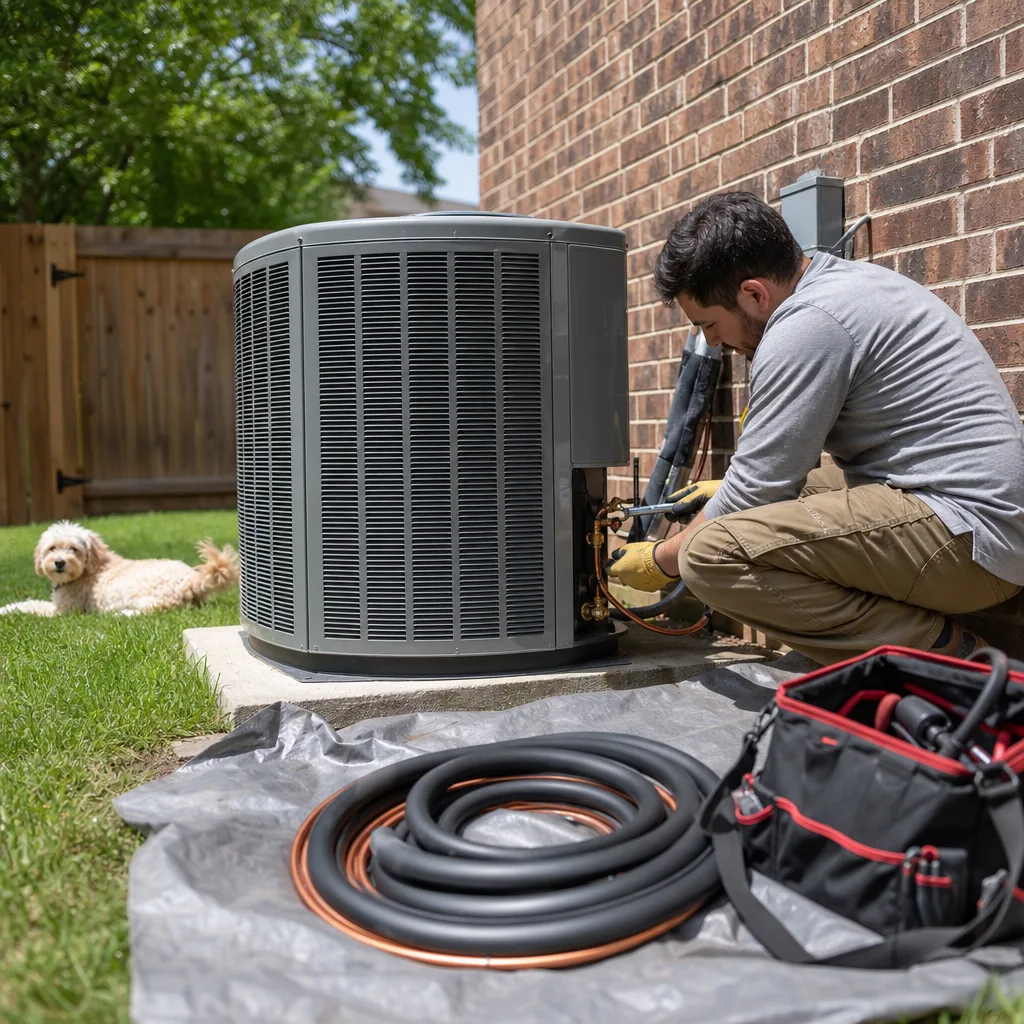
What’s Covered on This Page
- Know When Full A/C System Installation Is the Right Call
- Rule Out Repair Before You Replace
- What Determines the Right System Size for Your Dallas Home
- What Happens During Installation, Start to Finish
- Why Installation Quotes Vary So Much, and What’s Included in Yours
- What is the $5,000 rule for HVAC systems?
- How long does it take to install a new AC system in a Dallas home?
- Do I need a permit to replace my AC system in Dallas?
Know When Full A/C System Installation Is the Right Call
Nobody wants to buy a new AC. So start with the honest question: is this a one-time problem, or is the whole system wearing out? That answer tells you almost everything.
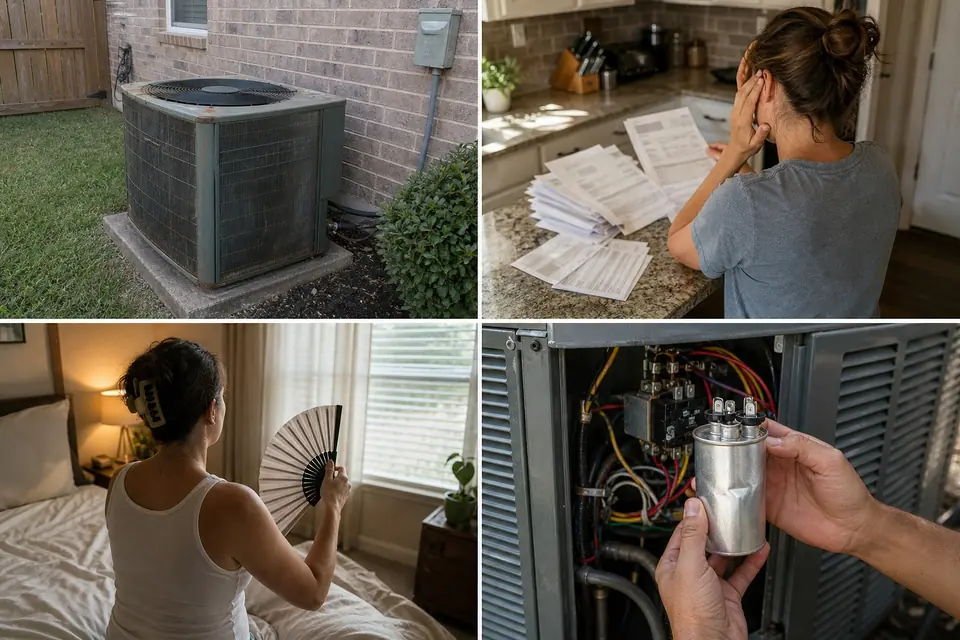
A new system is usually the right move when you notice several of these at once:
- You’ve paid for repairs every summer, and each one seems to lead to the next.
- The house never gets cool on a hot afternoon, even with the thermostat set low and the system running nonstop.
- Your power bills keep going up while your habits haven’t changed.
- A big part has failed, like the compressor, on a system that’s already been running a long time.
- Some rooms stay hot and sticky while others feel fine, and the air feels damp even when it’s cool.
- Your system uses an older refrigerant that’s been phased out, so every leak gets harder and costlier to fix.
Dallas summers make these signs show up faster. An outdoor unit that sits in the sun all day and an indoor unit up in a hot attic both work hard from late spring into fall. Many 1950s to 1990s ranch homes in Dallas have the air handler and ducts in that attic, so a tired system loses even more of its cooling before the air reaches your rooms.
Here’s when you probably don’t need a new system:
- Your system is fairly new and one part failed, like a capacitor, a fan motor, or a sensor. Those are normal repairs.
- The AC stopped after a storm or a tripped breaker, and nothing else was wrong before that.
- Airflow is weak because the filter is clogged. Change the filter yourself and give it a day.
- Water is backing up because the drain line is plugged. That’s a cleaning job, not a new system.
- The coil froze over once. A frozen coil has a cause, and fixing that cause is usually enough.
If your situation looks like that second list, repair it and keep enjoying the system you already paid for. Replacing a healthy system early doesn’t help you.
One more thing to watch for. If only the outdoor unit fails on an older split system, it’s tempting to swap just that piece. But the indoor and outdoor parts are built to work as a matched pair. Putting a new condenser on an old indoor coil can cost you the efficiency and comfort you’re paying for, and it can shorten the life of the new part. In that case, replacing both sides together is often the smarter long-term choice.
Not sure which side of the line you’re on? That’s what an AC system consultation is for. As a Trane Comfort Specialist, our team can look at your system’s age, repair history, and how well it’s cooling your home, then give you upfront pricing on both options. That way you’re comparing real numbers, not guesses, and the choice stays yours.
Rule Out Repair Before You Replace
A new system is a big check to write. Before you write it, make sure repair has been fairly ruled out. A good contractor should help you do that, not rush you past it.
Start with a few easy checks of your own. Make sure the thermostat is set to cool and the set point is below room temperature. If it runs on batteries, try fresh ones. These take five minutes, and they sometimes solve the whole problem before anyone comes out.
If the AC still won’t cool, you need a real diagnosis, not a guess. A good one should answer these questions in plain English:
- Which part failed? You should get a name, like a capacitor, contactor, fan motor, or compressor, not just “it’s shot.”
- Why did it fail? A part that burned out because of another problem will fail again if the root cause isn’t fixed.
- What shape is the rest of the system in? One bad part on a healthy system is very different from one bad part on a tired one.
- What does the repair cost, and what does replacement cost? You should see both prices side by side before you choose.
Watch out for one trap. If your system is low on refrigerant, it has a leak somewhere. Refrigerant doesn’t get used up like gas in a car. Adding more without finding the leak is a short-term patch, and you’ll likely pay for it again. Ask whether the leak was found and whether it can be fixed. That answer often settles the repair-or-replace question.
Ask the technician one simple question: “If this were your house, would you fix it or replace it?” A straight answer, with reasons, tells you a lot about who you’re dealing with.
Timing matters in Dallas too. Sometimes the smartest move is a repair that gets you through the hottest weeks of summer, with replacement planned for later. When your system is down in August, every hour feels urgent, and that’s a hard time to compare options. A repair that buys you a few months lets you plan the replacement on your own schedule, with time to weigh equipment choices and budget.
Here’s how a visit from us works on cost. Our service-call fee is $26-$99, and it’s credited toward the repair if you go ahead with Xtreme Air Services. You get upfront flat-rate pricing that you approve before any work starts, so no meter is running while you decide. Our licensed and insured technicians are background-checked and drug-tested, and they’ll show you what they found.
If the repair makes sense, we’ll fix it and you keep the system you already paid for. If it doesn’t, you’ll know why, and you’ll have real numbers to compare.
What Determines the Right System Size for Your Dallas Home
The right size comes from a cooling load calculation done on your actual home. It doesn’t come from your square footage alone, and it doesn’t come from the label on your old unit. Getting this step right does more for your comfort than almost any other choice you’ll make.
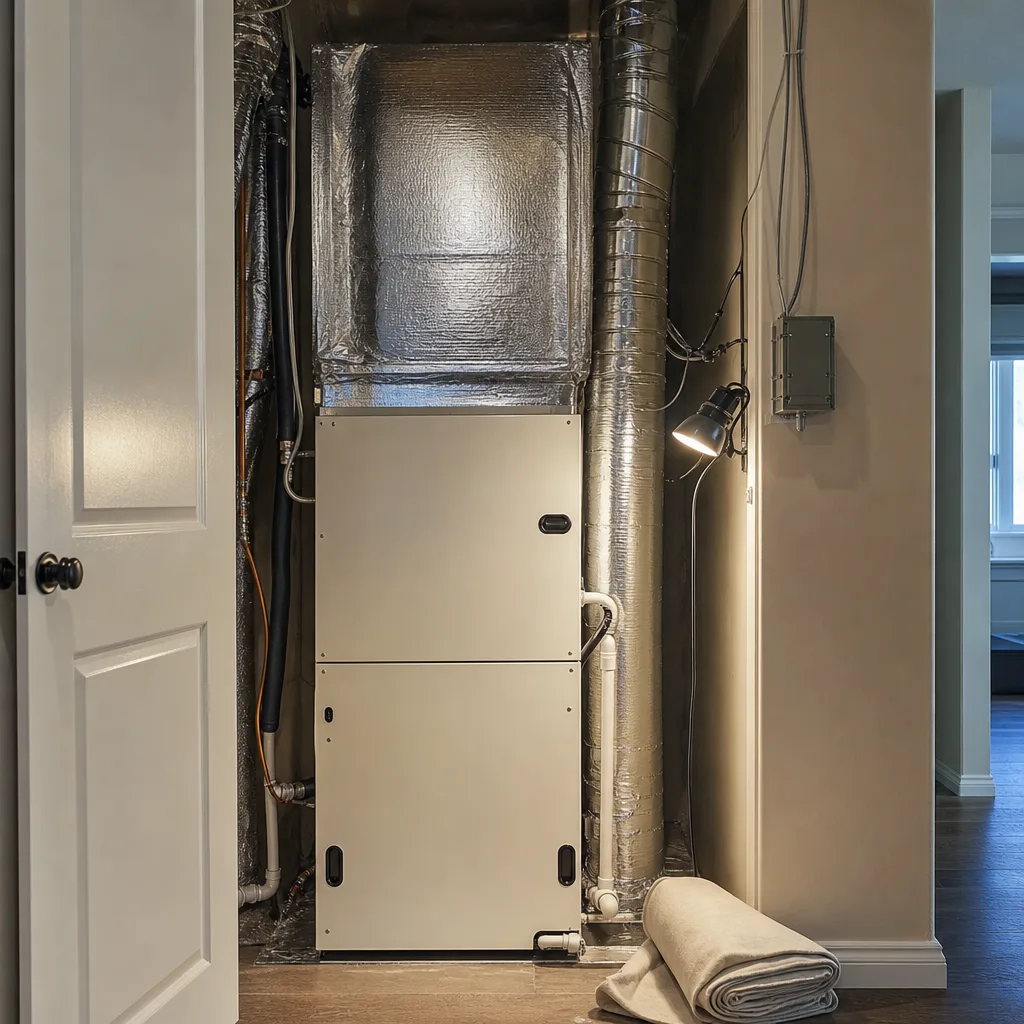
AC size is measured in tons. One ton of cooling removes 12,000 BTUs of heat per hour. Most homes need somewhere between 2 and 5 tons. The exact number depends on how much heat gets into your house on a hot day.
Bigger isn’t better. An oversized system cools the air fast and then shuts off before it has run long enough to pull moisture out. You end up with a house that feels cool but clammy. It also turns on and off over and over, which wears out parts sooner. An undersized system has the opposite problem. It runs all afternoon and still can’t keep up when it’s 105 outside.
A proper load calculation looks at the things that really drive heat into your home:
- How much insulation is in your attic and walls.
- How many windows you have, how big they are, and which way they face. West-facing glass takes the full Dallas afternoon sun.
- Where your ducts run. Ducts in a hot attic lose cooling before the air reaches your rooms.
- How leaky the ducts and the house are.
- Ceiling height, shade trees, and how many people live there.
Many Dallas ranch homes built from the 1950s to the 1990s have their air handler and ductwork up in the attic, and that space gets very hot in summer. That’s a real part of your home’s cooling load, and a good calculation counts it instead of ignoring it.
Don’t assume your new system should match your old one. Your old unit may have been sized by a rule of thumb years ago. Or your home may have changed since then. New windows, added attic insulation, or sealed ducts can mean you need less capacity than before. A room addition or a finished garage can mean you need more. Copying the old tonnage can carry an old mistake into a brand-new system.
Your ducts have to fit the system, too. If you put a larger unit on ducts that are too small, it can push more air than they can carry. You’ll hear more noise, feel weaker airflow at the far rooms, and lose efficiency. So sizing the system and checking the ducts go together.
Humidity matters here more than most people expect. Variable-speed systems can run at a lower, steady speed for longer stretches instead of blasting on and off. That longer run time pulls more moisture out of the air, so your home feels comfortable at a higher thermostat setting. If your house has always felt sticky, ask about this when you’re comparing options.
Size also affects your price, since equipment capacity is one of the things that drives the cost of a new system up or down. That’s another reason to get it right. You don’t want to pay extra for tonnage that makes your home less comfortable.
Ask any contractor you’re considering whether they’ll do a cooling load calculation before they quote you. Our team offers cooling load calculation, so your new system can be sized for the house you live in now.
Have questions? We’re happy to help.
Call Today, Get Service Today. Xtreme Air Services — Oak Lawn is ready to help.
What Happens During Installation, Start to Finish
A good installation is more than swapping one box for another. Most of what decides how well your new system runs for years happens on install day, in steps you may never see. Here’s what a job done right should include, so you know what to look for and what to ask.
Before the work starts, you should have a written quote that spells out what’s covered. For a standard like-for-like job, our pricing includes the equipment and materials, professional installation, standard connections, startup and testing, and haul-away of the old unit. Duct, electrical, or plumbing changes, code corrections, and permits aren’t included unless they’re stated. Ask about those up front so nothing comes as a surprise. If your installation needs a permit, find out who is pulling it before the crew arrives.
On install day, the work usually goes in this order:
- Removing the old system. The refrigerant in your old unit should be recovered with the right equipment, not released into the air. Then the old outdoor unit and indoor coil come out.
- Setting the new outdoor unit. It should sit level on a solid pad with enough open space around it to breathe. A unit boxed in by shrubs or a fence has to work harder in the heat.
- Installing the indoor side. In many Dallas homes, that means working in the attic to set the new coil or air handler and tie it into your existing ducts.
- Connecting the refrigerant lines. The copper lines between the indoor and outdoor units are joined and sealed, then pressure-tested to make sure there are no leaks.
- Pulling a vacuum. Before the refrigerant goes in, the lines are pumped down to remove air and moisture. Skipping this or rushing it can hurt the system’s performance and shorten its life.
- Wiring and the thermostat. The power and control wires are connected, and the thermostat is hooked up and set for the new equipment.
- The condensate drain. Your AC pulls a lot of water out of the air during a humid Texas summer. With the unit in the attic, the drain line, the overflow pan, and any shutoff switch need to be right, or a clog can end up as a stain on your ceiling.
Startup and testing is where a careful installer earns their pay. Once the system is running, the refrigerant charge should be checked against the maker’s specs, not guessed at. Airflow should be checked, too, along with the temperature difference between the air going into the system and the cool air coming out. These numbers tell you whether the system is working the way it was built to, not just whether it turns on.
Before the crew leaves, ask them to walk you through what they did. You want to know how to change your filter, where it goes, and how to use your new thermostat. It’s also fair to ask what readings they got at startup. An installer who did the job right won’t mind showing you.
Your part on the day is simple. Clear a path to the attic access and the outdoor unit, put pets somewhere safe, and plan on being without cooling for part of the day while the old system is out.
Watch Our Video
See How We Handle A/C system installation in Dallas
Xtreme Air Services — Oak Lawn
Why Installation Quotes Vary So Much, and What’s Included in Yours
If you’ve gotten two or three quotes and they’re thousands of dollars apart, you’re not imagining it. Most of that gap comes from differences in the equipment and in the work each contractor plans to do. A higher price doesn’t always mean you’re being overcharged, and a lower price isn’t always a bargain.
Here are our real numbers. Our A/C system installations typically run $5,500-$13,000. Our most common job is a standard like-for-like installation that uses your existing connections with no major changes. That job runs $7,000-$10,000.
Where your job lands in that range depends on a few things:
- Size and capacity. More tons of cooling means bigger equipment and a higher price. This is why the load calculation matters so much.
- Efficiency. SEER2 is the rating that tells you how much cooling you get for each dollar of electricity. A higher SEER2 system costs more up front and less to run through a long Dallas summer.
- Brand and model. Within one brand, a basic single-speed unit and a variable-speed unit can be priced very differently.
- Ease of access. A roomy attic is a quicker job than a tight, hot attic in an older ranch home where the crew has to work around low rafters.
- The condition of what’s already there. Worn ductwork, old wiring, or a drain setup that isn’t up to today’s standards can add work.
- Code upgrades, permits, and any custom fabrication, like a new plenum or transition piece to make new equipment fit old ducts.
Our price covers the equipment, the installation, startup and testing, and haul-away of your old unit. Duct, electrical, or plumbing changes, code corrections, and permits are extra unless the quote says they’re included. We’ll tell you before the work starts if your home needs any of them, so the number you approve is the number you pay.
When you line up quotes side by side, check that you’re comparing the same job:
- Is each quote based on a cooling load calculation, or on the size of your old unit?
- Are the tonnage and SEER2 rating the same on each one?
- Does it include both the indoor and outdoor units as a matched pair, or just the outdoor unit?
- Are permits, haul-away, and any duct or electrical work listed, or left out?
- Does it spell out startup and testing, or just say “install”?
A quote that’s much lower than the rest is often missing something on that list. It’s fair to ask the contractor to explain what’s left out and why.
If the price is the hard part, we offer flexible financing on qualifying installations and larger jobs, on approved credit. That can let you get the right size and efficiency now instead of settling for less to fit this month’s budget.
Call 469-269-6373
Frequently Asked Questions
Common questions about A/C system installation
What is the $5,000 rule for HVAC systems?
The $5,000 rule is a simple way to decide between repair and replacement. Multiply the age of your AC system by the repair cost, and if that number is above $5,000, replacement usually makes more financial sense. For example, a 10-year-old system with a $700 repair quote lands at $7,000, which points toward replacing it. A 3-year-old system with that same $700 repair stays at $2,100, so fixing it is the better call. This rule is just a starting point though. It works best alongside a real look at your repair history and how well the system is cooling your Dallas home.
How long does it take to install a new AC system in a Dallas home?
Most standard like-for-like installations finish in one day. The crew removes the old equipment, sets the new outdoor unit, works on the indoor coil or air handler in the attic, connects and pressure-tests the refrigerant lines, pulls a vacuum, wires the thermostat, and checks the condensate drain before testing the finished system. Jobs that need duct changes, electrical upgrades, or a tricky attic layout in an older ranch home can take longer. You should plan on being without cooling for part of the day while the old system is disconnected and the new one goes in.
Do I need a permit to replace my AC system in Dallas?
Most full system replacements in Dallas require a permit, since you’re swapping equipment and reconnecting refrigerant, electrical, and sometimes ductwork. Ask your contractor upfront who is responsible for pulling it before work starts, since that should be spelled out in your written quote. Permit and inspection rules can vary depending on which jurisdiction your property falls under, so it’s worth confirming before install day rather than after.
Ready to Get Started?
Call (469) 269-6373 Today, Get Service Today.