


A/C System Repair in Dallas: Fast, Honest Fixes
Warning signs explained, quick checks to try first, and a repair price that tells you what's included.
What’s Covered on This Page
- Signs Your A/C System Needs Repair
- When You Don’t Need a Repair Call Yet
- Why Dallas Summers Wear Out A/C Parts Faster
- What Happens During an A/C Repair Visit
- What A/C Repair Costs and What’s Included
- What temperature should I set my A/C at during a Dallas summer?
- Do I need a yearly A/C tune-up, or is that unnecessary?
- Why does my A/C struggle more in the afternoon than in the morning?
Signs Your A/C System Needs Repair
Your air conditioner usually tells you something’s wrong before it stops cold. The trick is knowing which signs matter. In a Dallas summer, your system may run almost nonstop for months. A small problem in June can turn into a full breakdown by August. Here’s what to watch and listen for.
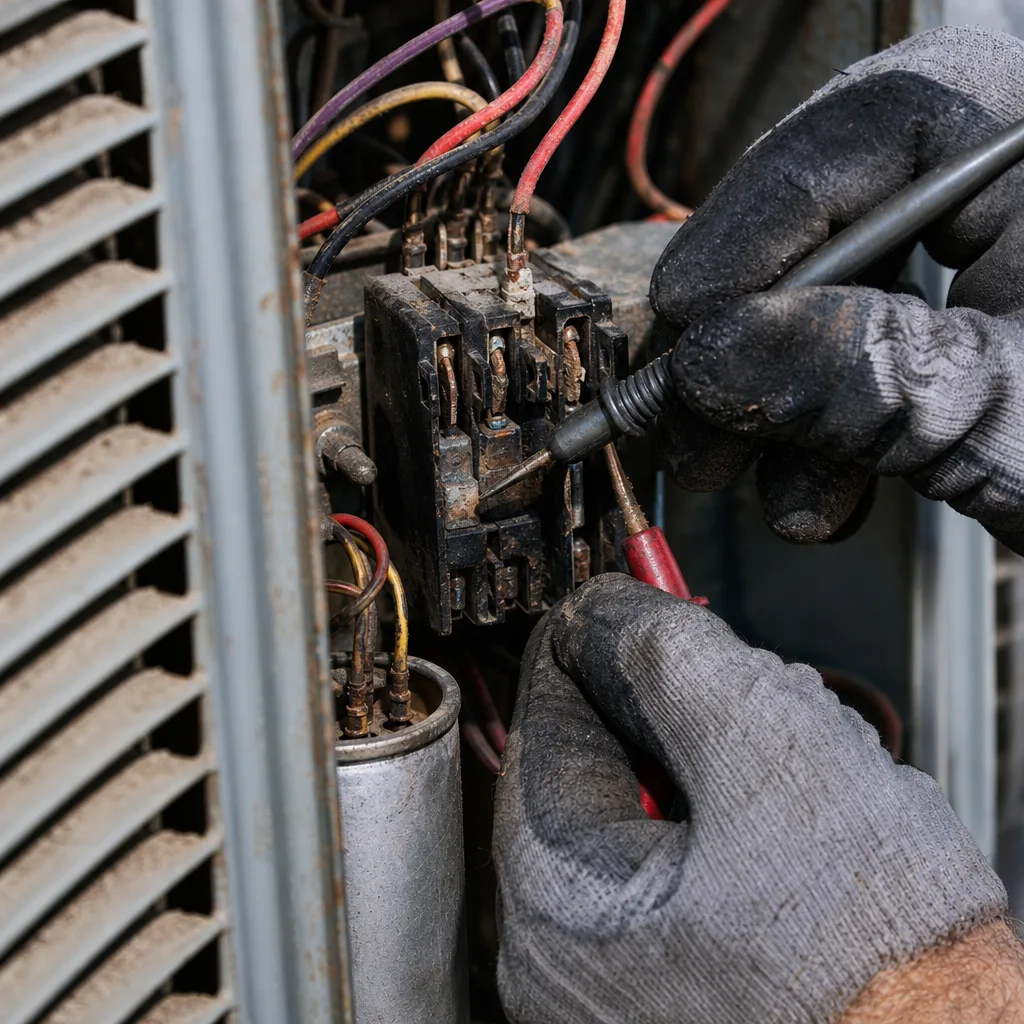
- Warm or barely cool air from the vents. If the thermostat is set to cool and the air feels like room temperature, something in the cooling side isn’t doing its job. Common causes are a failed capacitor, a refrigerant leak, or a compressor that isn’t starting.
- Weak airflow. If the air coming out is cool but it barely moves, look for a blower motor problem, a frozen coil, or a blockage in the ducts. Rooms at the far end of the house usually feel it first.
- The system won’t turn on at all. No hum, no fan, nothing. This can be a tripped breaker, a thermostat problem, a bad control board, or an electrical fault at the outdoor unit.
- Short cycling. Your AC turns on, runs a few minutes, shuts off, then starts again. That constant stop and start wears parts out faster and leaves your home sticky and uneven.
- New or loud noises. Buzzing, clicking, grinding, squealing, or rattling aren’t normal. A buzz from the outdoor unit often means an electrical part is struggling. Grinding or squealing usually points to a motor or bearing.
- Ice on the copper lines or indoor coil. Ice in July sounds strange, but it’s a real sign of low refrigerant or poor airflow. If you keep running a frozen system, you can put extra strain on the compressor.
- Water where it shouldn’t be. In many Dallas homes, the indoor unit sits in the attic. If the condensate drain line clogs, water can back up and overflow. A brown stain on the ceiling below the unit is often the first clue.
- A burning or electrical smell. A hot, burnt smell from the vents or the outdoor unit can mean an overheating motor or wiring. Treat it as urgent.
- Higher energy bills with no change in use. When a part is weak, your system runs longer to keep up. You pay for that extra run time every month.
Humidity is another quiet signal. A healthy AC pulls moisture out of the air as it cools. If your home feels clammy even when the thermostat reads normal, the system may not be running long enough or moving enough air across the coil.
None of these signs means you need a new system. Most of them trace back to one part, like a capacitor, a fan motor, a drain line, or a sensor. That part can be found and fixed. What helps most is calling while it’s still a single problem. When you call, tell us what you noticed: the sound, when it started, and whether the outdoor fan is spinning. Those details help the technician narrow it down fast.
When You Don’t Need a Repair Call Yet
Not every warm afternoon means a broken AC. Some problems take five minutes and cost you nothing to fix. Before you pay a service-call fee, run through these checks. If one of them solves it, great. You keep your money, and we’d rather you do that than pay us for a dead thermostat battery.
- Check the thermostat first. Make sure it’s set to Cool, not Heat or Off, and that the set temperature is below the room temperature. If the screen is blank, try fresh batteries. A lot of ‘dead’ AC calls end right here.
- Look at the fan setting. If it’s set to On instead of Auto, the blower runs nonstop, even when the outdoor unit isn’t cooling. You’ll feel room-temperature air between cycles and the house can feel muggy. Switch it to Auto and see if things settle down.
- Change a dirty air filter. A clogged filter chokes airflow, and that can make the whole system feel weak. In a Dallas summer your system runs long hours, so filters load up faster than you’d think. If you can’t remember the last change, start there.
- Check the breaker. If the AC breaker tripped, reset it once. If it trips again, stop there. A breaker that keeps tripping is telling you something’s wrong, and flipping it over and over won’t fix it.
- Give it a few minutes after a power blip. Many systems have a built-in delay before the outdoor unit restarts after the power flickers. Waiting a few minutes before you worry is normal.
- Open your vents and clear the outdoor unit. Closed or blocked supply vents and furniture over return grilles cut airflow. Outside, grass clippings, leaves, and shrubs packed against the condenser make it work harder. Give it some breathing room.
There’s one more situation that isn’t a breakdown. On the hottest Dallas afternoons, when your attic is baking and the sun’s been on the roof all day, a healthy system may run almost constantly and still sit a couple of degrees above where you set it. If the air from the vents feels clearly cooler than the room, the system is cooling. It’s just working against a lot of heat. Often it catches up once the sun goes down. Closing blinds on west-facing windows and not running the oven or dryer in late afternoon can help it keep pace.
Now for the honest other side. These checks help with simple stuff. They won’t fix a failed capacitor, a refrigerant leak, a bad motor, or a clogged drain line in the attic. If you’ve worked through the list and the problem is still there, or you’re seeing any of the warning signs above, it’s time for a technician. Please don’t open the electrical panel on the outdoor unit, add refrigerant yourself, or chip ice off the coil. Those jobs carry real risk to you and to the equipment, and a DIY attempt can turn a one-part repair into a bigger one.
If you’re not sure which side of that line you’re on, that’s fine too. Write down what you checked and what happened. It saves time later and helps narrow down the real cause faster.
Why Dallas Summers Wear Out A/C Parts Faster
Your air conditioner doesn’t wear out all at once. It wears out one part at a time, and a Dallas summer speeds that up. Your system may run most of the day from late spring into fall, often with no real break overnight. Every extra hour adds heat, vibration, and stress to the same handful of parts. That’s why most breakdowns here come down to one tired component, not a dead system.
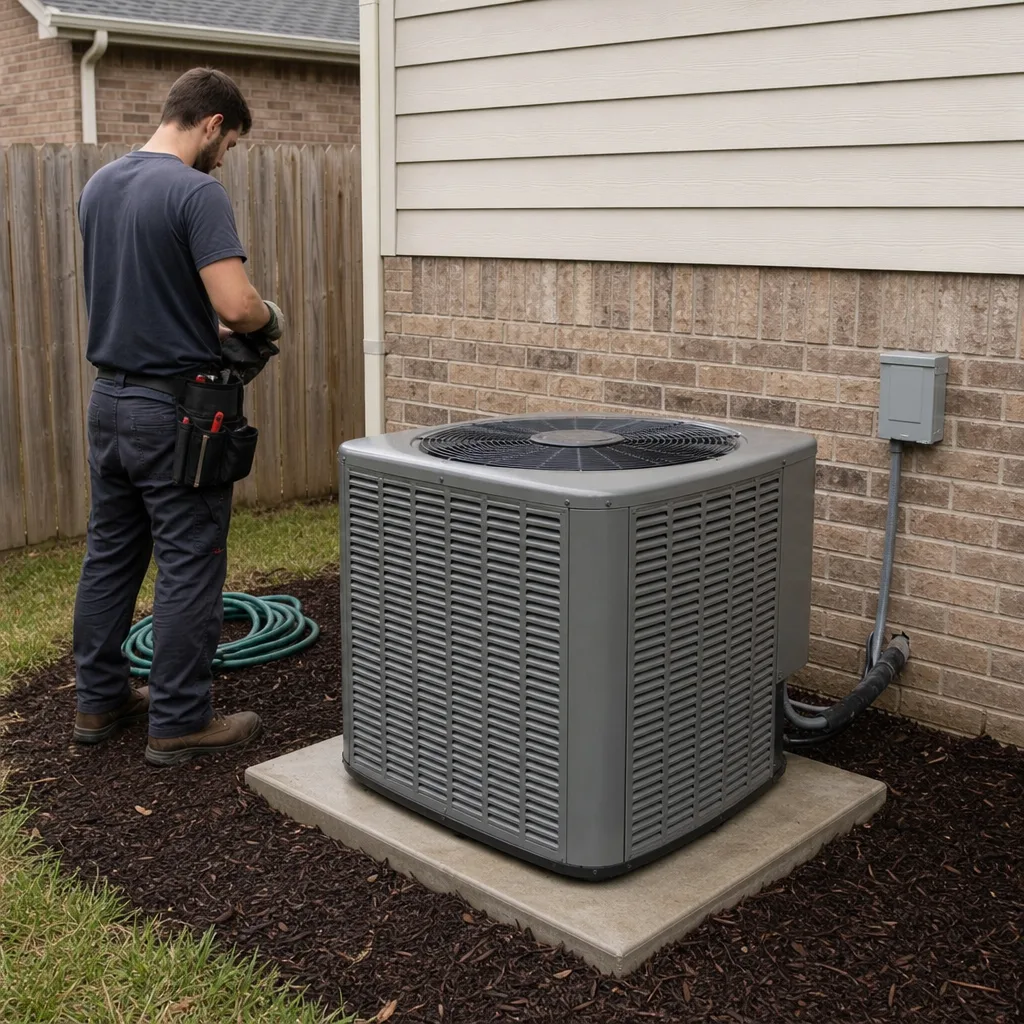
Here’s where the heat hits hardest:
- Capacitors. This small part gives the compressor and fan motors the jolt they need to start. Heat breaks it down over time. An outdoor unit sitting in full afternoon sun puts that capacitor under extra strain, and it’s one of the most common parts to fail mid-summer.
- Contactors. This switch tells the outdoor unit when to turn on. Every start makes a tiny spark, and thousands of starts pit and burn the contact points until the switch sticks or stops working.
- Condenser fan motors. The outdoor fan pushes heat away from your home. When it runs nearly nonstop, the bearings wear, and you may hear squealing or grinding before the motor quits.
- The compressor. This is the heart of your system. It isn’t usually the first thing to go, but it suffers when a cheaper part fails. A weak capacitor or a dirty coil makes it run hotter and harder.
- Drain lines. Long run times in muggy weather mean your system pulls a lot of water out of the air. That steady flow, plus warmth, feeds the slime and algae that clog the line.
Where your equipment sits matters too. In many Dallas homes, the indoor unit and much of the ductwork live in the attic. On a summer afternoon, that attic can get far hotter than the outdoors. Your blower motor, control board, and wiring all work in that heat. Older homes may also have aging ductwork and equipment that’s been patched over the years. Newer homes can have tight attic spaces that hold heat.
North Texas weather adds its own wear. Spring and summer thunderstorms bring power flickers and surges that can damage control boards and other electrical parts. Hail can bend the thin metal fins on your outdoor coil, which cuts down on how well it gets rid of heat. Cottonwood fluff, dust, and grass clippings pack into that coil, too, and a dirty coil makes everything else run hotter.
Then there’s the ground under your outdoor unit. The clay soil around Dallas swells when it’s wet and shrinks when it dries out. Over time, that movement can tilt the pad your condenser sits on. A unit that’s off level can stress the refrigerant lines and strain the motor.
None of this means your system is failing. It means certain parts carry most of the load, and those parts are built to be replaced. A worn capacitor or a pitted contactor is a normal repair. The trouble starts when one tired part is left alone and starts dragging down the parts around it. A failing fan motor can overheat the compressor, and a clogged drain can soak your ceiling. Fixing the weak link early is what keeps a small repair from turning into a big one.
Not sure what your A/C system repair project needs? Ask us.
Call Today, Get Service Today. Xtreme Air Services — Oak Lawn is ready to help.
What Happens During an A/C Repair Visit
An A/C repair visit has three jobs. Find the part that failed. Repair or replace it. Then prove your system is cooling again before anyone packs up. Most calls come down to a single common failure that gets fixed on the first visit.
A few small things on your end help the visit go faster:
- Clear a path to the attic hatch or pull-down stairs. In many Dallas homes the indoor unit is up there, so move the boxes, coats, or car out of the way.
- Unlock the side gate to the outdoor unit, and bring pets inside.
- Stop resetting the breaker if it keeps tripping. Leave things as they are so the technician sees the real problem.
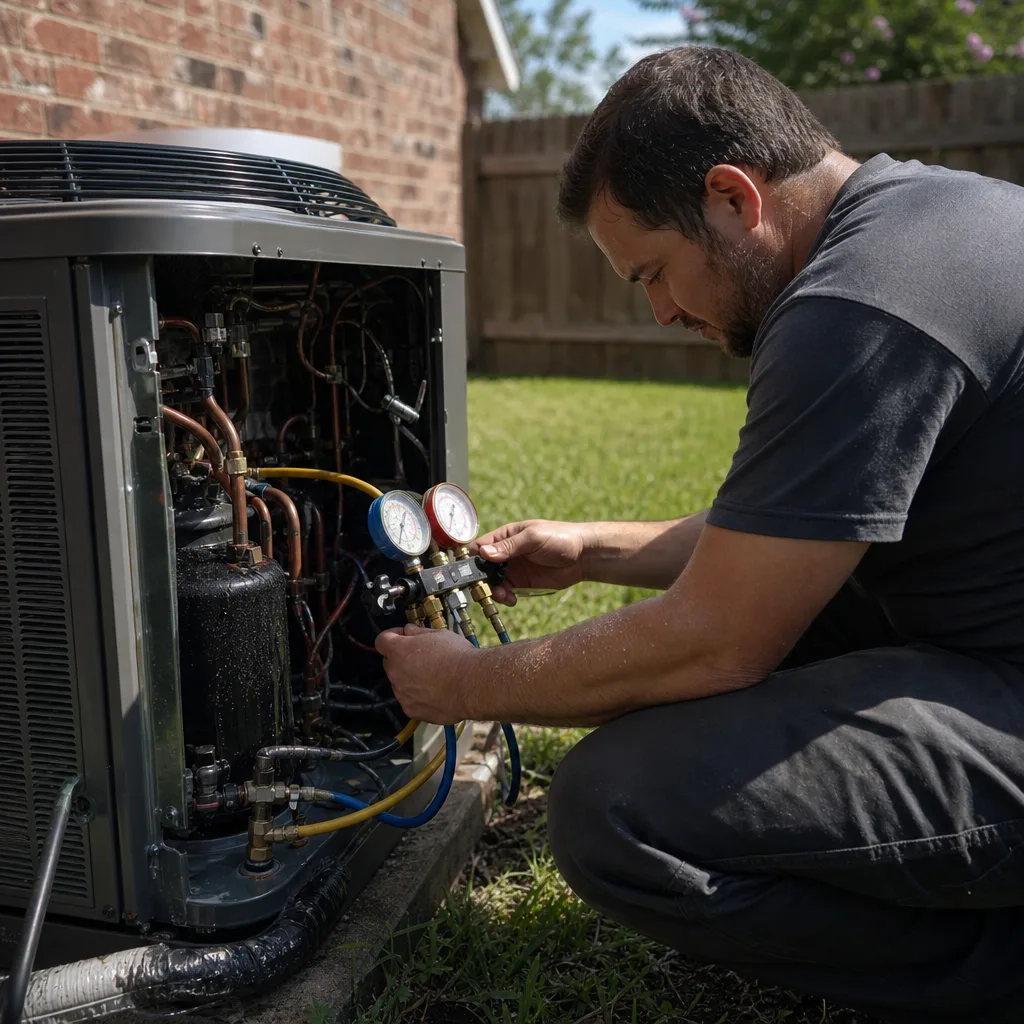
Next comes the diagnosis, and it’s included in the repair. A good diagnosis means testing, not guessing. That covers both halves of your system. Outside, that’s the capacitor, contactor, fan motor, and compressor. Inside, it’s the blower, coil, drain line, control board, and thermostat. Parts get checked with meters and gauges, so you’re not paying for a string of parts swapped in until something works.
Before any work starts, you’ll hear what failed and see the flat-rate price. Nothing happens until you say yes. That price covers diagnosis, labor, the standard replacement part, testing, and cleanup. If you go ahead with the repair, the service-call fee is credited toward it. You won’t have a meter running or a surprise line on the bill afterward.
Sometimes the technician finds more than one tired part, or a major component like the compressor. Those are quoted separately, so you can decide with clear numbers in front of you. A bigger repair is also the right moment to weigh your options. Financing is available on larger repairs and replacements. Either way, the choice is yours, and you’ll get a straight answer about what the system needs now and what can wait.
Once the repair is done, the system gets tested. You want to see the outdoor fan and compressor running, cool air moving at the vents, and the system holding steady instead of short cycling. On a hot Dallas afternoon, that check matters. A system that runs fine for five minutes isn’t the same as one that keeps up. After testing, the work area is cleaned up, whether that’s the attic floor, the closet, or the pad outside.
Timing shouldn’t cost you extra either. Same-day service is available, and there’s no extra charge for nights or weekends. If your AC quits on a Saturday evening in August, you pay the same as you would on a Tuesday morning.
Watch Our Video
See How We Handle A/C system repair in Dallas
Xtreme Air Services — Oak Lawn
What A/C Repair Costs and What’s Included
Here are real numbers. Most A/C repairs from Xtreme Air Services fall between $150-$700. The most common job is finding the one part that failed, fixing or replacing it, and making sure your system runs right. That usually lands between $150-$400. Most calls come down to one common failure that gets fixed on the first visit.

There’s also a $26-$99 service-call fee. As mentioned above, it’s credited toward the repair if you go ahead with us. You’re not paying twice just to have someone show up.
Where your repair lands in that range depends on a few things:
- How much has failed. A worn capacitor is a small fix. A fan motor that ran hot until it seized costs more because the part and the labor are bigger.
- Part cost and availability. Some parts are common and easy to get. Others cost more or take longer to find, and that shows up in the price.
- Your equipment’s age and brand. Parts for an older system, or for certain brands, can cost more than parts for a newer, common model.
- Whether more than one part is worn out. After a long Dallas summer, one tired part can drag down the parts around it. Two failed parts cost more than one.
- Timing. This one won’t change your bill with us. There’s no extra charge for nights or weekends.
You already know what the flat-rate price covers from the visit section. Here’s what it doesn’t cover unless it’s quoted separately: additional failed parts, major components like a compressor, code upgrades, and permits. A code upgrade can come up when a repair touches older wiring or equipment that doesn’t meet current requirements. You’ll hear about it and see the price before anything happens, so the choice stays yours.
Financing usually isn’t offered for a smaller repair like this. It’s available for larger repairs and replacements. So if the fix turns out to be a big one, you’ll have options.
Whoever you call, a few questions help you compare pricing fairly:
- Is the price flat-rate, or is it billed by the hour?
- Is the service-call fee credited toward the repair?
- Does the price include diagnosis, the part, labor, and cleanup?
- Do nights or weekends cost extra?
- Will I get the price before any work starts?
If the answers are fuzzy, the final bill often is too. A clear price up front means you can decide with your eyes open, even on a hot evening with a warm house.
Call 469-269-6373
Frequently Asked Questions
Common questions about A/C system repair
What temperature should I set my A/C at during a Dallas summer?
Most Dallas homes do best with the thermostat set between 75 and 78 degrees when you’re home. This keeps your system from fighting extreme heat all day, which lowers wear on parts like the capacitor and condenser fan motor. Setting it much lower on a 100-degree afternoon just makes the system run longer without cooling the house any faster. If the air from the vents feels cooler than the room but the house isn’t catching up, the system may just be working against heavy attic and roof heat, not a broken part.
Do I need a yearly A/C tune-up, or is that unnecessary?
A yearly check before summer is worth it because it catches small problems while they’re still cheap to fix. In Dallas, your system runs nearly nonstop from late spring into fall, which wears down parts like capacitors, contactors, and drain lines faster than in milder climates. A tune-up usually means someone checks these parts, clears the drain line, and confirms the system is cooling properly before the heat hits hard. Skipping it doesn’t guarantee a breakdown, but it raises the odds a small issue turns into a bigger one mid-summer.
Why does my A/C struggle more in the afternoon than in the morning?
Afternoon heat load is the main reason, especially once the sun has been baking your roof and attic for hours. By mid-afternoon, attic temperatures in Dallas homes can run far hotter than outside air, and that heat pushes into your ductwork and indoor unit. A system that cools fine in the morning can seem to fall behind by 4 or 5 p.m. simply because it’s fighting more heat, not because a part has failed. If the air at the vents still feels clearly cooler than the room, the system is working, it’s just working harder.
Ready to Get Started?
Call (469) 269-6373 Today, Get Service Today.