


Emergency or Same-Day? A Dallas Homeowner’s Guide to AC Repair That Can’t Wait
Know which AC problems can't wait, what to check first, and what happens when a technician comes the same day.
What’s Covered on This Page
- What Counts as an AC Emergency in Dallas Heat
- When It Can Wait for Standard Scheduling
- What Happens During a Same-Day Repair Visit
- What an Emergency Call Costs and What’s Included
- Checking a Technician’s License Before Letting Them In
- Is no AC considered an emergency in Texas?
- How much is an emergency AC call?
- What qualifies as an AC emergency?
What Counts as an AC Emergency in Dallas Heat
In Dallas, an AC that quits in July is more than uncomfortable. A closed-up house can heat up fast on a summer afternoon, and it doesn’t get much relief at night when the outside air stays warm. So the real question isn’t only what broke. It’s how long your home can safely go without cooling.
Call for same-day help if you notice any of these:
- Warm air from the vents while the indoor temperature keeps climbing.
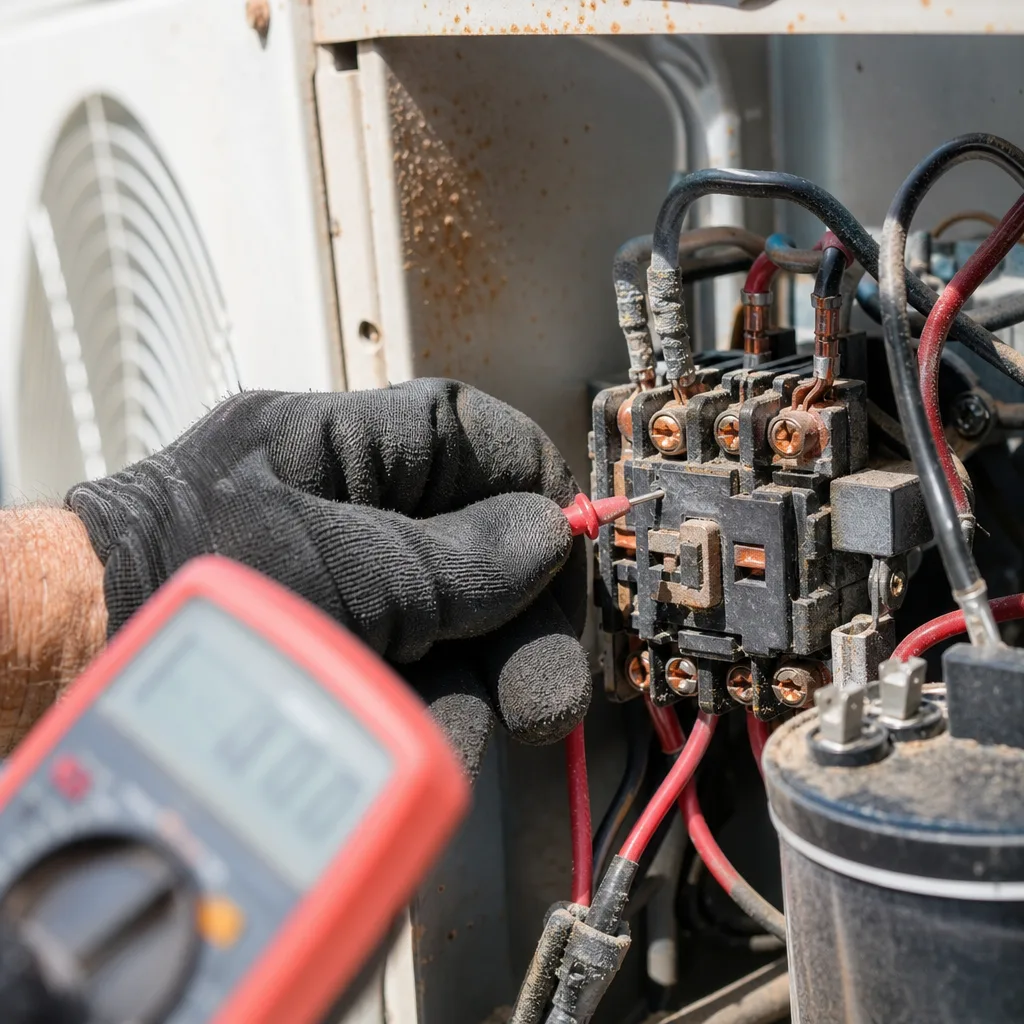
- The system won’t turn on at all, or the outdoor unit hums but the fan doesn’t spin. That humming often points to a failed capacitor or fan motor.
- A burning or electrical smell, or loud grinding, screeching, or buzzing from either unit.
- Ice on the copper lines outside or on the indoor coil. Running the system while it’s frozen strains the compressor, which is the most expensive part of your system.
- Water dripping from a ceiling or pooling around the indoor unit. Many Dallas homes have the air handler up in the attic, so a clogged drain line can soak the drywall below.
- Someone in your home is a baby, an older adult, pregnant, or has a health condition that heat makes worse.
Dallas attics make some of these failures more likely. An attic in the summer gets much hotter than the yard outside, and that heat wears on motors, capacitors, and wiring in an air handler that’s already running hard all day. When one of those parts gives out, the whole system usually stops with it.
Now for the honest part. Some problems look like emergencies but aren’t. Check these before you call anyone:
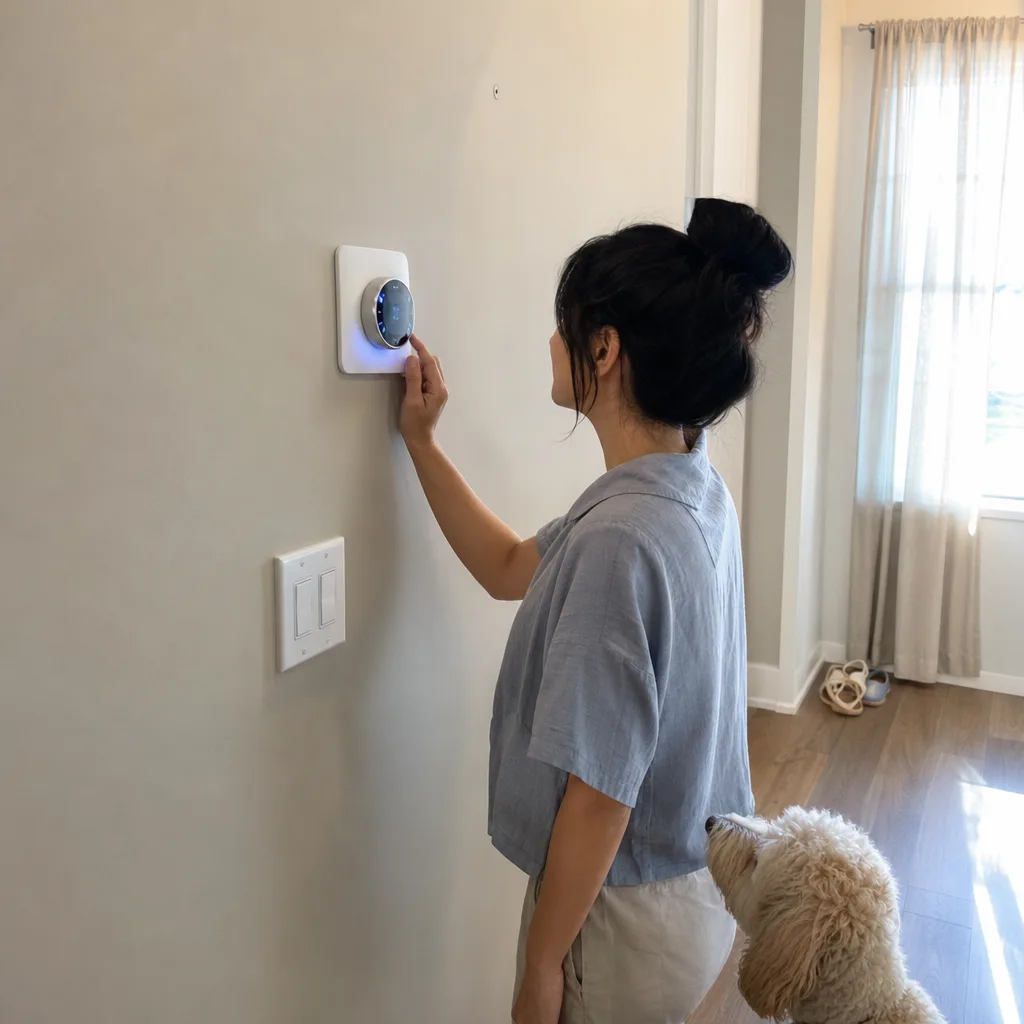
- Blank thermostat screen. Try fresh batteries, then make sure it’s set to Cool and set below the room temperature.
- A tripped breaker. A single trip can happen. If it trips again after you reset it, something’s wrong, and that’s when it’s time to call.
- Weak airflow with a gray, clogged filter. Swap in a clean filter and give the system some time to catch up.
- One room running warmer while the rest of the house cools fine. That’s worth fixing, but it can wait for a regular visit.
If it’s a mild day, nobody at home is at risk, and the system is still cooling some, a regular appointment is a fine choice. Sometimes the reason to wait is cost, since many companies charge more after hours. We don’t charge extra for nights or weekends, so if your AC dies on a Saturday evening in August, you don’t have to sweat it out until Monday to get a fair price.
When It Can Wait for Standard Scheduling
Standard scheduling just means booking a regular visit in the next few days instead of asking for a technician today. It’s a smart choice when your AC is still cooling, nothing smells or sounds dangerous, and nobody at home is at risk from the heat. These problems usually fit that window.
- Your electric bill jumped, but the house still feels cool. A dirty outdoor coil, a slow refrigerant leak, or a worn part can make the system work harder than it should. It’s worth a look, but it’s not a tonight problem.
- The system turns on and off more often than it used to, but it still holds the temperature you set.
- There’s a new quiet, steady rattle or click. Loose panels and screws often cause this. Loud grinding or screeching is different, and that’s on the urgent list above.
- You smell something musty when the system kicks on, with no burning or electrical odor. That’s often moisture sitting on the indoor coil or in the drain pan.
- The air feels cool but sticky. Your system should pull moisture out of the air as it cools, so high indoor humidity means something needs attention, just not in the middle of the night.
- The outdoor unit leans on its pad. Dallas clay soil swells when it’s wet and shrinks during dry spells, and over the years that movement can tip the pad. A leaning unit puts strain on its lines and should be leveled, but it rarely needs an after-hours visit.
One thing that’s not a problem at all is water dripping from the small pipe outside your house near the outdoor unit. That’s the drain line doing its job. Water only becomes a worry when it shows up inside.
While you wait, a few simple habits take pressure off your system and keep you more comfortable:
- Close blinds and curtains on the sunny side of the house during the afternoon.
- Run ceiling fans in the rooms you’re using. They help you feel cooler without making the AC work harder.
- Keep the thermostat at one steady setting. Turning it way down won’t cool the house any faster. It just makes the system run longer.
- Clear grass clippings, leaves, and anything stacked against the outdoor unit so it can breathe.
- Save the oven and dryer for the cooler part of the day.
Keep an eye on things over the next few days. A problem that can wait today can change. If the house stops cooling, you see ice, water shows up inside, or you smell something burning, it’s moved into the urgent column we covered above. Don’t wait out the appointment at that point.
Timing matters too. Dallas springs and falls are mild enough that a small issue in April or October rarely puts anyone at risk. That makes those months a good time to get it fixed. A system with a worn part or a dirty coil can limp along on an 80-degree day. The first long stretch of summer heat, when it runs nearly nonstop, is when it’s most likely to give out. Getting a small problem handled before then is how you avoid the July breakdown.
What Happens During a Same-Day Repair Visit
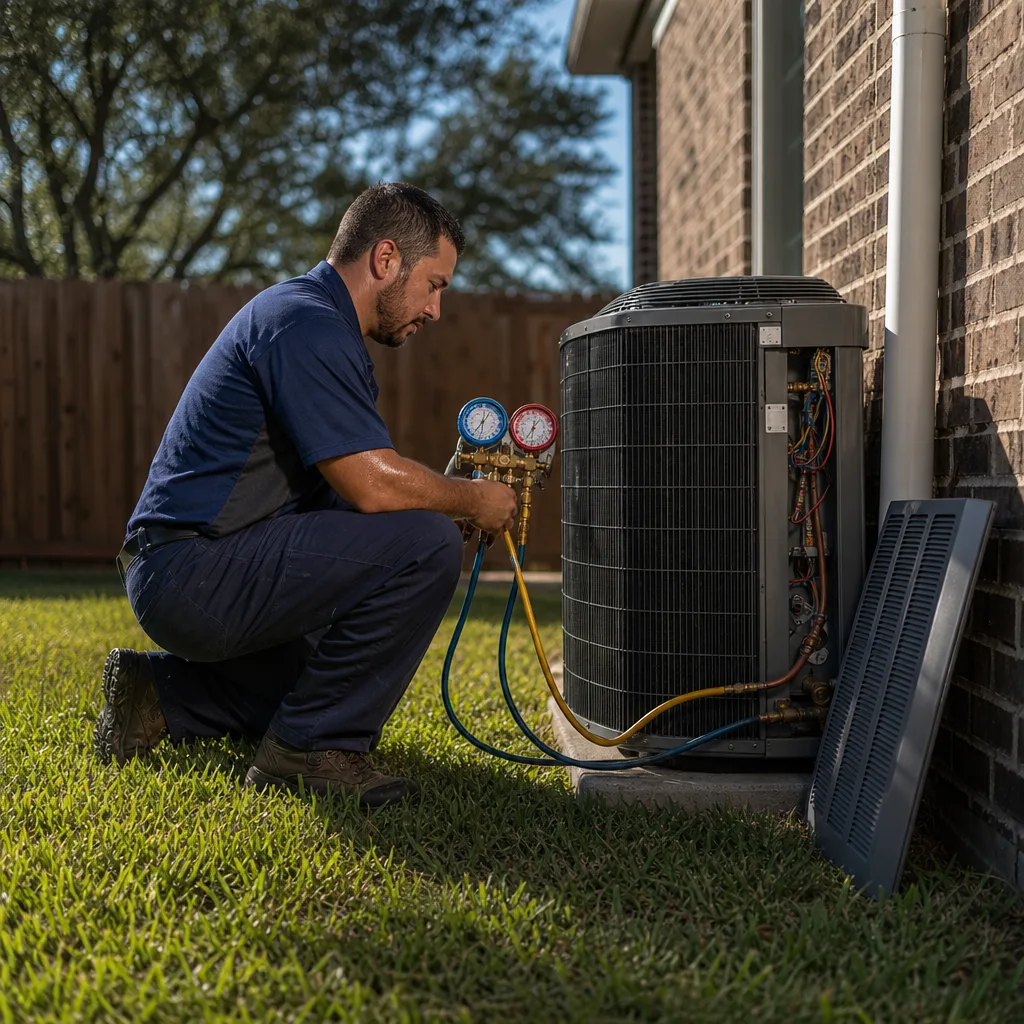
A same-day visit has one job: find what failed, fix it, and prove your system is cooling again before the technician leaves. Most calls come down to a single common failure that gets fixed on the first visit. Here’s how that plays out at your home.
Before anyone arrives, a few small steps save time. Clear a path to the outdoor unit and to your attic access if your air handler is up there, as it is in many Dallas homes. Put pets in another room. Jot down what you noticed and when it started, such as the hum outside, the warm air, or the water spot on the ceiling. Those details point the technician toward the problem faster.
The person at your door is one of our licensed and insured technicians, and our team members are background-checked and drug-tested. You shouldn’t have to wonder who you’re letting into your home when you’re already stressed.
Next comes the diagnosis. Swapping parts until something works isn’t a diagnosis. A careful check usually looks at the parts most likely to fail in hard summer use:
- Power to both units, including the breaker and the disconnect box by the outdoor unit
- The thermostat and the wiring that tells the system to start
- The capacitor and contactor, two small electrical parts that help the motors start and run
- The outdoor fan motor and the indoor blower motor
- Refrigerant pressures, to see whether the system is low or a coil is freezing
- The drain line and pan, if water is showing up where it shouldn’t
- The temperature of the air going into the system compared with the air coming out of your vents
Once the failed part is found, you get the answer in plain English: what broke, why it matters, and what it costs to fix. We use upfront flat-rate pricing, and you approve the price before any work starts. No meter is running while you think it over, and nights and weekends don’t change the number.
The service-call fee runs $26-$99. If you go ahead with the repair, that fee is credited toward it. The repair price covers the diagnosis, the labor, and the standard replacement part, plus testing and cleanup. Extra failed parts, major components, code upgrades, or permits aren’t included unless they’re quoted separately. If the technician finds a second problem, you’ll hear about it and get a price before anything else is done.
If the problem turns out to be bigger than a part swap, such as a failed compressor or a badly leaking coil, you’ll get a straight explanation of your choices. You can take time to decide. Financing is available on larger repairs and replacements, though it isn’t usually needed for a smaller same-day fix.
The visit doesn’t end when the new part goes in. The technician runs the system and checks that it’s cooling the way it should, with cold air at the vents, both fans spinning, and no warning signs left behind. Then the work area gets cleaned up, so the only thing you notice is your house finally cooling down.
Need help with Emergency / same-day AC repair?
Call Today, Get Service Today. Xtreme Air Services — Oak Lawn is ready to help.
What an Emergency Call Costs and What’s Included
Most same-day AC repairs we do cost $200-$525. That’s the most common job: find the one part that failed, repair or replace it, and make sure your system runs right. Our typical range for this kind of work is $200-$900. You’ll know your exact number before any work starts, along with the service-call fee and what’s included, which we covered above.
So why does one repair cost more than another? A few things move the price:
- How big the failure is. A burned-out capacitor is a small part and a quick fix. A motor that seized after weeks of running in a hot Dallas attic takes a bigger part and more time.
- Part cost and availability. Some parts cost little and are easy to find. Others cost more. During a long heat wave, when lots of systems across DFW are working overtime, some parts can get harder to find.
- Your equipment’s age and brand. Parts for older or less common systems can cost more and take longer to track down.
- Whether more than one part failed. One weak part can wear out another. A failing capacitor can strain the fan motor it’s supposed to help start. If two parts are bad, you’ll get a price for both before anything is done.
- When you call. Many companies charge more for nights, weekends, or holidays. We don’t. A Sunday night call costs the same as a Tuesday morning.
That last one matters more than it sounds. A system that’s run hard through a 100-degree afternoon can quit by evening, long after most offices close. If getting cool means paying an after-hours premium, you might feel pushed to sit in a hot house until Monday. You shouldn’t have to make that choice.
Whoever you call, these questions help you avoid surprises:
- Will I get a set price before you start, or are you billing by the hour?
- Do you charge more for nights or weekends?
- Is the trip fee credited toward the repair if I go ahead?
- What does the price include, and what would cost extra?
- Is your company licensed? In Texas, HVAC contractors are licensed through the Texas Department of Licensing and Regulation (TDLR). Ours is HVAC License #TACLA29023C.
Good answers are short and clear. If a company can’t tell you the price before the work starts, take note of that before you say yes.
Call 469-269-6373
Watch Our Video
See How We Handle Emergency / same-day AC repair in Dallas
Xtreme Air Services — Oak Lawn
Checking a Technician’s License Before Letting Them In
A real AC technician won’t mind you asking for proof. In Texas, anyone doing paid AC work has to either hold a state contractor license or be registered with the state and work under a licensed contractor. Checking takes a couple of minutes, and you can do it from your phone while you wait.
- Get the company’s license number. It should be on the estimate, the invoice, or the company’s website. Ours is listed in the questions above.
- Look it up on the Texas Department of Licensing and Regulation website, which has a free license search. Make sure the name matches the company and the license shows as active, not expired.
- Ask the technician at your door for their own state card. Registered and certified technicians carry one with their name on it.
- If your system needs refrigerant, ask whether the technician is certified to handle it. Federal rules require that certification to buy and work with refrigerant.
Why go to the trouble when you’re hot and just want cold air? Because a license protects you. To keep a Texas AC contractor license, a company has to carry liability insurance, so if something gets damaged in your attic, you’re not stuck with the bill. A licensed company also answers to the state. If a job goes wrong, you have somewhere to file a complaint.
The urgency is what makes people skip this step. Say your AC quits on a 104-degree afternoon and someone hands you a number for a guy who can come right now. That’s exactly the moment to spend two minutes checking. DFW gets hit with hail and severe storms, and after a big one, some crews go door to door looking for work. Many are honest. Some aren’t licensed at all.
Slow down if you notice any of these:
- They showed up at your door without you calling.
- They can’t or won’t give you a license number.
- They want cash only, or full payment before any work starts.
- They won’t put the price in writing before they begin.
- They say the whole system has to be replaced today but can’t show you what failed.
None of those mean you’re being scammed for sure. They do mean you should ask more questions before you open your attic to someone.
We’d rather you check us than take our word for it. Look up our license, ask our technician for their card, and ask anything that’s on your mind. Our licensed and insured technicians are background-checked and drug-tested, and we’ll give you a flat-rate price in writing before any work starts.
Call 469-269-6373
Frequently Asked Questions
Common questions about Emergency / same-day AC repair
Is no AC considered an emergency in Texas?
Yes, a dead AC during Dallas summer heat counts as an emergency, especially if the house keeps heating up with no relief at night. A single tripped breaker or dirty filter usually isn’t an emergency, but no cooling at all on a hot day is. The real test is how fast your home is heating up and who’s inside, such as a baby, an older adult, or someone with a health condition.
How much is an emergency AC call?
Our service-call fee runs $26-$99, and it gets credited toward your repair if you move forward with the fix. Most same-day AC repairs end up costing $200-$525, with our typical range for this kind of work landing between $200-$900. You get the exact price in writing before any work starts, and it doesn’t change for nights, weekends, or holidays.
What qualifies as an AC emergency?
Warm air from the vents, a system that won’t turn on, a burning smell, or water leaking inside all count as AC emergencies. Ice on the copper lines or indoor coil is also urgent, since running a frozen system strains the compressor, the most expensive part to replace. If someone in your home is at higher risk from heat, that pushes a borderline problem into same-day territory too.
Ready to Get Started?
Call (469) 269-6373 Today, Get Service Today.