


Heating System Repair in Carrollton: Get the Real Problem Fixed, Not Oversold
Furnace and heat pump problems fixed on the first visit, with an honest call on repair versus replace.
What’s Covered on This Page
- Signs Your Furnace Needs a Repair Call
- Checks to Make Before You Call
- Urgent vs. Can-Wait Heating Problems
- What Happens During a Repair Visit
- What Drives Heating Repair Cost Up or Down
- Can a plumber fix my furnace instead of an HVAC tech?
- What does an HVAC technician do during a heating call?
- Is there a rule about when a furnace repair isn’t worth it anymore?
Signs Your Furnace Needs a Repair Call
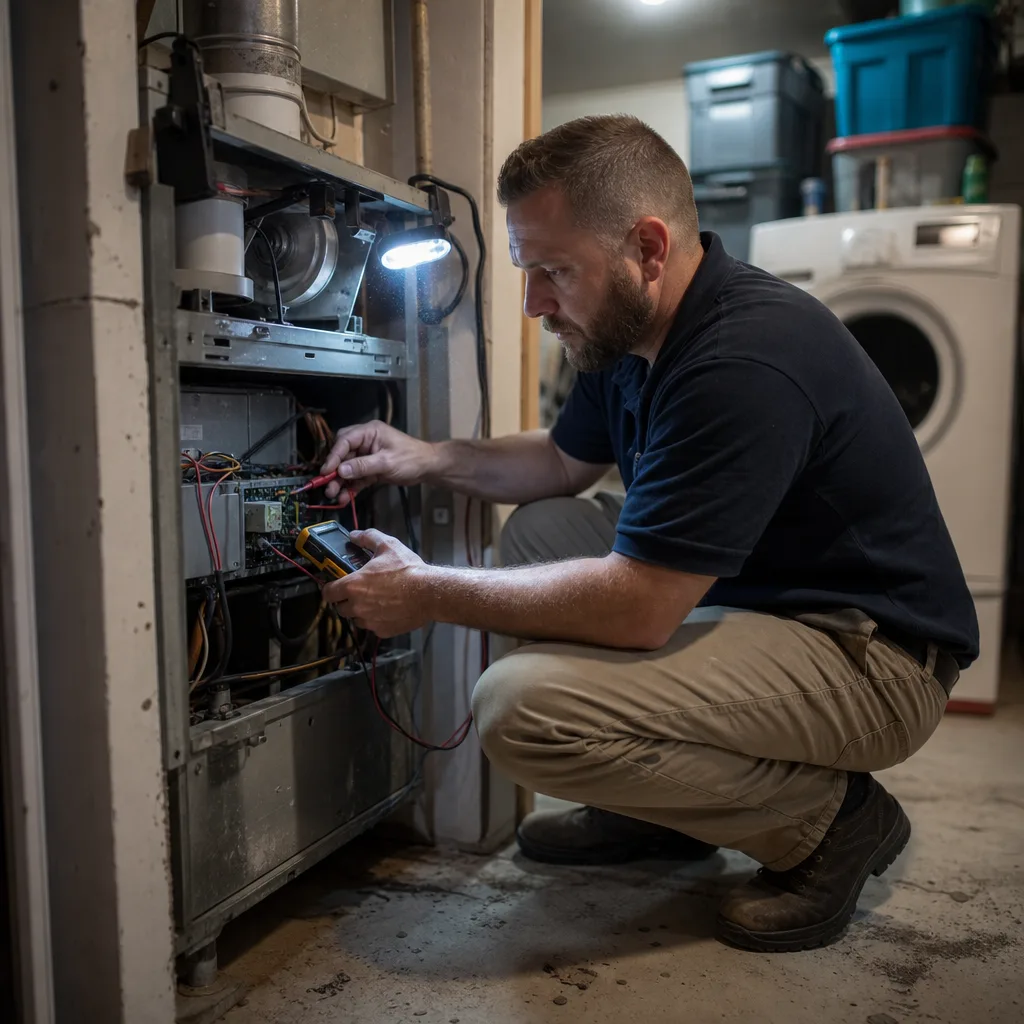
Most furnace trouble shows up the same way. Your home feels colder than the thermostat says it should, and something about the system just seems off. The good news is that most heating calls come down to one common failure that gets fixed on the first visit. You don’t need to guess which part it is. You just need to know when it’s more than a setting.
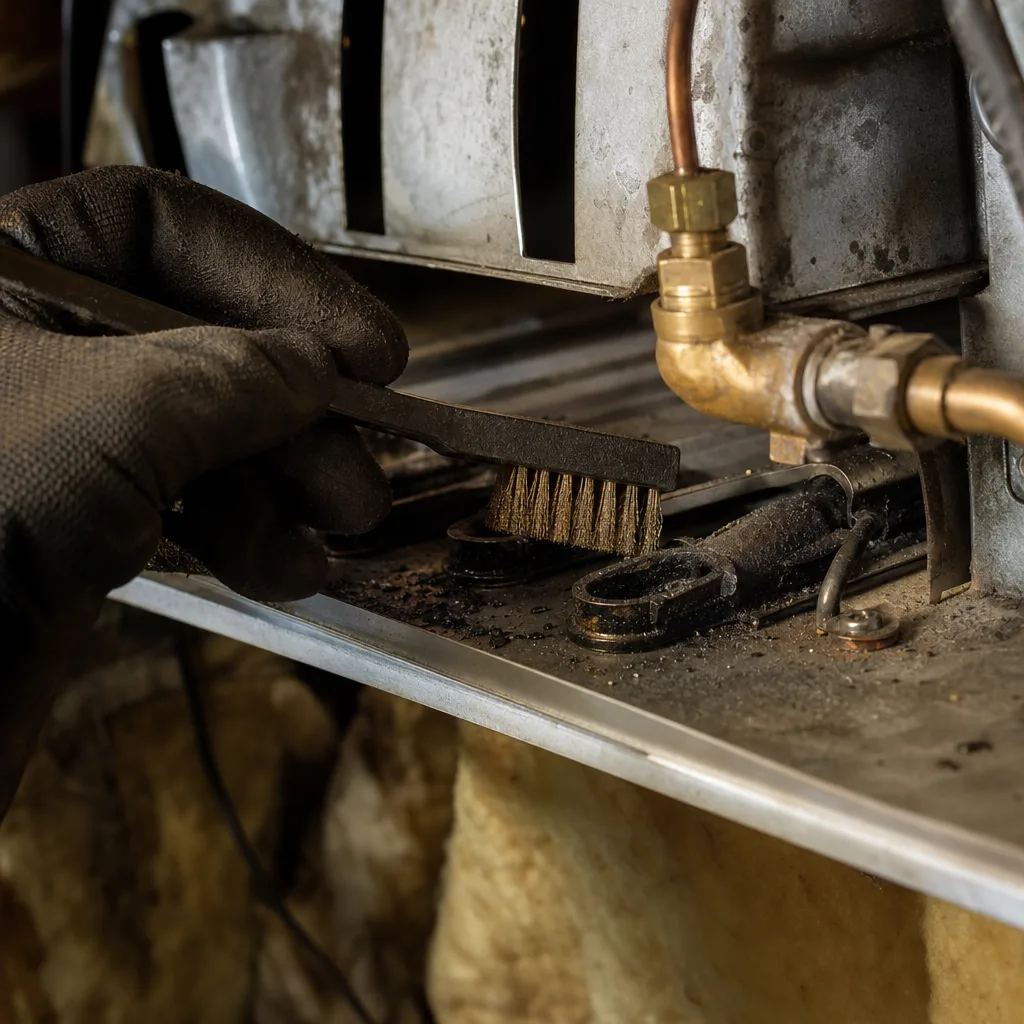
Here are the signs that point to a real repair:
- The blower runs, but the air from your vents is cool or room temperature.
- You hear the furnace click or try to start, but it never lights, or it lights and shuts off a few seconds later.
- The system turns on and off over and over in short bursts and never warms the house.
- Some rooms stay cold while others feel fine, even with every vent open.
- You hear new sounds, like squealing, grinding, banging, or rattling, when the heat kicks on.
- The breaker for your furnace keeps tripping after you reset it.
- Nothing happens at all when the thermostat calls for heat.
- Your energy bill jumps, but your house isn’t any warmer.
Each of these usually traces back to a specific part, like an ignitor, a flame sensor, a blower motor, or a control board. That’s why a good technician starts by finding the failed part instead of swapping things until the heat comes back.
Before you call anyone, check a few things yourself. These are free, and they fix more no-heat problems than you’d think:
- Thermostat: Make sure it’s set to Heat, set a few degrees above room temperature, and has fresh batteries if it uses them.
- Air filter: A clogged filter can choke airflow and make the system shut itself off. If it’s gray and packed with dust, swap it.
- Breaker and switch: Look for a tripped breaker in your panel and a power switch near the furnace that may have been bumped off.
- Furnace door: If the front panel isn’t fully closed, many furnaces won’t run at all.
If one of those fixes it, great. You don’t need us, and you just saved a service call. If the heat still won’t come back, or the breaker trips again, stop resetting things and let a technician take a look. Repeated resets can hide the real problem and put more strain on parts that are already struggling.
Timing matters here in North Texas. Carrollton winters are mostly mild, so a furnace can sit unused for weeks and then get pushed hard the moment a cold front blows through. Many homes here keep the furnace in the attic, which means a small issue can go unnoticed until the first chilly night. If you’ve noticed any of the signs above, even once, it’s worth getting it checked before the next cold snap rather than during it.
Checks to Make Before You Call
If the thermostat, filter, and breaker all look fine, there are a few more things you can safely check on your own. None of them need tools. Each one either brings your heat back or gives a technician a head start on finding the failed part.
- Gas supply: If you have a gas furnace, see if your gas stove or gas water heater still works. Then find the gas valve on the pipe going into the furnace. A handle that lines up with the pipe is open. A handle that crosses the pipe is closed. If it’s closed and you don’t know why, leave it alone and mention it when you call.
- Drain pan and float switch: High-efficiency furnaces make water as they run. In an attic setup, a pan sits under the unit, and a small float switch shuts the system down if that water backs up. If you can safely reach the unit and you see standing water in the pan, you’ve likely found why the heat stopped. The drain line will need to be cleared.
- Heat pump outdoor unit: A light coat of frost in cold weather is normal, and the unit clears it on its own. A thick block of ice that’s still there after an hour, or a fan that won’t spin, points to a repair.
- Emergency heat: If your heat pump thermostat has an Emergency Heat or Aux setting, it can keep you warm for now. It uses backup electric heat, which costs more to run. Treat it as a short-term fix, not a solution.
- Vents and returns: Look for rugs, beds, or furniture covering supply vents or the large return grille. Blocked airflow can leave rooms cold and make the furnace shut itself off to protect its parts.
- Status light: Many furnaces have a small window with a blinking light on the control board. Count the blinks and check the chart printed on the inside of the panel door. Writing down that code saves real time.
If none of that brings the heat back, grab a pen before you call. Jot down when the problem started, what you heard or smelled, any blink code, and which checks you already tried. That short list helps a technician narrow down the failed part instead of starting from scratch. On most systems, that’s the difference between a quick, clear repair and a long afternoon of guessing.
Some homeowners put off calling because they worry about paying for a visit that turns out to be small. Here’s how it works with Xtreme Air Services. There’s a $26-$99 service-call fee, and it’s credited toward the repair if you go ahead with us. There’s no extra charge for nights or weekends, so a cold Saturday night costs the same as a Tuesday morning. You’ll know the price before any work starts.
Urgent vs. Can-Wait Heating Problems
Not every heating problem is an emergency. Some need you out of the house right now, some need a technician today, and some can wait for a time that works for you. Here’s how to tell the difference.
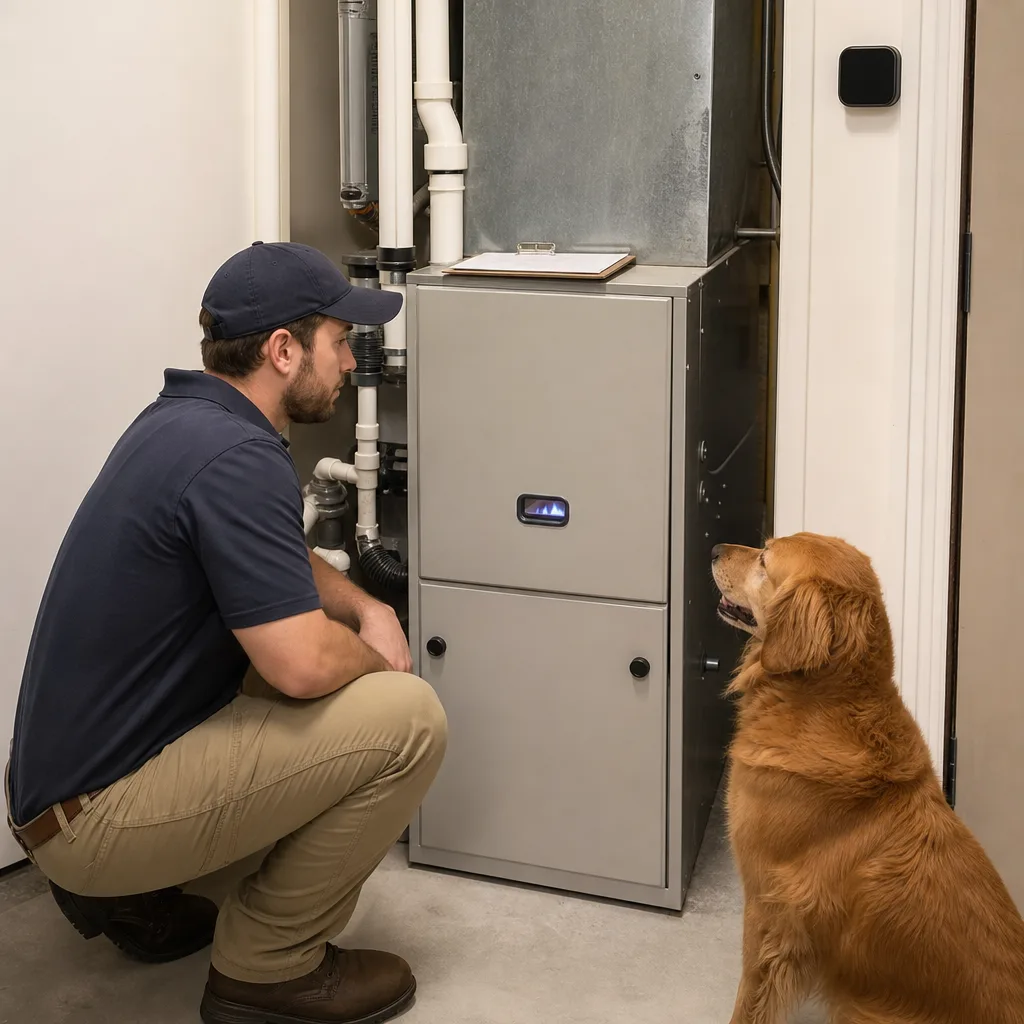
Stop and put safety first if you notice any of these:
- You smell rotten eggs or gas near the furnace. Get everyone outside. Don’t flip switches or light anything. Call your gas company or 911 once you’re out of the house.
- Your carbon monoxide alarm goes off. Get everyone out into fresh air and call 911. Headaches, dizziness, or nausea that ease when you step outside are a warning sign too.
- You smell burning plastic, see smoke, or notice scorch marks near the unit. Turn the furnace off at its power switch or breaker, and leave it off.
Once everyone’s safe, a furnace that caused any of these needs a technician before it runs again. Our team offers carbon monoxide testing and furnace safety inspections, so you’ll know it’s safe before you turn it back on.
Call for same-day repair if:
- You have no heat at all and a freeze is in the forecast.
- You have no heat and someone at home is a baby, an older adult, or has a health condition that makes cold risky.
- Water from an attic unit is dripping through your ceiling.
- The breaker keeps tripping, even after you’ve stopped resetting it like we covered above.
These usually come down to one failed part. Waiting doesn’t make them cheaper, and a cold house can quickly turn into a bigger problem, like frozen pipes.
These can usually wait a day or two:
- One room runs a few degrees cooler than the rest.
- Your heat pump is keeping you warm on Emergency Heat. It costs more to run, but it buys you time.
- You hear a new sound, but the house is still warming up fine.
- Your energy bill went up and you can’t explain why.
- The furnace works, but you want it checked before winter really sets in.
Can-wait doesn’t mean ignore it. A squeal or a short cycle is often a worn part giving you an early warning. It’s usually a simpler fix now than after it quits on the coldest night of the year.
That timing is the real trap in Carrollton. Winters here are mostly mild, so a small issue can feel like no big deal for weeks. Then a cold front rolls in, the temperature drops overnight, and that attic furnace you barely used is suddenly running nonstop. A part that was hanging on often gives out right then. If you’ve got a can-wait problem, book it during a mild stretch. Don’t wait for the forecast to turn.
With Xtreme Air Services, the hour you call doesn’t change what you pay, since there’s no extra charge for nights or weekends. That means your decision can be about safety and comfort, not about saving money by toughing it out until Monday.
Ready when you are – get in touch today.
Call Today, Get Service Today. Xtreme Air Services — Carrollton is ready to help.
What Happens During a Repair Visit
A heating repair visit has one job: find the part that failed, fix it, and prove your heat works before the technician leaves. Most calls come down to a single common failure that gets fixed on the first visit, so you aren’t signing up for a long project when you call.
The person at your door is one of our licensed and insured technicians, background-checked and drug-tested, working under HVAC License #TACLA29023C. Here’s how the visit goes from there.
- Finding the problem comes first. The technician starts with what you noticed, like the sounds, the smells, the blink code, and the checks you already tried. Then they test the system until the failed part shows itself. On a gas furnace, that can mean watching each step of startup to see exactly where it stops.
- You get a clear price before any work starts. You’ll hear what failed, what it takes to fix it, and what it costs, in plain English. Our pricing is upfront and flat-rate, so there’s no meter running while someone works in your attic. You approve it, or you don’t.
- The repair itself. The failed part gets repaired or replaced. Diagnosis, labor, and the standard replacement part are all included in the repair price.
- Testing before anyone leaves. The system gets checked to make sure it runs correctly, so you’re not left guessing whether the heat will hold up tonight.
- Cleanup. Your home gets left the way it was found, minus the cold.
Why does diagnosis come first? Different parts can fail in ways that look the same from your hallway. A dirty flame sensor and a worn-out ignitor can both make a furnace click, light, and quit. If someone swaps the wrong part, you pay for it and still have no heat. Testing first is how you avoid paying twice.
Sometimes the technician finds more than one problem. A second failed part, a major component, a code upgrade, or a permit isn’t part of the standard repair price. If any of those come up, you’ll get a separate quote, and nothing extra happens until you say yes. For larger repairs and replacements, financing is available, so a big surprise doesn’t have to become a big strain on your budget.
When the technician packs up, you should know three things: what broke, what was done about it, and that your system is heating the way it should. If any of those isn’t clear, ask. You should never be left wondering about your own furnace.
Watch Our Video
See How We Handle Heating system repair in Carrollton
Xtreme Air Services — Carrollton
What Drives Heating Repair Cost Up or Down
Most heating repairs with Xtreme Air Services run $150-$700. The most common job costs $150-$400. In that job, the technician finds the one part that failed, repairs or replaces it, and makes sure your system runs correctly. Where your repair lands depends on what broke, not on how long someone spends in your attic.
These are the things that move the price up or down:
- How much failed. Cleaning a dirty flame sensor or swapping a worn ignitor is a smaller fix. A failed blower motor or control board is a bigger part and more work.
- Part cost and availability. Some parts are common and easy to get. Others cost more or take longer to track down.
- Your equipment’s age and brand. Parts for older or less common systems can be harder to find and cost more.
- More than one failed part. One problem can wear out another. For example, a furnace that keeps short cycling puts extra strain on its ignitor. Each extra part gets its own quote, as covered above.
- Time of day. With us, this one doesn’t change your price, since there’s no extra charge for nights or weekends.
That list is why finding the problem comes first. When a company guesses and swaps parts until the heat comes back, you pay for every guess. When the failed part is found before any work starts, you pay for one repair, and you know the price before anyone picks up a tool.
Whoever you call, these questions will tell you a lot before you say yes:
- Is the service-call fee credited toward the repair if I go ahead?
- Will I get a flat price to approve before work starts, or is it billed by the hour?
- Does the price include diagnosis, labor, the part, testing, and cleanup?
- Do you charge more for nights, weekends, or holidays?
- If you find a second problem, will you stop and give me a price before fixing it?
Clear answers to those questions mean you’re dealing with someone who isn’t hiding the bill. Vague answers are worth noticing.
Sometimes the quote involves a major component on an older system. When that happens, it’s fair to ask whether a repair still makes sense or whether replacement is the better use of your money. A good technician will walk you through both options and let you decide. Financing is there for the bigger jobs if you need it.
Timing affects cost too. In Carrollton, a furnace can sit quiet through weeks of mild weather and then run nonstop when a cold front hits. A worn part fixed during a calm stretch is usually one part and one visit. Wait until it fails on the coldest night, and it can take another part down with it.
Call 469-269-6099
Frequently Asked Questions
Common questions about Heating system repair
Can a plumber fix my furnace instead of an HVAC tech?
No, you want a licensed HVAC technician, not a plumber, to fix a furnace. Furnaces involve gas lines, electrical controls, and combustion safety checks that fall under HVAC licensing, not plumbing. A plumber may handle a gas line connection, but diagnosing a bad ignitor, flame sensor, or control board takes HVAC-specific training.
What does an HVAC technician do during a heating call?
An HVAC technician tests your system to find the exact part that failed, then repairs or replaces it and checks that your furnace runs correctly before leaving. This isn’t just swapping parts at random. It means checking startup sequence on a gas furnace, testing electrical components, and confirming airflow before calling the job done.
Is there a rule about when a furnace repair isn’t worth it anymore?
Many homeowners use a rule of thumb: multiply the repair cost by the age of the unit, and if that number tops $5,000, replacement may make more sense than repair. It’s a rough guide, not a hard law, and it works best alongside a real look at your system’s condition. If a quote involves a major component on an older furnace, it’s fair to ask whether repair still makes sense or if replacement is the smarter move.
Ready to Get Started?
Call (469) 269-6099 Today, Get Service Today.