


Emergency / No-Heat Furnace Repair in Carrollton
When the heat quits, know whether it's an emergency tonight or can wait until morning – and what a repair visit involves.
What’s Covered on This Page
- Your Furnace Stopped Working: What To Check Before You Call
- When No Heat Is a Safety Emergency, Not a Repair Call
- Why Furnaces Fail Without Warning During a Cold Snap
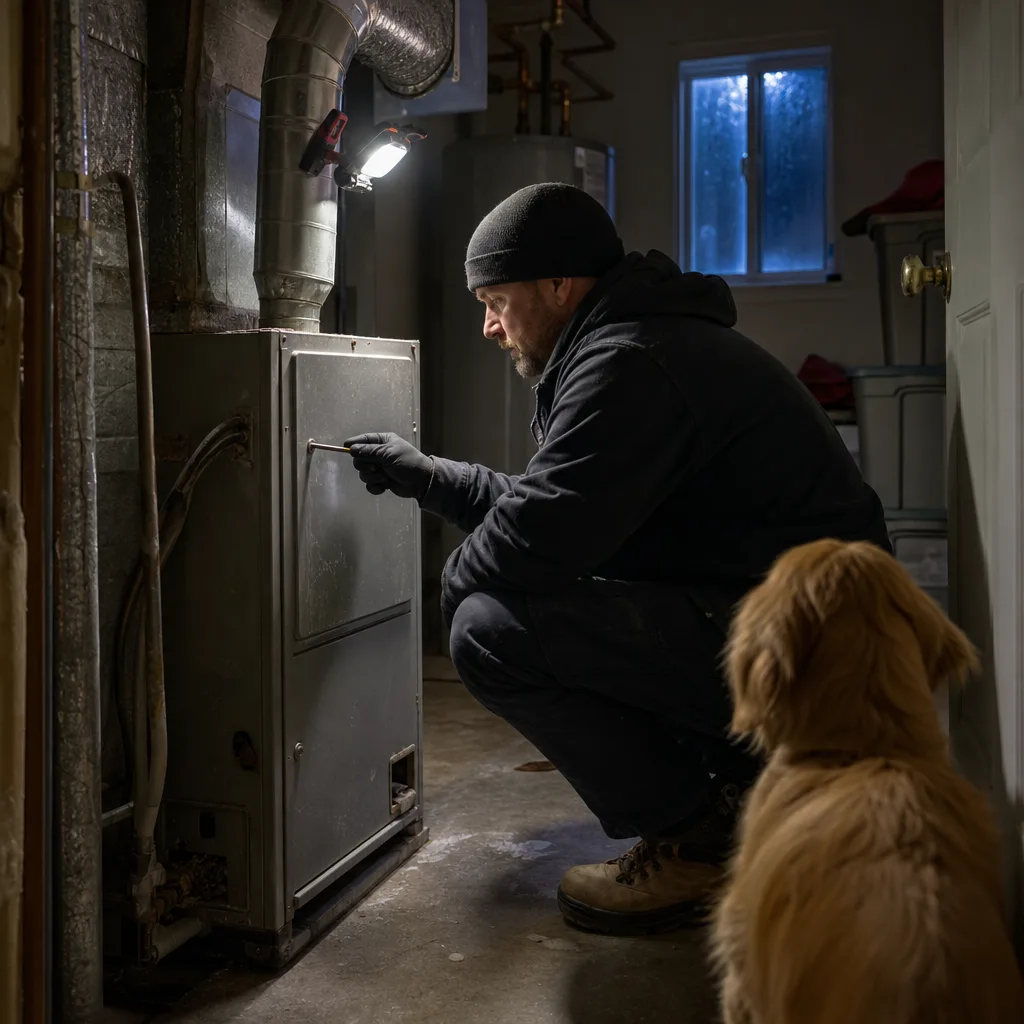
- What Happens During an Emergency No-Heat Repair Visit
- What Emergency Furnace Repair Costs and Why It Varies
- How do I keep my house warm while I wait for the repair technician?
- Can cold weather alone cause a furnace to suddenly quit?
Your Furnace Stopped Working: What To Check Before You Call
A cold house at 6 a.m. after a North Texas cold front feels like a crisis. Emergency / no-heat furnace repair is our job, but we’d rather you not pay for a visit that a dead battery could fix. Start with these checks. Most take less than a minute.
- Thermostat. Make sure it’s set to Heat, not Cool or Off, and set a few degrees above the room temperature. If the screen is blank or dim, put in fresh batteries.
- Breaker. Look at your electrical panel for a tripped breaker labeled furnace, air handler, or HVAC. Flip it fully off, then back on, one time.
- Furnace power switch. Most furnaces have a switch that looks like a regular light switch, mounted on or near the unit. It gets bumped off more often than you’d think, especially in attic or hall closet installs where people store things.
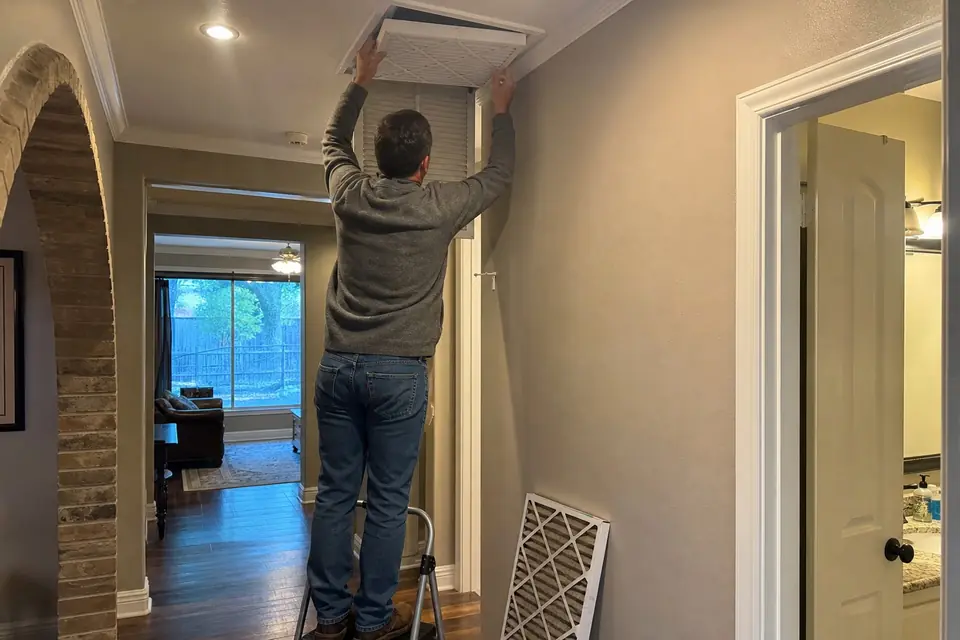
- Air filter. A filter caked with dust can choke airflow so badly that the furnace shuts itself down to protect itself. If you can’t see light through it, swap it out.
- Front panel. Furnaces have a safety switch that keeps them off when the access door isn’t fully seated. If someone changed the filter recently, push the panel firmly back into place.
- Gas valve. On a gas furnace, the handle on the supply line should run in the same direction as the pipe. If it’s turned crosswise, it’s closed.
Give the system about five minutes after each change. Many furnaces wait a short time before they try to start again.
One thing not to do is keep cycling the power over and over. After a few failed tries to light, many furnaces lock themselves out on purpose. Restarting it again and again won’t fix the part that’s failing, and it can make the real cause harder to spot.
If you smell gas, smell something burning, or your carbon monoxide alarm is sounding, skip this list. Don’t touch the furnace. That’s not a DIY situation.
So what does it mean if you’ve checked everything and the house is still cold? Usually it means one part has quit, like the ignitor, the flame sensor, the blower motor, or the control board. That’s good news in its own way. A single failed part is the most common reason a furnace stops making heat, and it’s often fixed on the first visit. You’ve already ruled out the easy stuff, which helps our technician get to the real cause faster.
You also don’t need to wait for business hours to make that call. We charge no extra for nights or weekends, so calling at 10 p.m. on a Saturday doesn’t cost you more than calling on a Tuesday afternoon.
When No Heat Is a Safety Emergency, Not a Repair Call
Most no-heat calls are just a repair problem. Your house is cold, a part has quit, and it needs fixing. A few situations are different. If you notice any of the signs below, the furnace isn’t your main worry anymore. Your family is.
- A rotten egg or sulfur smell near the furnace, the water heater, or a gas line. Gas companies add that smell on purpose so you can notice a leak.
- Your carbon monoxide alarm is going off. Another warning sign is when people in the house get headaches, feel dizzy, or feel sick to their stomach, then feel better once they step outside. Carbon monoxide has no smell, so the alarm and those symptoms may be your only warning.
- A burning or electrical smell, smoke, or scorch marks on or around the furnace.
- Flames or black soot showing up outside the burner area, where they shouldn’t be.
- A furnace or HVAC breaker that trips again right after you reset it.
If any of those are happening, get everyone out of the house, pets included. Don’t flip light switches, don’t light anything, and don’t try to shut the furnace down yourself. Once you’re outside, call 911 or your gas company. They need to make the house safe before anyone works on the furnace.
After they’ve cleared your home, that’s where we come in. Our team offers carbon monoxide testing and furnace safety inspections, and we can repair the furnace once it’s safe to run again. You shouldn’t go back to using a furnace that set off an alarm until someone has found out why.
Some situations are urgent without being dangerous. North Texas cold snaps don’t last long, but they can hit hard. Many homes around Carrollton have water lines running through the attic or along outside walls. If the heat stays off for a long stretch during a hard freeze, those lines can freeze and split. If a pipe has already burst, our team handles burst pipe repair too, so one call covers both problems.
The same goes when someone in your home can’t handle the cold well. That might be a newborn, an older parent, or someone with a health condition. A cold house is more than uncomfortable for them, and getting heat back fast matters more.
Here’s the honest part. If you don’t smell gas, no alarm is sounding, nothing smells like it’s burning, and it isn’t freezing outside, you’re dealing with a repair, not a crisis. Your home will get chilly, but it’s usually fine for a few hours while help is on the way. You don’t need to panic. You just need the right part fixed.
Why Furnaces Fail Without Warning During a Cold Snap
It always seems to happen on the coldest night of the year. The furnace ran fine last week, and now it won’t make heat. That timing isn’t bad luck. In most cases, a part was already worn out and the cold snap is what finally made it quit.
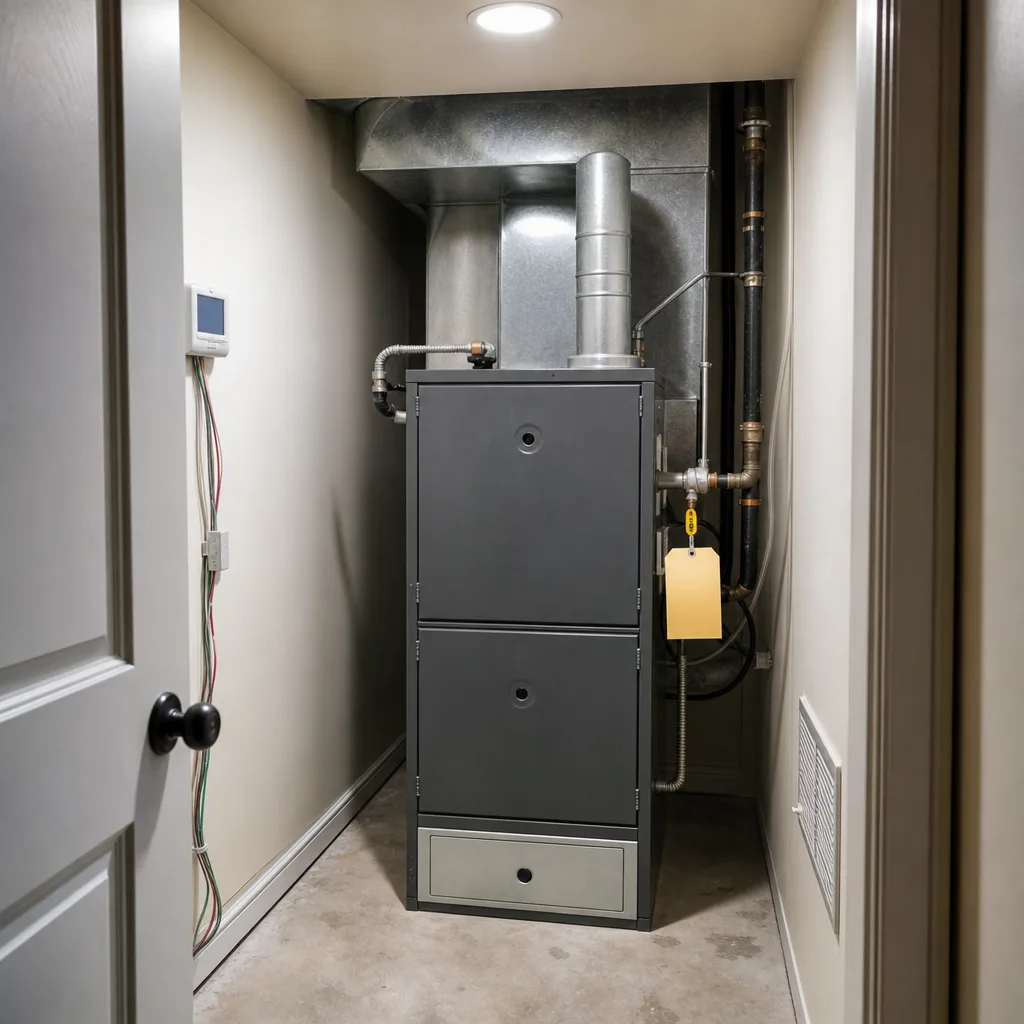
Here in North Texas, your furnace spends most of the year doing nothing. Then a cold front rolls through, temperatures drop fast, and it suddenly has to run long, hard cycles for days in a row. A part that was barely hanging on during mild weather can’t keep up with that load.
These are the parts that tend to give out when the work picks up:
- The ignitor. Many gas furnaces use a small part that glows red-hot to light the burners. Every time it heats up and cools down, it gets a little weaker. After enough starts, it cracks. More starts in a cold snap means it reaches that point sooner.
- The flame sensor. This small metal rod confirms the burners lit. Over time it picks up a thin coating, and the furnace stops trusting it. It may work on short runs, then start shutting the burners off once the furnace has to run back to back.
- The blower motor. In most homes, the same blower that pushes warm air in winter also pushes cool air all summer for your AC. By the time winter comes, it’s already put in a long season of work. A weak motor or the small part that helps it start can fail right when you need it most.
- The control board. This is the furnace’s brain. It tells each part when to turn on. Heavy use and age can wear it down, and sometimes a power surge does the damage.
Where your furnace sits matters too. A lot of homes around Carrollton have the furnace up in the attic. On a freezing night, that attic can be nearly as cold as outside, so the furnace starts every cycle from a colder spot and works harder to warm up. If you have a high-efficiency furnace, it also drains water through a small line. When that line runs through a cold attic, it can freeze. Then a safety switch shuts the furnace down, even though nothing inside is broken.
Age plays a part, too. A furnace in an older home has had more years of starts and stops than one in a newer house. Even so, an older furnace that quits usually has one tired part, not a dead system.
So when your furnace stops cold, try not to assume the worst. A sudden failure doesn’t mean your whole system is done. It usually means one part reached the end of its life at the moment the weather asked the most of it. Find that part, fix it, and your heat comes back.
That’s also why a fall heating maintenance or tune-up visit is worth it. A worn ignitor or a dirty flame sensor can often be spotted and handled before the first freeze shows up.
Have questions? We’re happy to help.
Call Today, Get Service Today. Xtreme Air Services — Carrollton is ready to help.
What Happens During an Emergency No-Heat Repair Visit
You’ve done the checks above and the house is still cold. Here’s what the visit looks like from your side. On an emergency no-heat call, our job comes down to three things. We find the part that failed, repair or replace it, and make sure your furnace runs right before we leave.
A little prep helps the visit go faster. Clear a path to the furnace, whether it’s in a hall closet, the garage, or up the attic ladder. Put pets in another room. Jot down what you already tried, like new batteries, a reset breaker, or a fresh filter. Also note what the furnace did before it quit. Did it click, glow, light and shut off, or make no sound at all? Those small details point the technician to the right part sooner.
Finding the real cause comes first. Your technician watches the furnace try to start and checks the parts covered earlier until the failed one shows itself. The goal is to find out why your heat stopped, not to guess and swap parts until something works.
Next, you get the price before any work starts. We use upfront flat-rate pricing, and you approve it first, so there’s no meter running while someone works. Here’s how the numbers break down:
- Service-call fee: $26 to $99. It’s credited toward the repair if you go ahead with us.
- Most common no-heat repair: $200 to $525.
- Typical range for this service: $200 to $900.
- Included: diagnosis, labor, the standard replacement part, testing, and cleanup.
- Not included unless quoted separately: additional failed parts, major components, code upgrades, or permits.
Where you land in that range depends on how much has failed, what the part costs and whether it’s easy to get, and the age and brand of your furnace. If the technician finds a second worn part, you’ll hear about it and get a separate price. Then it’s your call. Financing usually isn’t offered for a repair this size, but it is available on larger repairs and replacements.
Then comes the repair itself. Most no-heat calls come down to one common failure that gets fixed on the first visit. That’s why ruling out the simple stuff beforehand matters. It means the visit is spent on the part that quit.
Last, we prove it works. A repair isn’t done just because the burners lit once. Before the job is wrapped up, you should see the furnace run a full heating cycle. The burners light and stay lit, the blower pushes warm air out of your vents, and the system shuts off on its own once the house reaches your thermostat setting. That’s also a good time to ask any questions. What failed? Why did it fail? Is anything else showing wear?
The person doing all of this is one of our licensed and insured technicians. Every one of them is background-checked and drug-tested. When someone’s in your home late at night with your family asleep down the hall, that should matter. You should know who’s at your door, what they’re fixing, and what it costs before they pick up a tool.
Watch Our Video
See How We Handle Emergency / no-heat furnace repair in Carrollton
Xtreme Air Services — Carrollton
What Emergency Furnace Repair Costs and Why It Varies
You’ve seen our numbers above. Here’s the part most people never get told: why one no-heat call ends near the low end of that range and another doesn’t, and how to tell whether any company’s emergency price is fair.
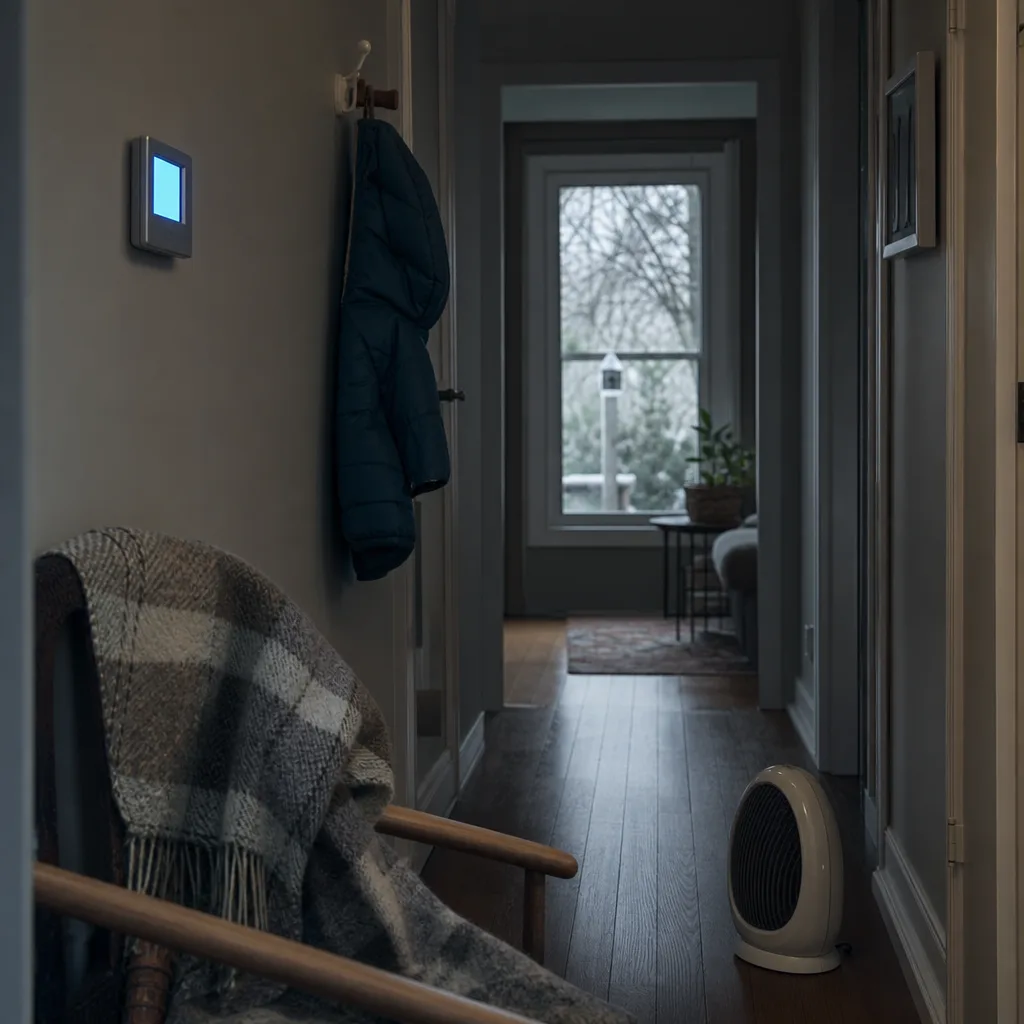
Across the heating trade, emergency pricing usually works one of two ways. Some companies bill by the hour, so the clock runs while the tech hunts for the problem. Many also add a surcharge for nights, weekends, or holidays. That’s why a furnace that quits at midnight during a cold snap can cost you a lot more somewhere else. We price the job up front instead, and we charge no extra for nights or weekends. A Sunday night call costs the same as a Tuesday morning one.
What really moves the price is which part failed and what else it took down with it. Here’s how that plays out:
- A dirty flame sensor or a cracked ignitor is a small part and a quick fix. These jobs tend to sit toward the lower end.
- A blower motor or control board costs more as a part, and the work takes longer. These jobs move toward the upper end.
- Sometimes one failure causes another. A weak part that helps the blower start can strain the motor until it burns out too. Two failed parts means two repairs.
- Older furnaces and less common brands can need parts that are harder to find. When a hard freeze hits all of North Texas at once, popular parts can also run short.
There’s also a point where repair stops making sense. If a major component like the heat exchanger has failed on an aging furnace, the honest conversation may be about replacement, not another patch. That’s a bigger decision, and it shouldn’t be rushed at 2 a.m. Your technician can get your family through the night safely and walk you through furnace replacement options when you’re not standing in a cold hallway. Financing is available for those larger jobs.
Before you let anyone start work, ask these questions. A fair company will answer them without hesitating:
- Is there a service-call fee, and does it count toward the repair?
- Is the price flat, or are you billing by the hour?
- Do you charge more for nights, weekends, or holidays?
- What’s included in the price, and what isn’t?
- If you find a second problem, will you price it and ask me before you fix it?
- Are your technicians licensed in Texas?
You already know our answers. The fee is credited toward the repair, the price is flat and approved before we start, there’s no after-hours markup, and any extra part gets its own price and your okay. Our HVAC work is done under Texas license TACLA29023C.
Call 469-269-6099
Frequently Asked Questions
Common questions about Emergency / no-heat furnace repair
How do I keep my house warm while I wait for the repair technician?
Close off rooms you’re not using and layer up with blankets to hold in body heat. Keep interior doors open so warm air can circulate from rooms that still have some heat, like spots near a sunny window. Run ceiling fans in reverse on low speed if you have them, since this pushes warm air near the ceiling back down. Stay away from using your oven as a heater, since that’s a carbon monoxide risk. If it’s a hard freeze, open cabinet doors under sinks on outside walls so warm room air can reach the pipes.
Can cold weather alone cause a furnace to suddenly quit?
Yes, cold weather often pushes an already-weak part past its breaking point. Your furnace runs much harder and longer during a cold snap than it does the rest of the year, and that extra strain is usually what makes a worn ignitor, flame sensor, blower motor, or control board finally fail. It’s rarely the cold itself causing damage. It’s the sudden jump in workload exposing a part that was already close to done.
Ready to Get Started?
Call (469) 269-6099 Today, Get Service Today.