


HVAC System Maintenance in Irving: What’s Included and What It Costs
A full inspection, cleaning and safety check on every visit, so you know exactly what you're paying for.
What’s Covered on This Page
- What a Maintenance Visit Covers
- Signs Your System Is Due for Service
- When Maintenance Is Not the Right Call
- One-Time Visit vs. a Maintenance Plan
- What Happens If Repairs Are Found
- How often should my HVAC unit be serviced?
- What is the $5,000 rule for deciding on HVAC repairs?
- Is paying for regular HVAC maintenance worth it?
What a Maintenance Visit Covers
Here’s what each part of the visit means in plain English, and what a thorough tune-up generally looks at.
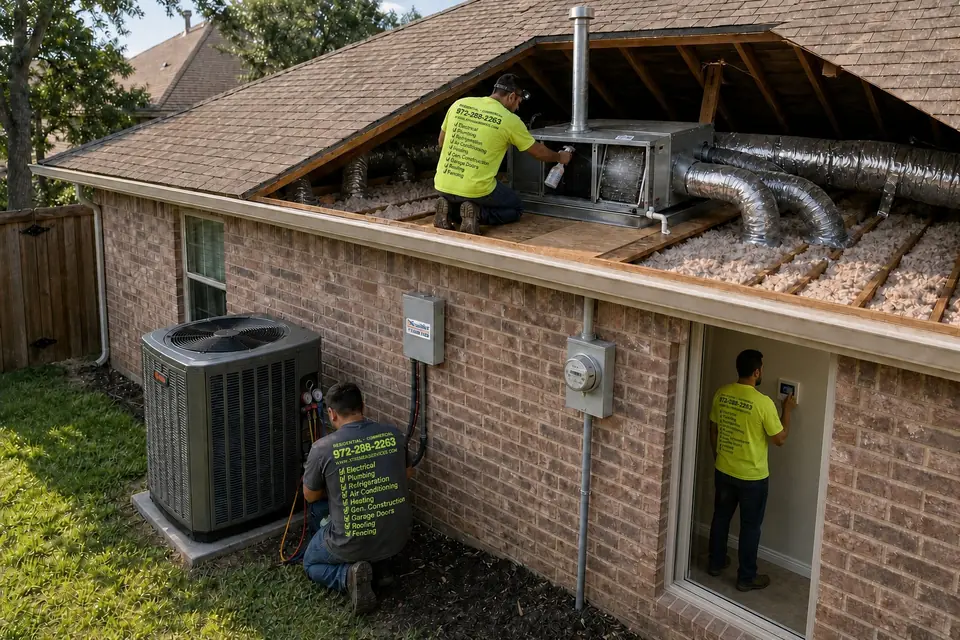
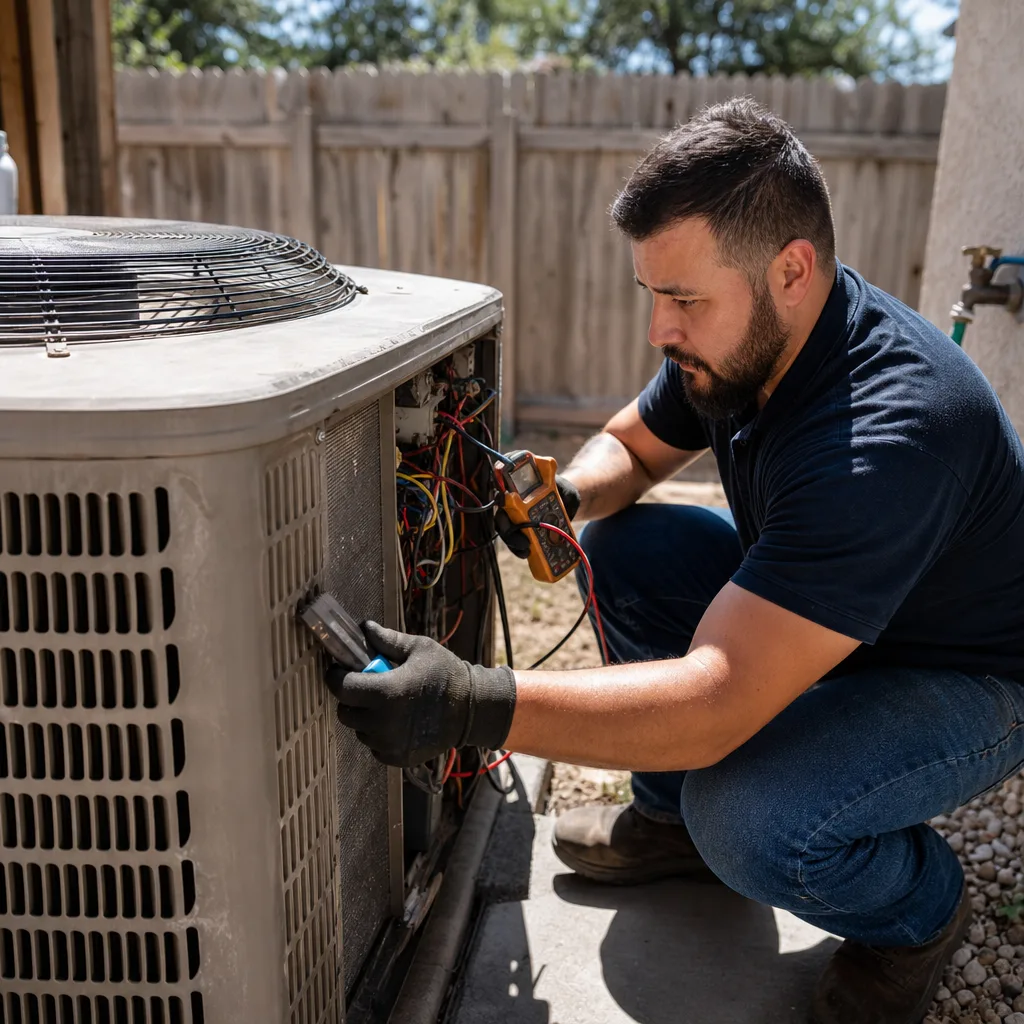
The inspection is where problems get caught early. A good technician doesn’t just glance at the unit and check a box. They look at the parts that tend to wear out first:
- Electrical connections and the capacitor, the small part that gives your motors a kick to start. A weak one often fails on the hottest afternoon of the year.
- The thermostat, to make sure it’s reading the room correctly and telling the system what to do.
- The blower motor and fan, which move air through your whole house.
- The condensate drain line and pan, which carry away the water your AC pulls out of the air.
- The indoor and outdoor coils, where your system picks up and dumps heat.
- On the heating side, the burners, flame sensor, and heat exchanger on a gas furnace.
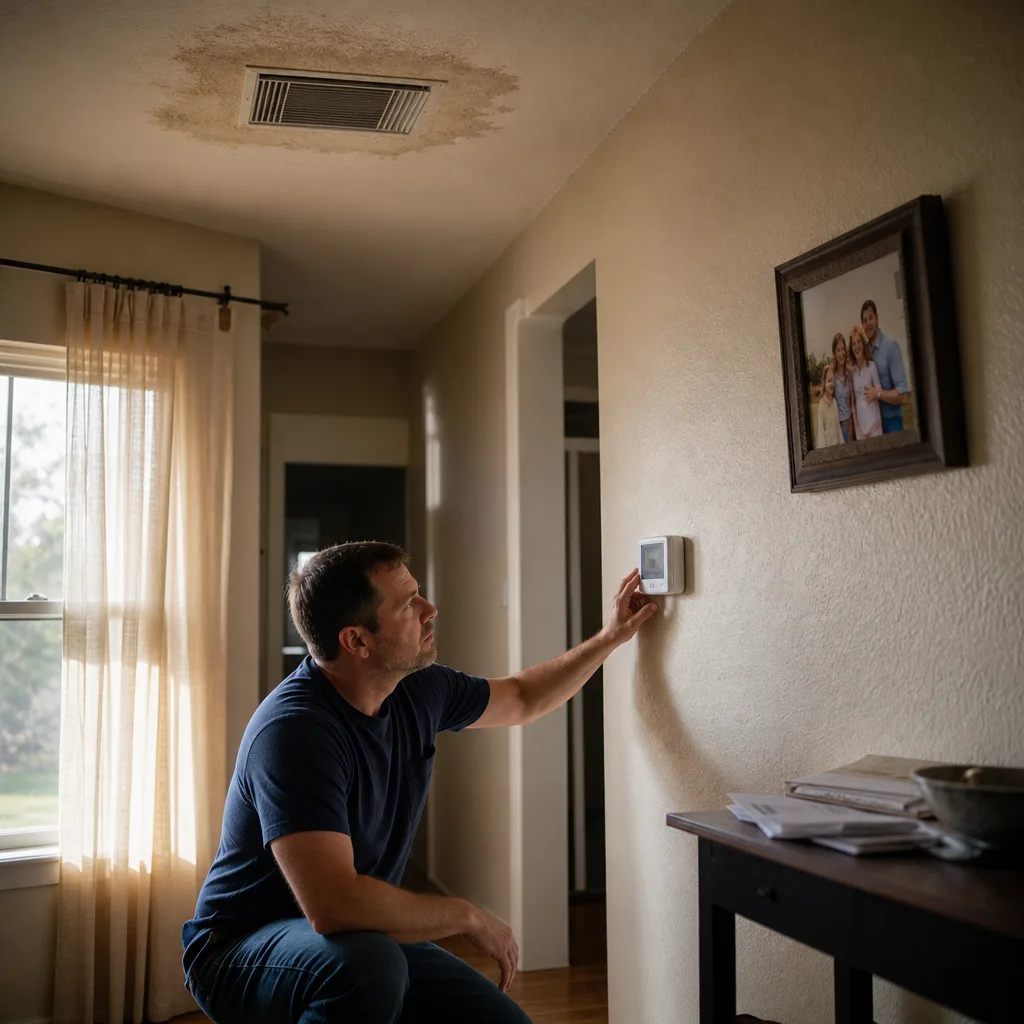
The cleaning matters more in North Texas than most places. Your AC runs for months straight here, and the outdoor unit pulls in dust, grass clippings, and cottonwood fluff the whole time. A dirty coil can’t shed heat, so the system runs longer and works harder to keep you cool. Inside, a lot of homes have the indoor unit up in the attic, where summer heat bakes everything. If the drain line clogs up there, the first sign is often a water stain on your ceiling. Clearing that line during a routine visit is a lot easier than drying out drywall later.
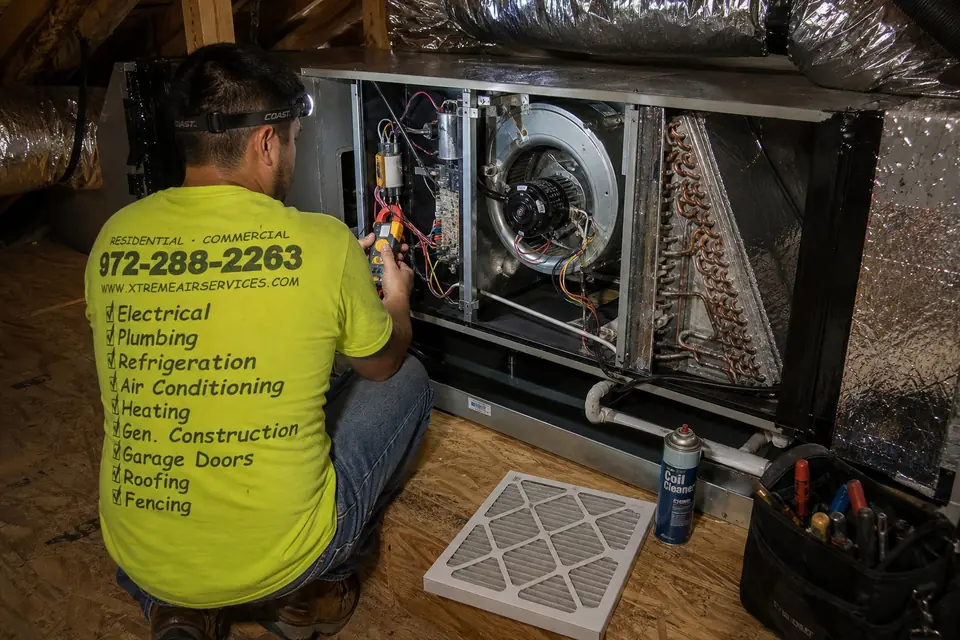
The performance check tells you whether your system is doing its job, not just turning on. That usually means measuring the temperature difference between the air going in and the air coming out, checking how much power the motors are pulling, and watching the system run through a full cycle. A unit can blow air and still be quietly losing ground, and these numbers show it before your power bill does.
The safety check protects your family. For gas heat, that includes looking for cracks or signs of carbon monoxide risk, along with checking gas and electrical connections. You don’t want to learn about a furnace problem on the first cold night after a sudden front blows through.
What’s not included is any repair work or parts. If the technician finds a weak capacitor, a refrigerant leak, or a motor on its way out, you’ll hear about it, see the price, and decide. With upfront flat-rate pricing, nothing gets replaced without your okay. You get a clear picture of your system’s health, and you stay in charge of what happens next.
Signs Your System Is Due for Service
Your system is due for service if it’s been more than a year since anyone looked at it, or if it’s started acting even a little different than it used to. Most systems don’t quit all at once. They slip a little at a time, and the early signs are easy to shrug off until a hot afternoon or a cold front shows you how far things have slid.
Here’s what to watch for:
- Your power bill is creeping up, but you haven’t changed how you set the thermostat. A system that has to work harder to do the same job costs more to run.
- The AC runs longer than it used to, or it barely keeps up on hot days when it once had no trouble.
- Some rooms are noticeably warmer or cooler than others, or the air from the vents feels weaker than you remember.
- The system turns on and off in quick bursts instead of running steady cycles.
- The house feels sticky or clammy even when the thermostat says it’s cool. Your AC is supposed to pull moisture out of the air, not just chill it.
- You hear new sounds, like rattling, buzzing, squealing, or a click that doesn’t lead to the system starting.
- You find water near the indoor unit, a stain on the ceiling below it, or ice on the copper lines running to the outdoor unit.
- Your furnace gives off a burning or musty smell that hangs around well past the first few minutes of the season.
Timing matters too, even if nothing seems wrong. The best time for AC maintenance is before you lean on it hard, so spring makes sense here, ahead of months of nonstop cooling. A heating check before the first real cold snap means you’re not finding out about a furnace problem at night when the temperature drops fast.
Before you call anyone, check two things yourself. First, pull your air filter. If it’s gray and packed with dust, swap it out. A clogged filter alone can cause weak airflow, longer run times, and even iced-up lines, and a new one costs a few dollars. Second, if your thermostat runs on batteries, replace them. If the problem clears up after that, you may not need a visit right now. We’d rather you save the money.
If the filter’s clean and the signs are still there, that’s when a maintenance visit earns its keep. Most of the items on that list trace back to the kind of wear, dirt, and drift a tune-up is built to catch.
Some signs mean you’ve moved past maintenance and need a repair. If your system won’t turn on at all, blows warm air in cooling mode, keeps tripping the breaker, or smells like burning wires, don’t wait for a routine visit. Those need a diagnosis now, and our team offers same-day service for exactly that kind of problem, with no extra charge for nights or weekends.
When Maintenance Is Not the Right Call
Sometimes a tune-up is the wrong thing to pay for. Here’s when we’d tell you to skip it, wait, or book something else.
Your system already got a full check this year and it’s running fine. If a technician went through it in the spring and nothing has changed, you don’t need a second visit just because July got hot. Keep changing your filter, keep an eye out for the signs above, and save your money until next season.
Something is already broken. If you’re seeing any of the repair signs we covered, a maintenance visit is the wrong booking. Maintenance doesn’t include repairs, so you’d pay for the tune-up and then still need the fix quoted on top of it. Ask for a repair diagnosis instead. Our service-call fee is $26-$99, and it’s credited toward the repair if you go ahead with us.
Your system was just put in. A new system should be started up and checked by whoever installed it. If yours is only a few months old and cooling well, ask your installer whether a first-season check is part of the job before you book a separate tune-up. There’s no reason to pay twice for the same look.
Your system is old and keeps needing big repairs. A tune-up keeps a healthy system healthy, but it can’t make an old one young again. Maybe you’ve already replaced a compressor or a coil, or every visit turns up something new. If so, paying for yearly maintenance may just push back a harder question. At that point, an honest talk about repairing versus replacing is worth more than another cleaning, and that’s what our AC system consultation is for.
The problem is in your ducts, not your unit. Say one room is always hot or stuffy, but the equipment checks out fine. The cause may be leaky or poorly sized ductwork, and in North Texas a lot of that ductwork runs through attics that bake all summer. Cleaning the coil won’t help air that never makes it to the room. A ductwork inspection or duct sealing is the better fit.
Your house feels muggy even after a tune-up. If your AC cools the house fast, shuts off, and leaves the air sticky, it may be too big for your home. A system that’s too large chills the air before it has time to pull out the moisture. Maintenance can’t change the size of your equipment. A cooling load calculation, which figures out how much cooling your home needs, gets to the real cause.
If none of these fit, and your system is working but due for a check, that’s when maintenance makes sense. It’s for keeping a working system on track. It isn’t a fix for every comfort problem in the house.
Ready when you are – get in touch today.
Call Today, Get Service Today. Xtreme Air Services — Irving is ready to help.
One-Time Visit vs. a Maintenance Plan
Both options get you the same visit: the inspection, cleaning, and performance and safety check we covered above. The difference is how it’s scheduled and how it’s priced. For one system, a routine maintenance visit runs $100-$200. Our typical range for maintenance work is $100-$300. Where you land depends on four things: how many systems you have, how easy they are to reach, how much buildup or neglect the technician finds, and whether it’s a one-time visit or part of a maintenance plan.
A one-time visit makes sense when:
- You have one system, and you’re good about booking a check every year on your own.
- You just bought a home and want a clear baseline on equipment someone else was in charge of.
- You plan to sell or replace the system soon and just need it running well for now.
- You skipped a year or two and want to get back on track before you decide anything bigger.
A plan usually makes more sense when:
- You know you’ll forget. Most people don’t skip maintenance on purpose. Life gets busy, and spring turns into July before you notice.
- You have more than one system, like separate units for upstairs and downstairs. The number of systems is one of the biggest things that moves the price.
- You want both cooling and heating looked at every year, not just whichever one is acting up.
- You run a business with rooftop units or several systems, where a breakdown costs you customers and comfort for your staff. That’s what our commercial preventive maintenance is built for.
Before you sign up for any maintenance plan, from us or from anyone else, get straight answers to these questions:
- How many visits a year are included, and do they cover both heating and cooling?
- Is every system in my home included, or is each unit priced on its own?
- How does the plan price compare with booking single visits?
- If the technician finds a problem, how is the repair quoted?
- Can I cancel, and what happens if I do?
If a company can’t answer those clearly, you can’t compare it fairly. When you call us, we’ll explain how our preventative maintenance plans are set up and what one would cost for your home. Then you can weigh it against a single visit and pick what fits. No pressure either way.
One more honest note on budget. Because maintenance is a smaller job, financing isn’t typically offered for it. We save financing for larger repairs and replacements. Whichever option you choose, you get licensed and insured, background-checked and drug-tested technicians and upfront flat-rate pricing you approve before any work starts.
Call 469-200-2166
Watch Our Video
See How We Handle HVAC system maintenance in Irving
Xtreme Air Services — Irving
What Happens If Repairs Are Found
If the technician finds a problem, you’ll be told what it is, why it matters, and what it costs to fix. Then you choose to fix it now, schedule it for later, or leave it alone. Repairs are quoted separately from the visit, so a finding is information. It isn’t a bill.
Not every finding is equally urgent. It helps to sort what you hear into three groups.
- Fix it now. These are safety problems, such as a cracked heat exchanger or other carbon monoxide risk on a gas furnace, scorched or melted wiring, or a gas smell near the unit. Don’t keep running the system while you think it over.
- Fix it soon. These are parts that still work but are clearly on their way out, such as a swollen capacitor, a worn contactor, a motor with squealing bearings, or a slow refrigerant leak. Your system will run for now, but these parts tend to fail under heavy load. In Irving, that load usually means the middle of summer, when your AC barely gets a break.
- Keep an eye on it. This covers minor wear, surface rust, and aging parts that still test fine. You don’t need to spend money today. The part just gets noted so it can be checked again on the next visit.
A good technician will tell you which group each finding falls into. If they don’t, ask. You should never feel like everything on the list is an emergency.
Before you approve any repair, from us or anyone else, these questions will get you a clear answer fast:
- What exactly is wrong, and can you show me? A reading, a photo, or the worn part itself.
- What happens if I wait a month? What about until next season?
- Is this a one-part fix, or is it a sign of a bigger problem coming?
- What’s the full price, including parts and labor?
Here’s a common example. Say the technician finds your system low on refrigerant. Adding more refrigerant without finding the leak only buys you time, because it’ll leak out again. Ask whether the price covers finding and fixing the leak or just topping off the system. Those are two very different jobs at two very different prices.
Timing matters here too. A part flagged during a spring visit can be replaced on your schedule, before cooling season gets going. That same part failing on a hot July afternoon, with an attic unit baking over your living room, is a much harder day. Planning the repair at a calm time usually means you’re not making a rushed choice in a hot house.
With upfront flat-rate pricing, the number you approve is the number you pay. No meter is running while the work gets done. On a bigger repair, it’s fair to take a day to think it over. If the finding is a repair-versus-replace question, that’s the honest talk covered above.
Call 469-200-2166
Frequently Asked Questions
Common questions about HVAC system maintenance
How often should my HVAC unit be serviced?
Most homes in Irving do well with one check-up a year, ideally in spring before the heavy cooling season starts. If you have both heating and cooling equipment, some homeowners split it into two visits: one for the AC in spring and one for the furnace in fall. Skipping service for several years in a row is when small issues, like a weak capacitor or a clogged drain line, tend to turn into bigger repairs.
What is the $5,000 rule for deciding on HVAC repairs?
The $5,000 rule is a quick way to decide between repairing and replacing a system. You multiply the age of your unit by the repair cost, and if that number is above $5,000, replacement usually makes more financial sense than another repair. It’s a rough guideline, not a hard law, and it works best alongside an honest look at how many repairs your system has already needed.
Is paying for regular HVAC maintenance worth it?
Yes, for most homeowners it’s worth it, especially in Irving where your AC runs for months straight every summer. Regular maintenance catches wear on parts like capacitors, coils, and drain lines before they cause a breakdown or a bigger repair bill. It also helps your system run efficiently, which keeps your power bill from creeping up without you noticing.
Ready to Get Started?
Call (469) 200-2166 Today, Get Service Today.