


Commercial Refrigeration Repair in Allen That Protects Your Inventory
Walk-in coolers, freezers and ice machines repaired by licensed refrigeration technicians – usually one part, not a whole new system.
What’s Covered on This Page
- A Warm Walk-In Cooler Is a Business Continuity Problem, Not Just a Comfort Issue
- What Happens During a Commercial Refrigeration Repair Visit
- What Drives the Cost of a Walk-In Cooler, Freezer, or Ice Machine Repair
- Why Refrigerant-Containing Equipment Requires a Certified Technician
- Checks You Can Make Before Calling a Technician
- Can I keep running my walk-in cooler while I wait for a technician?
- Why does my ice machine make thin or slow ice even though it still runs?
- Is it ever okay to just add refrigerant to a low system myself?
- What should I check myself before paying for a service call?
A Warm Walk-In Cooler Is a Business Continuity Problem, Not Just a Comfort Issue
At home, a warm fridge is a hassle. At your business, it’s lost money. Commercial refrigeration holds the product you already paid for, and every hour the box runs warm puts more of it at risk. If you run a restaurant, a bar, a grocery, or a convenience store, a cooler problem can change your whole day in a hurry.
Here’s what’s really on the line when the cooler slips:
- Inventory you may have to throw out, from produce and dairy to meat and frozen stock.
- Menu items you can’t sell, which means turning customers away or cutting your hours.
- Staff time spent moving product, checking temperatures, and calling around for help.
- Health inspection trouble if your stored food can’t be kept at a safe temperature.
Most cooler failures give you a warning before they become an emergency. You might notice the box feels warmer than normal when you step in. The compressor might run and run without shutting off. You could see frost or ice building up on the coil inside, water pooling on the floor, or a door that won’t seal tight. A loud or new noise from the unit on the roof or out back is worth paying attention to, too.
North Texas summers make all of this worse. When it’s blazing hot outside, the condensing unit that pushes heat out of your cooler has to work much harder. A dirty coil, a weak fan motor, or a tired part that got by in spring can finally give out in July, often right in the middle of a busy week.
That’s why speed and accuracy matter more than anything else here. You don’t need someone who guesses, swaps parts, and comes back three times. You need a technician who finds the part that failed, repairs or replaces it, and checks that the system holds temperature before leaving. Most of our commercial refrigeration calls come down to a single common failure that gets fixed on the first visit. That’s the outcome that gets your kitchen or store back on track.
Breakdowns don’t wait for business hours, and you shouldn’t have to either. Our phones are answered around the clock by a real person, same-day service is available, and there’s no extra charge for nights or weekends. Our licensed, background-checked technicians come out of our office at 1333 W McDermott Dr in Allen, so help isn’t coming from across the Metroplex.
Before you call, jot down what you’ve noticed: the temperature on your thermometer, when it started climbing, and any ice, water, or noises. Those details help our team get to the cause faster once we’re on site.
What Happens During a Commercial Refrigeration Repair Visit
You want to know two things when a technician walks into your kitchen or stockroom. What’s wrong, and what will it cost to fix? A good repair visit answers both before any work starts. Here’s how it goes, step by step.
The visit starts with a service-call fee of $26-$99. That fee covers getting a technician to your door. If you go ahead with the repair through Xtreme Air Services, it’s credited toward the job, so you aren’t paying twice.
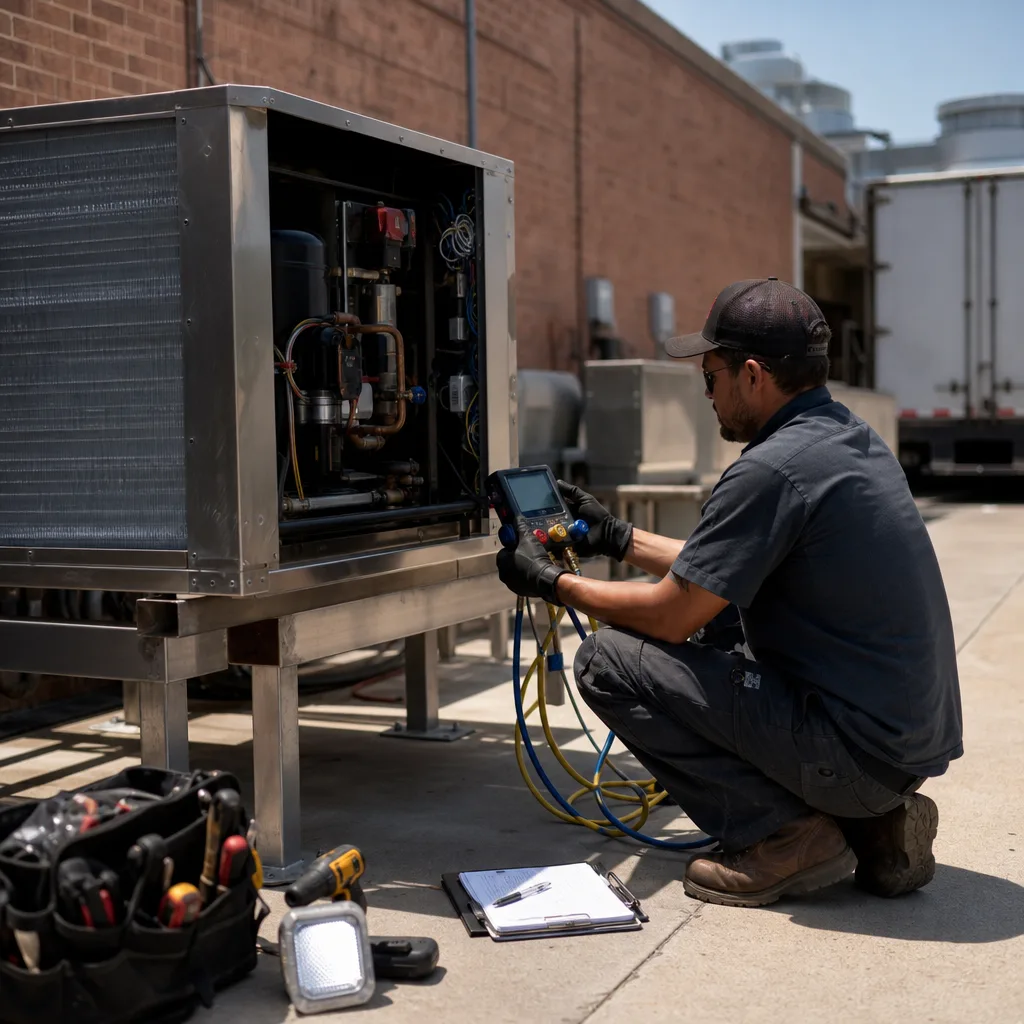
Next comes the part that matters most, which is finding the failed part. A walk-in cooler, reach-in, or ice machine is a system. A warm box can trace back to many different spots, and a careful tech checks the usual suspects before naming a cause:
- The condensing unit outside or on the roof, including a dirty coil or a fan motor that’s quit
- Electrical parts like capacitors, contactors, and controls that tell the system when to run
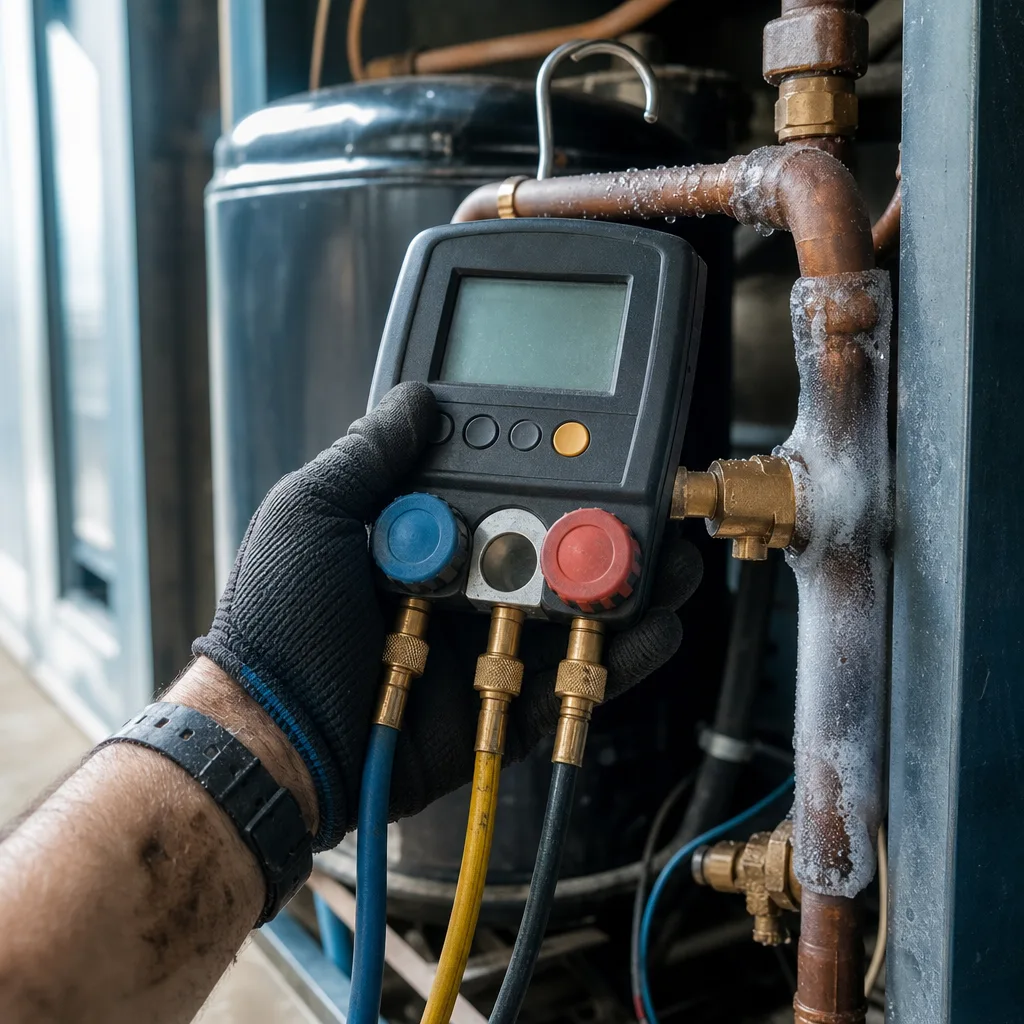
- Refrigerant pressures, which can point to a leak or a weak compressor
- The defrost system, if ice is choking the evaporator coil inside the box
- Door gaskets, hinges, and closers that let warm air sneak in all day
Once the cause is clear, you get the price up front. We use upfront flat-rate pricing that you approve before work starts. There’s no meter running while you decide, and no surprise line items later. A standard repair includes diagnosis, labor, and the standard replacement part, plus testing and cleanup.
For the most common job, which means locating one failed part, repairing or replacing it, and verifying the system runs correctly, the price is typically $300-$2,400. Across all commercial refrigeration work, our typical range is $300-$5,000. Most calls are a single common failure fixed on the first visit.
After the repair, the job isn’t done until the system proves it’s working. A properly verified repair means watching the unit cycle and pull the box back down toward its set temperature, not just hearing it switch on. That check is what keeps you from making a second call at 9 p.m. on a Friday.
Sometimes the problem is bigger than one part. Your price can move with the extent of the failure, part cost and availability, equipment age and brand, and whether more than one component has failed. Additional failed parts, major components, code upgrades, and permits aren’t part of a standard repair. If your situation needs any of them, they’re quoted separately so you can decide with the full picture in front of you.
If you’re facing a larger job, flexible financing is available on qualifying installations and larger jobs, on approved credit. And the clock doesn’t change the price. A breakdown during Saturday dinner rush costs the same as one on Tuesday morning, because we charge no extra for nights or weekends.
Call 469-299-8996
What Drives the Cost of a Walk-In Cooler, Freezer, or Ice Machine Repair
Two coolers can show the same warm temperature and end up with very different bills. The price depends on which part failed, how hard it is to get, and what else that failure took down with it. Here’s what moves the number, in plain terms.
The biggest factor is which part quit. A small electrical part like a capacitor or contactor sits at the low end of most repairs. A condenser fan motor or an evaporator fan motor costs more, but it’s still a routine fix. A compressor is the heart of the system and usually the most expensive part to replace. A refrigerant leak adds steps, because the leak has to be found and sealed before the system gets recharged.
Each kind of equipment has its own weak spots:
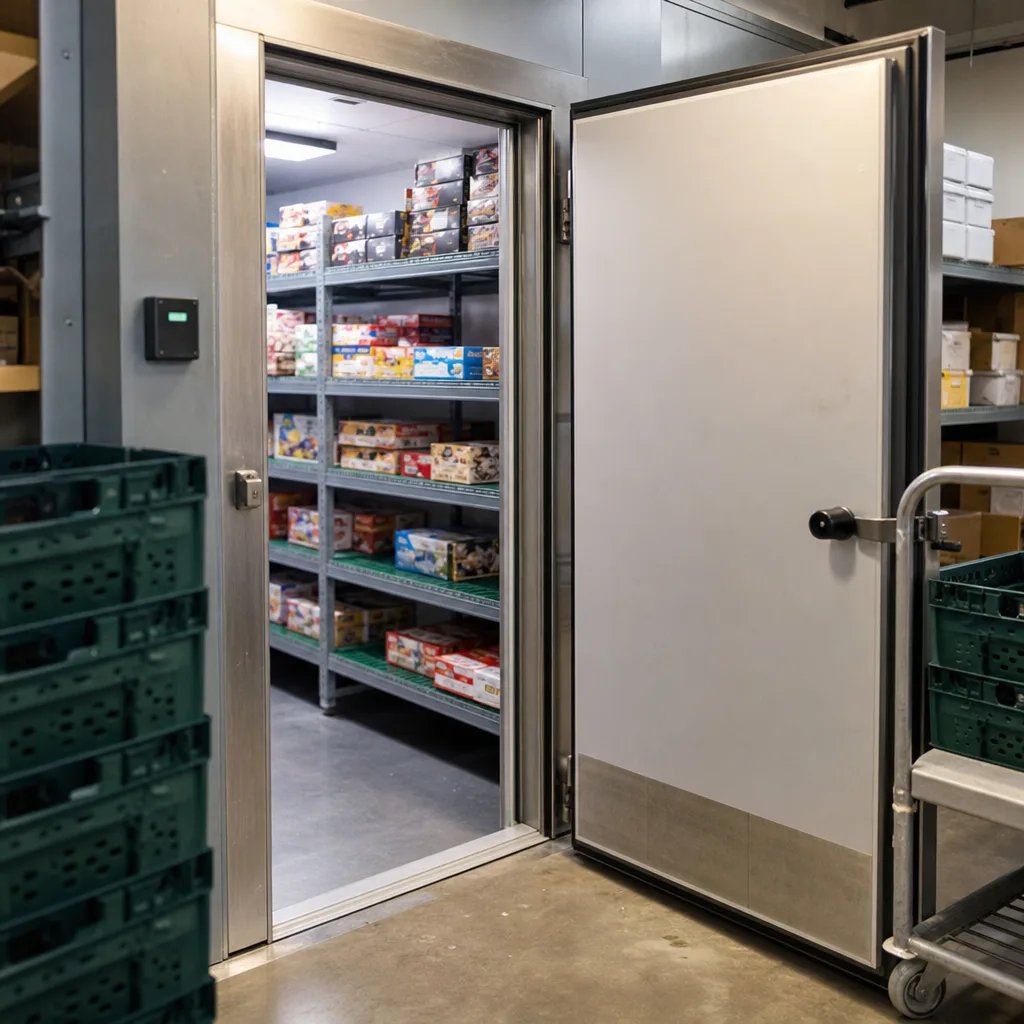
- Walk-in coolers often come down to fan motors, door gaskets, door closers, or a dirty condenser coil that made everything else work too hard.
- Walk-in freezers add the defrost system. A failed defrost heater, timer, or control lets ice choke the coil, and you may also need a drain line heater checked.
- Ice machines are sensitive to scale. North Texas has hard water, and mineral buildup on the evaporator plate, water pump, or valves can slow ice production long before the machine stops cold.
Age and brand matter because of parts. A common part for a newer unit can often be found locally. A part for an older or less common model may have to be ordered, which can raise the cost and stretch the timeline. Some older systems also run on refrigerants that are being phased down, which can make them harder to find and pricier to recharge.
One failure can cause another. A condenser fan that quits on a 100-degree afternoon can push the compressor past its limits. A leak left alone can starve the compressor of the oil and cooling it needs. That’s how a single-part repair turns into a multi-part job, and it’s the best reason to call when you first notice warning signs instead of waiting for the box to fail completely.
Sometimes repair isn’t the smart money. If an older unit needs a compressor and has a history of leaks, putting a big repair into it may not pay off. A good technician should tell you that straight and let you weigh a repair against replacement, not just fix whatever’s in front of them.
Before you hire anyone, ask these questions:
- Is this a flat price for the whole repair, or an hourly rate plus parts?
- Which part failed, and did it cause damage anywhere else?
- Is the part in stock, or does it need to be ordered?
- If a second problem shows up mid-repair, will you stop and quote it before going ahead?
- Given the age of my unit, would you repair it or replace it?
Clear answers to those questions tell you a lot about who you’re dealing with. You should know what failed, why it costs what it does, and what your options are before you sign off on anything.
Not sure what your Commercial refrigeration project needs? Ask us.
Call Today, Get Service Today. Xtreme Air Services — Allen is ready to help.
Why Refrigerant-Containing Equipment Requires a Certified Technician
Your walk-in, reach-in, or ice machine moves heat with refrigerant. That’s the chemical that soaks up heat inside the box and dumps it outside. It’s also the part of the system the law doesn’t let just anyone touch. Under federal rules from the EPA, a person who opens a refrigerant system to service it has to be certified to handle refrigerant.
That rule isn’t red tape for its own sake. It protects your equipment, your staff, and your wallet.
Here’s what a certified technician knows how to do that a general handyman usually doesn’t:
- Recover refrigerant with the right machine instead of letting it escape into the air. Venting it on purpose isn’t allowed.
- Read system pressures correctly, so a low charge gets traced to a real cause and isn’t just guessed at.
- Use the exact refrigerant your unit was built for. Mixing types can damage the compressor and leave you with a system no one can service cleanly.
- Work safely around high-pressure lines, which can cause frostbite-type burns if a fitting lets go.
- Handle newer refrigerants found in many reach-ins and ice machines, some of which are flammable and call for extra care around sparks and tools.
The most common shortcut we warn owners about is the quick top-off. If your system is low, the refrigerant went somewhere. Adding more without finding the leak, as covered above, only buys you a few days or weeks. Then the box runs warm again, often on a busier day, and you’ve paid twice. It’s also how a small leak ends up taking a compressor with it.
That doesn’t mean you have to call someone for every little thing. Some checks are fair game for you or your staff, as long as nobody opens up the sealed system:
- Make sure the unit has power and the breaker hasn’t tripped.
- Check that the thermostat or controller wasn’t bumped to a new setting.
- Look at the door gasket for tears and make sure the door closes all the way.
- Keep boxes, trash, and stock away from the condensing unit so it can breathe, which matters a lot in a North Texas summer.
- Avoid stacking product against the evaporator fans inside the box.
If one of those fixes it, great. You didn’t need us. If the box is still warm, you’re hearing hissing, you smell something odd, or you see oily spots around the copper lines, stop there. That’s refrigerant territory.
Before anyone works on your system, ask a few plain questions:
- Are you certified to handle refrigerant, and will you show me proof?
- Are you licensed and insured for HVAC and refrigeration work in Texas?
- If my system is low, will you find the leak before you add refrigerant?
- Will you recover any refrigerant you remove instead of venting it?
A real pro won’t mind any of these. Xtreme Air Services is licensed and insured, with Texas HVAC License #TACLA29023C, and our background-checked technicians would rather answer your questions up front than leave you wondering who’s working on the equipment that protects your inventory.
Watch Our Video
See How We Handle Commercial refrigeration in Allen
Xtreme Air Services — Allen
Checks You Can Make Before Calling a Technician
A few minutes of looking can save you a service call, or at least make the one you need go faster. You’ve already got the basics from the section above: power, breaker, controller setting, door gasket, and airflow around the units. Here are a few more checks that are safe for you or your staff to do, as long as nobody opens up the sealed system.

Start by making sure the box is really warm. A wall thermometer that got knocked loose or sits right by the door can read high. Put a separate thermometer on a middle shelf, wait 15 minutes, and compare. Then check the product itself, not just the air. If both read warm, you have a real problem.
- Think about the last few hours. Was the door propped open for a delivery or restock? Did someone load a big batch of warm product at once? A box can take a while to catch up after a heavy load on a hot Allen afternoon.
- Look at the strip curtain, if you have one. Torn or missing strips let warm air pour in every time the door opens.
- Check the evaporator coil inside the box. A thin layer of frost is normal. A solid block of ice isn’t, and it usually points to a defrost or airflow problem that needs a technician.
- Look for water under or around the evaporator. A clogged drain line can back up and spill, and in a freezer that water turns to ice fast.
- For an ice machine, make sure the water supply valve is open and the water filter isn’t long overdue. A machine that has water but makes thin or slow ice is often fighting scale, which hard North Texas water speeds up.
Don’t try to chip ice off the coil with a knife or screwdriver. It’s easy to puncture a tube, and that turns a defrost problem into a refrigerant leak.
While you wait, protect what you can. Keep the door closed as much as possible. Move your most valuable or most sensitive product, like meat, seafood, and dairy, into a reach-in or freezer that’s still holding temperature. Write down the temperature and the time every 30 minutes or so. That log helps you decide what’s safe to keep, and it gives the technician a clear picture of how fast the box is losing ground.
If your checks turn up a simple cause and the box pulls back down, you’re done. If it keeps climbing, if the coil is iced solid, or if you notice any of the refrigerant warning signs covered earlier, it’s time to call. Have your temperature log, the unit’s make and model from its data tag, and what you’ve already tried ready. That way the technician can start on the real cause instead of repeating your checks.
Call now
Frequently Asked Questions
Common questions about Commercial refrigeration
Can I keep running my walk-in cooler while I wait for a technician?
You can keep it running, but close the door as much as possible to limit warm air getting in. Move your most sensitive stock, like meat, seafood, and dairy, into another unit that’s still holding temperature. Check and log the temperature every 30 minutes so you know how fast you’re losing ground and can share that log with your technician.
Why does my ice machine make thin or slow ice even though it still runs?
This usually points to scale buildup rather than a refrigerant problem. Allen’s hard water leaves mineral deposits on the evaporator plate, water pump, or valves, and that scale slows ice production long before the machine stops working. Checking the water filter and supply valve is safe to do yourself, but clearing scale inside the sealed system is a job for a certified technician.
Is it ever okay to just add refrigerant to a low system myself?
No, topping off refrigerant without finding the leak only buys you a few days or weeks before the box runs warm again. If your system is low, the refrigerant had to go somewhere, and a real fix means locating and sealing that leak first. Federal rules also require a certified technician to handle refrigerant, since mishandling it can damage the compressor or create a safety hazard.
What should I check myself before paying for a service call?
Start with power, the breaker, and the thermostat setting, since a bumped control or tripped breaker causes more warm-box calls than you’d expect. Check the door gasket for tears and make sure stock isn’t blocking airflow around the condensing unit or evaporator fans. If those checks don’t fix it, or you see heavy ice, water pooling, or hissing, it’s time to call for refrigerant-level repairs.
Ready to Get Started?
Call (469) 299-8996 Today, Get Service Today.