


Boiler Installation in Allen: Is It the Right Call for Your Property?
Boiler installs for buildings that heat with water, with what's included and what drives the cost explained.
What’s Covered on This Page
- Confirm You Need Boiler Installation, Not Furnace Replacement
- Know the Signs Your Boiler Needs Full Replacement, Not Repair
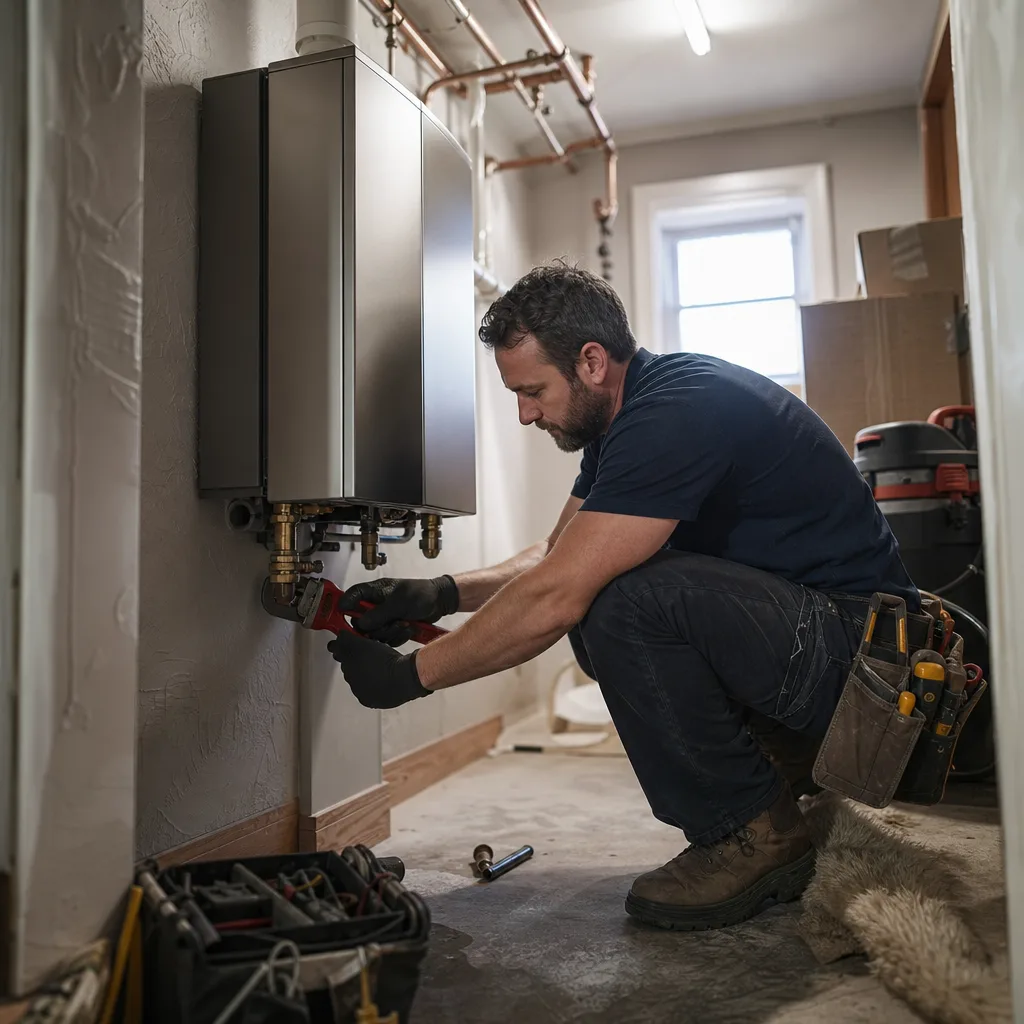
- What a Standard Boiler Installation Includes
- What Happens During Your Boiler Installation
- Questions to Ask Before You Hire Anyone for Boiler Installation
- What do you call a technician who installs or fixes boilers?
- Do plumbers handle boiler installation, or is that an HVAC job?
- Can a plumber fix a gas boiler, or do I need a different pro?
Confirm You Need Boiler Installation, Not Furnace Replacement
Before you price out a new boiler, take two minutes to make sure that’s what you have. Lots of people call any heating unit “the boiler.” But a boiler and a furnace do very different jobs, and swapping one for the other costs a lot more than replacing like with like.
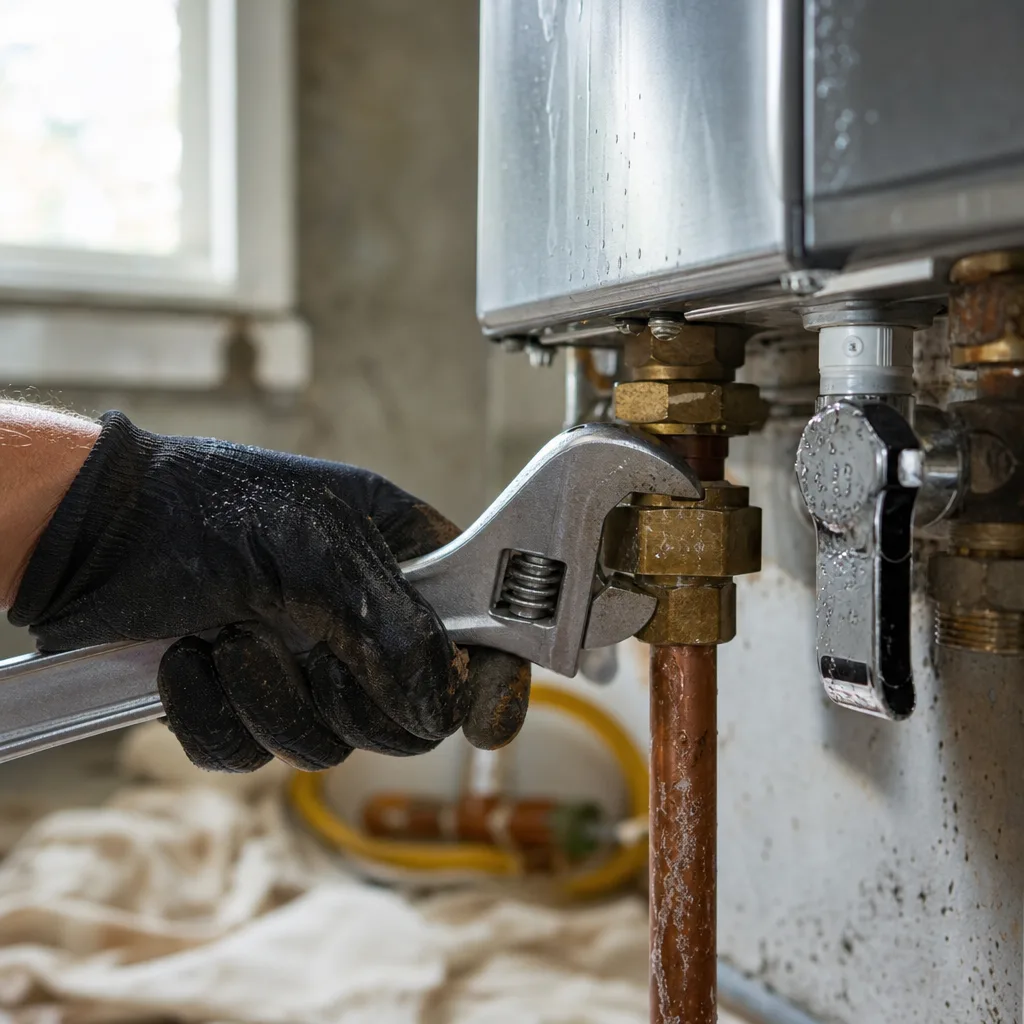
Most North Texas homes heat with forced air. That means a furnace or heat pump, often up in the attic or in a hall closet, blowing warm air through ducts. Boilers show up more in some older homes, in buildings with radiant floor heat, and in commercial spaces. So if you’re in a typical Allen house with vents in every room, there’s a good chance a boiler isn’t what you need.
You likely have a boiler if you see:
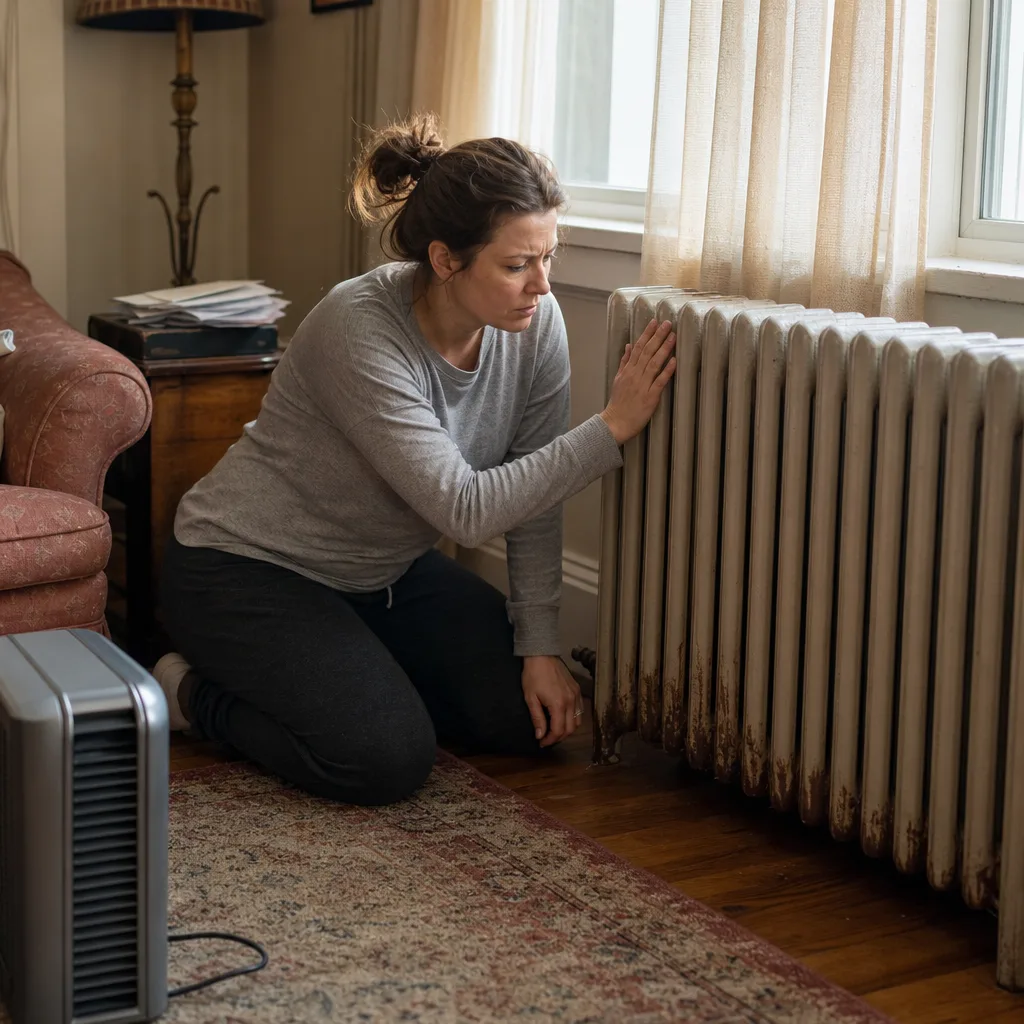
- Radiators or long, low baseboard heaters along your walls
- Warm floors with no vents anywhere in the room
- A unit with water pipes coming in and out, plus a pressure gauge on the front
- A small tank hanging near the unit (that’s an expansion tank, which gives the hot water room to grow)
- No air filter slot and no ductwork running from the unit
You likely have a furnace if you see:
- Supply vents in your floors, walls, or ceilings that blow warm air
- A filter you change every few months
- Large metal ducts or flex ducts connected to the unit
- The same vents that cool your home in summer
One more mix-up we should clear up. A tall tank in your garage that makes hot water for showers and sinks is a water heater, not a boiler. If that’s the unit giving you trouble, you need water heater help instead.
Here’s the honest part. Even if you do have a boiler, you might not need a new one. A boiler that won’t fire, leaks a little, or loses pressure can often be fixed. A bad pump, valve, or control is a repair job, not a reason to replace the whole system. If your boiler is still in decent shape, ask about boiler repair first and let a technician tell you plainly if it’s worth fixing.
Replacement starts to make sense when the boiler keeps breaking down, has a cracked heat exchanger or a leaking body, or can’t keep your space warm anymore. That’s when installation is the right call, and it’s what the rest of this page covers.
What if you don’t have a boiler but want one? Say you’d like warm floors in a new addition, or you’re upgrading a commercial building. That isn’t a simple swap. It’s a design job that may involve radiant heating or hydronic heating installation, new piping, and sizing from scratch. Expect it to fall outside the standard like-for-like installation price. Our team can walk you through boiler system design if that’s where you’re headed.
Know the Signs Your Boiler Needs Full Replacement, Not Repair
A boiler rarely quits all at once. It usually drops hints over a few heating seasons. One repair is normal. A pattern is what you want to watch for. These are the signs that point toward a new boiler instead of another fix.
- Water coming from the boiler itself. A drip at a valve or fitting is a repair. Water seeping from the cast iron sections or the heat exchanger usually can’t be patched in a way that lasts. The heat exchanger is the part that moves heat from the flame into the water.
- A repair every winter. If you paid for a fix last season and the season before that, you’re buying the boiler back one piece at a time.
- Parts that are hard to find. Older boilers can use controls and parts the maker no longer produces. When a technician has to hunt for a part or rig a workaround, your next breakdown could mean days without heat.
- Gas bills going up while your habits stay the same. AFUE is a rating that tells you how much of your fuel turns into heat. An older boiler with a low AFUE sends more of your money up the flue, and wear makes that worse over time.
- Rooms that won’t warm up. If you’ve bled the radiators and some still stay cool, the boiler may not be keeping up anymore, or buildup inside may be blocking heat.
- Pressure that keeps dropping. A boiler that needs topping off all the time is leaking somewhere, even if you can’t see it.
- Rust, water stains, or flaking metal around the base or on the cabinet.
That pressure problem matters more here than you might think. North Texas water is hard. In a sealed boiler loop that rarely takes on new water, that’s not a big deal. But a boiler that keeps losing pressure keeps pulling in fresh water full of minerals and oxygen. Minerals leave scale on the inside surfaces, and oxygen speeds up rust. Scale works like a blanket. Your boiler burns more gas to push out the same heat, and hot spots can stress the metal until it cracks. So in Allen, a slow pressure leak isn’t something to live with for years.
Our winters also play a part. They’re mostly mild, broken up by sudden cold fronts. A boiler can sit for months and then get asked to run hard all night when the temperature drops. That stop-and-start pattern is when a tired boiler shows its weak spots, and a freezing night is the worst time to be shopping for a new one.
When it’s a close call, look at two things together: how old the boiler is and how big the repair is. A major repair on an older boiler that’s showing other signs from the list above is usually money better spent on a new one. A single failed part on a boiler that’s otherwise healthy is worth fixing, as we covered earlier. A good technician should lay out both options and explain the reasoning, not just hand you the bigger ticket.
If you run a business, there’s one more thing to weigh, and that’s downtime. If your boiler heats tenants, a restaurant, or a shop floor, a breakdown during a cold snap can cost more than the repair bill. Replacing a boiler on your own schedule is a lot easier than an emergency swap with people waiting on heat.
What a Standard Boiler Installation Includes
Once you know it’s time for a new boiler, the next question is simple: what do you get for the money? Here’s the plain answer, so you can read any quote with confidence.
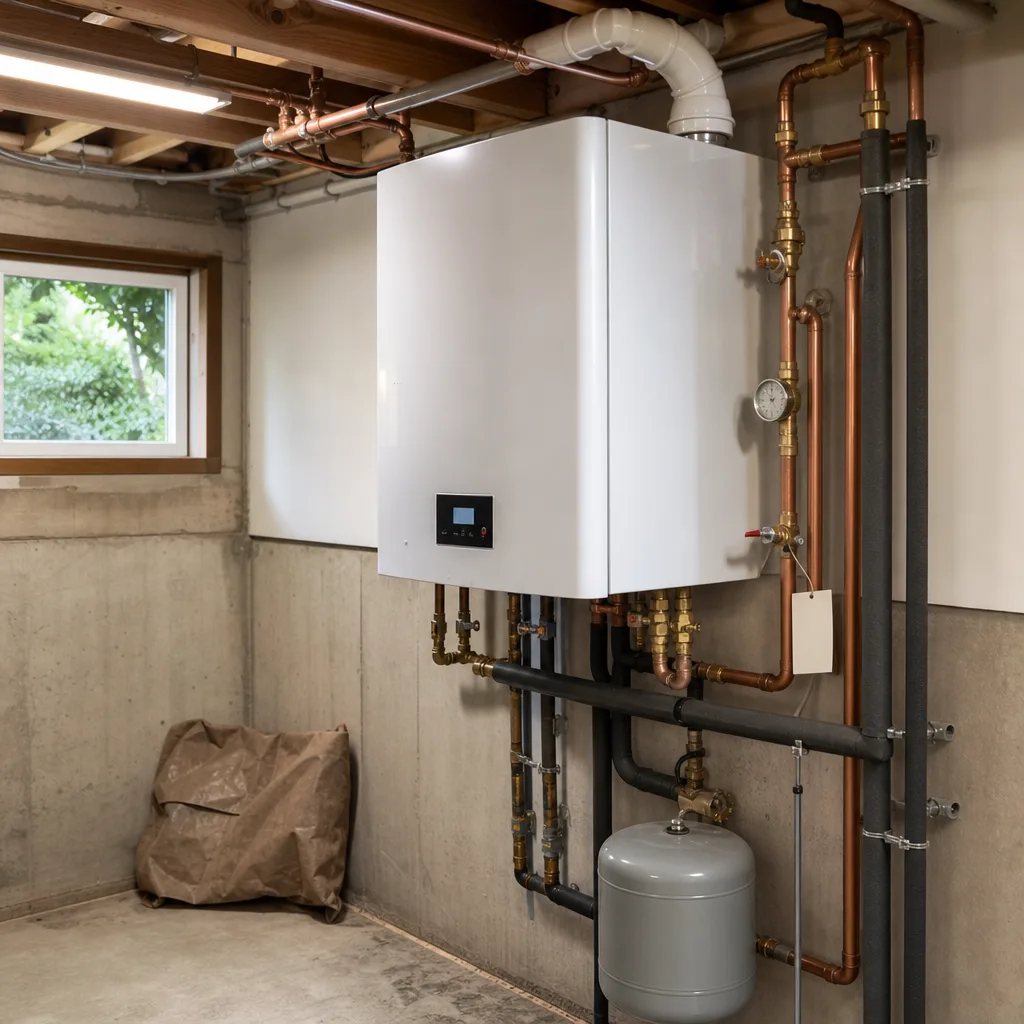
Our most common boiler job is a standard like-for-like installation. That means the new boiler goes where the old one was and hooks up to the connections you already have, with no major changes to your piping, wiring, or venting. For that kind of job, the price runs $8,800 to $14,500.
A standard installation includes:
- The new boiler and the materials needed to put it in
- Professional installation by our licensed team
- Standard connections to your existing system
- Startup and testing, so the boiler is running and checked before we leave
- Haul-away of your old unit, so it isn’t left sitting in your garage or mechanical room
Some work isn’t part of the standard price unless your quote says so:
- Changes to plumbing, electrical, or ductwork
- Code corrections, meaning fixes needed to bring older work up to current rules
- Permits
We spell this out because it’s where surprise charges tend to come from. An older boiler may have been installed under rules that have since changed, and that can affect the venting, gas piping, or wiring. If that’s the case at your place, you should hear about it before any work starts, not after.
Across all our boiler jobs, from simple swaps to bigger projects, prices typically range from $6,000 to $20,000. A few things decide where your job lands in that range:
- Size and capacity. A boiler has to be sized to heat your space. Bigger output costs more.
- Efficiency. A higher AFUE boiler usually costs more up front and can cut your gas bills over time.
- Brand and model.
- Ease of access. A boiler in a tight closet or hard-to-reach basement takes more labor than one in an open utility room.
- Condition of what’s already there. Worn piping, wiring, or connections may need work before a new boiler can go in.
- Code upgrades and permits.
- Custom fabrication, such as piping or parts built to fit an unusual setup.
If you’re replacing a boiler in a commercial building, expect the cost to run higher than a home job. Commercial boilers are larger and often tie into more complex piping, controls, and building systems.
Paying for a new boiler all at once can be tough, especially when the old one quits during a cold snap. Flexible financing is available on qualifying installations and larger jobs, on approved credit.
Before you hire anyone for boiler work, ask these questions:
- Is this a like-for-like swap, or will my piping, venting, or wiring need changes?
- Are permits included, or are they extra?
- Is removal of the old boiler part of the price?
- What size boiler are you recommending, and how did you figure that out?
- Is the price set before you start, or could it change once work begins?
A contractor who answers these clearly, up front, is one you can trust in your home. We work on upfront flat-rate pricing, so you approve the price before any work begins.
Have questions? We’re happy to help.
Call Today, Get Service Today. Xtreme Air Services — Allen is ready to help.
What Happens During Your Boiler Installation
A good boiler installation starts before anyone picks up a wrench. If you know the steps, you can tell a careful job from a rushed one. You’ll also know how to get your home or building ready.
Step one is sizing. A new boiler shouldn’t just match the number on the old one’s label. That boiler may have been too big from day one, or your home may have changed since then with new windows, more insulation, or an added room. A proper sizing looks at your square footage, how well the space holds heat, and how many radiators or radiant zones the boiler has to feed. A boiler that’s too big turns on and off all day, wastes gas, and wears out sooner. A boiler that’s too small can’t keep up on the coldest nights.
Once you approve the price, the work itself goes in this order:
- Shutting it down. The gas, water, and power to the old boiler get turned off so the space is safe to work in.
- Draining and removing the old unit. The water in the system gets drained, and the old boiler is disconnected and carried out.
- Setting the new boiler. It goes in place, level and with enough room around it for future service.
- Making the connections. Water piping, the gas line, the vent, and the wiring to your thermostat or controls all get hooked up.
- Filling and bleeding. The system is refilled, and trapped air is pushed out of the pipes and radiators. Air left in the loop causes gurgling, cold spots, and rust over time.
- Startup and testing. The boiler gets fired up and checked to make sure it heats properly, holds the right pressure, and vents its exhaust safely outdoors.
In Allen, the fill step deserves extra care. Our hard water carries minerals that build up as scale inside a boiler, as we covered above. Many installers flush the old piping before the new boiler goes in, so sludge from the old system doesn’t end up coating the new one. It’s worth asking about this when you get your quote.
A straight like-for-like swap often wraps up in a day or two. If the job needs new venting, piping changes, or permit inspections, it can take longer. Your heat will be off while the work is going on, so plan around the forecast if you can. North Texas cold fronts can drop the temperature fast, and a replacement scheduled on a mild week is a lot easier on your family than one done during a freeze.
To get ready, clear a path from the door to the boiler, move anything stored near it, and keep pets in another room. If you manage a commercial building, give tenants or staff a heads-up about when the heat will be off.
Before the installer leaves, ask for a quick walk-through. You should know where the pressure gauge sits and what a normal reading looks like. You should also know how your thermostat or controls work with the new boiler, and who to call if something seems off. A clear, unhurried explanation at the end is a good sign the job was done right the first time.
Watch Our Video
See How We Handle Boiler installation in Allen
Xtreme Air Services — Allen
Questions to Ask Before You Hire Anyone for Boiler Installation
You already have the price and scope questions from above. These next ones tell you something different: whether the person standing in your home is qualified, careful, and still going to pick up the phone after the check clears.
- What’s your Texas license number? HVAC contractors in Texas are licensed through the Texas Department of Licensing and Regulation, also called TDLR. A real contractor will give you the number without a pause, and you can look it up yourself.
- Are you insured, and can I see proof? A boiler job involves gas, water, and heavy equipment. If something goes wrong, you want the contractor’s insurance covering it, not yours.
- Who will do the install? Ask whether the person who quoted the job will do it, or whether it goes to a subcontractor you’ve never met. You should know who’s coming into your home.
- How will you check the venting and exhaust at startup? A boiler burns gas, and its exhaust has to leave the building safely. Ask how they confirm the vent is sound and the burner is running clean before they call the job done.
- If you find a hidden problem, what happens next? Old valves, corroded pipe, or venting that doesn’t meet today’s rules can turn up once the old boiler comes out. The right answer is that they stop, show you, and price it before doing anything extra.
- If my old boiler already quit, how soon can you start? With no heat during a North Texas cold front, a week’s wait is a long time.
- Who do I call if something goes wrong at 2 a.m. next winter? Ask whether nights and weekends cost more. A contractor who only answers during business hours leaves you stuck on the coldest night of the year.
Watch how they answer, not just what they say. A contractor who gets vague about licensing or rushes past the safety question is telling you something. Same for one who won’t put the price in writing before work starts.
Here’s how we answer those questions. Xtreme Air Services is licensed and insured, and our HVAC license number is TACLA29023C. Our technicians are background-checked, so you know who’s coming through your door. We work on upfront flat-rate pricing. That means you see and approve the price before we start, and if we find something unexpected, you hear about it first.
If your boiler has already failed, same-day service is available. There’s no extra charge for nights or weekends. We’re also a Trane Comfort Specialist, with a 4.8-star reputation across more than 2,900 reviews on Google, Angi, and HomeAdvisor.
Our office is on W McDermott Dr in Allen, so we’re close by when you need us. We also handle plumbing and electrical under one roof. If your boiler job turns up a gas line or wiring problem, you won’t have to find and schedule a second company to fix it.
Call 469-299-8996
Frequently Asked Questions
Common questions about Boiler installation
What do you call a technician who installs or fixes boilers?
A technician who works on boilers is usually called a boiler technician or a hydronic heating specialist. Some HVAC contractors also handle boilers, since both trades deal with heating systems, gas lines, and venting. Ask any contractor directly whether boiler work is part of their regular service, since not every HVAC company installs them.
Do plumbers handle boiler installation, or is that an HVAC job?
Both trades can handle boiler work, since a boiler installation involves water piping, gas lines, and heating controls. Plumbers often cover the water and gas piping side, while HVAC contractors handle sizing, venting, and heating performance. The safest move is to ask a contractor if they do full boiler installations, not just plumbing repairs.
Can a plumber fix a gas boiler, or do I need a different pro?
A plumber can fix some gas boiler issues, especially ones involving water piping or gas line connections. But gas boiler work also touches venting, combustion safety, and heating controls, which fall under HVAC licensing in Texas. For full installation or diagnosis of why a boiler won’t heat properly, a licensed HVAC contractor is usually the better call.
Ready to Get Started?
Call (469) 299-8996 Today, Get Service Today.