


Boiler Replacement in Allen: Is It Really a Boiler or a Furnace?
Boiler replacements for hot-water heating systems, with what's included and when a failing boiler becomes an emergency.
What’s Covered on This Page
- Boiler Replacement Means a Hydronic or Steam System, Not a Furnace
- Signs a Boiler Needs Full Replacement, Not Repair
- When Repair or Servicing Is the Better Call
- Who Should Handle Boiler Replacement in a Commercial or Mechanical Building
- What Happens During a Boiler Replacement
- Is boiler repair considered plumbing work?
- Do you need a permit to remove or replace a boiler in Allen?
- Can any plumber fix a boiler, or do I need someone else?
Boiler Replacement Means a Hydronic or Steam System, Not a Furnace
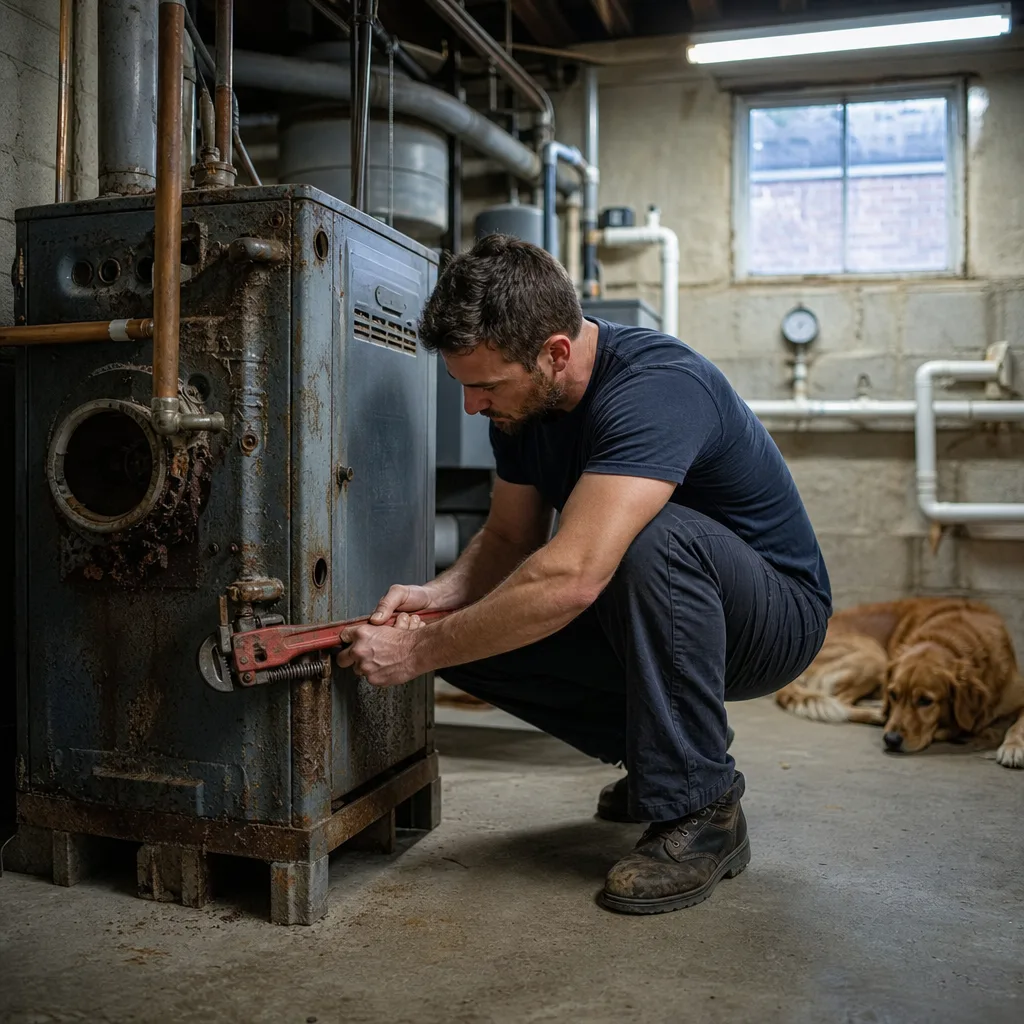
Here’s the honest starting point. A good boiler replacement in Allen begins with knowing exactly what you have. Most homes around North Texas heat with a forced-air furnace or a heat pump, so plenty of people say “boiler” when they mean “furnace” or “water heater.” That mix-up matters. If the system gets named wrong on the first call, you can end up with a quote for equipment your home doesn’t use.
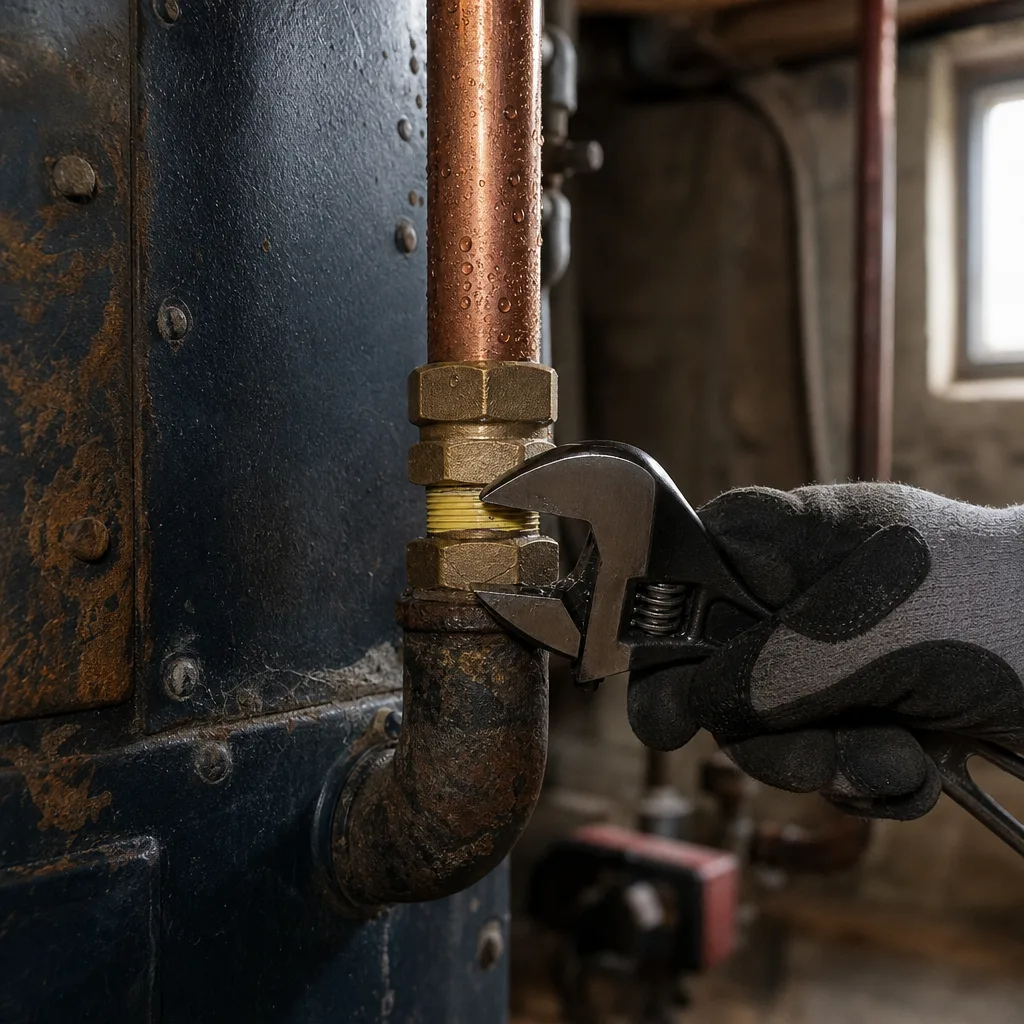
A boiler doesn’t blow air. It heats water, or in older systems turns water into steam, and moves that heat through pipes. The heat comes out of radiators, baseboard units along the walls, or tubing under the floor. That last one is called radiant heat, and you’ll find it in some custom homes and commercial buildings. A furnace does the opposite job. It warms air and a blower fan pushes it through ductwork to the vents in each room.
You can usually tell which one you have in a few minutes. Look for these signs of a boiler:
- No air comes out of floor or ceiling vents when the heat is on.
- You have radiators or low metal baseboard units along the walls, or your floors feel warm.
- The unit has a gauge that shows both pressure and temperature, plus pipes running in and out of it.
- There’s a small tank on the piping, called an expansion tank, that gives the heated water room to grow.
- A small pump, called a circulator, sits on the pipes and moves hot water through the house.
- On a steam system, you’ll see a glass tube showing the water level, and you may hear hissing or clanking at the radiators.
If you see a filter slot, a big blower, and ducts coming off the top or side, that’s a furnace. Our furnace replacement page walks through that job.
One more common mix-up: a water heater isn’t a boiler, even though both heat water. A water heater feeds your showers and sinks. A boiler feeds your heating loop. Some setups use one appliance for both jobs, and that changes what a replacement involves.
Boilers also carry their own efficiency rating. You’ll see AFUE on the label. In plain English, it tells you how much of the fuel you pay for turns into heat in your home instead of going up the vent. A higher number means less waste. It’s one of the things worth comparing when you replace an old unit.
Why spend time on this? A boiler replacement isn’t a furnace swap with a different name. It means matching water or steam capacity, piping, pumps, and venting to what’s already in your walls and floors. Get the system type right first. Every step after that, from the quote to the install, starts on solid ground.
Signs a Boiler Needs Full Replacement, Not Repair
Not every boiler problem means you need a new boiler. Plenty of them come down to one worn part that a technician can swap in an afternoon. The real question is whether the boiler itself is failing, or just something attached to it.
Here’s the simple way to think about it. A boiler has a body, the part that holds and heats the water, and a lot of smaller parts around it. When the smaller parts fail, you repair. When the body fails, you’re usually looking at replacement.
These are the signs that point toward full replacement:
- Water leaking from the boiler itself, not from a valve or fitting. A crack or rust-through in the body or heat exchanger usually can’t be patched safely.
- Heavy rust, flaking metal, or a puddle that keeps coming back under the unit no matter what gets tightened.
- You keep adding water or resetting the pressure, and the system won’t hold steady for long.
- Repair calls are stacking up, one part after another, season after season.
- Parts for your model are hard to find or have to be special-ordered, which turns a small fix into a long, cold wait.
- Your heating bills keep climbing even though you’re using the boiler the same way. An older, low-efficiency unit wastes more of the fuel you pay for, the gap that AFUE measures.
- Some rooms stay cold even after the radiators get bled and the pump checks out fine.
North Texas adds a couple of twists. Our hard water leaves mineral scale inside boilers over time, and that scale makes the unit work harder and heat less evenly. A scaled-up boiler can sometimes be cleaned, but heavy buildup inside an old heat exchanger is often a sign the unit is near the end.
Our mild winters play a part too. A boiler in Allen can sit idle for months, then get pushed hard the moment a cold front blows through. Weak spots that stayed quiet all fall tend to show up on that first cold night. If yours struggled through the last hard freeze, take that seriously before the next one.
Now the other side, because you deserve a straight answer. These problems are usually repairs, not reasons to replace:
- A circulator pump that hums but won’t move water.
- A waterlogged or failed expansion tank.
- A pressure relief valve that drips.
- An ignitor, flame sensor, or thermostat that’s stopped working.
- Air trapped in the lines that makes radiators gurgle or stay cool at the top.
If the boiler body is sound and the fuel bills look reasonable, fixing one of these parts is often the smarter call. There’s no reason to replace a solid boiler because a pump wore out.
Where it gets harder is the middle ground. Say the unit is older, it needs a pricey part, and it’s already had a few repairs. That’s when it helps to look at the whole picture together. Weigh the age, the condition of the body, what the repair costs compared to replacement, and how long you plan to stay in the home or building. A good technician should walk you through all of that and let you make the call, not make it for you.
When Repair or Servicing Is the Better Call
A lot of boilers that get written off as “done” just haven’t been cared for. If the body is sound and the problem is one of the single-part repairs covered above, you probably don’t need a new boiler. Often what you need is a good cleaning and a full service visit.
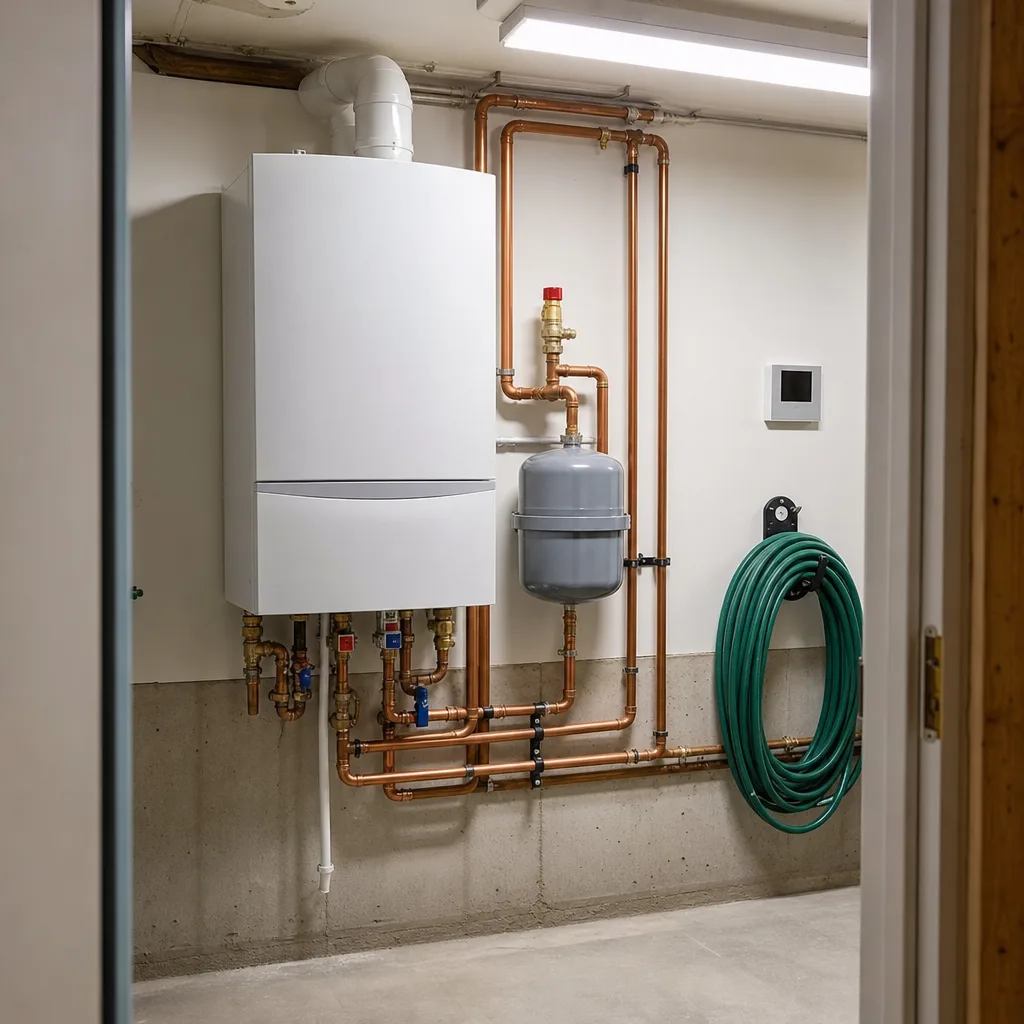
Boilers here pick up mineral scale from our hard water, and that scale cuts heat output over time. When the buildup is caught early, a cleaning can bring back a lot of lost heat. Rooms warm up more evenly, and the unit stops working so hard. This is a different picture from the heavy, years-deep scale in a worn-out heat exchanger. Light to moderate buildup in a healthy boiler is a maintenance job, not a reason to replace it.
Servicing is the better call when:
- The boiler hasn’t had a real tune-up in a few years, and the only complaint is weaker heat.
- Your fuel bills crept up, but the unit isn’t leaking and still holds pressure.
- Radiators heat unevenly, and nobody has balanced the system or cleared the air out in a while.
- You want a safety check before winter, including carbon monoxide testing on a gas boiler.
Some things you can check yourself before anyone comes out. Make sure the thermostat is set to heat and has fresh batteries. Check that the boiler’s power switch and breaker are on. Take a look at the pressure gauge so you can tell the technician what it reads. Plenty of owners are comfortable bleeding air from their radiators too. If any of these fixes the problem, great. You just saved yourself a visit.
Waiting can make sense too. Our winters are short, and a boiler in Allen may only work hard for a handful of weeks. Maybe your unit is older but still sound, and a repair gets it through the season. Then you can plan a replacement on your schedule, not in the middle of a cold snap. That gives you time to compare options and budget for it. It also keeps you out of a rushed decision on the coldest night of the year.
The same goes for a business. If your building runs on a boiler and it’s limping but safe, a repair now and a planned swap during warmer months can keep tenants and staff comfortable. It also avoids a shutdown when you can least afford one.
If you’re not sure which camp you’re in, a diagnostic visit answers it. Xtreme Air Services charges a $26-$99 service-call fee, and it’s credited toward the repair if you go ahead with us. You’ll find out whether servicing, a repair, or a replacement fits your boiler, and you can decide from there.
Ready when you are – get in touch today.
Call Today, Get Service Today. Xtreme Air Services — Allen is ready to help.
Who Should Handle Boiler Replacement in a Commercial or Mechanical Building
If your building runs on a boiler, replacing it isn’t a bigger version of a home job. It’s a mechanical project. The boiler ties into pumps, piping, controls, gas supply, venting, and often a building automation system that tells everything when to run. Pull out one piece without understanding the rest, and you can end up with a new boiler that short-cycles, leaves some floors cold, or fights with the controls all winter.
That’s why the right choice is a licensed mechanical contractor who can look at the whole system, not just the box in the boiler room. Some commercial buildings use more than one boiler, staged so one carries the load on mild days and others kick in when a cold front hits. Others feed radiant floors, air handlers with hot water coils, or a mix of both. A good replacement starts with matching the new equipment to how your building uses heat today. That may be different from what the original designer planned years ago.
Here’s what a commercial boiler replacement often touches beyond the boiler itself:
- Circulator pumps and piping, which may need to be resized or rerouted for the new unit.
- Venting, since newer high-efficiency boilers often vent differently than older ones.
- Gas lines and electrical connections that have to meet current code.
- Controls and building automation, so the boiler talks to the rest of your system.
- Safe decommissioning and removal of the old boiler.
- Commissioning, which means starting the new system up, testing it under real conditions, and confirming it runs the way it should.
When those jobs are split among a boiler installer, a plumber, an electrician, and a controls company, you become the project manager. Every handoff is a chance for delays or finger-pointing. Xtreme Air Services covers boiler replacement, boiler system design, commissioning, pump and piping work, building automation, and commercial plumbing and electrical. That puts one accountable team on the job instead of four. Our technicians are licensed and insured, and we hold Texas HVAC License #TACLA29023C.
There’s also a paperwork side. Commercial boilers in Texas fall under state inspection rules overseen by the Texas Department of Licensing and Regulation, while most private homes don’t. Ask any contractor up front how the new boiler will be inspected and certified, and who handles scheduling it, so the job isn’t held up at the finish line.
Before you hire anyone for a commercial boiler, ask these questions:
- Will you size the new boiler to our building’s current heating load, or just copy the old nameplate?
- Who handles the piping, electrical, gas, and controls work, and is it all your own crew?
- How will you schedule the shutdown so tenants, staff, or customers aren’t left without heat?
- What does commissioning include, and will you show us the results?
- What’s included in the written quote, and what’s excluded, like code corrections or permits?
Planning ahead pays off most in a commercial building. As covered above, a limping but safe boiler can often be repaired to get through the season, with the full swap scheduled for warmer months. For a business, that’s the difference between a planned weekend project and an emergency that shuts your doors. Our Allen office at 1333 W McDermott Dr keeps us close to commercial properties in the area when you’re ready to walk through your system and plan the job on your timeline.
Watch Our Video
See How We Handle Boiler replacement in Allen
Xtreme Air Services — Allen
What Happens During a Boiler Replacement
A boiler replacement isn’t just pulling out the old unit and dropping in a new one. A good job follows a clear order. Each step protects the one after it. Here’s what that looks like, so you can tell whether a contractor is doing it right.
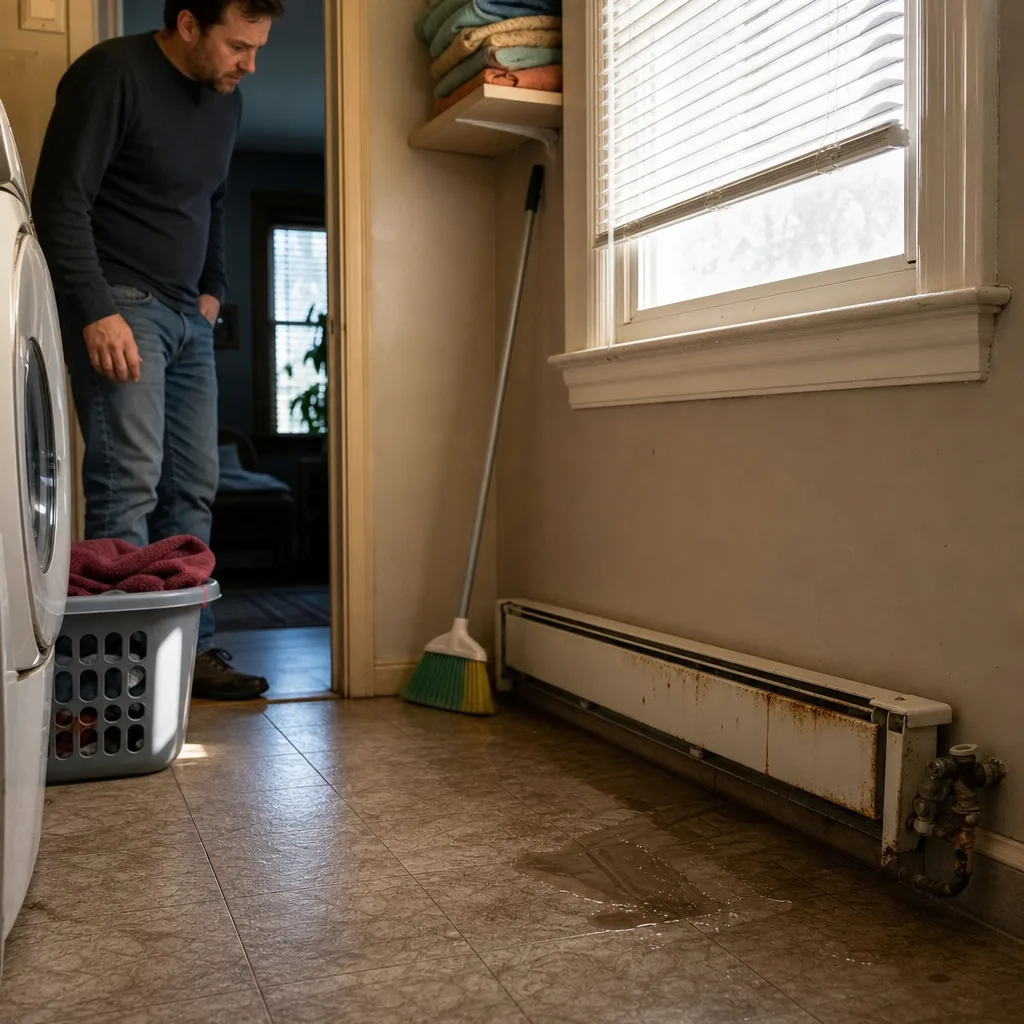
It starts with sizing, not shopping. The new boiler should match how much heat your home or building loses on a cold night. That number can differ from the old boiler’s label, since windows, insulation, and additions change over the years. A careful contractor also checks the radiators or baseboards, the piping, the gas line, and the venting. Those parts decide which boilers will fit and work well with what’s already in your walls.
Next comes a written quote, and you should read it closely. For a standard like-for-like job at Xtreme Air Services, the quote includes the equipment and materials, professional installation, standard connections, startup and testing, and haul-away of the old unit. Duct, electrical, or plumbing changes, code corrections, and permits aren’t included unless the quote says so. If your new boiler needs any of those, you should see them listed before work begins, not after.
On install day, the work usually goes like this:
- Shut down and drain. The gas and power get turned off, and the water gets drained from the heating loop.
- Remove the old boiler. It’s disconnected from the gas, water, and vent, then carried out.
- Set the new boiler. It goes in place and gets connected to the supply and return pipes, the gas line, and the power.
- Vent it correctly. Many high-efficiency boilers vent through plastic pipe instead of an old metal flue. They also need a drain for the water they make while running. If your venting has to change, it should be in the quote.
- Install safety parts. That includes the pressure relief valve, a low-water cutoff where it’s needed, and a properly sized expansion tank.
- Flush and fill. The old loop often holds sludge and scale. Flushing it out protects the new boiler’s heat exchanger, which matters with our hard water. Then the system gets filled and the air is purged so every radiator can heat.
Startup and testing is where you find out whether the job was done right. The burner gets fired and checked for clean, safe combustion. A gas boiler should get a carbon monoxide test. Then the pressure and temperature get checked under load, and someone confirms that heat reaches every room, not just the ones closest to the boiler. In a commercial building, this is the commissioning step covered above.
Before the crew leaves, you should get a quick walkthrough. Ask what the gauge should read when the system is running, where the shutoffs are, and how often the boiler needs service. A new boiler with a high AFUE rating only stays efficient if it gets looked after, and scale from Allen’s water keeps building whether the unit is old or new.
How long does it take? A simple like-for-like swap usually takes days, not weeks. Venting changes, piping rework, or a larger commercial system add time. That’s one more reason to plan the job in warmer months if your boiler can safely make it there.
Frequently Asked Questions
Common questions about Boiler replacement
Is boiler repair considered plumbing work?
Boiler work overlaps both plumbing and HVAC, since a boiler moves heated water through pipes like a plumbing system but also involves gas, venting, and combustion like a furnace. That’s why it takes a licensed contractor who understands both the water side and the heating side, not just one trade.
Do you need a permit to remove or replace a boiler in Allen?
Most boiler replacements in Allen require a permit, since the work touches gas lines, venting, and sometimes electrical connections. A licensed contractor should pull the permit and schedule any required inspection as part of the job, so you’re not left to handle that paperwork yourself.
Can any plumber fix a boiler, or do I need someone else?
A general plumber can handle some boiler parts, like piping or a leaking valve, but full boiler diagnosis and repair usually needs a contractor licensed for both plumbing and heating work. Boilers involve gas combustion, venting, and controls that go beyond standard plumbing training, so ask about HVAC licensing before you hire.
Ready to Get Started?
Call (469) 299-8996 Today, Get Service Today.