


Central Air Conditioning Repair in Irving: Know the Cost Before You Call
Central AC problems diagnosed and fixed right the first time, with clear pricing on what drives the cost.
What’s Covered on This Page
- What’s Really Wrong: Diagnosing the Common Central AC Failures
- One Part or the Whole System: What Decides Your Repair Cost
- Repair Now or Risk a Bigger Breakdown: Reading the Urgency Signs
- Skip the Service Call: When a Dirty Filter or Reset Breaker Is the Real Fix
- What Happens During a Repair Visit: From Diagnosis to a Running System
- How long should a central AC unit last before it needs major repairs?
- Can a small AC problem turn into a bigger, more expensive one if I wait?
- What are the most common reasons a central AC stops cooling?
What’s Really Wrong: Diagnosing the Common Central AC Failures
When your house starts heating up, it’s easy to picture the worst. But a central air system is a handful of parts working as a team. When one part fails, it leaves clues. Here’s what those clues usually mean.
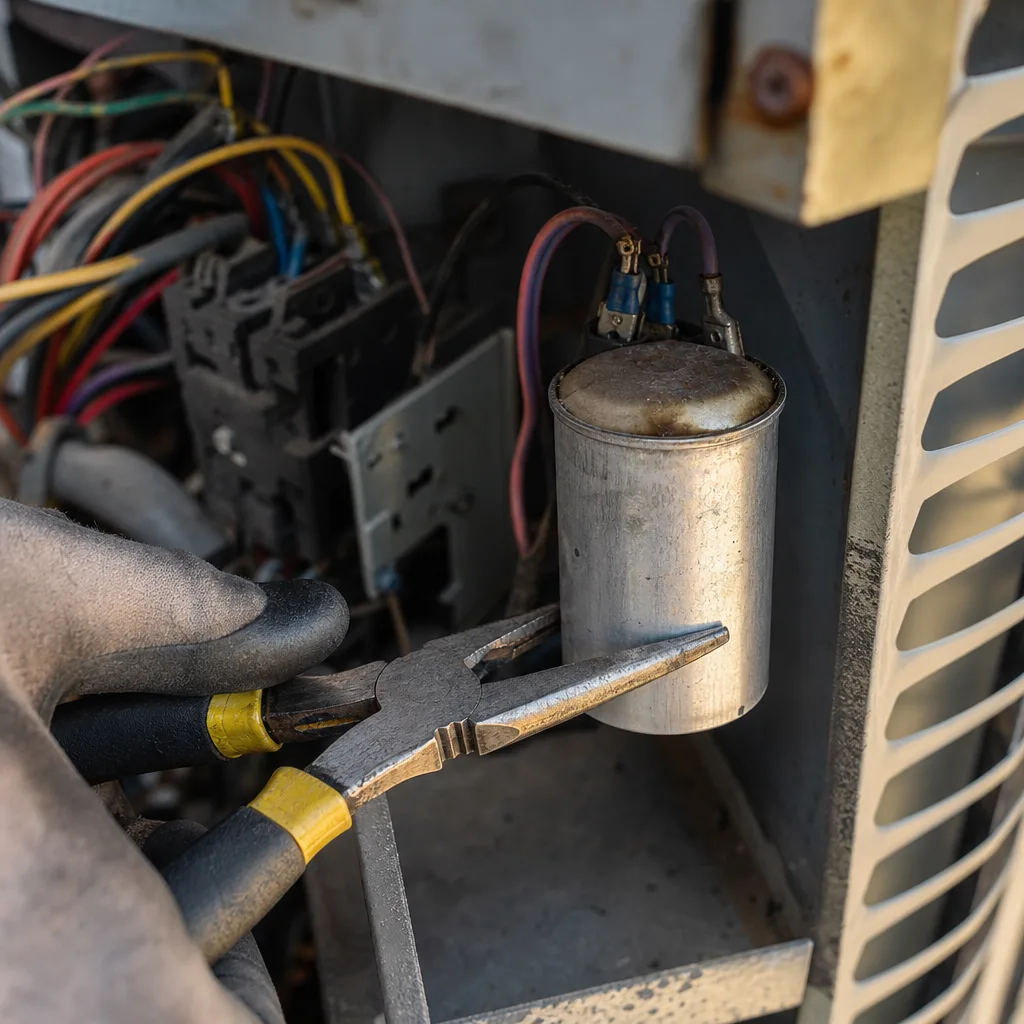
- The outdoor unit hums but the fan won’t spin. This often points to a weak or failed capacitor, the small part that gives the motors a jolt to start. It can also be a worn-out condenser fan motor.
- Warm air is coming from the vents. The outside unit may not be running at all, the system may be low on refrigerant from a leak, or the outdoor coil may be so caked with dirt it can’t shed heat.
- There’s ice on the copper line or the indoor coil. A frozen evaporator coil usually comes from a clogged filter, weak airflow, or low refrigerant. The ice blocks airflow, so the house just keeps getting warmer.
- The system shut off and won’t restart, or there’s water near the indoor unit. A clogged condensate drain line can back up and trip a safety switch that shuts the whole system down to protect your ceiling.
- Air feels weak in every room. The indoor blower motor may be failing, or something is choking airflow, like a dirty filter or a frozen coil.
- Nothing happens at all. The cause could be a thermostat problem, a tripped breaker, a blown fuse, or a failed control board.
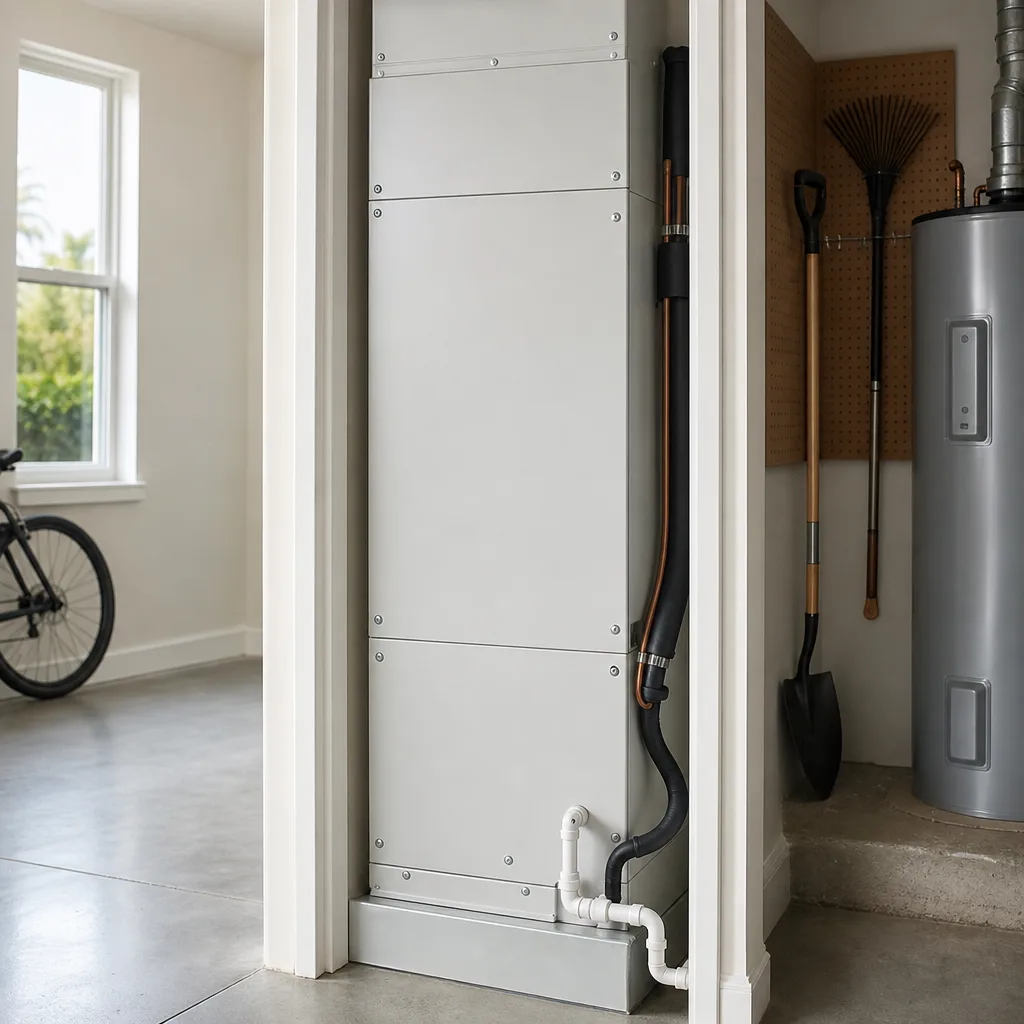
In a lot of North Texas homes, the indoor unit sits up in the attic. That spot gets brutally hot in summer and makes some problems harder to spot. A drain line can back up, or a coil can ice over, for a while before you notice anything. By then the only sign may be a house that won’t cool down, or a water stain on the ceiling below.
Here’s the part that should ease your mind. Many of these failures sound alike from the couch but cost very different amounts to fix. A fan that won’t spin could be a small capacitor or a bigger motor. Warm air could be a dirty coil or a leak. Guessing wrong means paying for parts you didn’t need, or getting talked into a whole new system when one part would have done the job.
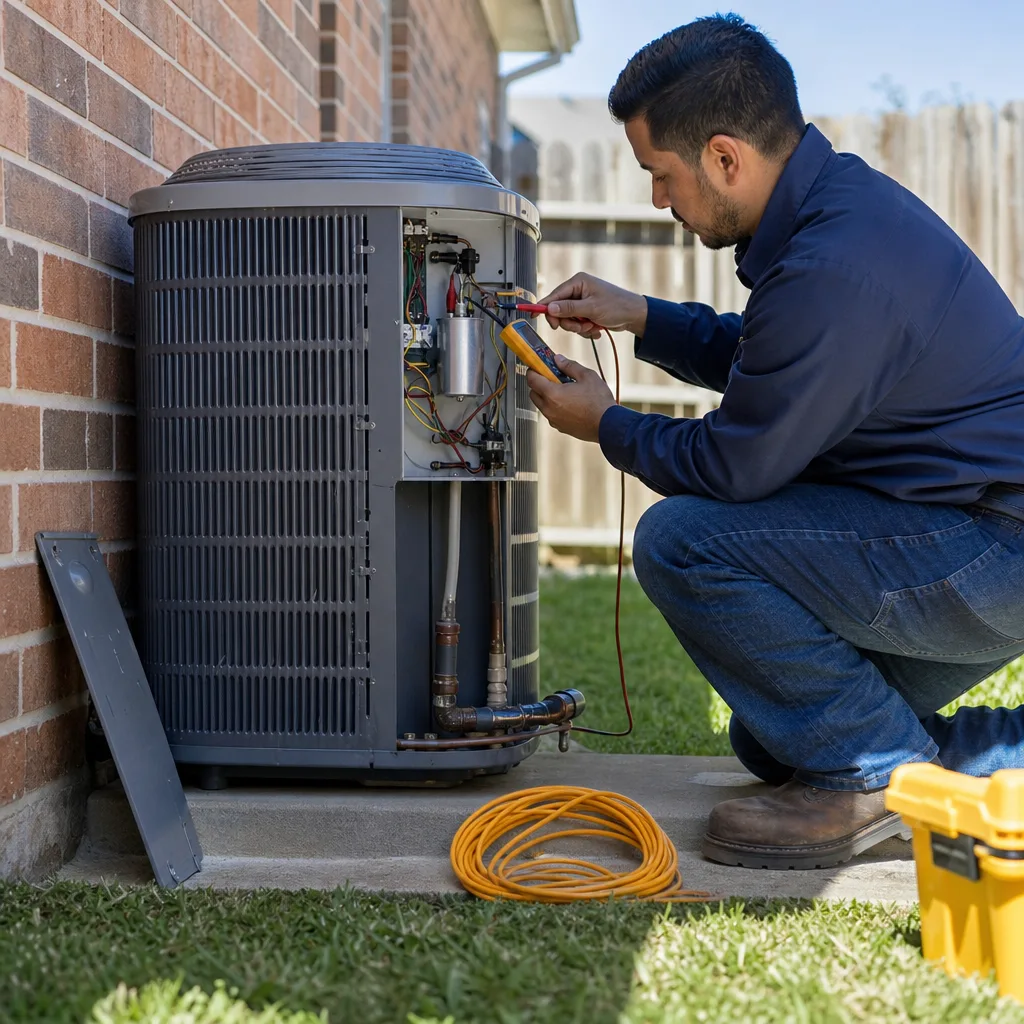
That’s why diagnosis comes first. When we come out for central air conditioning repair in Irving, the goal is simple. We find the failed part, repair or replace it, and then check that the whole system runs correctly before we leave. Most calls are a single common failure fixed on the first visit. That’s usually good news for your wallet and your weekend.
The bigger failures do happen. A compressor can wear out, or several parts can fail at once in an older system. If that’s what we find, you’ll hear it straight. We’ll show you what failed and explain your options in plain English, so you can make the call that’s right for your home.
One Part or the Whole System: What Decides Your Repair Cost
What you pay for a central AC repair comes down to one question. Did one part fail, or did several? Most repairs land on the smaller side, because most breakdowns are one worn part. Once the failed part is found, the price follows from what’s broken. It isn’t a guess.
Here’s what our repairs usually cost. Most central air repairs we do fall between $150 to $700. The most common job is finding the failed part, fixing or replacing it, and checking that the system runs right. That one runs $150 to $400.
There’s a $26 to $99 service-call fee to come out and diagnose the problem. If you go ahead with the repair, that fee is credited toward the job. So you aren’t paying twice just to find out what’s wrong.
These are the things that move your price up or down:
- How bad the failure is. A part that has simply worn out costs less to fix than one that took other parts down with it.
- The part itself. Some parts cost more than others, and some are harder to get.
- Your system’s age and brand. Older or less common equipment can need parts that cost more or take longer to find.
- Whether more than one part failed. Each extra failed part adds to the job.
- The time of day. This one doesn’t apply with us. We charge no extra for nights or weekends, so an AC that quits on a Saturday night costs the same to fix as one that quits on a Tuesday morning.
Your repair price includes the diagnosis, the labor, and the standard replacement part. It also includes testing the system and cleaning up afterward. It doesn’t include extra failed parts, major components like a compressor, code upgrades, or permits. Those are quoted separately, so you’ll see them before anything happens.
That’s the point of upfront flat-rate pricing. You get the price, you approve it, and then the work starts. There’s no meter running while you wait in a warm house wondering what the bill will be.
Sometimes the answer is bigger than one part. In an older system, a failed compressor or several worn parts at once can push you to a harder choice between a major repair and a new system. Financing isn’t usually offered for smaller repairs. It is available on larger repairs and replacements, so a big job doesn’t have to be decided by what’s in your checking account this week.
Whoever you call, a few questions will tell you whether a quote is fair:
- Can you show me the part that failed?
- Is this a flat price, or will it change once you start?
- What does this price include, and what would cost extra?
- Does the service-call fee count toward the repair?
- Do nights or weekends cost more?
A company that’s doing right by you will answer every one of those without hesitating. If you get vague answers, take that as your sign to get a second opinion before you pay for a whole system when one part might have done the job.
Repair Now or Risk a Bigger Breakdown: Reading the Urgency Signs
Not every AC problem is an emergency. But some problems get worse, and cost more, every hour the system keeps running. A worn part that’s left running can take a healthy part down with it. That’s how a single repair turns into the multi-part job we covered above. Here’s how to tell which situation you’re in.
Turn the system off and get help soon if you notice any of these:
- Ice on the copper line or the indoor coil. Running a frozen system just grows the ice and makes the compressor fight against it. Shutting it off lets the ice melt and takes the strain off.
- The outdoor unit hums but the fan won’t spin. Without the fan, the motor and compressor keep heating up with nothing to cool them. A worn capacitor is a small fix. A burned-out compressor isn’t.
- A burning smell, or a breaker that trips again right after you reset it. That’s an electrical problem. Don’t keep flipping the breaker back on.
- Water dripping from the ceiling or pooling around the indoor unit. When the unit sits in the attic, overflow can soak insulation and drywall before you ever see a stain.
- The system clicks on and off every few minutes. Every hard start wears parts faster, and this kind of short cycling usually points to something that will only get worse.
- Grinding, screeching, or banging from either unit. Those sounds mean something is rubbing, loose, or failing inside.
Some problems can wait. A few you can handle yourself before you call anyone:
- Check your filter. If it’s gray and packed with dust, swap it out. A clogged filter alone can cause weak airflow and even a frozen coil.
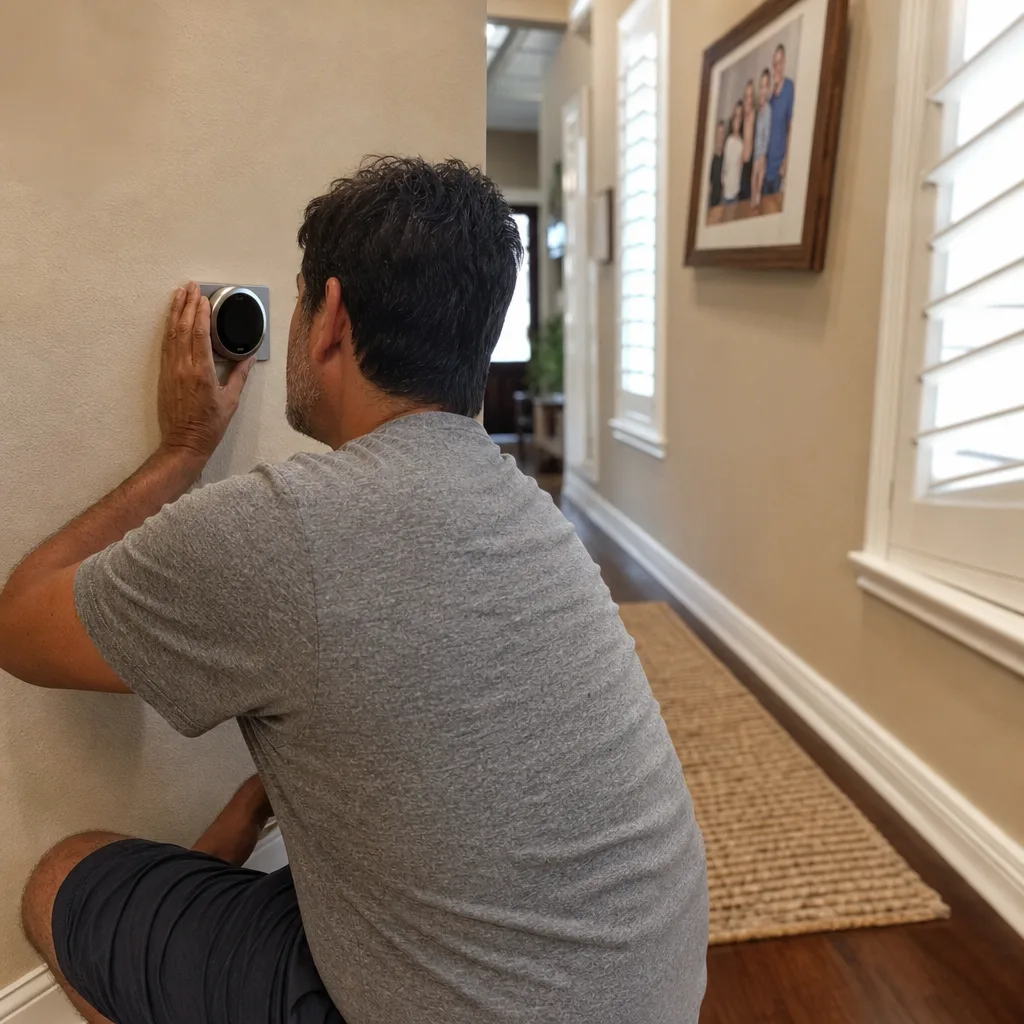
- Check the thermostat. Make sure it’s set to cool, the setting is below the room temperature, and the batteries aren’t dead.
- Check the breaker once. If it tripped, reset it one time. If the system comes on, stays on, and cools the house, you may be fine.
- Watch for slow changes. A system that still cools, just a little weaker, or a bill that’s crept up isn’t a midnight emergency. Book a visit before the next long hot stretch, not after.
If one of those checks fixes it, you don’t need us, and that’s a good outcome. We’d rather you save the service-call fee than pay to have someone flip a switch you could flip yourself.
Timing matters more here than in a lot of places. During a North Texas summer, your AC can run almost nonstop for weeks. A part that’s already weak gets very little rest, so it tends to fail faster once it starts struggling. A system that’s limping in May often won’t make it through July. Fixing the small problem while it’s still small is usually the cheapest choice you’ll get.
If you’re seeing one of the stop signs above, you don’t have to sweat it out until Monday. Same-day service is available. Because nights and weekends don’t cost extra, calling when the problem starts won’t cost you more than waiting.
Have questions? We’re happy to help.
Call Today, Get Service Today. Xtreme Air Services — Irving is ready to help.
Skip the Service Call: When a Dirty Filter or Reset Breaker Is the Real Fix
The quick checks we mentioned above fix more AC calls than you’d think. The trick is doing them right and knowing the spots most people miss. Here’s how to make sure you’re not paying a service-call fee for something you can handle in five minutes.
Start with the filter, because you have to find it first. In most homes it sits behind a return grille in a hallway wall or ceiling. In others it slides into a slot right at the indoor unit. If your indoor unit is in the attic, the filter may be up there too. In summer, go up early in the morning before the attic turns into an oven. The filter size is printed on the edge of the frame, so take a photo before you shop. When you put the new one in, the arrow on the frame points toward the unit, the same way the air flows. If you’re not sure what type to buy, match what was already in there. Some very thick, tight filters can choke airflow on systems that weren’t built for them.
If the system still won’t run, look at these before you pick up the phone:
- The outdoor disconnect. This is a small box on the wall next to the outdoor unit. It can get bumped or pulled during yard work. Make sure it’s switched on or fully seated. If the box looks damaged or has loose wires showing, leave it alone and call a pro.
- A second breaker. The indoor unit and the outdoor unit are often on separate breakers. One can trip while the other stays on, so check both.
- The indoor unit’s panel door. Many units have a safety switch that keeps the fan off if the access panel isn’t snapped tight. If the fan quit right after someone changed the filter at the unit, check that panel first.
- The thermostat schedule. A schedule or hold setting can quietly override what you just set. Make sure it isn’t running a program you forgot about.
- Blocked return grilles. A couch, a rug, or a stack of boxes in front of a return can starve the system of air.
- A buried outdoor unit. Grass clippings, leaves, and plants growing into the fins keep it from getting rid of heat. Turn the power off at the disconnect, then clear the area around it by hand. A gentle rinse from a garden hose is fine. A pressure washer isn’t, because it can bend the thin metal fins.
After a reset or a filter change, give it a few minutes. Many thermostats and outdoor units wait a bit before restarting to protect the compressor, so silence right away doesn’t mean it failed. Once it’s running, hold your hand to a vent and check that the air feels cool.
One easy fix is good news. The same easy fix over and over isn’t. A filter that’s packed with dust again in a couple of weeks, or a breaker that holds after a reset and then trips again a few days later, means something underneath is wrong. The filter or the breaker is just where it shows up. The same goes for a coil that froze from a dirty filter. The new filter is the right step, but let the ice melt all the way before you run it again, as we covered above. If it ices up again, the filter wasn’t the whole story. That’s the point where paying for a real diagnosis makes sense, and not before.
Watch Our Video
See How We Handle Central air conditioning repair in Irving
Xtreme Air Services — Irving
What Happens During a Repair Visit: From Diagnosis to a Running System
A repair visit comes down to three steps. We find the part that failed. We repair or replace it. Then we make sure your whole system runs correctly before we call it done. You approve the price before any work starts, so you’re in charge of the decision the whole way through.
A little prep on your end makes the visit go faster. None of it is required, but it helps:
- Tell us what you noticed when you call. When did it start? Is there ice, water, a noise, or a smell? Did a breaker trip? Those details point straight at the likely cause.
- Clear a path to the indoor unit. If it’s in the attic, move any boxes from under the attic stairs or hatch. Working up there in July is hot enough without climbing over storage.
- Make sure the outdoor unit is easy to reach. Unlock the gate and keep pets inside.
- If you shut the system off because of ice, leave it off until we get there.
Finding the failed part means testing, not guessing. As we covered above, a weak capacitor and a worn fan motor can look exactly the same from your yard. The only honest way to know is to check the parts. Once we know what failed, you’ll see it and hear what it does in plain English. If it’s one part, you’ll know that. If something bigger turned up, you’ll know that too, before anyone picks up a tool.
Next comes the price. With upfront flat-rate pricing, you get one price for the job and you say yes or no. There’s no meter running while you wait in a warm house. The diagnosis, labor, and standard replacement part are part of that price, along with testing and cleanup.
Then the repair itself. Our technicians are licensed and insured, and every one is background-checked and drug-tested. You’re letting someone into your home, sometimes with your kids or parents there. That should feel safe, and we treat your home like family would.
The last step is the one that matters most to you. A repair isn’t finished when the new part goes in. It’s finished when the system runs the way it should. That’s why testing is part of every job, and why we clean up after ourselves when we’re done.
After we leave, you can check the work yourself:
- Air from your vents should feel cool within a few minutes.
- The outdoor fan should be spinning, with no new grinding or screeching.
- The house should keep cooling toward your thermostat setting. If it got very hot inside, give it a few hours. A system has to pull heat out of your walls and furniture too, not just the air.
- There shouldn’t be any water near the indoor unit.
If something doesn’t seem right, call us. A fix that’s done right the first time is the whole point of the visit.
Call now
Frequently Asked Questions
Common questions about Central air conditioning repair
How long should a central AC unit last before it needs major repairs?
Most central AC units run well for 12 to 15 years before major parts start failing. Texas heat shortens that timeline because the system works harder and longer each summer. A unit pushing past 15 years that needs a big repair, like a compressor, is often better replaced than fixed. If your system is newer and just had one part fail, a repair is usually the smarter move.
Can a small AC problem turn into a bigger, more expensive one if I wait?
Yes, a small problem left alone often grows into a bigger repair bill. A worn capacitor that goes unfixed can force the compressor to strain, and a frozen coil that keeps running can stress the whole system. Since North Texas summers push your AC to run almost nonstop, a weak part gets little rest and tends to fail faster. Fixing the small issue early is usually the cheapest path.
What are the most common reasons a central AC stops cooling?
The most common causes are a failed capacitor, a dirty or frozen coil, a clogged condensate drain, a weak blower motor, or low refrigerant from a leak. Each one leaves its own clue, like warm air, ice on the coil, or water near the indoor unit. Most of these are single-part failures, not full system breakdowns. That’s good news, since one worn part is usually a straightforward fix.
Ready to Get Started?
Call (469) 200-2166 Today, Get Service Today.