


AC Replacement in Irving: Know When to Replace vs. Repair
An honest read on whether it's time to replace, what a standard replacement includes, and the permit step explained.
What’s Covered on This Page
- Decide Between Repair and Replacement First
- Signs an Aging System Needs Replacement
- When Repair Still Makes Sense
- What a Standard Replacement Includes
- What Drives AC Replacement Cost
- How much should I expect to pay for a full AC replacement in Irving?
- How long does an AC replacement take once I decide to move forward?
- Is it better to replace just the outdoor unit or the whole system at once?
Decide Between Repair and Replacement First
Before you start pricing a new system, make sure you need one. A lot of AC problems feel like the end of the road, but they really come down to one worn-out part. If that part is cheap to fix and the rest of the system is healthy, replacing the whole thing is money you don’t need to spend.
Start with a few checks you can do yourself. Look at your air filter. A clogged one can choke airflow and even freeze the coil, so swap it out and give the system time to recover. Make sure the thermostat is set to cool and has fresh batteries. Check your breaker panel for a tripped breaker. If one of these fixes it, you’re done, and you didn’t need anybody.
These problems usually call for a repair, not a new system:
- The outdoor unit hums, but the fan won’t spin. That’s often a bad capacitor, a small part that gives the motor its start.
- A fan motor or blower motor has worn out.
- Water is backing up because the AC drain line is clogged.
- The coil keeps freezing because of an airflow problem.
- The thermostat or a sensor is giving the system bad signals.
Replacement becomes the better choice when the problem is bigger or keeps coming back. Watch for these signs:
- The compressor has failed on an older system. The compressor is the heart of your AC, and it’s one of the most expensive parts to replace.
- A refrigerant leak keeps coming back, or your older system runs on a refrigerant that’s no longer made and costs more every year.
- You’ve had several service calls in one season, and each fix only buys you a few weeks.
- The system runs nonstop on hot days and still can’t cool the house, even after repairs.
- Your energy bills keep climbing while your comfort keeps dropping.
Here’s a simple way to think about it. Picture two homes. In the first, the AC is a few years old, and the outdoor fan stopped spinning on a hot afternoon. That’s a repair. In the second, the system is much older, it’s the third breakdown this summer, and the tech just found a bad compressor. Pouring more money into that unit rarely makes sense. Long North Texas summers put steady strain on an older system, so a weak unit doesn’t usually get stronger with another patch.
If you’re not sure which home you’re in, that’s what a diagnostic visit is for. Our service-call fee is $26-$99, and it’s credited toward the repair if you move forward with Xtreme Air Services. You get upfront flat-rate pricing approved before any work starts, so you can compare the repair price against replacement with real numbers in front of you. Then the decision stays yours.
Signs an Aging System Needs Replacement
Age alone doesn’t mean you need a new AC. Plenty of older systems still cool fine. What matters is whether the whole system is wearing down at once, not just one part. When an older unit shows two or three of the signs below, you’re usually looking at a system that’s tired from top to bottom.
First, find out how old your system really is. Look for the metal data plate on the side of the outdoor unit. The serial number often has the manufacture date built into it, and the brand’s customer line can decode it if you can’t. Your home inspection report or old install paperwork may list it too. If nobody in the house remembers when the system went in, that’s a clue by itself.
Then watch for these signs of an aging system:
- Your house feels sticky or clammy, even when the thermostat says it’s cool. A worn system often can’t pull enough moisture out of the air.
- Some rooms never catch up. The back bedroom or the room over the garage stays warm all afternoon while the rest of the house is fine.
- The system short cycles. It kicks on, runs a few minutes, shuts off, and starts again soon after.
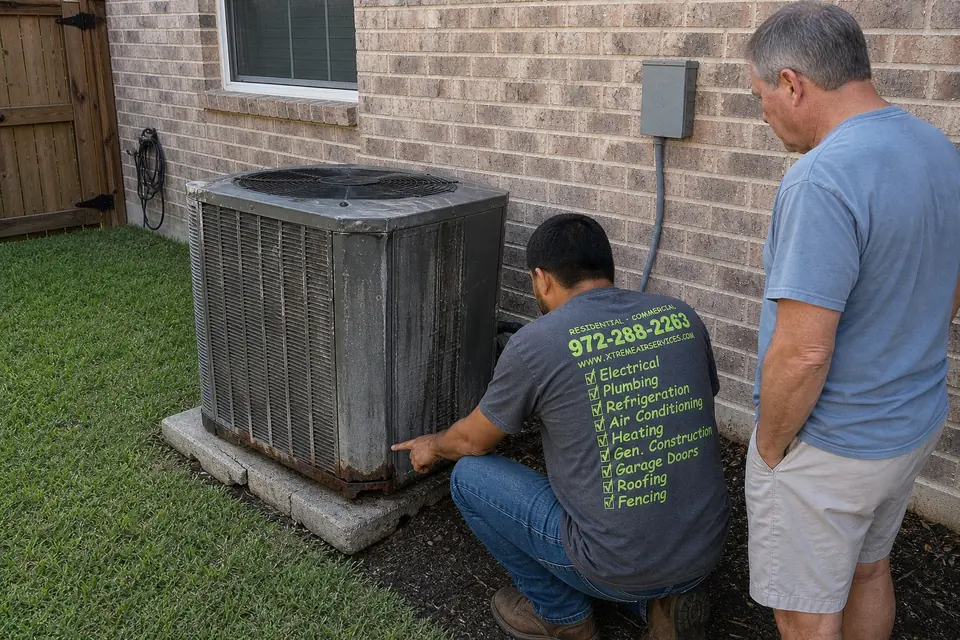
- The outdoor unit looks beat up. You see rust on the cabinet, or the thin metal fins on the coil are bent flat from hail, mowers, or years of yard debris.
- There’s trouble around the indoor unit. You spot rust in the drain pan or water stains near the air handler in the attic.
- New noises show up. Grinding, screeching, or a loud bang when the system starts is different from the normal hum you’re used to.
- Your system is a mix of old and new parts. Maybe the outdoor unit was replaced years ago, but the indoor coil is original. Halves that weren’t built to work together don’t run at their best.
Be fair to your system here. One sign on its own is often a repair. Uneven rooms, for example, can come from leaky ducts instead of a failing AC, and duct sealing may fix it for far less than a new system. That’s why it helps to have someone look at the whole picture before you decide.
Irving summers are hard on equipment. Your AC runs long hours for months at a time, and if your air handler sits in the attic, it’s working in some of the hottest air in the house. Years of that kind of load add up. Once the signs start stacking, the question usually isn’t whether the system will need replacing, but when.
That’s the real advantage of spotting these signs early. If you plan your AC replacement while the old system still runs, you get to pick the right size and efficiency, look over real numbers, and take your time. You aren’t stuck making a big choice in a hot house in the middle of July. If the timing is tight on your budget, Xtreme Air Services offers flexible financing on qualifying installations, on approved credit.
When Repair Still Makes Sense
Sometimes the honest answer is that you don’t need a new system yet. A repair is still the right call in more cases than people expect, even when the AC isn’t young anymore. What matters is the shape the rest of the system is in.
Repair usually makes sense in these situations:
- One part failed, and everything else checks out. The coil is clean, the cabinet is solid, airflow is good, and the house cooled fine until this week. A healthy older system with one bad part is still a healthy system.
- A leak was found and fixed at an easy spot. A leak at a valve or a reachable fitting can be sealed for good. That’s very different from a coil that keeps leaking in new places.
- You need to get through the summer. If your system is near the end but a modest repair will keep it running, fixing it now and replacing it in spring or fall is a smart plan. You’ll have time to compare options without a hot house pushing you.
- You’re moving soon. If you plan to sell in the next year or so, a solid repair may cover your needs. Just be upfront with buyers about the system’s age.
- The AC isn’t the real problem. Weak cooling can come from leaky ducts, a dirty coil, low attic insulation, or a thermostat mounted in a sunny hallway. Fix the cause, and the system you have may cool just fine.
That last one catches a lot of people. In an Irving summer, an attic can get very hot, and poorly sealed ducts running through it can lose a good share of your cool air before it ever reaches a room. A brand-new AC hooked to those same ducts will have the same weak spots. Sometimes the fix is in the attic, not the yard.
The key is to weigh what a repair costs against what it buys you. A small repair that gives you a few more good seasons is money well spent. A large repair on a tired system that may only last a few months is not. Ask yourself whether you’d be fine paying for this same fix again next year. If the answer is no, that tells you something.
When a tech gives you a repair price, ask a few plain questions before you decide:
- What else did you notice while you were in there?
- How long should this repair hold up?
- Is this part likely to fail again, or is something else causing it?
- What condition are the coil, ducts, and wiring in?
Good answers help you see the whole system, not just the broken part. If the tech says the rest of the unit looks solid, repair it and enjoy the extra years. If they point to two or three other parts wearing out, that’s a fair reason to start thinking about replacement on your own schedule.
A repair isn’t settling. When the system is sound, it’s simply the right fix, and it keeps your money in your pocket for when you truly need a new system.
Thinking about AC replacement? Let’s talk.
Call Today, Get Service Today. Xtreme Air Services — Irving is ready to help.
What a Standard Replacement Includes
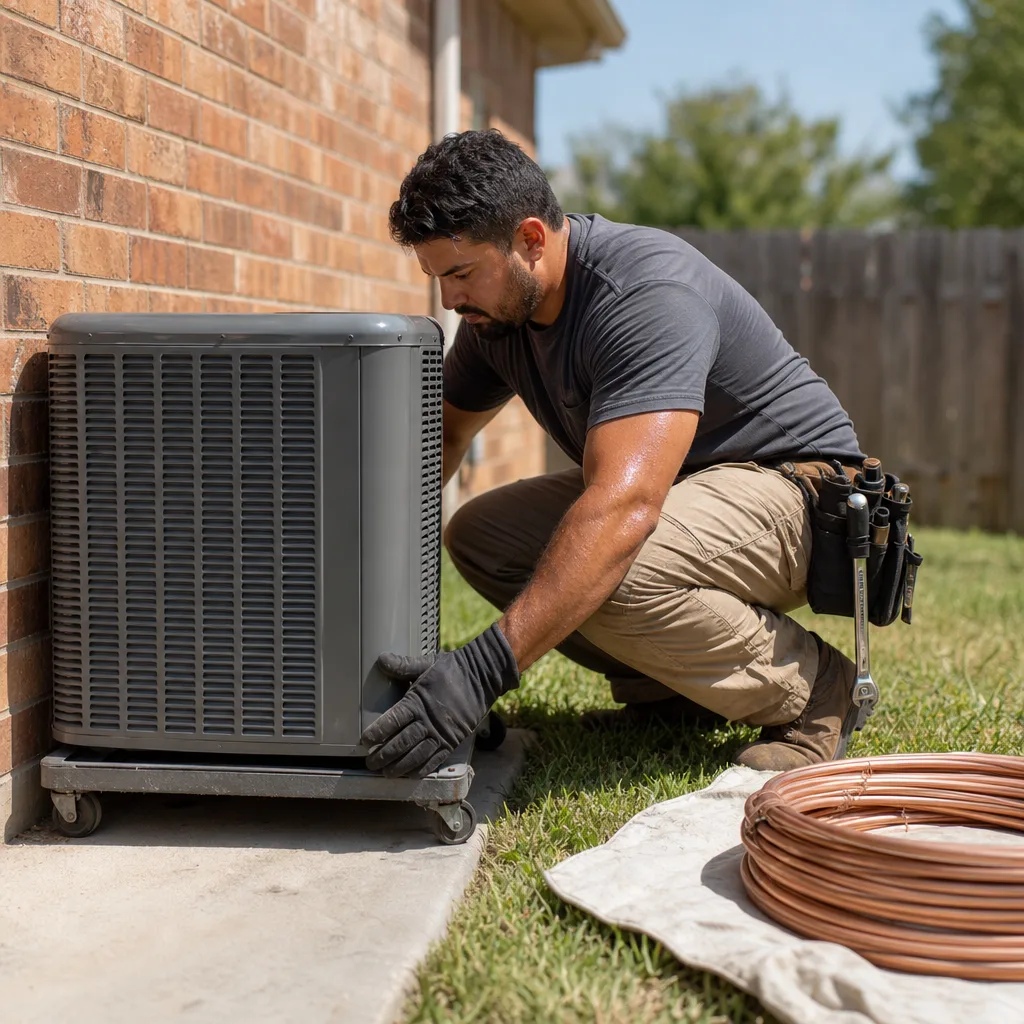
Once you know you need a new system, the next question is simple: what am I paying for? At Xtreme Air Services, our most common AC replacement is a standard like-for-like job. The new system uses your existing connections and doesn’t need major changes to your home. For that job, our price range is $6,400-$9,200. Across all the replacements we do, the typical range is $5,000-$12,000.
Here’s what a standard replacement includes:
- The new equipment and materials
- Professional installation
- Standard connections to your home’s existing lines and wiring
- Startup and testing, so you know the system is running right
- Haul-away of your old unit, so it doesn’t end up sitting by your fence
Some work isn’t part of the standard job unless your quote says it is:
- Changes to your ductwork
- Electrical modifications
- Plumbing modifications
- Code corrections
- Permits
Why the split? Those extras depend on your house, not the equipment. Two homes can get the same size system and still need very different work. Say one home in Irving had its system installed decades ago and has older wiring and ducts. They may need updates before new equipment can go in. A newer home with lines that already fit could be a straight swap. Pricing the standard job on its own keeps you from paying for work your home doesn’t need.
Inside that range, a few things move the price up or down. The biggest three are system size, efficiency, and access.
- Size. AC capacity is measured in tons. That’s how much heat the system can pull out of your home. A bigger house usually needs more tons, and bigger equipment costs more.
- Efficiency. SEER2 is a rating for how much cooling you get from each dollar of electricity. A higher number usually means lower summer bills but a higher price up front.
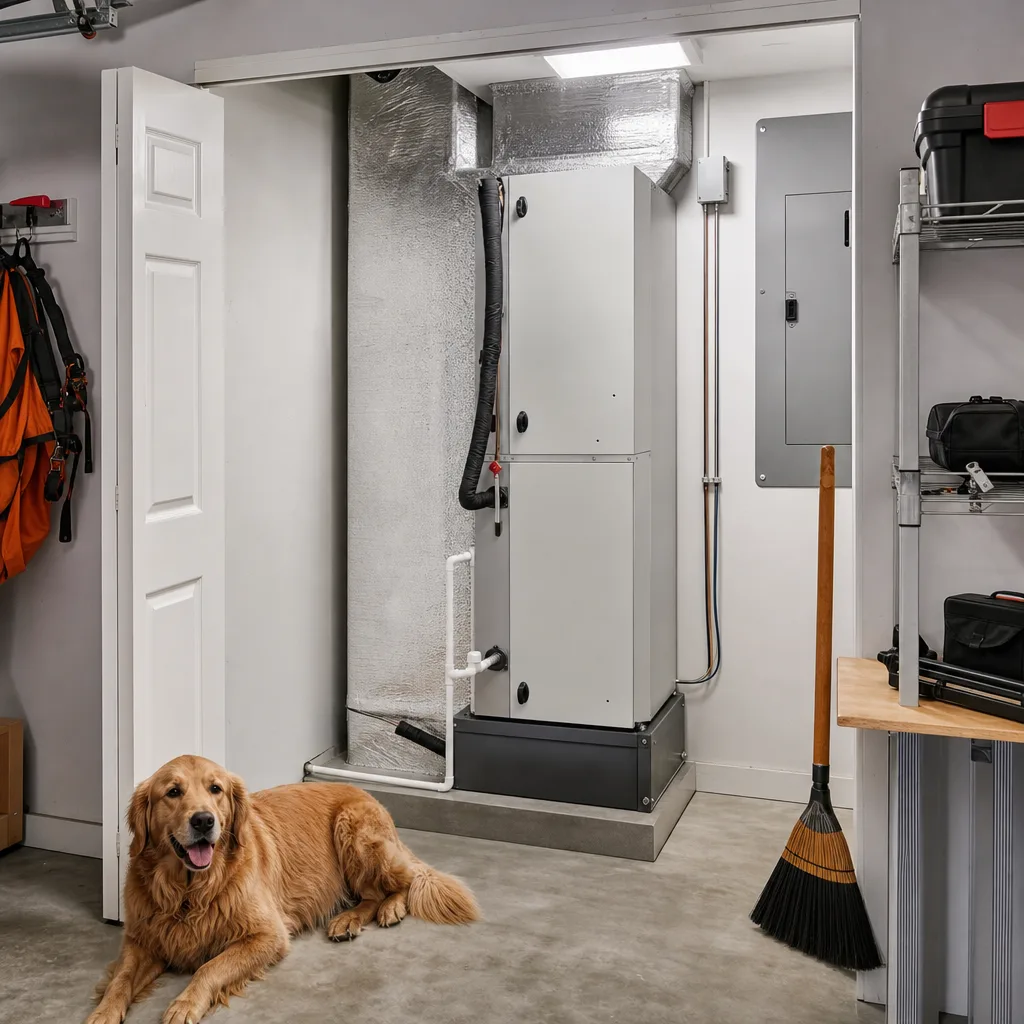
- Access. An air handler in a roomy closet is quicker to swap than one squeezed into a tight, hot attic. More labor means more cost.
- Brand and model. Different lines and features come at different prices.
- The condition of your ducts, wiring, and plumbing. Parts in good shape keep the job standard. Worn parts may need work first.
- Code upgrades, permits, and custom fabrication. Sometimes a new coil doesn’t fit the old space, and sheet metal has to be made to match.
You’ll see all of this before anything starts. We give you upfront flat-rate pricing, and you approve it before work begins. You’ll know what’s in the standard job and what’s an add-on. If a line item isn’t clear, ask whether it’s part of the like-for-like swap or extra work your home needs. Then you can decide with the full picture in front of you.
Watch Our Video
See How We Handle AC replacement in Irving
Xtreme Air Services — Irving
What Drives AC Replacement Cost
You’ve seen the list of things that move the price. The more useful question is which of those choices are yours to make and which ones your house makes for you. Get the right answer on a few of them, and you won’t pay for more system than you need or end up with less than your home requires.
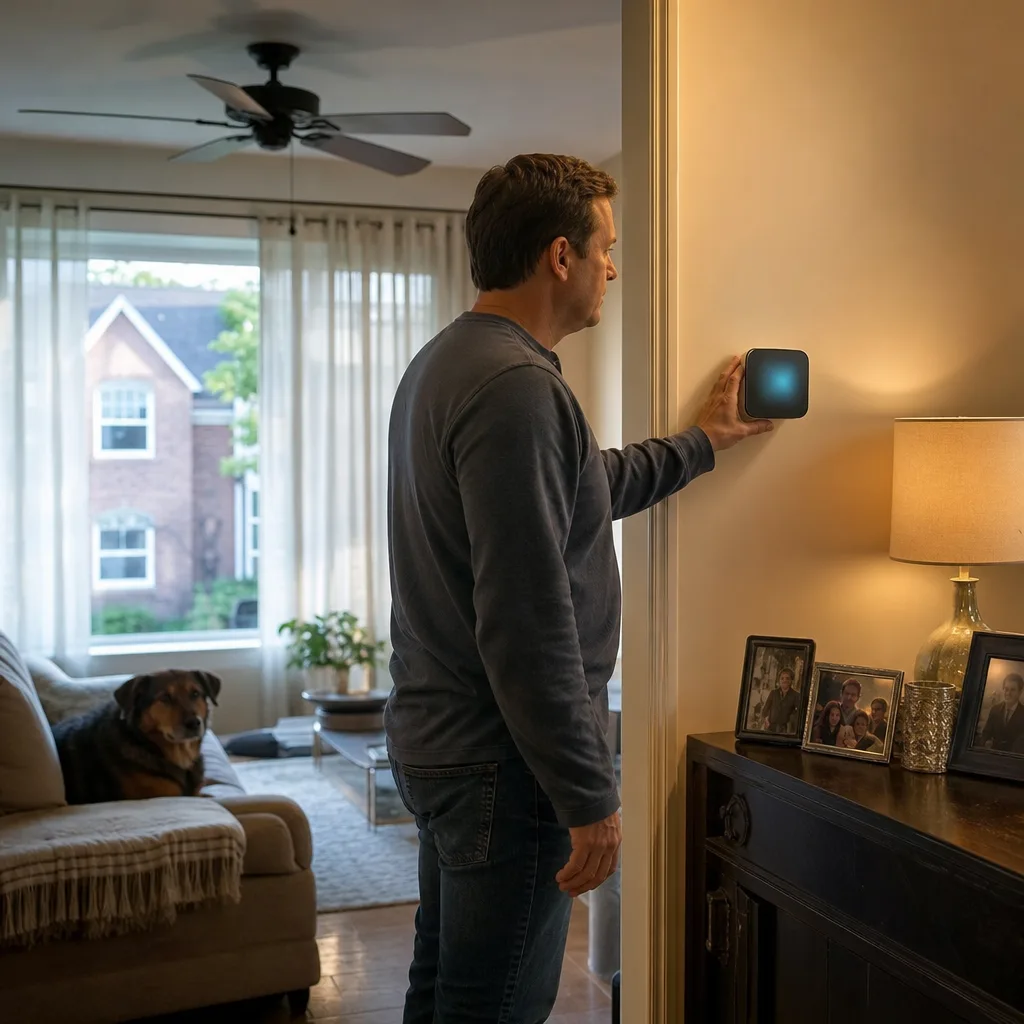
Start with size, because it’s the easiest one to get wrong. A lot of quotes simply copy the tonnage printed on your old unit. That number may not fit your home anymore. New windows, added attic insulation, a closed-in patio, or a room addition all change how much cooling your house needs. A system that’s too big costs more up front. It also cools the house fast and shuts off before it pulls the moisture out, which is the clammy feeling and short cycling we covered earlier. A system that’s too small runs all afternoon in an Irving July and still can’t keep up. The right size comes from a cooling load calculation, a room-by-room look at your home’s square footage, windows, insulation, and the direction the house faces.
Next, look at whether both halves of the system are being replaced. Swapping only the outdoor unit can look like the cheaper choice on paper. But newer equipment often uses a different refrigerant than older systems, and the old indoor coil may not be built for it. A matched outdoor unit and indoor coil costs more on day one. It’s also how the system is designed to reach its rated efficiency and comfort.
Efficiency is where you have the most say. A higher SEER2 rating costs more now and saves on cooling bills later. Whether that trade pays off depends on two things. The first is how long you plan to stay in the home. The second is how hard your system works. In a city where the AC runs for months at a time, the savings add up faster than they would somewhere milder. Variable-speed systems run longer at a lower, steady speed. That helps a lot with humidity and with rooms that never seem to catch up. If you’re moving in a few years, a solid standard-efficiency system may be the smarter buy.
Homes with the air handler in the attic can carry costs a yard unit doesn’t. A rusted drain pan, a worn condensate line, a flimsy platform, or a tight attic opening can all add work. It’s better to hear about these items in the quote than halfway through the install.
When you’re comparing quotes, make sure you’re comparing the same job. Ask each contractor:
- What size system are you quoting, and how did you decide on that size?
- Are you replacing both the outdoor unit and the indoor coil?
- What SEER2 rating is this, and what would one step up or down cost?
- Are permits, drain pan work, and haul-away included, or are they extra?
- Does my ductwork or wiring need anything before the new system goes in?
A lower price for a smaller system, or for only half the equipment, isn’t a better price. It’s a different job. Once each quote answers these questions, the numbers start to mean something, and you can pick the one that fits your home and your budget.
Frequently Asked Questions
Common questions about AC replacement
How much should I expect to pay for a full AC replacement in Irving?
Most standard like-for-like AC replacements in Irving fall between $6,400 and $9,200, with the full range across all job types running $5,000 to $12,000. Where your job lands depends on system size, efficiency rating, and how hard your attic or closet is to work in. A tight attic install or an older home needing duct or wiring updates will push costs toward the higher end. Getting a cooling load calculation and a clear flat-rate quote before work starts is the best way to know your real number.
How long does an AC replacement take once I decide to move forward?
A standard like-for-like replacement is usually a one-day job once the old unit is disconnected and the new equipment goes in. Jobs take longer when your home needs extra work, like duct changes, electrical updates, or a mismatched indoor coil that needs replacing too. Homes with the air handler in a tight attic space, common in older Irving houses, can also add time because of limited access. Ask your technician upfront whether your home is a straightforward swap or needs extra steps, so you know what to expect on install day.
Is it better to replace just the outdoor unit or the whole system at once?
Replacing the whole system, both the outdoor unit and the indoor coil together, is almost always the smarter move. Newer outdoor units often run on a different refrigerant than older indoor coils are built for, so pairing new equipment with an old coil can hurt performance and efficiency. A matched set is also how the system is designed to reach its rated cooling output. If a quote only covers the outdoor unit, ask directly whether the indoor coil needs to be swapped too before you compare prices.
Ready to Get Started?
Call (469) 200-2166 Today, Get Service Today.