


Commercial HVAC Repair & Maintenance in Frisco
Commercial and rooftop systems repaired before one failing part takes the rest down – plus preventive maintenance.
What’s Covered on This Page
- Signs Your Commercial System Needs a Repair Call Today
- What Happens During a Commercial HVAC Repair Visit
- What’s Included in a Repair Call and What Costs Extra
- Commercial Preventive Maintenance vs. Reactive Repair
- Why a Licensed Commercial Technician Matters for This Work
- How fast can you get a technician to my business in Frisco?
- Do I need to be on-site during the repair, or can my manager handle it?
- What if my rooftop unit is hard to access?
- Can a technician tell me if my unit is worth repairing or should be replaced?
Signs Your Commercial System Needs a Repair Call Today
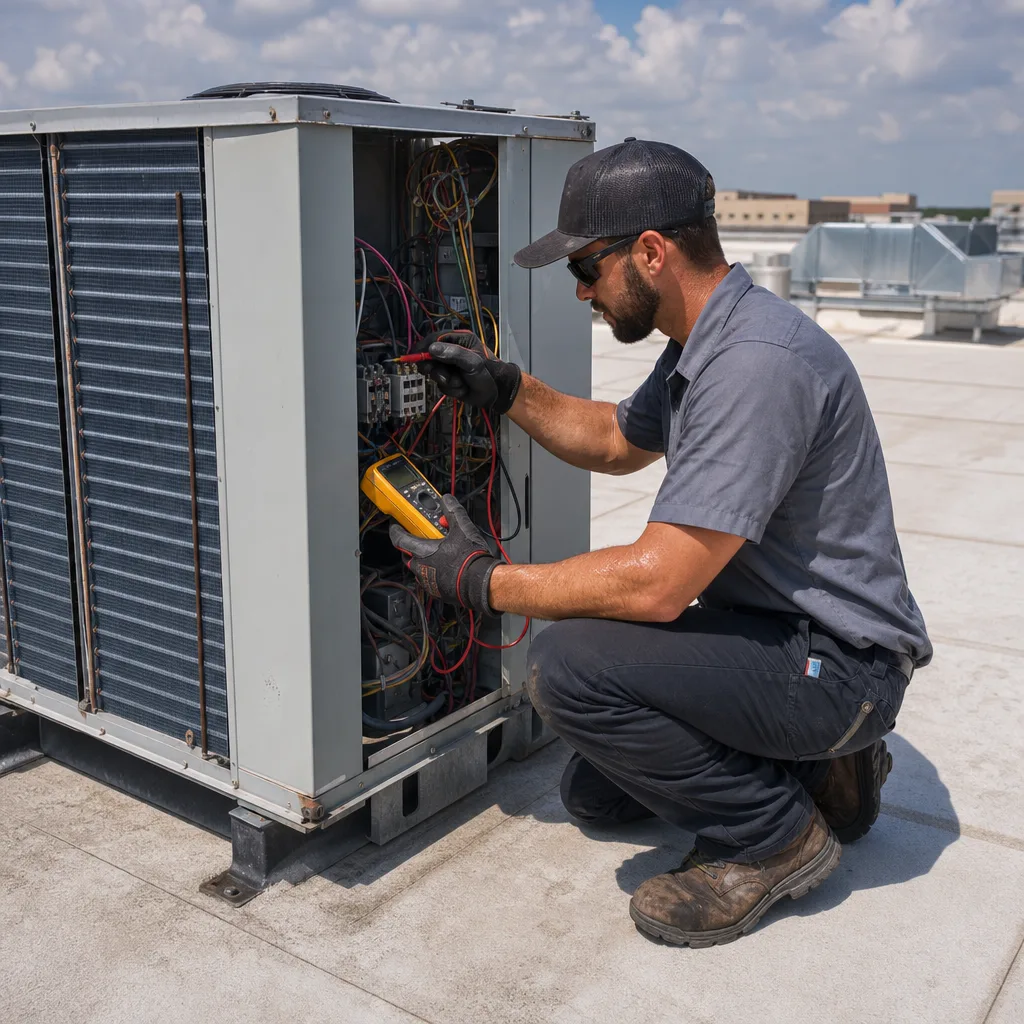
Your commercial system works harder than any home unit. It runs long hours, serves more people, and often sits on a roof baking in the sun. When one part starts to fail, the rest of the system has to cover for it. That’s how a single bad part becomes two or three bad parts. Catching it early is the difference between a quick repair and a bigger bill with more downtime.
Here are the signs that mean you should pick up the phone today, not next week:
- The space won’t cool down. The unit runs all day but never reaches the temperature you set. Employees are sweating and customers notice.
- Warm air from the vents. If the vents are blowing room-temperature air across the whole space, something in the cooling side has stopped doing its job.
- One area is hot while the rest is fine. A single zone or suite going warm can point to a failed rooftop unit, a damper, or a controls problem.
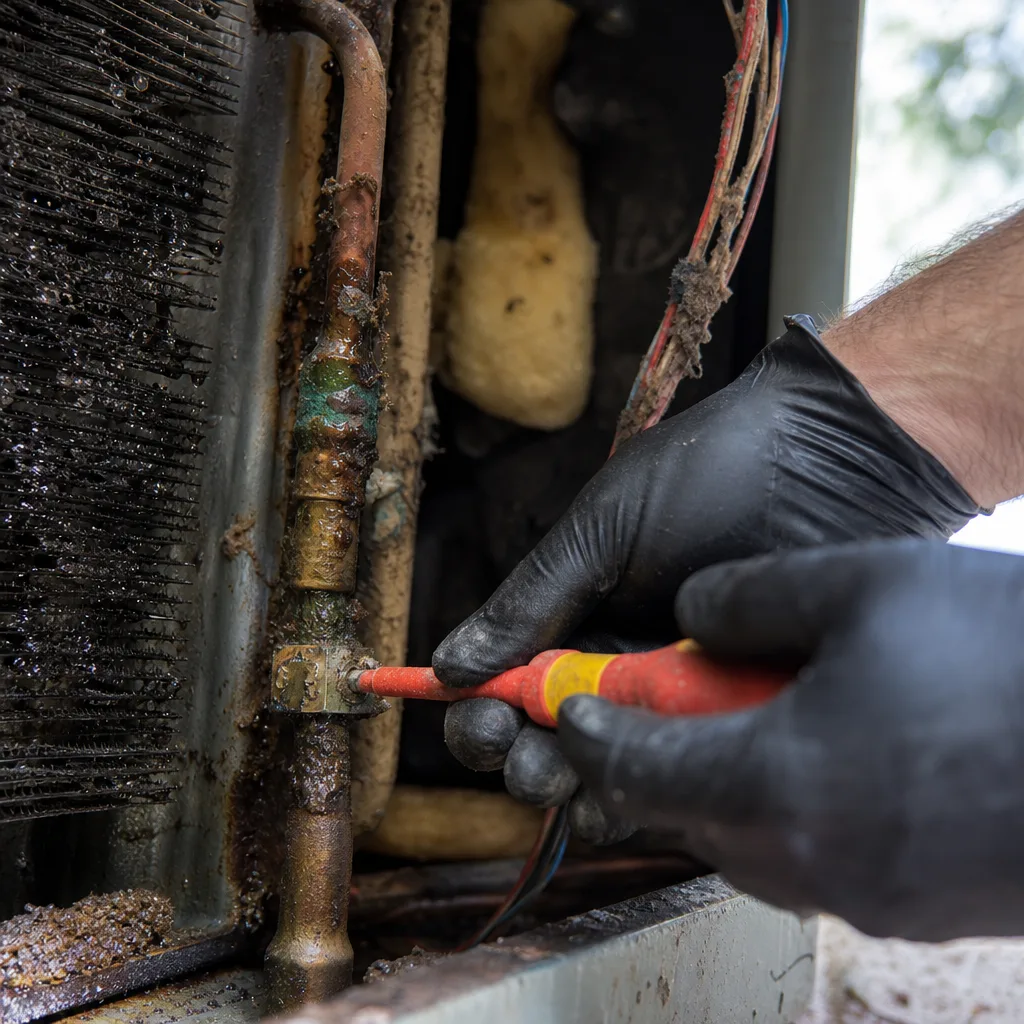
- Water where it shouldn’t be. Stained or dripping ceiling tiles, puddles near the air handler, or water around the rooftop unit often mean a clogged drain line. Left alone, that water can damage ceilings, inventory, and equipment.
- Ice on the lines or coil. Frost on copper lines or the indoor coil means air or refrigerant isn’t moving right. The unit won’t cool well until it’s fixed.
- Short cycling. The system kicks on, runs a few minutes, shuts off, and repeats. That wears out parts fast.
- A breaker that keeps tripping. Resetting it over and over doesn’t fix the cause. It points to an electrical or motor problem.
- Burning, electrical, or hot smells. Any smell like that coming from the vents or the unit is a call-today sign.
- New noises. Grinding, squealing, banging, or loud buzzing usually means a motor, fan, or electrical part is on its way out.
- A big, sudden jump in your energy bill with no change in how you use the building. A struggling system burns more power to do less.
Not everything is an emergency, and we’d rather you know that up front. If the thermostat screen is blank, try fresh batteries first. If the filter is caked with dust, change it and see if airflow comes back. If a breaker tripped once during a storm and the system runs normally after a reset, keep an eye on it and book a regular visit. Those are fair things to check yourself before you call.
Timing matters too. A system that’s limping on a mild morning can quit by the afternoon heat. If you notice a warning sign late in the day or on a weekend, don’t wait for Monday to save money. Xtreme Air Services charges no extra for nights or weekends, so the right time to call is when you first see the problem.
What Happens During a Commercial HVAC Repair Visit
A repair visit comes down to three jobs. We find the part that failed, repair or replace it, and then make sure your system runs the way it should. Most commercial calls turn out to be one common failure that gets fixed on the first visit, so your space can be cooling again the same day.
Here’s how the visit goes:
- Diagnosis. A licensed and insured technician tracks the symptom you noticed, like a warm suite, a tripping breaker, or water on the ceiling tiles, back to the part that’s causing it.
- Your price, before any work. You get upfront flat-rate pricing and approve it first. No meter running while you wait.
- The repair. We repair or replace the failed part. The standard replacement part is part of the price.
- Testing. We run the system and confirm it’s doing its job before we call it done.
- Cleanup. We clean up the work area so your staff and customers aren’t stepping around our mess.
Our technicians are background-checked and drug-tested, which matters when they’re walking through your office, your back room, or your tenants’ spaces during business hours.
There’s a $26-$99 service-call fee to come out and diagnose the problem. If you go ahead with the repair, that fee is credited toward it. For a sense of the bigger picture, our most common commercial repair job runs $300-$2,400, and the full typical range for this work is $300-$5,000. Where your job lands depends on how bad the failure is, what the part costs and whether it’s in stock, the age and brand of your equipment, and whether more than one part has gone bad.
Some things aren’t in the standard repair price. That includes additional failed parts, major components, code upgrades, and permits. If the technician finds one of those, it gets quoted separately, and you decide before anything else happens. You stay in control of the bill the whole time.
If the fix turns into a larger job, flexible financing is available on qualifying installations and larger jobs, on approved credit.
A few things on your end help the visit go faster:
- Roof access. If your unit sits on the roof, have the hatch key or ladder access ready, or let building management know we’re coming.
- Equipment access. Clear a path to the air handler, mechanical closet, or electrical panel.
- What you noticed. Tell us when the problem started, which areas are affected, and anything you already tried, like a breaker reset or a filter change.
- A point person. Have someone on site who can approve the price so the work isn’t held up.
That’s the whole visit. One clear diagnosis, one price you’ve agreed to, and a system that’s been tested before we leave.
What’s Included in a Repair Call and What Costs Extra
The price you approve covers the fix for the problem you called about. That includes finding the failed part, the labor, the standard replacement part, testing, and cleanup. If anything else turns up, it gets its own quote. You see that quote and decide on it before we touch it. That’s the line, and knowing where it sits makes your quote much easier to read.
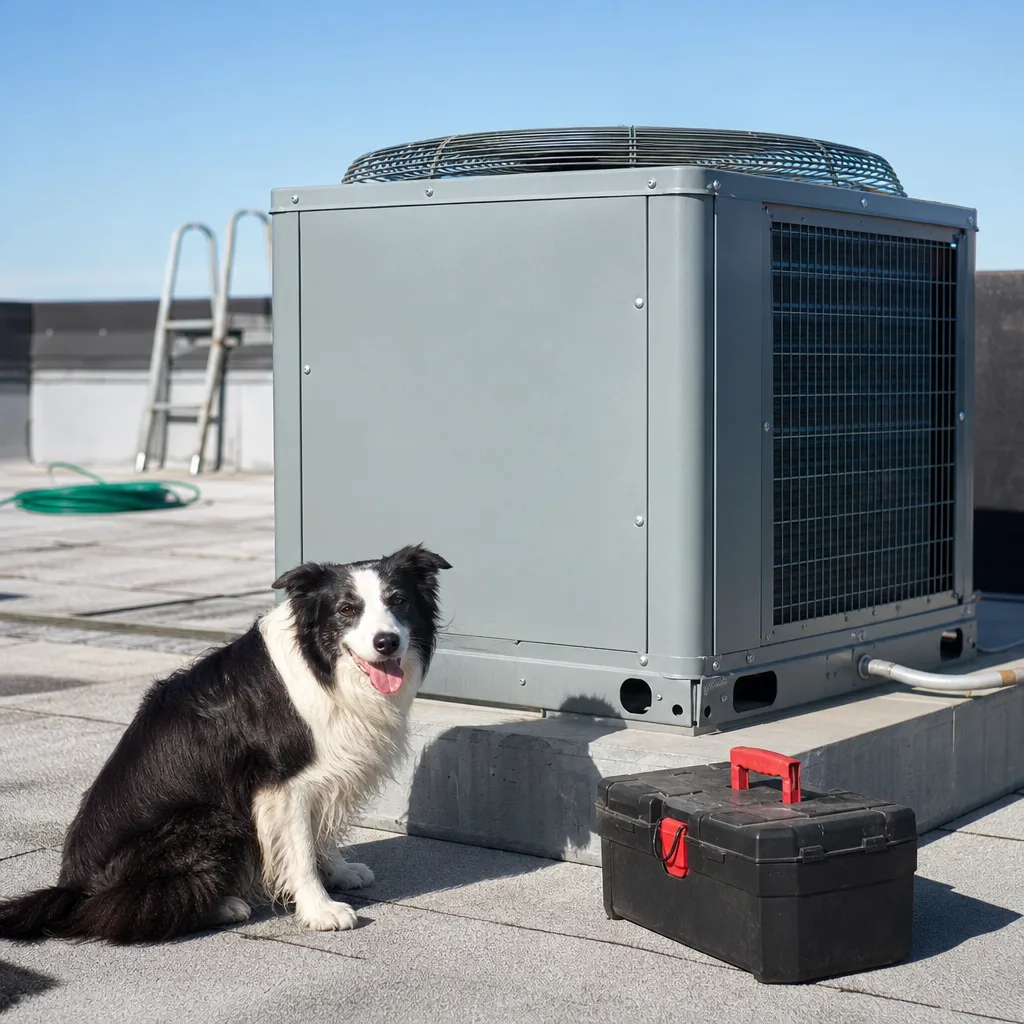
On a commercial unit, a standard repair is usually one common part that wore out. Think of a capacitor that helps a motor start, a contactor that switches the unit on, a fan motor, a sensor, or a clogged drain line. These are the everyday failures behind most “it stopped cooling” calls. Your quote will say plainly which part is covered.
Major components are a different story. A compressor, a condenser or evaporator coil, or a control board costs a lot more and can take longer to get. When one of these is the real problem, you’ll see it priced on its own so you can weigh it.
Here’s why extra items come up at all. As the earlier section covered, a failing part makes the rest of the system work harder. By the time a rooftop unit quits on a hot North Texas afternoon, a second part may be worn too. A good technician tells you about it instead of quietly adding it to the bill or leaving it to fail next week. Code upgrades and permits work the same way. Older equipment sometimes can’t be put back exactly as it was under current rules, and some work needs a permit. When that applies, it’s spelled out for you, not tucked inside the price.
It helps to know how pricing works in this trade. Some contractors bill by the hour plus materials, so the final number isn’t known until the job is done. With upfront flat-rate pricing, you get the number first. A tough diagnosis or a stuck bolt doesn’t change what you pay. And calling at night or on a weekend doesn’t either.
Before you approve any quote, from us or anyone else, these questions are worth asking:
- Which part failed, and can you show me?
- Is the price fixed, or could it change once the work starts?
- Did you find any other worn parts? Are they urgent, or can they wait?
- Does this job need a permit or a code upgrade?
- If the part isn’t in stock, how long will my system be down?
If the extra quote is large, step back before you say yes. Ask yourself a few things. How old is the unit? Is this its second or third big repair? How much does downtime cost your business? Sometimes one more repair is the smart call. Sometimes it makes more sense to talk about replacement, and financing is available on qualifying larger jobs, on approved credit. Either way, you’re the one who decides, with real numbers in front of you.
Call 469-490-3595
Not sure what your Commercial HVAC repair & maintenance project needs? Ask us.
Call Today, Get Service Today. Xtreme Air Services — Frisco is ready to help.
Commercial Preventive Maintenance vs. Reactive Repair
Reactive repair means you call when something breaks. Preventive maintenance means a technician checks and cleans the system on a schedule, so worn parts get caught before they quit. For most businesses, the main question is simple: what does an unplanned shutdown cost you? If the answer is “a lot,” maintenance usually earns its keep.
With a repair call, you pay for the fix. You also pay for everything that stops while you wait. That could be a restaurant that can’t seat guests in a hot dining room, an office sending staff home early, or a retail shop where shoppers leave quickly. Those costs never show up on a repair invoice, but you still feel them.
A typical commercial maintenance visit targets the things that cause the everyday failures you read about above:
- Changing filters, so air moves freely and the unit doesn’t strain.
- Cleaning condenser and evaporator coils, so the system can get rid of heat the way it’s built to.
- Clearing the condensate drain line before it backs up onto your ceiling tiles.
- Checking belts, fan motors, and electrical connections for wear or loose wiring.
- Testing capacitors and contactors, the small parts that help the unit start and switch on.
- Checking that refrigerant levels and temperatures look right.
Each of these is a small job when it’s planned. The same issue can turn into a much bigger repair if it’s found on a 104-degree afternoon.
Timing matters in Frisco. Rooftop units here bake through long summers, and spring storms can bring hail that bends coil fins and blocks airflow. A spring checkup gets your cooling ready before the heat arrives. A fall visit covers heating before the first cold front moves through. Booking ahead also helps you schedule work around your business hours, so you aren’t trying to find an open slot on the busiest day of July.
Here’s the honest part. Maintenance won’t stop every breakdown. Parts still wear out, and a technician can’t predict every failure. Reactive repair can also make sense in some cases:
- You have a small space with one newer unit, and a few hours of downtime wouldn’t hurt your business much.
- Your equipment is old and you’re already planning to replace it soon. Spending heavily to keep it in top shape may not be worth it.
- Your lease puts HVAC upkeep on the landlord or property manager. Check your lease before you pay for something that’s already covered.
If none of those fit, maintenance is usually the better bet. That’s especially true if you have several rooftop units, tenants who expect steady comfort, or stock and equipment that can’t handle heat. Think of it this way. Preventive maintenance is a cost you pick on your schedule. Reactive repair is a cost that picks you, usually at the worst time.
Xtreme Air Services offers both commercial preventive maintenance and preventative maintenance plans, along with rooftop unit service. If you’re not sure which approach fits your building, ask the technician on your next visit. Tell them how many units you have, how old they are, and what an hour of downtime costs you. That’s enough to give you a straight answer.
Watch Our Video
See How We Handle Commercial HVAC repair & maintenance in Frisco
Xtreme Air Services — Frisco
Why a Licensed Commercial Technician Matters for This Work
A commercial system isn’t just a bigger home unit. It runs on heavier electrical power, holds more refrigerant, and often ties into controls that run several suites at once. It usually sits on a roof where one mistake can hurt someone or shut down your business. A licensed technician is trained for that work and accountable for it. In Texas, HVAC contractors are licensed through the Texas Department of Licensing and Regulation (TDLR), and you can look up any license before you let someone touch your equipment.
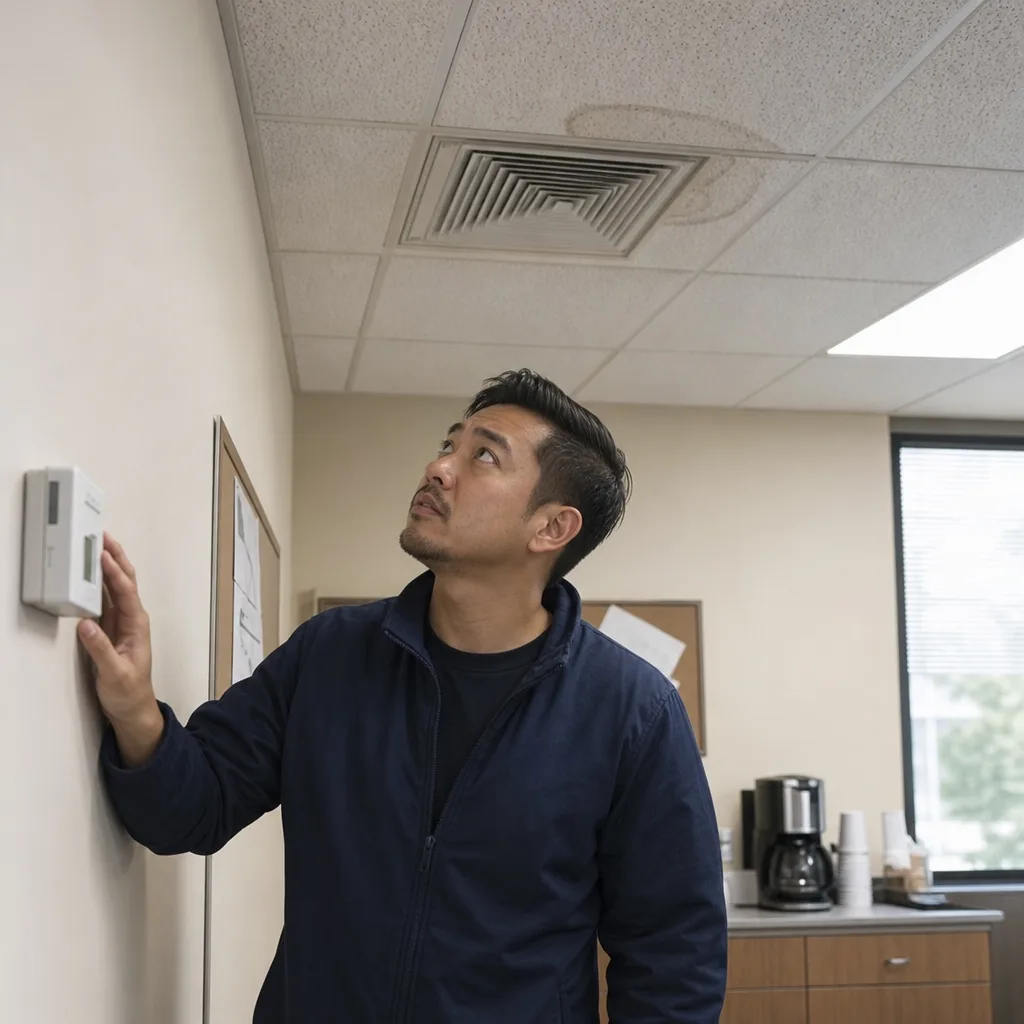
Here’s what makes commercial work different from a house call:
- Heavier power. Many rooftop units run on three-phase power, which carries more electricity than a home circuit. A wrong move at the disconnect can injure a person or burn out a motor.
- More refrigerant. Commercial units hold a larger charge, and refrigerant handling is regulated. It has to be recovered and recharged by someone trained to do it. Guessing at the amount can’t be part of the job.
- Roof work. Working safely on a hot roof in a Frisco summer takes the right gear and habits. Rushed roof work is how coils get bent and roof membranes get punctured.
- Connected controls. One thermostat or control board can run several units or zones. Wire it wrong, and a whole suite can go warm while the rest of the building seems fine.
- Permits and code. Some repairs need a permit or a code update. A licensed contractor knows when that applies and tells you up front.
There’s also the question of who pays if something goes wrong. Say an unlicensed worker gets hurt on your roof, or a bad repair floods a tenant’s ceiling. That cost can land on you, your landlord, or your insurance. A licensed and insured contractor keeps that risk off your books.
Before you hire anyone, us included, check these four things:
- Ask for the HVAC license number and look it up with TDLR.
- Ask if they’re insured for commercial work.
- Ask who will show up. Will it be the licensed company’s own technician, or someone they hand the job to?
- Get the price in writing before any work starts.
Our proof is out in the open. Xtreme Air Services is licensed and insured, and our HVAC license number is #TACLA29023C. We’re a Trane Comfort Specialist with a 4.8-star reputation across 2,900+ reviews on Google, Angi, and HomeAdvisor. We’re also one team for HVAC, plumbing, electrical, and refrigeration. That matters when a rooftop unit problem turns out to be a bad electrical feed or a backed-up drain line. You make one call instead of lining up two or three different companies while your space heats up.
Call now
Frequently Asked Questions
Common questions about Commercial HVAC repair & maintenance
How fast can you get a technician to my business in Frisco?
We offer same-day service, 6 days a week, so you don’t have to wait while your space heats up. There’s no extra charge for nights or weekends, so call as soon as you notice a problem instead of waiting for business hours.
Do I need to be on-site during the repair, or can my manager handle it?
You just need one point person who can approve the price before work starts. That person should also be ready to tell the technician when the problem started, which areas are affected, and anything already tried, like a breaker reset or filter change.
What if my rooftop unit is hard to access?
Let us know ahead of time so we can plan for it. Have the hatch key or ladder access ready, or tell building management we’re coming, so the technician isn’t stuck waiting at a locked gate while your space stays hot.
Can a technician tell me if my unit is worth repairing or should be replaced?
Yes, and that decision usually comes down to the unit’s age, how many big repairs it’s had, and what downtime costs your business. If a repair quote comes back large, ask the technician those questions directly, and financing is available on qualifying larger jobs for approved credit.
Ready to Get Started?
Call (469) 490-3595 Today, Get Service Today.