


Commercial HVAC Repair & Maintenance in Dallas
Commercial and rooftop systems repaired before one failing part takes the rest down – plus preventive maintenance.
What’s Covered on This Page
- Commercial HVAC Problems That Mean Call Now
- What Happens During a Commercial HVAC Repair Visit
- What Drives Commercial HVAC Repair Cost
- Preventive Maintenance to Avoid Emergency Failures
- Questions to Ask Before Hiring a Commercial HVAC Contractor
- Can one company handle both my commercial HVAC and refrigeration problems in Dallas?
- How often should a Dallas business schedule commercial HVAC maintenance?
- Does hail damage affect my commercial rooftop unit even if it still runs?
- What should I ask a contractor before letting them work on my commercial HVAC system?
Commercial HVAC Problems That Mean Call Now
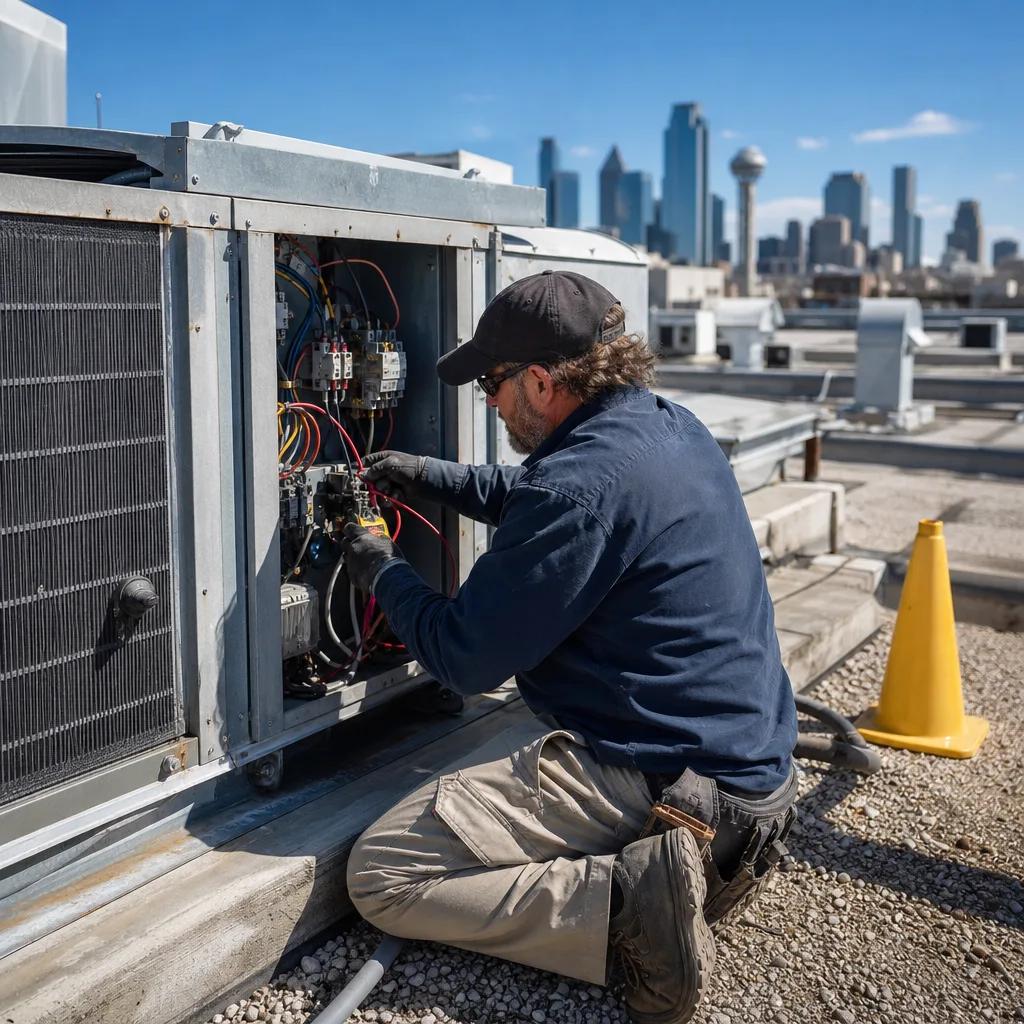
In Dallas, a commercial system doesn’t get many easy days. Rooftop units sit on flat roofs in full sun through a long, hot cooling season. When one part starts to fail, the rest of the system works harder to cover for it. That’s how a small repair turns into a big one. Here’s how to tell when your building can’t wait.
- Warm air from the vents while the unit runs. If the space keeps getting hotter on a summer afternoon, your customers, tenants, or staff will feel it within the hour. Common causes include a failed capacitor, a fan motor that quit, or a refrigerant problem.
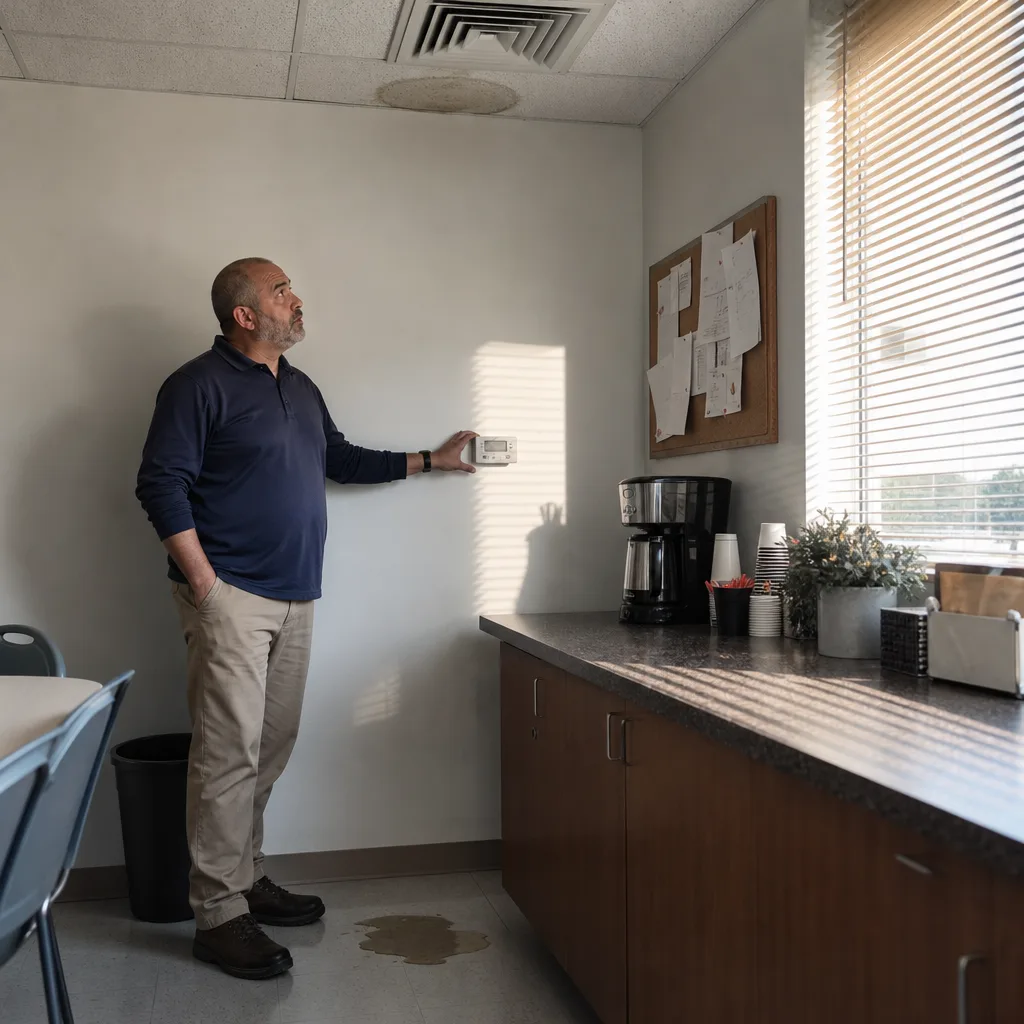
- Water coming through ceiling tiles or pooling near the unit. This usually points to a clogged condensate drain or an overflowing drain pan. It can ruin ceilings, stock, flooring, and electronics fast, so treat it as urgent even if the air still feels cool.
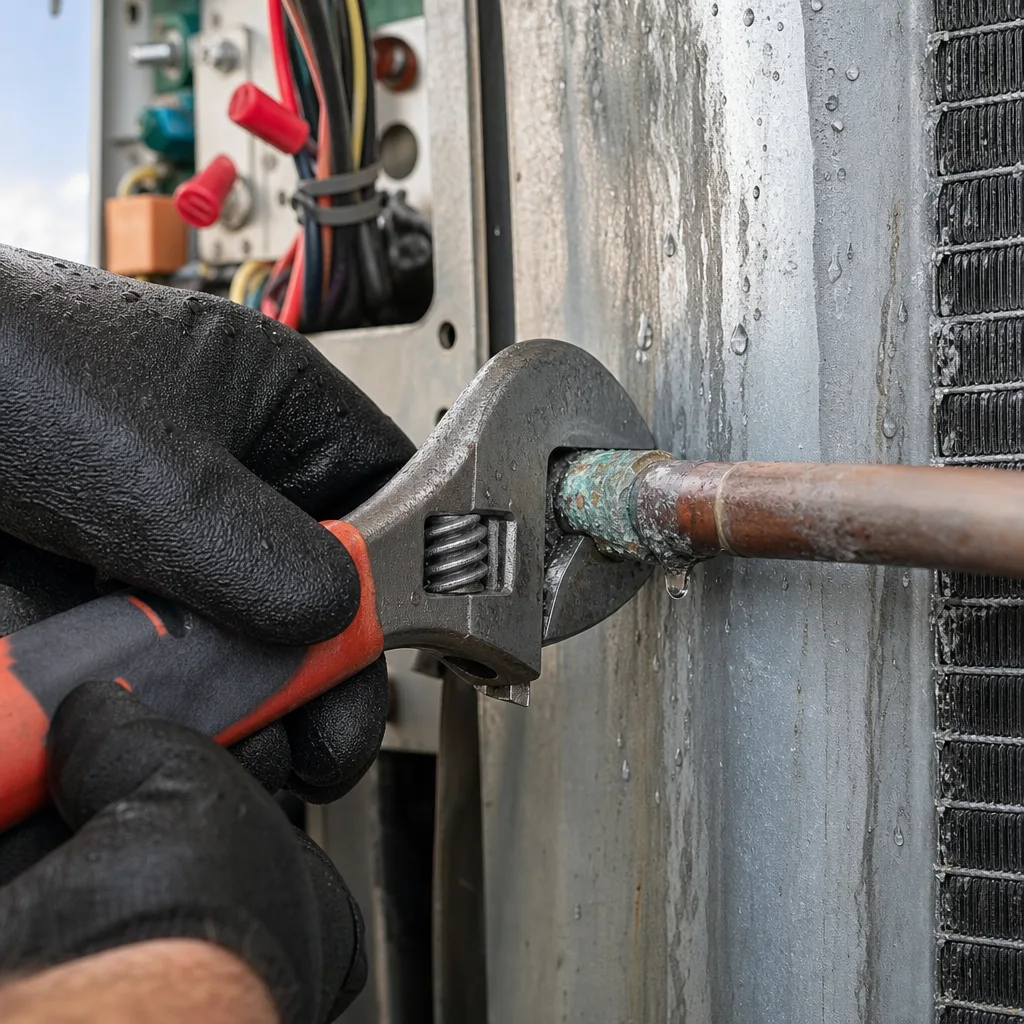
- Ice on the refrigerant lines or coil. A frozen coil means air or refrigerant isn’t moving the way it should. If the unit keeps running in that state, the compressor takes the strain, and that’s one of the most expensive parts to replace.
- New grinding, banging, or squealing from the rooftop unit. These sounds often come from a worn bearing, a loose part, or a motor on its way out. Caught early, that’s usually a single part. Ignored, it can take other parts down with it.
- A burning smell or breakers that keep tripping. Electrical trouble inside the unit isn’t something to reset over and over and hope for the best. Call right away.
- Short cycling. If the system clicks on and off every few minutes, it’s wearing itself out without ever cooling the space.
Some problems can wait for a regular appointment. A filter that’s overdue, one office running a degree or two warmer than the rest, or a thermostat that needs new batteries won’t shut your doors. If the building is comfortable and nothing is leaking, smelling, or making noise, book a visit for a time that works for your business.
Problems rarely wait for business hours. A unit that quits Friday night can cost you a full weekend of sales or a lobby full of unhappy tenants. That’s why Xtreme Air Services charges no extra for nights or weekends. You shouldn’t have to pick between protecting your business and paying an overtime rate.
If you run walk-in coolers or freezers, a refrigeration failure is its own kind of emergency because your inventory is on the clock. Our commercial refrigeration page covers that work.
What Happens During a Commercial HVAC Repair Visit
A commercial HVAC repair visit follows three steps. We find the part that failed, repair or replace it, and test the system to make sure it runs correctly before we leave. Most calls come down to one common failure that gets fixed on the first visit. You’ll know the price before any work starts.
Here’s how the visit plays out, so you know what you’re agreeing to when you call.
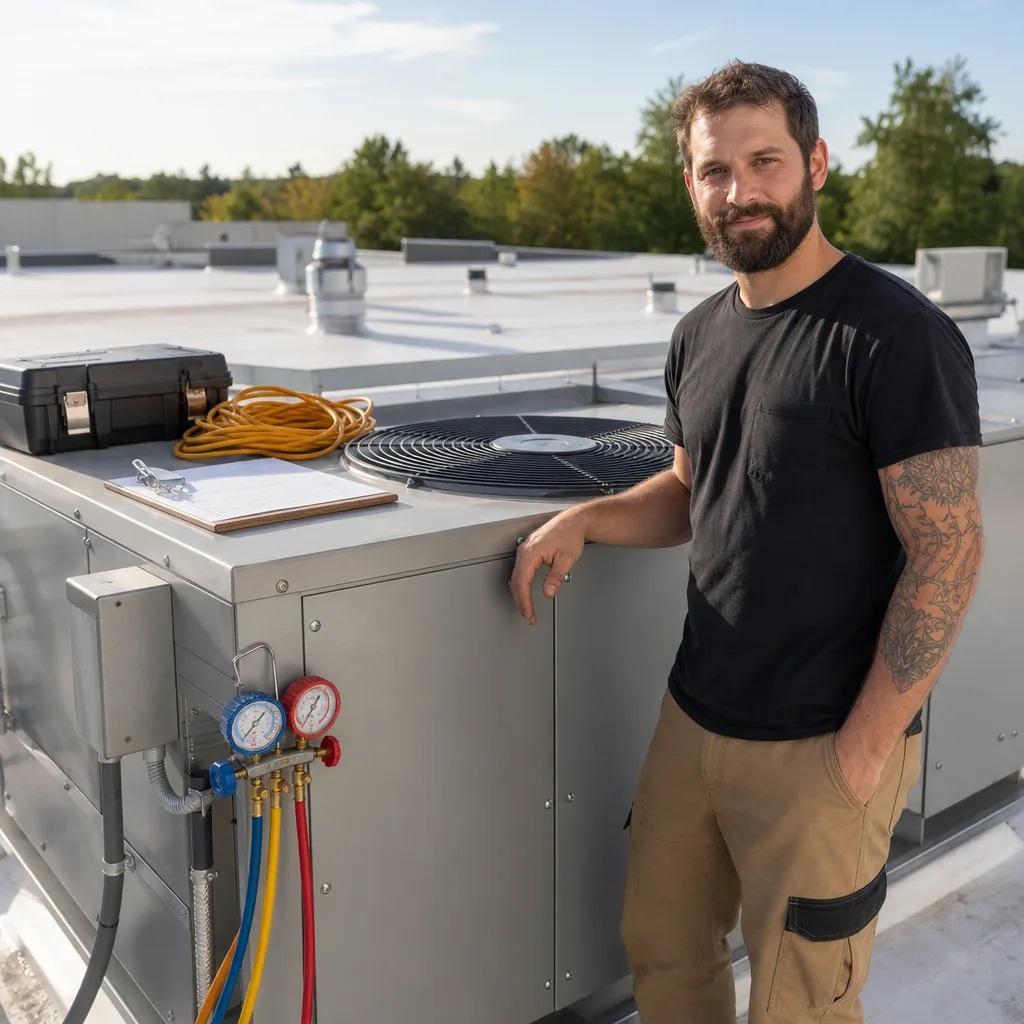
- Diagnosis. Our licensed and insured technician tracks down what’s wrong. That could be a capacitor, a fan motor, a clogged drain, or a refrigerant problem, which are the kinds of failures covered above. The point is to find the cause, not just quiet the symptom.
- An upfront, flat-rate price. Before anyone picks up a tool, you get a flat-rate price for the repair, and you approve it. There’s no meter running while we work, and the price doesn’t change because the job ran late or landed on a Saturday.
- The repair. Once you say yes, we repair or replace the failed part.
- Testing and cleanup. We run the system and check that it’s cooling and working the way it should. Then we clean up the work area, so your staff isn’t stepping around old parts or debris.
The service-call fee is $26-$99. If you go ahead with the repair through Xtreme Air Services, that fee is credited toward the job, so you’re not paying twice to have someone look at the problem.
Your repair price includes the diagnosis, the labor, the standard replacement part, testing, and cleanup. Some things are quoted separately: additional failed parts, major components, code upgrades, and permits. If we find a second problem, or the fix needs a major component like a compressor, you’ll hear about it and see a separate quote before we do that work. You stay in control of what gets done and what it costs.
You’ll also want to know who’s walking through your building. Our technicians are background-checked and drug-tested, and they’re licensed and insured. That matters when they’ll be working around your staff, your customers, your tenants, and your stock.
Timing matters to a business, too. We offer same-day service, and there’s no extra charge for nights or weekends. A unit that quits after closing on a Friday can be looked at without waiting until Monday and without paying an overtime rate. The goal of every visit is simple: a repair done right the first time and a building that’s comfortable and open for business again.
What Drives Commercial HVAC Repair Cost
Most commercial HVAC repairs with Xtreme Air Services run $300-$2,400. That covers the most common job: finding the failed part, fixing or replacing it, and making sure the system runs right. Across all commercial repair and maintenance work, our typical range is $300-$5,000. Where your job lands in that range comes down to a handful of things you can usually see coming.
- How far the failure has spread. A capacitor that quit is a small repair. If the unit kept running after that and the compressor took the strain, the job gets bigger. This is why the warning signs covered above matter for your budget, not just your comfort.
- Part cost and availability. Some parts are common and quick to get. Others cost more or have to be ordered, which can affect both the price and the timing.
- Equipment age and brand. Older units and less common brands can need parts that are harder to find and cost more. An older rooftop unit that’s spent years on a Dallas roof in full summer sun may also have worn parts around the one that failed.
- More than one failed component. One bad fan motor is one repair. A bad fan motor plus a clogged drain plus a failing contactor is three. Each extra part adds to the cost.
- Timing. A lot of contractors charge more after hours. We don’t, so a Saturday call costs the same as a Tuesday call.
Here’s how that plays out. Picture two shops on the same street, both with warm air coming from the vents on a July afternoon. At the first one, the manager calls that day, and it’s a single failed part. At the second, the unit has been short cycling for weeks and nobody noticed until the coil froze. Same symptom, very different bill. The earlier you call, the more likely you’re paying for one part instead of several.
Because major components and extra failed parts are quoted separately, you won’t find out about a big cost after the fact. You’ll see it and decide before the work happens.
Whoever you hire, these questions will help you compare quotes fairly:
- Is this a flat price for the job, or are you billing by the hour?
- Does the price include the part, the labor, and testing?
- Will I pay more if you come out at night or on a weekend?
- If you find a second problem, will you stop and quote it before doing the work?
- Is the service-call fee applied to the repair if I go ahead?
Clear answers to those questions tell you a lot about how a contractor will treat your business once the work starts. With us, you get upfront flat-rate pricing that you approve first, so there’s no meter running while the technician works.
If a repair turns into a larger job, flexible financing is available on qualifying installations and larger jobs, on approved credit. That can help you get the building running again now without taking the whole hit to your cash flow at once.
Not sure what your Commercial HVAC repair & maintenance project needs? Ask us.
Call Today, Get Service Today. Xtreme Air Services — North Dallas is ready to help.
Preventive Maintenance to Avoid Emergency Failures
The cheapest repair is the one you catch before it becomes an emergency. Most commercial breakdowns start with one worn part: a weak capacitor, a slipping belt, a drain line that’s slowly filling up. Regular maintenance finds that part while it’s still a small fix you can schedule, instead of a failure that happens on a busy afternoon and takes other parts down with it.
That matters more in Dallas than in a lot of places. Your rooftop unit sits in full sun through a long cooling season, so it runs hard for months without a break. Spring storms add another problem. Hail can bend the thin metal fins on the outdoor coil, and bent fins choke off airflow. The unit may keep running, but it works harder every day until something gives.
A commercial tune-up looks at the parts most likely to quit under that kind of load:
- Capacitors and contactors, the small electrical parts that help motors start. They wear out quietly, and they’re a common cause of a unit that suddenly stops cooling.
- Belts and fan motors, checked for wear, cracking, and bearing noise before they snap or seize.
- Condensate drains and drain pans, cleared so water goes outside instead of through your ceiling tiles.
- Coils, cleaned and checked for dirt, debris, and hail damage that cuts down on airflow.
- Electrical connections, checked and tightened, since loose wiring runs hot and can trip breakers.
- Refrigerant levels and system pressures, checked so the compressor isn’t straining to make up for a problem.
Many building owners schedule a visit before the summer heat sets in and another before cold weather, so the system goes into its hardest stretch already checked. If a hailstorm rolls through, it’s worth having the rooftop unit looked at even if it still seems to be running fine.
You don’t need a technician for everything. Your staff can change filters on schedule, keep boxes and supplies clear of indoor equipment, and pay attention to new noises or leaks. If your roof is safe to walk and you have permission, a quick look for debris piled around the unit after a storm helps too. Leave anything inside the unit’s panels alone. It’s high-voltage equipment, and a wrong move there costs more than a service call.
Maintenance won’t promise that nothing ever breaks. Parts still wear out. What it does is make the surprise failures much less likely, which helps keep you out of the bigger repairs described above. A part replaced on your schedule costs less than one that fails on its own and drags others down with it. Over a long Dallas summer, that difference can protect your budget and your hours of operation.
Call 469-213-3107
Watch Our Video
See How We Handle Commercial HVAC repair & maintenance in Dallas
Xtreme Air Services — North Dallas
Questions to Ask Before Hiring a Commercial HVAC Contractor
Before anyone climbs onto your roof or opens a panel in your mechanical room, ask a few direct questions. The pricing questions above tell you what you’ll pay. These tell you who is doing the work and whether they can handle your building.
- Are you licensed for HVAC work in Texas, and what’s your license number? Texas licenses air conditioning and refrigeration contractors through the Texas Department of Licensing and Regulation (TDLR). A qualified contractor will give you the number right away. If they dodge the question, that tells you something.
- Are you insured to work on my property? Commercial jobs often mean roof access and high-voltage equipment. If someone gets hurt or something gets damaged, you don’t want the cost landing on your business.
- Do you work on commercial equipment like rooftop units? A commercial system isn’t just a bigger home unit. Your building may have several rooftop units, each serving a different area. Ask whether the contractor works on this kind of equipment, not only on houses.
- Who will be walking through my building? Your staff, customers, tenants, and inventory are all in that space. Ask whether the technicians are background-checked.
- How soon can you get here, and do you charge more after hours? A unit that quits on a Friday afternoon can’t wait until Tuesday. Get a straight answer on same-day service and on night and weekend rates before you’re in that spot.
- If the problem turns out to be electrical or plumbing, can you handle it? A breaker that keeps tripping may trace back to the building’s wiring. An overflowing drain can turn into a plumbing job. One company covering all of it means one call, not three contractors pointing at each other.
- Will you tell me straight if a repair isn’t worth making? On an older rooftop unit that’s spent years in the Dallas sun, a good contractor explains repair versus replacement in plain terms, then lets you decide.
- Can you look after my equipment on a regular schedule? If you’d rather stay ahead of breakdowns, ask about preventive maintenance plans so your units get checked before the hardest stretch of the year.
Here’s how we answer those questions. Xtreme Air Services is licensed and insured, and our HVAC License number is TACLA29023C. Our technicians are background-checked and drug-tested. We offer same-day service, with no extra charge for nights or weekends. We’re a family-owned company based right here in the Dallas area, and we’re a Trane Comfort Specialist with a 4.8-star reputation across more than 2,900 reviews on Google, Angi, and HomeAdvisor.
You also get one trusted team for HVAC, plumbing, electrical, and refrigeration. If the rooftop unit, the walk-in cooler, and the electrical panel all need attention, you make one call and deal with one company.
Call now: 469-213-3107
Frequently Asked Questions
Common questions about Commercial HVAC repair & maintenance
Can one company handle both my commercial HVAC and refrigeration problems in Dallas?
Yes, you can call one team for both. If your rooftop units and your walk-in cooler or freezer both need attention, Xtreme Air Services covers HVAC, plumbing, electrical, and refrigeration, so you’re not juggling separate contractors for separate systems.
How often should a Dallas business schedule commercial HVAC maintenance?
Most building owners schedule a tune-up before summer heat sets in and another before cold weather hits. That way the system goes into its hardest stretch, like a long Dallas cooling season, already checked for worn capacitors, dirty coils, and clogged drains.
Does hail damage affect my commercial rooftop unit even if it still runs?
Yes, hail can bend the thin metal fins on the outdoor coil and choke off airflow, even if the unit seems fine at first. After a spring storm rolls through, it’s worth having the rooftop unit checked, since it will keep working harder every day until something fails.
What should I ask a contractor before letting them work on my commercial HVAC system?
Ask if they’re licensed through the Texas Department of Licensing and Regulation, insured for roof and high-voltage work, and experienced with commercial rooftop units rather than just home systems. Also ask who will be walking through your building and whether night or weekend calls cost extra.
Ready to Get Started?
Call (469) 213-3107 Today, Get Service Today.