


Commercial Refrigeration in Frisco: Fast, Transparent Repair and Install
Walk-in coolers, freezers and ice machines repaired by licensed refrigeration technicians – usually one part, not a whole new system.
What’s Covered on This Page
- Most Refrigeration Failures Are One Part, Not a Full Replacement
- Signs a Walk-In Cooler, Freezer, or Ice Machine Needs Service Now
- Why This Work Requires a Licensed Refrigeration Technician, Not a Generalist
- Routine Maintenance You Can Handle vs. What Needs a Technician
- How Commercial Refrigeration Pricing Works
- Can my ice machine be saved, or does scale buildup mean I need a new one?
- Do I need a different technician for a walk-in freezer versus a reach-in cooler?
- What should I do if my commercial freezer breaks down after hours or on a weekend?
Most Refrigeration Failures Are One Part, Not a Full Replacement
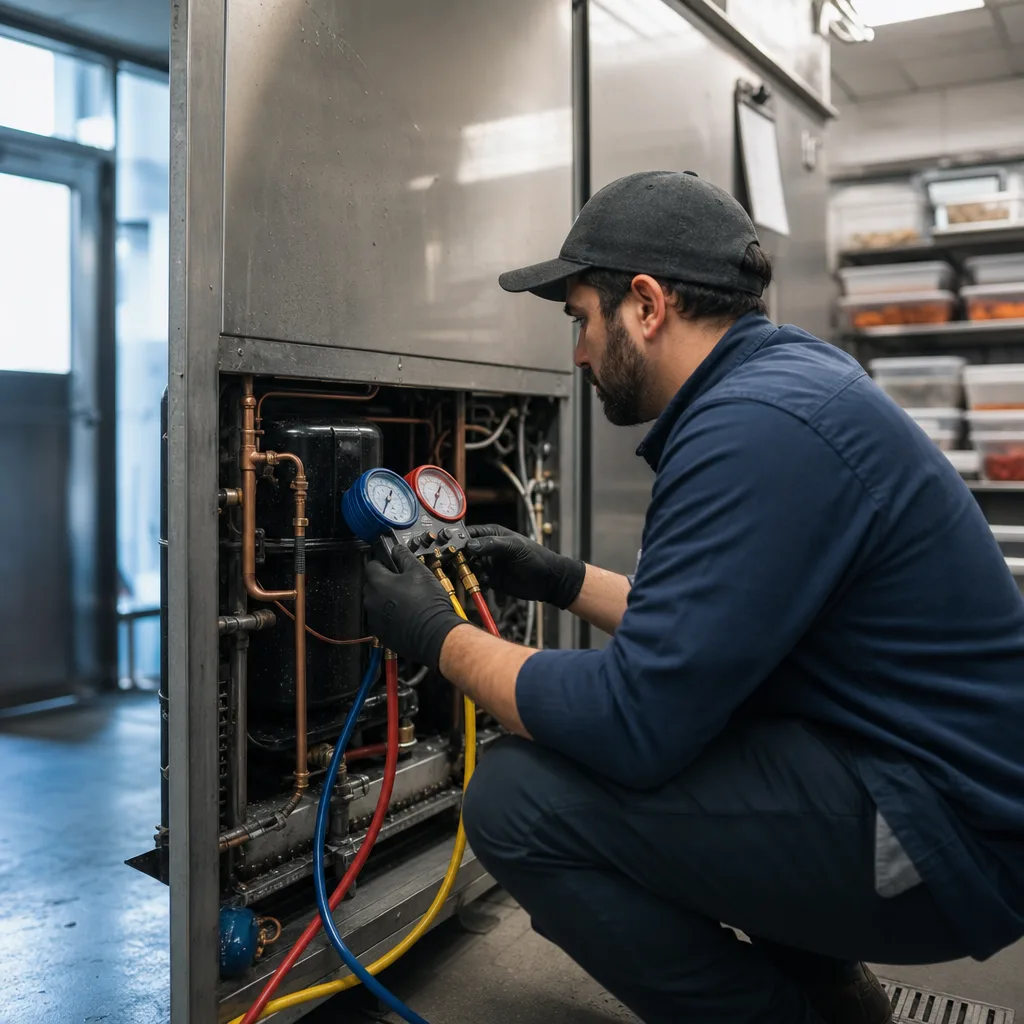
A warm walk-in feels like the end of the world when you’ve got a full load of product inside. But a refrigeration system is a set of parts that work together. When one of them quits, the whole box stops cooling. That doesn’t mean the box is done. It usually means one part needs to be found and swapped out.
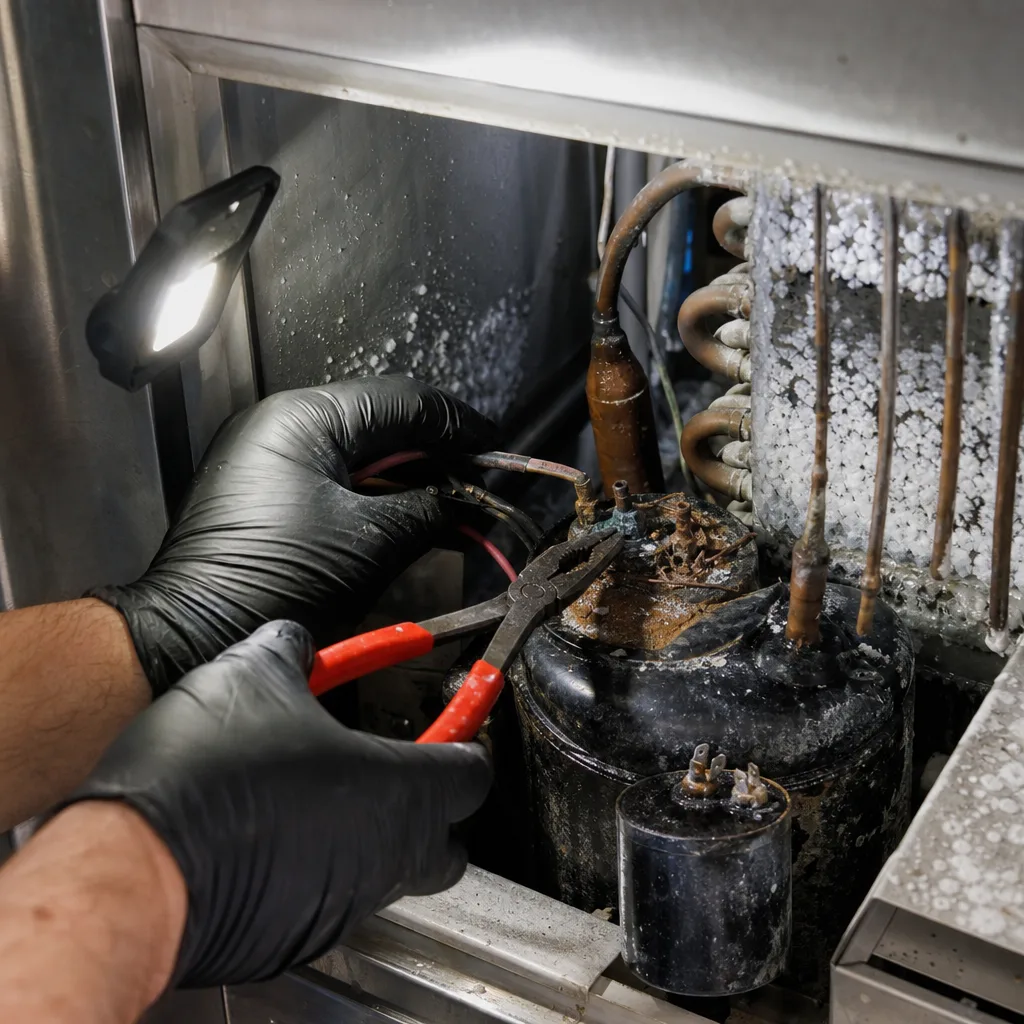
Here are some of the single parts that most often take a commercial unit down:
- Condenser fan motor. If the outdoor or rear fan stops spinning, the unit can’t get rid of heat, and temperatures climb fast.
- Evaporator fan motor. You might hear the compressor running but feel little or no cold air moving inside the box.
- Start capacitor, relay, or contactor. These small electrical parts help the compressor kick on. When they fail, you may hear clicking or humming with no cooling.
- Temperature control or sensor. The system is fine, but it’s getting the wrong signal and won’t run when it should.
- Defrost timer or heater. Ice builds up on the evaporator coil and blocks airflow, so the box warms up even though it looks frosty inside.
- Door gaskets and hinges. A torn seal lets warm air leak in all day and makes the system run nonstop.
- A dirty condenser coil. Grease and dust act like a blanket, so the unit has to work much harder to cool.
That last one matters in North Texas. Long, hot summers already push condensers hard, and a clogged coil on a rooftop or in a hot back room can be the thing that tips a tired system over the edge on a 100-degree afternoon.
Our job is to locate the failed part, repair or replace it, and make sure the system runs correctly before we leave. For this kind of single-part fix, our most common job runs $300-$2,400. That covers diagnosis, labor, and the standard replacement part, plus testing and cleanup. You’ll see the price and approve it before we start, so there’s no meter running while your product sits in a warm box.
Sometimes the answer really is replacement, and we’ll tell you straight when it is. These cases usually point that way:
- The compressor has failed on older equipment, and the repair would cost close to a new unit.
- Several parts have failed at once, which often means the whole system is worn out.
- Parts for an older or less common brand are hard to find, and waiting for them means more days without cooling.
If you’re in one of those spots, we’ll walk you through both options and the numbers behind them. Then you can make the call that’s right for your business, not the one that’s biggest for us.
Signs a Walk-In Cooler, Freezer, or Ice Machine Needs Service Now
Some refrigeration problems can wait a day or two. Others cost you product by the hour. Knowing which is which matters, because the sooner a failing part gets caught, the more likely the fix stays small.
Call for service today if you notice any of these:
- The box thermometer keeps climbing, even with the door shut and nobody going in and out.
- The compressor runs nonstop, but the air inside isn’t getting any colder.
- The unit is silent. No fans, no hum, nothing, and the breaker hasn’t tripped.
- You hear loud grinding, rattling, or rapid clicking that wasn’t there yesterday.
- Frozen product starts going soft, or ice cream turns mushy in the freezer.
- Water is pooling on a walk-in freezer floor, or thick ice is building up on the coil or around the door frame.
Any one of these can mean your system is losing ground. On a busy Friday night or a Frisco afternoon in August, a box that slips a few degrees can turn into a full loss before you close.
These slower warning signs can usually wait for a scheduled visit soon:
- The box takes longer than it used to to cool back down after a delivery or a rush.
- You see frost or sweat on the walls, ceiling, or product.
- The door doesn’t seal tight. You can feel cold air leaking out, or the gasket looks torn or flattened.
- Your electric bill went up, but you’re not using the equipment any more than before.
- The unit kicks on and off every few minutes instead of running steady cycles.
- The condenser is caked with dust or grease, or it feels much hotter than normal.
These usually mean a part is starting to wear out or the system is working too hard. Catching it now can be the difference between a simple repair and a compressor that burns out from the strain.
Ice machines give their own warnings. Watch for these:
- You’re getting less ice than usual, or the bin isn’t full by the time you open.
- The cubes come out small, hollow, cloudy, or stuck together in clumps.
- The ice tastes or smells off.
- Water is leaking under or behind the machine.
- The machine runs but won’t drop its ice.
- There’s white, crusty buildup on the water parts you can see.
North Texas has hard water, and the minerals in it leave scale inside ice machines over time. Scale slows freezing, blocks water flow, and makes the machine work harder for less ice. If your cubes have changed, scale is one of the first things worth checking.
Before you call, take two minutes to check the easy stuff. Make sure the door is fully closed and nothing is propping it open. Look at the thermostat to see if someone bumped the setting. Check that the breaker hasn’t tripped. If one of those was the problem and the box starts cooling back down, you may not need a technician at all. If the breaker trips again, or the box still won’t cool, something inside needs a real diagnosis.
Why This Work Requires a Licensed Refrigeration Technician, Not a Generalist
When your walk-in is warming up, it’s tempting to call whoever can get there first. That might be your building’s maintenance person, a handyman, or a home AC company. The problem is that a commercial cooler or freezer isn’t a big home air conditioner. If the person working on it doesn’t know the difference, a one-part fix can turn into three parts, a second visit, and a lot more lost product.
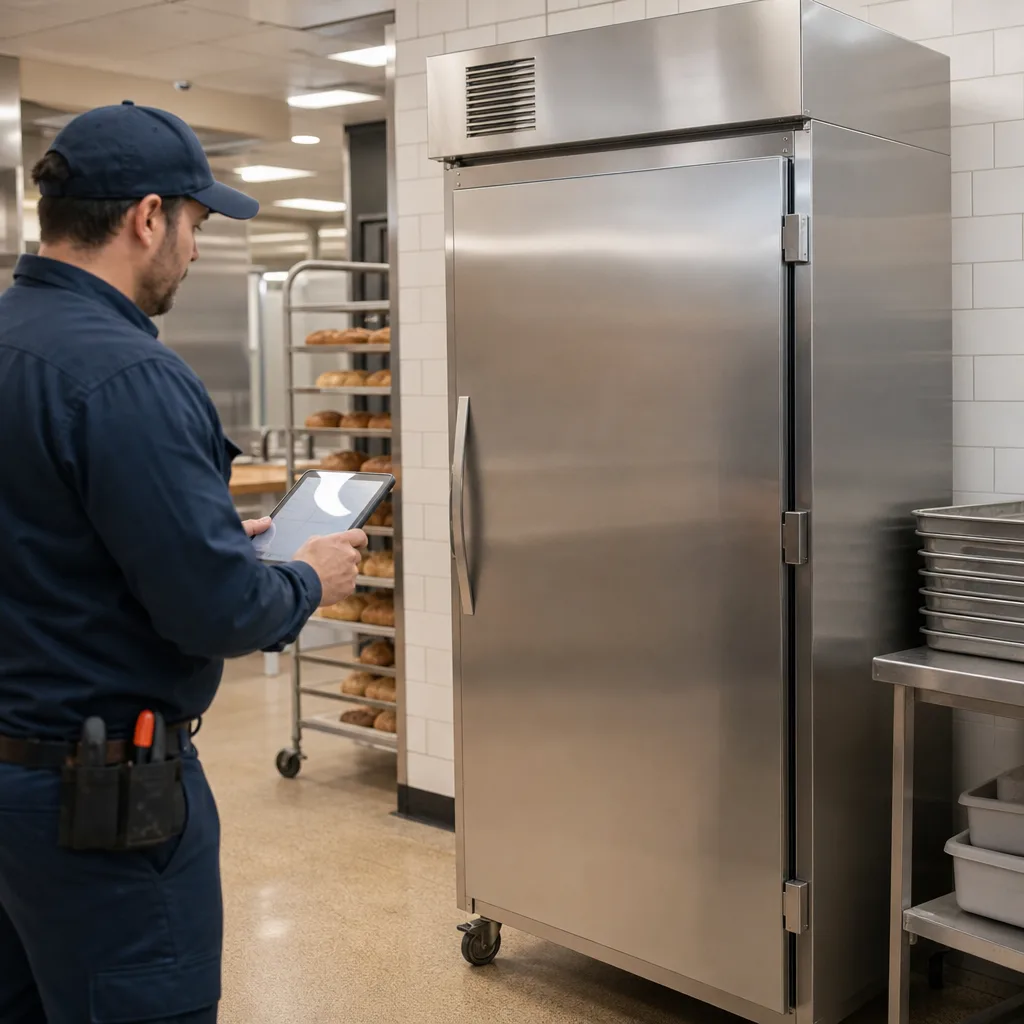
Here’s what sets refrigeration work apart.
- Refrigerant takes certification. Federal rules require anyone who opens a sealed refrigeration system or handles refrigerant to be certified. That isn’t paperwork for its own sake. Releasing refrigerant is illegal, and charging a system with the wrong amount or the wrong type can damage the compressor.
- Texas licenses this trade. The Texas Department of Licensing and Regulation licenses air conditioning and refrigeration contractors. Xtreme Air Services works under HVAC License #TACLA29023C, and our licensed and insured technicians are background-checked and drug-tested before they walk into your business.
- Freezers run very differently from comfort cooling. A walk-in freezer runs far colder than any home AC system. It also relies on defrost cycles and controls built for that box. Settings and parts that work fine in a house can leave a freezer icing up or short-cycling.
- Low refrigerant is a symptom, not a fix. If a system is low, it’s leaking somewhere. Topping it off without finding the leak just buys a few days. Real refrigeration leak detection finds where the refrigerant is going so you aren’t paying for the same problem twice.
The biggest cost of the wrong tech is guessing. Picture this. Your reach-in freezer is humming but not getting cold. Someone swaps the thermostat, then the fan motor, and it still won’t hold temperature. The real problem was a bad start relay all along. You paid for two parts you didn’t need, and your product sat warm the whole time. A trained refrigeration tech tests before replacing, so you pay for the part that failed.
There’s also the stuff around the box. A lot of refrigeration calls don’t stay inside the refrigeration system. A breaker keeps tripping on the condensing unit. An ice machine’s water line is leaking. A drain line from the walk-in is backing up onto the kitchen floor. With some companies, that means a second call to an electrician or a plumber, and another day of waiting.
We’re one trusted team for HVAC, plumbing, electrical, and refrigeration. If the trouble crosses from one trade into another, you don’t have to start over with someone new. The same company that found the problem can handle the commercial electrical or commercial plumbing side too.
This matters most when the clock is running. Health inspectors check cold-holding temperatures, and your customers notice when menu items run out. The fastest way back to normal isn’t the first truck in the lot. It’s the right person finding the right part, done right the first time.
Not sure what your Commercial refrigeration project needs? Ask us.
Call Today, Get Service Today. Xtreme Air Services — Frisco is ready to help.
Routine Maintenance You Can Handle vs. What Needs a Technician
A lot of what keeps a cooler or freezer healthy doesn’t take a technician at all. Your own staff can handle most of it in a few minutes a week. Done consistently, it’s the cheapest way to keep a worn part from turning into an emergency.
Here’s what you and your team can do yourselves:
- Log temperatures at opening and closing. A written log shows you a box drifting a degree or two long before product goes soft. It also gives a technician real data if something does go wrong.
- Wipe door gaskets with warm, soapy water. Grease and food buildup make gaskets stiff and crack them faster. While you’re there, close the door on a dollar bill. If it slides out easily, that spot isn’t sealing.
- Keep the condenser area clear. Don’t let boxes, mop buckets, or supplies pile up around the condensing unit. It needs room to breathe and dump heat.
- Don’t block the evaporator fan. Stacking product right up to the fan inside a walk-in chokes airflow. The box then cools unevenly, with warm spots in the back.
- Clean the condenser on reach-in units. Many reach-ins have a front grille you can lift off to reach the coil. Follow the cleaning steps in your owner’s manual.
- Change ice machine water filters on the schedule the manufacturer gives. In North Texas, with the scale problem covered above, a fresh filter does a lot of quiet work.
- Check door closers and strip curtains. A walk-in door that doesn’t swing shut on its own, or a torn curtain, lets warm air pour in all day.
If your logs look steady, your gaskets seal, and the unit runs normal cycles, you probably don’t need a technician between scheduled visits. That’s the honest answer.
Some work belongs to a trained technician. The line is pretty clear: anything inside the sealed system, the electrical parts, or the controls.
- Anything involving refrigerant, including checking charge or hunting for a leak. As covered above, this takes certification.
- Testing or replacing capacitors, relays, contactors, and fan motors. These parts can hold an electrical charge, and guessing at them costs money.
- Deep cleaning rooftop or remote condensing units, especially coils matted with grease from kitchen exhaust.
- Adjusting defrost timers, heaters, and temperature controls on freezers.
- Descaling and sanitizing the inside of an ice machine. Taking apart the water system and the evaporator is best left to someone who does it regularly.
- Checking how hard the compressor is working. A technician measures electrical draw and pressures to spot a compressor that’s struggling before it fails.
Timing matters here in Frisco. The months before summer are a smart time for a professional check. Long stretches of triple-digit heat put the most strain on condensing units, and that’s when a dirty coil or weak capacitor gives out. A scheduled commercial preventive maintenance visit in spring lets a technician catch those parts on your schedule, not on a Saturday night with a full walk-in.
Between visits, trust your logs and your eyes. If the numbers change or something sounds different, that’s when it’s worth a call. Otherwise, a few minutes of routine care from your own crew is usually enough.
Watch Our Video
See How We Handle Commercial refrigeration in Frisco
Xtreme Air Services — Frisco
How Commercial Refrigeration Pricing Works
With a warm walk-in, the first question is usually, “What’s this going to cost me?” Here’s how it works with us, in plain numbers.
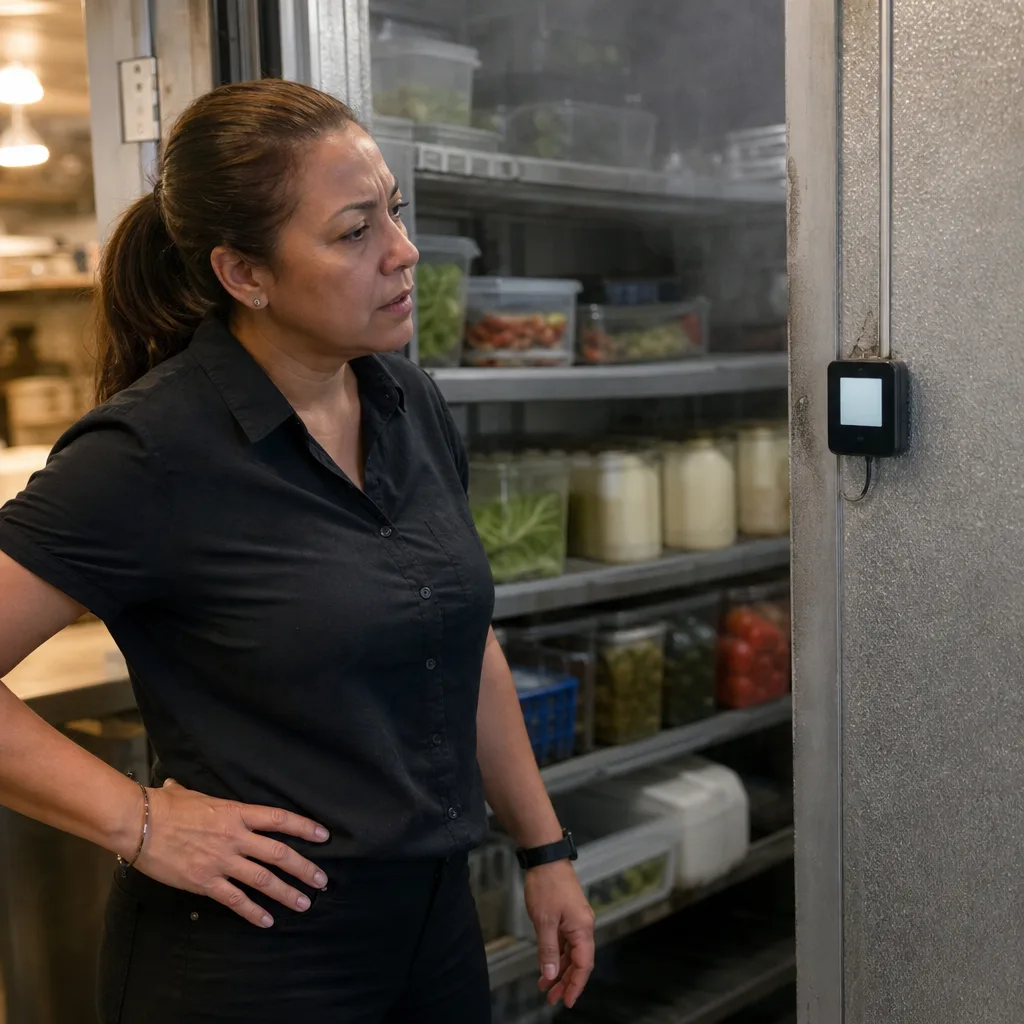
Our commercial refrigeration jobs typically run $300-$5,000. The single-part fixes covered above land at the lower end. The higher end covers bigger work, like a major component or several parts failing at the same time.
There’s a $26-$99 service-call fee to get a technician out and find the problem. If you go ahead with the repair, that fee is credited toward it. You aren’t paying twice just to learn what’s wrong.
These are the things that move your price up or down:
- How bad the failure is. A failed start relay is a much smaller job than a burned-out compressor.
- The cost of the part and how easy it is to get. Common parts are easier to get than parts for older or harder-to-find equipment.
- The age and brand of your equipment. Older units and less common brands can mean pricier or slower-to-find parts.
- Whether more than one part has failed. One worn part can strain the others, and each failed part adds to the job.
- After-hours timing. This one won’t raise your bill with us. We charge no extra for nights or weekends, so a Saturday night breakdown costs the same as a Tuesday morning.
It also helps to know what isn’t in the standard price. Extra failed parts, major components, code upgrades, and permits aren’t included unless we quote them separately. Here’s how that might look. We swap a dead condenser fan motor and find the coil also needs work. That second item gets its own quote, and nothing happens until you say yes.
If the answer turns out to be a new unit or a larger repair, flexible financing is available on qualifying installations and larger jobs, on approved credit. That can help you get back up and running without one big hit to your cash flow in the same week you lost product.
Before you hire anyone for refrigeration work, whether it’s us or someone else, these questions will save you surprises:
- Is the trip or service-call fee credited toward the repair?
- Will I get a set price before work starts, or are you billing by the hour?
- Do you charge more for nights, weekends, or holidays?
- What’s included in the price, and what would cost extra?
- Are your technicians licensed and certified to handle refrigerant?
A good company won’t hesitate on any of these. If the answers are vague, that’s worth noticing before your product is on the line.
Call 469-490-3595
Frequently Asked Questions
Common questions about Commercial refrigeration
Can my ice machine be saved, or does scale buildup mean I need a new one?
Most scaled-up ice machines can be saved with a proper descaling, not a full replacement. North Texas has hard water, and minerals build up inside the machine over time, slowing freezing and cutting ice output. If you catch it when cubes turn small, cloudy, or clumped, a descale and sanitize usually brings the machine back to normal. Waiting too long can strain the compressor, so it’s worth checking as soon as ice output drops.
Do I need a different technician for a walk-in freezer versus a reach-in cooler?
No, but the fix can look different between the two. A walk-in freezer runs much colder and relies on defrost cycles built for that size box, while a reach-in cooler is smaller and easier to check yourself, like lifting the front grille to clean the coil. Both need a certified refrigeration technician for anything involving refrigerant, electrical parts, or controls. The size of the unit changes the job, not who should handle the sealed system.
What should I do if my commercial freezer breaks down after hours or on a weekend?
Call for service right away, since a warm freezer can turn into lost product within hours. Before you call, check that the door is shut, the thermostat wasn’t bumped, and the breaker hasn’t tripped. If those are fine and the unit still won’t cool, you need a technician regardless of the time. Night and weekend breakdowns are common in food service, since equipment often fails under the heaviest use during busy shifts.
Ready to Get Started?
Call (469) 490-3595 Today, Get Service Today.