


Furnace Installation in Carrollton: Know Before You Replace
Know whether your furnace needs one more repair or a full replacement, and what your installation price includes.
What’s Covered on This Page
- Signs Your Furnace Needs Full Replacement, Not Another Repair
- When a Repair Is the Right Call Instead
- What Happens During a Furnace Installation
- What’s Included in Your Furnace Installation Price
- Permits and Licensing Required for Furnace Installation in Carrollton
- What is the $5000 rule for furnace replacement?
- Can I install my own furnace?
Signs Your Furnace Needs Full Replacement, Not Another Repair
Most furnace calls are fixable. A worn ignitor, a dirty flame sensor, or a tired blower motor can be swapped out, and you’re warm again. The question isn’t “Can it be fixed?” It’s “Is this fix worth it, or am I just buying time?” Here’s what tells you it’s time to stop repairing.
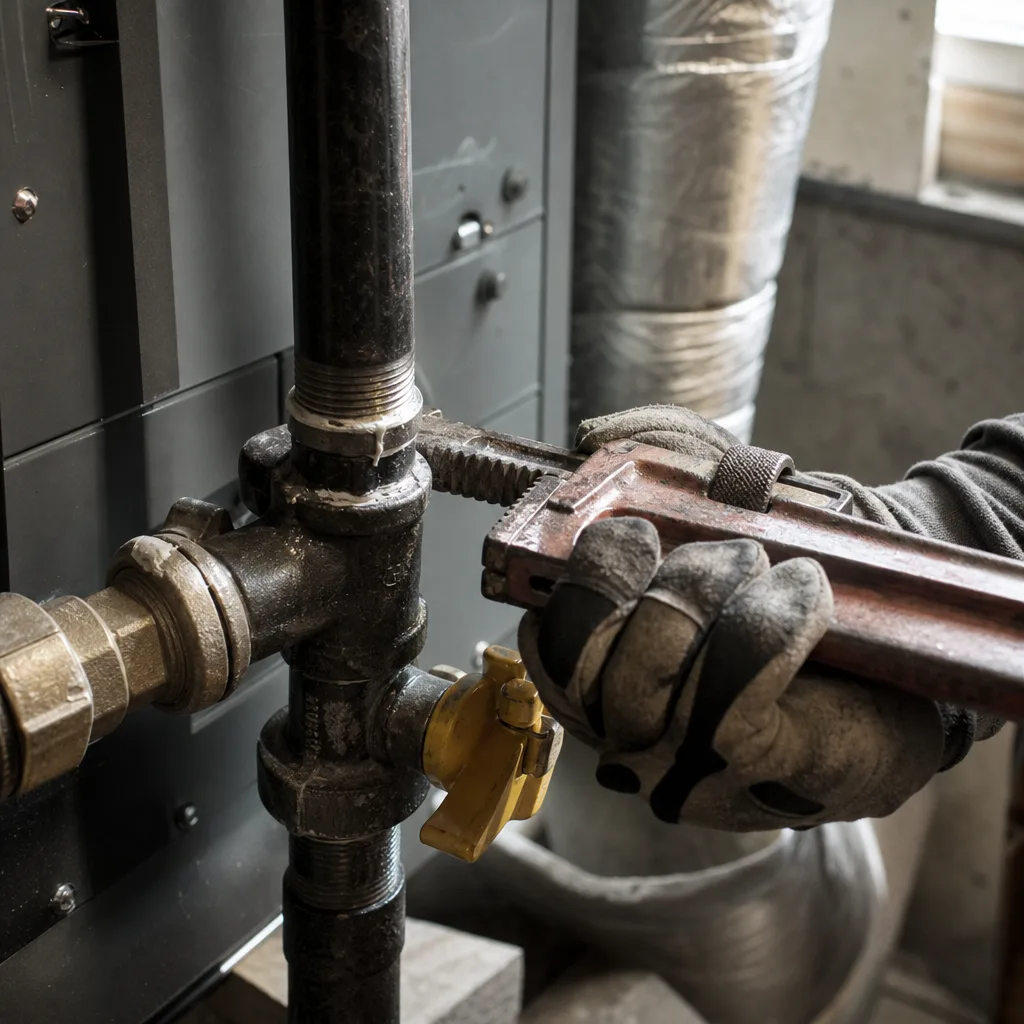
- The repairs keep coming. If you’ve paid for a fix last winter and you’re calling again this winter, those bills add up fast. When the cost of the next repair starts to look like a real chunk of a new furnace, replacement is usually the better use of your money.
- A major part has failed. The heat exchanger is the metal chamber that keeps burner gases separate from the air you breathe. If it’s cracked, that’s not a simple part swap on most older furnaces. It’s a safety problem, and it’s often the point where replacement makes the most sense.
- Your home heats unevenly. One bedroom is cold while the living room is fine, or the furnace runs and runs but never quite catches up. Sometimes that’s a duct issue. Sometimes it’s a worn-out furnace that can’t push enough warm air anymore.
- Your gas bills are climbing for no clear reason. Older furnaces lose efficiency as parts wear. A newer furnace with a higher AFUE rating, which simply means more of the gas you pay for turns into heat for your home, can help cut that waste.
- It’s making new noises or smells. Banging, rattling, squealing, or a burning smell that doesn’t go away after the first run of the season can point to parts wearing out together, not just one at a time.
- Parts are hard to find. On some older models, replacement parts get scarce or slow to arrive. That can leave your family without heat for days during a cold snap.
North Texas adds its own twist. Your furnace sits quiet for most of the year, then a cold front rolls through and it has to work hard with no warm-up. Many homes around DFW also have the furnace up in the attic, where it bakes through long Texas summers. That kind of on-and-off life can wear parts in ways that show up all at once on the first cold night.
Now the honest side. If your furnace is still fairly young, heats well, and just had one simple part fail, fix it. You don’t need a new system because an ignitor quit. Same goes for a furnace that only needs a good cleaning and tune-up to run right again. Replacing a healthy furnace early isn’t doing right by you.
When our licensed and insured technicians look at your furnace, we’ll tell you which side of that line you’re on and show you why. You’ll get upfront flat-rate pricing for the repair and, if it makes sense, for a replacement, so you can compare both before you approve anything. No pressure, no surprises. Just a clear answer so you can make the call that’s right for your home.
When a Repair Is the Right Call Instead
Plenty of “my furnace is dead” moments aren’t the furnace at all. Before you pay anyone to come out, spend five minutes on these checks. They’re safe, they need no tools, and they solve the problem more often than you’d think.
- Thermostat: Make sure it’s set to Heat, not Cool or Off. Make sure it’s set a few degrees above the room temperature. If it runs on batteries and the screen is blank or faded, swap them.
- Air filter: A clogged filter chokes airflow. Many furnaces shut themselves off to keep from overheating. If you can’t see light through the filter, replace it and try again.
- Power switch and breaker: Most furnaces have a switch nearby that looks like a regular light switch. It’s easy to bump off when you’re storing boxes in the attic or closet. Check that switch and the breaker in your panel.
- Front panel: Many furnaces have a safety switch behind the door. If the panel isn’t pushed fully into place, the furnace won’t start.
- Drain line on high-efficiency units: These furnaces make water as they run. If the drain line clogs, a safety switch can stop the heat. A full drain pan or a gurgling line is your clue.
If none of that brings the heat back, the next question is which part failed. Some parts are made to wear out. Replacing them is normal upkeep, not a sign the whole furnace is done. A pressure switch, inducer motor, limit switch, capacitor, or control board can fail on a furnace that still has plenty of good years left. If the heat exchanger and cabinet are sound and the furnace heated your home well last winter, fixing one of these parts is usually money well spent.
Cold rooms deserve a second look too. If one bedroom never warms up, check that the vent isn’t closed or hidden behind furniture. In many North Texas homes, the ductwork runs through a hot attic, where joints can loosen or tear over the years. Sealing or repairing those ducts can fix an uneven house for a lot less than a new furnace, and a new furnace pushing air into leaky ducts won’t fix the problem anyway. Our duct sealing and duct repair pages walk through how that works.
Sometimes the honest answer is to repair now and replace later. Say your furnace is getting older, but today’s problem is a small, affordable fix. You may be better off making that repair and getting through the season. Then plan your replacement for spring or fall, when the weather is mild. You’ll have time to compare options, look at efficiency ratings, and pick an install date that works for you. That beats making a big decision in a hurry on the coldest night of the year.
A good heating tech should be glad to tell you when a repair is enough. If someone pushes a full replacement for a furnace that just needs a part or a filter, get a second opinion.
What Happens During a Furnace Installation
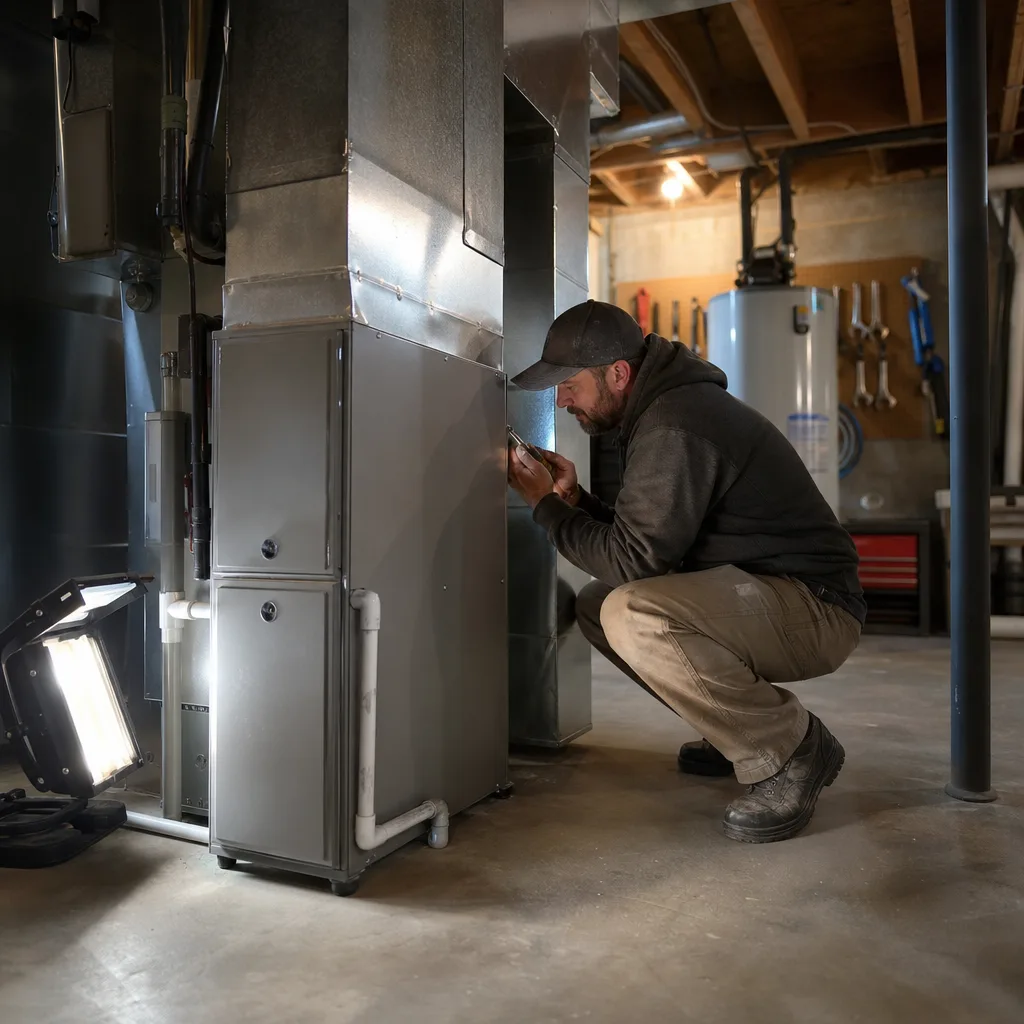
A furnace installation is more than pulling one box out and setting another in. The furnace can be a great unit and still run poorly if it’s the wrong size, vented wrong, or never tested once it’s in. Here’s what a careful install looks like, so you know what you’re paying for.
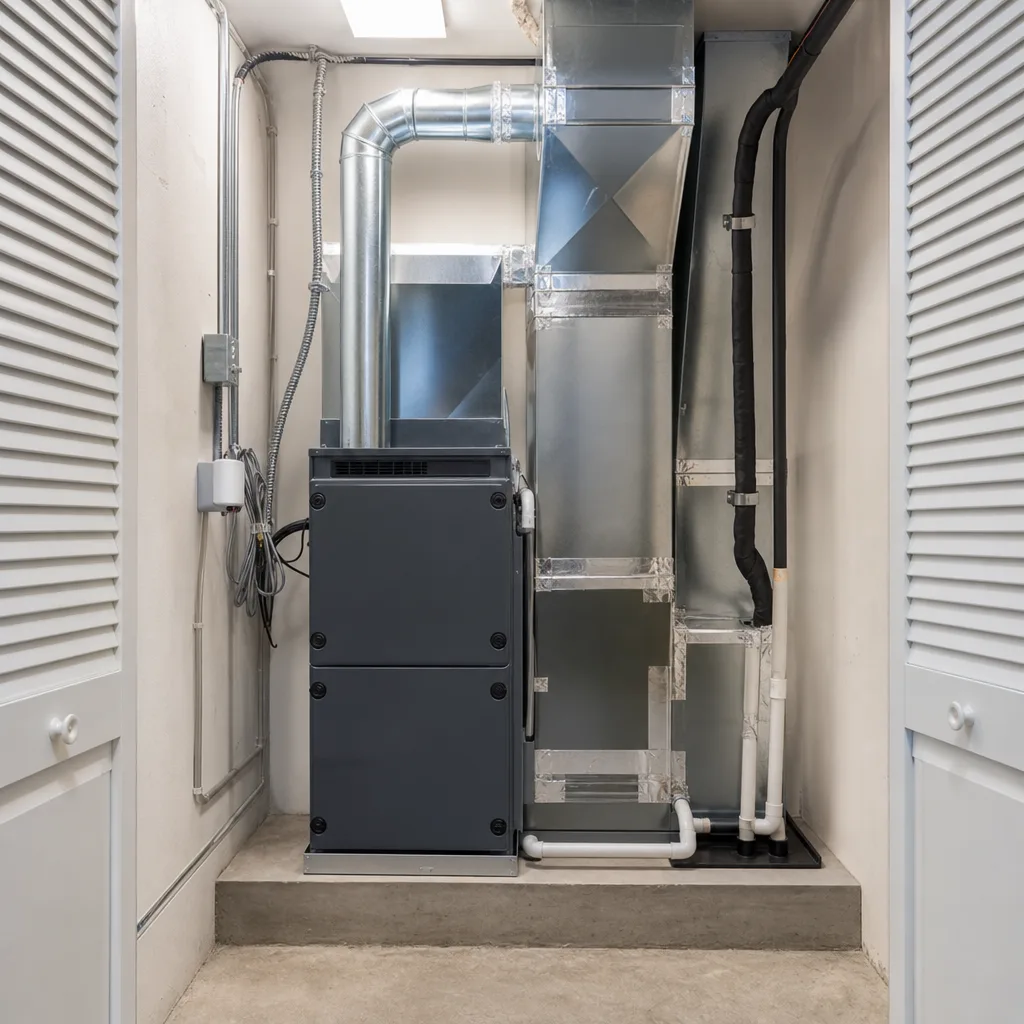
Before any work starts, the right furnace has to be picked for your home. Bigger isn’t better. A furnace that’s too large heats fast, shuts off, and starts again over and over. That wears parts and leaves some rooms cold. A good installer looks at your home’s size, insulation, windows, and ductwork, not just the sticker on the old unit. This is also when you decide on efficiency. A higher AFUE furnace turns more of your gas into heat, but it may need different venting and a drain line.
On install day, the work usually goes in this order:
- Shut off safely. Gas and power to the furnace get turned off before anything is touched.
- Remove the old unit. The old furnace is disconnected from the gas line, vent, ducts, and wiring, then taken out.
- Set the new furnace. It’s placed level, with room left around it so a tech can service it later.
- Make the connections. The gas line, venting, ductwork, wiring, and thermostat are hooked up to the new unit. High-efficiency furnaces also need their drain line run so the water they make has somewhere to go.
- Start it up and test it. The furnace gets fired up and checked to make sure it lights, heats, moves air, and shuts itself off the way it should.
That last step is the one rushed jobs skip, and it matters most. A proper startup checks gas pressure, how much the air warms up as it passes through, airflow, the safety switches, and that exhaust is leaving your home through the vent. A furnace can blow warm air and still be set up wrong. Testing is how you know it’s right.
Attic furnaces, common in North Texas homes, take extra care. The unit needs a solid platform and a clear path to reach it. A high-efficiency furnace up there also needs its drain set up so a clog doesn’t leak water through your ceiling. Summer attic heat is hard on wiring and drain lines, so those parts should be done neatly and secured.
With Xtreme Air Services, a standard like-for-like furnace installation using your existing connections covers the equipment and materials, professional installation, standard connections, startup and testing, and haul-away of your old unit. Some homes need more than a straight swap. That can mean duct, electrical, or plumbing changes, code corrections, or permits. Those aren’t part of the standard job unless they’re written into your quote. If your switch to a higher-efficiency furnace needs new venting or a new drain line, you’ll want that spelled out and priced before anyone starts. Our upfront flat-rate pricing means you see it and approve it first, with no surprises once the old furnace is already out.
Need help with Furnace installation?
Call Today, Get Service Today. Xtreme Air Services — Carrollton is ready to help.
What’s Included in Your Furnace Installation Price
At Xtreme Air Services, furnace installation typically runs $3,500 to $7,500. Our most common job is a standard like-for-like swap that uses your existing connections with no major modifications. That job typically runs $4,300 to $5,900. You’ve already seen what that standard job covers above, from the equipment through haul-away of your old unit. The real question is where your home lands in that range, and why.
Two homes on the same street can get different quotes for good reasons. Here’s what moves the price:
- Size and capacity. A furnace has to match your home’s heating needs. A bigger home or one that loses more heat needs more capacity, and that costs more.
- Efficiency. A higher AFUE furnace turns more of your gas into heat. It usually costs more up front and may need different venting or a drain line.
- Brand and model. Basic models, variable-speed models, and everything in between are priced differently.
- Ease of access. A furnace in a roomy closet is quicker to swap than one tucked into a tight attic with a narrow opening, a setup you’ll find in plenty of North Texas homes.
- Condition of what’s already there. Worn ductwork, old wiring, or gas piping that doesn’t fit the new unit adds work.
- Code upgrades and permits. If your current setup doesn’t meet today’s code, it has to be brought up to it.
- Custom fabrication. If the new furnace has a different shape or size than the old one, sheet metal may need to be built to connect it to your ducts.
Those last few items are why the standard price leaves out duct, electrical, and plumbing changes, code corrections, and permits unless your quote says otherwise. It’s not a trick. Nobody can price a duct repair until they’ve seen your ducts. With upfront flat-rate pricing, you see every extra item written down and approve it before work starts. You won’t get a surprise bill after the old furnace is already out.
When you’re comparing quotes from anyone, including us, ask these questions:
- Did you size this furnace for my home, or just copy the old unit’s label?
- What’s the AFUE rating, and does it need new venting or a drain line?
- Are permits, code fixes, and duct work in this price, or extra?
- Is haul-away of my old furnace included?
- Is this a flat price, or can it change once you start?
If one quote is much lower than the others, those answers usually explain why.
There’s a $26 to $99 service-call fee for the visit. It’s credited toward the work if you go ahead with Xtreme Air Services. If a new furnace doesn’t fit your budget all at once, flexible financing is available on qualifying installations and larger jobs, on approved credit.
Call 469-269-6099
Watch Our Video
See How We Handle Furnace installation in Carrollton
Xtreme Air Services — Carrollton
Permits and Licensing Required for Furnace Installation in Carrollton
A new furnace connects to your gas line, your electrical system, and a vent that carries exhaust out of your home. That’s why furnace replacement is permitted, inspected work, not a weekend project. In Carrollton, as in most North Texas cities, a furnace swap generally needs a mechanical permit through the city’s building inspection office before the job is signed off. Rules and fees can change, so it’s smart to confirm the current requirements with the city or ask your installer to do it.
One local wrinkle is worth knowing. A Carrollton mailing address doesn’t always mean you’re inside Carrollton city limits. Some addresses with a Carrollton ZIP code sit in a neighboring city. Whichever city your home is in handles the permit and the inspection. A good installer checks this up front so the paperwork goes to the right office.
A permit isn’t just red tape. It brings a second set of trained eyes into your home after the work is done. A city inspector typically looks at items like these:
- The gas connection, to make sure it’s tight and leak-free
- The venting, so exhaust leaves your home the way it should
- Clearance around the furnace for safety and future service
- The electrical hookup and shutoff near the unit
- The drain line on high-efficiency furnaces, especially in attics
Skipping the permit can come back on you later. When you sell your home, a buyer’s inspector may flag unpermitted HVAC work. If something goes wrong, your insurance company may also ask whether the work was done to code. A permit on file answers both questions. As our pricing section explains, permits aren’t part of the standard installation price unless your quote says so. If you’re comparing quotes, ask each company whether they pull the permit and whether it’s included.
Licensing matters just as much. In Texas, HVAC contractors are licensed through the Texas Department of Licensing and Regulation, or TDLR. Gas piping falls under plumbing licensing, which is separate. Before you let anyone touch your furnace, ask for their license number and look it up on the state’s website. It takes two minutes. If a company can’t give you a number, that’s your answer.
Xtreme Air Services is a licensed and insured HVAC, plumbing, and electrical contractor. Our HVAC license is TACLA29023C, and our team includes master plumber Larry Breedlove. Because heating, gas, and electrical work all live under one roof, you won’t have to coordinate separate trades just to get a new furnace connected and inspected. Our background-checked and drug-tested technicians do the work, and we’ll tell you up front what your permit involves and what it costs, so nothing shows up as a surprise later.
Call 469-269-6099
Frequently Asked Questions
Common questions about Furnace installation
What is the $5000 rule for furnace replacement?
It’s a simple way to decide between repair and replacement. Multiply the furnace’s age by the repair cost, and if that number is above $5,000, replacement usually makes more financial sense. A 15-year-old furnace needing a $600 repair, for example, comes out to $9,000, which points toward replacing it. A 5-year-old furnace with the same repair only comes to $3,000, so fixing it is the better deal.
Can I install my own furnace?
No, you shouldn’t install your own furnace in Carrollton. A furnace connects to gas lines, electrical circuits, and venting that carries dangerous exhaust out of your home, and the city requires a mechanical permit along with inspection by trained personnel. Beyond the legal requirement, mistakes with gas connections or venting can lead to leaks or carbon monoxide problems, which is why this work calls for a licensed HVAC contractor.
Ready to Get Started?
Call (469) 269-6099 Today, Get Service Today.