


Commercial HVAC Installation in Carrollton: Scope, Permits, and Cost
New commercial systems scoped and sized for your building, with what's included and what costs extra laid out first.
What’s Covered on This Page
- Know Whether Your Building Needs a Like-for-Like Swap or a Bigger Scope
- Commercial HVAC Installation Covers Rooftop Units, Split Systems, and Full Mechanical Scope
- What Drives Commercial HVAC Installation Cost in Carrollton
- Permits and Inspections Can Add Scope You Didn’t Expect
- Sizing Equipment for Carrollton’s Climate Instead of Matching the Old Unit
- What is the $5,000 rule for HVAC systems?
- What’s the difference between HVAC and commercial HVAC?
- What exactly does a commercial HVAC installer do?
Know Whether Your Building Needs a Like-for-Like Swap or a Bigger Scope
The first question we sort out on any commercial install is simple. Is this a straight replacement, or does the building need more than new equipment? The answer shapes your quote, your schedule, and how long your space runs without full cooling.
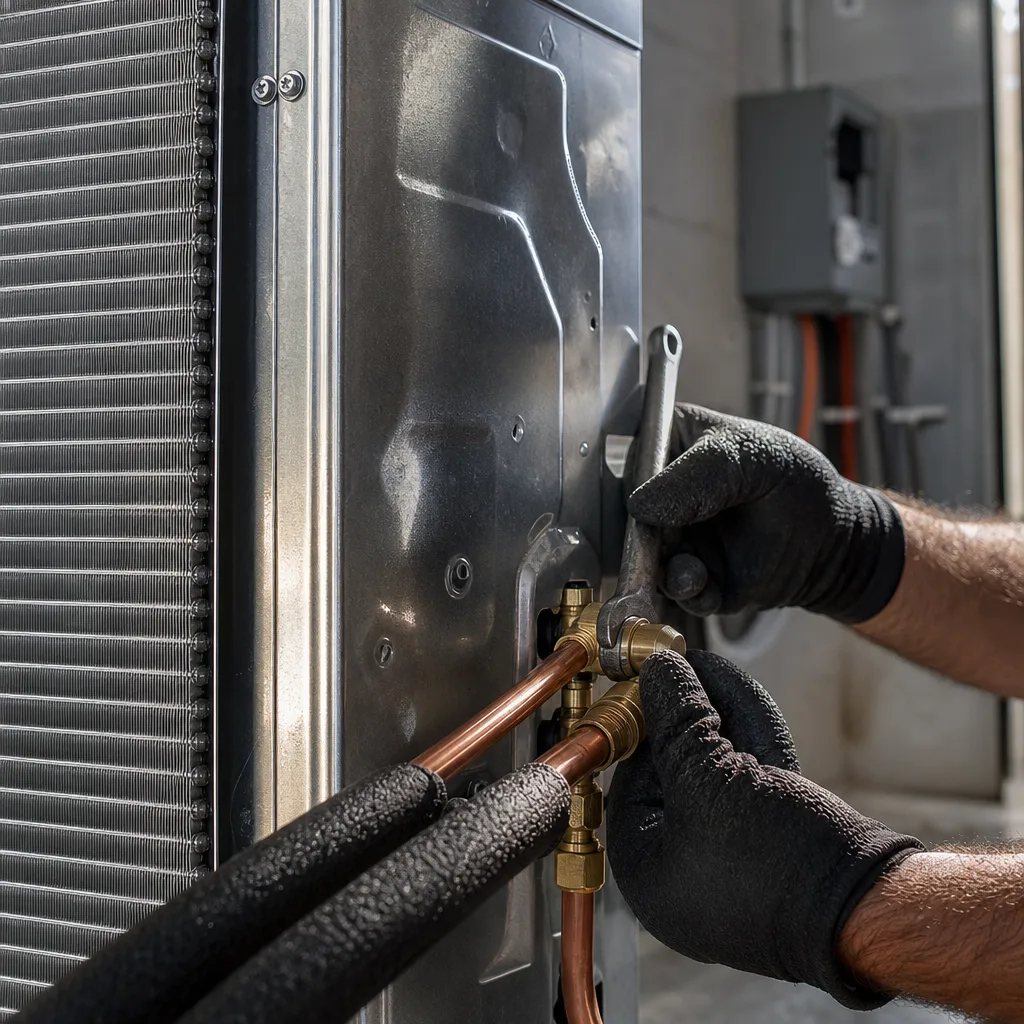
Our most common job is a like-for-like commercial HVAC installation. That means we set new equipment using your existing connections, with no major modifications. It covers the equipment and materials, professional installation, standard connections, startup and testing, and haul-away of the old unit.
You’re probably in like-for-like territory if most of these are true:
- Your space is used the same way it was when the old system went in, with the same layout and roughly the same number of people.
- The old unit kept every area comfortable until it started failing. No rooms were always too hot or too cold.
- The new unit is the same size, so it fits the same rooftop curb, pad, or closet.
- Your electrical service, gas line, and condensate drains are in good shape and can handle the new equipment.
A bigger scope usually shows up in one of these ways:
- The building changed jobs. An office became a restaurant, a warehouse added a showroom, or a back room now holds servers. More heat inside means the old tonnage may not be right anymore, and a cooling load calculation tells us what size you need.
- Some zones never kept up, even when the old unit was new. That often points to ductwork that’s undersized, leaky, or badly laid out. A new unit pushing air through the same bad ducts gives you the same hot spots.
- The new equipment doesn’t match the old footprint. A rooftop unit with a different base may need a curb adapter or custom sheet metal work.
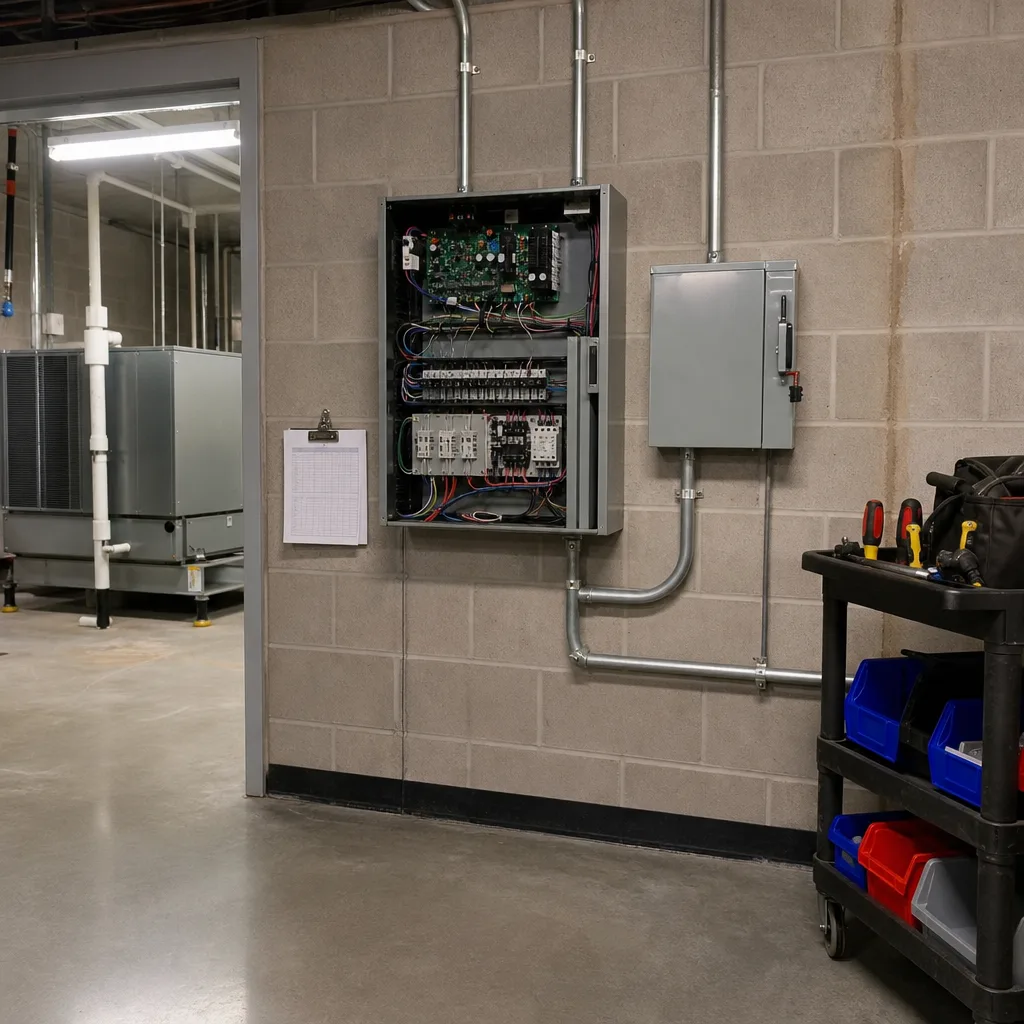
- The electrical panel or circuit can’t carry the new unit’s load, or the gas or drain piping needs changes.
- Code has changed since the original install, and the job can’t pass inspection without corrections.
Here’s why this matters for your budget. Duct, electrical, and plumbing modifications, code corrections, and permits aren’t part of a standard installation unless your quote says so. That’s not a trick. It’s the honest line between swapping equipment and reworking a building. A good contractor finds these items before the work starts, not halfway through.
This is also where having one team helps. We handle HVAC, plumbing, and electrical under one roof. If your new rooftop unit needs a bigger circuit or a rerouted gas line, you’re not stuck coordinating three companies while your tenants or customers sweat through a North Texas afternoon. You get one walkthrough, one plan, and one upfront price for the full scope.
If you’re not sure which camp you’re in, that’s normal. Tell us how the space is used now, which areas struggle, and how old the system is. We’ll check the equipment, the connections, and the ducts, then show you plainly what’s a swap and what’s extra. Then you decide.
Commercial HVAC Installation Covers Rooftop Units, Split Systems, and Full Mechanical Scope
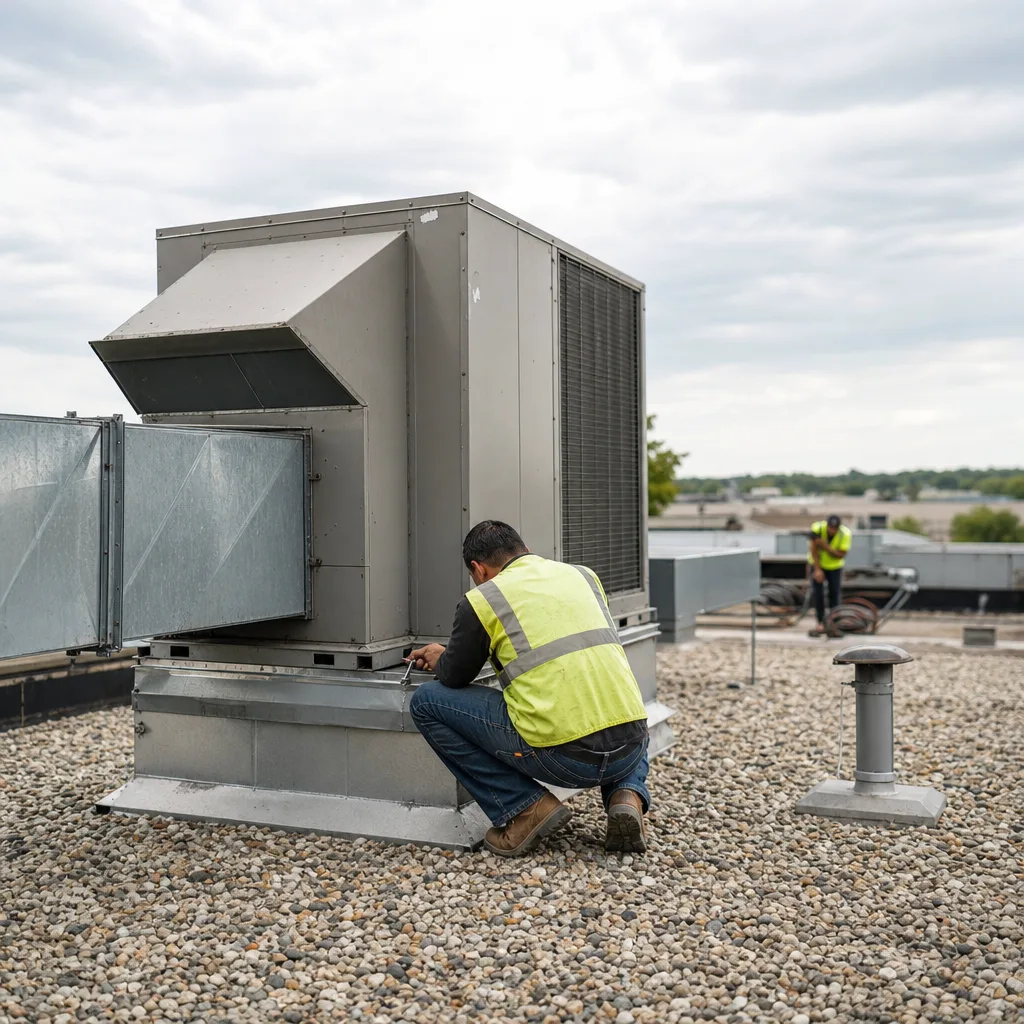
Commercial buildings don’t all cool the same way. A strip-center shop, a two-story office, a restaurant, and a warehouse can each need a different kind of system. The right fit depends on your roof, your floor plan, and what goes on inside. Knowing your system type helps you read your quote and plan your downtime.
Here’s the equipment we install, in plain English.
- Rooftop units (RTUs). These are the boxes you see on most flat commercial roofs. Cooling, heating, and the blower all sit in one cabinet, and ducts carry air down into your space. Retail, small offices, and many light industrial buildings run on them.
- Split systems. A condenser sits outside, and an air handler or furnace sits inside, joined by refrigerant lines. They’re common in smaller offices, medical suites, and buildings without much roof space.
- Ductless mini-splits. These are small wall or ceiling units with no ductwork. They work well for a server room, an add-on office, or a spot the main system never reached.
- VRF and variable air volume systems. These systems let different zones get different amounts of cooling. That matters when one side of your building bakes in the afternoon sun while the other side stays cool.
- Chillers, cooling towers, and boilers. Larger buildings often cool with chilled water and heat with hot water, piped through the building instead of blown through one big unit.
A full commercial install can also reach past the main unit. Depending on your building, the job may include:
- Commercial ductwork, including custom ductwork fabrication and sheet metal work when standard parts won’t fit
- Make-up air systems, commercial kitchen ventilation, and exhaust hood installation for restaurants and food service
- Building automation and controls, so you can set schedules and temperatures across zones
- HVAC system balancing, so every area gets the airflow it was designed for
- Mechanical system commissioning, which confirms the whole system works together the way it’s supposed to
Why does this matter to you? Each item on that second list is a scope question. A restaurant swapping an RTU may also need its make-up air looked at, because a kitchen hood pulls air out of the room and that air has to be replaced. An office adding zones may need controls and balancing, not just a new box on the roof. When those pieces are named up front, nothing surprises you on install day.
North Texas summers make the sizing piece count. A commercial system here runs hard for months, and a rooftop unit sits in direct sun on a hot roof all day. Equipment that’s too small runs nonstop and still falls behind. Equipment that’s too big cycles on and off, wears itself out faster, and leaves the air feeling damp and sticky. Getting the type and size right is what keeps your tenants, staff, and customers comfortable through August.
As a Trane Comfort Specialist, we can walk you through high-efficiency options and what the numbers mean. SEER2 tells you how much cooling you get for each dollar of electricity. AFUE does the same for gas heat. Higher numbers usually mean lower monthly bills, and we’ll help you weigh that against your upfront cost.
Our team also handles plumbing and electrical. Gas lines, condensate drains, and circuits for new mechanical equipment stay with one accountable crew instead of being handed off between contractors.
What Drives Commercial HVAC Installation Cost in Carrollton
Most commercial HVAC installations we do fall between $10,000 and $100,000. That’s a wide range because a small split system for an office suite and a full rooftop changeout on a large building are very different jobs. Our most common job, a standard like-for-like installation using existing connections with no major modifications, typically runs $28,000 to $64,000.
Where your building lands in that range comes down to tonnage and scope. Here’s what moves the number:
- Equipment size and capacity. Tonnage is how much heat a system can pull out of your space. More tons means bigger equipment and a bigger price.
- Efficiency. Higher SEER2 and AFUE ratings cost more up front. They usually cost less to run every month.
- Brand and model. Different product lines carry different price points and features.
- Ease of access. A unit on a low roof with crane or lift access goes faster than one that’s hard to reach. That affects labor time.
- Condition of what’s already there. Worn ductwork, an overloaded electrical circuit, or tired gas and drain piping can add work.
- Code upgrades and permits. If the old setup doesn’t meet current code, corrections have to happen before the job can pass inspection.
- Custom fabrication. A new unit that doesn’t match the old curb or duct openings may need custom sheet metal to fit.
The last three items tie back to the swap-versus-bigger-scope question above. They’re the reason some quotes land near the top of the range. They also aren’t part of a standard installation unless your quote says so.
So how do you know a quote is fair? Ask the contractor to show you which line items are equipment and labor, and which are added scope. Ask what tonnage they picked and why. A cooling load calculation should back up that number, not a guess based on the old unit’s label. If two quotes look far apart, the gap is usually in tonnage, efficiency, or scope items one contractor caught and the other didn’t.
With us, you get upfront flat-rate pricing approved before work starts. There’s no meter running while the crew is on your roof. Our service-call fee is $26 to $99, and it’s credited toward the job if you move forward with Xtreme Air Services.
A new commercial system is a big line item, and most businesses don’t have it sitting in the budget when an old unit gives out in July. Flexible financing is available on qualifying installations and larger jobs, on approved credit. That can help you replace a failing system now, instead of nursing it through another North Texas summer and risking a shutdown on the hottest day of the year.
Need help with Commercial HVAC installation?
Call Today, Get Service Today. Xtreme Air Services — Carrollton is ready to help.
Permits and Inspections Can Add Scope You Didn’t Expect
A new commercial system isn’t done when it’s running. It’s done when it passes inspection. In Carrollton, installing or replacing commercial HVAC equipment usually needs a permit from the city, and an inspector checks the finished work against current code, not the code your building was built under. That gap is where surprise scope tends to show up.
Your old unit may have been fine when it went in 15 or 20 years ago. Since then, the rules may have changed. The inspector won’t grandfather the parts that get touched during the install, so anything connected to the new equipment has to meet today’s standard.
Here’s what can come up on a commercial job:
- Electrical. The disconnect near the unit, the wire size, or the breaker may not match what the new equipment needs. That work often needs its own electrical permit.
- Gas piping. A new gas unit with a different input rating may need larger gas lines or a new shutoff. That’s a separate permit and inspection, too.
- Condensate drains. Where the water from your system drains, and how, has to meet current rules. Old drains routed straight onto the roof may need to be redone.
- Roof and structure. A heavier rooftop unit may need the roof checked to confirm it can carry the load, and the curb may need changes.
- Safety controls. Larger air handlers can require a smoke detector in the ductwork that shuts the system down if smoke is sensed.
- Kitchen exhaust. Restaurants replacing hoods or make-up air may also face fire safety review, not just a mechanical inspection.
None of this means a contractor did something wrong. It’s simply what happens when old buildings meet new equipment. The trouble starts when nobody looks for these items until the inspector does. Then you’re paying for corrections after the fact, and your space may sit without full cooling while you wait for a re-inspection.
You can avoid most of that with a few questions before you sign:
- Who’s pulling the permit, and is it listed in the quote?
- Did you check the electrical, gas, and drain connections against current code, or just the old unit’s label?
- If the inspection turns up a correction, who handles it, and how fast?
- How will inspection timing affect my downtime?
That last question matters in a North Texas summer. Building in time for inspections up front lets you plan around your busiest hours instead of scrambling.
We’re a licensed HVAC contractor, License #TACLA29023C, and our team also covers plumbing and electrical. So if an inspection calls for a bigger circuit, a new disconnect, or a rerouted gas line, you don’t have to find and schedule another company. The same team that set your unit can make the fix and get you back to passing.
Watch Our Video
See How We Handle Commercial HVAC installation in Carrollton
Xtreme Air Services — Carrollton
Sizing Equipment for Carrollton’s Climate Instead of Matching the Old Unit
It feels safe to buy the same size you had. The old unit said 10 tons, so the new one should be 10 tons. But that label only tells you what someone picked years ago. It doesn’t tell you whether that guess was right then, or whether it’s right for how your building runs now.
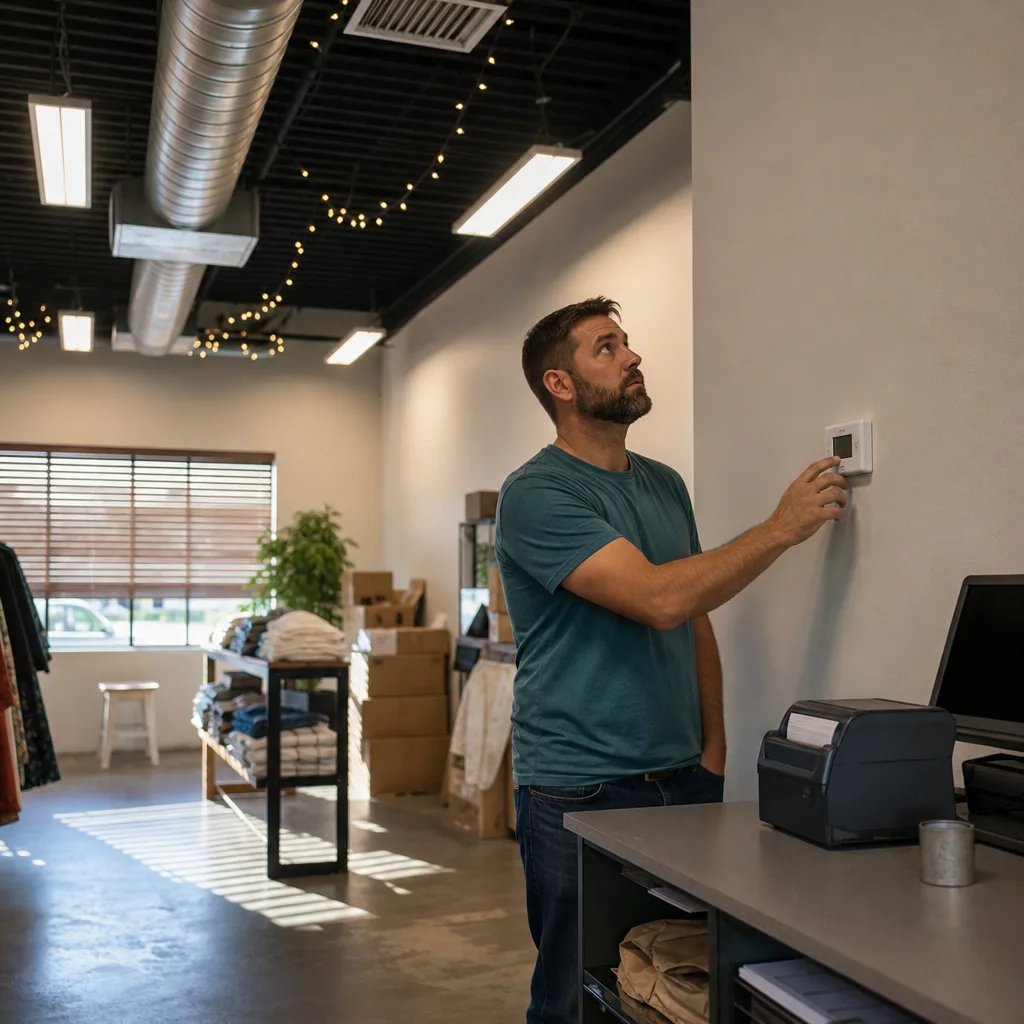
Plenty of older commercial units went in oversized. Some installers padded the size “just to be safe,” and the next contractor matched it, and the one after that matched it again. Your building may have been living with the wrong size for decades without anyone checking.
Buildings also change a lot over 15 or 20 years, even when the walls don’t move. Each of these shifts how much heat your system has to pull out:
- New windows, tinted glass, or added roof insulation can cut the load.
- LED lighting gives off far less heat than old fluorescent fixtures.
- More staff, more customers, or longer hours can raise it.
- Computers, servers, ovens, and fryers add heat that wasn’t there before.
- A new roof coating or a lighter roof color changes how much sun soaks through.
A cooling load calculation adds all of that up. It looks at your square footage, which way your windows face, how well the roof is insulated, how many people are inside, what equipment runs, and how much fresh outside air the space needs. The result is the size your building needs today, not the size it had.
Humidity is where this really shows up in Carrollton. North Texas isn’t only hot. Spring and early summer bring muggy days, and an AC system pulls moisture out of the air while it cools. That drying only happens when the unit runs long, steady cycles. A system that’s too big chills the room fast, shuts off, and leaves the air damp. Your thermostat reads fine, but your office feels clammy, and you may notice musty smells or condensation on vents and ceiling tiles.
Here’s something else worth knowing. Your system spends most of the year working below its peak. The hottest August afternoon is only a small slice of its running time. That’s why high-efficiency equipment with variable-speed or multi-stage operation can make sense for a commercial space. It can run at a lower, gentler speed on mild days and ramp up when the heat hits. You get steadier temperatures, better moisture control, and less wear from constant on and off cycling.
Right-sizing sometimes means a smaller unit than you have now, which can lower your equipment cost and your monthly bills. Sometimes it means bigger, because your business grew into the space. Either way, you want that answer from math, not from the old nameplate.
When you’re comparing quotes, ask one simple question. “How did you pick this size?” If the answer is “it matches what you had,” ask for a load calculation before you sign. It’s a small step that protects a very large purchase.
Call now
Frequently Asked Questions
Common questions about Commercial HVAC installation
What is the $5,000 rule for HVAC systems?
It’s a rule of thumb some technicians use to decide between repair and replacement. You multiply the age of the unit by the repair cost, and if that number tops $5,000, replacement usually makes more financial sense. On a commercial system, this matters even more because repeated repair bills can add up fast on older rooftop units. If your equipment is pushing 15 to 20 years old and facing a major repair, it’s worth getting a replacement quote alongside the repair estimate.
What’s the difference between HVAC and commercial HVAC?
Commercial HVAC handles bigger spaces, higher loads, and more complex equipment than a typical home system. A house usually runs one split system or one rooftop unit sized for a few thousand square feet. A commercial building may need multiple rooftop units, VRF zoning, make-up air for a kitchen, or chillers and boilers for larger square footage. Commercial installs also deal with more code requirements, since inspectors check things like kitchen exhaust, building automation, and electrical load that rarely come up in a home.
What exactly does a commercial HVAC installer do?
A commercial HVAC installer sizes, sets, and connects the heating and cooling equipment that keeps a business comfortable, then confirms it passes inspection. That covers picking the right rooftop unit, split system, or VRF setup for your space, running the needed electrical, gas, and drain connections, and testing the system before calling the job done. For restaurants or buildings with special exhaust needs, the installer also coordinates kitchen hood and make-up air work so the whole mechanical system works together.
Ready to Get Started?
Call (469) 269-6099 Today, Get Service Today.