


Boiler Installation in Carrollton: Is It a Boiler or a Furnace?
Boiler installs for buildings that heat with water, with what's included and what drives the cost explained.
What’s Covered on This Page
- Boiler vs. Furnace: Confirm Which System You Need
- Residential and Commercial Boiler Installation Both Fall Under Mechanical Contracting
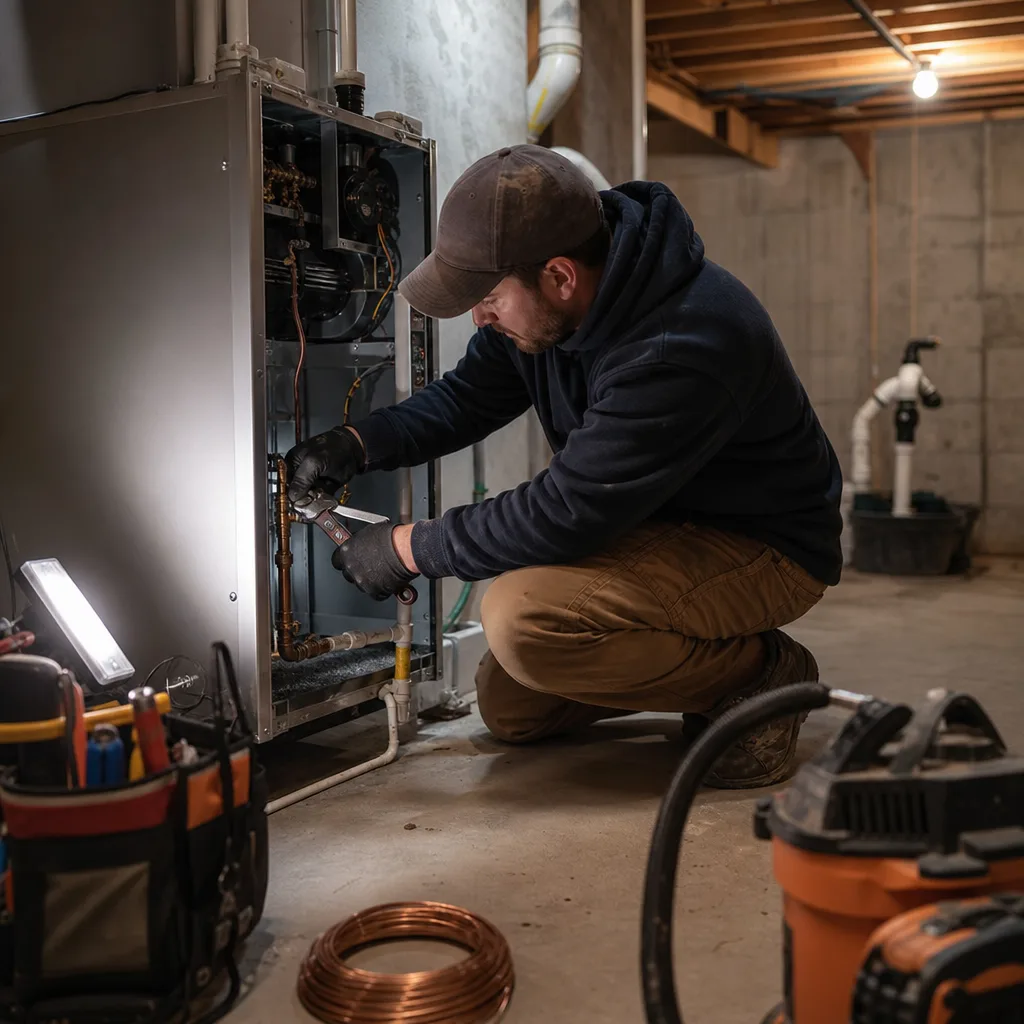
- What Happens During a Boiler Installation
- Sizing, Venting, and Commissioning Matter More Than the Brand
- Repair or Replace: Signs Your Boiler Needs a New Install
- Who should install a boiler, a plumber or an HVAC company?
- Can I install a boiler myself?
- Does a new boiler need a permit in Carrollton?
Boiler vs. Furnace: Confirm Which System You Need
Before you spend money on a boiler installation, take two minutes and make sure a boiler is what you have. A lot of people say “boiler” when they mean their furnace or even their water heater. That mix-up is easy to make, and it’s much better to catch it now than after a quote.
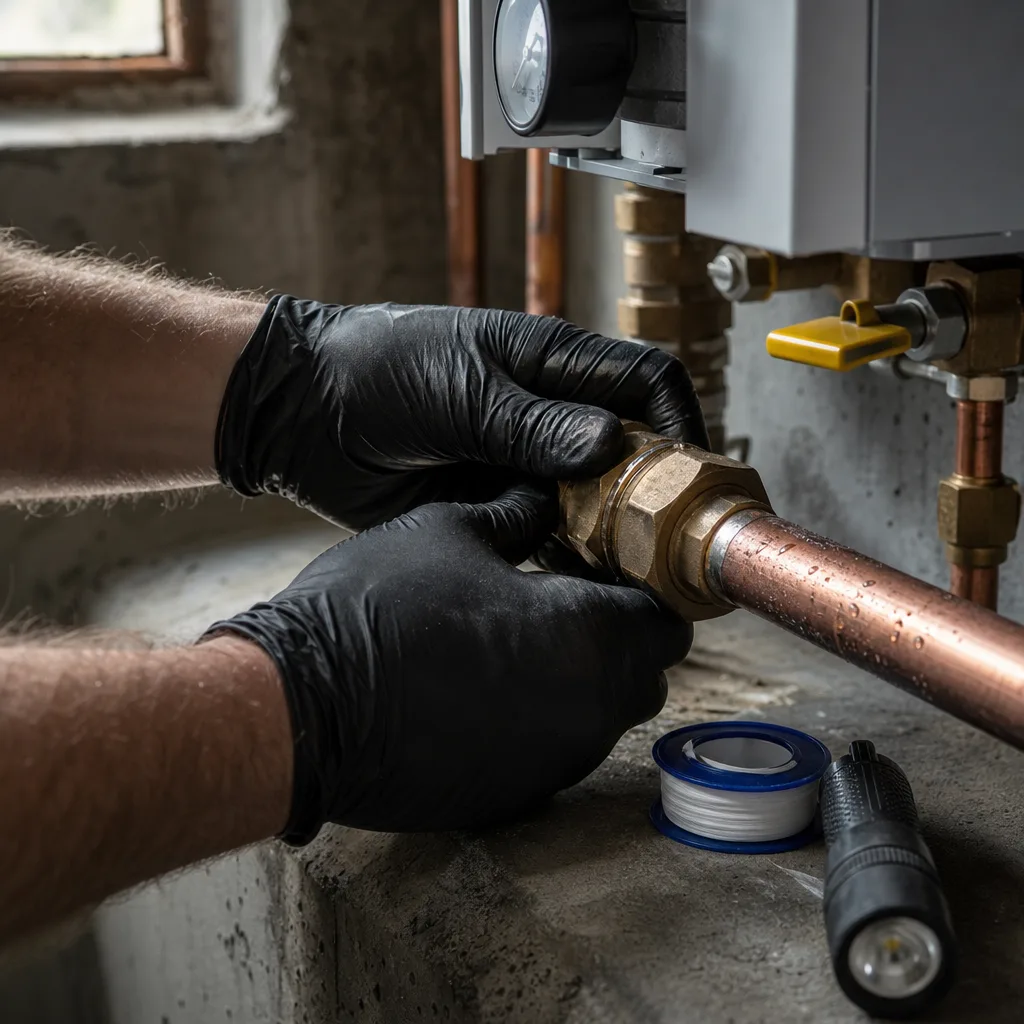
Here’s the plain difference. A boiler heats water, then a pump sends that hot water through pipes to give off heat in each room. A furnace heats air, then a blower pushes that warm air through ductwork and out the vents in your floors, walls, or ceiling.
You probably have a boiler if you notice:
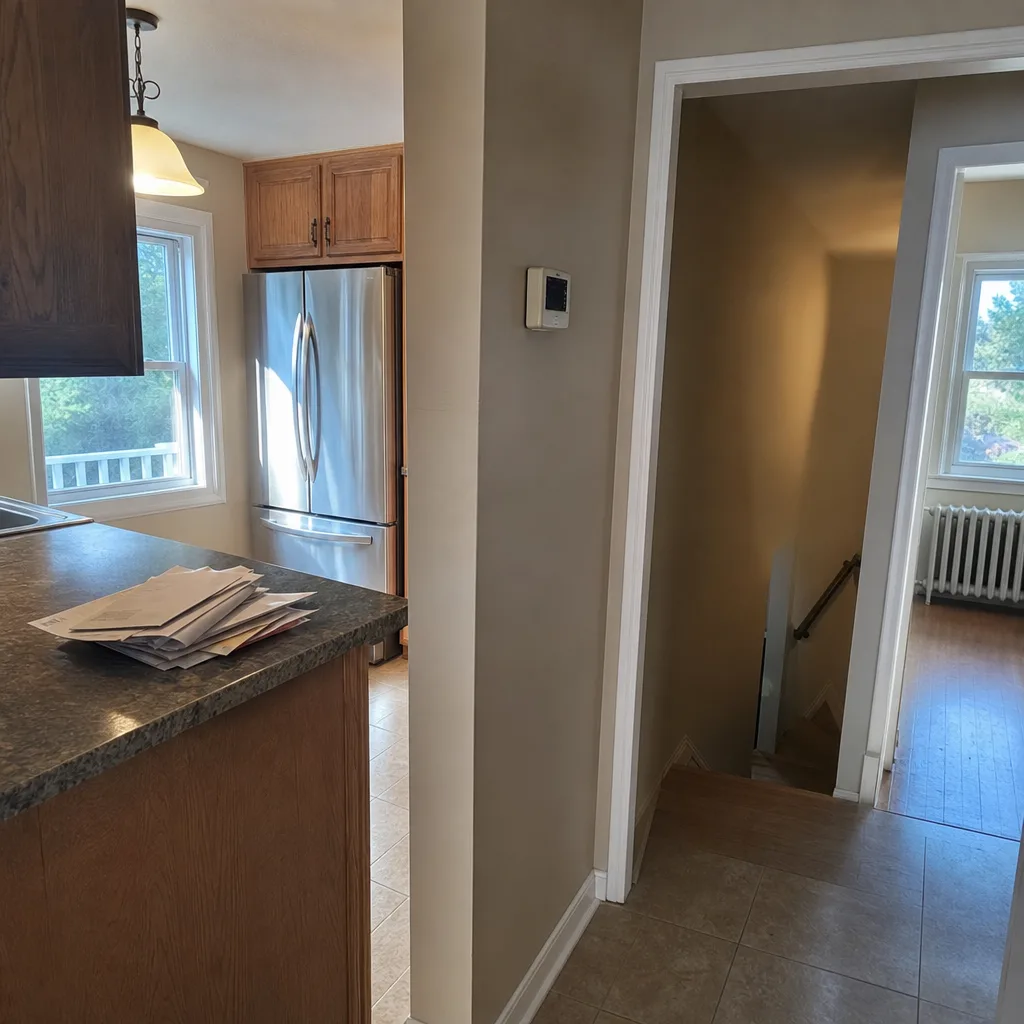
- Metal baseboard units along the bottom of your walls, or upright radiators in your rooms
- Warm floors with no vents anywhere, which points to radiant tubing under the floor
- A gauge on the unit that shows water pressure and temperature
- Pipes running out of the unit, plus a small tank and a pump mounted nearby
- No heat coming out of your air vents, even when the heat is running
You probably have a furnace if warm air blows out of the same vents your AC uses, there’s an air filter you change every so often, and the unit sits in your attic, a hall closet, or the garage. That setup is the norm in North Texas homes, because one duct system handles both heating and cooling.
If the tank you’re thinking of heats water for your showers and sinks, that’s a water heater. It’s a different job. We handle water heater installation and tankless water heater installation as separate services.
Here’s the honest answer for a ducted home: you likely don’t need a boiler. Your ducts already move air for cooling, and in Texas summers you’re keeping that AC no matter what. Adding a boiler would mean running new water piping and new heat emitters through every room while still keeping your ducts. For most families, that’s a lot of cost for a heating system you’ll lean on only during our shorter winters. A furnace replacement or a heat pump installation is usually the simpler path.
There are good reasons to want water-based heat, though. Some homeowners love how quiet and even radiant floor heat feels, and some are planning a remodel or addition where hydronic heating or radiant heating installation makes sense. That’s a design project, not a swap, so plan for it that way.
On the business side, boilers are more common. If you manage an office, a multi-tenant building, or a commercial space in Carrollton that already runs on a boiler, you’re in the right place. Commercial jobs are priced higher than homes, and keeping your tenants or staff warm through a winter cold front is the real goal.
Still not sure? Snap a photo of the unit and its label, along with whatever is on your walls where the heat comes out. That usually settles it fast, and it tells us whether you’re looking at a like-for-like replacement using your existing connections or something bigger.
Residential and Commercial Boiler Installation Both Fall Under Mechanical Contracting
A boiler isn’t just a heater. It ties into your gas line, your water piping, your venting, and your electrical. That’s why boiler work falls under mechanical contracting, whether the boiler heats a house or a whole building. One install can touch three trades at once.
That matters when you’re choosing who to hire. If one company sets the boiler but has to call someone else for the gas hookup or the wiring, you end up juggling schedules and wondering who’s responsible if something’s off. Xtreme Air Services is a licensed and insured HVAC, plumbing, and electrical contractor (HVAC License #TACLA29023C). One team handles the whole job from our Carrollton location on East Trinity Mills Road.
Home installations are usually the simpler of the two. The most common job is a like-for-like swap: a new boiler that uses your existing connections, with no major changes. That covers:
- The equipment and materials
- Professional installation and standard connections
- Startup and testing
- Hauling away your old unit
Duct, electrical, or plumbing changes aren’t part of a standard swap. Neither are code corrections or permits, unless your quote says so. If your old boiler was put in years ago and the piping or venting no longer fits today’s code, that’s extra work. You should see it written out before anything starts, not discovered halfway through.
Commercial installations are a bigger animal. An office, a multi-tenant building, or a shop space may run more than one boiler, extra pumps, and controls that talk to the rest of the building. On those jobs, the work often includes:
- Boiler system design, so the new setup is sized for the space
- Pump installation and piping installation
- Boiler commissioning, so the system runs the way it was designed
- Boiler decommissioning to take the old system out of service
For a business, the hardest part usually isn’t the equipment. It’s the timing. Your tenants and staff still need heat, and you don’t want the building cold when a winter front blows through North Texas. Planning the changeover around your schedule is part of doing the job right. Commercial work is priced higher than residential because the scope is bigger.
Whether you’re replacing a boiler at home or at work, ask any contractor these questions before you sign:
- Are you licensed in Texas, and can I see the license number?
- Will your own team do the gas, water, and electrical connections, or will you bring in someone else?
- Are startup and testing included in the price?
- What isn’t included, and will I see any extra work in writing first?
- Who pulls the permit if one is needed?
Straight answers to those five questions tell you a lot. A good contractor won’t mind you asking. You’re trusting them with gas, water, and power in your home or building, and you have every right to know who’s doing the work.
What Happens During a Boiler Installation
A boiler installation follows a set order. Once you know that order, you can tell whether the job is being done carefully or rushed. Here’s what a proper install looks like from start to finish.
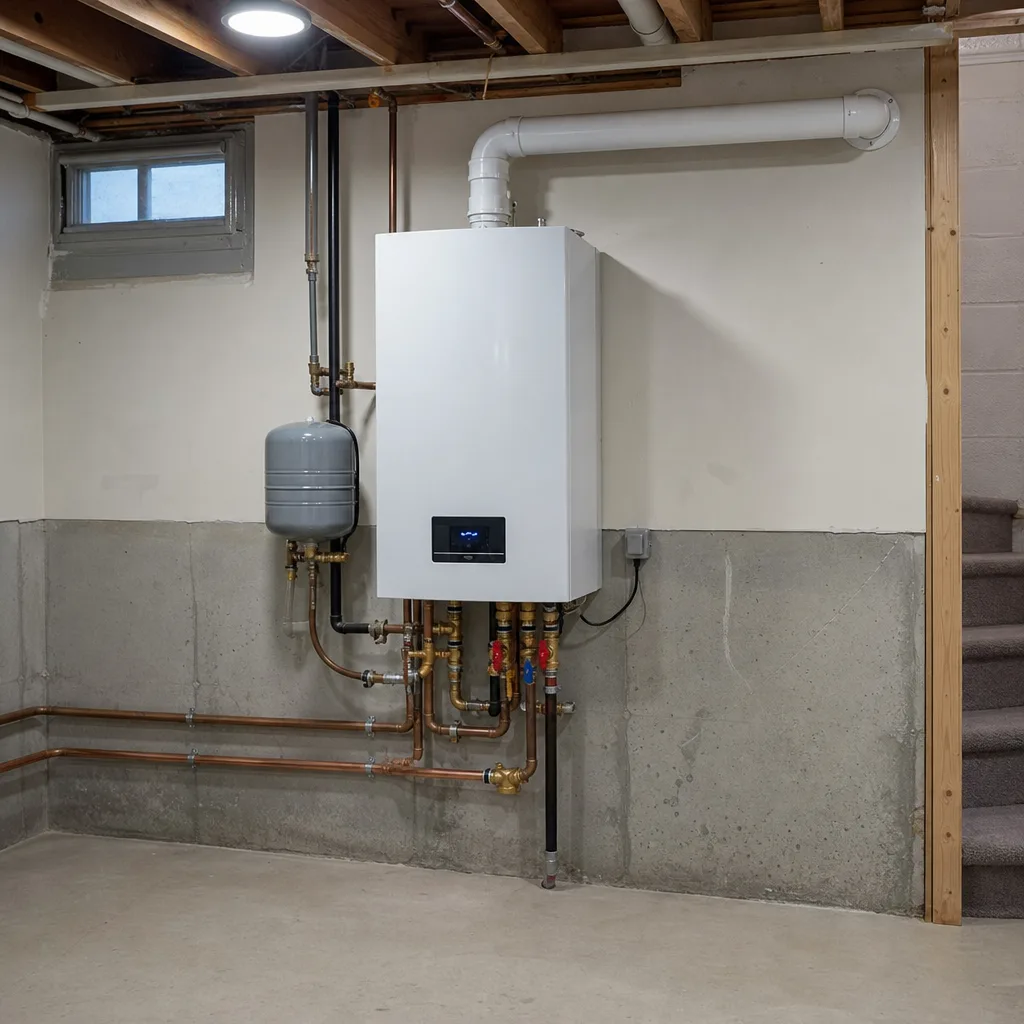
It starts with sizing, not with the old label. A boiler should match how much heat your home or building loses on a cold night. Copying whatever size was there before isn’t enough. Older boilers are often bigger than they need to be. An oversized boiler turns on and off in short bursts, which wastes fuel and wears out parts. If you’ve added insulation, replaced windows, or closed off part of the building since the old one went in, the right size may have changed.
Next comes the swap itself. The old boiler gets shut down, drained, disconnected, and removed. Then the new one is set in place and tied into the gas, water piping, venting, and power. Those are the three trades from the section above, all coming together at one spot.
Venting deserves a closer look. Many newer high-efficiency boilers are condensing models. They pull so much heat out of the exhaust that it cools down and leaves water behind. That means they often need a different kind of vent pipe and a drain for that water. Your old metal flue may not work with them. This is where efficiency ratings matter. AFUE tells you how much of the fuel you pay for turns into heat, so a higher number means less wasted gas. It also explains why a high-efficiency upgrade can turn a simple swap into a bigger job. If new venting or a drain line is needed, you should see that written in your quote before work starts.
Then the system gets filled and the air gets pushed out. Trapped air makes gurgling noises and leaves cold spots in radiators or baseboards. It’s also worth thinking about the water going in. North Texas water is hard, and minerals left in a boiler can build up as scale inside the parts that heat the water. That’s one reason some homeowners pair a boiler job with a water softener installation.
Startup and testing are where good work shows. A careful startup checks:
- Gas pressure and a clean, steady flame
- That exhaust leaves the building the way it should, with a carbon monoxide check
- Water pressure and temperature on the gauge
- That every zone and every room heats up, not just the one closest to the boiler
- That the thermostat and controls tell the boiler when to run
Before the installer leaves, ask them to show you the pressure gauge and tell you what a normal reading looks like. Knowing that one number helps you spot trouble early.
How long it all takes depends on the scope. A like-for-like home swap that uses your existing connections moves faster than a job with new venting. Both are quicker than a commercial changeover with several boilers and building controls. On a commercial job, the timeline should be planned around your tenants and staff so the building isn’t left cold during a winter front.
Have questions? We’re happy to help.
Call Today, Get Service Today. Xtreme Air Services — Carrollton is ready to help.
Sizing, Venting, and Commissioning Matter More Than the Brand
Two quotes can name the same boiler and still give you very different winters. Three things around the boiler matter more than the box itself. Is it sized to your home or building? Is it vented the way its design needs? Was it fully tested before the installer left? The brand is worth asking about. It just shouldn’t be the first line you compare.
Here’s why. A well-built boiler that’s oversized, hooked to an old flue that doesn’t fit it, or started up without checking every zone will run worse than a modest boiler that was installed right. The steps covered above are where your money turns into steady heat. They’re also the steps a rushed job skips.
When you look at a quote, check for these things:
- A sizing method. Ask how they got the number. “Same as the old one” isn’t a method.
- Venting in writing. If the new boiler is a condensing model, the quote should list new vent pipe and a drain line, or explain why your current setup works.
- Startup and testing listed by name, not assumed.
- Exclusions spelled out, such as permits, code corrections, and piping changes, so nothing surprises you halfway through.
Now for the money. At Xtreme Air Services, a boiler installation typically runs $6,000 to $20,000. Our most common job is a standard like-for-like swap that uses your existing connections with no major changes. That job runs $8,800 to $14,500 and covers the equipment and materials, professional installation, startup and testing, and haul-away of your old unit.
Where you land in that range depends on equipment size and capacity, efficiency (AFUE), brand and model, how easy the boiler is to reach, the condition of your existing wiring and plumbing, code upgrades, permits, and any custom fabrication. Commercial jobs cost more.
Look at that list again. Brand is one item on it, not the whole thing. A lower quote that leaves out the vent change or skips testing isn’t really lower. It just moves the cost to later, often on the first cold night after a North Texas front blows through.
If the right boiler comes in higher than you planned, flexible financing is available on qualifying installations and larger jobs, on approved credit.
Call 469-269-6099
Watch Our Video
See How We Handle Boiler installation in Carrollton
Xtreme Air Services — Carrollton
Repair or Replace: Signs Your Boiler Needs a New Install
Not every boiler problem means you need a new boiler. A lot of trouble comes from one worn part, like a pump, a valve, a pressure relief valve, or an igniter. If the rest of the boiler is in good shape, fixing that part is usually the smart use of your money. A new install only makes sense when the boiler itself is wearing out.
A repair is often the right call when:
- It’s the first real problem in years, and the boiler has otherwise run well
- The leak is coming from a fitting, valve, or pipe joint, not the boiler body
- The heat still works but one zone is acting up, which can point to a pump, valve, or thermostat
- Gurgling or cold spots go away after the air is bled out and the pressure is set right
Replacement starts to make more sense when you notice these signs:
- The same problem keeps coming back, and you’re calling for repairs more than once a winter
- Water is leaking from the boiler body itself, or you see rust and corrosion on the unit or a puddle underneath it
- Your gas bills keep going up, but your home doesn’t feel any warmer
- Parts for your model are hard to find or take weeks to arrive
- Rooms still heat unevenly even after the system is bled and the pressure is set right
- You hear loud banging or rumbling, which can mean heavy mineral scale has built up inside from our hard North Texas water
Here’s a common picture. You look at the pressure gauge and see it dropping every few days. You top it off, it holds for a while, and then it drops again. One fix might stop that. But if the cause turns out to be a slow leak inside the boiler, you’re paying to patch a machine that’s already on its way out.
A fair way to decide is to weigh the repair against the boiler’s overall condition. A small repair on a solid boiler is easy to justify. A big repair on an old, rusty boiler that’s already needed several fixes usually isn’t. That money often does more good going toward a new boiler that’s sized right for your home today.
For a business, timing changes the math. A repair that keeps an aging boiler limping along can still leave your tenants or staff cold if it fails during a January front. If the signs above are adding up, planning the replacement in the fall gives you control over the schedule instead of scrambling in an emergency.
If you’re not sure which side you’re on, start with a diagnosis. A good technician should show you what failed, tell you plainly whether a repair will hold, and give you a price for both options so you can choose. At Xtreme Air Services, there’s a $26 to $99 service-call fee, and it’s credited toward the repair if you proceed with us. That way, finding out what’s really wrong doesn’t push you toward a bigger job than you need.
Frequently Asked Questions
Common questions about Boiler installation
Who should install a boiler, a plumber or an HVAC company?
A boiler installation needs someone licensed for mechanical, gas, and electrical work, since the job touches all three. Xtreme Air Services handles boiler work as a licensed HVAC, plumbing, and electrical contractor, so one team manages the gas hookup, water piping, and wiring instead of passing you between separate companies.
Can I install a boiler myself?
No, you should not install a boiler yourself. A boiler connects to gas lines, pressurized water piping, venting, and electrical power, and a mistake in any of those can create a carbon monoxide risk or a leak inside your home. This is licensed mechanical contracting work, not a weekend project.
Does a new boiler need a permit in Carrollton?
Most boiler installations need a permit, since the work involves gas, venting, and pressure equipment. Carrollton sits in the DFW Metroplex, where mechanical permits are handled through the local building department, so check with your contractor to confirm who pulls it before work starts.
Ready to Get Started?
Call (469) 269-6099 Today, Get Service Today.