


Chiller Installation in Carrollton: Who Needs It
Make sure chiller installation is the right job before you get quotes – and who is qualified to install one in Texas.
What’s Covered on This Page
- Chiller Installation Means Chilled-Water Equipment, Not Every Commercial AC
- Signs You Need Chiller Installation Instead of Repair
- When You Do Not Need Chiller Installation
- Who Is Qualified to Install a Chiller in Texas
- Carrollton Permitting for Chiller Installation
- How long does a chiller last before it needs to be replaced?
- Can I keep using my building while a new chiller is installed?
- Do I need a cooling load calculation even if I’m replacing a chiller that already exists?
Chiller Installation Means Chilled-Water Equipment, Not Every Commercial AC
If you run a building in Carrollton and the cooling plant is failing, you might be searching for chiller installation. Before you get quotes, make sure that’s the right job. A lot of commercial cooling isn’t a chiller at all. Your existing equipment, piping, and connections decide what the project looks like and what it costs.
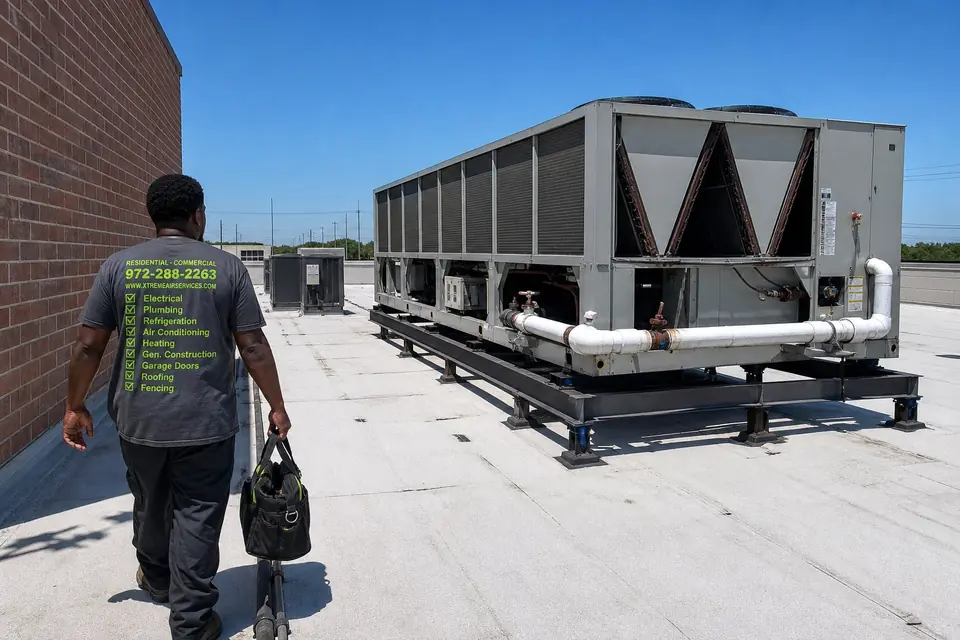
A chiller doesn’t blow cold air into your rooms. It chills water, then pumps that water through insulated pipes to air handlers or fan coils around the building. Those units move air across the cold-water coils, and that cool air goes into your space. The warm water flows back to the chiller to get cooled again.
The chiller has to dump that heat somewhere. An air-cooled chiller uses big fans, a lot like a giant outdoor AC unit. A water-cooled chiller sends the heat to a cooling tower. A North Texas summer keeps either one working hard for months, so getting the size right matters.
You likely have a chiller system if you see these signs:
- A mechanical room with large, insulated pipes running in and out of it
- Pumps that move water to different floors or wings of the building
- A cooling tower on the roof or beside the building
- Air handlers or fan coils fed by water pipes instead of refrigerant lines
- Process equipment, like molds or machines, cooled by a closed water loop
Some buildings don’t need a chiller at all. If your building cools with rooftop units that push cold air straight into the ductwork, that’s rooftop unit work or commercial HVAC installation. The same goes for split systems with a condenser outside and refrigerant lines running in, and for ductless mini-splits. A VRF system is also different. It moves refrigerant, not water, to each zone, and it has its own install process.
Here’s the honest part. If your building runs fine on rooftop units, switching to a chiller is rarely a simple upgrade. You’d need new water piping, pumps, air handlers, and controls. At that point you’re building a central plant, not swapping one machine. For many small and mid-size buildings, a new set of rooftop units is the better choice. We’d rather tell you that up front than sell you a bigger project than you need.
Chillers do make sense for larger buildings with many zones, where one central plant cools the whole space more evenly. They also fit manufacturing work that needs steady process cooling. If you already have chilled-water piping and pumps in good shape, replacing the chiller like-for-like is the simplest path. If those connections are worn out or the building’s needs have changed, the scope grows. That’s why the first step is a close look at what’s already in place.
Signs You Need Chiller Installation Instead of Repair
A chiller that breaks down doesn’t always need to be replaced. Sometimes one part fails, it gets fixed, and the machine runs strong for years. The real question is whether you’re fixing a problem or just paying to keep an old machine limping along. Here are the signs that point to new chiller installation instead of another repair.
- The same problems keep coming back. If the compressor, controls, or tubes have been worked on more than once and the chiller still trips off, the machine is telling you something. Every repair buys less time than the one before.
- A major part failed on an older unit. A dead compressor or a cracked heat exchanger on a chiller near the end of its life is a big bill for a machine that may not have much life left.
- Your refrigerant is getting hard to find. Older chillers often run on refrigerants that federal rules have been phasing out. Each recharge costs more, and a leak can turn into a long wait for supply.
- Parts are no longer made. When a technician has to hunt for used or rebuilt parts, every breakdown means more downtime for your tenants, staff, or production line.
- It can’t keep up anymore. If the building feels warm by mid-afternoon in July, or your process water runs warmer than it should, the chiller may be worn out. Or your building may simply need more cooling than it did when the chiller was put in.
- Energy bills keep climbing. An aging chiller has to work harder to make the same cold water. In North Texas, where the cooling season runs for months, that extra power use adds up fast.
- You see corrosion or leaks. Rust on the shell, wet spots under the unit, or water leaking around the tubes are signs the metal is wearing out from the inside.
Here’s when repair makes more sense. Your chiller is younger. One part failed, like a sensor, a pump motor, or a control board. The machine kept up fine until that part went bad. In that case, fixing it is usually the smart, cheaper move. A good technician should tell you that, not talk you into a new machine.
A helpful way to decide is to put the numbers side by side. Look at what this repair costs. Then think about what the chiller is likely to need over the next few years. Weigh that against a new machine that uses less power and runs on a refrigerant you can still buy. If you keep spending real money on a unit that’s only getting older, replacing it often protects your budget better in the long run.
Downtime counts too. For an office in Carrollton, a dead chiller means warm, unhappy tenants. For a plant that relies on process cooling, it can stop production. If your chiller is starting to fail at the worst times, planning a replacement on your own schedule beats an emergency swap in the middle of August.
If you’re seeing two or three of these signs at once, it’s time to get the whole system checked before you sign off on another repair. That includes the chiller, the piping, and the pumps, because their condition shapes how big the job turns out to be.
When You Do Not Need Chiller Installation
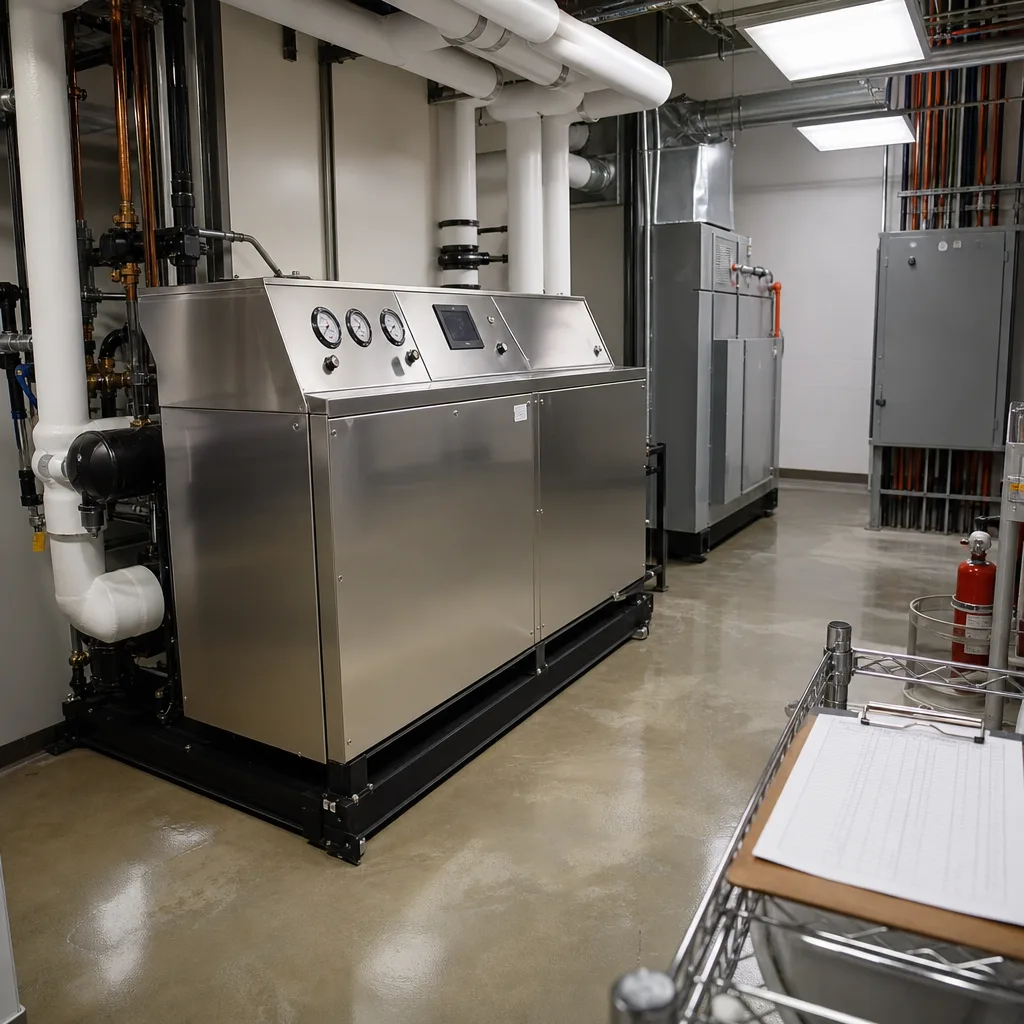
A warm building doesn’t always mean a bad chiller. A chiller is one part of a loop. Pumps, pipes, valves, coils, a cooling tower, and controls all have to do their jobs too. If any one of them fails, your tenants feel it, and the chiller gets the blame. Before you spend money on a new machine, rule these out.
You probably don’t need a new chiller if:
- The chiller is making cold water, but rooms are still warm. Have someone check the water temperature leaving the chiller. If it’s on target, the problem is downstream. It could be a stuck control valve, a clogged coil in an air handler, or a fan coil that isn’t moving air.
- Only one floor or one wing is hot. A chiller cools the whole loop, so it can’t single out one area. Hot spots usually point to balancing, a failed valve, or air trapped in the pipes in that part of the building.
- A pump is weak or failing. If water isn’t moving fast enough, the chiller can be working fine and the cold water just never reaches the far end of the building. A pump repair costs far less than a chiller.
- The cooling tower is the weak link. On a water-cooled system, a tower with a broken fan, low water, or heavy scale can’t get rid of heat. The chiller then trips off or struggles. North Texas hard water makes scale a real concern in towers.
- The tubes inside the chiller are dirty. Scale and sludge on the tubes act like a blanket. The machine runs longer and cools less. Cleaning the tubes and fixing water treatment can bring back a lot of lost capacity.
- The controls are set wrong. A bad sensor, a wrong setpoint, or a building automation glitch can make a healthy chiller act sick.
Here’s a simple way to picture it. Say your office is warm every afternoon. The chiller hums along, the gauges look normal, and the water leaving it is cold. In that case, a new chiller would leave you with the same warm office and a much smaller bank account. The fix is in the parts that carry the cold to your rooms.
There are also times when it makes sense to wait, even if the chiller is old.
- You’re planning a remodel, an addition, or a change in how the building is used. A new tenant, more equipment, or fewer people all change how much cooling you need. Size the new chiller for the building you’ll have, not the one you have today.
- The old chiller still runs reliably and you’re heading into the cooler months. A working machine can carry you through fall and winter while you plan. That lets you replace it on your own schedule before the next Texas summer, instead of rushing a decision.
- You don’t know your real cooling load yet. If no one has measured what the building needs, get a cooling load calculation first. Guessing can lead to a chiller that’s too big, cycles on and off, and wears out early.
If any of these sound like your building, a good inspection of the whole loop should come before any talk of a new chiller. Sometimes the honest answer is a repair, a cleaning, or a few months of planning.
Ready when you are – get in touch today.
Call Today, Get Service Today. Xtreme Air Services — Carrollton is ready to help.
Who Is Qualified to Install a Chiller in Texas
A chiller isn’t a job for a general handyman or a residential AC crew that’s never set a central plant. In Texas, heating and cooling contractors are licensed by the Texas Department of Licensing and Regulation, or TDLR. A chiller job also touches refrigerant, high-voltage power, and water piping, so you need someone qualified in all three. Before you sign a bid, here’s what to check.
- A current TDLR air conditioning and refrigeration contractor license. Ask for the number and look it up on the TDLR website. It takes two minutes. Texas license classes also limit how big a system a contractor may work on, so ask whether their license covers equipment the size of your chiller.
- EPA refrigerant certification for the technicians. Anyone who recovers the old refrigerant or charges the new machine has to be certified to handle it. That matters even more when replacing an older chiller that runs on a phased-out refrigerant.
- A licensed electrician for the power side. A chiller pulls a lot of power. The disconnect, the wiring, and any panel work need to be done by a licensed electrician and done to code.
- Insurance that fits a commercial job. Ask for proof of general liability and workers’ comp. A chiller can weigh several tons, and setting it often takes a crane. You don’t want to carry that risk yourself.
- Real experience with chilled-water systems. Ask how they handle piping, pumps, controls, and startup. If they talk only about the chiller and never about the loop it feeds, keep looking.
Permits are part of this too. A new chiller in Carrollton goes through the city’s building inspection process, and the person pulling the permit should be the licensed contractor doing the work. If a bidder asks you to pull the permit yourself, treat that as a red flag. It can mean they aren’t licensed for the job. Pricing for chiller installation doesn’t include permits unless the quote says so. A good contractor will spell that out in writing, so you know exactly who’s handling it.
Here’s why this matters for your building. A chiller that’s set wrong, wired wrong, or started up without testing can fail early. Worse, it can void the manufacturer’s coverage and leave you stuck in the middle of a Texas summer. The right paperwork protects your tenants, your staff, and your budget.
Xtreme Air Services is a licensed and insured HVAC, plumbing, and electrical contractor. Our HVAC license is #TACLA29023C, and you’re welcome to look it up. We’re also a Trane Comfort Specialist. Because we handle HVAC, plumbing, and electrical under one roof, you don’t have to juggle three companies for the cooling, the piping, and the power. One team stays accountable for the whole job.
Whoever you hire, ask these questions out loud and get the answers in writing. A qualified contractor won’t mind. They’ll be glad you asked.
Watch Our Video
See How We Handle Chiller installation in Carrollton
Xtreme Air Services — Carrollton
Carrollton Permitting for Chiller Installation
A chiller job in Carrollton is rarely one permit and done. The licensed contractor pulls the paperwork, as covered above. It still helps to know what the city will look at, because each review can add time to your schedule.
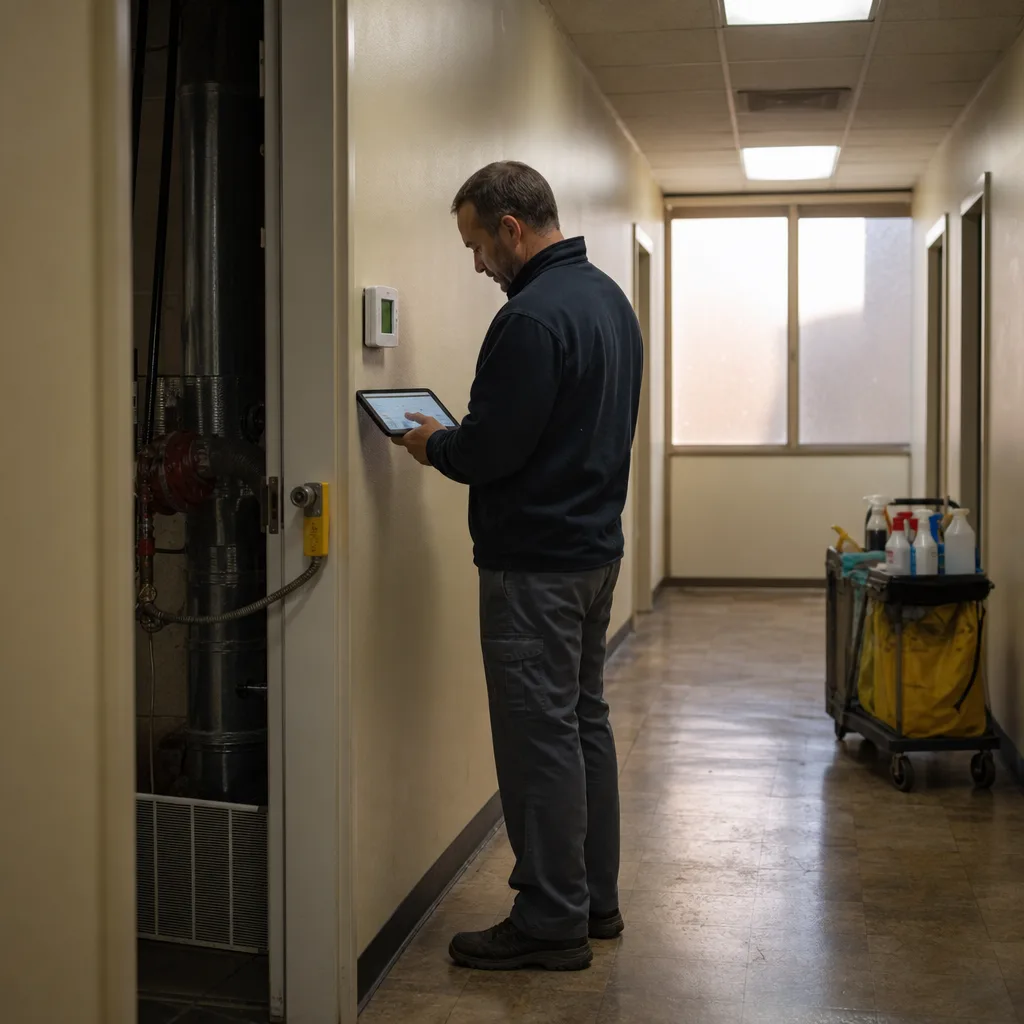
A chiller touches several trades at once. Depending on your building and the scope of work, the city may need to review:
- Mechanical work. This covers the chiller itself, the refrigerant side, and the chilled-water piping it connects to.
- Electrical work. A chiller often needs a new or larger circuit, a disconnect, and sometimes panel changes. If your building needs more power than it has today, Oncor may also need to weigh in, and that adds lead time.
- Plumbing work. Water-cooled systems pull makeup water into the cooling tower. That line usually needs a backflow preventer so tower water can’t flow back into the city supply.
- Structural review. A rooftop chiller can weigh several tons. If it sits on the roof or on a new pad, the city may ask for proof that the roof or slab can carry the load. Sometimes that means a letter from an engineer.
A like-for-like swap on existing connections usually means less review than a new installation. If you’re moving the chiller, going up in size, or changing from air-cooled to water-cooled, expect more steps and more drawings.
A few smaller items can catch people off guard. Setting a chiller often takes a crane. If the crane has to sit in a street or block a fire lane, you may need city approval for that day. Air-cooled chillers have big fans, so placement near a property line or a neighboring building is worth thinking through before the design is final.
Timing is where permits matter most. Commercial plan review takes time, and a new chiller can take weeks or months to arrive from the factory. A good plan runs both at once. The equipment gets ordered while the permit is in review. The crane and the shutdown day get booked only after approval comes through. That way your tenants or your production line aren’t sitting without cooling while everyone waits on paperwork.
Inspections happen in stages. An inspector may need to see piping and wiring before they’re insulated or covered, then come back for a final check once the chiller is running. If work gets closed up before an inspection, it may have to be opened back up. That costs you time and money.
Before you sign a bid, ask these questions and get the answers in writing:
- Which permits will this job need?
- Are permit fees in the price, or billed separately?
- How much time have you built in for plan review?
- Will I get a copy of the final inspection sign-off?
Keep that final sign-off with your building records. It shows the chiller was installed and inspected the right way. That paperwork helps when you sell the building, file an insurance claim, or bring in a new tenant.
Frequently Asked Questions
Common questions about Chiller installation
How long does a chiller last before it needs to be replaced?
Most chillers run well for 15 to 20 years with good maintenance, but that range shifts based on load and water treatment. A machine that runs hard every summer in North Texas heat wears faster than one with a lighter duty cycle. The real test is the signs covered above, like repeat repairs, climbing energy bills, and hard-to-find parts, rather than age alone.
Can I keep using my building while a new chiller is installed?
Often yes, but it depends on whether you have a backup cooling source during the swap. Many commercial buildings schedule the shutdown day for cooler months or overnight to limit disruption to tenants or production. Ask your contractor to walk through the shutdown window before you sign, so you know exactly when cooling will be off.
Do I need a cooling load calculation even if I’m replacing a chiller that already exists?
Yes, if your building’s use has changed since the old chiller was installed. Adding tenants, equipment, or square footage changes how much cooling you need. Sizing the new chiller off the old one’s capacity alone can leave you with a unit that’s too small or too big for today’s building.
Ready to Get Started?
Call (469) 269-6099 Today, Get Service Today.