


Commercial Refrigeration in Carrollton: Get Your Unit Running Again Fast
Walk-in and reach-in units running warm, traced to the part that failed so your unit is running again fast.
What’s Covered on This Page
- Common Reasons a Commercial Unit Stops Cooling
- Signs That Mean Call Now, Not Later
- When You Don’t Need a Service Call
- What Happens During a Repair Visit
- How Commercial Refrigeration Pricing Works
- Can a walk-in cooler be repaired, or is it always cheaper to replace it?
- Why does my cooler act up more in the summer than other times of year?
- Is it normal for a cooler or freezer to warm up a little during the day?
- What should I write down before calling about a refrigeration problem?
Common Reasons a Commercial Unit Stops Cooling
When your walk-in or reach-in starts running warm, it’s easy to picture the worst. But refrigeration is a chain of parts that move heat out of the box, and the chain usually breaks at one link. In our pricing notes, most calls come down to a single common failure fixed on the first visit. Here’s where that link usually breaks, and what you’ll notice when it does.
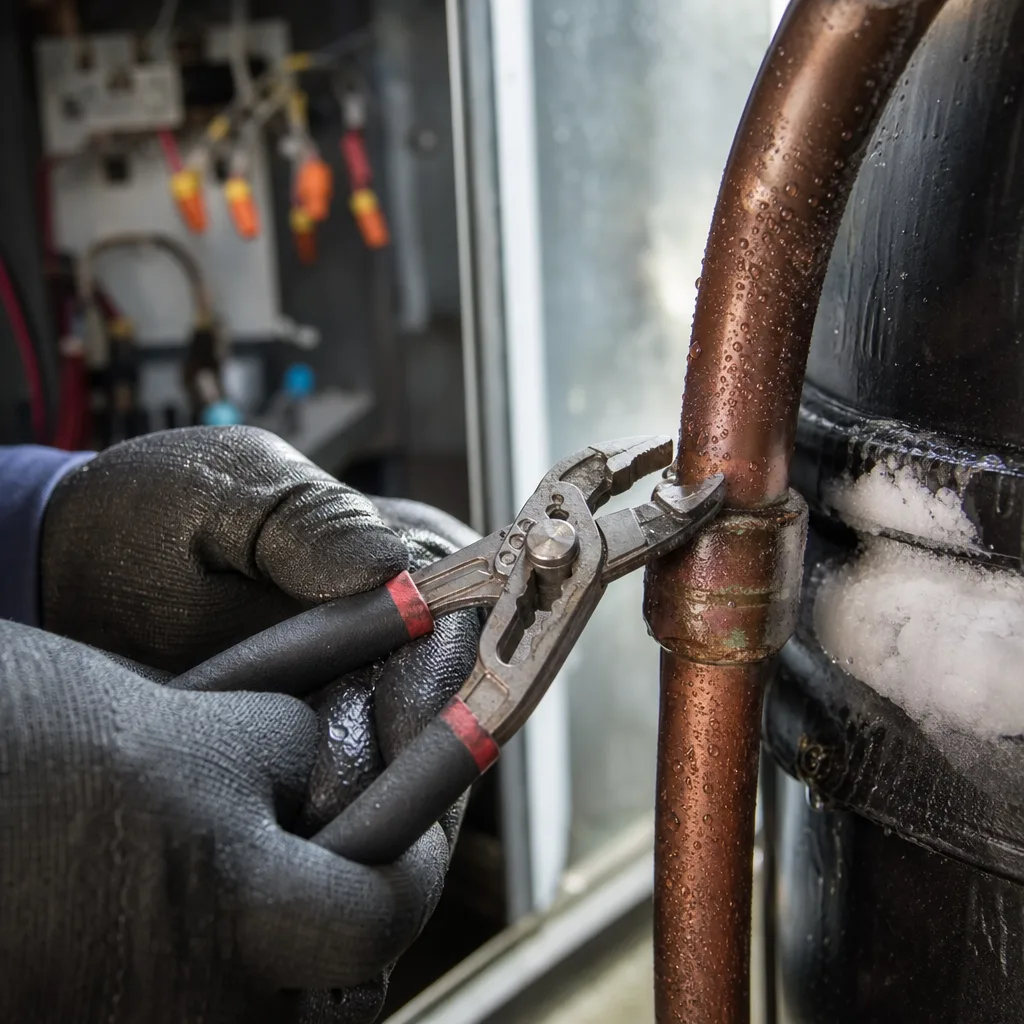
- Dirty condenser coil. The condenser is the part that dumps heat outside the box. When dust, grease, or kitchen exhaust buildup coats it, heat can’t escape. You’ll notice the unit running nonstop and the box slowly losing ground, often worst on the hottest afternoons.
- Failed condenser fan motor. If the outdoor or top-mounted fan stops spinning, the compressor overheats and may shut itself off. You might hear a hum with no fan noise, or feel the unit cycling on and off.
- Failed evaporator fan motor. This is the fan inside the box that blows cold air around. When it quits, the coil gets cold but the box doesn’t. Food near the coil may freeze while the rest warms up.
- Iced-up evaporator coil. Freezers and many coolers run a defrost cycle to melt frost off the coil. A bad defrost heater, timer, or sensor lets ice build up until air can’t pass through. If you see a solid block of frost on the coil, this is likely your problem.
- Refrigerant leak. Refrigerant is the fluid that carries heat out. A small leak means the system slowly loses cooling power over days or weeks. Oily spots near fittings or a temperature that creeps up over time are common clues.
- Worn start parts. Capacitors and contactors help the compressor and fans start up. They wear out, especially when they’re working hard in heat. A clicking sound with no startup is a classic sign.
- Torn door gaskets or a door that won’t seal. Warm, humid air leaks in, frost builds fast, and the system runs constantly trying to keep up. Look for gaps, cracks, or ice around the door frame.
- Thermostat or control problems. Sometimes the cooling parts are fine but the control isn’t telling them to run, or it’s reading the temperature wrong.
North Texas summers make several of these worse. A condenser on a roof or behind your building is already fighting hot air. Add a dirty coil or a weak fan and it can’t keep up, so a box that held fine in spring starts slipping in July and August. That heat also wears on start parts and compressors. That’s why a small problem you could ignore in April turns urgent in summer.
You don’t need to diagnose it yourself. Just note what you see and hear. Is the fan spinning? Is there ice on the coil? Is the unit running nonstop or not at all? What does the thermometer read, and how fast is it rising? Those details help a technician narrow it down before they even reach your door, so you’re back to protecting your inventory sooner.
Signs That Mean Call Now, Not Later
Some refrigeration problems give you days of warning. Others give you hours. The difference is whether the box is still holding temperature. If it’s slipping and won’t come back, every hour you wait puts more product at risk.
Call right away if you notice any of these:
- The temperature keeps climbing even after the door has stayed shut for a while. A box that won’t recover on its own isn’t going to fix itself.
- Frozen product is getting soft. Ice cream that gives when you press it, or meat that’s lost its hard freeze, means you’re running out of time.
- The unit isn’t running at all. It’s silent, nothing is spinning, and the box is warming up.
- You smell something burning or electrical near the unit, or a breaker keeps tripping. Those are reasons to stop and get a technician out, not to keep resetting it.
- You hear grinding, banging, or loud rattling that wasn’t there yesterday.
- Water or ice is building up on the walk-in floor. That’s a slip hazard for your staff on top of a cooling problem.
- The unit clicks on and off every few minutes and never seems to settle down.
Timing matters too. A cooler that starts acting up on a Friday afternoon in August is a different story than the same problem on a mild Tuesday in March. North Texas heat keeps pushing on your equipment all weekend, and a box that’s barely hanging on at 4 p.m. may not make it to Monday morning.
Plenty of owners wait because they’re worried about paying overtime. With Xtreme Air Services, you don’t have to weigh that. We charge no extra for nights or weekends, so calling at 9 p.m. Saturday costs the same as calling Tuesday morning. Same-day service is available, so you’re not waiting until next week.
Some problems really can wait for a scheduled visit. You don’t need an emergency call if:
- The box is holding its normal temperature, even if it runs a little longer on the hottest afternoons.
- A door gasket is worn or cracked in one spot, but the door still closes and seals.
- You see a light, even layer of frost that clears after a defrost cycle.
- The unit is a bit noisier than it used to be, but the sound is steady and the temperature is fine.
Those are worth fixing soon, because small problems grow in summer. But they don’t need someone at your door tonight. Watch the thermometer, write down the readings, and book a regular visit.
If you’re in the call-now group, take a few steps while help is on the way. Keep doors closed as much as you can. Move your most expensive or most sensitive product to a cooler or freezer that’s still working. Check and write down the temperature every 30 minutes or so. That log helps you make decisions about your product, and it gives the technician a clear picture of how fast the box is losing ground.
When You Don’t Need a Service Call
Not every warm box means a broken part. Sometimes the fix is a dial, a door, or a few cases of product in the wrong spot. Before you call anyone, us included, take five minutes and walk through these checks. If one of them solves it, you just saved yourself a service-call fee.
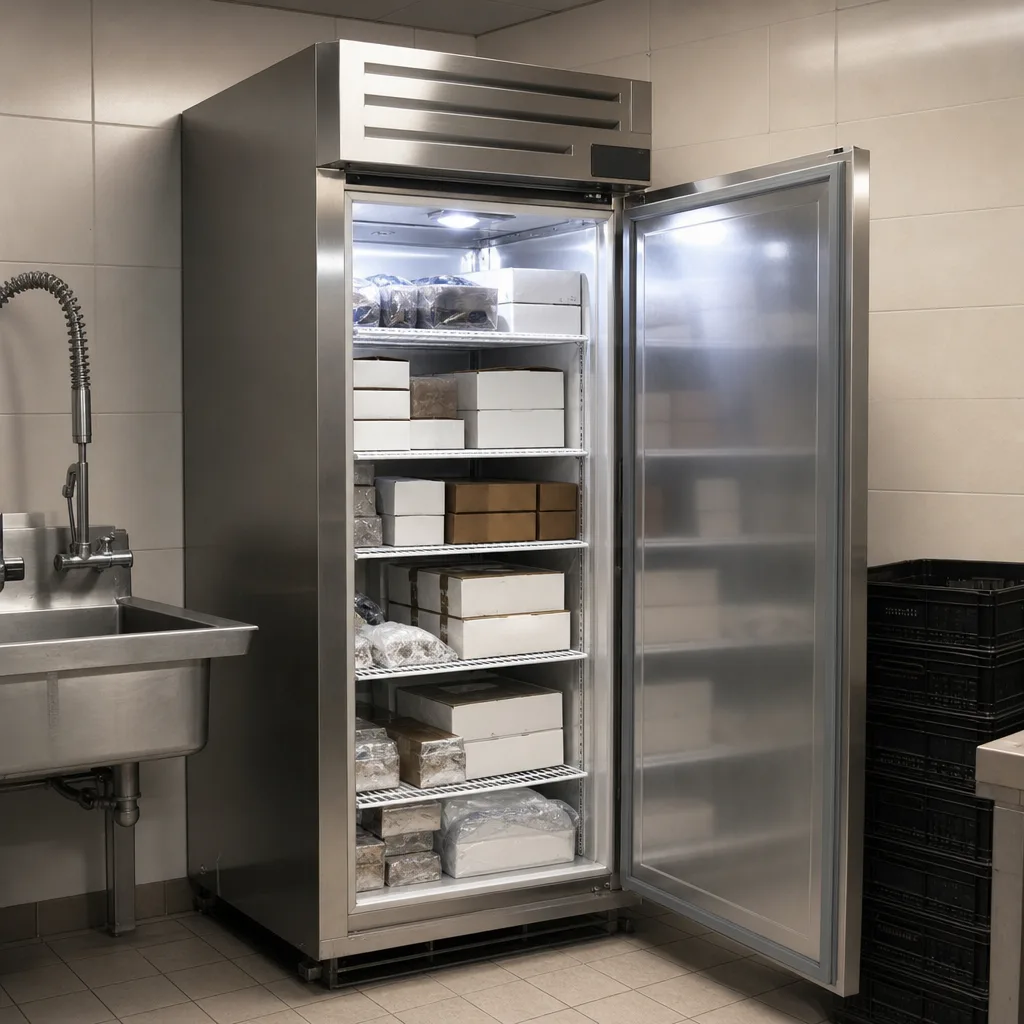
- Check the temperature setting. Thermostat dials on reach-ins and walk-ins get bumped by mop handles, carts, and busy hands. If someone nudged it a few degrees warmer, turn it back and give the box time to pull down.
- Make sure the door is fully closed. A case of produce or a rubber mat can keep a walk-in door from latching. A reach-in door can sit just slightly open behind a tray. Close it tight and watch whether the temperature starts to drop.
- Look at how the box is stocked. Product stacked right up against the evaporator fan inside the box blocks the cold air from moving. Pull it back a few inches so air can flow around the shelves.
- Think about what just went in. A big delivery or a load of warm food will push the temperature up for a while. That’s normal. A healthy box should pull back down on its own over the next few hours.
- Check the power. Make sure the unit is plugged in and the breaker hasn’t tripped. If a breaker tripped once, you can reset it. If it trips again, stop there, because that’s a call-now sign.
- Clear the space around the condenser. The condenser needs room to breathe. Boxes, trash bags, or supplies piled around it, whether it’s on top of the unit or behind your building, trap hot air. In a North Texas summer, that alone can make a box struggle.
You might also see a short temperature bump during a defrost cycle. Many units warm up a few degrees while the coil heater melts off frost, then cool back down when the cycle ends. If you happen to check the thermometer right then, it can look like trouble when it’s really the system doing its job. Check again in 30 to 45 minutes before you decide anything.
Here’s a common moment. You come in after a delivery day, the walk-in reads 44 degrees, and your stomach drops. Then you notice cases stacked tight against the back wall and the door didn’t latch all the way. You fix both, and by lunch it’s back to 37. That’s not a repair. That’s just a busy kitchen.
The rule is simple. If you fix one of these and the box steadily pulls back to its normal temperature within a few hours, you’re fine. Keep an eye on it the rest of the day and jot down a couple of readings. If you’ve checked everything on this list and it’s still climbing, or it won’t come back down, that’s when a part has likely failed and it’s time to get a technician out.
Not sure what your Commercial refrigeration project needs? Ask us.
Call Today, Get Service Today. Xtreme Air Services — Carrollton is ready to help.
What Happens During a Repair Visit
A repair visit has one job. We find the part that failed, repair or replace it, and make sure your box holds temperature again before we call it done. Most calls come down to a single common failure fixed on the first visit, so you’re usually looking at one visit, not a drawn-out project.
Here’s how it goes from start to finish.
- You call and talk to a real person. Share what you’ve noticed, like your temperature readings, whether the fans are spinning, and any ice or strange sounds. Same-day service is available.
- A licensed and insured technician shows up. Our team members are background-checked and drug-tested, so you can feel good letting them into your kitchen, stockroom, or roof access.
- We find the failed part. Your notes and temperature log help narrow it down faster.
- You see the price before any work starts. We use upfront flat-rate pricing that you approve first. There’s no meter running while we work.
- We repair or replace the part. In most cases that’s the single failure that started the problem.
- We test it and clean up. We check that the system runs correctly and that the box is pulling back down to temperature, and we clean up before we leave.
You’ll also want to know what the price covers. There’s a $26 to $99 service-call fee, and it’s credited toward the repair if you go ahead with Xtreme Air Services. Your repair price includes the diagnosis, the labor, the standard replacement part, testing, and cleanup.
Some things aren’t included unless we quote them separately. That covers additional failed parts, major components, code upgrades, and permits. If we find a second part that’s failing, you’ll hear about it and get a price before anything happens. You stay in control of every dollar. For larger jobs, flexible financing is available on approved credit.
A little prep on your end can get the job moving faster.
- Clear a path to the unit and to the condenser, whether it’s on the roof, on top of the box, or behind your building.
- Know where the roof access, ladder, or keys are kept.
- Pull product back from the fan inside the box so the technician can reach it.
- Have your temperature log handy, even if it’s just times and readings jotted on a notepad.
- If you can, have someone on site who knows the equipment and can approve the price.
Before the technician heads out, ask what failed and why. Knowing whether it was a worn part, a dirty coil, or a door that wasn’t sealing tells you what to keep an eye on. Then watch your thermometer for the next few hours. A healthy box should keep pulling down steadily until it’s back to your normal setting, and you can get back to running your business.
Watch Our Video
See How We Handle Commercial refrigeration in Carrollton
Xtreme Air Services — Carrollton
How Commercial Refrigeration Pricing Works
Our commercial refrigeration jobs typically run $300 to $5,000. The most common job is finding one failed part, fixing or replacing it, and confirming the system runs right. That job usually costs $300 to $2,400. The wide spread comes down to which part failed and what it takes to get your box cold again.
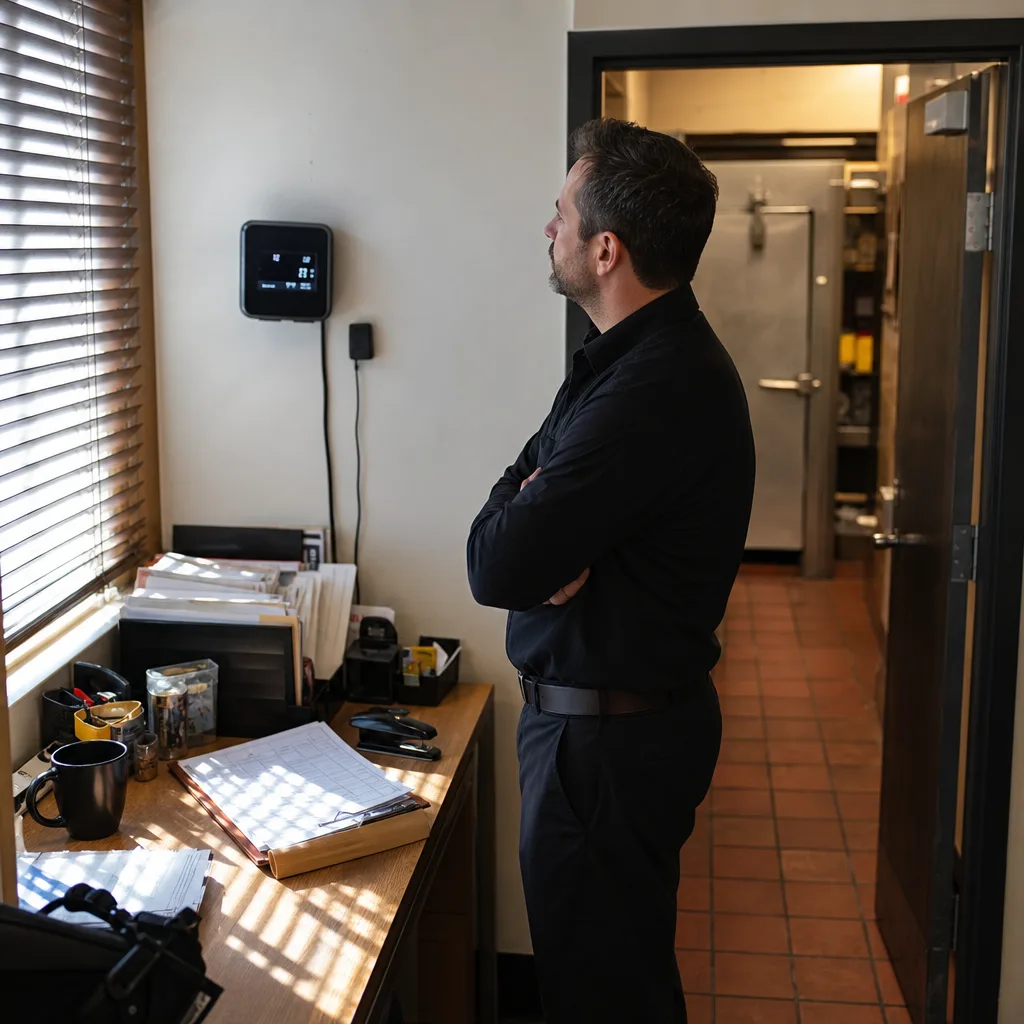
A worn start part or a dead fan motor is usually a smaller repair. A failed compressor on an older walk-in costs more. The visit is the same. The part and the labor are not.
These five things move your price up or down:
- How much failed. A part that’s cheap to swap costs far less than the heart of the system, which is the compressor that moves the refrigerant around.
- Part cost and availability. Some parts are common and easy to get. Others take longer to find, which can raise the cost and add time.
- Equipment age and brand. Older units and less common models can need harder-to-find parts or extra work to fit them.
- More than one failed part. Sometimes one failure strains another part. A condenser fan that quit can overheat the compressor, for example. Two failed parts mean a bigger bill than one.
- Timing. Many companies charge more for nights and weekends. We don’t. A Saturday night call costs the same as a Tuesday morning call.
That last point matters more than most owners realize. When your cooler starts slipping late on a Friday in August, you shouldn’t have to choose between your inventory and an overtime rate. You won’t have to with us.
Sometimes the honest answer is that a repair isn’t worth it. If your unit is old and a major part like the compressor has failed, ask for a repair price and a replacement price side by side. Then decide what makes sense for your business. A big repair on aging equipment can still make sense if the rest of the system is in good shape. It makes less sense if other parts are wearing out too. Either way, the choice is yours.
Whoever you call, these questions protect you from surprise charges:
- Is this a flat price I approve before work starts, or are you billing by the hour?
- Does the price include the part, the labor, and testing?
- Is there a trip fee, and does it count toward the repair?
- Do you charge more for nights, weekends, or holidays?
- If you find a second problem, will you stop and give me a price before fixing it?
You can answer all five about us from this page. You approve upfront flat-rate pricing before any work starts. Your service-call fee is credited if you go ahead with the repair. There’s no extra charge for nights or weekends. Any part outside the original quote gets its own price first. Our licensed and insured technicians explain what failed and what it costs before you spend a dollar.
Call 469-269-6099
Frequently Asked Questions
Common questions about Commercial refrigeration
Can a walk-in cooler be repaired, or is it always cheaper to replace it?
It depends on what failed and how old the unit is. A worn start part or a dead fan motor is usually worth fixing. If the compressor fails on an older walk-in, ask for a repair price and a replacement price side by side, then weigh that against the condition of the rest of the system.
Why does my cooler act up more in the summer than other times of year?
North Texas heat pushes your equipment harder, especially if the condenser sits on a roof or behind your building. A dirty coil or weak fan that barely got by in spring often can’t keep up once July and August heat sets in, which is why problems tend to show up suddenly in summer.
Is it normal for a cooler or freezer to warm up a little during the day?
Yes, a short temperature bump is normal during a defrost cycle, since the coil heater melts off frost before cooling back down. It’s also normal after a big delivery or a load of warm food, as long as the box pulls back down to its normal temperature within a few hours.
What should I write down before calling about a refrigeration problem?
Note whether the fan is spinning, whether there’s ice on the coil, and whether the unit is running nonstop or not at all. Also jot down the thermometer reading and how fast it’s climbing, since those details help a technician narrow down the problem before they even arrive.
Ready to Get Started?
Call (469) 269-6099 Today, Get Service Today.