


Whole-Home Standby Generator Installation in Allen
Turnkey standby generators sized to your home's real load – gas line, panel, permits and startup handled as one job.
What’s Covered on This Page
- A Turnkey Standby Generator Install Covers Gas, Electrical, and Site Work Together
- Portable Generators and Interlock Kits Are Not the Same as Whole-Home Standby
- What Drives the Cost of a Standby Generator Installation Up or Down
- Sizing, Placement, and Fuel Source Decisions Before Installation Day
- Why DIY Generator Wiring Is a Safety Risk Best Left to Licensed Electricians
- Is there a tax credit for a whole house generator?
- What is the 80% rule for generators?
- Can I just buy a generator from a home improvement store and have it installed?
A Turnkey Standby Generator Install Covers Gas, Electrical, and Site Work Together
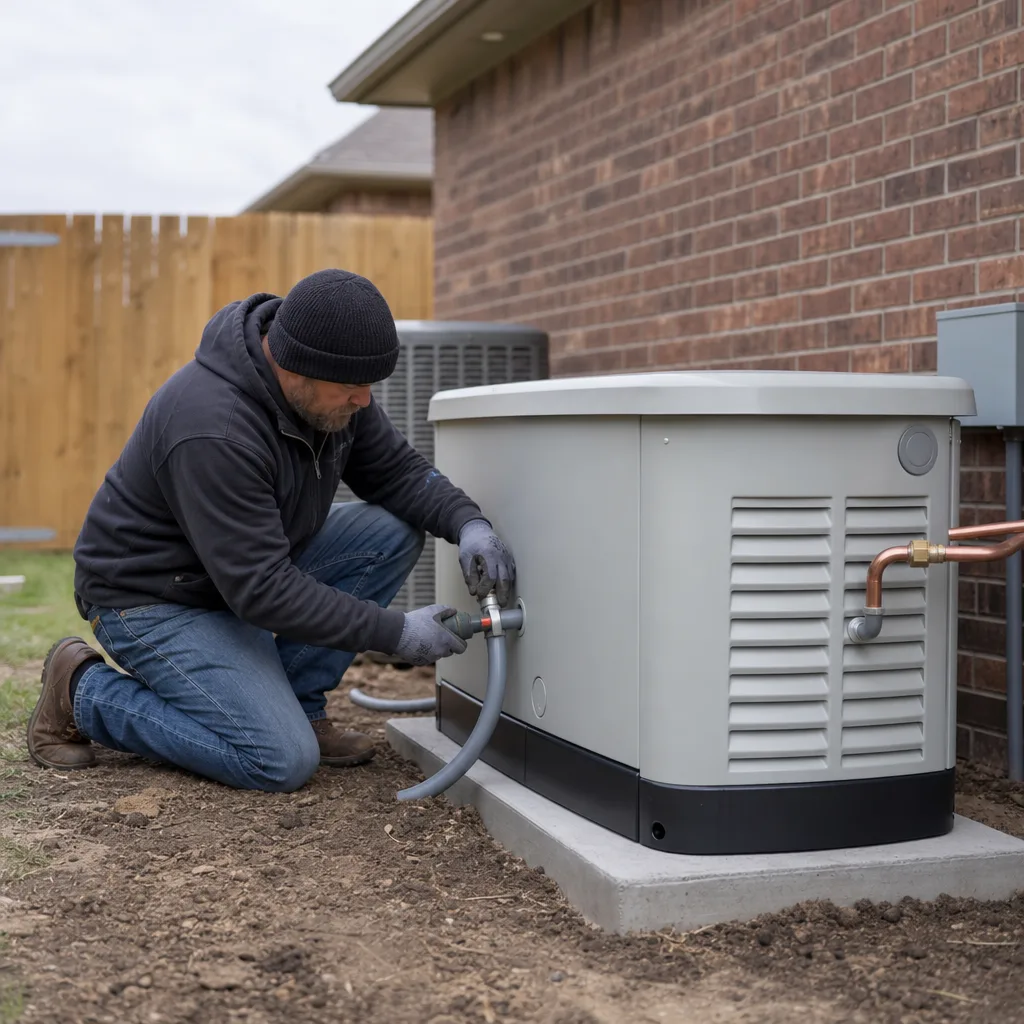
Picture the next storm knocking out your power. Your generator should start on its own within moments and carry your home. That only happens if the gas line feeds it enough fuel, the transfer switch talks to your panel the right way, and the unit sits level on a solid pad. If any one of those is off, the whole system lets you down when you need it most.
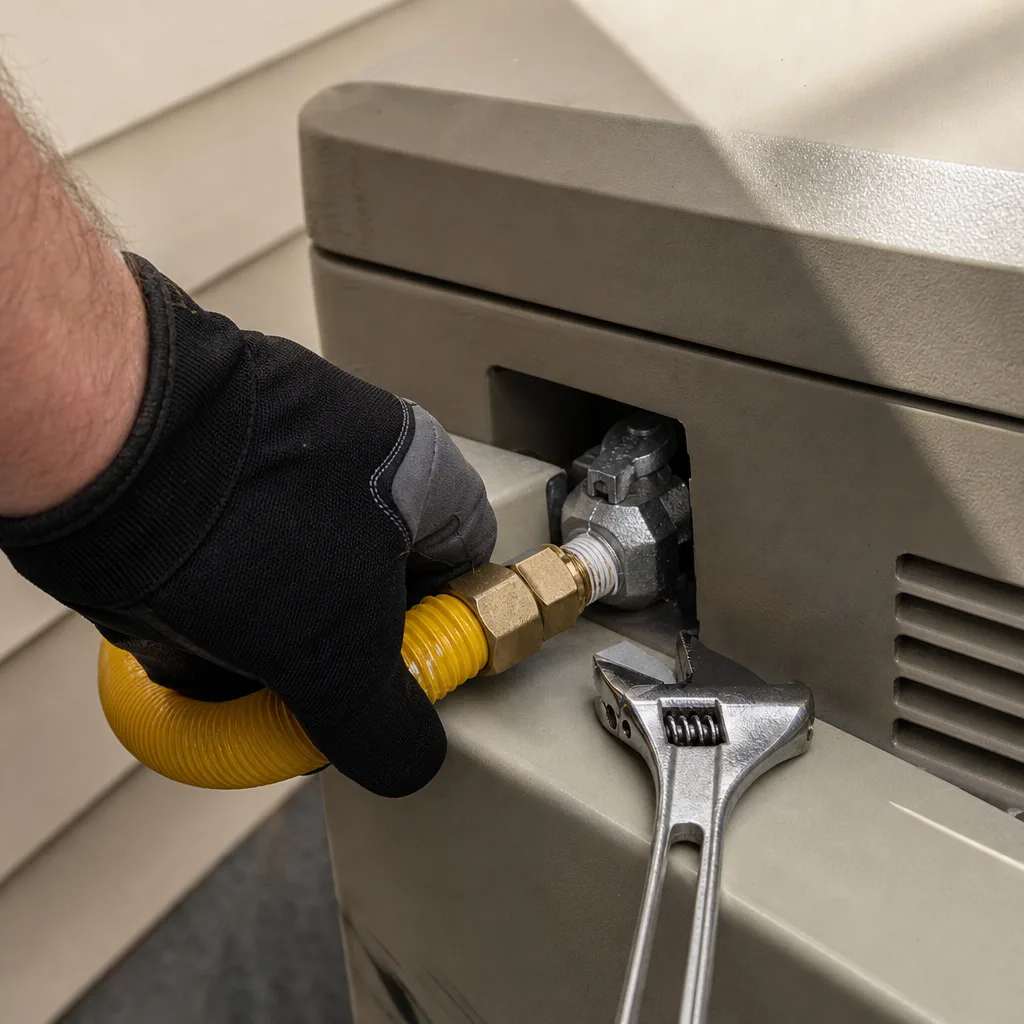
That’s why we handle it as one job. Xtreme Air Services is a licensed and insured HVAC, plumbing, and electrical contractor, so the same accountable team owns the gas work and the electrical work. You don’t have to coordinate three crews or play referee when something doesn’t line up.
Here’s what our turnkey whole-home standby generator installation includes:
- The generator itself
- The transfer switch
- Professional installation
- Gas and electrical connections
- Startup and testing, so you know it runs before we leave
On the gas side, the generator needs steady fuel at the right pressure. How far the gas line has to run, and what pressure your home’s supply gives, are two of the biggest things that move your price. We also handle gas line installation as its own service if your home needs a new run.
On the electrical side, the automatic transfer switch does the important work. It senses when grid power drops, cuts your home off from the utility line, and switches you over to the generator. It switches you back when power returns. The type of switch you choose and the distance from the generator to your panel both affect cost. If your panel can’t handle the hookup, an electrical panel upgrade may be needed first.
The site work matters more than people think. North Texas clay soil swells when it’s wet and shrinks when it’s dry, so a level, stable pad keeps your generator sitting right year after year. Pad and site prep is part of the job and part of the price.
Our most common job is a standby generator with an automatic transfer switch, gas hookup, and pad, commissioned and tested. It runs $10,000 to $14,000. Our typical price range is $8,000 to $18,000, depending on generator size (kW), transfer switch type, gas line run and pressure, pad and site prep, distance to the panel, code upgrades, and permits.
So nothing catches you off guard, here’s what’s not included:
- Extensive gas or electrical service upgrades
- Landscaping
- Code corrections beyond the scope of the install
- Permits, unless stated in your quote
You’ll get upfront flat-rate pricing approved before work starts, with no meter running. Flexible financing is available on qualifying installations and larger jobs, on approved credit.
Portable Generators and Interlock Kits Are Not the Same as Whole-Home Standby
You’ve probably seen a cheaper way to get backup power. You buy a portable generator, add an inlet on the outside wall, and put an interlock kit or a manual transfer switch on your panel. It’s a real option, and for some homes it’s the right one. It just isn’t the same thing as a whole-home standby system, and it helps to know where the two part ways.
An interlock kit is a small metal plate on your electrical panel. It keeps your main breaker and the generator breaker from both being on at the same time. That matters because it stops your generator from sending power back out onto the utility lines, where it could hurt a line worker trying to fix the outage. A portable setup is only safe when that kind of protection is in place. Running a generator through a dryer outlet or a homemade cord is not.
Here’s how the two compare when the lights go out:
- Starting it: a portable generator needs you to roll it out, start it, plug it in, and flip the breakers yourself. A standby unit starts on its own through the automatic transfer switch, even if you’re out of town.
- Fuel: a portable usually runs on gasoline, so you’re refueling every several hours and storing gas in your garage. A standby unit runs off your home’s natural gas line, so there’s no refueling.
- What it powers: a portable is sized for the basics, like the fridge, some lights, a fan, and phone chargers. A properly sized standby unit can carry far more of your home, including central AC.
- Where it sits: a portable has to run outside, because its exhaust contains carbon monoxide. That means you’re dragging it out in the rain, wind, or cold. A standby unit lives on its own pad outdoors all year.
Now the honest part. A portable generator with a safe connection may be all you need if your outages are usually short, someone is almost always home to run it, and you’re fine keeping just the fridge and a few circuits going. If your budget is tight, that setup can get you through most storms without a big install.
Whole-home standby makes more sense when the outage itself is the problem you can’t live with. Think of a July outage in Allen when your house heats up fast and a portable can’t run your central air. Or a hard winter freeze, when you need heat and you don’t want to be fueling a generator outside in the dark. It also makes sense if someone in your home depends on powered medical equipment, if you travel often, or if you work from home and can’t lose a full day.
If you’re stuck between the two, that’s what a backup power assessment and generator sizing consultation are for. We’ll look at what you need to keep running and tell you straight which setup fits. We also offer portable generator hookup, so if the smaller option is the better call for your home, you’ll hear that from us.
What Drives the Cost of a Standby Generator Installation Up or Down
Two homes on the same street in Allen can get very different generator quotes. That’s not a sales trick. It comes down to a handful of things about your house, your gas supply, and what you want to keep running. Once you know how each one works, you can look at a quote and see exactly where the money goes.
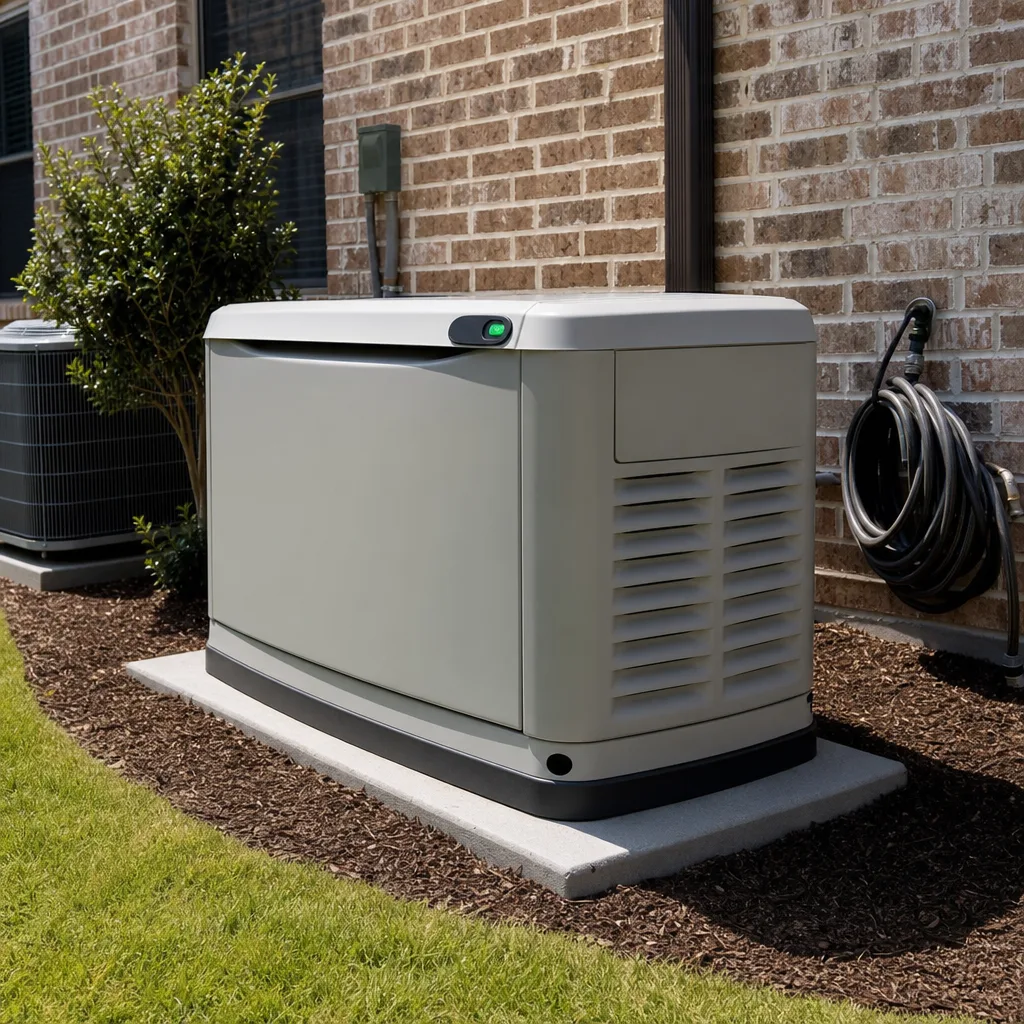
Generator size is the biggest lever. Size is measured in kilowatts (kW), which is just how much power the unit can make at once. Your central AC is usually the hardest load, because a compressor pulls a big surge of power the moment it kicks on. If you want your whole house cooled during a July outage, you need a bigger unit. If you’re fine running one AC system and the essentials, a smaller generator can do the job for less.
The transfer switch type matters too. A switch that carries your entire panel costs more than one that only feeds selected circuits. Some setups add load management, which lets the generator turn big appliances on and off in turns so a smaller unit can still cover more of your home. That can bring the generator size, and the price, down.
Gas line run and pressure come next. A generator burns a lot of fuel at full load. If your meter sits right next to where the pad goes, the gas run is short and simple. If the line has to cross the yard or run around the house, the cost climbs. If your current meter can’t deliver enough gas, a larger upgrade may be needed. That’s work that sits outside a standard install.
Pad and site prep depend on your yard. A flat side yard with good access is the easy case. A slope, tight spacing between houses, or a spot that needs extra grading to handle North Texas clay all add labor.
Distance to the panel affects how much wire and conduit we run. A generator placed a few feet from your panel costs less to connect than one on the far side of the house.
Code upgrades and permits round it out. An older or full panel may need changes before a generator can tie in safely. Permit costs and inspection steps are set by your city, not by us.
Before you sign with anyone, ask these questions:
- What size generator did you pick, and what loads did you base that on?
- Will the transfer switch cover my whole panel or only certain circuits?
- Did you check my gas meter and line pressure, or are you guessing?
- Where will the pad go, and how far is that from my meter and panel?
- Are permits in this price, or will they be added later?
A good quote answers all five before work starts. With our upfront flat-rate pricing, you’ll see those answers in writing, so you can choose the size and setup that fits your home and your budget.
Need help with Whole-home standby generator installation?
Call Today, Get Service Today. Xtreme Air Services — Allen is ready to help.
Sizing, Placement, and Fuel Source Decisions Before Installation Day
Most install-day surprises start with a choice nobody made ahead of time. Settle three things before anyone pours a pad: what your generator has to run, where it will sit, and what fuel it will burn. Get those right and the rest of the job goes smoothly.
Start with sizing, and size for your worst day, not an average one. Walk through your house and picture a power outage. Write down what you can’t go without. For most families in Allen, that list starts with central air in summer and heat during a hard freeze. It usually also includes the fridge, the well-used outlets in the kitchen, and anything someone in your home depends on for health or work.
- How many AC systems you have, and whether you need all of them running or just the one that covers the bedrooms
- Whether your water heater, range, or dryer run on gas or electric, since electric ones add a lot of load
- Any pool pump, EV charger, or well pump you’d want to keep on
- Powered medical equipment, a home office, or a freezer full of food you can’t afford to lose
That list is what a generator sizing consultation is built on. If the list comes back bigger than your budget, load management can stretch a smaller unit further. That is better than buying a generator that’s too small and trips under load the first hot afternoon it has to work.
Placement comes next, and it’s tighter than most people expect. A standby generator gives off exhaust, so it has to sit a safe distance from windows, doors, vents, and anything that burns. The manufacturer’s installation manual sets those clearances, and local code backs them up. In many newer Allen subdivisions, homes sit close together. On those lots, the side yard you had in mind may not leave enough room. The best spot balances four things:
- Safe clearance from openings in your home and your neighbor’s
- A short path to your gas meter and electrical panel
- Ground that drains well, so water doesn’t pool around the base after a storm
- Room for a technician to open the cover and service the unit later
If you live in a neighborhood with a homeowners association, check whether it has to approve outdoor equipment or screening before installation. It’s much easier to sort that out now than after the pad is set.
Last is fuel. If your home already has natural gas service, that’s usually the simplest choice. The generator runs off the same supply as your furnace or water heater, so you never refuel. The real question is whether your meter and line can feed the generator at full load while your other gas appliances are running too.
If your home doesn’t have natural gas, propane is the common alternative. It works well, but it adds a tank to place, a tank size to choose, and refills to keep up with. If a long outage hits when your tank is low, your runtime is limited by what’s in the tank.
Once these three decisions are made and written into your quote, installation day is just the work. No one is standing in your yard guessing where things go.
Watch Our Video
See How We Handle Whole-home standby generator installation in Allen
Xtreme Air Services — Allen
Why DIY Generator Wiring Is a Safety Risk Best Left to Licensed Electricians
If you’re handy, it’s fair to ask whether you could save some money by doing part of the generator install yourself. Here’s our honest answer. You can do a lot of the planning on your own. The wiring and the gas hookup are where DIY stops making sense.
Start with your electrical panel. A lot of people think that once the main breaker is off, the panel is safe to work in. It isn’t. The big wires coming in from the utility stay live even with the main breaker off, and a transfer switch has to tie in right next to them. One slip with a screwdriver there can cause a serious shock or an arc flash, which is a sudden burst of heat and light that can burn you badly. Licensed electricians work around that every day. They know where the live parts are and how to stay clear of them.
Next is the transfer switch itself. If it’s wired wrong, your generator can send power back out onto the street lines. That’s the same backfeed danger we covered with portable setups, and it puts the line workers fixing your outage at risk. A bad tie-in can also damage the generator, overload your panel, or leave you with a system that looks fine on a sunny day and then fails during the first real storm.
The gas side carries its own risk. A standby generator pulls a lot of fuel at full load. That means the line has to be sized right, every joint has to be tight, and the whole run has to be tested for leaks. A small leak at a fitting near your house is not something you want to discover after the fact. In Texas, gas work is a job for a licensed plumber.
There’s also the paperwork. A standby install typically needs a permit and an inspection through the City of Allen. Inspectors check that the electrical and gas work meet code. A DIY job that skips that step can cause problems later, for example when you sell your home or need to file an insurance claim after a storm.
Here’s what you can do yourself, and it really does help:
- Make the list of what you need to keep running during an outage
- Check with your HOA about approval or screening rules
- Look at your side yard and think about where the unit could go
- Find your gas meter and electrical panel so you know how far apart they are
That homework makes your quote faster and more accurate. Everything that touches live power or gas should go to a licensed pro.
That’s where having one team for the whole job pays off. Xtreme Air Services is a licensed and insured plumbing and electrical contractor. The same background-checked team handles the gas line and the transfer switch, and we test everything before we leave. Nobody has to hand off half-finished work to someone else.
Call now
Frequently Asked Questions
Common questions about Whole-home standby generator installation
Is there a tax credit for a whole house generator?
Standby generators that run on fossil fuels like natural gas or propane generally do not qualify for federal energy tax credits, since those credits target efficiency upgrades like solar or heat pumps. Some homeowners ask about this because a generator is a big purchase, so it’s worth checking with a tax professional before you count on a credit. We can give you a clear, upfront quote so you know your real cost either way.
What is the 80% rule for generators?
The 80% rule means you should size a generator so your expected load uses about 80% of its total capacity, not 100%. Running a generator right at its max for long periods adds strain and shortens its life. This is part of why we build your sizing around your actual circuits, like central AC and the fridge, instead of just picking the biggest unit available.
Can I just buy a generator from a home improvement store and have it installed?
You can buy a generator elsewhere, but the install still needs a licensed electrician and plumber to handle the transfer switch and gas hookup safely. The equipment is only part of the job. The gas line sizing, the panel tie-in, and the pad all need to be done right, which is why we handle the generator, transfer switch, and both connections as one job.
Ready to Get Started?
Call (469) 299-8996 Today, Get Service Today.