


Electrical Troubleshooting in Plano: Find the Real Problem Before You Pay for a Fix
The fault traced to where it starts, with a clear written summary before any repair begins.
What’s Covered on This Page
- What Happens During an Electrical Troubleshooting Visit
- Common Electrical Problems That Call for Troubleshooting
- When the Problem Can Wait and When It Can’t
- When You Don’t Need a Troubleshooting Visit
- What Electrical Troubleshooting Costs and What the Fee Covers
- My breaker keeps tripping but only when it’s hot out. Is that a wiring problem?
- Can electrical troubleshooting find a problem that only shows up sometimes?
- Will a bad electrical connection cause a fire?
What Happens During an Electrical Troubleshooting Visit
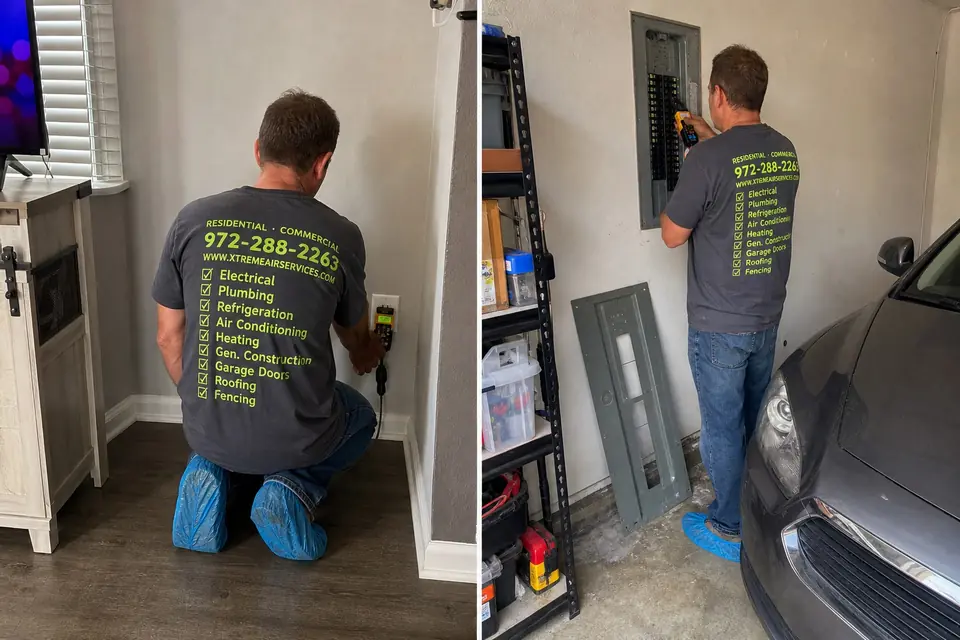
Most people call us with a simple story. An outlet in the bedroom went dead. The kitchen breaker trips every time the microwave and toaster run together. The lights in one room flicker, but only some nights. That story is where the visit begins, so it helps to have a few details ready before the technician knocks on your door.
- Which outlets, lights, or rooms are affected
- When the problem started and whether it comes and goes
- What was running when a breaker tripped or the power cut out
- Any smell, warmth, buzzing, or scorch marks you noticed at an outlet or the panel
- Whether anyone recently added an appliance, a space heater, or a new fixture
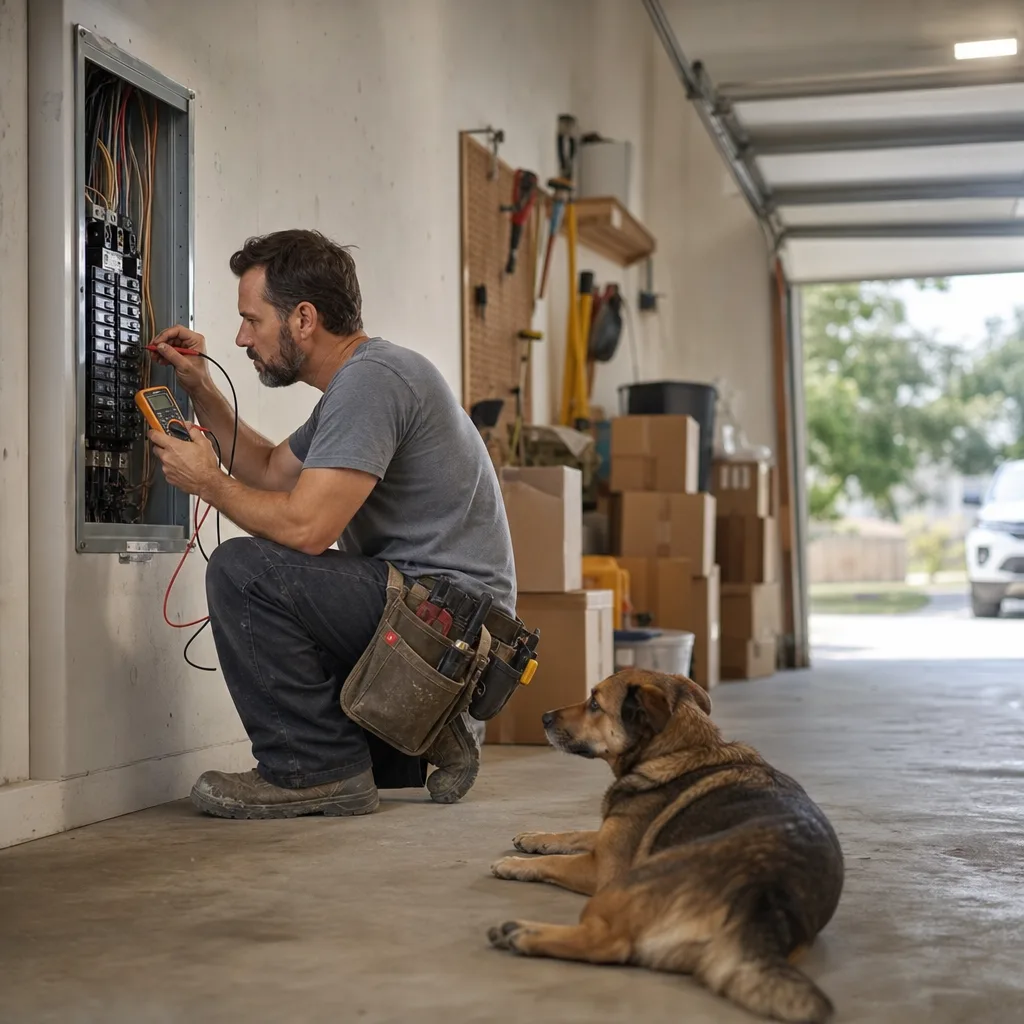
From there, electrical troubleshooting works a lot like detective work. A dead outlet isn’t always a bad outlet. It could be a tripped GFCI outlet in another room that feeds it, a loose wire at a different outlet upstream, or a breaker that has worn out. A breaker that keeps tripping may be doing its job on an overloaded circuit, or it may be the part that’s failing. The job is to test along the circuit and rule things out until the true cause is clear, instead of swapping parts and hoping.
Some problems take longer than others. A fault that shows up every time is usually quicker to trace. An intermittent one, like lights that flicker only when the AC kicks on during a hot Plano afternoon, can take more testing to catch in the act. That’s why the complexity of the fault, the size of your home, how many circuits you have, how easy the wiring is to reach, and whether special test equipment is needed all affect the cost of the visit.
When the source is found, you get a clear written summary of what we found and what we recommend. That paper is yours. You can use it to decide on a repair today, plan it for later, or get a second opinion. We don’t think you should have to make a choice about your home’s wiring based on a quick verbal guess at the door.
Here’s what the visit covers and what it doesn’t. Included: the on-site diagnosis and the written findings and recommendation summary. Not included: any repairs or corrective work the diagnosis turns up. If you want us to make the fix, you’ll get upfront flat-rate pricing to approve before any work starts, so there’s no meter running. If you go ahead with the repair through Xtreme Air Services, the service-call fee is credited toward it.
The person doing this work is a licensed, background-checked technician who treats your home with respect. And if your breaker decides to act up on a Saturday night, there’s no extra charge for nights or weekends.
Common Electrical Problems That Call for Troubleshooting
Most electrical problems start small. You notice something odd, you flip a breaker, and it seems to go away. Then it comes back. When the same thing keeps happening, or you can’t tell where it’s coming from, that’s when troubleshooting earns its keep. These are the problems people call us about most, and why each one can fool you.
- A whole room or a string of outlets goes dark. One dead outlet is one thing. When a bedroom wall, a garage, or the back patio all quit at once, it usually means something along the shared circuit has failed. The question is where.
- Only part of your home has power. Some lights work and some don’t, or the AC and dryer won’t run while the TV stays on. That pattern points to a different kind of problem than a single tripped breaker. It often traces back to the panel or the service coming into the house.
- Outlets or switch plates that feel warm, buzz, or smell like something’s burning. You may see a brown or black mark around the slots. Heat means electricity is fighting its way through a loose or worn connection, and the bad spot isn’t always the outlet you’re looking at.
- A GFCI outlet that won’t reset, or trips with nothing plugged in. Sometimes the outlet itself is worn out. Sometimes it’s catching moisture or a fault somewhere further down the line. Swapping the outlet won’t help if the real issue is downstream.
- A tingle or a light shock when you touch an appliance, a fixture, or a metal faucet. That’s never normal. It can mean a grounding problem or a wire touching something it shouldn’t.
- Lights that dim across the whole house, not just one fixture. One flickering bulb is usually a bulb or a fixture. Dimming in several rooms at once is a bigger clue about how power is moving through your home.
Timing tells a story too. Problems that show up right after a summer thunderstorm, or after you add a big new load like an EV charger, a hot tub, or a garage freezer, give the technician a head start. Older established homes and newer subdivisions in Plano can fail in different ways. An older home may have connections that have loosened over decades of Texas heat. A newer one may have a circuit that just wasn’t set up for everything you’re asking it to run today.
Here’s the honest part. If your whole street lost power, or your neighbors’ porch lights are out too, that’s not a wiring problem in your home. That’s Oncor’s side, and they’re the ones to call. A troubleshooting visit makes sense when the problem is inside your walls and you can’t pin it down.
Each of these symptoms has more than one possible cause. That’s the whole reason to find the source before anyone replaces a part. If the diagnosis turns up something bigger, like a panel that needs repair, wiring that needs work, or a home that would benefit from whole-house surge protection, you’ll know exactly what you’re dealing with before you spend a dollar on the fix.
When the Problem Can Wait and When It Can’t
Not every electrical problem is an emergency. Some can wait until a day that works for you. Others shouldn’t wait at all. Here’s how to tell the difference.
Call right away if:
- An outlet, switch, or your panel feels hot, smells like burning plastic, or buzzes or crackles.
- Someone in your home got a shock or a tingle from an appliance, fixture, or faucet.
- A breaker trips again the second you reset it.
- Part of your home lost power, and your neighbors still have theirs.
- Water has reached an outlet, a light fixture, or the panel after a hard storm or a leak.
- An electrical failure has knocked out your AC in the middle of a Plano summer, when a hot house gets unsafe fast for kids, older family members, and pets.
If you see smoke or flames, get everyone out and call 911 first. We can help once everyone’s safe.
Those signs mean electricity is going somewhere it shouldn’t, or a part is getting hot. There’s no reason to wait and see how it goes. This is when same-day service really matters, and nights and weekends cost the same as a weekday.
It can usually wait a day or two if:
- One outlet quit, but it isn’t warm, discolored, or smelly, and you have another outlet you can use.
- A breaker tripped once while the space heater and hair dryer were running together, and it held after you reset it.
- One light flickers, and a new bulb fixes it.
- A GFCI outlet tripped and reset normally.
Before you call anyone, check the easy stuff yourself. Look for a tripped GFCI in a bathroom, the kitchen, the garage, or outside, since one of those can cut power to outlets in other rooms, as we covered above. Try a fresh bulb. Unplug whatever was running and reset the breaker once. If that fixes it and it stays fixed, you don’t need us., keep the service-call fee in your pocket.
The tricky part is the middle ground. Say the breaker held after you reset it, then trips again next week. Or the flicker you blamed on the bulb comes back in a different room. Or the GFCI resets fine on dry days but trips every time a storm rolls through. A problem that keeps coming back isn’t fixing itself. It’s trying to tell you something.
That’s the right time to book a troubleshooting visit, before it turns into the urgent kind. You can pick a time that fits your week. You won’t be scrambling on the worst possible afternoon. You’ll also get a written summary of what’s going on, so you can plan any repair on your own schedule.
Call 469-527-5131
Not sure what your Electrical troubleshooting project needs? Ask us.
Call Today, Get Service Today. Xtreme Air Services — North Plano is ready to help.
When You Don’t Need a Troubleshooting Visit
Troubleshooting is for a problem you can’t pin down. If you already know what’s wrong, or the problem isn’t really in your wiring, paying for a diagnosis doesn’t make sense. Here’s when you can skip it.
- The appliance is the problem, not the outlet. Plug a lamp or a phone charger into the same outlet. If it works, your outlet is fine. The toaster, vacuum, or space heater is what failed, so repair or replace that instead.
- You already know what you want done. Adding an outlet, moving a switch, hanging a ceiling fan, or putting in recessed lights is installation work. There’s nothing to hunt for, so it gets priced as installation, not as a diagnosis.
- A breaker trips every single time you run the same two big things together, and nothing is warm, buzzing, or smelly. You’ve already found the cause. That circuit has too much on it. The fix is spreading the load or adding a dedicated circuit for that appliance.
- Your AC has power but won’t cool. If the thermostat lights up, the breaker is on, and the system runs but blows warm air, the trouble is in the AC system, not your home’s wiring. An AC not cooling diagnosis is the right visit for that.
- You rent your home. Call your landlord or property manager first. Fixing the wiring is often their job to arrange, and they may already have someone they use.
- A home inspector already flagged a specific item. Maybe the report says a bathroom is missing a GFCI outlet, or a breaker is double-tapped, which means two wires are clamped under a screw built for one. The finding is already written down. You need a repair price, often for code correction, not another round of testing.
- Nothing is wrong yet, but you want peace of mind. Maybe you’re buying a home or the wiring is older and you’ve never had it checked. That calls for an electrical safety inspection, which looks over the whole system instead of chasing one fault.
In each of these cases, the question troubleshooting answers has already been answered. You know the appliance is dead, you know which circuit is overloaded, or you know exactly what you want installed. Paying someone to confirm what you can see for yourself isn’t a good use of your money.
One caution. Don’t talk yourself out of a visit just because a problem went quiet. A breaker that’s been fine for a month after tripping twice hasn’t been fixed. If the cause isn’t clear and the problem keeps showing up, that’s exactly the situation troubleshooting is built for. If your problem fits one of the cases above, skip the diagnosis fee and go straight to the fix you need.
Watch Our Video
See How We Handle Electrical troubleshooting in Plano
Xtreme Air Services — North Plano
What Electrical Troubleshooting Costs and What the Fee Covers
Most people want two numbers before they call: what the visit costs and what the fix might cost. We can give you the first one right now. The second one depends on what the diagnosis finds, and that’s exactly why you’ll get it in writing before you decide anything.
Electrical troubleshooting with Xtreme Air Services typically runs $100 to $350. Our most common job is diagnosing a dead outlet, a tripping breaker, or an intermittent fault. That job runs $100 to $200. It includes tracing the problem to its source and giving you a clear written summary of what we found and what to do next.
There’s also a service-call fee of $26 to $99. If you go ahead with the repair through Xtreme Air Services, that fee is credited toward it. You’re not paying twice to get the problem found and then fixed.
Why the range? It comes down to the things covered earlier: how tricky the fault is, how big your home is, how many circuits it has, how easy the wiring is to reach, and whether special test equipment is needed. A dead outlet with one clear cause tends to sit near the low end. A flicker that only shows up on certain nights, in a larger home with a lot of circuits, takes more testing to catch. That pushes the price higher.
The repair itself is a separate price. Once you know what’s wrong, you’ll see upfront flat-rate pricing for the fix and approve it before any work starts. If the fix is small, like a worn outlet or a loose connection, it may be handled on the same visit once you say yes. If it’s bigger, like panel work or rewiring, you’ll have the written summary to plan with. Financing usually isn’t offered for a smaller job like troubleshooting. It’s available on larger repairs and replacements, so a big fix doesn’t have to be paid all at once.
Pricing for this kind of work isn’t set the same way everywhere. Some electricians charge by the hour, which means a hard-to-find fault keeps the meter running. Others charge a set diagnostic fee. Whoever you call, these questions will tell you a lot about what you’ll really pay:
- Is the service-call fee credited toward the repair if I hire you to fix it?
- Do I get the findings in writing, or just a quick verbal answer at the door?
- Will I see the repair price and approve it before any work starts?
- Do you charge more for nights, weekends, or holidays?
- Is the person coming to my home licensed and insured?
With us, the answers are simple. The fee is credited when you proceed. The findings come in writing. The repair is priced before work begins. And there’s no extra charge for nights or weekends. Your neighbors trust us for that kind of straight talk, backed by a 4.8-star reputation across 2,900+ reviews.
Call 469-527-5131
Frequently Asked Questions
Common questions about Electrical troubleshooting
My breaker keeps tripping but only when it’s hot out. Is that a wiring problem?
It can be, but it’s not always your wiring. Heat makes an overloaded circuit or a weak breaker trip faster than it would in cooler weather, since hot attics and hot panels add extra strain. If it trips every time the AC and another big appliance run together, that circuit may just have too much on it. If it trips at random without a clear pattern, a troubleshooting visit can trace it to the real cause before it gets worse.
Can electrical troubleshooting find a problem that only shows up sometimes?
Yes, but intermittent faults take more time to catch than steady ones. An issue that happens every time, like a dead outlet, is usually quicker to trace. A flicker that only shows up on certain nights or during a storm takes more testing to catch in the act, since the technician has to test along the circuit until it acts up again.
Will a bad electrical connection cause a fire?
A loose or worn connection can get hot enough to start a fire, which is why heat, buzzing, or a burning smell at an outlet or the panel is never something to ignore. That heat means electricity is fighting its way through a bad spot, and the dangerous part isn’t always the outlet you’re looking at. If you see smoke or flames, get everyone out and call 911 first.
Ready to Get Started?
Call (469) 527-5131 Today, Get Service Today.