


Electrical Troubleshooting in Dallas: Know When to Call a Licensed Electrician
The fault traced to where it starts, with a clear written summary before any repair begins.
What’s Covered on This Page
- What Electrical Troubleshooting Fixes
- Try This Safe Check Before You Call
- Signs That Mean Call Now, Not Later
- Why Older Dallas Homes Trip Breakers More Often
- What Happens During a Troubleshooting Visit
- How long does an electrical troubleshooting visit usually take?
- Can I do my own electrical troubleshooting before calling someone?
- What counts as electrical troubleshooting versus electrical repair?
What Electrical Troubleshooting Fixes
Electrical troubleshooting doesn’t start with a new part. It starts with a question: where is this problem really coming from? A dead outlet in your living room might have nothing to do with that outlet. A breaker that trips every evening might be fine, and the real issue sits somewhere down the line. When you find the true source first, you avoid paying for a fix that doesn’t stick.
These are the problems troubleshooting is built for:
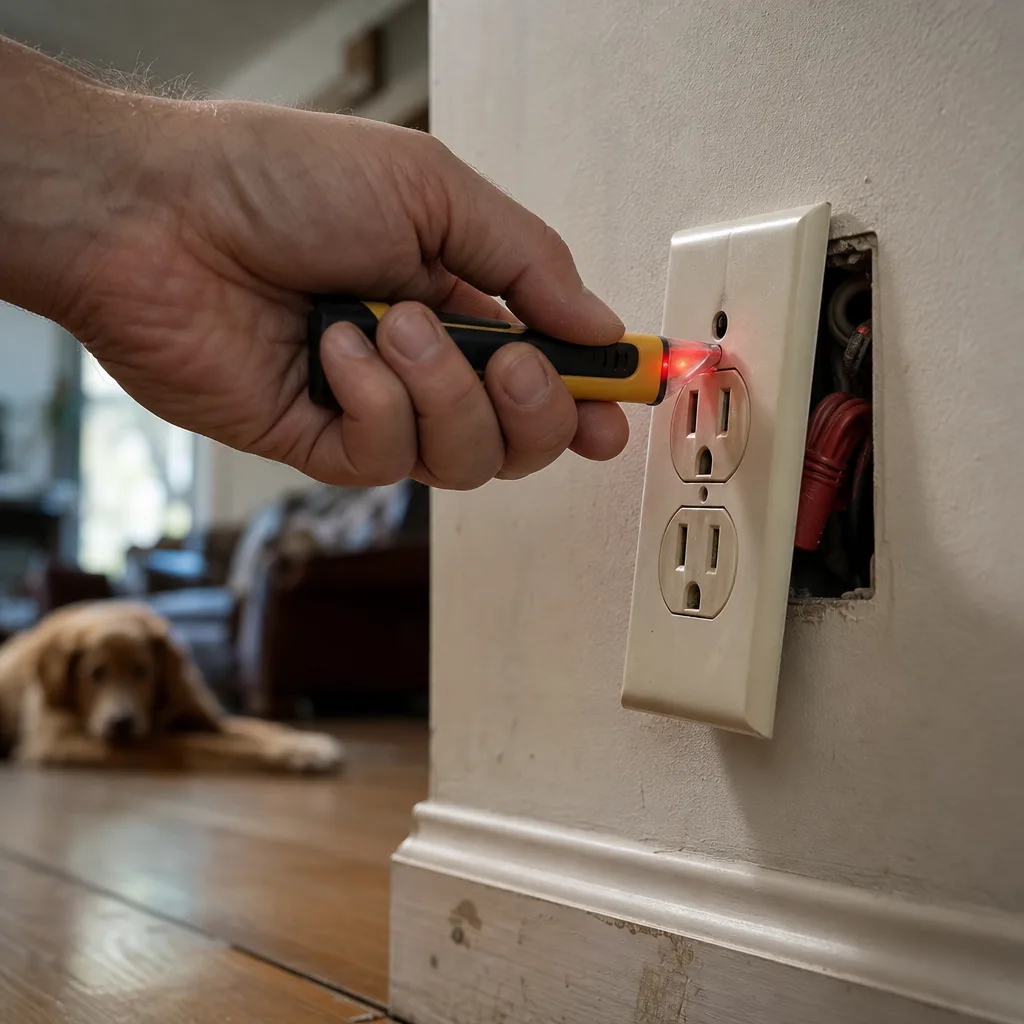
- Dead outlets. Sometimes the cause is a GFCI outlet in another room that has tripped and cut power to everything after it. Other times it’s a loose wire behind the plate or a worn-out outlet.
- A breaker that won’t stay on. A breaker can trip because a circuit carries too much load, because of a short somewhere on the line, or because the breaker itself is worn. Each of those needs a different fix.
- Flickering or dimming lights. Lights that flicker usually point to a loose connection, either at the fixture, inside a junction box, or back at the panel.
- Problems that come and go. An outlet that works one day and not the next is the hardest kind to pin down. Testing can track down a fault that only shows up some of the time.
- Warm switch plates, buzzing, or a burning smell. These warning signs often mean a connection is heating up, and they’re worth looking at sooner rather than later.
Your home makes a difference too. Many Dallas houses are slab-on-grade ranch homes built between the 1950s and the 1990s, with wiring and outlets that have been in place for decades. Connections that were tight 40 years ago can loosen over time. Wiring and junction boxes that run through the attic also go through big temperature swings every Dallas summer. Problems in older homes tend to hide in these spots, and you can’t find them by swapping the outlet you happen to be looking at.
Here’s what the visit includes. You get an on-site diagnosis and a clear written summary of what we found and what we recommend. Repairs aren’t part of the troubleshooting visit itself. That’s on purpose. You see the cause and the recommended next step in writing before you decide anything, so you stay in control of the decision.
Some problems turn out to be bigger than one circuit. If the trail leads to a worn-out panel, aging wiring, or a circuit that’s carrying more than it should, you’ll know that up front. Xtreme Air Services also handles panel repair, wiring repair, and outlet and switch repair, so the same team that found the problem can fix it if you choose.
Try This Safe Check Before You Call
Before you book anyone, take five minutes with the checks below. Plenty of electrical problems turn out to have a simple cause. If one of these fixes yours and it stays fixed, you don’t need a troubleshooting visit. That’s the honest answer.
You don’t need any tools for these steps. You also don’t need to open your panel cover or take off an outlet plate. Skip any step that doesn’t feel right to you.
- Press Reset on your GFCI outlets. These are the outlets with the Test and Reset buttons. Check the ones in your kitchen, bathrooms, garage, laundry room, and outside. As we covered above, one tripped GFCI can kill power to outlets in a different room.
- Look at your breaker panel. A tripped breaker usually sits in the middle, or it doesn’t line up with the others. Push it firmly all the way to OFF, then back to ON. Just flipping it toward ON often won’t reset it.
- Unplug things on that circuit. If the breaker trips again, unplug everything you can on that line and reset it one more time. If it holds now, the circuit was probably overloaded. A space heater and a hair dryer running on the same bathroom circuit is a classic example. Moving one of them to another outlet may be all you need.
- Rule out the easy stuff. Try a new bulb. Test the lamp in a different outlet. Flip nearby wall switches too, since some outlets are wired so a switch controls them.
- If the whole house is dark, check your street first. Look outside to see if your neighbors have lights. If they don’t, it’s likely an outage, and Oncor is the one to call, not an electrician.
Those signs mean the problem is behind the wall or inside the panel. That’s the point where guessing gets risky and testing becomes the safer way to find the cause.
If you reset something and the problem comes back later, you can still help. Jot down what was running when the breaker tripped, what time it happened, and which outlets or lights went out. A pattern like “every evening when the dryer and the window unit are both on” gives a technician a big head start. It can mean a shorter, simpler diagnosis for you.
Signs That Mean Call Now, Not Later
Some electrical problems can sit for a few days while you go about your week. Others shouldn’t. If you’ve already hit one of the stop signs above, like a burning smell, a buzzing outlet, or a breaker that won’t hold, you already know to leave it alone. A few other signs belong in that same group, and they’re easy to miss.
Call the same day if you notice any of these:
- Lights that get much brighter or dimmer across half the house, or that dim hard every time the AC or dryer kicks on. That pattern can point to a loose connection in the main service, not one bad circuit. Call Oncor too if your meter or the line to the house looks damaged.
- A shock or a tingle when you touch an appliance, a switch, or even a metal faucet. Something that’s supposed to stay grounded may not be.
- An outlet or switch plate with brown or black marks around the slots, or a plug that looks melted.
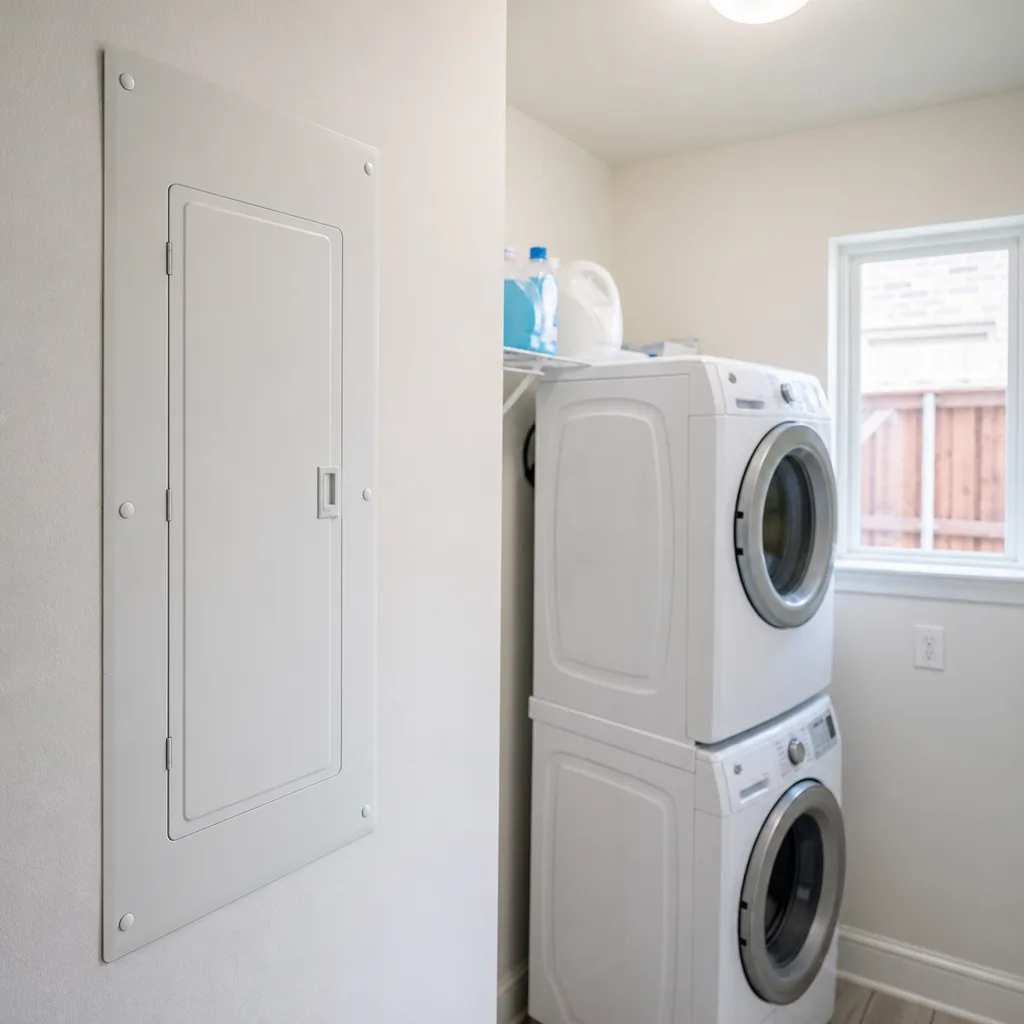
- A breaker panel that feels warm to the touch or makes noise, even when nothing big is running.
- Outlets, fixtures, or the panel that got wet. After a hailstorm or a heavy North Texas thunderstorm, roof and attic leaks can drip right onto wiring and junction boxes.
- A breaker that suddenly starts tripping after years of no trouble, with nothing new plugged in.
If you see flames or smoke, get everyone out and call 911 first. An electrician comes after that, not before.
Dallas summers make these signs worth taking seriously. When it’s over 100 degrees outside, your AC runs for hours, and attic wiring sits in heat that’s far hotter than your living room. A connection that’s already a little loose gets pushed harder every afternoon. Small warning signs in July can grow faster than they would in a mild month.
Now for the honest other side. These can usually wait for a regular appointment:
- One dead outlet with no heat, smell, or marks, after you’ve already checked your GFCIs and breakers.
- A breaker that tripped once, reset cleanly, and has stayed on.
- A single light that flickers only when you bump the fixture or its switch.
- A doorbell, ceiling fan, or under-cabinet light that stopped working, with nothing else wrong.
Leave those off for now if it’s easy, and keep notes on when they act up. You’re not in danger, and you don’t need to pay for a rush.
When it does belong on the call-now list, you shouldn’t have to wait for business hours. At Xtreme Air Services, a real person answers the phone around the clock, and same-day service is available across Dallas. There’s no extra charge for nights or weekends, so a problem that shows up on a Saturday night costs the same to look at as one on a Tuesday morning. Our licensed, background-checked technicians come to your home, track down the cause, and walk you through what they found before any work starts.
Call now
Not sure what your Electrical troubleshooting project needs? Ask us.
Call Today, Get Service Today. Xtreme Air Services — North Dallas is ready to help.
Why Older Dallas Homes Trip Breakers More Often
A breaker that trips isn’t broken. It’s doing its job. It cuts power when a circuit pulls more than its wire can safely carry, or when it senses a fault. In an older home, the real question is why it keeps getting pushed to that point. The answer usually comes down to a house that was wired for one way of living and is now asked to handle another.
Think about what a kitchen or bedroom needed when many of these Dallas ranch homes were built. Back then that meant a toaster, a lamp, maybe a radio. Builders put in fewer circuits and fewer outlets, because that’s all most families used. Today the same circuits run a microwave, an air fryer, a coffee maker, a laptop, a TV, and a few phone chargers. Nothing is wrong with any one of those things. Together, they can add up to more than that old circuit was meant to carry.
Here’s where older homes tend to run into trouble:
- Winter freezes. When a hard North Texas cold front rolls in, space heaters come out. One space heater can use most of what a typical bedroom circuit can handle. Plug in a second one, or an electric blanket, and the breaker trips.
- Rooms that changed jobs. A garage turned into a game room or a back porch closed in for an office often gets power from whatever circuit was closest. Add a window unit, and that circuit is now feeding two rooms.
- Decades of add-ons. Over 40 or 50 years, a house may go through several owners. Each one may have added an outlet here or a light there. Some of that work was done well. Some wasn’t, and it can be hard to spot without testing.
- Breakers that are simply worn. A breaker that has tripped hundreds of times over the decades can get weak. It may start tripping below its rated load, even when nothing on the circuit has changed.
- Aluminum branch wiring. Some homes built in the late 1960s and early 1970s were wired with aluminum instead of copper. Aluminum expands and contracts more with heat, so its connections need closer attention than copper ones.
Each of these causes looks the same from your hallway: a breaker in the OFF position. But each one has a different fix. An overloaded circuit might need a new dedicated line. A worn breaker might just need a replacement. A bad splice from an old remodel needs to be found and repaired where it sits.
That’s why swapping in a bigger breaker is the one fix you should never try. A breaker is matched to the size of the wire it protects. If you put a 30-amp breaker on wire built for 15 or 20 amps, the tripping stops. But now the wire can overheat inside your walls with nothing to shut it off. The annoying problem goes away, and a hidden one takes its place.
Good troubleshooting in an older home looks at the whole picture. That means checking what’s on the circuit, how much it’s drawing, the condition of the breaker, and the connections along the way. Once you know which of these causes you’re dealing with, the right fix is usually clear. It’s often smaller than people expect.
Watch Our Video
See How We Handle Electrical troubleshooting in Dallas
Xtreme Air Services — North Dallas
What Happens During a Troubleshooting Visit
Good electrical troubleshooting follows a sequence. It moves from what you’ve noticed, to the panel, to the exact spot where the problem lives. Each step narrows the search, so nobody’s guessing or opening walls for no reason.
It starts with you. The notes you jotted down after trying the safe checks above are useful here. When does the breaker trip? Which outlets go dead? What was running at the time? A pattern like “only when the microwave and the toaster run together” points somewhere very different than “randomly, even at night.”
From there, the work usually looks like this:
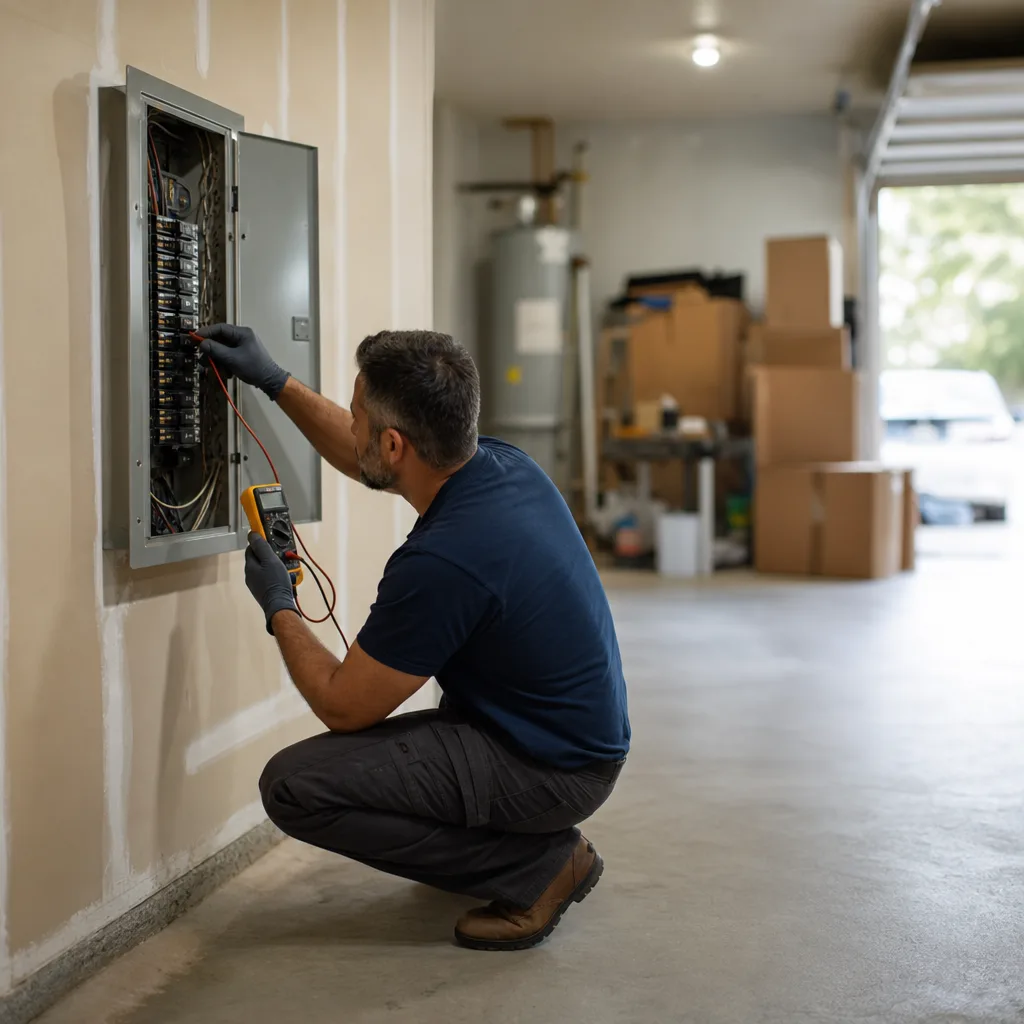
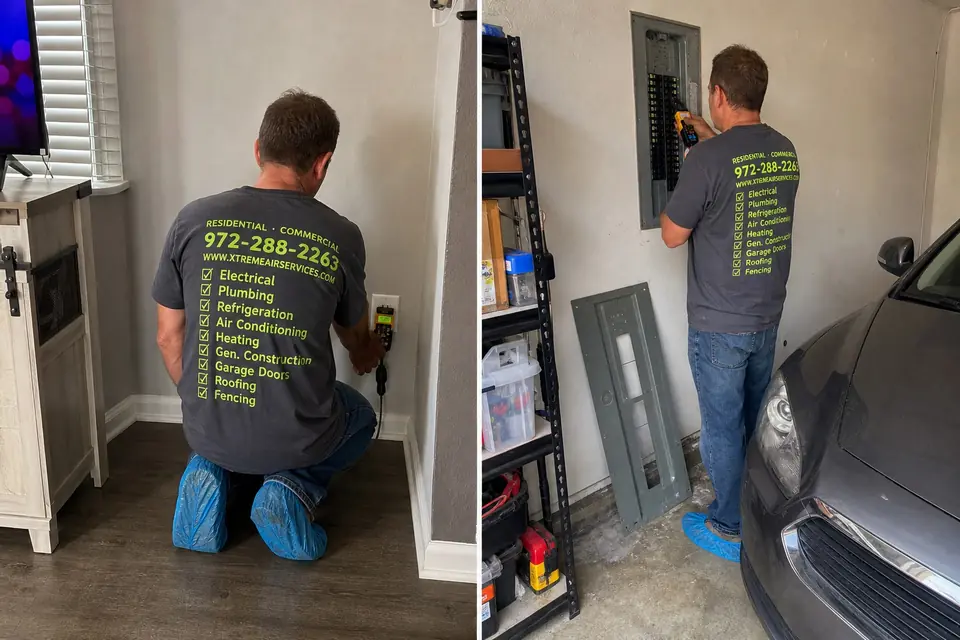
- Checking the panel. That means looking at the breaker on the problem circuit, how it’s labeled, how it’s seated, and whether it shows signs of heat or wear.
- Testing the circuit. Readings show whether the right voltage is reaching each outlet and whether anything is leaking current where it shouldn’t.
- Following the line. A circuit can run through several rooms, plus the attic or a garage wall. Testing at points along the way shows which stretch has the fault.
- Finding the cause. That might be a loose splice in a junction box, a worn breaker, a damaged wire, or a circuit carrying more than it should. Once it’s isolated, the fix becomes clear.
Problems that come and go take more patience. A fault that only shows up under load, or only on hot afternoons, sometimes needs specialized test equipment to catch. That’s one reason the time and cost can vary from one home to the next.
You can make the visit go faster with a little prep. Clear a path to your breaker panel. Know where your attic access is. If the problem is intermittent, try to have the same things plugged in that were running when it acted up.
At the end, you get the written summary of findings and next steps we covered earlier. It names the cause and lays out what we recommend. Then you decide what happens next.
Here’s what it costs. Our most common troubleshooting job is diagnosing a dead outlet, a tripping breaker, or an intermittent fault, tracing it to the source, and giving you that written summary. That job typically runs $100-$200. Troubleshooting in general falls in a typical range of $100-$350.
What moves the price up or down is simple:
- How complex the fault is
- How big your home is and how many circuits it has
- How easy it is to reach the wiring
- Whether specialized test equipment is needed
There’s a $26-$99 service-call fee, and it’s credited toward the repair if you go ahead with Xtreme Air Services. The diagnosis fee is often credited toward the repair too. Pricing is upfront and approved before work starts, so there’s no meter running while someone traces wires through your house.
Financing isn’t typically offered for a smaller job like this. It is available on larger repairs and replacements, so if the trail leads to a panel or wiring problem, you’ll have options for that bigger job.
Frequently Asked Questions
Common questions about Electrical troubleshooting
How long does an electrical troubleshooting visit usually take?
It depends on how hard the fault is to find. A single dead outlet with an obvious tripped GFCI can be solved in a short visit. A problem that only shows up some of the time, or a fault buried behind a wall or in the attic, takes longer because it needs testing at several points along the circuit before the real cause shows up.
Can I do my own electrical troubleshooting before calling someone?
Yes, for the simple stuff. Resetting GFCI outlets, checking your breaker panel for a tripped breaker, and unplugging items on an overloaded circuit are all safe steps you can try first. If the breaker trips again right away, or you notice a burning smell, warm switch plates, or buzzing, stop and call instead of digging further.
What counts as electrical troubleshooting versus electrical repair?
Troubleshooting is the diagnosis step, where the goal is tracing a problem like a dead outlet or tripping breaker back to its real cause. Repair is the fix that comes after, like replacing a worn breaker or fixing a loose connection. A troubleshooting visit ends with a written summary of the cause and the recommended fix, so you decide on repairs separately.
Ready to Get Started?
Call (469) 213-3107 Today, Get Service Today.