


Transfer Switch Installation in Frisco: Safe, Code-Compliant Generator Hookup
Automatic or manual transfer switches installed to code, so your generator powers your home safely.
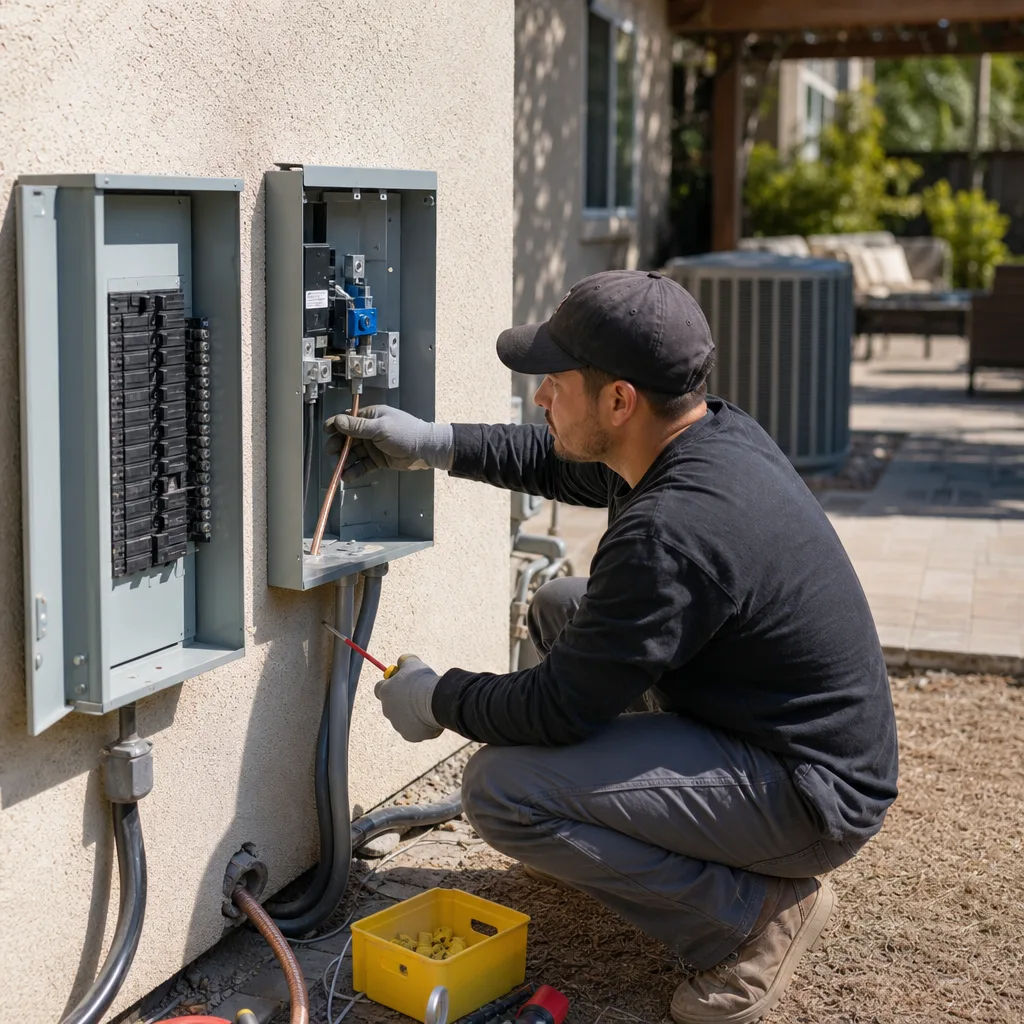
What’s Covered on This Page
- Why a Transfer Switch Is the Code-Required Way to Connect a Generator
- Automatic vs. Manual Transfer Switches: Choosing the Right Fit
- What Happens During Installation, From Panel Check to Final Test
- The City of Frisco Permit Step, and Why It’s Worth Keeping
- What Drives the Cost of Transfer Switch Installation
- Can I wire the generator to my house myself instead of hiring an electrician?
- Will I lose power to my whole house during the transfer switch installation?
- Do I need a different transfer switch if I upgrade from a portable to a standby generator later?
Why a Transfer Switch Is the Code-Required Way to Connect a Generator
Here’s the simple version. Your home’s electrical panel is normally fed by the utility. When the power goes out, the panel doesn’t know the grid is down. If you feed generator power into that panel without cutting off the utility side first, the electricity has two places to go: into your house and back out through your meter onto the street.
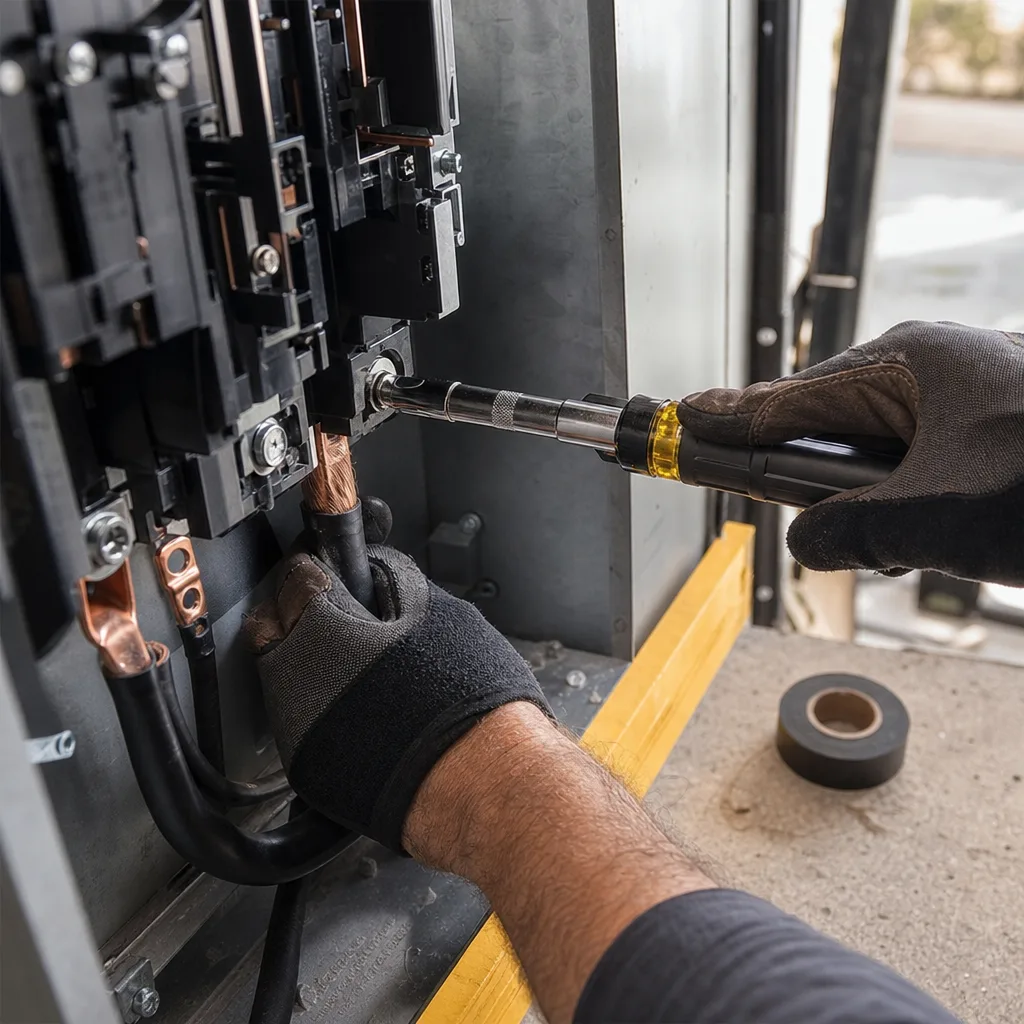
That backward flow is called backfeed, and it’s the main reason the transfer switch exists.
- It can hurt the people fixing the outage. The transformer on your pole works in both directions, so it can step your generator’s power back up to high voltage on lines that crews expect to be dead. During a storm outage in Frisco, those are the Oncor crews working the lines on your street and your neighbors’ streets.
- It can wreck your generator. When grid power comes back while your generator is still tied in, the two sources collide, and that can damage the generator and your home’s wiring.
- It can start a fire. A setup without a proper switch can overload circuits that were never meant to carry power that way.
A transfer switch solves all three problems with one mechanical rule: your home connects to one source or the other, not both. When you switch to generator power, the utility side is physically disconnected first. When the grid comes back, the generator side lets go before the utility reconnects.
That’s why the electrical code calls for approved transfer equipment any time a backup generator powers a home’s wiring. It’s not paperwork for the sake of paperwork. It protects line workers, your family, and the generator you paid good money for.
You may have heard of a shortcut: a cord with a plug on both ends, run from the generator into a dryer outlet or other wall outlet. People do it because it seems quick. It isn’t safe, and it isn’t legal. The plug’s metal prongs are live while you handle them, and nothing stops backfeed onto the grid. If you’ve been powering your home this way, a transfer switch is the fix.
There’s also a practical upside beyond safety. With the switch wired into your panel, you pick which circuits run on backup power. That could be your refrigerator, the furnace blower, a few lights, the garage door, or a medical device. You won’t need extension cords snaking through a cracked-open door in the middle of a Texas ice storm or a summer thunderstorm.
Because this work ties directly into your panel and the utility connection, it should be done by a licensed electrician. Texas licenses electrical work through the Texas Department of Licensing and Regulation, and Xtreme Air Services is a licensed and insured contractor. Your switch gets wired to code the first time, so you can trust it the moment the lights go out.
Automatic vs. Manual Transfer Switches: Choosing the Right Fit
The right switch depends mostly on one thing: what kind of generator you have, or plan to buy. A manual switch pairs naturally with a portable generator. An automatic switch belongs with a permanent standby generator. Once you know which generator you’re working with, the choice usually makes itself.
With a manual transfer switch, you do the work when the power goes out. You roll the generator outside, start it, plug it into an inlet on the outside of your house, and flip the switch to generator power. When the grid comes back, you flip it back and shut the generator down. It takes a few minutes, and someone has to be home and able to do it.
With an automatic transfer switch, you don’t do anything. The switch watches for the utility power to drop. When it does, it tells your standby generator to start and moves your home over to backup power within seconds. When the grid returns, it switches back and lets the generator cool down and shut off on its own.
A manual switch is usually a good fit if:
- You already own a portable generator and want to use it safely.
- You’re fine running a handful of key circuits, like the fridge, a few lights, and the furnace blower.
- Someone is almost always home during storm season to start the generator and make the switch.
- You want the lower-cost way to get safe backup power.
An automatic switch makes more sense if:
- You have, or plan to install, a whole-home standby generator.
- Someone in your home depends on powered medical equipment and can’t wait for a person to get home.
- You travel or work long hours and want the house covered while you’re gone.
- You don’t want an older parent, or anyone, wrestling with a generator in the rain or on an icy driveway.
Think about how outages play out here. A summer thunderstorm can knock out power in the middle of the afternoon while you’re at work. A winter ice storm can leave your driveway too slick to walk safely. If the idea of heading outside in either one sounds fine to you, manual works. If it doesn’t, that’s your answer.
Cost matters too. Switch type is one of the biggest things that moves the price, along with how many circuits you want backed up, how much room your panel has, and how far the generator sits from the house. An automatic switch costs more because it has more parts and does more of the thinking for you. A manual switch keeps the cost down but asks more of you during an outage.
There’s no wrong choice between the two. Both keep your home tied to one power source at a time, and both are code-approved when they’re installed right. The real question is how much of the work you want to do yourself when the lights go out. If you’re torn, tell us about your generator, your panel, and who’s home during a storm. We’ll give you a straight recommendation, even if that means the simpler, less expensive switch.
What Happens During Installation, From Panel Check to Final Test
A good transfer switch install follows a clear order. Check the panel, plan the circuits, mount the switch, wire it, then prove it works with a real test. Most jobs finish the same day, and you shouldn’t be left guessing at any step.
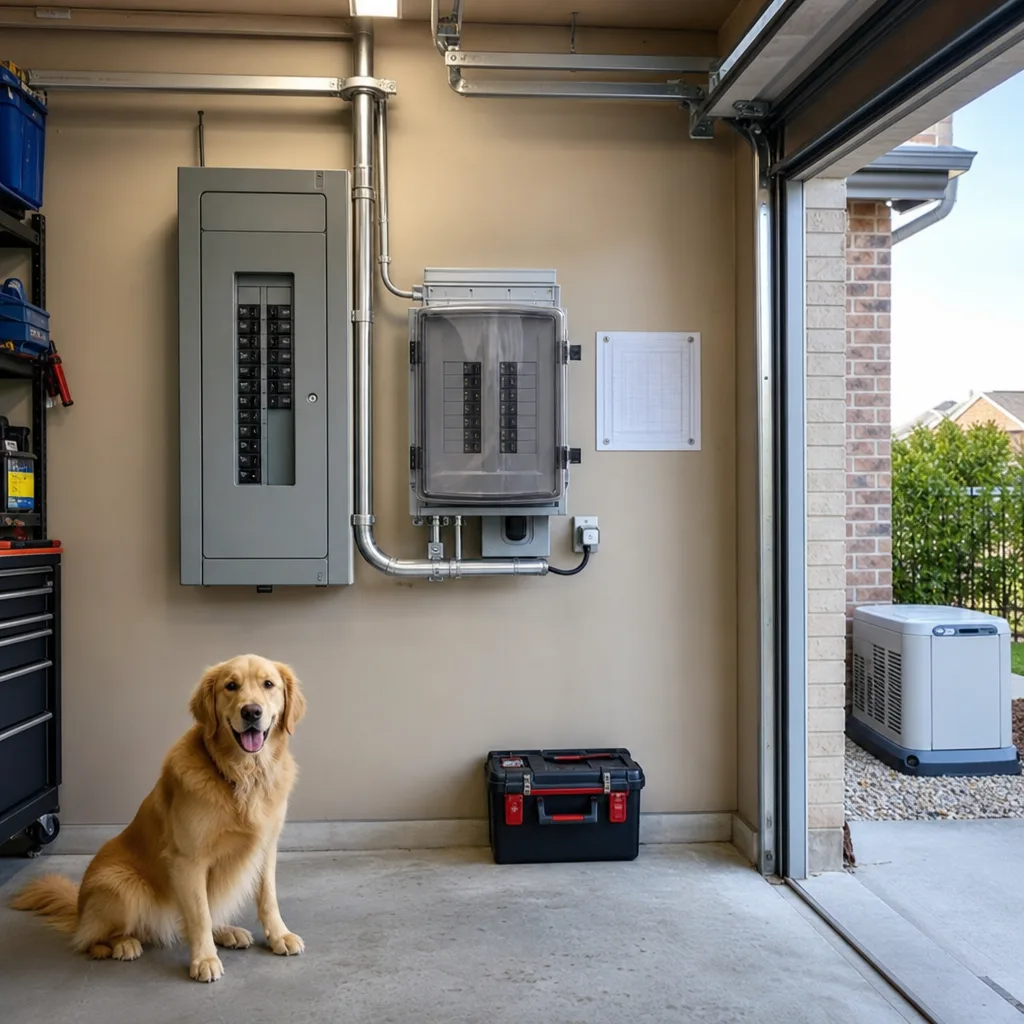
1. The panel check comes first. Before anything gets mounted, your electrician opens the panel and looks at a few things:
- Whether there’s open space for the switch’s breakers or connections.
- The size of your main breaker and service.
- Signs of trouble, like scorched breakers, loose connections, or two wires crammed under one breaker screw.
If the panel is full, worn out, or has existing code problems, you’ll hear about it before work starts. Panel upgrades and code corrections aren’t part of a standard transfer switch install, so you get to decide on them with the facts in front of you. You won’t find a surprise on the bill afterward.
2. You choose what stays on. If you’re using a portable generator with a manual switch, you’ll pick the handful of circuits that matter most to you. That might be the fridge, the furnace blower, a bedroom, and the garage door. With a standby generator and an automatic switch, the plan is matched to what the generator can carry. A switch that sends more load than the generator can handle just trips it off when you need it most.
3. The switch gets mounted, and the power goes off for a while. The switch usually goes on the wall right beside your panel. For a portable setup, an inlet box goes on the outside wall where you’ll plug the generator in. That keeps the cord outdoors and away from open doors and windows. For a standby unit, the wiring runs in conduit from the switch out to the generator pad. Your main power is shut off while the panel is being wired, so plan on some time without electricity that day. Some whole-home automatic switches install between the meter and the panel, and that can mean working with Oncor to disconnect and reconnect service.
4. The circuits get moved and the grounding gets checked. Each chosen circuit is routed through the switch so it can only draw from one source at a time. The ground and neutral connections get close attention too. A generator’s grounding has to match how the switch is wired, and getting that wrong is a common reason a homemade setup fails inspection or acts strangely during an outage.
5. The final test proves it works. This is the step that matters most. A proper test copies a real outage: the utility power is cut, the generator takes over, and each backed-up circuit is checked to confirm it runs. With an automatic switch, you watch it sense the outage, start the generator, and switch back on its own once utility power returns. With a manual switch, you should go through the steps yourself while someone who knows the system watches, so the first time you do it isn’t in the dark during a storm.
Electrical work like this often needs a permit and a city inspection. Ask up front whether the permit is part of your quote, because it’s not automatically included. The goal is a switch that’s been tested and checked before you ever need it.
Thinking about Transfer switch installation? Let’s talk.
Call Today, Get Service Today. Xtreme Air Services — Frisco is ready to help.
The City of Frisco Permit Step, and Why It’s Worth Keeping
Adding a transfer switch means working inside your electrical panel. In Frisco, that kind of work generally calls for a permit from the City of Frisco and a city inspection before it’s signed off. It’s easy to see that as red tape that slows things down and adds cost. It isn’t. The permit is the one part of the job where someone with no stake in the sale checks the work for you.
A city inspector doesn’t care who installed the switch or what it cost. They look at whether it was done right. That usually means checking things like these:
- The switch is an approved type for the way it’s being used.
- The grounding and neutral connections match your generator setup.
- The wire size fits the breakers it’s connected to.
- The outdoor inlet or the conduit run to the generator is mounted and sealed properly.
- The panel isn’t overloaded with more than it was built to handle.
Those are the same details that decide whether your switch works safely in a storm. A second set of trained eyes on them is worth having.
The permit keeps paying off long after install day.
- Insurance. If you ever file a claim tied to fire or electrical damage, your insurer may ask whether the work was permitted. An unpermitted switch can make that conversation a lot harder.
- Selling your home. A buyer’s home inspector will spot a transfer switch next to your panel and may ask for the permit record. A signed-off permit answers that question in one step. Without one, you could be asked to open the work back up or fix it before closing.
- Your own peace of mind. You’ll count on this switch when the power’s out and you can’t easily call for help. Knowing it passed inspection lets you flip it, or let it flip itself, without wondering.
Sometimes an installer offers to skip the permit to save you money. The savings can sound nice, but think about what you’re trading. If someone is willing to skip the inspection, it’s fair to ask what else they might skip when no one’s checking. The cost of a permit is small next to tearing out and redoing panel work, or a claim that goes sideways.
Here’s how the permit fits into our pricing. Our standard installation includes the transfer switch and materials, professional installation, the connections, and testing. Permits aren’t included unless stated, and neither are code corrections or panel upgrades. We list them that way so you can see each cost on its own instead of having it hidden inside one big number.
One thing to know ahead of time: an inspector may point out an older problem in your panel that has nothing to do with the new switch. If that happens, it counts as a code correction. You’ll hear what it is and what it costs, and you get to decide on it before any of that work happens. The inspection may also land on a different day than the install, depending on the city’s schedule. Your switch can be wired and tested the same day, with the final sign-off coming when the inspector visits.
Watch Our Video
See How We Handle Transfer switch installation in Frisco
Xtreme Air Services — Frisco
What Drives the Cost of Transfer Switch Installation
Most transfer switch installs we do fall between $500 and $1,500. Our most common job is installing an automatic or manual transfer switch, connecting it to your panel, and testing it. That job runs $700 to $1,100, and most of them finish the same day. Where your home lands in that range comes down to a short list of things we can usually sort out in one visit.
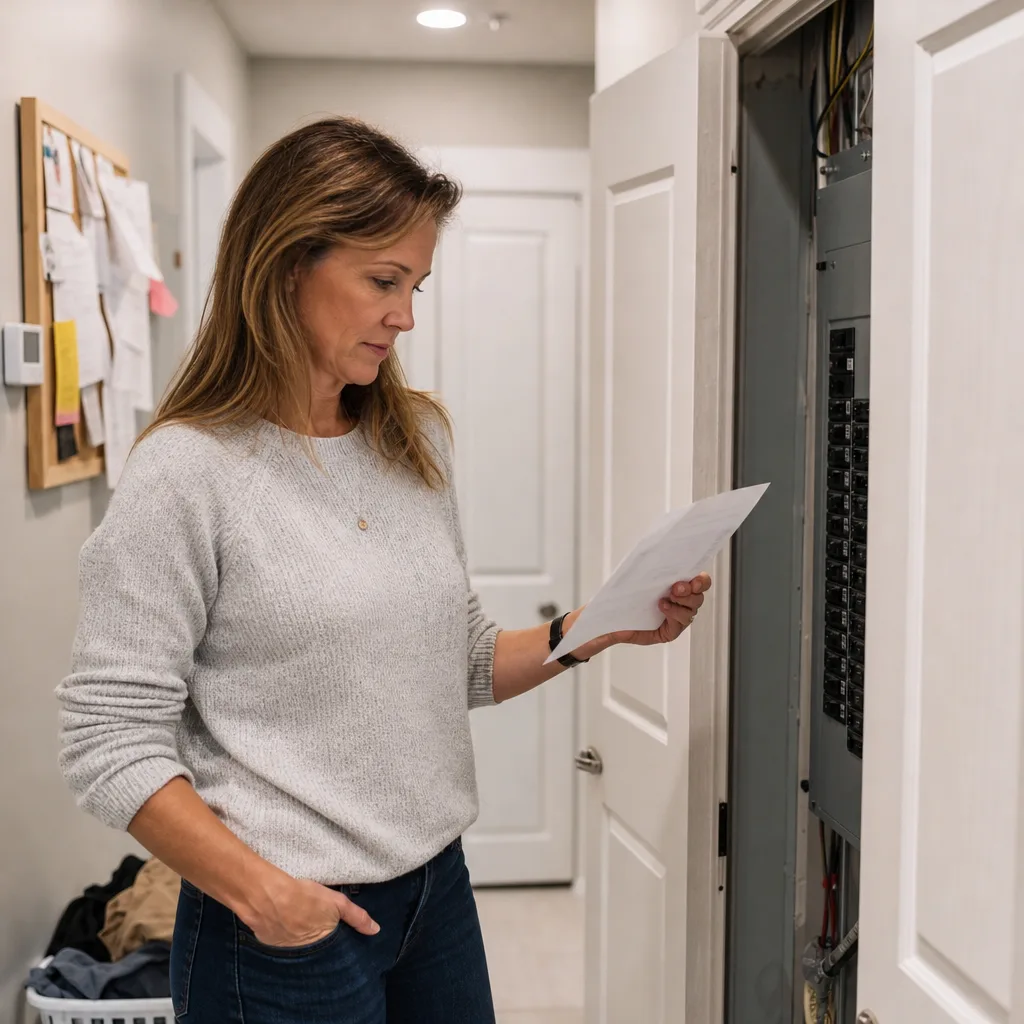
- Switch type. An automatic switch costs more than a manual one. It has more parts and does more of the work for you.
- Number of circuits. Backing up a fridge, a few lights, and the furnace blower is a smaller job than moving a dozen circuits over. Each added circuit means more wiring and more time.
- Panel condition and space. A panel with open room and clean connections keeps the job simple. A crowded or worn panel can add work, or point to a panel upgrade before the switch can go in.
- Distance to the generator. A portable setup with an inlet box right outside the panel wall is a short run. A standby generator across the side yard needs a longer conduit and wire run, and that adds material and labor.
- Code upgrades. If older problems turn up in the panel, fixing them is separate from the switch install.
- Permits. As covered above, the permit is its own line item unless your quote says otherwise.
Here’s how those factors play out in real life. Say you already own a portable generator and want the fridge, a couple of bedrooms, and the garage door on backup. Your panel has room, and the inlet can go on the wall right behind it. That job tends to sit toward the lower end. Now say you’re adding a whole-home standby generator with an automatic switch, the generator pad is a good distance from the panel, and the panel is already packed. Expect that job to land higher in the range.
One thing to keep straight is that the generator itself isn’t part of the transfer switch price. If you’re shopping for both, budget for them separately. If you’re getting a standby unit, ask about our whole-home standby generator installation so the switch and generator are planned together.
Before you hire anyone, ask these questions. Is the price fixed before work starts, or billed by the hour? Which circuits are included? Is the permit in the quote? What happens if the panel needs work? You should get clear answers to all four. With us, you get upfront pricing, approved by you before any work begins, and no surprises.
There’s a $26 to $99 service-call fee to come out and look at your setup. That fee gets credited toward the work if you go ahead with Xtreme Air Services. If the total is more than you’d like to pay all at once, flexible financing is available on qualifying installations and larger jobs, on approved credit.
Call now
Frequently Asked Questions
Common questions about Transfer switch installation
Can I wire the generator to my house myself instead of hiring an electrician?
You shouldn’t, because this work ties directly into your main panel and the utility connection. A mistake there can send power backward onto the lines, which puts Oncor crews working an outage at risk. It also needs a permit and inspection in Frisco, which a licensed electrician handles as part of the job. A properly wired switch means the panel, grounding, and circuits are all matched correctly before you ever lose power.
Will I lose power to my whole house during the transfer switch installation?
Yes, your main power gets shut off for part of the day while the panel is being wired. Most installs still finish the same day, with the switch wired and tested before the crew leaves. If your setup ties in between the meter and the panel, that can also mean coordinating a disconnect and reconnect with Oncor. Plan for a few hours without power rather than a full day.
Do I need a different transfer switch if I upgrade from a portable to a standby generator later?
Yes, a manual switch built for a portable generator isn’t matched to a standby unit’s automatic start. If you think a standby generator is in your future, mention that before the install so the panel space and wiring can be planned with that upgrade in mind. Switching types later means opening the panel again and running new wiring to the generator pad. Planning ahead now can save a second round of work down the line.
Ready to Get Started?
Call (469) 490-3595 Today, Get Service Today.