


Home Rewiring in Allen: Know If Your House Needs It
A straight answer on whether your house needs rewiring or a smaller repair, and what a full project involves.
What’s Covered on This Page
- Signs Your Home’s Wiring Is the Problem
- When You Don’t Need a Full Rewire
- What a Home Rewiring Project Includes
- What Rewiring Costs and What Changes the Price
- Permits and Licensing for Rewiring Work in Allen
- How long does rewiring a house in Allen take?
- What counts as residential electrical work versus a rewire?
- Will I be without power during a rewire?
Signs Your Home’s Wiring Is the Problem
A single bad outlet or one breaker that trips doesn’t mean you need to rewire your house. The thing to look for is a pattern. When the same symptoms keep turning up across your home, the wire behind the walls is usually what’s failing, not the device you can see.
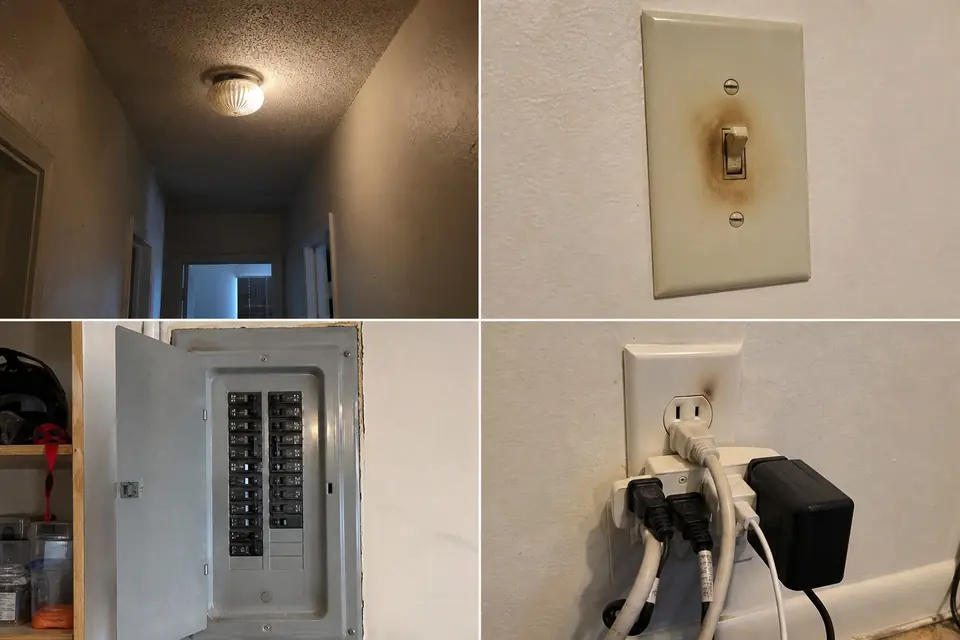
Here are the signs that point to the wiring:
- Breakers trip in more than one room, even when you aren’t running much. One overloaded circuit is one problem. Several touchy circuits often mean the wiring can’t carry what your family uses today.
- Lights dim or flicker when the AC, microwave, or hair dryer kicks on, and it happens in different parts of the house.
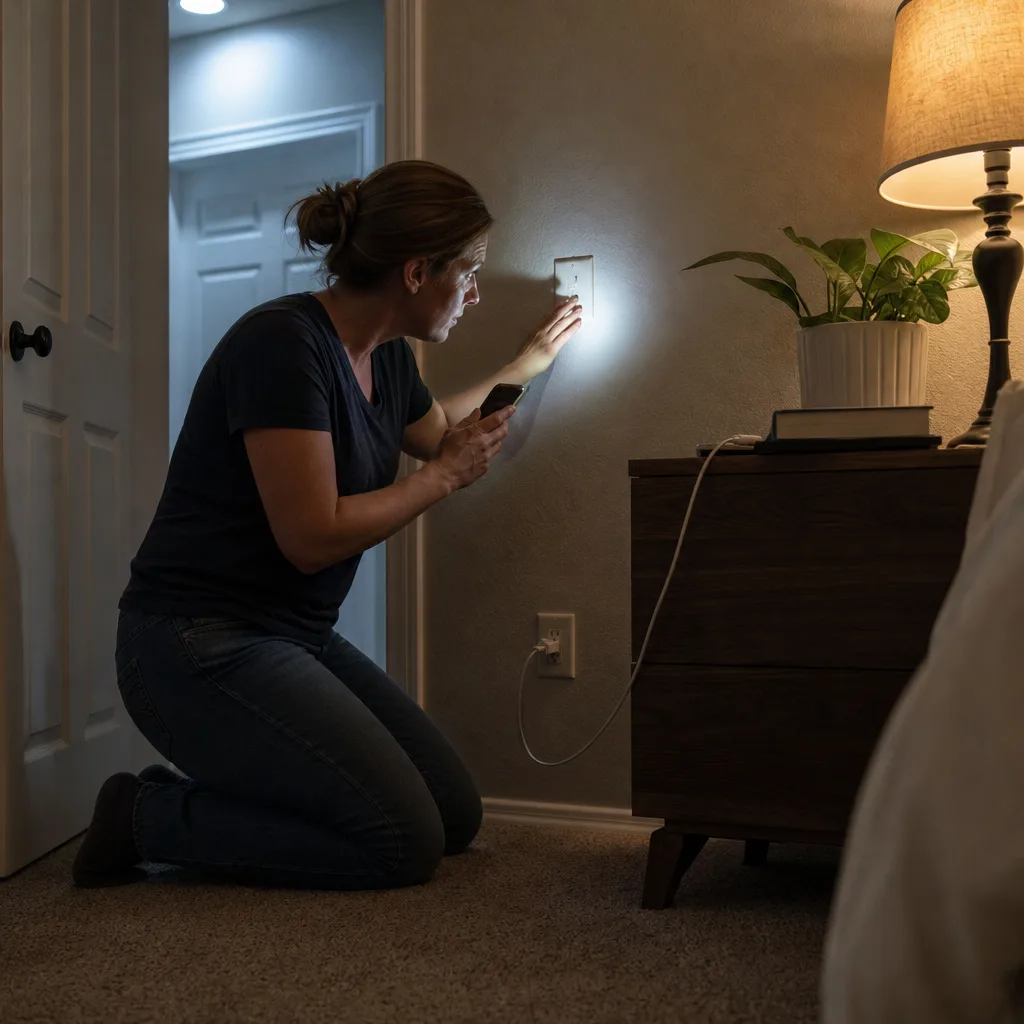
- Outlets or switch plates feel warm, or you see brown or black marks around them.
- You hear buzzing or crackling from a wall, a switch, or an outlet.
- You smell something hot or burning near outlets or the panel, and you can’t find a cause.
- Most of your outlets have only two slots. That usually means there’s no ground wire, so surges and faults have no safe path to follow.
- Your home has aluminum branch wiring or knob-and-tube wiring. Both are older types of wiring that loosen and wear at the connections over time.
- Extension cords and power strips have become permanent because there aren’t enough outlets where you need them.
Warmth, scorch marks, buzzing, and burning smells mean the wire or a connection is getting hotter than it should. Don’t wait on those. The other signs are more about age and capacity. They’re still worth a real look, but they give you time to plan.
North Texas adds a few strains of its own. Wiring that runs through your attic spends every Allen summer in serious heat, and years of that can make the plastic coating on the wire brittle. Our clay soil swells and shrinks, which shifts foundations and walls a little at a time. That movement can pull on connections in boxes and junction points. Neither one shows up on day one. Both add up over decades.
Here’s how it often plays out. You might notice that the bedroom lights dip every time the AC cycles on. Then the bathroom breaker starts tripping when someone runs the hair dryer. Later you find a kitchen outlet that feels warm to the touch. Any one of those could be a small fix. All three together point to wiring that’s tired across the house.
If you’ve only got one symptom in one spot, start with electrical troubleshooting. It’s a smaller job, and it may be all you need. If your list looks like the one above, it’s time to talk about the wiring as a whole.
When You Don’t Need a Full Rewire
A full rewire is a big job, and plenty of homes don’t need one. If the wire inside your walls is in good shape, a smaller, targeted fix is the right answer. Here are the cases where we’d tell you to skip the rewire.
- The problem stays in one spot. A single dead outlet, a buzzing switch, or one breaker that keeps tripping usually comes down to one bad device or one loose connection. Electrical troubleshooting finds it, and the fix is often done in one visit.
- The panel is the weak link, not the wire. Older panels can have worn breakers or too few open spaces for what you plug in today. An electrical panel upgrade can solve tripping and capacity problems while the branch wiring stays put.
- You just need more power in one place. A new window unit, a garage freezer, or a home office that keeps tripping a breaker usually needs a dedicated circuit. That means one new run of wire, not a whole house of it.
- You have two-prong outlets, but the wiring is otherwise sound. You don’t always have to pull new wire to make those outlets safer. GFCI outlets can add shock protection on circuits with no ground wire, and in some rooms adding a ground wire is a reasonable option.
- You have aluminum wiring that’s still in decent shape. The weak spots with aluminum are usually the connections at outlets, switches, and splices. There are approved repair methods that make those connections safe without replacing every wire in the house.
Some things you can check yourself before you call anyone. If an outlet in a bathroom, kitchen, garage, or outside wall goes dead, look for a GFCI outlet nearby with a reset button. One GFCI often protects several outlets down the line, and a quick press of reset may bring them all back. If one breaker trips only when the space heater and the vacuum run together, try moving one of them to a different circuit. If the problem stops, you’ve likely found an overloaded circuit, not failing wire.
Sometimes the honest answer is to wait. Say your wiring tests fine, but you’re planning to redo the kitchen or finish a room in the next year or two. It makes sense to update the wiring in that space while the walls are open. Running new wire through finished drywall costs more and makes more mess, so timing the work with a remodel saves you money.
Newer homes are a good example. If your house was built in the last few decades, it most likely has grounded outlets, copper wire, and a modern panel. A problem in a home like that is far more likely to be one bad part than worn-out wiring. In an older Allen home, an electrical safety inspection can tell you which parts of the system are fine and which need attention. That way you’re paying to fix only what’s wrong.
There’s one thing that changes this. Heat, scorch marks, and burning smells are not a reason to wait or try a DIY fix, even if they show up in only one spot. Those need a licensed electrician to look at them right away. Everything else on this list gives you room to start small.
What a Home Rewiring Project Includes
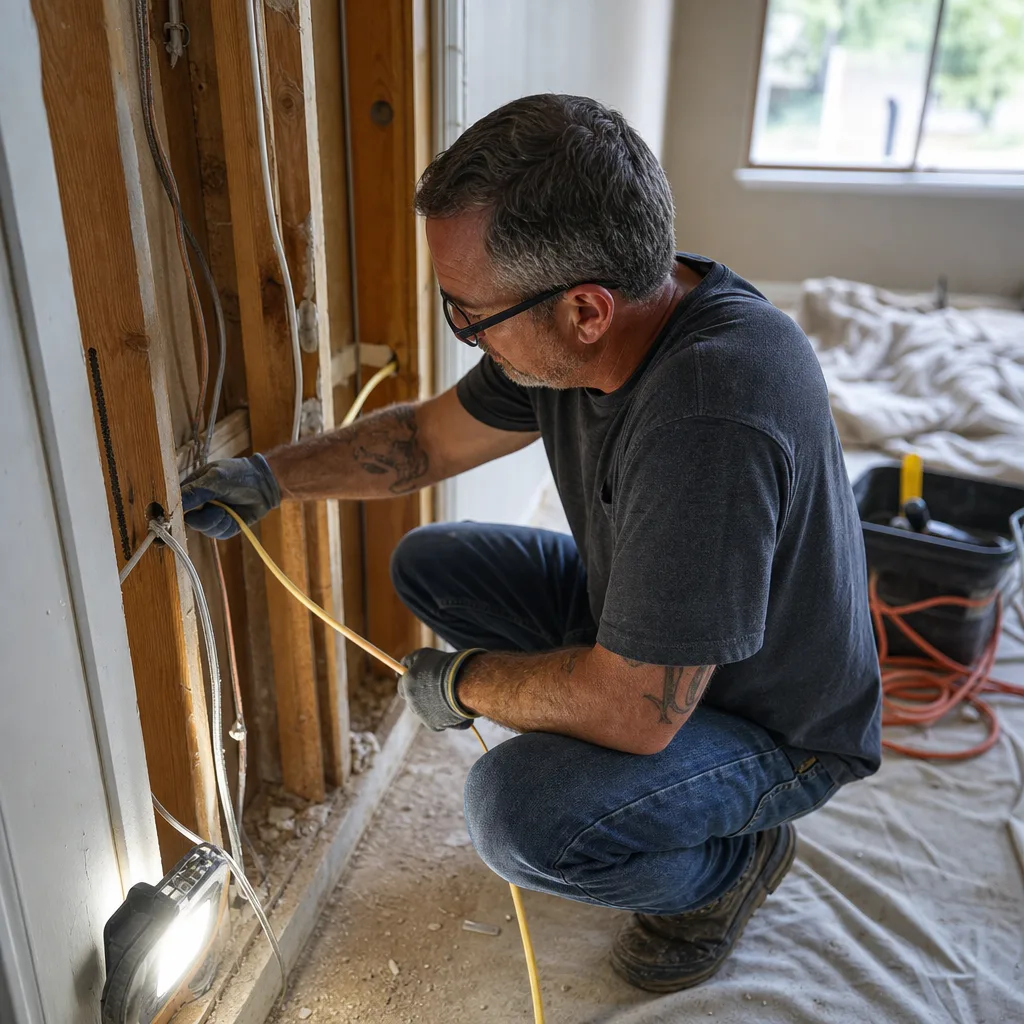
A home rewiring project replaces the old wire running through your walls and ceilings with new circuits, new devices, and proper grounding. Then the whole system is inspected and tested before you use it. You’re not patching one bad spot. You’re getting a new set of wiring for the house, sized for how your family lives today.

Here’s what our rewiring work includes:
- Wire and materials. This covers the new copper wire, boxes, and connectors that carry power to every room in the scope.
- Professional installation. Licensed and insured electricians run the new circuits and make every connection.
- Devices. These are the new outlets and switches that the new wire connects to, so you’re not putting fresh wire behind worn-out parts.
- Grounding. This gives surges and faults a safe path to follow. It’s also what makes three-prong outlets do their job.
- Startup and testing. The system is powered up and checked circuit by circuit before the job is called done.
A rewire usually doesn’t mean tearing out whole walls. Most Allen homes sit on slab foundations, so there’s no crawlspace under the floor to work from. In most cases the new wire comes down from the attic into the walls through small openings cut where they’re needed. How easy it is to reach your walls, attic, or crawlspace is one of the things that moves the price. So is the number of circuits your home needs.
It helps to know up front what’s not part of the rewiring price. That way nothing catches you off guard:
- Drywall finishing and paint. Those small access openings need patching, finishing, and paint afterward. Plan for a drywall and paint pro, or for doing it yourself.
- Fixture upgrades. If you want new light fixtures, ceiling fans, or recessed lights while the wiring is open, that’s priced separately.
- Code corrections beyond scope. If the work turns up problems outside what you agreed to fix, those are handled as a separate item.
- Permits, unless stated. Look at your quote to see whether permits are listed. If they aren’t, ask before work starts.
Your panel is a separate question. New wiring needs a panel that can handle it. If yours is old or full, an electrical panel upgrade may be part of the conversation. That’s a cost driver in its own right, and it has its own page.
Before you agree to any rewire, from us or anyone else, get the scope in writing. It should say which rooms and circuits are covered, whether the panel is included, and who handles permits and wall repair. A clear scope protects your budget more than anything else on the quote. We price rewiring by home size and scope, with upfront flat-rate pricing you approve before the work begins.
If the total is more than you want to pay all at once, flexible financing is available on qualifying installations and larger jobs, on approved credit.
Have questions? We’re happy to help.
Call Today, Get Service Today. Xtreme Air Services — Allen is ready to help.
What Rewiring Costs and What Changes the Price
Most home rewiring jobs we do fall between $8,000 and $20,000. Our most common job is replacing the outdated or unsafe wiring throughout the home with new circuits, devices, and grounding, all inspected and tested. That job usually runs $10,500 to $15,000. Where your home lands in that range depends on its size and how much of the house is in the scope.
That’s a wide spread, and that’s on purpose. Two houses on the same Allen street can have very different price tags. Here’s what makes the difference.
- Home size and number of circuits. More rooms mean more wire, more boxes, and more connections. A house with a big kitchen, a home office, and a garage shop needs more circuits than a smaller home with the same square footage.
- Access to walls, attic, and crawlspace. If there’s a clear attic above most rooms, wire can drop into the walls with less cutting. Vaulted ceilings, a second story, or tight attic spaces take more time and more care.
- Condition of the existing wiring. Aluminum or knob-and-tube wiring, brittle insulation, or past DIY work can mean more removal and more surprises behind the walls.
- Panel upgrades. If your panel can’t handle the new circuits, replacing it adds to the total. Some homes need it and some don’t.
- Drywall repair. More access openings mean more patching afterward. The finishing and paint aren’t in our price, as covered above, but the number of openings still affects your total project budget.
- Code upgrades. New wiring has to meet today’s electrical code, which asks for more protection in some rooms than older homes ever had. That can add devices and breakers to the job.
- Permits. A rewire is the kind of work that gets permitted and inspected. Check whether the permit is listed on your quote.
Timing can matter too. Working in an attic in an Allen summer is slow, hot work, and spring or fall can be easier on everyone. That doesn’t mean you should wait if you’re seeing heat or scorch marks. It just means that if your wiring is old but not causing trouble, you have room to plan.
To get a real number, someone has to see your home. Our service-call fee is $26 to $99, and it’s credited toward the work if you go ahead with Xtreme Air Services. So if you move forward with the rewire, that visit doesn’t cost you extra.
After that visit, you get upfront flat-rate pricing you approve before any work starts. There’s no meter running. If the job takes an extra afternoon because a wall is harder to reach than it looked, your price for the agreed scope doesn’t climb.
If you’re comparing quotes, line them up on the same points. Ask how many circuits each one includes, whether the panel is part of it, and whether the price is flat or billed by the hour. A low number that leaves out the panel or half the circuits isn’t really lower. It’s just a different job.
And if the right rewire costs more than you want to pay all at once, the financing mentioned above can spread it out, on approved credit.
Watch Our Video
See How We Handle Home rewiring in Allen
Xtreme Air Services — Allen
Permits and Licensing for Rewiring Work in Allen
A rewire touches every circuit in your home, so it shouldn’t happen off the books. In Allen, work this size should be permitted with the city and checked by an inspector. In Texas, electrical work has to be done by electricians licensed through the Texas Department of Licensing and Regulation, known as TDLR. Those two things protect you more than any promise on a quote.
A permit isn’t just paperwork. It’s what brings a second set of eyes into your home. A city inspector looks at the job twice:
- Rough-in inspection. This happens after the new wire is run but before the walls get patched. The inspector can see the wire, the boxes, and the connections while they’re still exposed.
- Final inspection. This happens once the devices are in and the system is powered up. It confirms the finished work meets today’s electrical code.
That timing is the reason to care. Once the drywall goes back up, nobody can see what’s behind it. The rough-in inspection is your one chance to have an outside expert sign off on the work you’re paying for.
Skipping the permit can come back to bite you. When you sell your home, a buyer’s inspector may ask about wiring that looks new with no permit on record. Your insurance company may also have questions after a claim. A permit on file shows the work was done right and checked.
As covered in the cost section, look at your quote to see whether the permit is listed. Either way, the licensed electrician doing the work should be the one who pulls it. If a contractor asks you to pull the permit yourself as the homeowner, take that as a red flag. It often means they can’t or won’t put their own license on the job.
If your rewire also includes a panel upgrade, the power to your home has to be shut off at the meter. Oncor Electric Delivery owns that meter and the lines up to it. Your electrician coordinates with Oncor for the disconnect and reconnect, so you don’t have to make those calls yourself.
Before you hire anyone for a rewire, ask these questions:
- Who’s the licensed electrician on this job? Get a name and a license number. You can look it up on the TDLR website in a couple of minutes.
- Who pulls the permit? The answer should be the contractor.
- When are the inspections? The walls shouldn’t be closed up before the rough-in inspection passes.
- Are you insured? A rewire puts people in your attic and inside your walls for days. You want that covered.
Xtreme Air Services is a fully licensed and insured contractor for electrical, HVAC, and plumbing work. Our office is at 1333 W McDermott Dr in Allen. Our technicians are background-checked and drug-tested, so you know who’s in your home. We’ll tell you up front how the permit and inspections fit into your rewire, and you’ll see it all in writing before any work starts.
Call 469-299-8996
Frequently Asked Questions
Common questions about Home rewiring
How long does rewiring a house in Allen take?
Most home rewiring jobs take several days to about a week, depending on home size and how many circuits are in the scope. A larger home with more rooms, or one with tight attic access, takes longer than a smaller single-story home. Homes with vaulted ceilings or a second story also add time because the crew has to work more carefully to reach the walls. Your electrician can give you a realistic timeline once they’ve seen the home and the scope of work.
What counts as residential electrical work versus a rewire?
Residential electrical work covers everything from small repairs to full rewiring, and a rewire is just one type of job within that category. Troubleshooting, outlet and switch repair, panel upgrades, and new circuit installs are all residential electrical work, but they don’t always mean replacing the wiring itself. A rewire specifically means pulling new wire through the walls and ceilings and replacing the old circuits, devices, and grounding. If you’re not sure which one your home needs, a safety inspection can tell you where the actual problem is before you pay for more than you need.
Will I be without power during a rewire?
You won’t lose power for the whole project, but short outages happen at specific points in the job. The main disconnect comes when a panel upgrade is part of the work, since Oncor Electric Delivery has to shut off power at the meter for that swap. Outside of that, electricians typically work circuit by circuit so most of your home stays powered while new wiring goes in elsewhere. Ask your electrician how they plan to phase the work before the job starts so you know what to expect.
Ready to Get Started?
Call (469) 299-8996 Today, Get Service Today.