


Home Rewiring in Dallas: Know Before You Call
A straight answer on whether your house needs rewiring or a smaller repair, and what a full project involves.
What’s Covered on This Page
- Decide Whether Your House Needs Full Rewiring
- Know When Rewiring Is Not the Right Fix
- Understand Older Dallas Homes and Outdated Wiring
- What Happens During a Home Rewiring Project
- What’s Included in Your Rewiring Price
- How long does it take to rewire a 2,000 square foot house?
- Can you rewire an old house without tearing out all the drywall?
- What steps does someone need to take to become a licensed electrician in Texas?
Decide Whether Your House Needs Full Rewiring
Start with one honest question. Is the problem in one spot, or is it everywhere? A rewire replaces the wiring through your whole home. That’s a big job, and it only makes sense when the old wire can’t be trusted anymore.
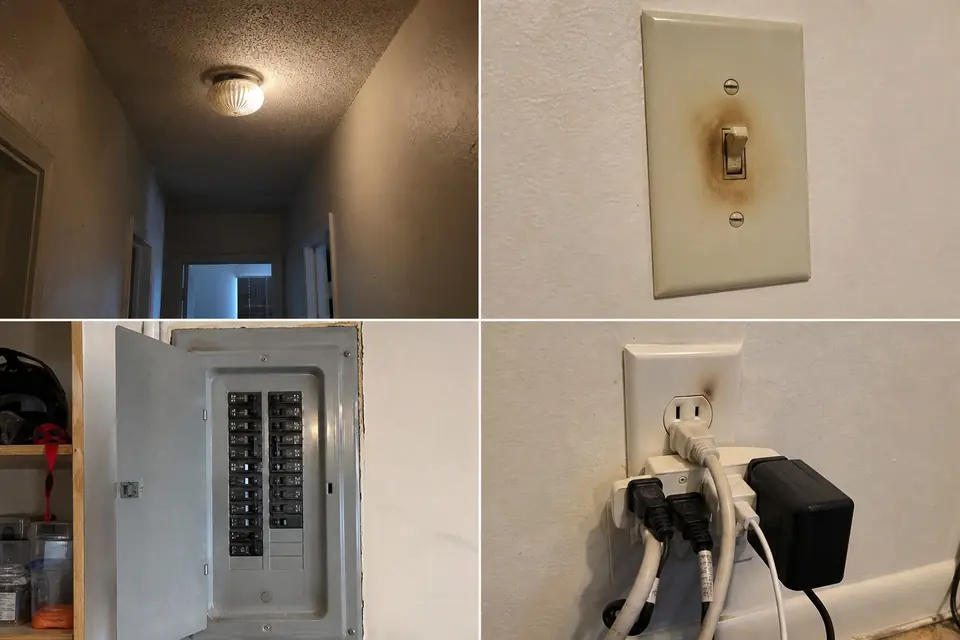
These signs point toward a full rewire:
- Knob-and-tube wiring. You’ll see white ceramic knobs and tubes holding single wires in the attic. This kind of wiring has no ground wire at all.
- Cloth or rubber-covered wire that cracks or flakes when it’s handled.
- Two-prong outlets in most rooms. That means there’s no ground path to protect you or your TVs, computers, and appliances.
- Warm switch plates, scorch marks, or a burning smell at more than one outlet.
- Old do-it-yourself patches, like wires spliced together with tape and no junction box.
Your home’s age matters here. Many Dallas homes are slab-on-grade ranch houses built between the 1950s and the 1990s. A slab house has no crawlspace, so most of its wiring runs through the attic. A North Texas summer bakes those wires year after year, and older insulation gets brittle in that heat. A house still on its original 1950s or 1960s wiring deserves a close look. Some homes from the late 1960s and 1970s also used aluminum branch wiring. Aluminum wiring replacement can sometimes be handled without rewiring the entire house.
Now the other side. You probably don’t need a full rewire if:
- One outlet or switch stopped working. That’s usually a worn device or a loose connection, and an outlet and switch repair fixes it.
- One breaker keeps tripping. That circuit may just be overloaded, and a dedicated circuit for the heavy appliance often solves it.
- You need more power for an EV charger or a bigger AC. The panel may be the limit, not the wiring, so an electrical panel upgrade could be the real answer.
- A few rooms have two-prong outlets, but the rest of the wiring is in good shape. Ground wire installation or GFCI outlets may cover it.
- Lights flicker in just one room. Look for a loose connection there before you assume the whole house is the problem.
There’s also a middle path. If only part of your home has old wire, like a kitchen or an older addition, a partial rewire can replace just that section. It’s still a real project, but it’s smaller than doing the whole house.
If you can’t tell which group you fall into, that’s normal. You don’t need to open walls to find out. A licensed electrician can check the panel, a few outlets, and the attic runs, then tell you which path fits your home. If you have us take a look, the $26-$99 service-call fee is credited toward the repair when you go ahead with Xtreme Air Services.
Know When Rewiring Is Not the Right Fix
A rewire is a big, real project. We’d rather tell you it’s the wrong fix than sell you one you don’t need. Here are the cases where the problem looks like bad wiring but isn’t.
The trouble is on the utility side. Does your whole house dim at once? Do lights go bright and then weak, or does half the house lose power while the other half works? That can be a loose connection where power comes into your home, not the wiring inside your walls. If the fault is on the utility side of the meter, it’s Oncor’s job to fix it, not yours. An electrician can test at the panel and tell you which side the problem is on before anyone talks about new wire.
A storm took out a few things. Dallas gets hail and hard spring thunderstorms. After one, you might find a dead TV, a fried garage door opener, or a few outlets that quit. That points to a power surge, not worn-out wiring. Fixing the damaged parts and adding a whole-house surge protector is usually the smarter move.
Your house already has modern wiring. Many homes in Dallas’s newer subdivisions, and plenty of older homes that were updated along the way, already have grounded copper cable and three-prong outlets throughout. If that wire is in good shape, a rewire won’t buy you anything. Electrical troubleshooting can find the one weak link instead.
You’re planning a remodel soon. If you’ll be opening up the kitchen or gutting a bathroom in the next year or so, it often makes sense to wait. Do the wiring while the walls are already open. You’ll save on drywall work and patching, and you won’t tear up fresh paint twice. The exception is any sign of heat or burning, like scorch marks or warm plates. That shouldn’t wait for a remodel.
A home inspector flagged a few items. Buying or selling often brings a punch list: a missing cover plate, an open junction box, a GFCI missing near a sink. Those are usually spot repairs. Code correction for the listed items is often all the sale needs.
Some things you can check yourself before you call anyone:
- A dead bathroom, kitchen, or garage outlet may just need its GFCI reset. That might be a different outlet nearby, or even one in another room.
- A breaker that trips only when the space heater and the hair dryer run together is telling you about load, not old wire. Move one of them to another circuit.
- A light that flickers may just have a loose or failing bulb. Try a new one first.
If one of those clears it up, you’re done. No visit needed.
And if the wiring really is the problem, you’ll know that before you spend a dime on the full job. A good electrician should be able to show you why. That might be the cracked cloth insulation in your attic, the missing ground at the outlet, or the scorched connection. If nobody can point to it, ask more questions before you sign anything.
Understand Older Dallas Homes and Outdated Wiring
The age of your house is a good first clue to the wire behind your walls. It doesn’t settle the question, though. Two houses on the same Dallas street can be built the same year and still have very different wiring today. One may have been updated. The other may be all original. Here’s what each era usually means.
- Before the 1950s: Knob-and-tube is common in homes this old. Even when it still works, it was never built for the power a modern family uses.
- 1950s and 1960s: Many of these homes have early cloth-covered cable. Some of it has no ground wire. The insulation was fine when it was new. After 60 or more years, with your attic heat on top of that, it can crack when it’s touched.
- Late 1960s and 1970s: Some homes from these years used aluminum branch wiring. Aluminum swells and shrinks more than copper as it heats and cools. Over time, that can loosen the screws at outlets and switches. A loose connection runs hot.
- 1980s and 1990s: Most of these homes have grounded copper wire, and the wire itself is often in decent shape. The bigger issue tends to be too few circuits and none of the newer safety devices.
There’s a catch that fools a lot of people. A three-prong outlet doesn’t prove your home is grounded. Over the years, owners and flippers often swapped old two-prong outlets for three-prong ones without running a ground wire. The outlet looks modern, but that third hole isn’t connected to anything. An inexpensive plug-in outlet tester will show you this in a few seconds.
Load is the other half of the story. A kitchen wired in 1958 was planned for a fridge, a toaster, and maybe a mixer. Now that same kitchen runs a microwave, an air fryer, a coffee maker, and a dishwasher, and they’re often on the same one or two circuits. Older homes also tend to have fewer outlets per room. That’s how you end up with power strips plugged into power strips. The wire might not be failing. It’s being asked to do a job it was never sized for.
Past work matters too. A 1960s house in Dallas may have a 1990s addition, a remodeled kitchen, and a few rooms that nobody has touched. That’s a mix of wire types under one roof. It’s a big reason a partial rewire is sometimes the right answer. It’s also why nobody should guess at your home’s wiring from its age alone.
If you’d like a head start before anyone visits, take a quick look on your own. Check the labels inside your panel door. Look at the cable jackets you can see in the attic. Note which rooms have two-prong outlets. Write down any outlet that feels loose when you plug something in. Those few notes help an electrician get to the real answer faster.
Have questions? We’re happy to help.
Call Today, Get Service Today. Xtreme Air Services — Oak Lawn is ready to help.
What Happens During a Home Rewiring Project
A rewire sounds like your walls get torn out. In most homes, they don’t. It’s a planned job done in stages, and you should know what each stage looks like before anyone starts.
It starts with a walkthrough. An electrician looks at your panel, your attic, and the outlets and switches in each room. Then they map out the new circuits. This is when you speak up. Want more outlets in the kitchen? A circuit for a home office or a future EV charger? It’s far easier to plan that now than to add it later. With Xtreme Air Services, you get upfront flat-rate pricing that you approve before any work begins, so you know the number before a single wire gets pulled.
Here’s how the work itself usually goes:
- Permit. A full rewire normally needs a city permit and inspection. Ask who pulls it, because permits aren’t included in our price unless your quote says so.
- Protecting your home. Floors and furniture near the work get covered, and power is shut off one area at a time, not usually the whole house for the whole job.
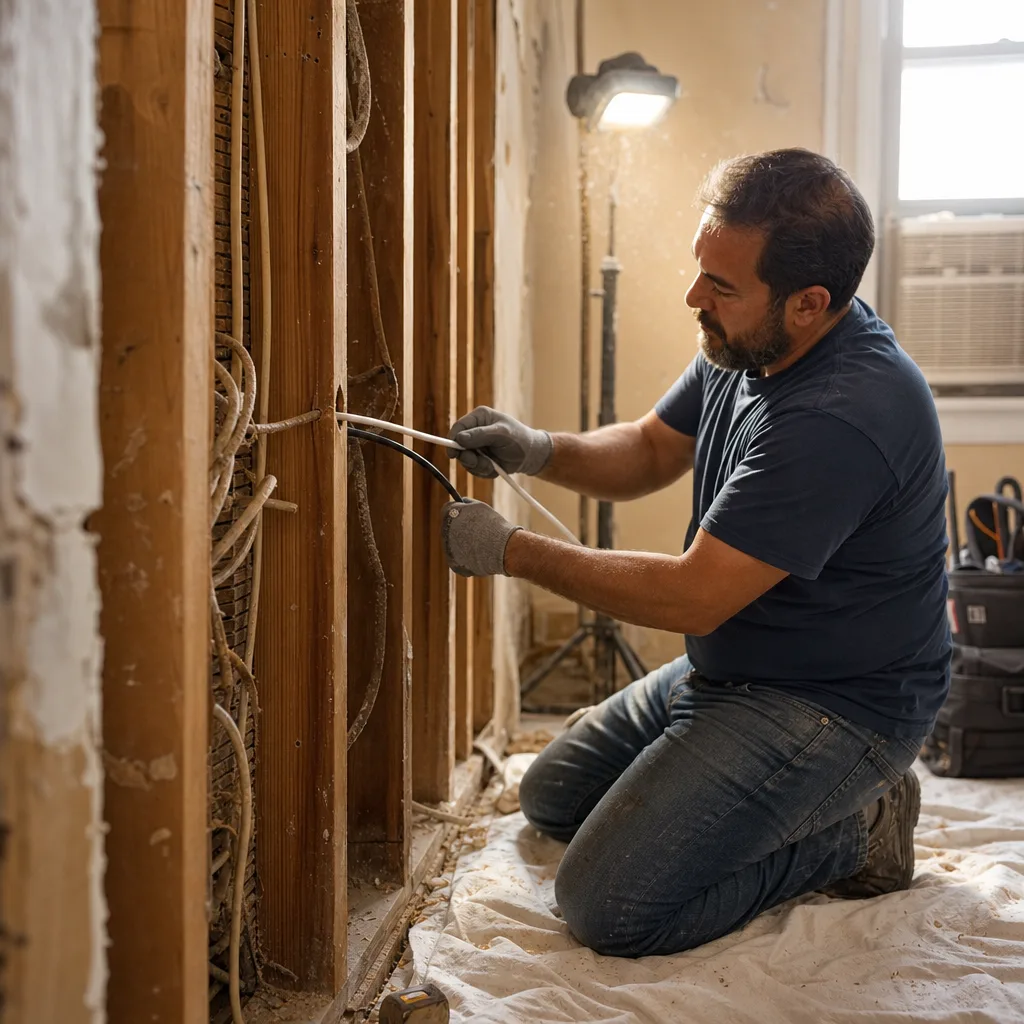
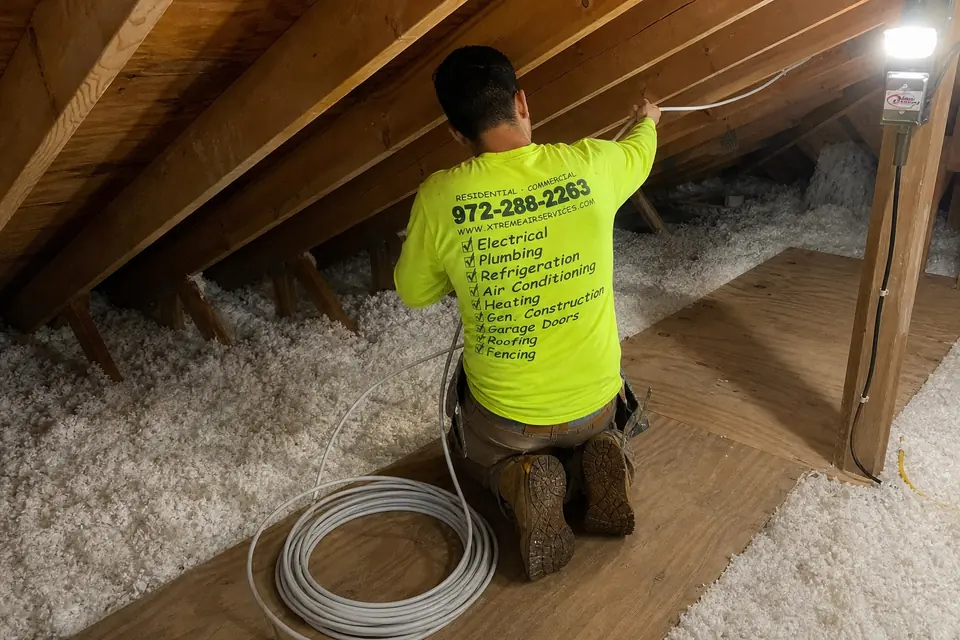
- Pulling new wire. In a slab-on-grade Dallas home, most new cable runs through the attic and drops down inside the walls. Small access holes are cut where a wire can’t be fished through any other way.
- New devices and grounding. Old outlets and switches come out. New grounded outlets, switches, and boxes go in, so that third prong finally connects to something.
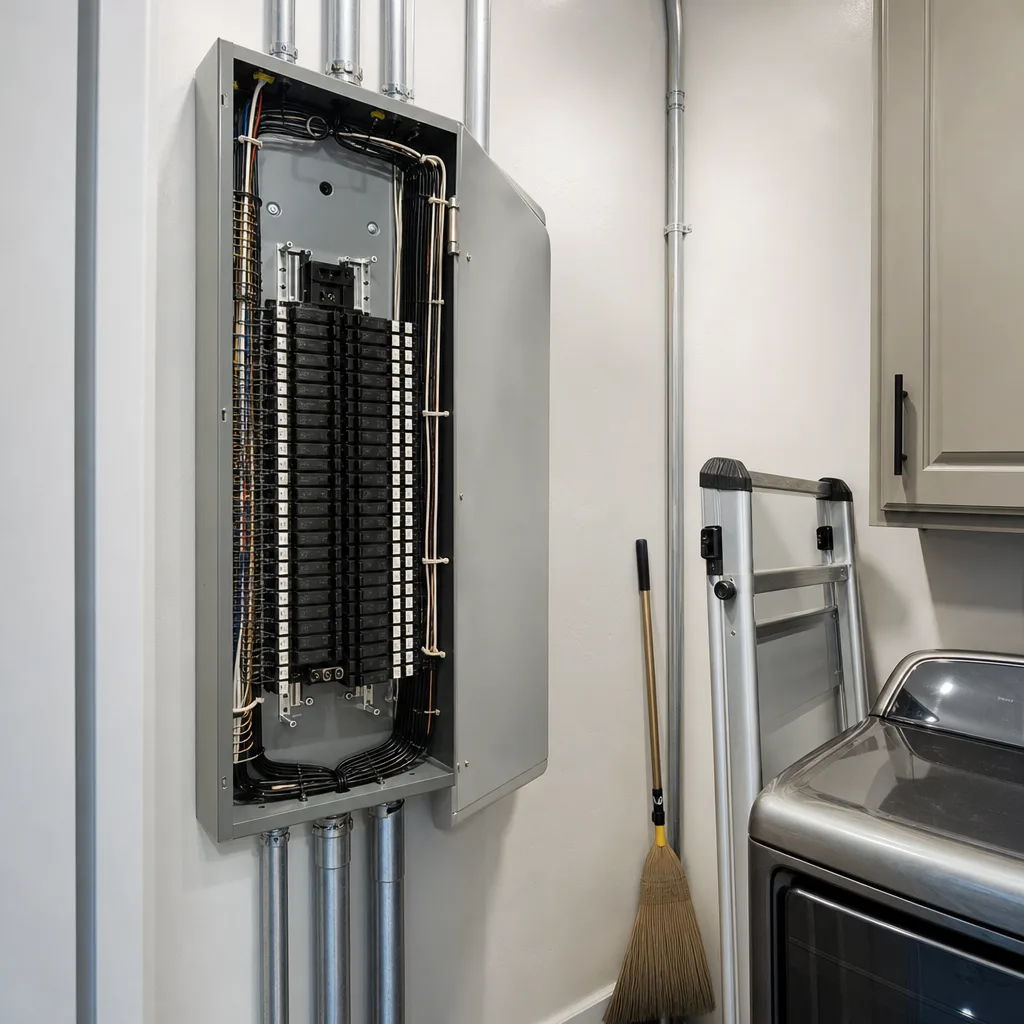
- Connecting to the panel. The new circuits get tied in at your breaker panel. If the panel is too small or too old for the new load, an electrical panel upgrade is a separate line item, and you’d hear about it up front.
- Inspection. A city inspector usually checks the wiring before the walls are closed up, and again at the end.
- Startup and testing. Every circuit gets powered up and tested to confirm it works the way it should.
How long does it take? That depends on the size of your home, how many circuits it needs, and how easy the attic and walls are to reach. A small ranch house with an open attic moves faster than a two-story with tight spaces and plaster walls. On many jobs, families keep living at home while the work happens, since power goes off in sections rather than all at once. If you work from home or someone needs medical equipment, say so at the walkthrough so the schedule can be planned around it.
Be clear about what’s in the price and what isn’t. Our rewiring price includes the wire and materials, professional installation, devices, grounding, and startup and testing. It doesn’t include drywall finishing or paint, new light fixtures, code corrections beyond the agreed scope, or permits unless your quote states them. Those small access holes will be there when the electrical work is done. You can have them patched and painted by your own drywall pro, or ask about options when you get your estimate.
None of this should be a surprise halfway through. If something unexpected turns up behind a wall, like a hidden splice or a burned connection, you should be told what it is and what it costs before anyone fixes it. That’s the difference between a project you can plan for and one that keeps growing on you.
Watch Our Video
See How We Handle Home rewiring in Dallas
Xtreme Air Services — Oak Lawn
What’s Included in Your Rewiring Price
Here’s the number you came for. Most home rewiring jobs we price fall between $8,000-$20,000. Our most common job is replacing outdated or unsafe wiring throughout the home with new circuits, devices, and grounding, inspected and tested. That job usually runs $10,500-$15,000. We price each one by home size and scope, not by the hour, so you see the total before you agree to anything.
Why such a wide range? Two Dallas houses can look alike from the street and still need very different amounts of work. These are the things that move your price up or down:
- Home size and number of circuits. More rooms and more circuits mean more wire, more devices, and more hours.
- Wall, attic, and crawlspace access. A one-story ranch with an open attic is quicker to wire than a two-story with tight spaces or plaster walls.
- Condition of the existing wiring. Old wire that crumbles when it’s handled takes longer to remove safely.
- Panel upgrades. If your panel can’t carry the new circuits, the upgrade is added to the quote.
- Drywall repair. More access holes mean more patching later.
- Code upgrades. Bringing an older home up to today’s code can add parts and labor.
- Permits. These add to the cost when they’re part of your quote.
You already saw what’s in our price and what’s left out. When you compare quotes from different electricians, check that each one covers the same work. A lower number sometimes means fewer circuits, no grounding, or a permit left for you to sort out.
Ask these questions before you sign with anyone:
- How many new circuits am I getting, and which rooms do they serve?
- Is the permit included, or do I pay it separately?
- Does my panel need an upgrade, and is that in this number?
- Who patches the access holes, and is that priced here?
- If you find something unexpected behind a wall, how will I hear about it before you fix it?
If any answer is vague, ask again. A clear quote should spell out the circuits, the rooms, and anything left out, in plain words you can read at your kitchen table.
A rewire is a big expense, and most families don’t keep $10,000 or more set aside for it. Flexible financing is available on qualifying installations and larger jobs, on approved credit. That can let you deal with crumbling wire now in monthly payments instead of waiting until you’ve saved the full amount.
The quickest way to learn where your home falls in that range is to have someone look at it. A walkthrough of your panel, attic, and outlets turns a range into a real number. You get upfront flat-rate pricing that you approve before any wire gets pulled.
Call 469-269-6373
Frequently Asked Questions
Common questions about Home rewiring
How long does it take to rewire a 2,000 square foot house?
It depends on your home’s layout, but an open attic and easy wall access speed things up a lot. A one-story ranch house with a simple attic moves faster than a two-story home with plaster walls and tight crawlspaces. Many Dallas slab-on-grade homes from the 1950s through 1990s have open attics, which helps crews pull new wire without opening up every wall. Your electrician should give you a realistic timeline after seeing your panel, attic, and outlets in person.
Can you rewire an old house without tearing out all the drywall?
Yes, most rewiring jobs avoid major drywall removal. Electricians run new cable through the attic and drop it down inside the walls, cutting only small access holes where a wire can’t be fished through any other way. Those holes are typically patched and painted after the electrical work is done. A full teardown of drywall is rarely needed unless the walls are already being opened for a remodel.
What steps does someone need to take to become a licensed electrician in Texas?
In Texas, electricians are licensed through the Texas Department of Licensing and Regulation, or TDLR. The path usually includes supervised apprentice hours, passing a state exam, and holding an active license before working unsupervised. If you’re hiring someone for a rewiring job, it’s worth asking whether the electrician doing the work holds a current TDLR license, since permit and inspection rules can vary depending on which side of the Dallas County line your home falls on.
Ready to Get Started?
Call (469) 269-6373 Today, Get Service Today.