


Slab Leak Repair in Irving: Confirm the Problem, Then Fix It Right
Leaks under your slab located and fixed with a spot repair or a reroute – whichever is right for your home.
What’s Covered on This Page
- Signs You Have a Slab Leak, Not Something Else
- Why Irving’s Older Homes Are More Likely to Develop Slab Leaks
- Spot Repair vs. Reroute: Making the Call That Fits Your Home
- What’s Included, What’s Not, and What It Costs
- How a Licensed Plumber Handles Diagnosis and Repair
- How serious is a slab leak?
- Is a leak at my water meter the same thing as a slab leak?
Signs You Have a Slab Leak, Not Something Else
Most Irving homes sit on a concrete slab, with the water lines running through or under it. North Texas clay soil swells when it’s wet and shrinks when it dries out. That movement can stress those pipes over time. When one of them starts leaking, you can’t see it. You only see the clues it leaves behind.
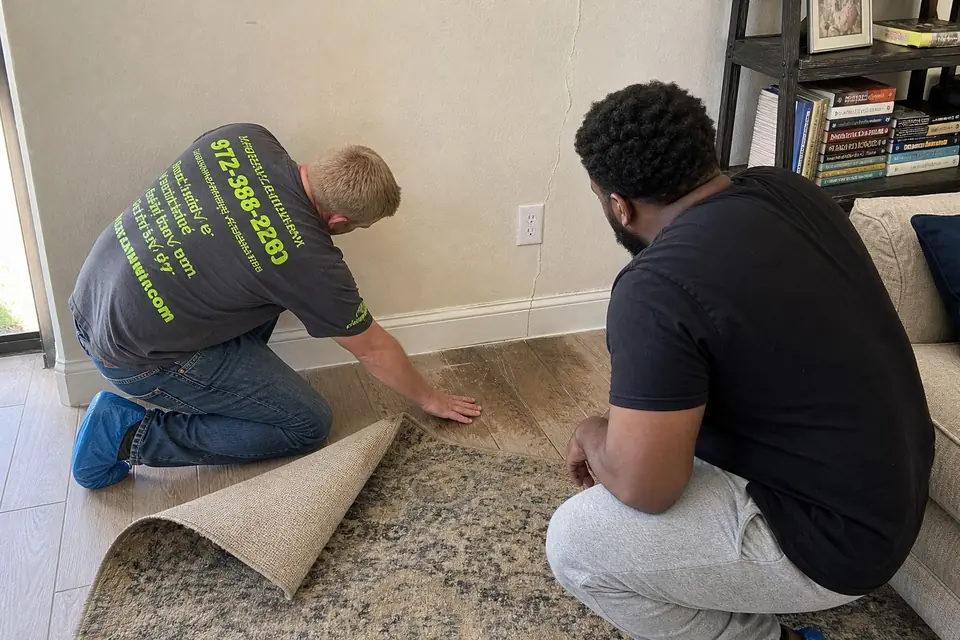
- Your water bill jumps, but your family hasn’t used more water than usual.
- You hear water running or hissing when every faucet, toilet, and appliance is off.
- A spot on your floor feels warm under bare feet. That often points to a leak in a hot water line.
- Carpet feels damp, wood or laminate starts to cup or lift, or tile grout stays dark in one area.
- You notice a musty smell or mildew near the base of a wall with no plumbing fixture around it.
- Your water heater seems to run all the time, or you run out of hot water faster than before.
- Water pressure drops at several fixtures at once, not just one.
One sign alone doesn’t prove much. Two or three together is when a slab leak becomes the likely answer.
Before you assume the worst, rule out the usual suspects. A toilet with a worn flapper can run quietly all day and push your bill up. Drop a little food coloring in the tank. If color shows up in the bowl within 15 minutes or so without flushing, you’ve found your leak, and it’s a cheap fix. A broken sprinkler head or irrigation line can also make your bill jump, and so can a dripping outdoor faucet. If you see water pooling near an indoor air handler or a wet spot on a ceiling, that’s more likely a clogged AC drain line than anything under your floor.
Here’s a simple check you can do yourself. Turn off every faucet, appliance, and your sprinkler system. Then look at your water meter, usually in a box near the street. Most meters have a small triangle or dial that spins when water is moving. If it’s still spinning with everything off, water is going somewhere it shouldn’t.
Next, close the main shut-off valve where the water line enters your house. If the meter stops, the leak is inside your home, and the slab is a real possibility. If the meter keeps moving, the leak is likely in the yard line between the meter and your house. That’s still a repair, but it isn’t a slab leak, and it’s usually easier to reach.
If your meter test points inside and you’re seeing a warm floor, damp flooring, or the sound of running water, it’s time to have the leak located with proper equipment instead of guessing where to break concrete.
Why Irving’s Older Homes Are More Likely to Develop Slab Leaks
If your Irving home has a few decades on it, the water lines under your floor are as old as the house. Nobody has looked at them since the concrete was poured. They can’t be checked during a normal plumbing visit, and they don’t get replaced when you remodel a kitchen or a bathroom. They just keep working until one day they don’t.
Age alone doesn’t cause a slab leak. It gives the slow causes more years to do their work. Here’s what’s usually wearing on those older lines:
- Rubbing against concrete and gravel. Hot water lines grow a tiny bit every time hot water runs, then shrink as they cool. Over thousands of showers and loads of laundry, a pipe pressed against concrete or rock can wear a thin spot and finally a pinhole.
- Water wearing the pipe from the inside. Hard water and everyday water chemistry slowly thin the walls of metal pipes over many years. A pipe that held up fine for 20 years can start to fail in several spots around the same time.
- Years of ground movement. The clay soil shifting we covered above doesn’t happen once. It happens every wet spring and every dry summer, and an older home has been through a lot more of those cycles.
- Past foundation work. If your home’s foundation has ever been leveled or repaired, the slab moved, and the pipes inside it moved too. That can put new stress on lines that were already tired.
Older homes often have one more thing going on that’s easy to miss. Many have metal drain lines under the slab, not just water supply lines. A cracked or corroded drain pipe can leak under your floor too. Since drain lines aren’t under pressure, your water meter won’t spin and the meter test won’t catch it. Instead you might notice a sewer smell, slow drains, or a damp spot near a bathroom or kitchen. If your meter test came back clean but those signs keep showing up, mention it when you call. It changes what we look for.
Here’s why the age of your home matters for the repair itself. In a newer house, a slab leak is often one bad spot on otherwise healthy pipe. Fixing that one spot can make good sense. In an older house, the pipe on either side of the leak has lived the same life as the part that failed. If the line is worn thin in one place, it may be worn in others. That’s when going around the old line, called a reroute, can be the better choice instead of opening the slab again next year.
That isn’t a rule that every older home needs a reroute. Some older lines are still in good shape, and a spot repair is the right call. The point is that it’s a real decision, and your home’s age is one of the facts that should drive it.
When you talk with us, it helps to know a few things: about when your home was built, whether you’ve had a slab leak before, and whether the foundation has ever been repaired. Those answers help our team find the leak faster and give you an honest picture of whether a spot repair will hold up or whether rerouting the line is worth it.
Spot Repair vs. Reroute: Making the Call That Fits Your Home
Once the leak is pinned down, there are two ways to stop it. You can fix the one bad spot, or you can go around the old line with new pipe. Neither one is always right. The better choice depends on where the leak sits, how deep it is, and how much life the rest of that pipe has left.
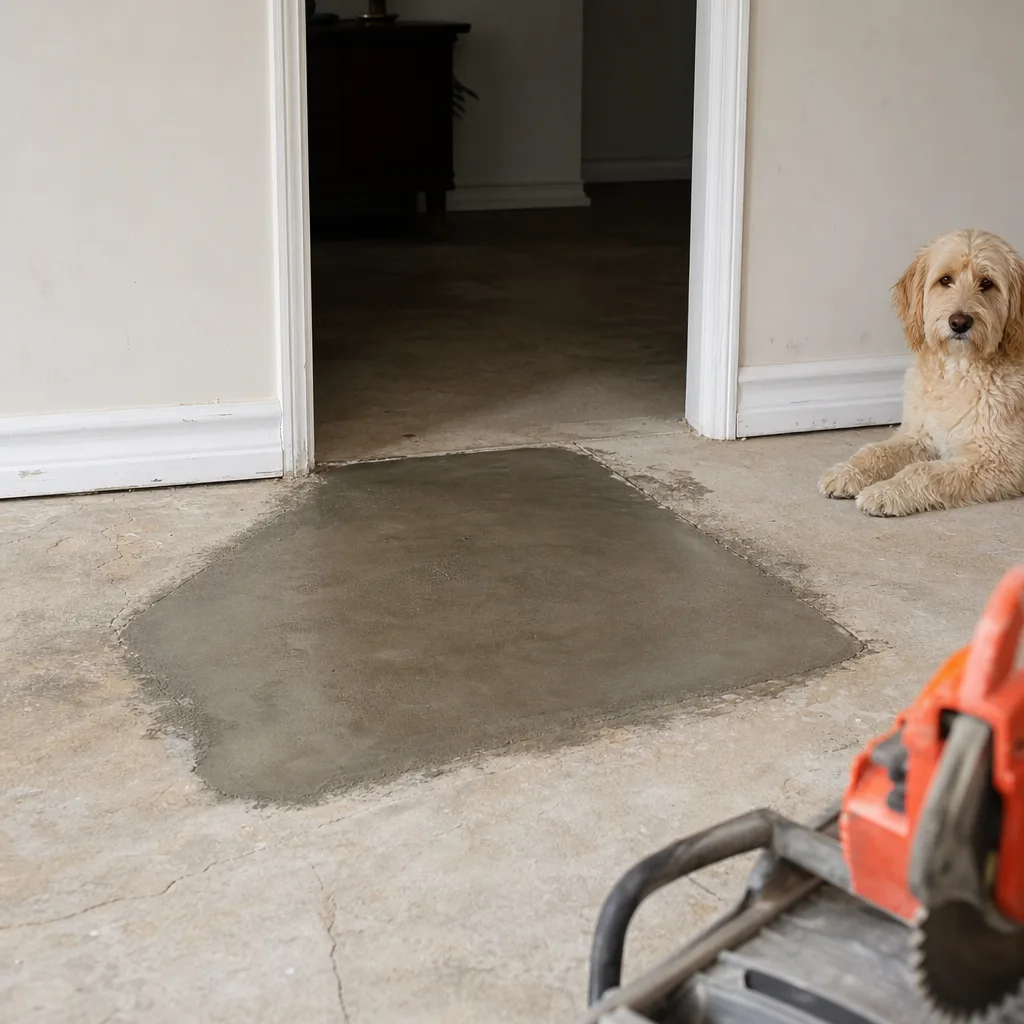
A spot repair means opening the concrete right above the leak, cutting out the damaged piece of pipe, putting in a new section, and closing the slab back up. A reroute means leaving the old line where it is and running new pipe a different way, often through the walls or attic, so water never goes back under the slab on that run.
A spot repair usually makes sense when:
- The leak is in one clear spot, and the pipe around it is still in good shape.
- The leak sits under flooring you don’t mind opening, like a utility room, garage edge, or tile you can patch.
- It’s the first slab leak your home has had.
A reroute often makes more sense when:
- The leak is deep, or sits under the middle of the house where getting to it means a lot of digging.
- It’s right under hardwood, a kitchen island, or a finished floor you’d rather not tear up.
- You’ve had a slab leak on that line before, or the pipe looks worn past the leak itself, which is common in the older homes we covered above.
One thing to think about with a reroute: if new lines go through the attic, they need to be insulated well. North Texas attics get extremely hot in summer, and a hard winter freeze can reach pipes up there too. Done right, that’s not a problem. It’s just a step you shouldn’t skip.
Now, what it costs. For our most common slab leak job, where we locate the under-slab leak and repair or reroute the line to stop it, the price is typically $2,000 to $3,800. Across all slab leak repairs, our typical range is $2,000 to $6,000. Where your job lands depends on three things: the leak’s location and depth, whether it’s a reroute or a spot repair, and how much access through the slab is needed.
Here’s what that price covers so nothing surprises you later. Included: finding the leak, the repair or reroute, and testing to make sure it’s holding. Not included unless stated: restoring your slab or flooring, work on additional lines, and permits. If a spot repair means opening the floor in a finished room, plan for flooring work afterward. That’s often a big reason homeowners lean toward a reroute.
Our service-call fee is $26 to $99, and it’s credited toward the repair if you move forward with Xtreme Air Services. If the bigger job is the right call but the timing is tight, flexible financing is available on qualifying larger jobs, on approved credit.
You’ll see the price and talk through both options before any concrete gets touched. If a spot repair will hold up, we’ll tell you so. If we think it won’t, we’ll tell you that too, and explain why.
Have questions? We’re happy to help.
Call Today, Get Service Today. Xtreme Air Services — Irving is ready to help.
What’s Included, What’s Not, and What It Costs
You’ve already seen our price ranges and what’s in them. Here’s how to use those numbers once a real quote is in your hand, so you know your full cost before any concrete gets cut.
Whether you call us or someone else, a good slab leak quote should answer these questions in plain words:
- Has the leak been located, or is the price based on a guess? A quote built on a guess is a quote that can grow.
- Is it a spot repair or a reroute? If it’s a reroute, where will the new pipe run: walls, attic, or both?
- Is the line tested after the work to prove it’s holding?
- Who closes up the concrete, and who handles the flooring on top of it?
- Are permits in the price or left out?
- Is it a set price, or does it keep climbing by the hour?
If a quote can’t answer those, ask until it does. You’re about to open your floor. You deserve to know exactly what you’re paying for.
The biggest cost people forget is what sits on top of the slab. Our price covers stopping the leak. It doesn’t cover putting your floor back unless that’s stated. If the leak is under a hallway with wood flooring, or under tile that’s no longer made, the flooring bill can be a real part of your total. It helps to get a flooring estimate early so you see the whole picture, not just the plumbing piece.
It’s also worth a call to your homeowners insurance before flooring gets pulled up. Policies differ a lot on what they’ll pay for, like the pipe itself versus the water damage it caused. Take photos of any wet carpet, cupped boards, or stained grout first. That way you have them if you need them.
Sometimes testing after a repair turns up a problem on a different line. That’s separate work, not part of the original price. With our upfront flat-rate pricing, you’d see that price and decide before anything moves forward. Nothing gets added quietly to your bill.
Timing won’t change your price either. A slab leak doesn’t wait for Monday morning, and there’s no extra charge for nights or weekends. The service-call fee we mentioned earlier still gets credited toward the repair if you go ahead with us.
If your meter test pointed inside the house and you’re seeing a warm spot, damp flooring, or a bill that won’t come down, the next step is having the leak found. Then you can make your choice with real numbers in front of you.
Call 469-200-2166
Watch Our Video
See How We Handle Slab leak repair in Irving
Xtreme Air Services — Irving
How a Licensed Plumber Handles Diagnosis and Repair
Finding a slab leak is the hardest part of fixing one. The pipe is hidden under concrete, and water can travel along it before showing up on your floor. So the wet spot you see may not sit right on top of the leak. Good work means one opening in the right place, not a row of holes made by guessing.
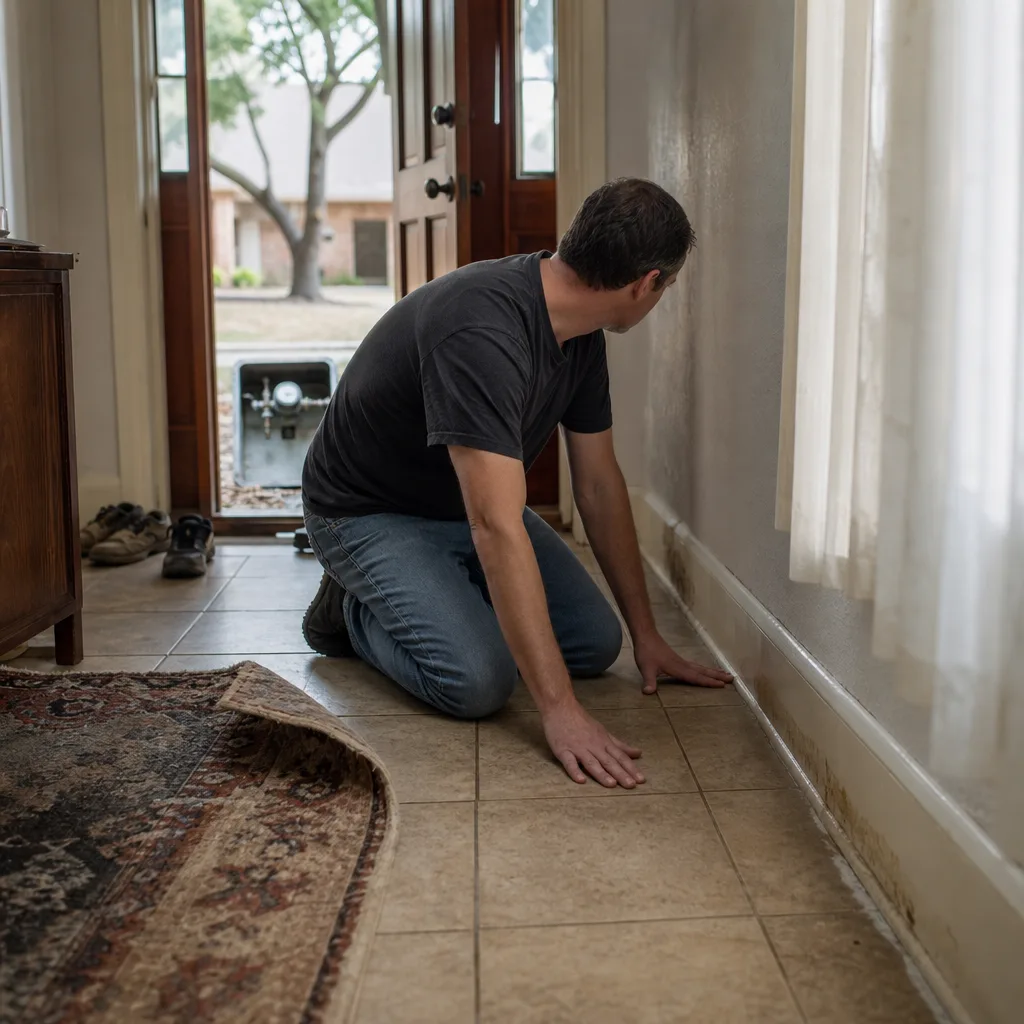
Here’s how a careful plumber narrows it down, step by step:
- Isolate the problem. The plumber closes off parts of the system and puts a pressure gauge on the lines. If the hot side loses pressure and the cold side holds, the search is now half as big.
- Trace the pipe’s path. Line-locating equipment shows where the pipe runs under your slab. Pipes rarely go in a straight line from the meter to the faucet.
- Listen for the leak. Water forced out of a pinhole makes a hiss. Acoustic listening gear picks up that sound through concrete and flooring, and it gets louder as the plumber gets closer.
- Look for heat. On a hot water line, a thermal camera can show a warm streak or spot on the floor that you can’t see with your eyes.
Say you’ve got a warm patch near the kitchen. The pressure test points to the hot line, tracing shows that line runs under the kitchen and hallway, and the listening gear is loudest a few feet from where you first felt the warmth. That’s the spot. One method alone can mislead. Several that agree are what you want before concrete gets cut.
Drain lines need a different approach, since they aren’t under pressure. A sewer camera inspection lets the plumber see cracks or breaks from inside the pipe, so there’s no guessing there either.
Once the leak is pinned down and you’ve picked spot repair or reroute, the work follows a clear order. For a spot repair, the plumber cuts a small opening in the slab, digs down to the pipe, removes the damaged piece, and joins in new pipe. For a reroute, the new line runs on its new path and gets connected, and the old run is shut off.
Then comes the step that matters most: testing. The line is put back under pressure and watched to make sure it holds before anything gets closed up. If a repair isn’t tested, you’re trusting it on faith. Testing is part of our slab leak repair price, along with finding the leak and the repair or reroute itself.
One more thing to know. In Texas, plumbing work has to be done by a state-licensed plumber, and you can look up any plumber’s license through the Texas State Board of Plumbing Examiners. It only takes a minute, and it’s worth doing for any job that involves breaking into your foundation. Xtreme Air Services is a licensed and insured plumbing contractor, and our technicians are background-checked and drug-tested before they ever come to your door.
Be careful with anyone who wants to start breaking concrete before they’ve shown you how they found the leak. A good plumber can tell you what the tests showed and why they’re cutting in that spot. If they can’t explain it, it’s fair to ask them to keep looking first.
Frequently Asked Questions
Common questions about Slab leak repair
How serious is a slab leak?
A slab leak is serious because it can damage your foundation and flooring the longer it runs. Water escaping under your home softens soil in one spot while the clay around it keeps shifting, which can lead to uneven settling under your slab. Left alone, a leak can also soak subfloors, warp wood or laminate, and grow mold behind walls. It won’t fix itself, so the sooner it’s found and stopped, the less damage you deal with.
Is a leak at my water meter the same thing as a slab leak?
No, a leak at your water meter is a different repair than a slab leak. The meter test described above helps you tell them apart: if your meter keeps spinning after you close the main shut-off valve, the leak is in the yard line between the meter and your house, not under your slab. That yard line repair is usually easier to reach since it doesn’t mean opening your foundation. If the meter stops when you close that valve, the leak is inside your home and a slab leak becomes the likely cause.
Ready to Get Started?
Call (469) 200-2166 Today, Get Service Today.