


Sewer Line Repair in Plano: Repair vs. Replacement, Explained
Sewer line problems confirmed before anyone digs, with a step-by-step repair and a quote that shows what's included.
What’s Covered on This Page
- Repair Means Fixing a Section, Not Replacing the Whole Line
- Signs Your Sewer Line Needs Repair
- When It’s Just a Clog, Not a Line Break
- Cast-Iron Lines Are a Common Culprit in Older Plano Homes
- How the Repair Process Works, From Locate to Verified Flow
- How long does a sewer line repair usually take?
- Will my yard or driveway be torn up for a sewer line repair?
- Can I use water in my house while the sewer line is being repaired?
Repair Means Fixing a Section, Not Replacing the Whole Line
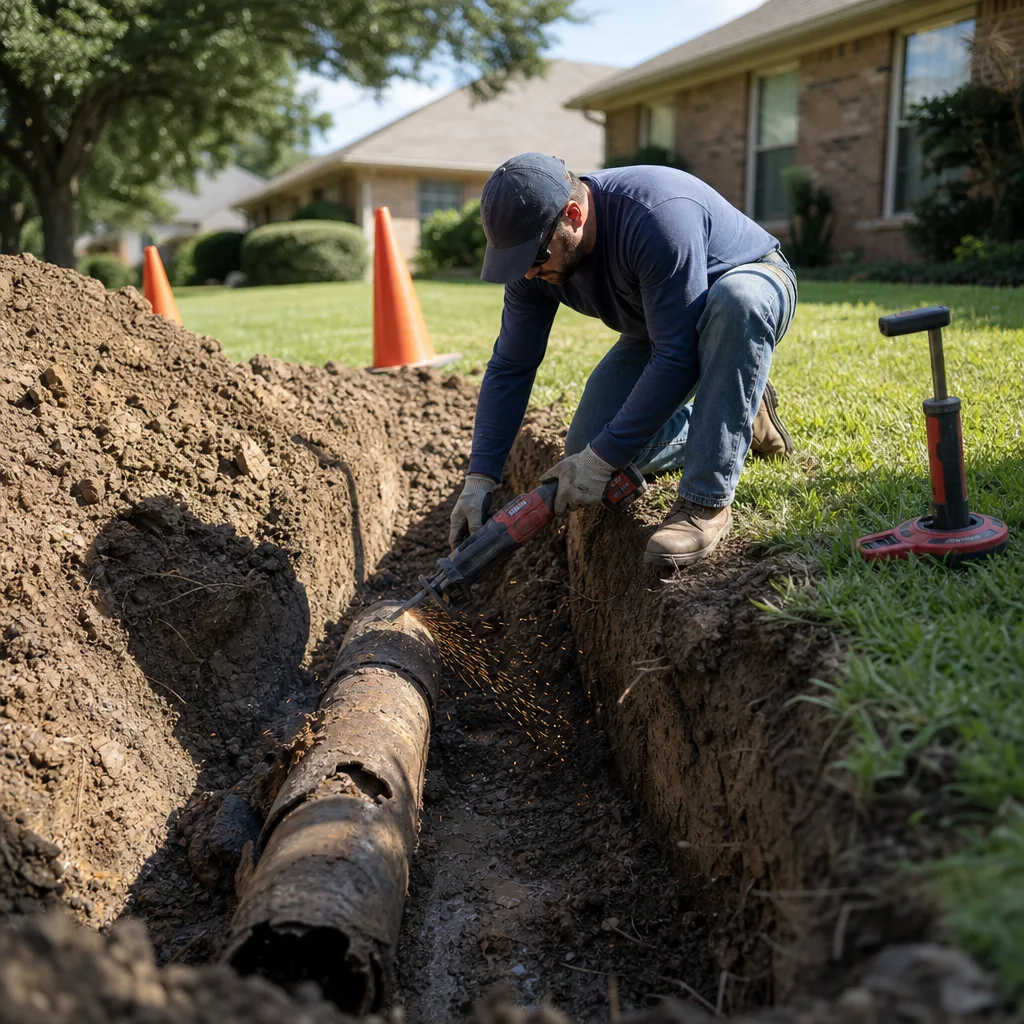
When you hear “sewer problem,” it’s easy to picture your whole yard torn up and a bill to match. Most of the time, that’s not what you’re facing. A sewer line usually fails in one spot. A joint pulls apart, a stretch of pipe cracks, or a low spot sags and starts holding waste. The rest of the line can still be in decent shape.
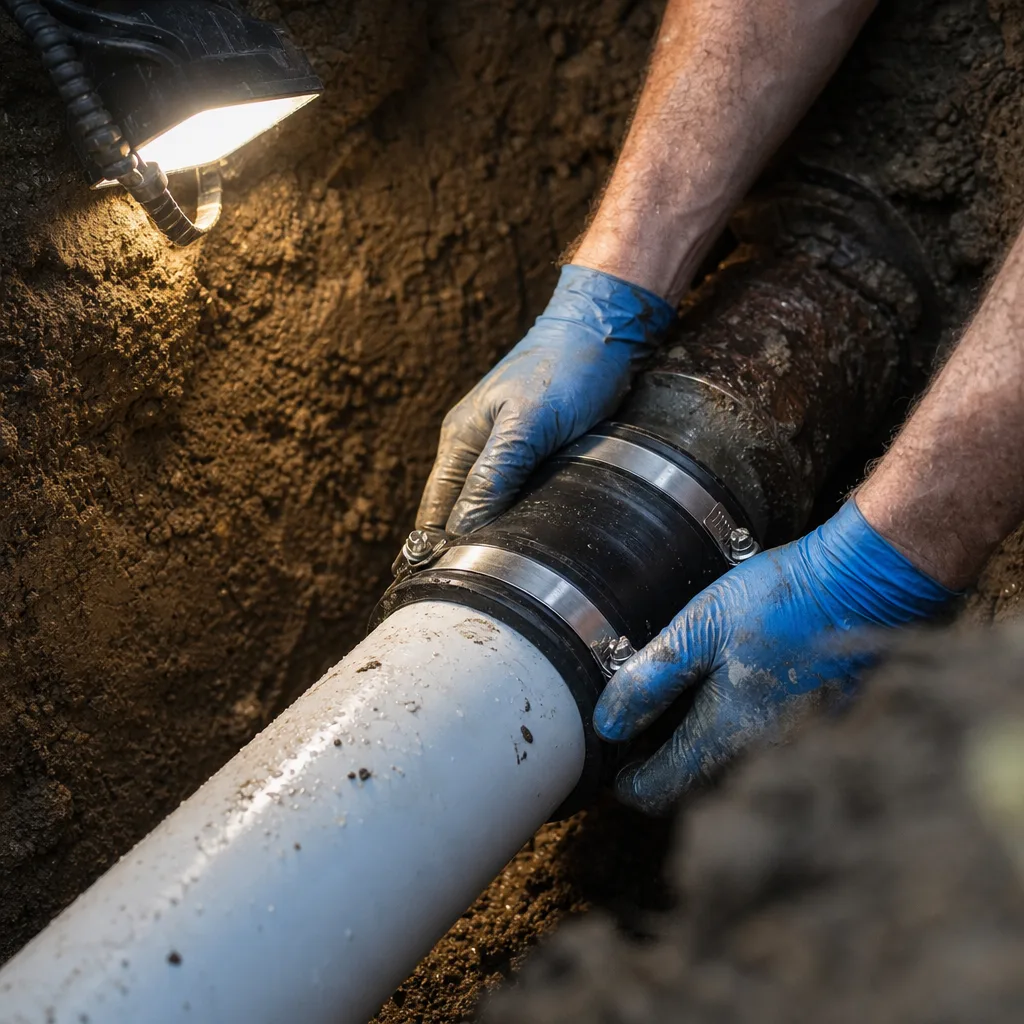
That’s what a repair is for. We find the damaged section, repair or replace just that piece, and then make sure everything drains the way it should. You pay to fix what’s broken, not to rebuild what isn’t.
Here’s what our most common sewer line repair includes, priced at $1,500 to $4,000:
- Locating the damaged section of your sewer line
- Excavation or access to reach it
- The repair itself, fixing or replacing that section
- Testing to verify proper flow before we call it done
And here’s what it doesn’t include, so nothing catches you off guard: a full line replacement, putting your landscaping or concrete back the way it was, and permits, unless we’ve stated them in your quote.
Across all sewer line repairs, our typical range is $1,500 to $7,000. Where your job lands depends on three things:
- Depth and length of the damaged run. A short, shallow section is a smaller job than a long one buried deep.
- Access and excavation. A break under open lawn is easier to reach than one under a driveway, patio, or tree roots.
- Whether trenchless methods are used. Trenchless sewer repair can fix pipe with far less digging, but it isn’t the right fit for every break.
North Texas soil plays a part here too. The clay around Plano swells when it’s wet and shrinks during dry spells. That steady push and pull can shift buried pipe, which is one reason a single joint or section can fail while the rest of the line holds up fine.
Before any digging starts, you’ll know the price. There’s a $26 to $99 service-call fee, and it’s credited toward the repair if you go ahead with Xtreme Air Services. If the job is on the larger side, flexible financing is available on qualifying installations and larger jobs, on approved credit.
Sometimes the damage really does reach too far for a section repair to make sense. If that’s what we find, we’ll tell you straight and explain why, so you can decide with the facts in front of you.
Signs Your Sewer Line Needs Repair
A damaged sewer line rarely shows up as one big event. It usually starts with small clues that are easy to brush off. The key is knowing which clues point to the main line under your yard and which ones are just a clog in one drain.
Your sewer line is the single pipe that carries everything from your home out to the city main. So when it has a problem, you tend to see trouble in more than one place at a time.
Watch for these signs inside your home:
- Several drains are slow at the same time, like the kitchen sink, the tub, and a toilet all in the same week.
- Water comes up in the tub or shower when you flush a toilet or run the washing machine.
- Toilets gurgle or bubble after you drain a sink, even when nobody’s flushing.
- A sewage smell hangs around a floor drain, a bathroom, or the laundry area and doesn’t go away after cleaning.
- The same clog keeps coming back a few weeks after a drain cleaning.
That last one matters. If a drain gets cleared and then backs up again soon after, the clog usually isn’t the real problem. Something in the line is catching waste over and over. That could be a cracked section, a joint that’s pulled apart, roots working in through a gap, or a low spot where waste sits instead of flowing.
Your yard can tell you a lot too. Walk the path between your house and the street and look for:
- A patch of grass that’s greener or grows faster than the rest of your lawn.
- A soggy or sunken spot that stays wet even when it hasn’t rained.
- A sewer smell outside near the same spot.
- Water or waste sitting in or around your outdoor cleanout, the capped pipe that gives access to the line.
Leaking sewage feeds the grass and softens the ground above the break. In Plano, where the soil shifts as it swells and dries, a sunken spot can also mean the pipe underneath has moved out of line.
Here’s the honest part. If only one drain is slow, like the bathroom sink, and everything else in your home drains fine, you most likely don’t have a sewer line problem. That’s usually hair, soap, or grease stuck close to that fixture. A plunger or a basic drain cleaning often fixes it, and you don’t need anyone digging in your yard.
The same goes for one slow drain after a holiday meal or a house full of guests. Give it a day of normal use. If it clears up and stays clear, you’re probably fine.
Signs point you in the right direction, but they can’t show you exactly what’s wrong or where. A sewer camera inspection lets you see inside the line, so you know if there’s a break, how big it is, and exactly where it sits. That’s what tells you whether a section repair will do the job, and it keeps you from paying to dig in the wrong place.
When It’s Just a Clog, Not a Line Break
A full house backup feels like proof your sewer line is broken. It isn’t always. Your main line can clog the same way a sink drain does, just farther down and with more at stake. When that’s the case, you need the line cleared, not repaired.
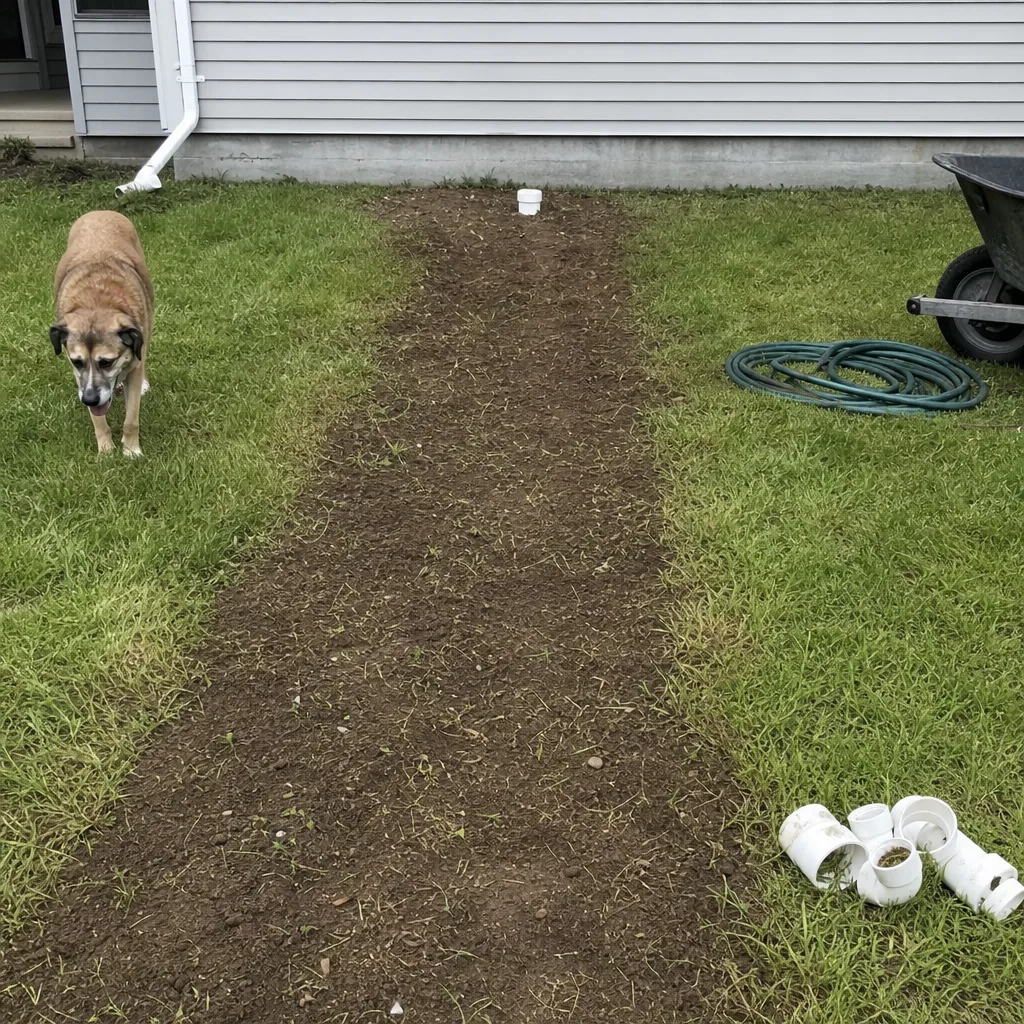
Lots of things can block a healthy pipe without hurting it:
- Wipes labeled “flushable” that don’t break down the way toilet paper does
- Grease and cooking oil poured down the kitchen sink, cooling into a thick layer inside the pipe
- Paper towels, feminine products, or cotton swabs that got flushed
- A small toy or other object a child sent down the toilet
- Heavy use all at once, like a long day of laundry plus a full house of guests
None of these crack a pipe or pull a joint apart. They just sit in the way. A standard drain cleaning can often punch through the blockage. For grease that coats the pipe walls, hydro jetting uses high-pressure water to scrub the inside of the line clean.
So how do you know which one you’ve got? The best clue is what happens after the line is cleared. If everything drains well and it stays that way for months, the pipe was most likely fine. You had a clog. You don’t need anyone digging up your yard.
If it backs up again within a few weeks, that tells a different story. A healthy pipe doesn’t keep catching waste over and over. That’s when it makes sense to look inside the line with a camera, as covered above, before you spend more on repeat cleanings.
Tree roots fall in between. Roots only get into a sewer line through a gap, so if they’re in there, something has opened up. But a little root growth at one joint doesn’t always mean the section has to be dug up right away. Light roots can often be cut back. Whether that joint needs a repair now or can be watched depends on how bad the gap is and how fast the roots come back. That’s a judgment call you should make after seeing the inside of the pipe, not before.
There’s also something you can do on your own that costs nothing. Cut back on what goes down your drains. Keep grease in a can and toss it in the trash. Throw wipes away, even the ones that say flushable. Only flush toilet paper. If your line has had one clog, these habits go a long way toward making sure it was the only one.
If your house backed up once, the line got cleared, and life went back to normal, you can most likely stop worrying. A sewer line repair is for a pipe that’s damaged. A clog that’s gone and stays gone isn’t one.
Need help with Sewer line repair?
Call Today, Get Service Today. Xtreme Air Services — West Plano is ready to help.
Cast-Iron Lines Are a Common Culprit in Older Plano Homes
If your home was built before plastic pipe became the norm, there’s a good chance your sewer line is cast iron. For decades it was the standard drain pipe in American homes. It’s heavy, strong, and quiet, and it can last a long time. It doesn’t last forever, though. When cast iron starts to fail, it usually happens slowly and from the inside out.
Here’s what happens to cast iron over the years:
- Rust builds up inside the pipe. Over time the walls get rough and bumpy. Instead of sliding past, waste and paper catch on that rough surface.
- The bottom of the pipe wears thin. Water runs along the bottom every day, so that’s where the metal often wears through first. The pipe can look solid from the top while the bottom is nearly gone.
- Cracks form. Thinned metal can split, especially when the ground around it moves. In Plano’s clay soil, that movement is part of everyday life.
- Joints open up. Older cast-iron pipe was joined in sections. When those joints loosen, roots can find the gap and grow inside.
That’s why cast iron and repeat clogs go together. A rough, narrowed pipe catches waste over and over, even when nothing heavy is going down the drain. If your drains keep backing up after cleanings and your home has some age on it, the pipe itself may be part of the story.
You can often find out what you have without calling anyone. Look at your outdoor cleanout, or any drain pipe you can see in the garage or a utility area. Cast iron is dark gray or black, feels like heavy metal, and may show rust. PVC is white or cream-colored plastic. Keep in mind that some homes have a mix. A past repair may have swapped part of the line for PVC, while the rest is still the original iron.
Finding cast iron doesn’t mean you need a whole new line. Plenty of older cast-iron pipe still works fine. If one section has cracked or a joint has failed, that piece can usually be cut out and replaced with new pipe tied into the old iron on both ends. That’s the kind of section repair this page is about.
What changes the answer is how far the wear goes. One bad spot in an otherwise sound pipe is a repair. If the bottom of the pipe has worn thin along most of its length, patching one piece just moves the next failure a few feet down the line. A camera inspection shows which one you’re dealing with, because you can see the inside of the pipe instead of guessing from its age.
Trenchless sewer repair can work on some cast-iron lines, but it depends on the pipe’s condition. A pipe that’s badly broken or out of shape may need to be dug up and replaced instead. You’ll want that decision made from what the camera shows, so you’re paying for the repair your pipe needs and nothing more.
Watch Our Video
See How We Handle Sewer line repair in Plano
Xtreme Air Services — West Plano
How the Repair Process Works, From Locate to Verified Flow
A sewer line repair isn’t a mystery dig. It follows four steps: find the problem, reach it, fix it, and prove the water flows again. All four are part of our most common repair job. Here’s what each one looks like from your side of the fence.
Step 1: Locate the damaged section. The camera shows what’s wrong inside the pipe. The next job is figuring out exactly where that spot sits under your yard. A locating tool picks up the camera head’s signal from the surface, so the break can be marked on the ground above it. That mark is what keeps the dig small. Before anyone breaks ground, underground utility lines like gas, electric, and cable get marked too, so nothing gets hit by accident.
Step 2: Reach the pipe. For a dig-and-replace repair, that means opening a hole right over the marked spot, big enough to work in safely and no bigger. Grass and soil come out and get set aside. If the break sits under a sidewalk or driveway, part of that surface may have to come up. When trenchless sewer repair fits your pipe, access can be as small as one or two openings instead of a trench.
Step 3: Make the repair. Once the pipe is exposed, the bad section gets cut out. New pipe goes in its place and is joined to the good pipe on each side with couplings made for the job. Getting the slope right matters here. Sewer lines drain by gravity, so the new piece has to tilt the right way and sit on firm, packed ground. If it doesn’t, you can end up with a low spot that holds waste, which is the same kind of problem you were trying to fix.
Step 4: Verify proper flow. A repair isn’t finished just because the new pipe is in. Water gets run through the line to confirm it drains the way it should. A camera pass through the new section is the clearest proof, because you can see a clean, straight pipe with tight joints. Only then does the hole get filled back in and packed down. Keep in mind that putting landscaping or concrete back the way it was isn’t part of the standard repair.
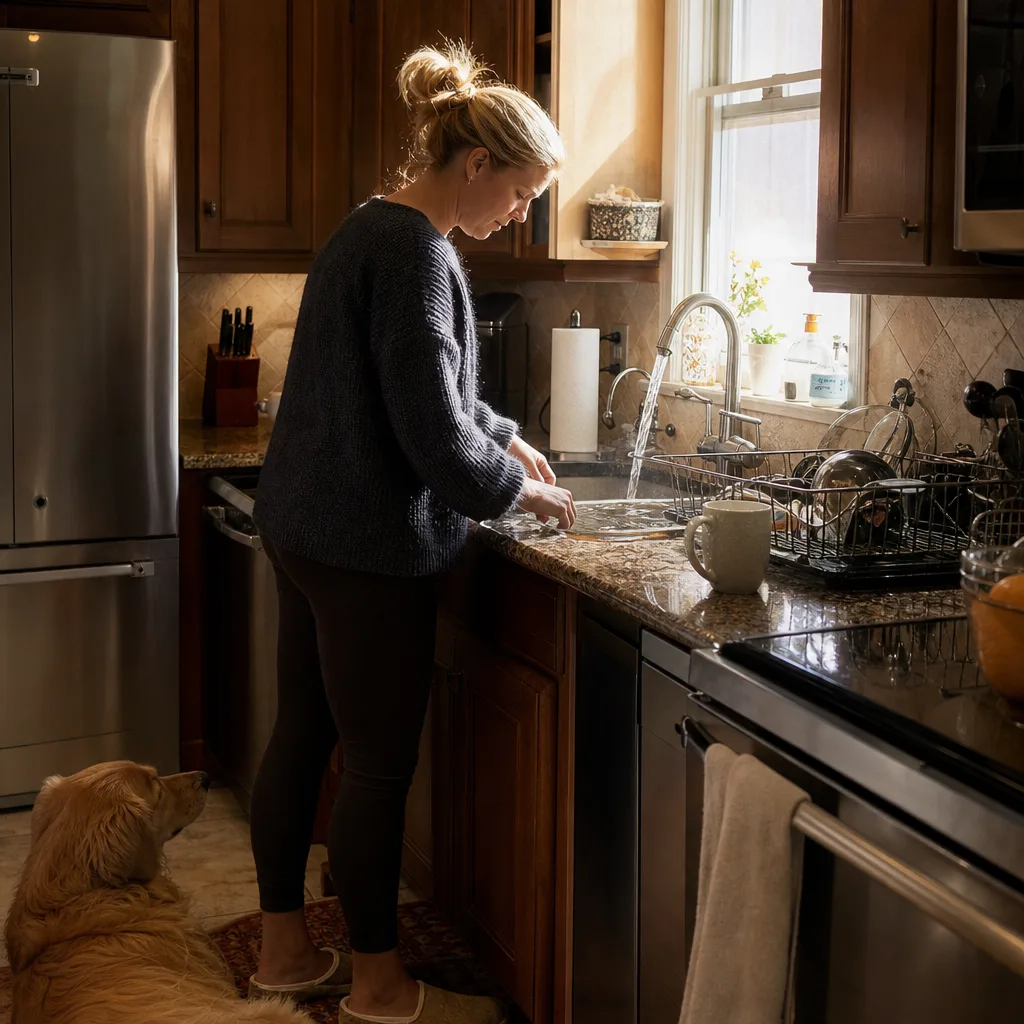
What should you do while the work is going on? Not much. Plan on using as little water as you can while the line is open. That means holding off on laundry, dishwashers, and long showers. Keep kids and pets away from the open hole. If you have sprinkler lines, an invisible pet fence, or anything else buried near the marked spot, tell your technician before digging starts.
You’ll know the price before any of this begins. Our licensed and insured, background-checked technicians explain what they found and what the fix is. You approve the upfront price, and only then does the work start.
Call now
Frequently Asked Questions
Common questions about Sewer line repair
How long does a sewer line repair usually take?
Most section repairs take one day, from locating the break to verifying flow again. The four steps are locate, access, repair, and test, and all four happen in a single visit for a typical job. Larger jobs with deep pipe or hard access, like under a driveway, can take longer.
Will my yard or driveway be torn up for a sewer line repair?
Only the small area right over the damaged section gets opened, not your whole yard. A locating tool marks the exact spot of the break so the dig stays as small as possible. If the break sits under a driveway or sidewalk, part of that surface may need to come up, but putting it back isn’t part of the standard repair.
Can I use water in my house while the sewer line is being repaired?
You should cut back on water use while the line is open, since the pipe can’t drain during the repair. Hold off on laundry, the dishwasher, and long showers until the work is done. Keep kids and pets away from the open hole until it’s filled back in.
Ready to Get Started?
Call (469) 217-9095 Today, Get Service Today.