


Whole-Home Water Filtration Installation in Dallas
Point-of-entry filtration for every tap in the house, compared honestly with softeners and reverse osmosis.
What’s Covered on This Page
- Matching the Right Filtration System to Your Dallas Water
- What Drives the Cost of Your Installation
- What Happens on Installation Day
- When Whole-Home Filtration Isn’t the Right Fit
- Why Licensing Matters for an In-Home Water Line Install
- How long does a whole-home water filtration installation take?
- Will a whole-home filter lower my water pressure?
- Do I need a permit to install a whole-home water filter in Dallas?
Matching the Right Filtration System to Your Dallas Water
There’s no single best whole-home filter. There’s only the best one for your water. Two homes on the same street can need different setups because one has older pipes and the other has a family of six taking back-to-back showers. So start with what’s bothering you, then match the system to it.
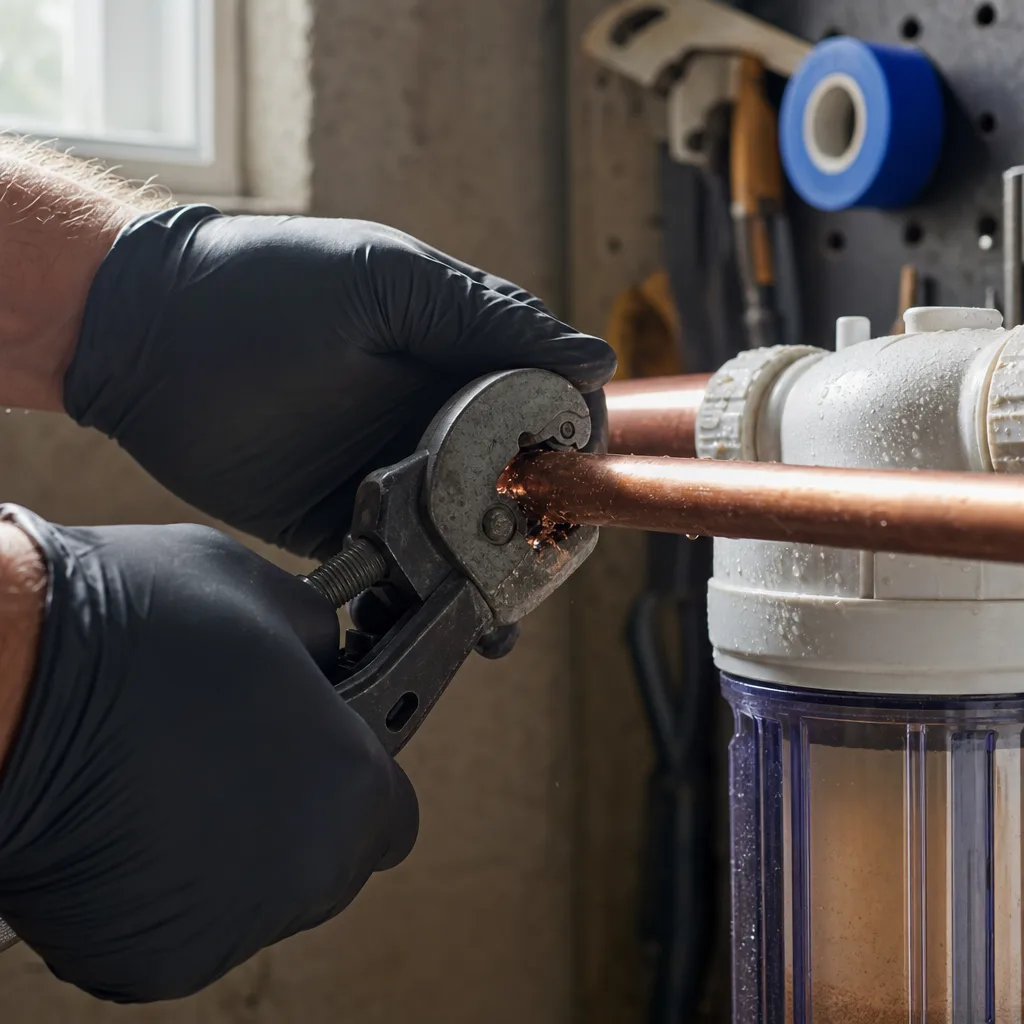
Here are the main types we install and what each one is built to handle:
- Sediment filters catch the gritty stuff: sand, silt, and rust flakes. If you see specks in your sink or your faucet screens clog up, this is usually the first stage. It also protects every filter after it.
- Carbon filtration targets taste and smell. City water is treated with disinfectants like chlorine or chloramine to keep it safe on the way to you. A carbon stage takes out that pool-like taste and odor before the water reaches your tap, shower, and ice maker.
- Iron filtration handles orange or brown stains in tubs, toilets, and laundry. It’s most common on well water, so most city homes won’t need it.
- UV water purification uses ultraviolet light to knock out bacteria and other germs. It’s a strong choice for well water or for anyone who wants an extra layer of protection.
Many homes do best with more than one stage, like a sediment filter in front of a carbon tank. More stages aren’t automatically better, though. Each one should solve a problem you have.
One thing trips up a lot of people. A filter doesn’t fix hard water. If your real complaint is white crust on faucets, spotty dishes, or scale building up in your water heater, that’s a hardness problem, and water softener installation is the fix. Some homes pair a softener with a carbon filter to get both soft water and better taste. If you want truly purified drinking water at the kitchen sink, a reverse osmosis system under the counter works alongside a whole-home setup.
Size matters as much as type. A whole-home system has to keep up when your home uses the most water at once. Picture a shower running, the dishwasher going, and the washing machine filling, all at the same time. If the system is too small for that flow, you’ll feel it as weak water pressure. If it’s oversized, you’ve paid for capacity you’ll never use. We look at the number of bathrooms, the people in your home, and the size of your main supply line before we recommend anything.
That’s why the smartest first step is a water test. We offer water testing, so you’ll know what’s really in your water instead of guessing from a stain or a smell. Then you can choose a system that fits your water, your household, and your budget, and nothing you don’t need.
What Drives the Cost of Your Installation
Most whole-home filtration installs we do run $1,500-$4,500. Our most common job is a point-of-entry system at your main water supply that treats the whole house, fully connected and tested. That job usually lands between $2,100-$3,300. We price it by system type, so the number depends on the setup your water needs, not on how long we’re in your home.
Your water test and your household size decide which system fits. Once that’s settled, these five things move the price up or down:
- Filtration type and stages. A single sediment stage costs less than a sediment filter paired with a carbon tank. Each added stage adds parts and labor, which is why we only add a stage that solves a real problem.
- Flow rate and capacity. A bigger home with more bathrooms needs a system that can keep up at your busiest time of day. More capacity means a bigger system and a higher price.
- Condition of your existing plumbing. If the pipes at your main supply are old, corroded, or hard to tie into, we may need extra fittings or a short pipe repair to make a clean, leak-free connection.
- Drain access. Some systems flush themselves clean and need a nearby drain. If there isn’t one close to where the system goes, running a line to it adds work.
- Code upgrades. If something at the connection point doesn’t meet current code, it has to be brought up to standard before the new system goes in.
Here’s what you get for the installation price. It covers the system and materials, professional installation, all the connections, startup and testing, and haul-away of your old unit if you’re replacing one. You won’t be left with a used filter tank sitting in your garage.
Some items fall outside that price, and you should know about them before you decide:
- A plumbing loop, if your home doesn’t already have one. Many newer homes are built with a loop at the main line that makes a filter or softener easy to add. Many older homes don’t have one, so one has to be added first.
- Electrical work. UV systems and some self-cleaning valves need power nearby. If there’s no outlet where the system goes, that’s a separate job.
- Code corrections.
- Permits, unless your quote says they’re included.
We’ll tell you plainly if your home needs any of these. Since we handle plumbing and electrical too, we can quote that work on the same visit, so you don’t have to call in a second company.
To come out and look at your setup, we charge a $26-$99 service-call fee. If you go ahead with the work through Xtreme Air Services, that fee is credited toward the job. You’ll get upfront, flat-rate pricing and approve it before any work starts, so there’s no meter running while we work.
If paying all at once is hard, flexible financing is available on qualifying installations and larger jobs, on approved credit. Ask about it when we give you your quote. That way you can pick the system your water really needs, not just the one that fits this month’s budget.
What Happens on Installation Day
You’ve picked a system and approved your upfront, flat-rate price. Here’s what the day looks like, so nothing catches you off guard.
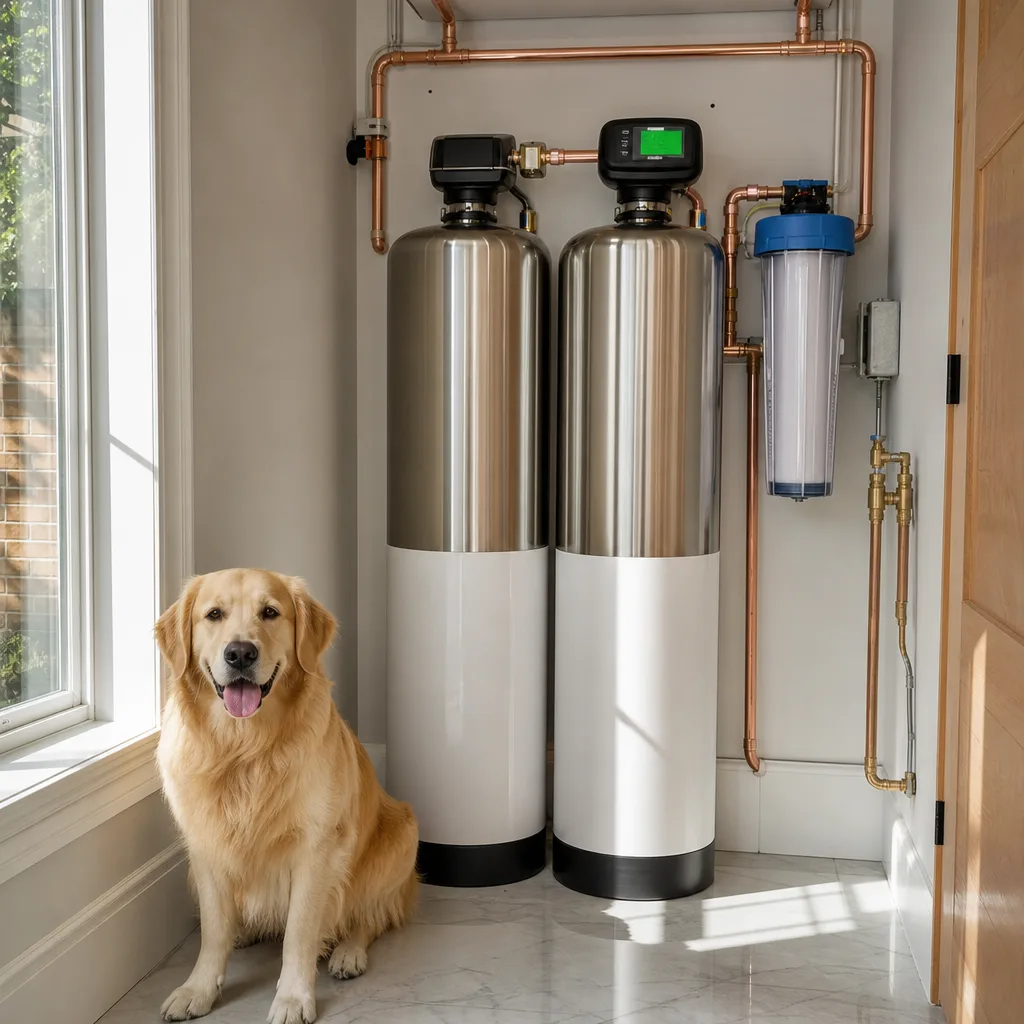
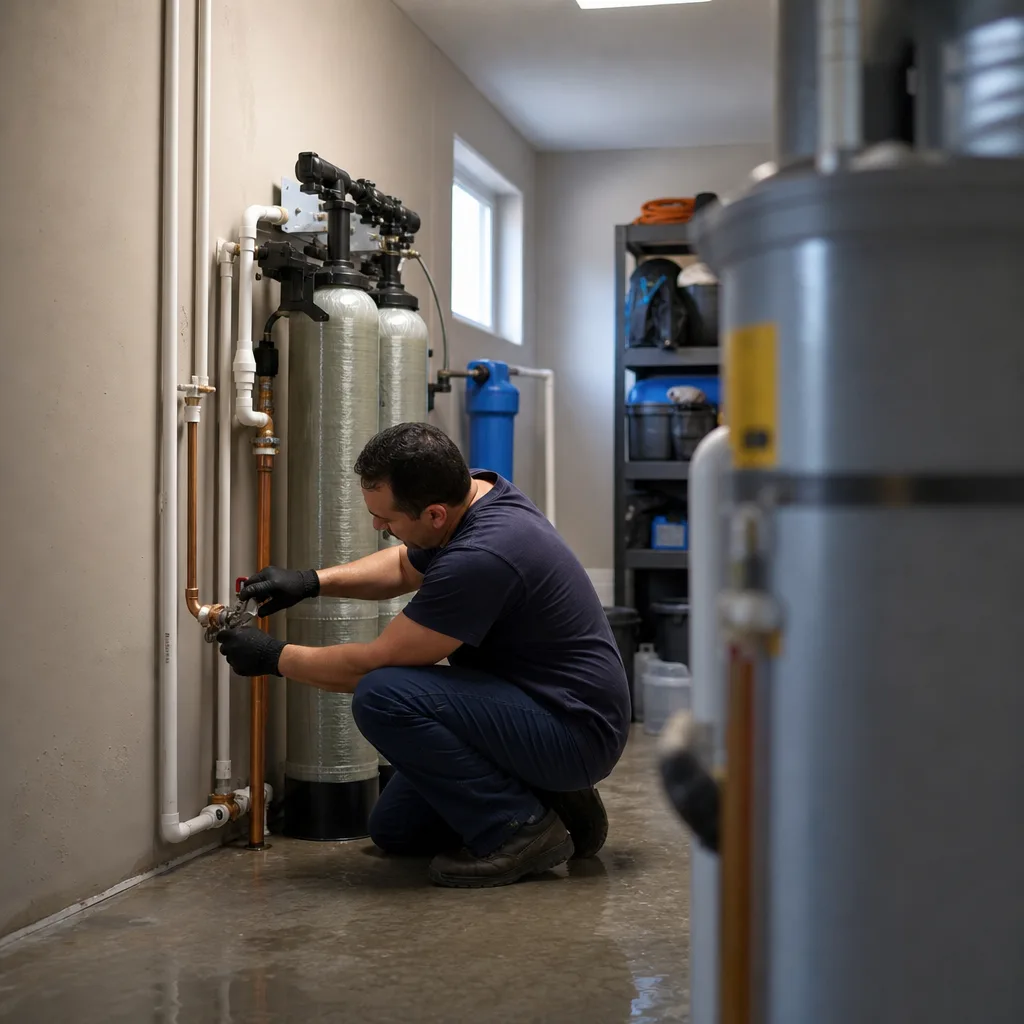
A whole-home filter goes where water first enters your house, before it splits off to the kitchen, bathrooms, and water heater. In Dallas, that’s often in the garage or on an outside wall near the main shutoff. Many older slab-on-grade ranch homes here have the line coming up in a tight spot. Many newer homes have a plumbing loop already in place. Either way, the system needs a level spot with room to change filters later.
To get ready, clear a few feet of space around that area. Move cars, storage bins, or yard tools out of the way. Plan on not using water for part of the visit, so start your laundry or dishwasher the night before.
A proper install follows these steps:
- Shut off the water at the main and drain the line so it can be opened safely.
- Remove the old unit if you’re replacing one. Haul-away is part of our installation price.
- Mount the system and tie it into your main line, or into your existing loop if you have one.
- Add a bypass valve. This lets you keep water running in the house while a filter is being changed or serviced.
- Connect the drain line on systems that flush themselves clean.
- Turn the water back on slowly and check every joint for leaks.
- Flush the new system. Fresh carbon media gives off fine black dust at first, and flushing clears it out before it reaches your taps.
- Run startup and testing to make sure water flows through every stage the way it should.
If your home needed one of the extra items from the cost section, like a new loop or a nearby outlet for a UV light, it gets done as part of this same job. You don’t have to wait on a second company.
Location matters in North Texas. A hard winter freeze can crack a filter housing or valve mounted on an outside wall. If your system has to go outdoors, ask how it will be protected from the cold. Ask before the work starts, not after the first January freeze.
Once the water’s back on, you can check the job yourself. Open a few cold taps around the house. Expect some sputtering at first while trapped air works out of the lines. That’s normal, and it should clear in a minute or two. After that, your water pressure should feel close to what it was before. A big drop can mean the system is too small or a valve isn’t fully open. Then look at the connections. They should be dry, and the bypass valve should be easy to reach.
Before the technician leaves, ask to be shown three things. First, how the bypass valve works. Second, where the filter housings open. Third, what kind of replacement filter or media your system uses and about how often it needs changing. Knowing these keeps your new system working on day 300 the way it did on day one.
Your installation is done by licensed and insured, background-checked and drug-tested technicians who respect your home. You should end the day with clean, better-tasting water at every tap, a dry and tidy install area, and no old tank left behind in your garage.
Not sure what your Whole-home water filtration installation project needs? Ask us.
Call Today, Get Service Today. Xtreme Air Services — North Dallas is ready to help.
When Whole-Home Filtration Isn’t the Right Fit
A whole-home filter is a good fix for the right problem. It’s also a real investment, and sometimes it’s the wrong one. Here’s when we’d tell you to hold off, even though it means you won’t be buying a system from us.
You only care about drinking water. If the shower and laundry water seem fine and you just want better water to drink and cook with, you don’t need to treat every gallon in the house. A fridge filter, a pitcher filter, or an under-sink reverse osmosis system handles that for much less money.
You’re happy with your water now. Dallas city water is treated before it reaches you. A whole-home carbon or sediment system improves taste, smell, and grit. It isn’t something every house needs. If nothing bothers you, it’s fine to leave things alone.
Your real complaint is hardness. As we covered above, white crust and spotty dishes call for a softener, not a filter.
You’re renting or moving soon. A system tied into the main line stays with the house. If you won’t be there long, a point-of-use filter you can take with you makes more sense.
Some water problems aren’t about the water at all. They start inside your plumbing, and a filter at the main line won’t touch them:
- Rusty or smelly water only from the hot side. If your cold taps run clear, the problem is likely inside your water heater, not your supply. A filter won’t change that.
- Low pressure at one faucet. That’s usually a clogged aerator, the little screen on the tip of the faucet. Unscrew it, rinse out the grit, and screw it back on.
- Low pressure everywhere. A filter can’t add pressure. If your whole house feels weak, the cause could be your pressure regulator or the pipes themselves.
- Cloudy or brown water after the city works on a nearby main. That’s stirred-up sediment. Run your cold taps for a few minutes and it usually clears on its own.
None of those need a new system. Several of them don’t need a plumber at all.
There’s one more case where you should slow down. If you’re worried about a health issue, such as lead from old pipes in an older home, don’t assume a basic sediment and carbon setup is the answer. Those stages are built for taste, smell, and particles. Get your water tested first so you know exactly what you’re dealing with. Then choose a filter that is rated for that specific problem.
If none of these sound like you, and you’re dealing with grit, chlorine taste, or odor all through the house, a whole-home system is likely worth it. If you’re not sure which group you’re in, a water test settles it before you spend more.
Watch Our Video
See How We Handle Whole-home water filtration installation in Dallas
Xtreme Air Services — North Dallas
Why Licensing Matters for an In-Home Water Line Install
A whole-home filter isn’t an appliance you plug in. It gets cut into the main water line that feeds every faucet, every toilet, and your water heater. That’s plumbing work, and in Texas, work on your water supply should be done by a licensed plumber. Here’s why that matters to you, not just on paper.
A licensed plumber knows the details a how-to video skips:
- The right fittings for your pipe. Many older Dallas ranch homes have copper or galvanized steel at the main. Many newer homes use PEX, a flexible plastic line. Joining the wrong metals or using the wrong fitting can cause corrosion or a slow leak months later.
- The ground wire. In a lot of homes, the electrical system is grounded through the metal water pipe. Cut that pipe to add a filter with plastic parts, and you can break that path. A bonding jumper, a wire that bridges across the system, keeps it connected. Skip it, and your pipes could carry a shock if there’s ever an electrical fault.
- The drain connection. Self-cleaning systems flush dirty water to a drain. That line needs an air gap, a small open space at the drain, so wastewater can’t get pulled back into your clean supply.
- Permits. A licensed pro knows when your city requires one and how to get it, so the work holds up if you ever sell your home.
Insurance matters too. A joint at your main line is under full water pressure all day, every day. If one lets go while you’re at work, water can soak your garage, an outside wall, or your floors before anyone notices. When your installer is licensed and insured, you’re not the one stuck paying for their mistake.
Before you hire anyone, including us, ask these questions:
- What’s your plumbing license, and whose name is it under?
- Are you insured if a connection leaks?
- Will you add a bonding jumper if my pipes are part of the ground?
- Who handles the permit, and is it in my written quote?
A good installer answers all four without hesitating. If you get a shrug or a “we don’t usually bother,” keep looking.
At Xtreme Air Services, our plumbing work is done under the license of Master Plumber Larry Breedlove. Our licensed and insured technicians are also background-checked and drug-tested, so you know who’s working in your home. We’re an electrical contractor too, so the bonding jumper and any outlet a UV light needs are handled by the same team on the same job. You’ll see upfront, flat-rate pricing and approve it before any pipe gets cut. There’s no extra charge for nights or weekends.
Call now
Frequently Asked Questions
Common questions about Whole-home water filtration installation
How long does a whole-home water filtration installation take?
Most installs take about half a day. Your technician shuts off the main, cuts in the system with a bypass valve, then flushes and tests every line before leaving. If your home also needs a plumbing loop or an outlet for a UV light, plan on a bit more time since that extra work gets done the same visit.
Will a whole-home filter lower my water pressure?
A correctly sized system should not cause a noticeable drop in pressure. You may feel some sputtering right after install while trapped air clears the lines, but that settles in a minute or two. If pressure stays weak everywhere after that, the system may be undersized for your home’s peak water use, like a shower and dishwasher running together.
Do I need a permit to install a whole-home water filter in Dallas?
It depends on the work and on where your home sits. Inside Dallas city limits, permits go through the City of Dallas; neighboring cities like Richardson and Addison run their own. A licensed plumber handling your install should already know which permits your address needs and can pull them for you.
Ready to Get Started?
Call (469) 213-3107 Today, Get Service Today.