


Electrical Panel Replacement / Upgrade in Dallas
Panel upgrades for homes that have outgrown their power, done by licensed electricians with the permit pulled.
What’s Covered on This Page
- Signs Your Panel Needs Replacing, Not Just a Repair
- Panel Replacement vs. Full Service Upgrade: Why Scope Changes the Price
- When a Panel Repair or Inspection Is Enough
- Dallas Permit Rules for Panel Work
- What Happens During Your Panel Installation
- Does a 50-year-old electrical panel need to be replaced just because of its age?
- What is the 80% rule for electrical panels?
- Why do panel replacement quotes vary so much from one electrician to another?
Signs Your Panel Needs Replacing, Not Just a Repair
Let’s start with the good news. A lot of panel trouble doesn’t mean you need a new panel. If one breaker keeps tripping, the cause is often a circuit with too much plugged into it, or one breaker that has worn out. Swapping that breaker or tightening a loose connection is a normal repair. You shouldn’t be sold a whole new panel for a problem that small.
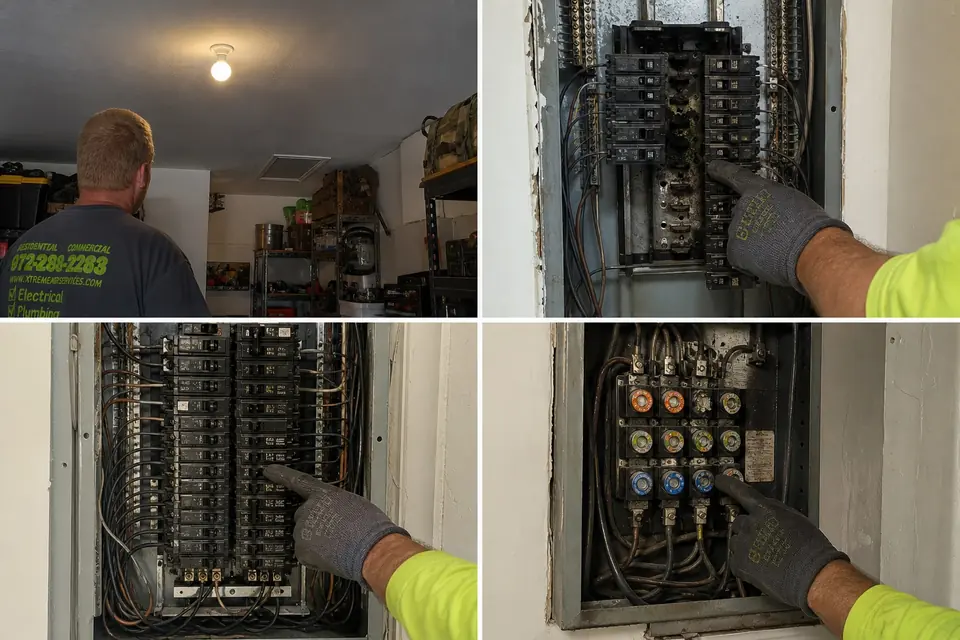
Replacement makes sense when the trouble comes from the panel itself, not one part inside it. Here’s what that looks like:
- Burn marks, melted plastic, or a hot smell near the panel. Heat damage inside a panel usually isn’t limited to the one spot you can see.
- Rust or water stains inside the box. Moisture eats at the metal parts that hold your breakers in place, and you can’t fix that part by part.
- Breakers that feel warm, buzz, or won’t stay reset, even after the circuit has been checked and isn’t overloaded.
- Lights that dim or flicker across the house when your AC or another big appliance kicks on.
- No open slots left, or two wires sharing a breaker built for one. That’s a panel telling you it has run out of room.
- You still have a fuse box, or your service is rated well below what your home now uses.
That last point matters a lot in Dallas. Many homes here are slab-on-grade ranch houses built from the 1950s through the 1990s. Their panels were sized for the way families lived back then. Since then, most of those homes have added central AC that runs hard through long Texas summers, plus bigger kitchens, more electronics, and sometimes a pool pump. A panel that was fine in 1975 can be working near its limit every afternoon in August.
Your plans count too. Maybe you’re adding an EV charger, a bigger AC system, a hot tub, or a room addition. If your panel doesn’t have the capacity or the space for new circuits, an upgrade, often to 200 amps, is what makes those projects possible. In that case nothing is broken. Your home just needs more than the old panel can give.
Here’s a simple way to think about it. If the problem lives in one circuit, it’s probably a repair. If it shows up all over the house, keeps coming back, or blocks something you want to add, the panel itself is the issue.
Not sure which one you have? That’s what a service call is for. Our service-call fee is $26-$99, and it’s credited toward the repair if you go ahead with Xtreme Air Services. You get a straight answer on whether a repair will do the job, and you don’t pay for a replacement you don’t need.
Panel Replacement vs. Full Service Upgrade: Why Scope Changes the Price
“Panel replacement” and “service upgrade” sound like the same job. They aren’t. That difference is the main reason two quotes for your home can look so far apart. Once you know which one you need, you can read a quote and compare fairly.
A straight panel replacement swaps your old box for a new one at the same size. Say your home already has 200 amps, but the panel is rusty or heat-damaged. You get a new panel, new breakers, and proper grounding. The heavy wires coming in from outside and your meter usually stay as they are.
A service upgrade raises how much power your home can take in, like going from 100 or 150 amps up to 200. The panel is only one piece of that. The wires that feed the panel and the meter base may also need to handle the bigger load. Oncor, the utility that delivers power in Dallas, has to be part of the plan to shut off and restore your service. More parts and more coordination mean a bigger job.
Here’s how that shows up in our pricing. Our most common job is replacing an aging or undersized panel, typically a 200A upgrade, with new breakers and proper grounding, inspected and tested. That job runs $2,100-$3,300. Across all the panel work we do, the typical range is $1,500-$4,500.
Where your job lands in that range depends on things like these:
- Panel amperage and brand
- The condition of your meter and service
- Whether your grounding needs to be upgraded
- How many circuits you have
- How easy the panel is to reach. A panel on an open garage wall is simpler than one boxed into a tight closet
- Utility coordination with Oncor
- Code upgrades and permits
It also helps to know what the price covers. Our panel work includes the panel and materials, professional installation, breakers, grounding, startup and testing, and haul-away of the old panel. It doesn’t include meter or service-entrance work done by the utility, rewiring, code corrections, or permits unless they’re stated in your quote.
That’s why a low number on paper isn’t always the low number in the end. Before you hire anyone for panel work, ask these questions:
- Is this a same-size replacement or a service upgrade?
- Are permits included in this price?
- Does my meter or service entrance need work, and who handles it?
- What happens to the price if code corrections turn up?
- Is grounding included?
A good electrician won’t mind any of these. With us, you get upfront flat-rate pricing approved before work starts, so you know the number before anyone picks up a tool. If the job is bigger than you planned for, flexible financing is available on qualifying installations and larger jobs, on approved credit.
When a Panel Repair or Inspection Is Enough
Plenty of panels don’t need to be replaced. Some need a small repair. Some just need a good look. And some situations aren’t a panel problem at all. Here’s the honest list, even though none of it ends with a new panel.
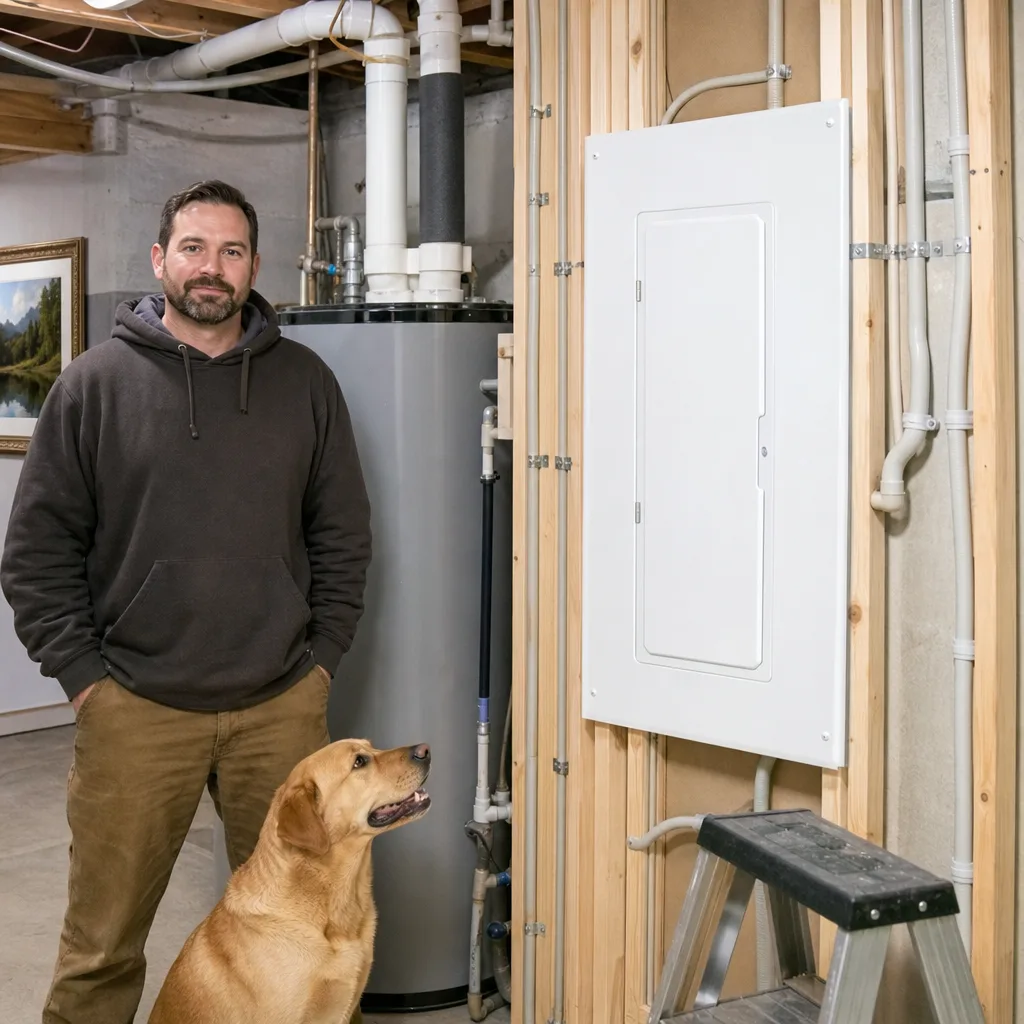
A breaker that trips once and then stays on is doing its job. Maybe a space heater and a hair dryer ran on the same circuit on a cold January morning, or a storm caused a short surge. If it resets and holds, and nothing smells hot or looks scorched, you can usually leave it alone and watch for a repeat.
A dead outlet in a bathroom, kitchen, garage, or patio often isn’t your panel either. Those spots usually have GFCI outlets, the kind with test and reset buttons. When one trips, it can shut off other outlets down the line. Find the GFCI with the button popped out, press reset, and the power often comes right back.
If your whole house goes dark at once, check whether your neighbors lost power too. During summer storms and hail season around Dallas, outages on Oncor’s lines are common. Oncor owns the lines and the meter, so the fix is on their end. If only part of your home loses power and your breakers all look normal, call Oncor first. That can point to a problem on the utility side before it ever reaches your panel.
Some panel trouble is a true repair, not a reason to replace the box:
- A loose wire connection on one breaker, caught before it causes heat damage
- A single circuit that needs to be split because one room has outgrown it
- A missing cover screw or knockout that leaves an opening in the panel face
- One new appliance that needs its own circuit when your panel still has open slots and enough capacity
That last one deserves a closer look. If your home already has 200 amps and room in the panel, adding a dedicated circuit for a new freezer, window unit, or shop tool is a much smaller job than a new panel. If you’re out of slots but your service still has capacity to spare, a subpanel can add room without replacing the main panel.
Age alone isn’t a reason to replace a panel either. If your panel is older but shows none of the warning signs above, and you aren’t adding big loads, it’s fine to wait. That holds even if it’s in a 1980s ranch home in Dallas that’s been well cared for. It’s also smart to wait if you aren’t sure about your plans yet. Maybe you’re thinking about an EV in a year or two, or a bigger AC system down the road. Holding off until you know lets you size the panel once, the right way.
When you just want to know where you stand, an electrical safety inspection is often the right first step. It makes sense if you’re buying an older home, if your insurance company asks questions about the panel, or if something seems off but you can’t name it. An inspection tells you the panel’s real condition, so any money you spend later goes to what your home needs.
Have questions? We’re happy to help.
Call Today, Get Service Today. Xtreme Air Services — Oak Lawn is ready to help.
Dallas Permit Rules for Panel Work
A new panel or a service upgrade in Dallas isn’t a job you just swap out and walk away from. Panel work goes through the City of Dallas permit process, and the city inspects the work before it’s signed off. That can sound like red tape, but it protects you. An inspector who doesn’t work for the contractor checks the job that controls every circuit in your home.
In Texas, electrical work is licensed through the Texas Department of Licensing and Regulation, also called TDLR. Permits for panel jobs are normally pulled by a licensed electrician, not by whoever happens to be holding the screwdriver. If someone offers to replace your panel “without all the paperwork,” treat that as a reason to keep looking, not as a way to save money.
On a typical panel job, the permit and inspection fit into the work like this:
- The permit is filed before work starts, so the city knows what’s being changed at your address.
- The old panel comes out, and the new panel, breakers, and grounding go in.
- A city inspector checks the work, including grounding, wire sizing, labeling, and clearance around the panel.
- On a service upgrade, Oncor needs the inspection cleared before it restores power to the new service. That’s part of why upgrades take more planning than a same-size swap.
That Oncor step is the part that surprises people. If your meter was pulled for the upgrade, your power stays off until the paperwork lines up. On a hot Dallas afternoon, you’ll want to know that schedule ahead of time, not halfway through the job. Ask how the inspection and the reconnect will be timed, and plan around it. Have a cooler ready for the fridge, and if anyone at home relies on medical equipment, think about where they’ll spend those hours.
Inspections can also uncover older problems, especially in Dallas ranch homes that have been added onto over the decades. A missing ground, a wire that’s too small for its breaker, or a panel squeezed into a spot without the required working space can all come up. That’s why code corrections are listed apart from the base panel price. It isn’t a trick. Nobody can promise what an inspector will flag until the cover is off.
Skipping the permit can cost you later. Unpermitted panel work can show up when you sell your home and the buyer’s inspector starts asking questions. It can also cause trouble if you ever file an insurance claim after an electrical fire. A permit on record shows the work was checked and passed.
One more thing to know if you live near the city line. Permits are handled by the city your home is in, not by your mailing address or ZIP code. If your house sits just outside Dallas in Highland Park or University Park, that city’s own office reviews the work, and its steps and timing can differ. A good electrician checks this before filing, so the permit goes to the right place the first time.
As mentioned in the pricing section, permits aren’t included in our panel price unless your quote says so. Read that line before you sign, and you’ll know exactly where the permit stands.
Watch Our Video
See How We Handle Electrical panel replacement / upgrade in Dallas
Xtreme Air Services — Oak Lawn
What Happens During Your Panel Installation
Most of the worry about a panel job comes from not knowing what the day looks like. Here’s how a typical installation goes, so you can plan around it and know what a job done right should include.

Before the work starts, clear a few feet of space in front of the panel. In a lot of Dallas ranch homes, the panel sits on a garage wall behind shelves, bikes, or storage bins. Moving those ahead of time saves time on the day. Charge your phones, and plan for the fridge and freezer to sit without power for a while. If you’ve already worked out the Oncor reconnect timing from the permit step, you’ll know whether your power will be off for a few hours or longer.
On a summer job, ask about starting in the morning. Your AC goes off with everything else, and a closed-up house in Dallas heats up fast by mid-afternoon. Starting early keeps the hottest part of the day on the right side of the job.
Once the power is off at the main, or at the meter on a service upgrade, the installation usually follows these steps:
- Each wire in the old panel is tagged so everyone knows which circuit it feeds. This keeps your kitchen, bedrooms, and AC on the right breakers later.
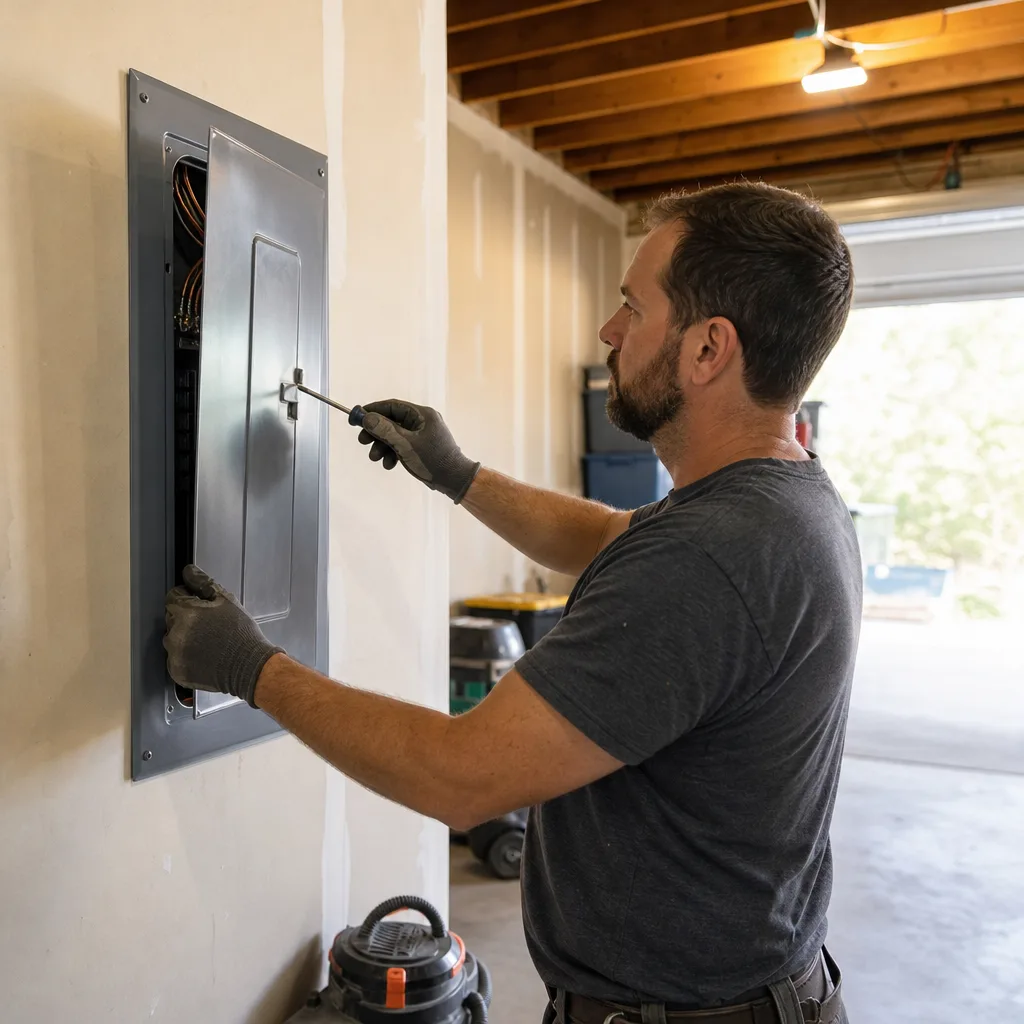
- The old panel is taken off the wall and the new one is mounted in its place.
- Your circuits are connected to new breakers. Each breaker should match the size of the wire it protects. A breaker that’s too big for its wire is one of the most common problems in older homes.
- Grounding gets done properly. This is the path that sends stray electricity safely into the earth instead of through your appliances or you. It usually means a solid connection to ground rods and proper bonding.
- The panel directory is filled in, so you can find the right breaker in the dark without guessing.
When the connections are done, the power comes back on and the system is tested. Startup and testing means checking that every circuit works, the breakers hold, and nothing runs hot under load. Then the city inspection covered in the permit section confirms the work from the outside.
With us, the panel and materials, professional installation, breakers, grounding, startup and testing, and haul-away of the old panel are all part of the job. You won’t be left with a rusty old box leaning against your garage wall.
As for timing, many same-size replacements fit into one workday. A service upgrade depends more on when the inspection clears and Oncor restores your service, so ask for that schedule up front.
When it’s done, open the panel door. You should see neat wiring, a breaker for every circuit with no doubled-up wires, a filled-in directory, and a cover with no open gaps. Lights should stay steady when your AC kicks on. If something seems off, ask before anyone leaves. A good electrician will walk you through it.
Call 469-269-6373
Frequently Asked Questions
Common questions about Electrical panel replacement / upgrade
Does a 50-year-old electrical panel need to be replaced just because of its age?
Not automatically, but age plus warning signs usually means yes. A panel that old has often outlived the amp capacity your home now needs, especially once central AC, bigger kitchens, and more electronics got added over the decades. If it also shows rust, warm breakers, or flickering lights when your AC kicks on, that combination points to replacement rather than age alone.
What is the 80% rule for electrical panels?
The 80% rule means a panel shouldn’t be loaded past 80% of its rated capacity on a continuous basis. This is a safety margin built into electrical code so wires and breakers aren’t run at their absolute limit for hours at a time. If your panel is regularly pushed close to its max, especially during long Texas summer AC runs, that’s a sign you may need more capacity, not just a repair.
Why do panel replacement quotes vary so much from one electrician to another?
Quotes vary mainly because they aren’t always pricing the same scope of work. A same-size panel swap costs less than a full service upgrade that also involves new wiring to the meter and coordination with Oncor. Differences in permit fees, code corrections, and whether grounding work is included can also push one quote far above another for what sounds like the same job.
Ready to Get Started?
Call (469) 269-6373 Today, Get Service Today.