


Water Heater Installation in Plano: Licensed, Permit-Compliant, and Priced Upfront
Like-for-like tank swaps by licensed plumbers, with what the price covers and when a permit applies spelled out.
What’s Covered on This Page
- Signs Your Water Heater Needs Replacing, Not Repairing
- When You Don’t Need a Full Installation
- Why a Licensed Plumber Matters for This Job
- Permits and Plano Code Requirements
- Tank vs. Tankless: Choosing the Right Setup
- Can a handyman install a water heater in Plano?
- Why does water heater installation cost more than just the tank price?
- What drives the labor cost up or down for a 40-gallon water heater install?
Signs Your Water Heater Needs Replacing, Not Repairing
Not every water heater problem means you need a new one. Before you spend money on a replacement, it helps to know what can be fixed and what can’t. The simple rule is this: you can swap out parts, but you can’t patch a tank.
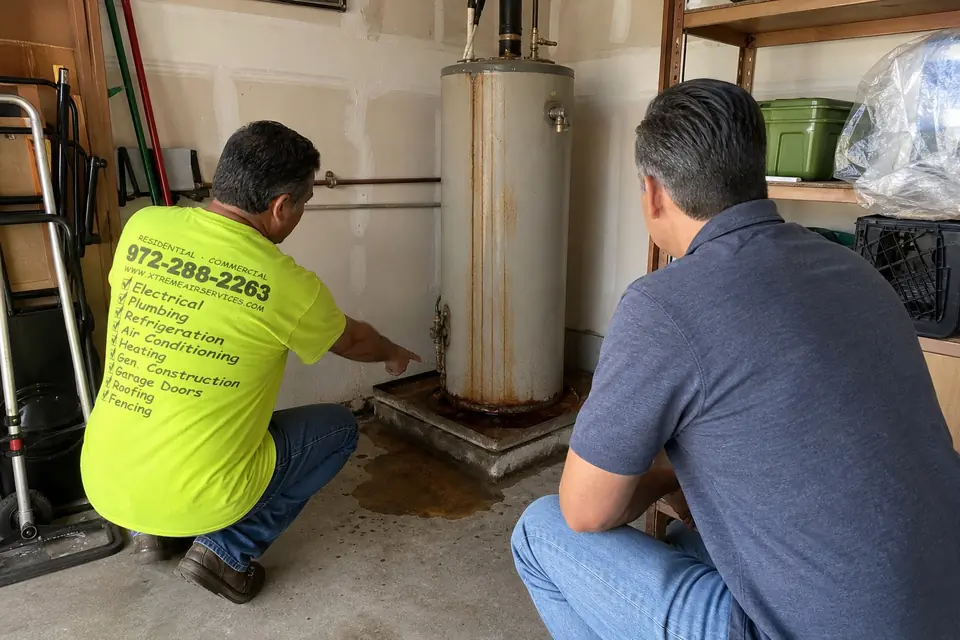
These signs point to replacement:
- Water is pooling under the tank, and it’s coming from the tank body, not a fitting or valve. Once the steel inside rusts through, there’s no safe fix.
- Your hot water comes out rusty or brown, but your cold water runs clear. That usually means the inside of the tank is corroding.
- You hear loud popping, rumbling, or banging when the heater runs. That’s sediment cooking at the bottom of the tank. Flushing can help early on, but heavy buildup in an older tank often keeps coming back.
- Your tank is getting up there in age. Many tank water heaters last around 8 to 12 years, and North Texas hard water can wear them down faster. The date is usually printed on the label or coded into the serial number.
- You’ve paid for repairs more than once in the past year or two. At some point, those repair bills start adding up to the cost of a new unit.
- You keep running out of hot water, and your household has grown since the tank went in. A tank that’s too small for your family won’t get better with a repair.
Hard water deserves a special mention here. The minerals in North Texas water settle as scale and sediment inside your tank. Over time, that layer makes the heater work harder, heat slower, and wear out sooner. If your faucets and showerheads get white crusty buildup, your water heater is dealing with the same thing on the inside.
Location matters too. Plenty of Plano homes have the water heater in the attic or a closet off the garage. A slow leak in the attic can soak drywall and ceilings before you ever see a drip. If an attic tank is older and showing any of the signs above, it’s worth acting before it fails.
Now the honest part. These problems can often be repaired, and you may not need a new heater at all:
- No hot water on an electric heater, which is often a bad heating element or thermostat.
- A gas heater whose pilot won’t stay lit, which can be a thermocouple or a similar part.
- A leak from a pipe fitting, drain valve, or the relief valve, not the tank itself.
- Water that’s only lukewarm on a newer tank, which may just need a thermostat adjustment or a flush.
If your tank is fairly young and the trouble is one of these, a repair usually makes more sense. If you’re not sure which camp you’re in, a technician can check the tank, the age, and the connections and tell you straight. Our $26-$99 service-call fee is credited toward the repair if you move forward with us, so finding out doesn’t cost you twice.
When You Don’t Need a Full Installation
A lot of calls about a dead water heater turn out to have nothing to do with the heater. Sometimes it’s a small fix. Sometimes nothing is broken at all. Before you start shopping for a new tank, rule out the easy stuff.
These are the common causes that don’t need a new heater, and often don’t need a plumber at all:
- A tripped breaker on an electric heater. A storm or a power blip can knock it off, and the tank goes cold even though nothing inside it is broken.
- Gas that was shut off for other work in the house, or a gas service interruption. The heater can’t make heat without fuel.
- A temperature dial that got bumped or turned down, especially on a heater in a garage closet where people store things.
- Hot water that runs out only when everyone showers back to back, or when you have a house full of guests. A tank holds a set amount. Using it all at once doesn’t mean it’s failing.
Winter catches a lot of people off guard. When a hard freeze rolls through North Texas, the water coming into your home is much colder. Your heater has to work harder to warm it up, so you may get shorter showers for a few weeks. If the problem goes away when the weather warms up, your tank is probably fine.
Age by itself isn’t a reason to tear out a working heater either. If your tank is getting older but the water is hot and clean, there’s no leak, and it runs quietly, you don’t have to replace it today. What makes sense is to plan for it. Know roughly how old it is, keep an eye on the floor around it, and decide ahead of time what you want next. Then you can replace it on your schedule instead of on a Sunday night with a wet floor.
Regular care can also buy you more time. Flushing out sediment and having the tank checked can help a healthy heater last longer, especially with our hard water. If scale keeps building up on your fixtures, a water softener can ease that wear on your heater and everything else in the house.
You also don’t need a bigger project than your situation calls for. If your current tank has served your family well, swapping it for the same size and fuel type is usually the simplest path. Switching from gas to electric, moving the heater to a new spot, or jumping to tankless can make sense for some homes. But those are choices, not requirements. If someone tells you that you have to go that route when your old tank just needs a match, ask them to explain why.
The point is simple. You should only buy a new water heater when your old one can’t do the job anymore.
Why a Licensed Plumber Matters for This Job
A water heater looks like a simple box. You unhook the old one, set the new one in place, and hook it back up. The tank is the easy part. The real work is in everything connected to it, and that’s where a licensed plumber earns the money.

Think about what your water heater does. It holds 40 or 50 gallons of very hot water under pressure. A gas model burns fuel inside your house and has to push the exhaust safely outside. An electric model pulls a lot of power from your panel. Each of those connections needs to be right on the day it’s installed, and it needs to stay right for years.
Here’s what a trained installer checks that a quick swap often misses:
- The gas line and shutoff. Every fitting gets tested for leaks before the heater fires up.
- The vent. A gas heater’s flue has to be the right size, pitched the right way, and sealed. If it isn’t, exhaust that contains carbon monoxide can spill back into your home instead of going out.
- The temperature and pressure relief valve. This valve lets water out if the tank gets too hot or too pressurized. It needs a discharge line that runs to a safe spot, not one that’s capped or cut short.
- Water pressure and expansion. Hot water expands. Depending on your plumbing, the system may need an expansion tank to handle that pressure.
- The electrical side. An electric heater needs the right breaker and wire size. A mismatch can cause trips or overheated wiring.
- The location. An attic or closet install needs a drain pan and safe access. That matters a lot in Plano homes where the heater sits above a finished ceiling.
Then there’s the paperwork. Water heater replacement often requires a permit and an inspection, and the rules can differ from one North Texas city to the next. A licensed plumber knows what your job needs and does the work so it passes. Skipping that step can come back to bite you when you sell your home or file an insurance claim after a leak.
Our plumbing work runs under Master Plumber Larry Breedlove, and our technicians are licensed, insured, and background-checked. That means the person in your home is accountable for the work. If something isn’t right, you know exactly who to call.
It also helps that we handle plumbing and electrical under one roof. If your new electric heater needs a different breaker, or an older home turns up wiring that isn’t up to the job, you don’t have to schedule a second company and wait another week.
You’ll also know the cost before any work starts. We give you upfront, flat-rate pricing, and you approve it first. Our standard install covers the equipment and materials, professional installation, standard connections, startup and testing, and hauling away your old unit. Permits, code corrections, and plumbing, electrical, or venting changes aren’t included unless your quote says so. If your home needs any of them, we’ll tell you why before we touch anything, so the price you agree to is the price you pay.
Not sure what your Water heater installation project needs? Ask us.
Call Today, Get Service Today. Xtreme Air Services — West Plano is ready to help.
Permits and Plano Code Requirements
Here’s the short answer. In Plano, swapping out a water heater is plumbing work the city expects to be permitted and inspected. It doesn’t matter that you’re putting a new tank in the same spot. The permit is how the city confirms the new heater was hooked up safely, and the inspection is the proof you keep.
That might sound like red tape for a simple swap. But it protects you in ways you’ll care about later. If you sell your home, a buyer’s inspector may ask about the water heater. If the tank ever leaks and you file an insurance claim, a permitted, inspected install is much easier to stand behind than one nobody checked.
Codes change over time. Your old heater may have met the rules the day it went in, but a new heater has to meet the rules that apply now. A lot of Plano homes were built in the 1970s, 80s, and 90s, and many of those original setups don’t match what today’s code asks for. When we replace the tank, the work around it has to come up to current standards too.
In older Plano homes, these are the updates that come up most during a replacement:
- A gas heater in the garage that sits flat on the floor. Gas water heaters in garages generally need to be raised up, away from fumes from cars, gas cans, and paint.
- A gas line with no sediment trap. This short piece of pipe catches dirt and debris before it can reach the heater’s gas valve.
- A relief valve line that’s too short, capped, or runs somewhere unsafe. The previous section covered why this valve matters.
- No drain pan under an attic or closet heater, or a pan with no drain line to carry water away.
- Old venting that doesn’t fit the new heater. Newer tanks can have different vent sizes or setups than the one you’re replacing.
- Electrical that doesn’t match the new unit, like an old breaker or wire that’s too small for the heater’s power draw.
Not every home needs all of these. Plenty of newer Plano homes need very little beyond the standard swap. The point is that a careful installer looks for them before quoting, not after the old tank is already out.
This is also where surprise bills tend to come from. As we mentioned, permits and code corrections aren’t part of a standard install unless your quote says so. So if your home needs any of the updates above, you should hear about it up front, along with the reason and the price, before you agree to anything.
Before you hire anyone, including us, ask these three questions:
- Will you pull the permit, and is it in my quote?
- Does my current setup need any code updates, and what do they cost?
- Will the job be inspected, and will I get a record that it passed?
If an installer tells you a permit isn’t needed, or offers to skip it to save you money, take that as a warning. A water heater can last you the next decade or more. It’s worth having it done right the first time, with paperwork that shows it.
Watch Our Video
See How We Handle Water heater installation in Plano
Xtreme Air Services — West Plano
Tank vs. Tankless: Choosing the Right Setup
For most Plano homes, a new tank of the right size is the simplest and most budget-friendly choice. Tankless makes sense when you want hot water that doesn’t run out, you plan to stay in the house a long time, and your gas line or electrical panel can handle it. Neither one is the right answer for everybody. The right setup is the one that fits how your family uses hot water and what your home can support.
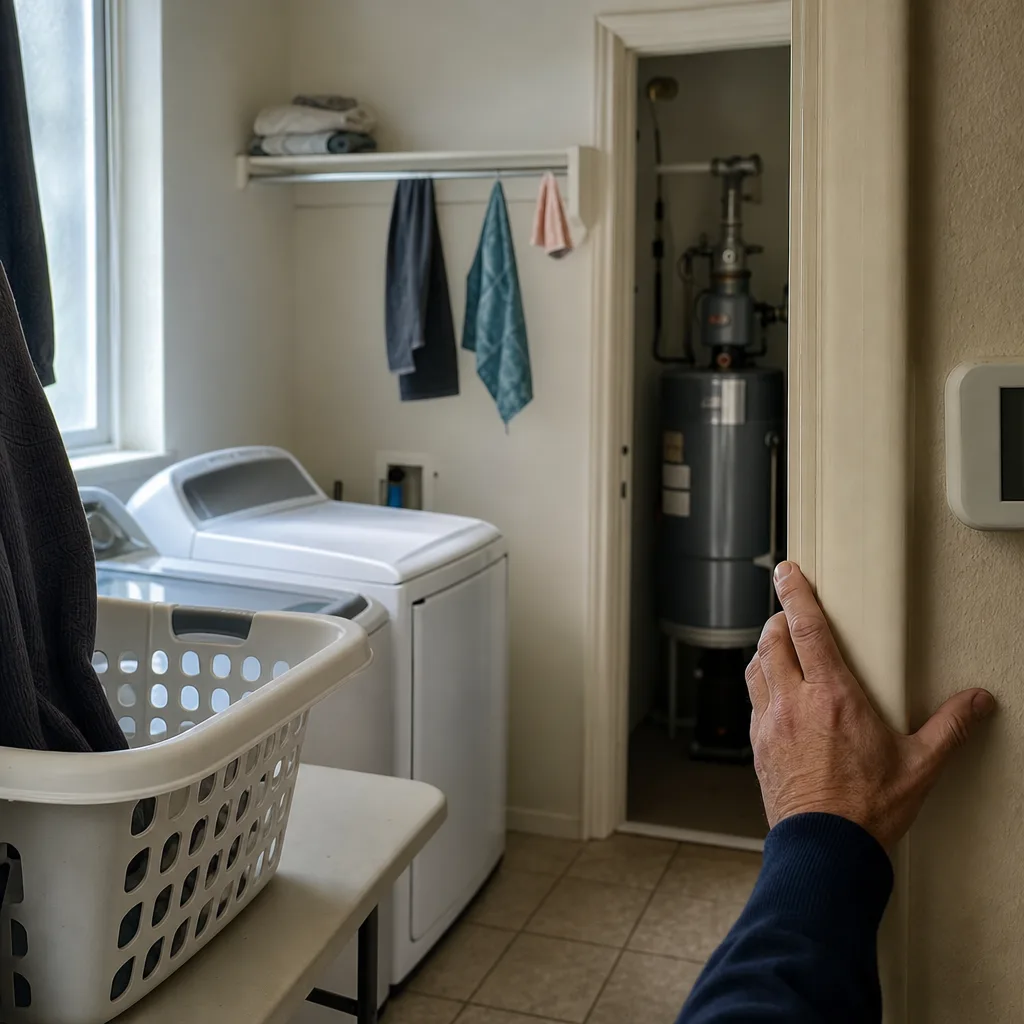
Here’s the basic difference. A tank heater keeps 40 or 50 gallons hot all day, ready when you turn on the tap. A tankless heater stores no water at all. It heats water only when it’s flowing through the unit. You don’t run out after a few showers, but it can only heat so much water at one time.
That last part surprises people. A tankless unit is rated by how many gallons per minute it can heat. If two showers, the dishwasher, and the washing machine all run at once, a unit that’s too small will send out lukewarm water. Sizing it to your busiest moment of the day matters more than anything else.
Winter plays into that too. When a hard freeze hits North Texas, the water coming into your home is much colder, so a tankless heater has to work harder to bring it up to temperature. A unit sized only for summer can fall short in January.
- A tank usually fits better if you want the lowest upfront cost, your current tank has kept up just fine, or you may move in the next few years.
- A tank also fits if you’d rather keep your existing gas line, vent, and wiring as they are. A like-for-like swap is the most straightforward job.
- Tankless usually fits better if your family keeps running out of hot water, you want to free up space in a garage closet or attic, or you plan to stay in your home for many years.
- Tankless can also fit if you’re already remodeling and opening walls, since gas, venting, or electrical changes are easier to make at the same time.
Switching to tankless is more than trading one box for another. A gas tankless unit often needs a larger gas line and a different type of vent than your old tank used. An electric tankless unit pulls a lot of power at once, and in some older Plano homes that can mean a bigger breaker, heavier wire, or an electrical panel upgrade. Those changes are what push the cost of going tankless well above a standard tank swap. Because we handle plumbing and electrical, we can look at both sides of your home and tell you what the switch would really involve.
Tankless units also need their own care. The hard water scale we talked about earlier builds up inside them too, so they need to be descaled on a regular schedule to keep heating well. Some homeowners pair a tankless heater with a water softener to cut down on that buildup.
If you’re torn, ask yourself one question: is your current tank failing you, or is it just old? If it kept up with your family until now, a matching tank is a solid choice. If you’ve been running out of hot water for years, that’s when tankless is worth a closer look. We’ll give you an honest side-by-side for your home, with upfront pricing on whichever way you go.
Frequently Asked Questions
Common questions about Water heater installation
Can a handyman install a water heater in Plano?
No, a handyman should not install your water heater in Plano. Water heater replacement involves gas or electrical connections, venting, and a relief valve, and TDLR requires a licensed plumber for this work. Plano also requires a permit and inspection on the job, which a handyman cannot pull. Hiring a licensed plumber protects you if you ever sell your home or need to file an insurance claim.
Why does water heater installation cost more than just the tank price?
The cost covers more than the tank because of the labor, parts, and code work needed to connect it safely. A plumber tests the gas line, checks the vent sizing, sets up the relief valve discharge line, and confirms your electrical or gas connections match the new unit. Older Plano homes often need extra updates, like raising a garage unit off the floor or adding a drain pan, which adds time and materials. Getting an upfront flat-rate quote before work starts is the best way to know exactly what you’re paying for.
What drives the labor cost up or down for a 40-gallon water heater install?
Labor cost depends mainly on whether your setup needs anything beyond a simple swap. A like-for-like replacement with a working gas line, vent, and electrical setup is the most straightforward job. Costs rise if your home needs code updates, like a sediment trap on the gas line, a new drain pan, or an electrical panel change for an electric unit. Asking for a full inspection before you get a quote helps you avoid surprise charges once the old tank is out.
Ready to Get Started?
Call (469) 217-9095 Today, Get Service Today.