


Water Softener Installation in Irving: Hire a Licensed Plumber
Whole-home softeners that treat water where it enters your house, usually installed the same day.
What’s Covered on This Page
- Why a Licensed Plumber Matters for This Job
- What a Standard Water Softener Installation Includes
- What Drives Installation Cost Up or Down
- Older Irving Homes vs. Newer Construction
- When You Don’t Need a Full Installation
- How long does a water softener installation take?
- Can I install a water softener myself instead of hiring a plumber?
- What size water softener do I need for my house?
Why a Licensed Plumber Matters for This Job
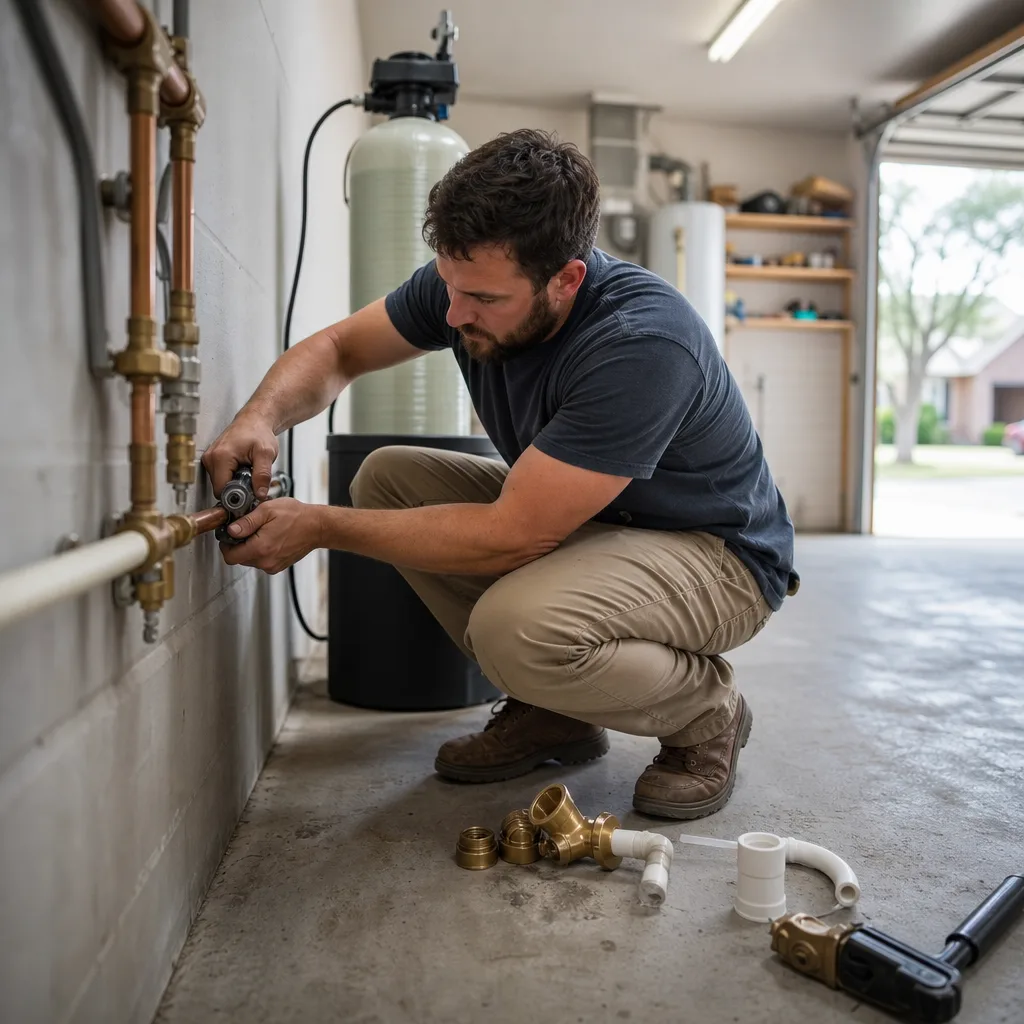
It’s easy to think of a softener as an appliance you just plug in. It isn’t. To install one, someone has to shut off your water, cut into the main supply line, and tie the unit in with fittings that will hold full city pressure every hour of every day. In Texas, work on the water lines that feed your home is plumbing work, and plumbing work is licensed work.
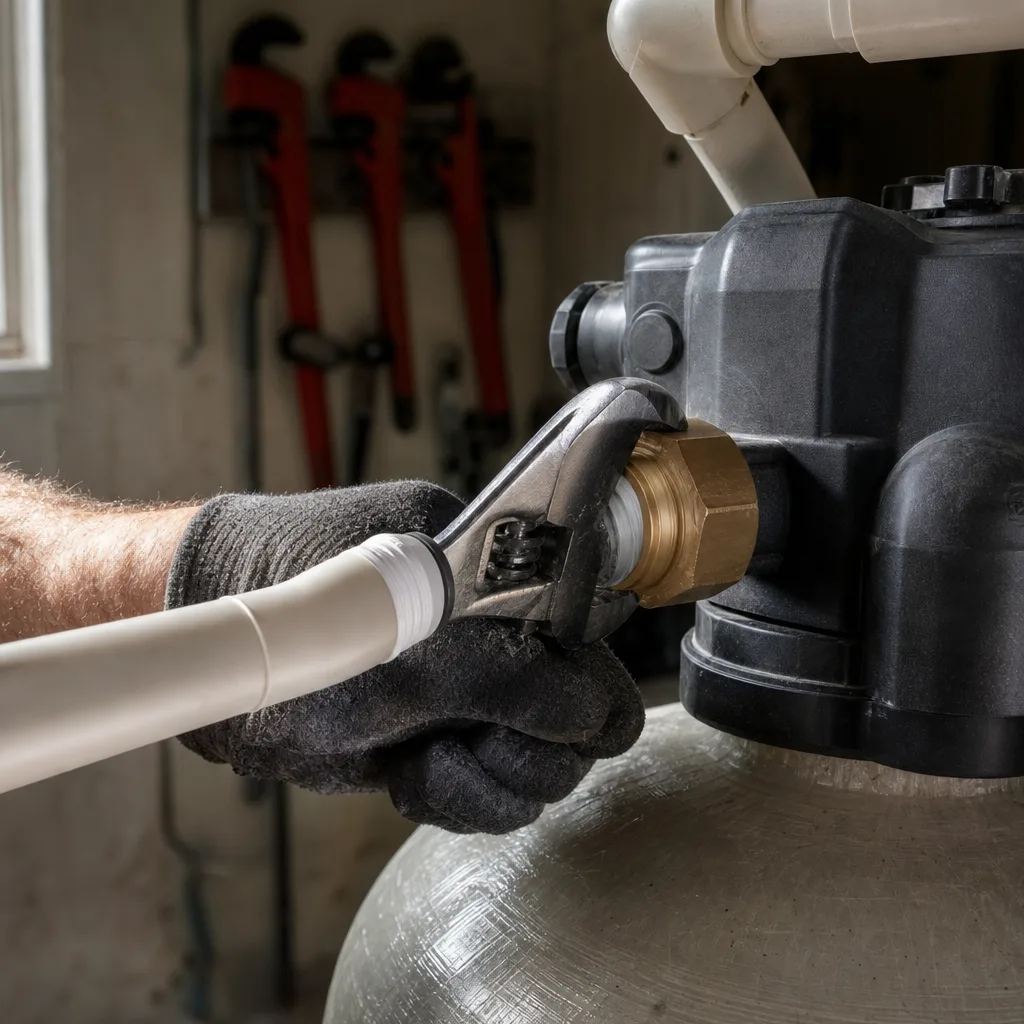
Here’s what a licensed plumber is watching for that a quick install can miss:
- The drain line air gap. When your softener cleans itself, it flushes salty rinse water down a drain. That drain line needs a physical gap so dirty water can never get siphoned back into the line you drink from. Skip it, and you’ve created a direct path for wastewater into your supply.
- A working bypass valve. If the softener ever needs service, a bypass lets you keep water running to the house. It has to be set up so you can find it and turn it easily, not buried behind a tangle of pipe.
- Solid connections on your main line. A weak joint at the main isn’t a small drip under a sink. It’s a steady leak at the busiest pipe in your home, often in a garage or along an outside wall where nobody notices right away.
- The right spot in the line. Most homes want hose bibs left on hard water for the yard, while the water heater and fixtures get soft water. Getting that split right protects your water heater from scale buildup.
Lots of Irving homes sit on slab foundations, so the main line usually comes up in the garage or at an outside wall instead of running through a crawlspace. Some newer homes already have a softener loop roughed in near the garage. Older homes often don’t. A plumber can tell you on the spot which one you have, because that changes the job and the price. A new loop isn’t part of a standard install, and neither are code corrections or permits unless we tell you so upfront. You’ll know before any work starts.
To be straight with you, some softener care really is a do-it-yourself job. Adding salt, checking the brine tank, and changing basic settings are all things you can handle without us. The part that needs a pro is the cut into your main line and the drain hookup.
Our team is licensed and insured, and our plumbing work runs under Master Plumber Larry Breedlove. The technician who shows up at your door is background-checked and drug-tested, and treats your home like family. When the work touches the water your kids drink, that’s who you want doing it.
What a Standard Water Softener Installation Includes
Here’s what you’re paying for with a standard install. We put a whole-home water softener at your main supply line, add a bypass and a drain line, connect everything, and test it. Most jobs finish the same day, so you aren’t left without water overnight or waiting on a second visit.
A standard install includes:
- The softener and materials. You get the unit plus the parts needed to tie it into your main line.
- Professional installation at your main supply, so every fixture and your water heater get soft water.
- Bypass and drain connections, set up the right way as covered above.
- Startup and testing. We get the softener running and test it before we call the job done.
- Haul-away of your old unit. If you’re replacing a worn-out softener, you don’t have to drag it to the curb.
Our most common job is that standard whole-home install, and it runs $1,700 to $2,600. Our typical range for softener installs is $1,200 to $3,500. Where your home lands depends on a few real things you can see and ask about.
- Softener capacity and type. A bigger family uses more water, so it needs a unit that can soften more before it cleans itself. A larger unit costs more.
- Condition of your existing plumbing. Old or corroded pipe at the main may need to be replaced so the new fittings have something solid to hold onto.
- Drain access. The softener has to send its rinse water somewhere. If there’s a drain close to the main line, the hookup is simple. If not, the drain line has to run farther.
- Added pre-filters or a loop. Some homes do better with a sediment or carbon filter in front of the softener. Homes without a softener loop need one built first.
- Code upgrades. If something on your line doesn’t meet code, it has to be fixed before the softener goes in.
Some items fall outside the standard price. You already know about the loop, code corrections, and permits. The other one is electrical. Most softeners need an outlet close by. If there isn’t one near your main line, adding it is separate work, and our electricians can handle that too, so you’re not calling a second company.
If we come out to look at your setup first, there’s a $26 to $99 service-call fee. That fee is credited toward the work if you move forward with Xtreme Air Services, so you aren’t paying twice for the same visit.
If paying all at once is hard, flexible financing is available on qualifying installations and larger jobs, on approved credit.
The most important part: you’ll get upfront flat-rate pricing, and you approve it before any work starts. No meter running, and no surprise line items once the softener is in. If your home needs a loop, a new outlet, or a code fix, you’ll hear about it and see the price before we pick up a tool. Then you decide.
What Drives Installation Cost Up or Down
You’ve seen the price range and what pushes a job higher. The next question is where your home will land. You can get a pretty good idea in about ten minutes, without tools, just by walking out to your garage.
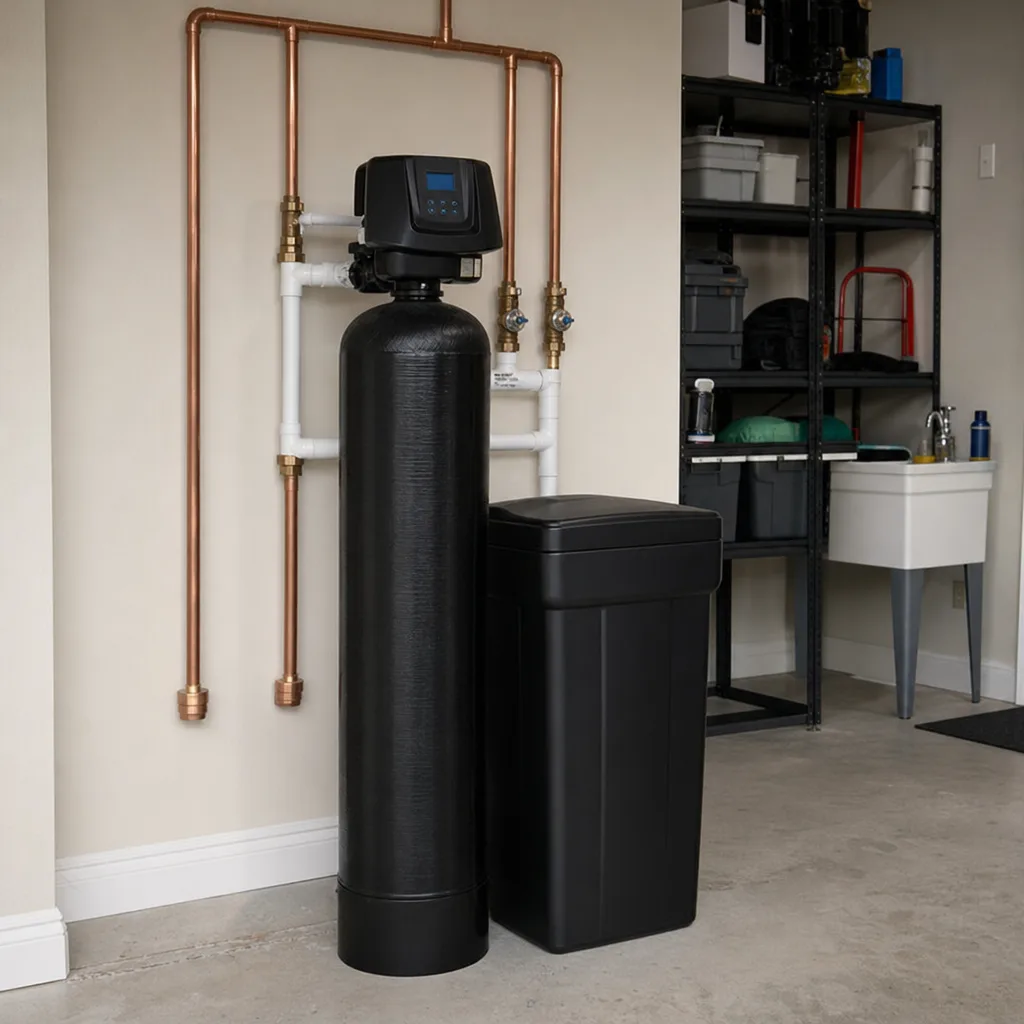
Here’s what to look for before you call:
- Where your main line comes in. In a lot of Irving homes on slab foundations, it’s in the garage or along an outside wall. Find it and snap a photo.
- Whether there’s a softener loop. A loop is two capped pipe stubs, or a short U of pipe, near the main line. If you see one, you’re closer to the low end.
- What the pipe looks like. Shiny copper or newer plastic pipe is usually easy to tie into. Green crusty joints or old metal pipe can mean some pipe needs to be swapped out first.
- A drain nearby. A floor drain, laundry standpipe, or utility sink within a few feet keeps the drain hookup short.
- An outlet close by. If there’s no plug near the main line, plan on a separate electrical step.
- Who lives in the house. More people means more water, and that’s what sets the size of the softener you need.
When you call, tell us what you found. Those answers do a lot of the work of setting a fair price before anyone shows up.
Here’s how that plays out in two real-world setups. Say you’re replacing an old softener in a newer home. The loop is already there, the drain and outlet are right next to it, and the old unit just comes out. That’s about as simple as this job gets. Now picture an older slab home where the main line comes up on an outside wall, there’s no loop, no outlet, and the closest drain is across the garage. Same softener, but a lot more work goes into getting it connected the right way. Both homes can end up with great water. They just won’t cost the same.
If you’re getting more than one quote, make sure you’re comparing the same job. A low number can look good until you find out what it leaves out. Ask each company these questions:
- Does this price include the bypass, the drain hookup with an air gap, startup, and testing?
- Will you haul away my old softener?
- If I don’t have a loop, is building one in this price or extra?
- Is the outlet, a permit, or any code fix included, or will that come later?
- Is this a flat price I approve before you start, or will the total change once you open things up?
- Who’s doing the work, and is it done under a licensed plumber?
A company that’s doing right by you will answer every one of those without dodging. If a quote doesn’t spell it out, ask until it does. Not sure your water is hard enough to need a softener at all? Water testing is something we offer too, and it’ll tell you how big a unit makes sense, so you’re not paying for more softener than your home needs.
Have questions? We’re happy to help.
Call Today, Get Service Today. Xtreme Air Services — Irving is ready to help.
Older Irving Homes vs. Newer Construction
The age of your home often changes the job more than the softener does. Irving has older established homes and newer construction, and each has its own surprises at the main line. Knowing which kind of home you have helps you plan, and it tells you what to ask about before any work starts.
If your home has some years on it, here’s what to keep in mind:
- The scale is already there. Years of hard water leave a mineral crust inside your pipes, faucets, and water heater. A softener stops new buildup from forming, but it won’t scrub out what’s already caked inside an old tank. If your water heater is near the end of its life, it can make sense to look at both at the same time.
- Older pipe. Some older homes still have galvanized steel pipe. That kind of pipe rusts from the inside and narrows over time. Tying a new softener into weak pipe invites a leak, so a short section may need to be replaced first.
- A softener someone installed years ago. An old install might be missing the bypass or air gap covered earlier. It might also be piped so your yard gets soft water too. We check the old setup before we pull it out, so you aren’t paying to repeat an old mistake.
Newer homes tend to be simpler to work in, often with the loop already in place. They still come with a few things worth knowing:
- Plastic pipe. Many newer homes use PEX, a flexible plastic pipe. It’s easy to tie into, but it needs the right fittings to hold up at full pressure.
- Tankless water heaters. Lots of newer homes have one. Water runs through narrow passages inside a tankless heater, and scale can clog them. That makes soft water even more important. Check your heater’s manual to see what it says about hard water.
- Tight garage space. Builders often put the loop right next to the water heater with little room to spare. A softener needs space for its brine tank and room for you to add salt. Where it sits matters just as much as how it’s connected.
Here’s the honest part. If your newer home already has a softener on the loop and it’s only a few years old, you probably don’t need a new install. Hard-water spots coming back, or salt that isn’t going down in the brine tank, often point to a setting that needs resetting or a part that needs attention. Water softener maintenance or repair is usually a smaller job than a full replacement, so it’s worth ruling out first.
Call now
Watch Our Video
See How We Handle Water softener installation in Irving
Xtreme Air Services — Irving
When You Don’t Need a Full Installation
A softener does one job. It pulls the minerals out of hard water that cause spots, crusty faucets, and scale in your water heater. If your problem is something else, a new softener won’t fix it, and you shouldn’t pay for one. Here are the times we’d tell you to hold off.
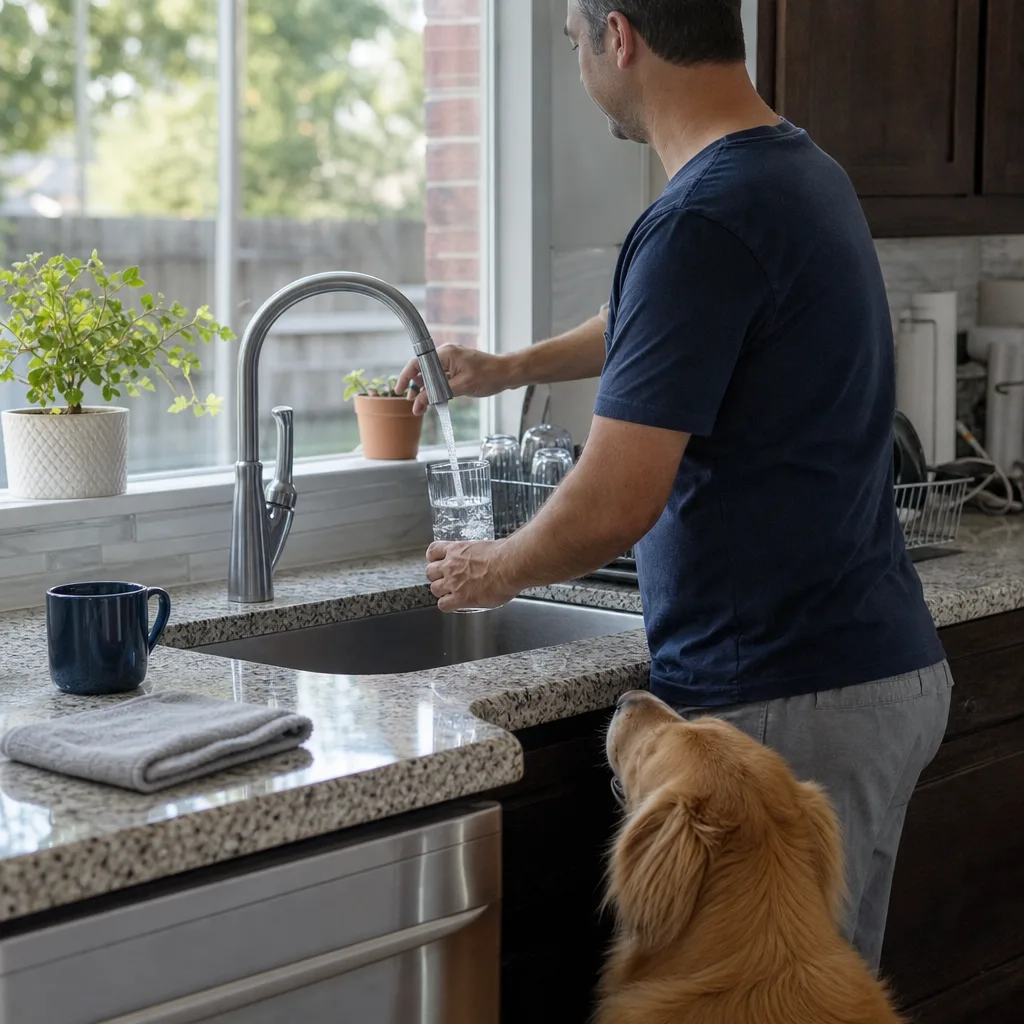
Your problem is taste or smell, not hardness. If your tap water tastes or smells like a swimming pool, that’s chlorine, which cities use to keep water safe. A softener doesn’t remove it. A carbon filter does. If you mostly want better drinking water at the kitchen sink, a reverse osmosis system under the counter may be all you need. It costs less than treating every pipe in your home.
You’re seeing rust-colored stains. Orange or brown stains usually point to iron. A softener can handle a small amount, but heavy iron calls for an iron filter, and sometimes a softener isn’t the main answer at all. Test first and buy the right tool once.
Your current softener just stopped working. Before you decide it’s dead, try these three quick checks yourself:
- Look at the bypass valve. Someone may have turned it to bypass during a repair or a move and never switched it back. If it’s on bypass, hard water is going straight past the softener.
- Check the clock. A power outage can reset the timer, so the softener cleans itself at the wrong time or not at all. Storm season in North Texas knocks power out often enough that this is worth checking first.
- Push a broom handle into the salt. If you hit a hard crust with empty space under it, that’s a salt bridge. The salt looks full, but it isn’t reaching the water. Break up the crust gently and give it a day.
If none of those fix it, a repair visit is still a much smaller step than a new install. A unit that’s leaking, cracked, or very old is a different story. That’s when replacing it makes sense.
You rent your home. A whole-home softener means cutting into the main line. That’s the landlord’s call, not yours. Ask them first. If they say no, a filter at the kitchen sink or a showerhead filter can help without touching the main plumbing.
Bigger plumbing work is coming soon. If you’re planning to repipe the house or move your water heater in the next few months, it often makes sense to wait. That way the softener goes in once, in the right spot, instead of being installed and then moved again.
You aren’t sure your water is hard. Spots on glasses can come from your dishwasher soap or rinse settings, not just your water. A water test settles it. If your water turns out to be fine, you’ve saved yourself the cost of a softener. If it’s hard, you’ll know what size unit fits your home.
We’d rather you spend less on the right fix than more on the wrong one. Your neighbors trust us because we tell them which one they need.
Frequently Asked Questions
Common questions about Water softener installation
How long does a water softener installation take?
Most installs finish in a single day, so your water isn’t shut off overnight. That includes setting the unit at your main line, adding the bypass and drain connections, and testing it before we leave. If your home needs a new softener loop built, an outlet added, or an old pipe replaced first, the job can run longer, but you’ll know that before work starts.
Can I install a water softener myself instead of hiring a plumber?
You can handle day-to-day care yourself, like adding salt or checking the brine tank, but the installation itself needs a licensed plumber. Cutting into your main supply line and tying in the drain with a proper air gap is plumbing work on the water your family drinks. A missed air gap can let wastewater siphon back into your supply, which isn’t worth the risk of a DIY shortcut.
What size water softener do I need for my house?
The right size depends on how many people live in your home, since more people use more water and need a unit that can soften more before it cleans itself. A water test also helps confirm how hard your water is, so you’re not paying for a bigger unit than your home needs. We can walk through both when we look at your setup.
Ready to Get Started?
Call (469) 200-2166 Today, Get Service Today.