


Generator Repair in Plano: Get Your Backup Power Running Again
Generators that won't start or carry load diagnosed and repaired, with what's included and what costs extra explained.
What’s Covered on This Page
- Diagnosing Why a Generator Won’t Start or Carry Load
- What Happens During a Generator Repair Visit
- What’s Included in a Repair Visit and What Costs Extra
- When a Generator Problem Can Wait and When It Can’t
- Why Generator Diagnosis Belongs to a Licensed Technician
- What do you call someone who repairs generators?
- Can any generator problem be repaired, or does it sometimes need full replacement?
- Why does my generator run fine during its weekly test but fail when the power goes out?
Diagnosing Why a Generator Won’t Start or Carry Load
Before anyone opens the enclosure, it helps to know exactly what you saw or heard. Did it click and do nothing? Did it crank and crank without catching? Did it run for a minute and quit? Each one points somewhere different. Here’s how we sort it out.
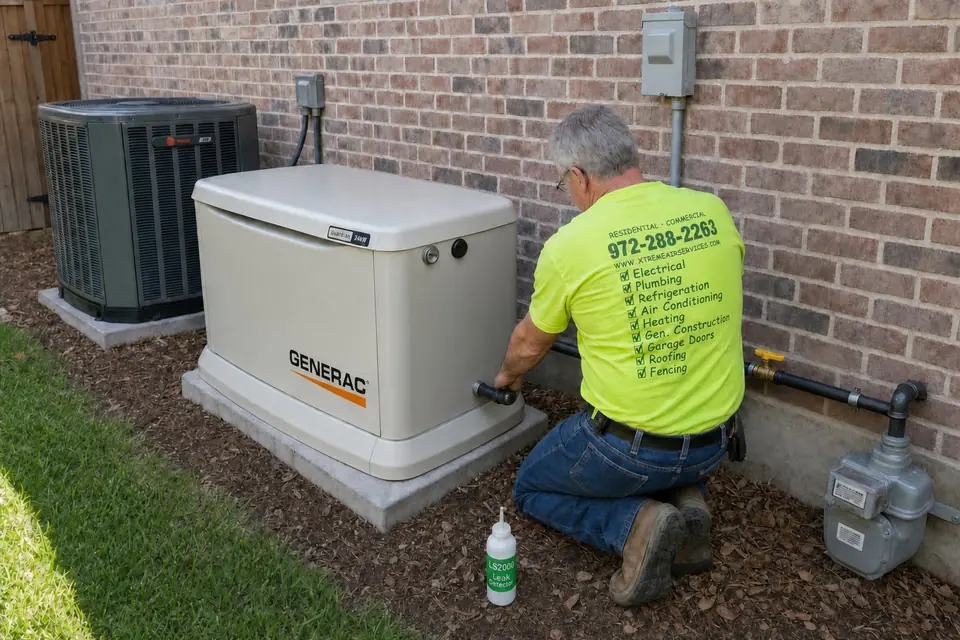
It won’t crank at all. You hear a click, or nothing. This is most often the starting battery. Batteries in an outdoor generator work hard in North Texas, with summer heat inside the enclosure and hard winter freezes a few months later. Corroded terminals, a loose cable, or a battery charger that quit can leave the battery too weak to turn the engine over. A failed starter motor is also on the list.
It cranks but won’t start. The engine turns over and never fires. This usually points to fuel. A closed or sticking gas valve, low gas pressure, or a low propane tank can starve the engine. Fouled spark plugs or an ignition fault can cause the same thing, so we check both before we replace anything.
It starts, then shuts itself down. Your generator is built to protect itself. If it senses low oil, overheating, or a speed problem, the controller shuts it off and usually saves an error code. That code is a big head start. Sometimes the fix is simple, like a faulty sensor. Sometimes the shutdown is doing its job, and the code points to a real engine problem.
It runs, but your house stays dark. The engine sounds fine, but power isn’t reaching your home. Now we look past the engine at how the power gets to you:
- The generator’s main breaker has tripped or was left off after service
- The transfer switch, which moves your home from utility power to generator power, isn’t switching over
- The unit is set to Off or Manual instead of Auto
- Too much is turning on at once, like two AC units starting together, and it’s overloading the generator
- A voltage regulator or control board problem means the power it puts out isn’t steady
A few things are worth checking yourself before you call. Look at the control panel and write down any error code or warning light. Check whether it says Auto. If you’re on propane, check the tank gauge. Those details help our technician show up with the right part instead of guessing.
Whatever we find, a repair isn’t done until the generator starts and carries real load. That means it powers your home the way it’s supposed to during an outage, not just idling in the yard. A generator that runs but can’t hold your AC and refrigerator through a Plano summer outage isn’t fixed yet.
What Happens During a Generator Repair Visit
You shouldn’t have to guess what happens after you call. Here’s how a generator repair visit works with Xtreme Air Services, from the first phone call to the moment your generator is back on the job.
It starts with a real person. Our phones are answered around the clock, and same-day service is available. If your generator quits on a Saturday night during a storm, the visit costs the same as it would on a Tuesday morning. There’s no extra charge for nights or weekends.
When you call, have these details ready if you can:
- What the generator did when it failed, plus any error code you wrote down
- The brand and size, which are usually printed on a label on the unit
- Whether it runs on natural gas or propane
- How to reach it, such as a locked side gate, a dog in the yard, or a tight spot along a fence
These details matter for a reason. Brand, size, and access all affect the price. Knowing them up front helps your technician plan before they reach your driveway.
A licensed technician who has passed a background check and drug test comes to your home. They confirm what you saw, read the controller, and work through the battery, fuel, controls, and starting parts we covered above. The goal is to find the actual failed part, not to swap parts until something works.
Once they know what’s wrong, they’ll show you and explain it in plain English. Then you get an upfront flat-rate price, and you approve it before any work starts. No meter running and no surprises when the bill comes.
There’s a $26 to $99 service-call fee. If you go ahead with the repair, that fee is credited toward it.
For a typical repair, the price covers:
- Diagnosis
- Labor
- The standard replacement part
- Testing
Most generator repair calls are fixed on that first visit.
Sometimes the problem is bigger. A major component may have failed, the unit may need full replacement, or the setup may need a code upgrade or permit. Those items aren’t part of a standard repair price. You’ll get a separate quote so you can decide with all the facts in front of you. Financing usually isn’t offered on smaller repairs, but it is available on larger repairs and replacements.
After the repair, your technician runs the test we described earlier. The generator has to start on its own and carry your home’s load before the job counts as finished. Make sure the unit is set back to Auto before your technician leaves, so it’s ready for the next outage without you having to touch it.
Our office is on West Park Boulevard in Plano, so you’re dealing with a local team, not a far-off call center. Through the whole visit, you know what’s wrong, what it costs, and what you’re agreeing to before anyone picks up a wrench.
What’s Included in a Repair Visit and What Costs Extra
Most generator repairs with Xtreme Air Services cost between $200 and $525. That’s the range for the most common job: we find the fault in the battery, fuel, controls, or starting parts, replace the failed part, and confirm the generator starts and carries load. Generator repairs as a whole usually run from $200 to $900.
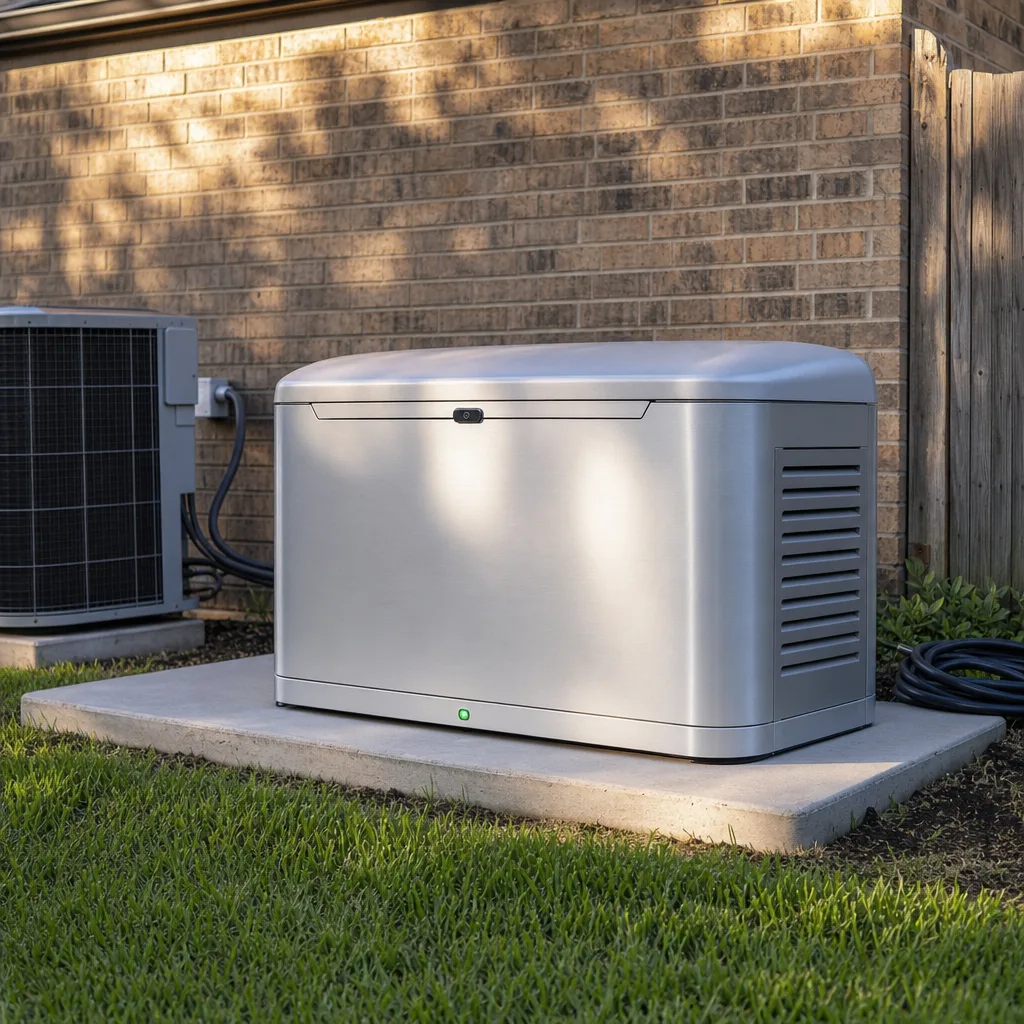
Two generators can have the same symptom and still land at different ends of that range. Here’s what makes the difference.
- What failed. A worn-out starting battery and a bad control board can both leave you in the dark, but they’re very different repairs. The cause sets most of the price.
- Your generator’s brand and size. Parts for a larger home standby unit often cost more than parts for a smaller one, and some brands use parts that cost more than others.
- Parts availability. A common part costs less and is easier to get. A part that’s hard to find for an older or less common model can cost more.
- Access. A generator with open space around it is quicker to work on than one wedged against a fence or a wall of shrubs. More time on a tight unit can add to the cost.
- Timing. This one doesn’t raise your price with us. There’s no extra charge for nights or weekends, so a Sunday night repair costs the same as a Tuesday afternoon.
Here’s an example. Say your generator clicks but won’t crank after a cold snap, and the problem is a weak battery with corroded terminals. That’s a simple fix. Now say the engine runs fine but your house stays dark, and the cause is a failed controller on a large unit with a part that’s harder to get. Both are generator repairs, but the second one will cost a lot more.
If the problem turns out to be one of the bigger items we mentioned earlier, like a major component or a full replacement, it’s quoted on its own before any work starts. You won’t see it added to your bill after the fact.
Whoever you call, it’s fair to ask a few questions before you agree to anything:
- Is the price a flat rate for the whole job, or are you charging by the hour?
- Does the price include the part, or just the labor?
- Does the service-call fee count toward the repair if I go ahead?
- Will you test the generator under real load, or just check that it starts?
- Do nights, weekends, or holidays cost more?
A good company will answer every one of these plainly before it touches your generator. With us, you’ll know the price and approve it first. That’s how it should work when you’re already stressed about losing power.
Not sure what your Generator repair project needs? Ask us.
Call Today, Get Service Today. Xtreme Air Services — West Plano is ready to help.
When a Generator Problem Can Wait and When It Can’t
Not every generator problem needs a technician today. Some don’t need one at all. Here’s the honest way to sort it out.
You may not need us if one of the quick checks from earlier fixes it. If the unit was left in Off or Manual and starts fine once you set it to Auto, you’re done. The same goes for a main breaker someone left off after a service visit, or a propane tank that just ran low. A low tank is a call to your propane supplier, not to us. And if your generator starts up for a few minutes once a week and then shuts off, that’s normal. It’s running a short self-test to stay ready.
Some problems can wait for a regular appointment. If the power’s on, the weather’s calm, and your generator shows a maintenance reminder or a minor warning but still starts and runs, you don’t need to pay for a rush visit. Book it for a day that works for you. If it’s been a while since anyone looked at it, a scheduled generator maintenance visit can catch a tired battery or a worn part before it turns into a no-start.
Other problems shouldn’t wait. Call the same day if any of these fit your situation:
- The power is already out and your generator won’t start or won’t carry your home.
- Storms are in the forecast. North Texas spring brings hail and severe thunderstorms, and a generator that fails a test now will likely fail when the lines come down.
- It’s the middle of a summer heat wave or a hard winter freeze, when losing power hits your home and family hardest.
- Someone in your home relies on power for medical equipment, or your business needs power to protect inventory or stay open.
- The same error code keeps coming back, or the unit keeps shutting itself down after you reset it.
- You notice smoke, a burning smell, scorched wiring, a gas odor, or fluid pooling under the unit. Those aren’t wait-and-see signs.
Here’s a common example. Your generator clicked during its weekly self-test and never started, but the sky is clear and the lights are on. That can usually wait a day or two. The same click with a line of storms headed toward Plano tonight is a different story. The problem is the same. The timing is what changes.
If you’re not sure which side of the line you’re on, just ask. Tell us what you’re seeing, and we’ll give you a straight answer, even if that answer is that it can wait or that you can fix it yourself. When it does need a visit, same-day service is available, there’s no extra charge for nights or weekends, and our licensed and insured technicians don’t call a repair finished until your generator starts and carries your home.
Call 469-217-9095
Watch Our Video
See How We Handle Generator repair in Plano
Xtreme Air Services — West Plano
Why Generator Diagnosis Belongs to a Licensed Technician
The quick checks we covered earlier are safe for anyone to do. Past that point, a standby generator isn’t just a lawn-mower engine in a box. It’s tied into three things at once: your home’s electrical panel, your gas supply, and the power lines out on your street. A mistake in any one of them can hurt a person, not just the generator.
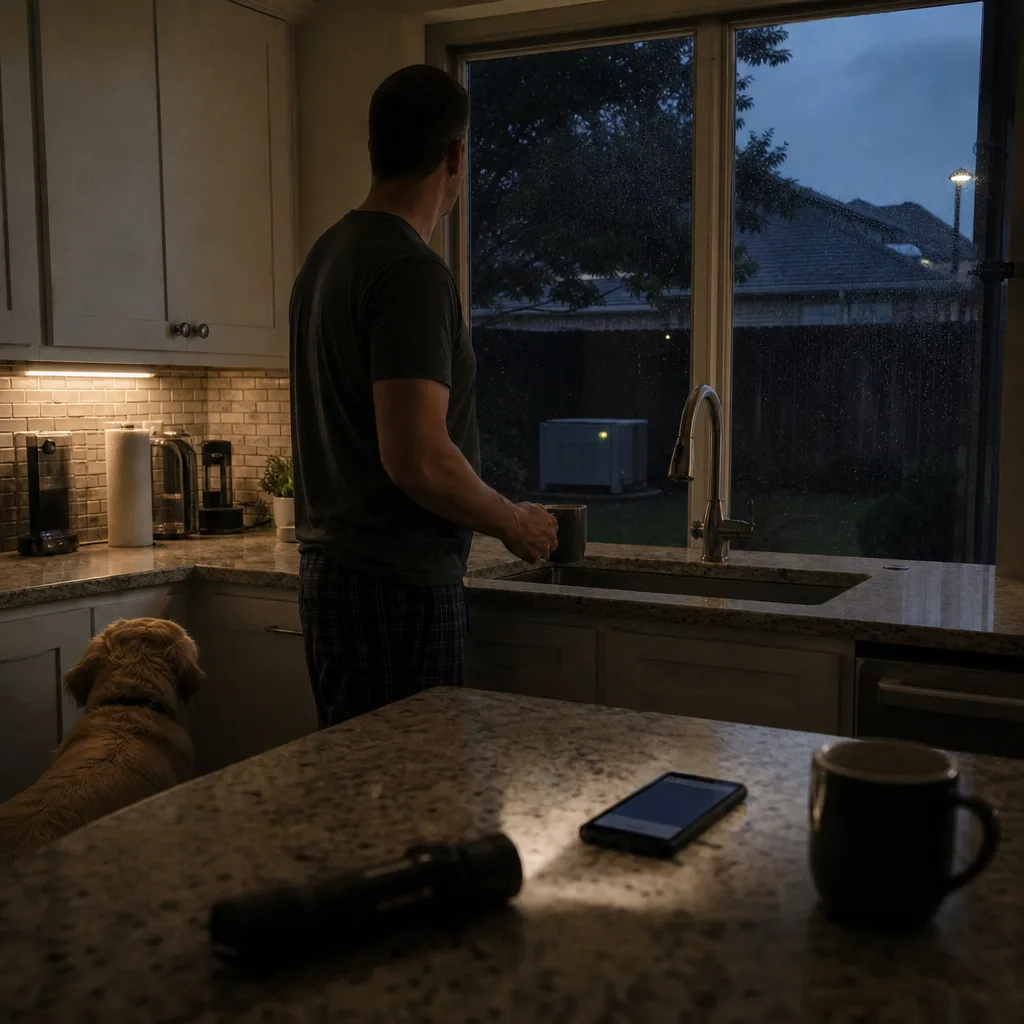
Start with the electrical side. A home standby generator puts out the same kind of 240-volt power that runs your AC and your dryer. Even with the engine off, parts inside the enclosure and the transfer switch can still be live from the utility side. Testing a voltage regulator, a control board, or a breaker means working right next to that power. You need the right meters and the training to use them.
Then there’s the grid. The transfer switch keeps generator power from flowing backward out of your house. If someone wires around a bad part just to get the lights on, that power can travel onto Oncor’s lines. After a storm, line workers in Plano are out restoring power on wires they expect to be dead. That’s the biggest reason this work shouldn’t be guessed at.
The fuel side matters too. Most standby units run on natural gas or propane through a fuel line. Checking gas pressure, a sticking valve, or a loose fitting means opening that line up. A small leak near a hot engine isn’t something you want to find by trial and error.
Guessing also costs you money. It’s easy to buy a new battery when the real problem was a dead battery charger, or to replace spark plugs when the gas pressure was low the whole time. A proper diagnosis looks at the whole picture:
- Reading the controller’s error history, not just the code showing right now
- Testing the battery under load, since a battery can show good voltage and still fail to crank
- Measuring gas pressure while the engine runs, when the demand is highest
- Checking the transfer switch and breakers with a meter instead of by eye
- Confirming the power stays steady once your home’s real load is on it
This is where having one company for the whole job helps. A generator problem can turn out to be electrical, a gas line issue, or both. Xtreme Air Services is a licensed and insured HVAC, plumbing, and electrical contractor. If the trouble traces back to your panel or the gas line feeding the unit, you don’t have to stop and find a second company. Electrical panel repair and gas line repair are both part of what we do. The person working at your house is a background-checked, drug-tested team member, not a stranger you found in a hurry.
None of this means you did something wrong by looking. Checking the panel, the Auto setting, and the propane gauge is smart. Once those check out and the generator still won’t start or carry your home, the next step needs a meter, a license, and someone who’s ready to stand behind the work.
Frequently Asked Questions
Common questions about Generator repair
What do you call someone who repairs generators?
They’re usually called generator technicians or electricians who specialize in standby power systems. A good one understands how your generator’s battery, fuel supply, controls, and starting parts work together, plus how the unit ties into your home’s electrical panel and gas line. For a standby generator, you want someone licensed to work on all three systems, not just a small-engine mechanic.
Can any generator problem be repaired, or does it sometimes need full replacement?
Most generator problems can be repaired by replacing the failed part, whether that’s a weak battery, a fouled spark plug, or a faulty sensor. A full replacement only comes up when a major component fails on an older unit, or when parts for that model are hard to find. If a technician finds the problem is bigger than a standard repair, you should get a separate quote for replacement before any work starts, so you can decide with the full picture in front of you.
Why does my generator run fine during its weekly test but fail when the power goes out?
This usually means the generator can start but can’t carry real load, which only shows up when your home’s full demand hits it at once. A weekly self-test only runs the engine for a few minutes without powering your house. The real test is whether it starts your AC, refrigerator, and other circuits together during an actual outage, which is why a repair isn’t finished until it’s confirmed under real load.
Ready to Get Started?
Call (469) 217-9095 Today, Get Service Today.