


Water Softener Installation in Fort Worth: What’s Included and What It Costs
Whole-home softeners that treat water where it enters your house, usually installed the same day.
What’s Covered on This Page
- What Drives the Price of a Whole-Home Water Softener Install
- Why Fort Worth Homes Often Need Softening in the First Place
- No Existing Plumbing Loop? Here’s What That Means for Your Install
- What Happens During Installation and How Long It Takes
- Full-Service Licensed Plumber vs. Treatment-Only Company
- How often do I need to add salt to a water softener?
- Is Fort Worth tap water safe to drink even though it’s hard?
- Do I need to be home all day for the installation?
What Drives the Price of a Whole-Home Water Softener Install
You should know what you’re paying for before anyone picks up a wrench. Here’s how the price comes together.
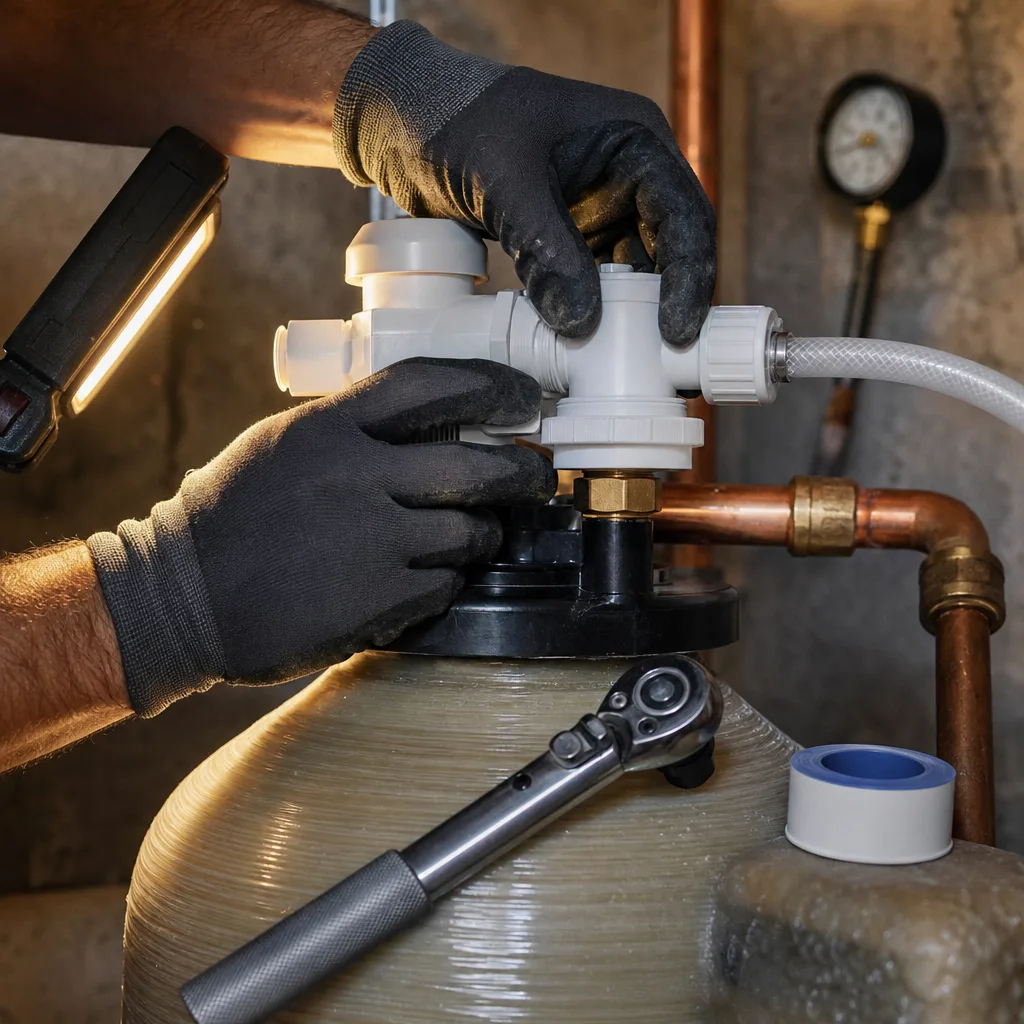
Our most common job is a standard whole-home install. We put the softener at your main water supply, add a bypass and a drain line, then connect and test everything. That job usually runs $1,700-$2,600, and most finish the same day. Across all the softener installs we do, the typical range is $1,200-$3,500.
These are the things that move your price up or down:
- Softener capacity and type. A bigger household uses more water, so it needs a softener that can handle more hardness between recharges. A larger or more advanced unit costs more than a basic one.
- Condition of your existing plumbing. Clean, sound pipes at the main supply make for a simple hookup. Old, corroded, or awkward piping takes more time and parts to tie into safely.
- Drain access. Every softener needs a place to flush its rinse water. If a drain is close by, that’s easy. If we have to run a longer line to reach one, the cost goes up.
- A plumbing loop. Some homes already have one. It’s a ready-made spot in the water line where a softener can connect. If your home doesn’t have a loop, we’ll need to add one, and that’s an extra cost.
- Added pre-filters. If your water needs filtering before it reaches the softener, adding that equipment raises the total.
- Code upgrades. If something nearby isn’t up to current code, it may need to be fixed as part of the job.
Here’s what comes with the install: the softener and materials, professional installation, the bypass and drain connections, startup and testing, and haul-away of your old unit if you have one.
Here’s what isn’t included unless we say so on your quote: a plumbing loop if your home doesn’t have one, electrical work, code corrections, and permits. We’d rather tell you that up front than have it show up as a surprise later. Your price is flat-rate and approved by you before any work starts.
There’s a $26-$99 service-call fee for the visit. If you go ahead with Xtreme Air Services, that fee is credited toward the job.
If paying all at once doesn’t fit your budget, flexible financing is available on qualifying installations and larger jobs, on approved credit. Just ask about it when you call, and we’ll walk you through your options.
Why Fort Worth Homes Often Need Softening in the First Place
Hard water is just water carrying a lot of dissolved minerals, mostly calcium and magnesium. It’s safe to drink. The trouble is what those minerals do once they leave the water and stick to everything they touch. Across North Texas, hard water is a fact of life, and Fort Worth homes are no exception.
You’ve probably already seen the signs. You just may not have tied them together.
- A white, chalky crust around faucets, shower heads, and the edge of the drain.
- Cloudy spots on glasses and dishes, even right out of the dishwasher.
- Soap and shampoo that won’t lather well, so you use more of both.
- Shower glass that looks foggy again a day after you clean it.
- Skin that feels dry and hair that feels dull after a shower.
- A tank water heater that pops, rumbles, or crackles while it heats.
Most of those are annoying, not harmful. The last one is different, and it’s the real reason a softener earns its keep.
Heat pulls minerals out of water faster. So the places that heat water take the hardest hit. In a tank water heater, scale settles on the bottom and builds into a crusty layer. The burner or element has to push heat through that layer to reach the water. That means longer heating times, higher energy use, and that popping sound you hear as water gets trapped under the scale and boils. Tankless water heaters have narrow passages that scale can choke over time, too.
The same buildup happens where you can’t see it. It coats the inside of your dishwasher, your washing machine valves, your fridge’s ice maker line, and the small screens in your faucets. None of it fails all at once. It just wears things down a little faster every year.
That’s why where the softener goes matters as much as whether you get one. A filter pitcher or a shower head filter only helps one spot. A whole-home softener at the main water supply treats every gallon before it reaches your water heater, your appliances, and every faucet in the house. You fix the cause once instead of scrubbing the symptoms room by room.
Fort Worth’s housing adds its own wrinkle. Older slab-on-grade homes may have decades of scale already sitting in the water heater and fixtures, and the main supply line can be harder to tie into cleanly. Newer subdivision homes sometimes come with a plumbing loop already in place, which makes the hookup simpler. Either way, the goal is the same: soft water to the whole house, with a bypass so you can shut the softener off without shutting off your water.
Not sure how hard your water really is? You don’t have to guess. A simple water test shows your hardness level and whether anything else, like iron or sediment, should be handled before the softener. If your water turns out to be fine, that’s a good answer too, and we’ll tell you so.
No Existing Plumbing Loop? Here’s What That Means for Your Install
If you don’t have a loop, your softener can still go in. It just means a plumber has to build the connection point first. That’s a normal part of the job in a lot of homes, and it’s why the loop shows up as its own line on your quote instead of hiding inside the install price.
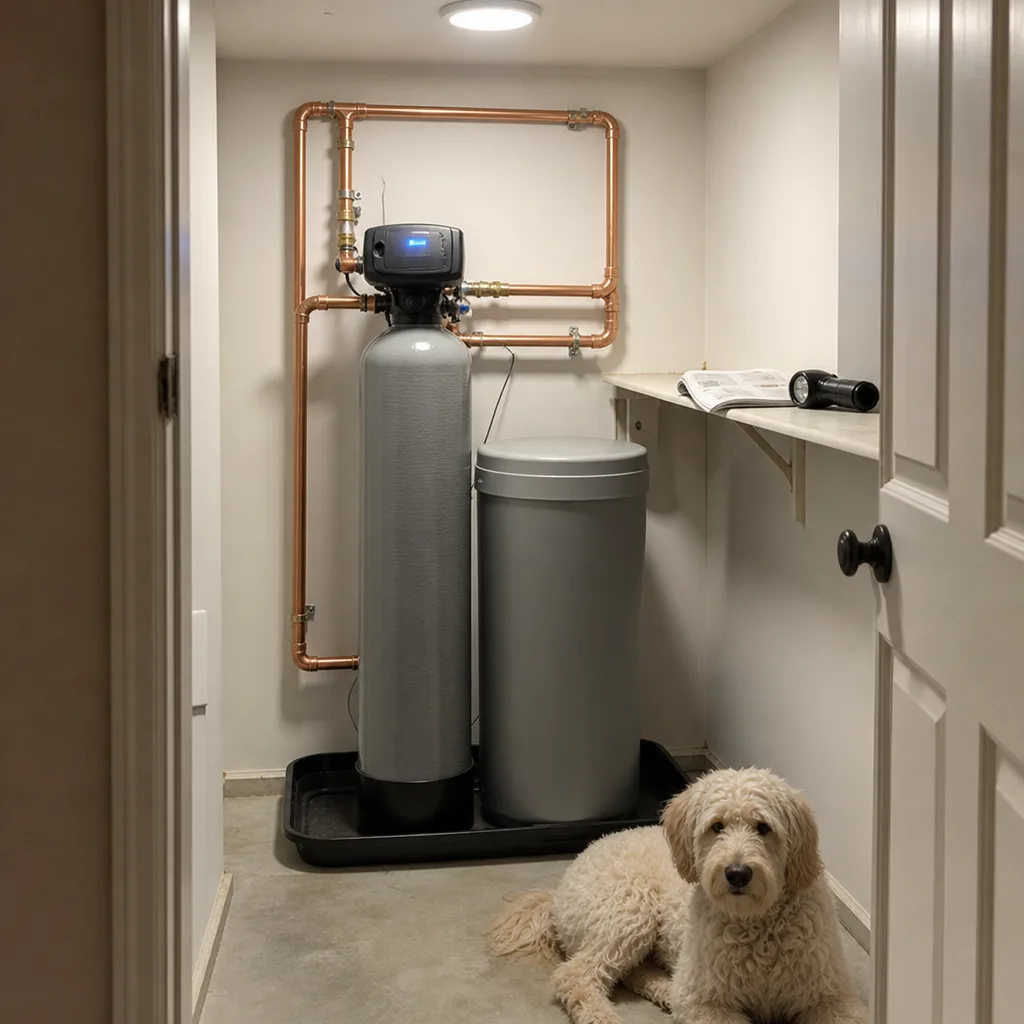
Here’s how to check if you already have one. Most loops are in the garage, often near the water heater or on the wall closest to where the water line comes into the house. Look for two pipes coming out of the wall or up from the floor, a few inches apart. Sometimes they’re joined by a short U-shaped piece of pipe. Sometimes they’re just capped off. Some builders put the loop in a small box on an outside wall instead.
- Two capped or joined pipe stubs side by side in the garage usually means you have a loop.
- A labeled box on an exterior wall near the front hose bib may be a loop box.
- If all you see is the water heater lines and nothing else, you likely don’t have one.
- Not sure? Snap a photo when you call. It helps us tell you what to expect before anyone comes out.
A loop does more than give the softener a place to plug in. A well-planned loop is placed so your outdoor hose bibs and sprinkler system stay on regular water, while everything inside the house gets softened water. That matters. Watering your lawn with softened water wastes salt and isn’t great for your plants. A good loop keeps the softener working only where it counts.
So what does adding one involve? The plumber has to find your main water line after it enters the house, cut into it, and run new pipe to the spot where the softener will sit. Then that pipe comes back to feed the rest of the house. How much work that takes depends on your layout.
- If the main line comes up close to the garage, the run is short and simple.
- If the main enters on the far side of the house, the new pipe may need to travel through a wall or the attic to reach the garage.
- On a slab foundation, the line can’t run under the floor, so the route has to go around or above it.
- Older pipes near the main may need a few new fittings so the new connection is solid.
This is where Fort Worth’s mix of homes comes into play. As we touched on above, some newer subdivision homes were built with a loop already in the garage. Many older slab-on-grade homes weren’t, because softeners weren’t standard back then. If your home is one of those, plan on a loop being part of the conversation.
The good news is this is a one-time job. Once the loop is in, it stays. If you ever replace the softener down the road, the next install hooks right up to it. You’re not paying for it twice. And because it’s quoted separately and approved by you before work starts, you’ll know exactly what the loop adds before you say yes.
Have questions? We’re happy to help.
Call Today, Get Service Today. Xtreme Air Services — Fort Worth is ready to help.
What Happens During Installation and How Long It Takes
Most whole-home softener installs finish the same day. Your water will be off for part of the visit, but you won’t be without it overnight in a normal install. Here’s what the day looks like, so nothing catches you off guard.
A little prep on your end helps the visit go faster:
- Clear a few feet of space where the softener will sit, usually in the garage near your loop or water heater.
- Know where your main water shutoff is, if you can. If you don’t, that’s fine. It just takes a few extra minutes to find.
- Check for a standard outlet near that spot. Most softeners have a small control head that plugs in. If there’s no outlet close by, let us know when you call, since electrical work isn’t part of the standard install.
- Plan to skip showers, laundry, and the dishwasher while the water is off.
On the day of the install, the work follows a clear order:
- Shut off the water. The main supply gets turned off and the lines are drained so the connection can be made dry.
- Remove the old unit. If you’re replacing a softener, the old one comes out and gets hauled away. You don’t have to deal with it.
- Set the new softener. The resin tank, the part that pulls hardness out of your water, goes in place along with the brine tank that holds the salt.
- Connect at the main supply with a bypass. The softener ties into your loop or main line. The bypass valve lets you route water around the softener any time it needs service, without shutting off your whole house.
- Run the drain line. The softener needs a place to flush its rinse water. The line runs to a nearby drain and is secured so it won’t kick loose or back up.
- Start up and test. Water goes back on slowly. Every joint gets checked for leaks, the system fills and flushes, and the control head is set for your water’s hardness and your household’s size.
What can stretch the day? The same things that affect the price. Building a loop from scratch, a long drain run, or old pipes near the main all add time. Those get flagged on your quote ahead of time, so you’ll know before the visit whether yours is a simple hookup or a longer job.
Once the softener is running, you may not feel soft water at every tap right away. Your pipes and water heater are still full of hard water, and it takes some normal use to push it through. Within a day or two, you’ll start to notice soap lathering better and fewer spots on your dishes.
After that, your main job is keeping salt in the brine tank. Lift the lid now and then. If you can see water above the salt, it’s time to add more. That small habit keeps the softener doing its work every day.
Call 817-677-1907
Watch Our Video
See How We Handle Water softener installation in Fort Worth
Xtreme Air Services — Fort Worth
Full-Service Licensed Plumber vs. Treatment-Only Company
Choosing who installs your softener comes down to one question: is your job just setting a tank, or does it involve your plumbing? The softener is the easy part. The hard part is the work around it, like cutting into your main water line, building a loop, running a drain line, adding an outlet, and fixing anything that isn’t up to code.
Some companies only sell and service water treatment equipment. Many of them know softeners very well. But if your home needs plumbing, electrical, or code work to get the softener in, a treatment-only company may have to stop, leave that part out of the quote, or bring in someone else. That’s how a simple install turns into two visits, two bills, and two companies pointing at each other if a joint leaks.
Here’s when a full-service team really pays off:
- Your home has no loop. Building one means cutting into the main line and routing new pipe, which is plumbing work from start to finish.
- The drain is far away. A long drain run has to be secured and connected the right way so it won’t back up or kick loose.
- There’s no outlet near the softener. The control head needs power, and adding an outlet is electrical work.
- Your pipes near the main are old or corroded. Tying into tired pipe takes the right fittings and someone who knows how far the problem goes.
- Something nearby isn’t up to code. A code issue next to the install spot may have to be fixed before the softener goes in.
Xtreme Air Services is a licensed and insured plumbing, electrical, and HVAC contractor. That means one team can cover the loop, the drain, the outlet, and any code corrections. When you look at your quote, you’ll see each of those as its own line, just like we covered in the pricing section. You approve the whole picture up front instead of finding out halfway through that you need to call somebody else.
Now the honest part. You don’t always need a full-service plumber. If your home already has a loop, there’s a drain and an outlet right there, and you’re swapping an old softener for a new one in the same spot, a reputable treatment company can do a fine job. The same goes for salt delivery or a quick setting change. If that’s your situation, it’s fair to pick whoever you trust most and whose price makes sense to you.
Whoever you call, ask these questions before you say yes:
- Who will connect the softener to my water line, and are they licensed to do plumbing work?
- If I need a loop, an outlet, or a code fix, can your team handle it, or will I need to hire someone else?
- Is the haul-away of my old unit included?
- Are permits included, or are they extra?
- Is the price flat-rate and approved before work starts?
Clear answers to those questions tell you more than any sales pitch. If a company gets vague about who does the plumbing, that’s your cue to keep looking.
Frequently Asked Questions
Common questions about Water softener installation
How often do I need to add salt to a water softener?
Check your brine tank every few weeks and add salt whenever the level drops close to or below the water line. Most households end up topping it off about once a month, but it depends on your water use and household size. Making a habit of lifting the lid when you think of it keeps the system working without surprises.
Is Fort Worth tap water safe to drink even though it’s hard?
Yes, hard water is safe to drink. Hardness just means your water carries more dissolved calcium and magnesium, which is a mineral issue, not a safety issue. A softener doesn’t make your water safer, it protects your pipes, water heater, and appliances from scale buildup.
Do I need to be home all day for the installation?
No, but you should plan around a few hours without water while the work happens. Most whole-home softener installs finish the same day, and your water is only off for part of the visit, not overnight. You’ll want to skip showers, laundry, and the dishwasher during that window.
Ready to Get Started?
Call (817) 677-1907 Today, Get Service Today.