


Water Softening Equipment Supplier in Fort Worth: Water Softener Installation, Repair & Replacement
Softener installation, replacement and repair, plus reverse osmosis and whole-home filtration for Fort Worth's hard city water.
What’s Covered on This Page
- Water Softener Installation Fits Homes With Hard Municipal Water
- Water Softener Repair Solves Problems In Existing Units
- Water Softener Replacement Covers Aging Or Failed Systems
- Whole-Home Water Filtration Installation Treats Water At The Source
- Reverse Osmosis System Installation Delivers Purer Drinking Water
- Water Testing Identifies What’s In Your Water Before You Buy Equipment
- Well Water Treatment Addresses Private Well Water Issues
- Water Conditioner Installation Offers A Salt-Free Option
- Iron Filtration System Installation Targets Rust And Staining
- Sediment Filter Installation Removes Grit And Particles
- Other Water Treatment Services We Handle
- Do I need a water softener if I’m on Fort Worth city water?
- How do I know if I need repair or replacement for my softener?
- Do I need a softener, a filter, or both?
- Where can I get my water quality tested in Fort Worth?
- Are resin water softeners safe for my home and plumbing?
- How is water softener installation different from replacement?
You notice hard water spots on your glasses and crusty white scale on the showerhead. Maybe there’s an orange ring in the tub. If you’re looking for a Water Softening Equipment Supplier in Fort Worth, the right fix depends on where your water comes from. Fort Worth’s city water runs hard across most neighborhoods. Homes on the outer edges and in unincorporated Tarrant County often pull from private wells, and well water brings its own mix of iron, sediment, and other issues.
Xtreme Air Services – Fort Worth helps you match the right softening, filtration, or treatment equipment to your water source. We’re a family-owned and operated HVAC, plumbing, and electrical contractor serving Fort Worth and the greater DFW Metroplex for 17 years, since 2009. Whole-home water treatment and softening is part of our plumbing work. We carry a 4.8-star reputation across 2,900+ reviews on Google, Angi, and HomeAdvisor.
Each section below explains what a service does and who it’s for. Find the one that sounds like your home, then call us for a full evaluation.
Not sure which service fits your water problem? Call Xtreme Air Services and talk it through with a real person.
Water Softener Installation Fits Homes With Hard Municipal Water
Fort Worth’s city water carries a lot of dissolved minerals, mostly calcium and magnesium. That’s a big reason so many homes here end up with a softener. You see it as white scale on faucets, spots on dishes, soap that won’t lather, and skin that feels dry after a shower. Inside your pipes and water heater, the same minerals build up where you can’t see them.
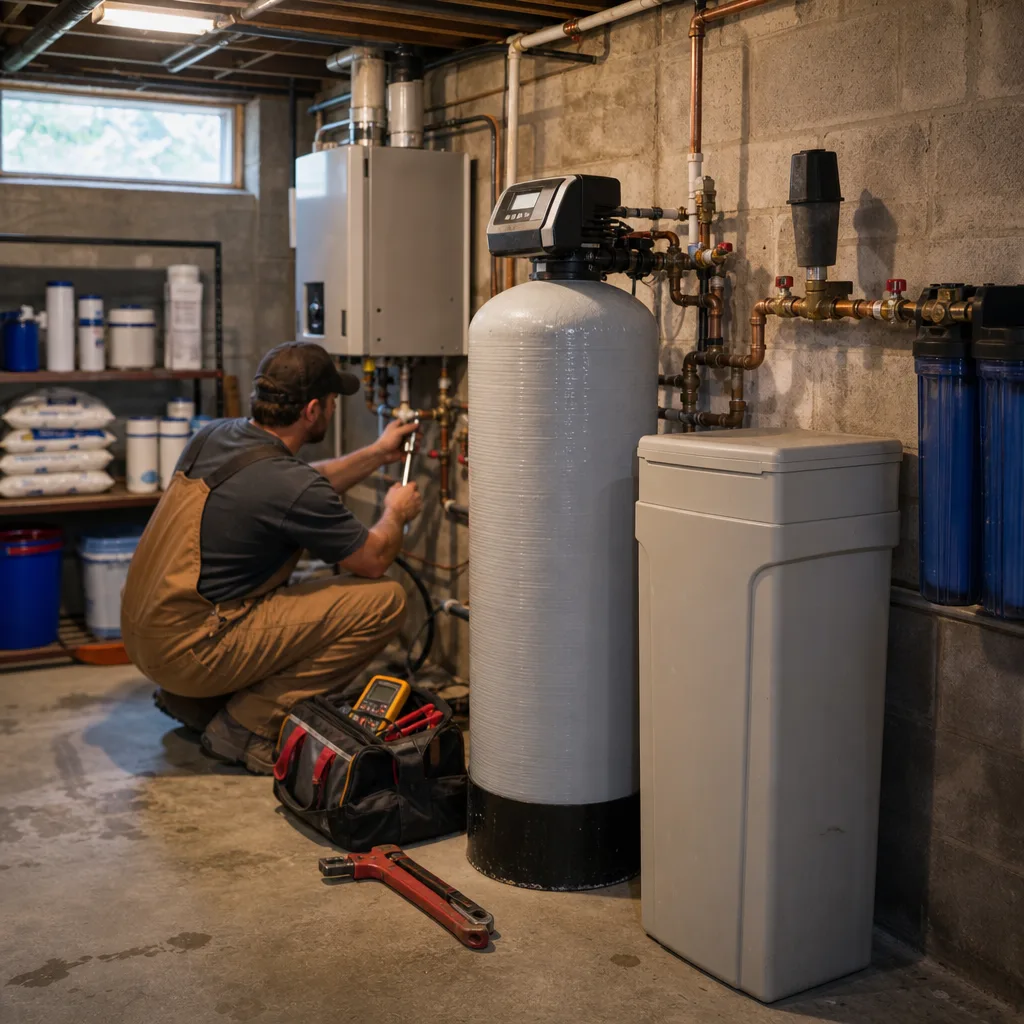
Water softener installation puts a salt-based system on your main water line. As water flows through a tank of small resin beads, the beads trade the hard minerals for sodium. Our technician sizes the softener to how much water your household uses. That way it’s big enough to keep up without being more than you need. Then we connect it to your existing plumbing lines.
Installation is for homes adding a softener for the first time, or homes where the plumbing setup needs to change. If you already have a softener and it’s worn out, that’s replacement, and it’s usually a simpler job.
Sizing is the step people skip when they grab a unit off the shelf. It matters more than most folks think. You can see what the process looks like on our Water Softener Installation in Fort Worth page.
Water Softener Repair Solves Problems In Existing Units
Your softener is running, but the spots on your dishes are back. Or you’ve found a puddle near the brine tank. Or the system regenerates at odd hours and never seems to stop. These are repair calls, and plenty of them don’t need a new unit.
Water softener repair means a technician finds the specific fault and fixes it. Here are common signs it’s time to call:
- Hard water symptoms coming back
- Water leaking around the tank or valve
- The unit cycling too often or not at all
- The salt level in the brine tank not dropping
- Low water pressure that started after the softener went in
A lot of these trace back to one part, like a bad control valve, a clogged injector, or a problem in the resin tank. Fix that part and the system can keep doing its job.
Repair makes sense when your softener is worth saving and the problem is one fault. If the unit is old or keeps breaking in new ways, replacement is usually the better path. We’ll tell you straight which one you’re looking at. Don’t let anyone talk you into a new system before they’ve diagnosed the old one. Read more on our Water Softener Repair in Fort Worth page.
Ready when you are – get in touch today.
Call Today, Get Service Today. Xtreme Air Services — Fort Worth is ready to help.
Water Softener Replacement Covers Aging Or Failed Systems
Replacement and installation sound alike, but they’re different jobs. Water softener replacement means taking out an old unit and putting a new one on the same plumbing connections. Installation may mean running new lines or setting up a softener for the first time.
Replacement is for softeners that have stopped working for good, or ones near the end of their useful life. Some units give out sooner than people expect. When a softener has had repair after repair, or the resin and valve are both worn out, putting more money into it stops making sense.
Since the connections are already there, the swap often goes faster than a first-time install. Our technician removes the old softener, sets the new one, ties it into your existing lines, and sets it up for your household’s water use. You get soft water back without reworking your plumbing.
It’s also a good time to ask whether your household has grown since the last unit went in. A bigger family may need a bigger softener. See what’s involved on our Water Softener Replacement in Fort Worth page.
Dealing with hard water right now? Call Xtreme Air Services to see what the installation process involves.
Whole-Home Water Filtration Installation Treats Water At The Source
Do you want better water at every tap, or just the kitchen sink? If it’s every tap, plus the shower, washer, and water heater, whole-home water filtration installation is the place to start.
A whole-home system goes where water enters your house. Everything that flows past it gets filtered. It’s built to cut down on taste, odor, and sediment problems across your whole home, not just one spot.
Filtration and softening aren’t the same thing. A softener takes out hardness minerals. A filter handles things like chlorine taste, smells, and particles. Plenty of Fort Worth homes end up with both.
Whole-home filtration is the bigger umbrella. Carbon, sediment, and iron filters are often specific parts that work inside it or next to it, each aimed at one type of problem. A water test tells us which pieces your home needs.
New construction in Fort Worth’s growth areas often isn’t pre-plumbed for water treatment, and that surprises a lot of new homeowners. The good news is a system can usually go in on your existing lines without tearing up walls. Get the details on our Whole-Home Water Filtration Installation in Fort Worth page.
Reverse Osmosis System Installation Delivers Purer Drinking Water
Reverse osmosis (RO) is a filter system that pushes water through a very fine membrane. That membrane catches a lot of what other filters let through, including dissolved solids. What comes out is clean, crisp water for drinking and cooking.

Reverse osmosis system installation is a point-of-use job. That means it treats water at one tap, usually under the kitchen sink, with its own small faucet on the counter. Our technician mounts the system, connects it to your cold water line and drain, and checks for leaks before we leave.
This is the right pick if you care most about the water you drink, brew coffee with, or mix into baby formula. Some folks also run a line to the fridge for ice and water.
Here’s the trade-off. Reverse osmosis treats water at one tap for drinking, while whole-home filtration treats all the water coming into your house but won’t match RO purity. RO won’t fix hard water in your shower or scale in your water heater. That’s why a lot of homes pair it with a softener or whole-home filter. Find out more on our Reverse Osmosis System Installation in Fort Worth page.
Not sure what your Water Softening Equipment Supplier project needs? Ask us.
Call Today, Get Service Today. Xtreme Air Services — Fort Worth is ready to help.
Water Testing Identifies What’s In Your Water Before You Buy Equipment
Before you buy any water equipment, find out what’s in your water. Hard water, iron, sediment, and bacteria can show up in similar ways. Cloudy water, odd smells, and stains don’t always point to one cause.
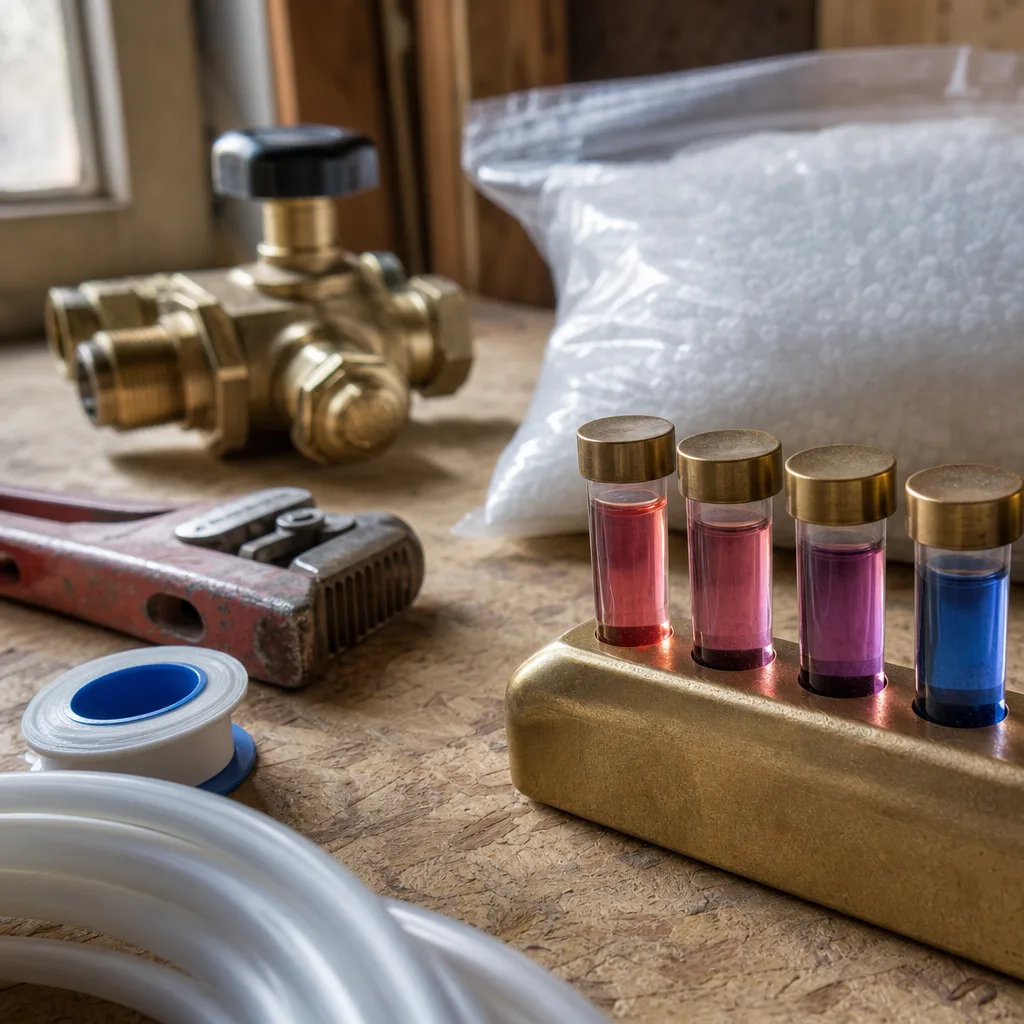
Water testing takes the guessing out. Our technician collects samples and checks for the things that drive equipment choices, such as:
- Hardness from calcium and magnesium
- Iron that leaves rust-colored stains
- Sediment like sand and silt
- Bacteria, mostly a concern with well water
- pH levels that can be hard on pipes
Then we walk you through the results in plain English and explain what equipment, if any, fits your home.
Testing matters most for well water homes on the outer edges of Fort Worth. City water stays fairly steady from one house to the next. Well water can be very different, even between neighbors. Testing first beats buying the wrong system and living with it. Learn how it works on our Water Testing in Fort Worth page.
Well Water Treatment Addresses Private Well Water Issues
If your home sits on the outer edge of Fort Worth or in unincorporated Tarrant County, there’s a good chance your water comes from a private well. Homes in the city core mostly run on municipal water. Out where city lines don’t reach, wells are more common.
Well water doesn’t pass through a city treatment plant. What comes out of your tap depends on the ground under your home. That’s why well water treatment starts with a test, not a sales pitch. The results often look nothing like city water.
Based on what we find, our technician recommends equipment that targets your well’s actual problems. That might be iron filtration for staining, sediment filtration for grit, a softener for hardness, or a mix. Every well is a little different, so the setup is too.
One thing to be clear on. This service covers the treatment equipment that cleans up your well water. Well pump repair and well drilling are separate plumbing jobs and aren’t part of it.
Your neighbors on city water can lean on general advice. You’ll do better with a plan built from your own test results. Read more on our Well Water Treatment in Fort Worth page.
Watch Our Video
See How We Handle Water Softening Equipment Supplier in Fort Worth
Xtreme Air Services — Fort Worth
Water Conditioner Installation Offers A Salt-Free Option
A water softener and a water conditioner both go after hard water. They just do it in different ways. A softener uses salt and ion exchange to pull hardness minerals out of the water. A conditioner doesn’t use salt at all.
Water conditioner installation is for homeowners who want help with hard water but don’t want to add salt or haul heavy bags. Instead of removing calcium and magnesium, a conditioner changes how those minerals behave. They’re less likely to stick to your pipes, fixtures, and water heater as scale. It’s a good fit if you:
- Want to skip salt and brine tank upkeep
- Are watching sodium in your water
- Mainly care about scale buildup
There’s an honest trade-off. Since the minerals stay in the water, you may still notice some spotting on glass and dishes. A softener does a better job with that. We’ll lay out both options so you can pick what fits how you live. See the full picture on our Water Conditioner Installation in Fort Worth page.
Need help with Water Softening Equipment Supplier?
Call Today, Get Service Today. Xtreme Air Services — Fort Worth is ready to help.
Iron Filtration System Installation Targets Rust And Staining
Maybe you’re seeing orange stains in the toilet bowl or rusty streaks in the sink. Your white towels come out of the wash looking tan. Those are classic signs of iron in your water.
Iron filtration system installation puts a filter on your water line that pulls iron out before it reaches your fixtures, laundry, and appliances. A regular softener can handle a little iron, but it isn’t built for heavy amounts. An iron filter is.
Two groups tend to need this most. The first is well water homes, since iron is common in groundwater. The second is older homes with aging or galvanized pipes. In established Fort Worth neighborhoods, older galvanized plumbing can rust from the inside, and iron behaves differently in those pipes than it does in newer homes.
That’s why we test first. If the iron is coming from your well, a filter on the main line makes sense. If it’s coming from your old pipes, a filter alone may not solve everything, and we’ll tell you so. Get more details on our Iron Filtration System Installation in Fort Worth page Iron filtration system.
Sediment Filter Installation Removes Grit And Particles
A sediment filter catches sand, silt, rust flakes, and other loose particles in your water. It’s one of the basic pieces of water treatment, and one of the most useful.

Sediment filter installation is for well water households and any home with water that looks cloudy or feels gritty. If you see specks in a glass of water or find grit in your faucet screens, sediment is likely the cause.
Our technician installs the filter on your main line so particles get caught before they reach your fixtures, water heater, and appliances. Grit wears down valves and clogs faucet screens over time. It can also make your other equipment work harder. A sediment filter often goes in ahead of a softener, iron filter, or reverse osmosis system to protect it.
It’s a small part of the setup, but it pulls a lot of weight. Learn more on our Sediment Filter Installation in Fort Worth page.
Other Water Treatment Services We Handle
A few related services round out our water treatment work. We handle Water softener maintenance to keep an existing system running well, Salt refill / setup so your softener never runs dry, Carbon filtration system installations for taste and odor, and UV water purification for homes that need extra protection against bacteria. Ask us about Water softener maintenance on any visit.
Call Xtreme Air Services today to schedule a water evaluation for your Fort Worth home.
Frequently Asked Questions
Common questions about Water Softening Equipment Supplier
Do I need a water softener if I’m on Fort Worth city water?
Most likely yes. Fort Worth’s city water runs hard across most neighborhoods, leaving scale on faucets and spots on dishes. If you’re on a private well in outer Tarrant County, you may deal with iron or sediment instead. Call us and we’ll help you figure out which equipment fits your actual water source.
How do I know if I need repair or replacement for my softener?
If one part failed, like a control valve or injector, repair usually fixes it. If your unit is old or keeps breaking in new ways, replacement makes more sense. We diagnose the unit first and tell you which path fits, instead of pushing a new system before checking the old one.
Do I need a softener, a filter, or both?
A softener removes hardness minerals like calcium and magnesium. A filter handles chlorine taste, odor, and sediment. Many Fort Worth homes need both, since softening and filtration solve different problems. Tell us what symptoms you’re seeing and we’ll point you to the right equipment, or a combination.
Where can I get my water quality tested in Fort Worth?
Xtreme Air Services can evaluate your water and talk through what’s causing your symptoms, whether that’s hardness, iron, or sediment. Testing tells you what’s in your water before you buy equipment. This matters most if you’re on a private well, since well water varies a lot across Tarrant County.
Are resin water softeners safe for my home and plumbing?
Yes, resin softeners are a standard, well-tested way to treat hard water in homes across Fort Worth and the DFW Metroplex. They trade hardness minerals for sodium using small resin beads in a tank. Proper sizing and installation on your plumbing lines matters more for long-term performance than the resin itself.
How is water softener installation different from replacement?
Installation often means running new lines or setting up a softener for the first time in a home that’s never had one. Replacement swaps an old, failed unit for a new one on the same existing connections. Replacement is usually faster since the plumbing work is already done.
Ready to Get Started?
Call (817) 677-1907 Today, Get Service Today.