


Whole-Home Water Filtration Installation in Fort Worth
Point-of-entry filtration for every tap in the house, compared honestly with softeners and reverse osmosis.
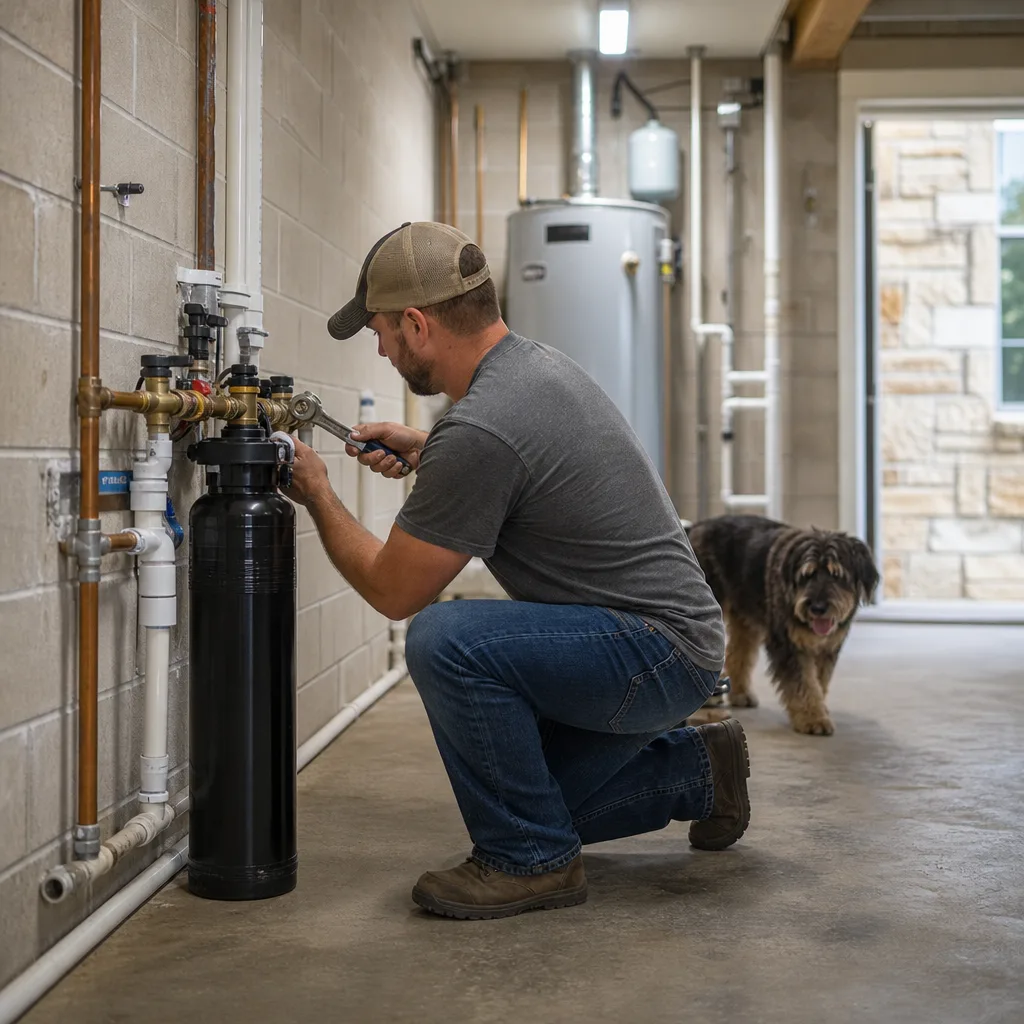
What’s Covered on This Page
- Signs Your Water Needs Whole-Home Treatment
- Water Testing Comes Before Installation
- Point-of-Entry Filtration vs. Single-Tap Filters
- What’s Included in a Professional Installation
- What Drives Your Price Up or Down
- Can I install a whole-home water filter myself instead of hiring someone?
- Why does my tap water smell like a swimming pool?
- Do I need a water softener, a whole-home filter, or both?
Signs Your Water Needs Whole-Home Treatment
The best clue is where the problem shows up. If it’s only at the kitchen sink, it could be that faucet or that one line. If it shows up in the shower, the laundry, the ice maker, and the bathroom sink, your water is arriving that way. Say you’ve swapped out the showerhead twice, the new one clogs within a few months, and the bathroom still smells like a pool. That isn’t bad luck with fixtures. It’s your water supply.
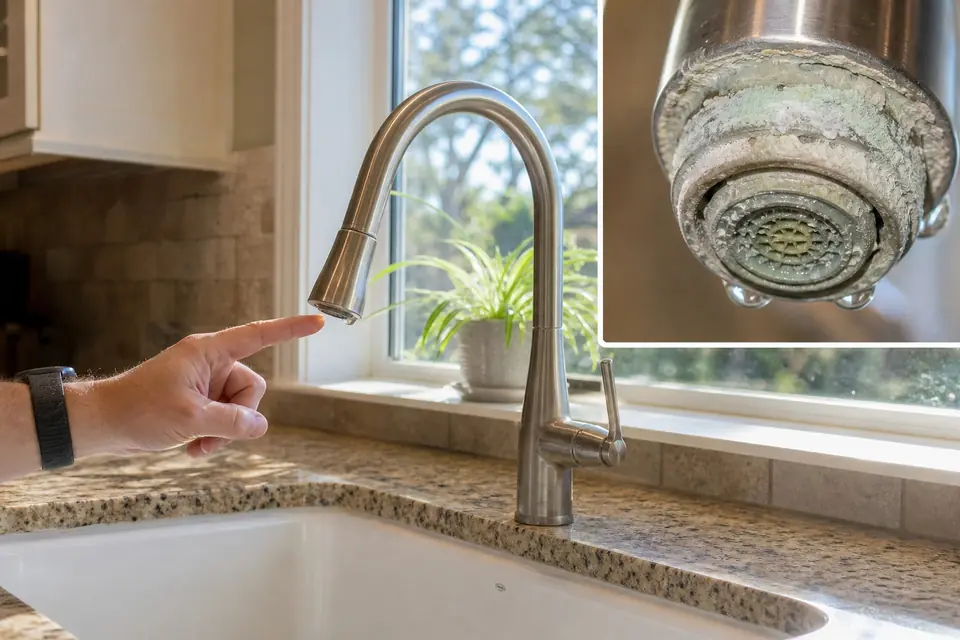
Here’s what to look for around your home:
- A bleach or pool smell when you run the shower or fill the tub. City water is disinfected before it reaches you, and some people notice it as dry skin and dull hair, too.
- Grit, sand, or small flakes in faucet aerators, showerheads, or the bottom of the toilet tank. That’s sediment, and it slowly wears on valves and appliance parts.
- Rust-colored or orange stains in sinks, tubs, and toilets, or white laundry that keeps coming out dingy.
- A musty, earthy, or metallic taste in water from every tap, not just one.
- Clogged inlet screens on your washer or dishwasher, or a fridge filter that wears out much faster than the box says it should.
- White crust on fixtures and cloudy spots on glasses. That’s hard water, and it’s common across North Texas.
That last sign needs its own word. White scale comes from dissolved minerals like calcium and magnesium, and a carbon or sediment filter won’t stop it. Scale is a softener’s job. Left alone, it builds up inside your water heater and fixtures and makes them work harder. Plenty of homes have both problems at once, a chlorine taste plus hard-water buildup, and the right setup handles each one in the right order. Knowing which problem you have keeps you from paying for equipment that doesn’t fix what’s bugging you.
Be honest about scope, too. If the only thing that bothers you is how your drinking water tastes, and the shower and laundry seem fine, you probably don’t need a whole-home system. A filter at the kitchen sink, or a reverse osmosis system under it, can fix that for a lot less. Whole-home treatment earns its cost when the problem follows you to every faucet in the house.
The surest way to know is a water test. It shows what’s in the water at your main line, so the system gets matched to your water and your home’s flow rate instead of picked off a shelf. If you’re on a private well, testing matters even more. Well water can carry iron, sediment, or bacteria that treated city water usually doesn’t, and each of those calls for a different kind of treatment.
Water Testing Comes Before Installation
A good water test isn’t a sales step. It’s the measurement the whole install is built on. Skip it, and you’re guessing at which filter goes on your main line, in what order, and how big it needs to be. Wrong guesses cost real money.
Here’s what a useful test looks at, and why each one matters to your system:
- Hardness. This tells you whether you need a softener next to your filter. A filter alone won’t handle scale.
- Chlorine or chloramine. City water is treated with one or the other. Chloramine is tougher to remove and usually needs more carbon and more contact time than plain chlorine.
- Iron and manganese. These cause orange and black stains, and they can foul other equipment if they aren’t handled first.
- Sediment. Sand and grit clog finer filters fast, so they decide whether you need a sediment stage up front.
- pH. Water that runs acidic or alkaline changes how other stages perform and how your pipes hold up.
- Total dissolved solids. This gives a quick read on how much is in your water overall.
Order matters as much as parts. Think of it like a line of strainers in your sink, coarse to fine. A sediment stage usually goes first so grit doesn’t choke the carbon behind it. If iron shows up, it has to be dealt with before it reaches a softener or a carbon tank. Put the stages in the wrong order and the system can look fine on day one but clog or stop working well within months.
Then there’s size. Every drop of water your house uses passes through a whole-home system. So it has to keep up when the shower, dishwasher, and washing machine all run at once. An undersized system drops your water pressure right when you need it. An oversized one costs more than it should. Your number of bathrooms, how many people live in the house, and your home’s flow rate set the right capacity.
What about the test strips from the hardware store? They’re fine for a quick look at hardness or chlorine. But they often miss iron, manganese, and chloramine, and they don’t tell you anything about flow rate or your plumbing. If you already have a recent professional test, keep it handy. It may answer a lot of these questions already.
Testing also affects your price. Our whole-home installs are priced by system type, and cost moves with filtration type and stages, flow rate and capacity, the condition of your existing plumbing, drain access, and any code upgrades. Most of those factors come straight from the test and a look at your main line. That’s how you get upfront flat-rate pricing you approve before work starts, instead of a number that changes halfway through the job.
Water testing is one of the services we offer. It can point you to a whole-home filter, a water softener, a reverse osmosis system for drinking water, or a mix of them. Sometimes it shows you need less equipment than you thought. That’s worth knowing before you buy anything.
Point-of-Entry Filtration vs. Single-Tap Filters
The real difference is where the water gets cleaned. A point-of-entry system sits on your main line, so every drop is treated before it splits off to the rest of the house. A single-tap filter, sometimes called point-of-use, cleans water at one spot only. That spot is usually the kitchen sink or the fridge. Both are good tools. They just do different jobs.
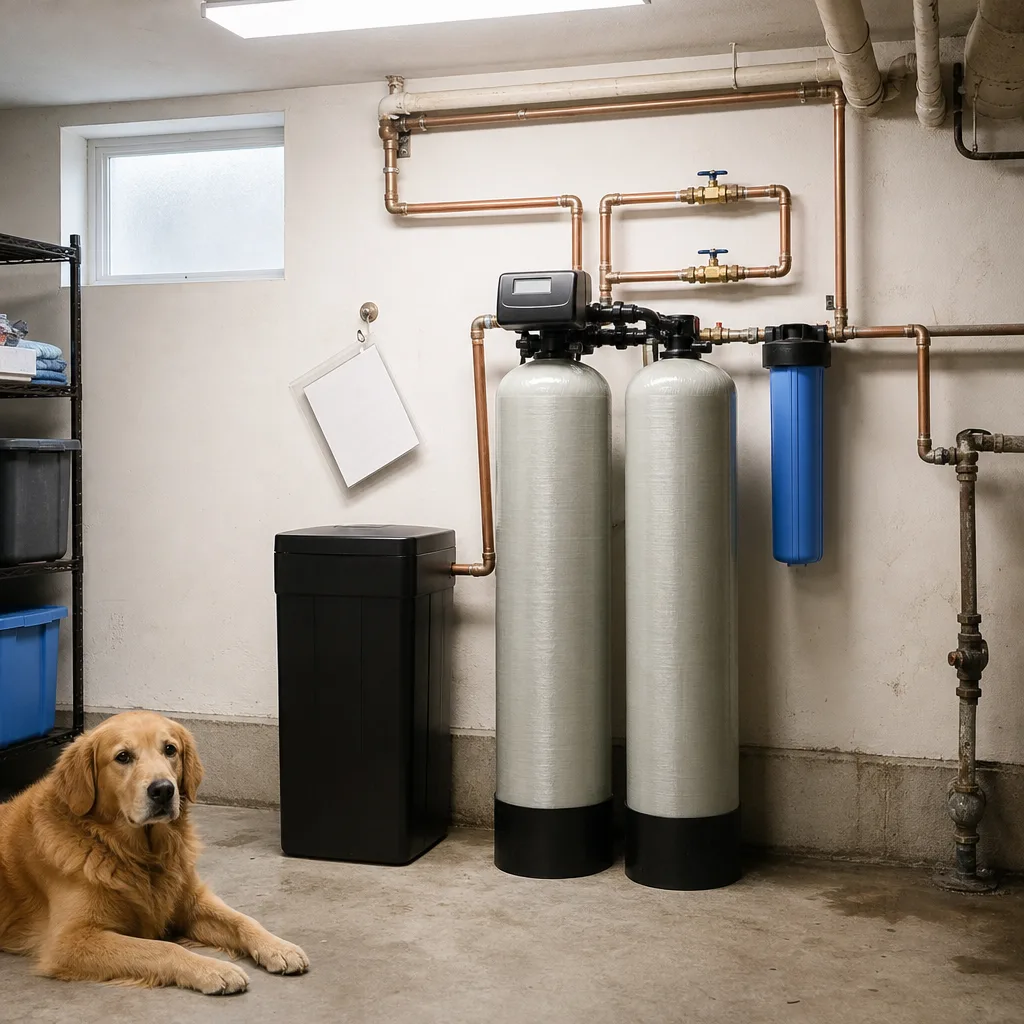
Here’s how they compare on the things that matter day to day:
- Coverage. A whole-home system treats your showers, tubs, laundry, dishwasher, ice maker, water heater, and outdoor spigots. A single-tap filter treats one faucet. Everything else in the house still gets untreated water.
- What they’re best at. Whole-home filters handle the big-volume problems, like chlorine smell, sediment, and off tastes at every tap. A single-tap reverse osmosis system goes finer and is built for the small amount of water you drink and cook with.
- Upkeep. A whole-home system means one place to service, right at the main line. Several single-tap filters mean several cartridges on several schedules, under several sinks.
- Install needs. A single-tap filter fits under a cabinet. A whole-home system needs room near where your water enters the house, a way to bypass it for service, and sometimes a drain nearby.
That last point is worth a closer look before you decide. On many slab-foundation homes, the main line comes up in the garage, on an outside wall, or near the water heater closet. Newer homes are sometimes built with a plumbing loop, which is a ready-made connection point for water treatment. Older homes often aren’t. If yours doesn’t have one, it has to be added. That’s not included in our standard install price. So it’s good to know up front, and it’s one of the first things we look at on your main line.
Here’s a simple way to picture the choice. If you’d filter only the kitchen faucet, you’d still shower in the same water that smells like a pool. Your washer and water heater would still take in the same grit. A whole-home system fixes that. But it isn’t made to deliver the extra-fine drinking water a reverse osmosis unit does.
That’s why plenty of homeowners end up with both. The whole-home filter does the heavy lifting for the whole house. A small reverse osmosis system at the kitchen sink polishes the water you drink. It also helps the drinking filter, since the water reaching it has already been cleaned once, so its parts don’t work as hard. If you have hard water too, a water softener can join the setup. Your test results decide what goes where.
The deciding question is simple. Does the problem bother you only when you drink, or everywhere you use water? If it’s only the glass in your hand, a single-tap filter is the honest answer. If you notice it in the shower, the laundry, and on your fixtures, treating the water once at the main line makes more sense than chasing it faucet by faucet.
Not sure what your Whole-home water filtration installation project needs? Ask us.
Call Today, Get Service Today. Xtreme Air Services — Fort Worth is ready to help.
What’s Included in a Professional Installation
When you get a quote for whole-home water filtration installation, you should know what’s in that number. Our most common job is a point-of-entry system installed at your main supply to treat the whole home, connected and tested. It’s priced by system type. Here’s what the price includes.
- The system and materials. This covers the filtration equipment your water test calls for, plus the parts that tie it into your main line.
- Professional installation by our licensed and insured technicians.
- Connections. The system gets plumbed into your supply line so treated water reaches every tap, shower, and appliance in the house.
- Startup and testing. The system is put into service and checked before the job is called done.
- Haul-away of the old unit. If you’re replacing an older filter or system, you won’t be left with it sitting in your garage.
Startup and testing is the part people skip past, but it matters. A new whole-home filter isn’t finished when the last fitting is tight. New filter media often needs to be flushed before the water runs clear. Every joint needs to stay dry under full pressure, and your water pressure should still hold up when the shower and the washing machine run at the same time. A system that drips at a joint or makes your shower weak isn’t done, no matter how good the equipment is.
Some work falls outside the standard install. It’s better to hear about it now than on install day:
- A plumbing loop, if your home doesn’t already have one.
- Electrical work. Some setups, like a UV water purification stage, need power near the main line. If there’s no outlet there, adding one is separate. Since we’re an electrical contractor too, one team can handle it.
- Code corrections. If the existing plumbing around your main line doesn’t meet current code, fixing it is a separate item.
- Permits, unless your quote says they’re included.
None of these come up on every job. A newer home with a loop and an open spot near the water heater may need none of them. An older home may need one or two. Either way, you’ll see it in your upfront flat-rate price and approve it before any work starts. No meter running, and no new line items showing up halfway through.
If we come out to look at your main line, there’s a $26-$99 service-call fee. That fee is credited toward the job if you go ahead with Xtreme Air Services. Flexible financing is also available on qualifying installations and larger jobs, on approved credit.
Whoever you hire, ask the same plain questions before you sign. Does the price include startup and testing? Will they haul away the old unit? Are permits included? Who handles electrical work if it’s needed? A good installer will answer all four without hesitating. If the answers are vague, that tells you something too.
Watch Our Video
See How We Handle Whole-home water filtration installation in Fort Worth
Xtreme Air Services — Fort Worth
What Drives Your Price Up or Down
Our whole-home water filtration installs typically run $1,500-$4,500. Our most common job is a point-of-entry system installed at your main supply, and it runs $2,100-$3,300. Where your home lands in that range comes down to five things. Here’s how each one moves the number, so your quote makes sense when you see it.
- Filtration type and stages. A single sediment stage is the simplest setup. Each stage you add on top adds equipment and labor, like a carbon tank for chlorine taste or an iron filter for orange stains. Chloramine matters here too, since it usually takes a larger or special carbon tank than plain chlorine does. Your test results decide how many stages you pay for.
- Flow rate and capacity. A two-bath home with two people can run on a smaller system than a four-bath home where showers, laundry, and the dishwasher all run at once. Bigger tanks and wider fittings cost more. Going too small to save money shows up later as weak pressure every morning.
- Condition of your existing plumbing. Tying into a clean, easy-to-reach line near the water heater is quick work. Corroded older pipe, a main valve that won’t fully shut off, or a cramped closet with no room to work all add time. If your home needs a plumbing loop added, that’s priced on its own, as covered above.
- Drain access. Some systems clean themselves on a timer by flushing water out, including backwashing carbon tanks and many iron filters. Those need a drain close by. Cartridge-style systems don’t. If the best spot for your system is in the garage and the nearest drain is across the room, running a line to it adds cost. Sometimes a cartridge system avoids that.
- Code upgrades. If the plumbing around your main line doesn’t meet current code, it has to be fixed so the install is done right. That could mean adding a proper shutoff or bypass valve, or other corrections. These items are separate from the standard price and show up in your quote before any work starts.
Picture two homes on the same street. The first was built with a plumbing loop and has a drain right next to the water heater. Its city water just needs carbon to fix the chlorine smell. The second is an older slab ranch with hard water, iron stains in the tubs, and a main line on the far side of the garage from any drain. Same street, very different quotes. Neither homeowner is being overcharged. The second home simply needs more equipment and more work to get the same result.
You have some control over where you land. Buy only the stages your test calls for, not extras that sound good on paper. Put the system where the main line and a drain are already close together, if your home allows it. And ask for a quote that spells out how each of these five factors applies to your house. When you can see why a price is what it is, you can decide with confidence instead of guessing.
Frequently Asked Questions
Common questions about Whole-home water filtration installation
Can I install a whole-home water filter myself instead of hiring someone?
You can, but matching the system to your water and your home’s flow rate is where DIY installs usually go wrong. A unit bought off a shelf may not account for your hardness, chlorine or chloramine levels, iron, or sediment, and getting the stage order wrong can mean a system that clogs or stops working well within months. A water test and a look at your main line tell you what your home needs before you spend money on equipment.
Why does my tap water smell like a swimming pool?
That smell is chlorine or chloramine used to disinfect your city water before it reaches your home. If you notice it at every faucet, especially in the shower, it points to treatment needed at your main supply rather than one fixture. Chloramine is tougher to remove than plain chlorine and usually needs a larger or special carbon stage to clear it.
Do I need a water softener, a whole-home filter, or both?
It depends on what’s bothering you. A whole-home filter handles chlorine smell, sediment, and off tastes at every tap, but it won’t stop the white scale that comes from hard water minerals like calcium and magnesium. If you have both a chlorine taste and scale buildup on fixtures, a softener and a filter working together handle each problem in the right order, and your water test results decide what goes where.
Ready to Get Started?
Call (817) 677-1907 Today, Get Service Today.