


Commercial Duct Cleaning in Sunnyvale That Catches Problems Early
Rooftop units and commercial trunk lines cleaned to NADCA ACR standards, scheduled around your hours, with documentation for your facility file.
What’s Covered on This Page
- Signs Your Commercial Building Needs Duct Cleaning
- Rooftop Units Are Common in Sunnyvale Commercial Buildings
- When Duct Cleaning Isn’t the Fix You Need
- What Happens During a Commercial Duct Cleaning Visit
- Verifying Airflow and Air Quality After Cleaning
- How fast can you schedule commercial duct cleaning for a Sunnyvale building?
- What happens when your crew arrives to clean a rooftop unit system?
- How often should a Sunnyvale warehouse or office get commercial duct cleaning?
- Can duct cleaning fix uneven airflow between rooms or floors?
- Do you clean the rooftop unit coils and blower along with the ductwork?
Signs Your Commercial Building Needs Duct Cleaning
Commercial buildings in Sunnyvale run their HVAC systems harder and longer than facilities in drier climate zones because Zone 3A’s mixed-humid profile keeps compressors cycling through most of the year. That extended runtime pulls more airborne particulate through the duct system, and per ANSI/NADCA ACR 2021 Standard guidance, buildup accumulates faster under these conditions than industry averages suggest. Facility managers often notice the downstream effects before they connect them to the ductwork itself.
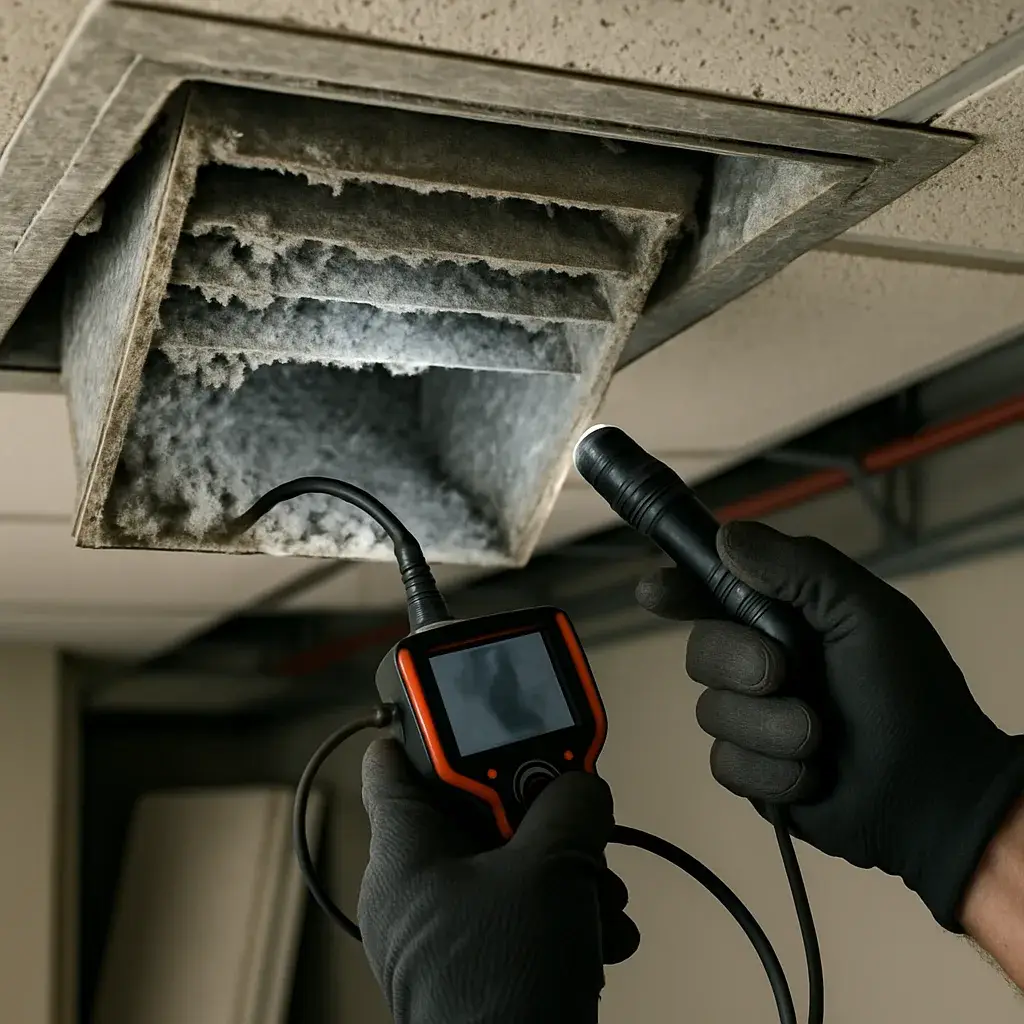
- Visible dust discharge from supply registers, especially dark streaking around vent covers or diffusers shortly after the system starts a cycle
- A persistent musty or stale odor that returns even after cleaning surfaces, often stronger near return air grilles or in rooms with poor circulation
- Uneven airflow between floors, suites, or zones, where some tenants report weak or nonexistent airflow while others run consistently strong
- A noticeable uptick in tenant complaints about allergies, headaches, or general air quality, particularly clustered in specific wings or floors
- Lingering fine dust or debris settling on desks and shelving weeks after a renovation, tenant improvement project, or demolition phase
- Higher than expected energy bills paired with reduced cooling performance, suggesting restricted airflow is forcing equipment to work harder
- Dust rings or soot marks around ceiling diffusers that reappear quickly after routine cleaning
Any one of these signs on its own might seem minor, but in combination they typically point to duct contamination that has crossed the threshold where basic filter changes or spot cleaning stop being effective. Post-renovation dust is especially common in Sunnyvale’s active commercial corridors, where tenant turnover and buildouts introduce drywall dust, insulation fibers, and construction debris directly into return air paths. Left unaddressed, this debris recirculates continuously, compounding the buildup that Zone 3A’s duty cycles already accelerate.
Rooftop Units Are Common in Sunnyvale Commercial Buildings
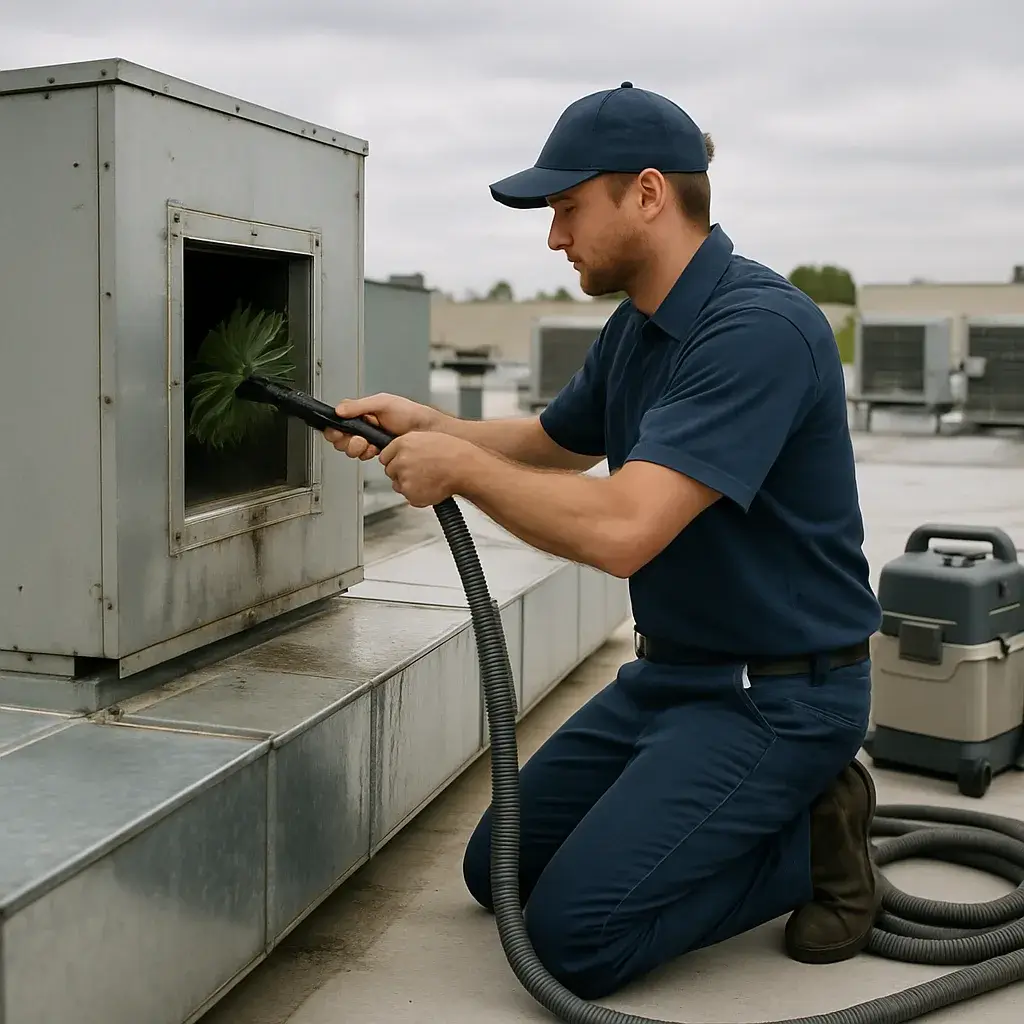
Walk the roofline of almost any warehouse, distribution center, or strip retail building along the US-80 frontage corridor in Sunnyvale and you will see the same pattern: rows of rooftop package units, commonly called RTUs, instead of a centralized chiller plant with a mechanical room. This is standard construction for single-story commercial buildings built from the 1980s through today, and it shapes almost every decision that goes into commercial duct cleaning here.
Unlike a residential furnace tucked into a closet or attic, an RTU houses the blower, coils, filters, and often the first several feet of ductwork all in one weatherproof cabinet on the roof. Ductwork typically drops straight down through the roof deck into the space below, sometimes feeding a network of branch runs above a suspended ceiling, sometimes dumping directly into an open warehouse ceiling with minimal distribution. That difference matters because access points, cleaning methods, and even crew safety protocols change when the starting point of the system is 20 feet in the air rather than in a hallway closet.
- Roof access requires ladder trucks, roof hatches, or exterior stairways, and often a fall-protection plan for technicians working near the roof edge
- Duct drops from RTUs may be shorter and more direct than residential trunk-and-branch systems, but they collect dust, product residue, and pest debris quickly in warehouse and light industrial settings
- Cleaning crews need to coordinate roof access with tenant operating hours, since RTUs often serve open retail floors or active warehouse zones below
- Multiple RTUs on one roof may each serve a separate tenant space, requiring the cleaning plan to map which unit feeds which suite before work begins
Because the duct system and the RTU itself are physically connected at the roofline, a duct cleaning job that ignores the unit’s coils, blower wheel, and drain pan is only solving part of the problem. Grease-laden air from a retail food tenant, fine particulate from a warehouse operation, or simple accumulated dust can travel back into the coil and blower section just as easily as it settles in the ductwork below.
This is why the same contractor who cleans your ducts should also be equipped to service the RTU components directly connected to them. A coordinated visit that covers duct interiors, coil surfaces, and blower assemblies in one mobilization reduces the number of roof-access trips, keeps documentation consistent for lease or insurance requirements, and gives building owners along the corridor a single point of accountability for airflow performance rather than juggling separate duct and mechanical vendors.
When Duct Cleaning Isn’t the Fix You Need
Not every HVAC complaint in a Sunnyvale office park, warehouse, or retail center calls for duct cleaning, and a reputable contractor should tell you that up front. If certain conference rooms run hot while others freeze, or if your rooftop unit strains to push air through the building, the culprit is usually leaky seams, disconnected flex duct, or undersized branch runs feeding older Sunnyvale properties built decades before current tenant loads. Cleaning does nothing to fix a physical airflow restriction. What helps is a duct leakage test, sealing with mastic or foil tape at connection points, and in some cases resizing a branch line so it can handle the CFM your equipment is rated for.
Mold is another situation where cleaning is the wrong tool. If you are seeing dark staining around diffusers, smelling a persistent musty odor near the mechanical room, or dealing with condensation buildup inside ductwork after a roof leak or a humid North Texas winter, that is a remediation issue, not a cleaning issue. Standard duct cleaning removes dust and debris, but it is not designed to kill mold colonies, dry out water-damaged insulation, or address the moisture source feeding the growth. A certified mold remediation specialist needs to test the extent of contamination, remove and replace affected duct sections or insulation, and correct the humidity or leak problem first. Running a duct cleaning crew through contaminated ductwork can spread spores further into occupied space through the supply registers.
There is also a large gap between full duct cleaning and simple upkeep. If your building just needs fresh filters swapped on schedule, vent covers wiped down, or dust buildup knocked off diffusers in a break room, that is routine maintenance your janitorial staff or a basic HVAC service visit can handle without scheduling a full negative-air duct cleaning. Reserving full duct cleaning for buildings with genuine debris accumulation, post-construction dust, rodent activity, or a documented indoor air quality complaint keeps your maintenance budget focused where it moves the needle.
- Uneven airflow between rooms or floors usually points to duct leaks or sizing problems that need sealing or repair, not cleaning
- Musty odors, visible staining, or condensation inside ducts signal mold contamination requiring remediation and moisture correction
- Light dust on vent covers or a filter that is simply overdue can be resolved with routine maintenance instead of a full service call
- A qualified contractor should inspect first and recommend the correct fix rather than defaulting to a duct cleaning quote
Not sure what your Commercial duct cleaning project needs? Ask us.
Call Today, Get Service Today. Xtreme Air Services is ready to help.
What Happens During a Commercial Duct Cleaning Visit
So what does a real commercial duct cleaning visit look like? Not some mystery van showing up and disappearing into your ceiling for a few hours. There’s a process, and it’s worth knowing before you book.
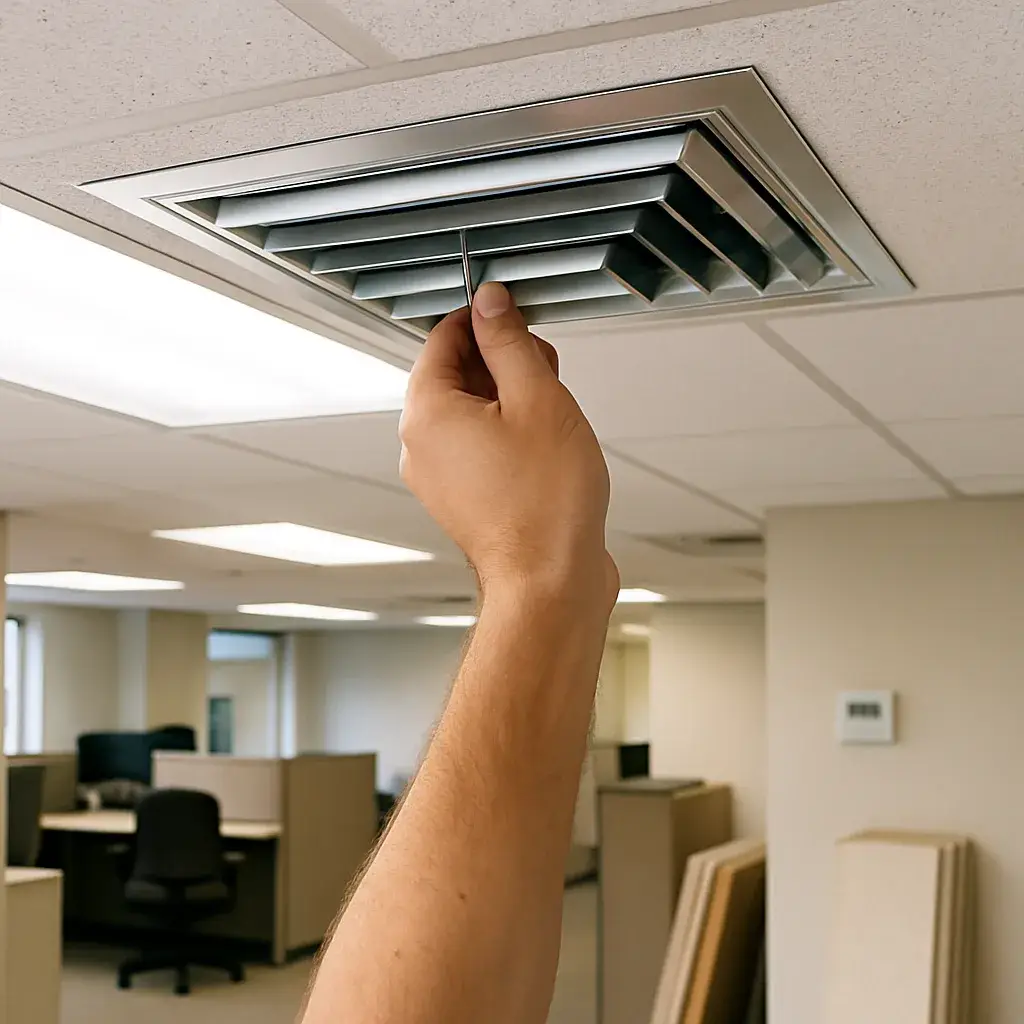
- We start with a walkthrough. Our technician looks at every system, every run of ductwork, and every vent to map out the job before touching anything.
- Next comes access. Grilles and registers come off, and we check how the buildup looks near each opening. This tells us a lot about what’s happening further back in the line.
- Then the cleaning itself. We work the full duct run and every vent, pulling dust, debris, and buildup out of the system instead of just knocking it loose.
- We check airflow at each vent once the cleaning’s done. A duct can look clean and still choke airflow if something’s off further up the line.
- Last, we walk the space with you. You see what came out, what we found, and what your airflow looks like now.
A strip center near the U.S. 80 corridor in Sunnyvale might have three rooftop units feeding one open floor plan, that changes the whole plan compared to a single-tenant office with one small system. Bigger building, more vents, more time on-site.
If we find something during the walkthrough that needs more than cleaning, like a duct seam that’s come loose or a section that needs repair, we’ll tell you straight and quote that work separately. We don’t fold surprise repairs into a cleaning visit without you knowing first.
Verifying Airflow and Air Quality After Cleaning
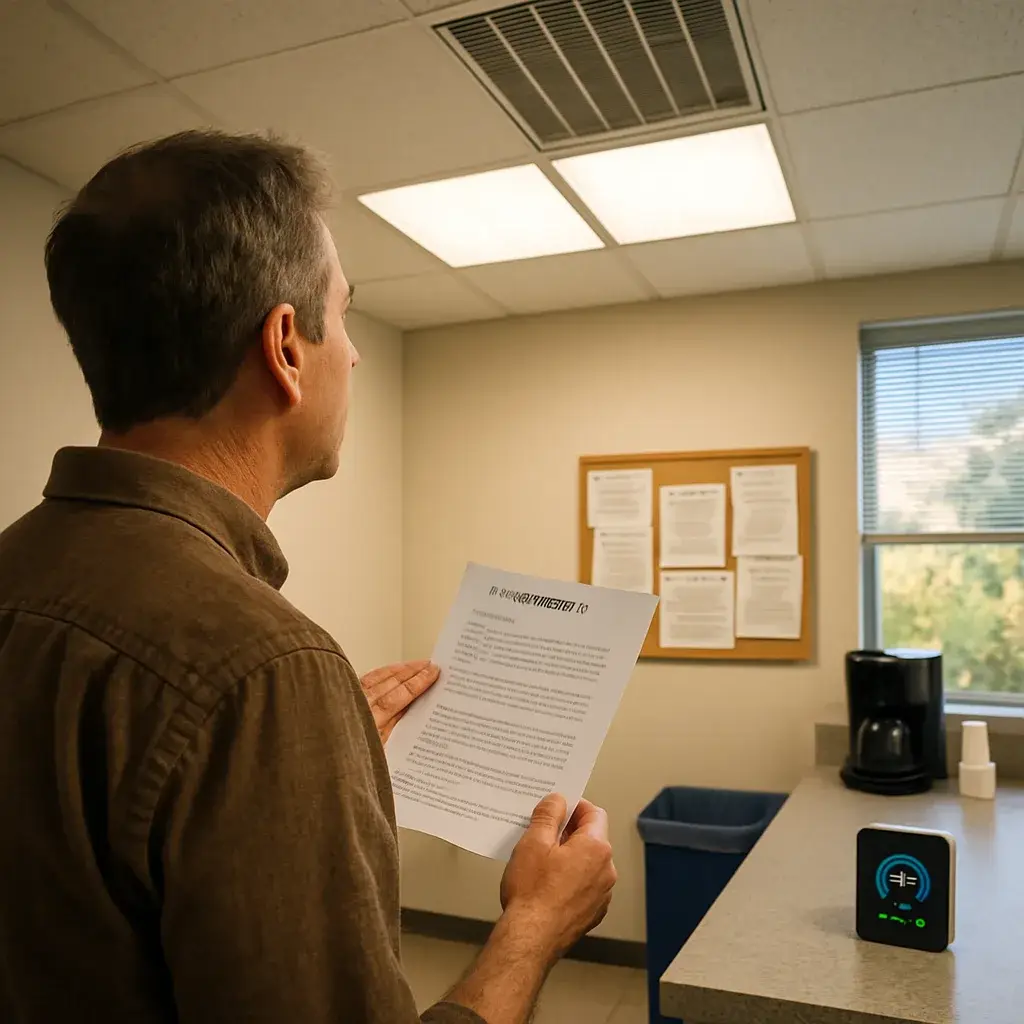
A clean duct that still blows weak air didn’t get the job done. That’s why we don’t just vacuum out the ductwork and leave. Every commercial duct cleaning job includes an airflow check at the vents and registers, so you can see the difference before we pack up the truck.
Here’s what that looks like in practice.
- We check airflow at each register and vent, comparing readings against what the system should be pushing.
- We look inside the ductwork with a camera or flashlight to confirm the buildup is gone, not just knocked loose.
- We check the return side too, since a dirty return grille can choke airflow just as bad as a dirty supply duct.
- We note any spots where dust or debris keeps collecting, that’s usually a sign of a leak or a gap somewhere in the run.
Usually, staff notice the change before we even say anything. Stale smells fade. Vents that used to whistle or barely trickle air start pushing steady. Dust on desks and shelves stops piling back up within a day or two.
One thing we won’t do is pretend a duct cleaning fixes everything. If we find a torn duct run, a loose connection, or signs of mold while we’re in there, that’s a separate conversation and a separate quote. Duct repair, sealing, and mold remediation aren’t part of a standard cleaning, and we’re not going to tack on surprise charges mid-job to cover it.
That honesty is the whole point of the airflow check. It’s not a formality, it’s proof the money you spent improved the air moving through your building.
Frequently Asked Questions
Common questions about Commercial duct cleaning
How fast can you schedule commercial duct cleaning for a Sunnyvale building?
We schedule most commercial duct cleaning jobs within a few business days of your call. Because many Sunnyvale buildings use rooftop units along the US-80 corridor, we plan roof access around your tenant hours so work does not disrupt business. If you manage multiple suites or floors, tell us that upfront. We map which rooftop unit feeds which space before the crew arrives, so the visit moves faster and covers every duct run in one trip.
What happens when your crew arrives to clean a rooftop unit system?
Our crew starts on the roof, not in a hallway closet, since most Sunnyvale commercial buildings run rooftop package units. We check the coils, blower wheel, and drain pan before opening the duct drops, because contamination often travels between the unit and the ductwork. We coordinate roof access with your operating hours and confirm which unit serves which suite. You get one mobilization that covers both the ducts and the equipment feeding them.
How often should a Sunnyvale warehouse or office get commercial duct cleaning?
Most Sunnyvale commercial buildings benefit from duct cleaning every one to three years, though it depends on tenant turnover and system runtime. Zone 3A’s mixed-humid climate keeps rooftop units cycling nearly year-round, which pulls more dust through the ductwork than drier regions see. Buildings with recent renovations, food tenants, or warehouse operations tend to need cleaning sooner. Visible dust at the registers or musty odors near return grilles are your best signal it’s time.
Can duct cleaning fix uneven airflow between rooms or floors?
No, duct cleaning alone will not fix uneven airflow caused by leaky seams or undersized branch runs. Many older Sunnyvale properties were built before current tenant loads, so some conference rooms run hot while others stay cold no matter how clean the ducts are. A straightforward contractor will inspect for physical duct problems first. If cleaning is not the right fix, we tell you before starting the job so you are not paying for work that will not solve it.
Do you clean the rooftop unit coils and blower along with the ductwork?
Yes, we service the coils, blower wheel, and drain pan on your rooftop unit as part of the same visit. Since the RTU sits directly connected to your duct system, grease, dust, or debris moves back and forth between the two. Cleaning ducts without touching the unit only solves half the problem. One coordinated visit reduces roof-access trips and gives your building a single, consistent record for lease or insurance documentation.
Ready to Get Started?
Call 972-288-2263 Today, Get Service Today.