

Commercial Ductwork in Sunnyvale That Keeps Businesses Running All Summer
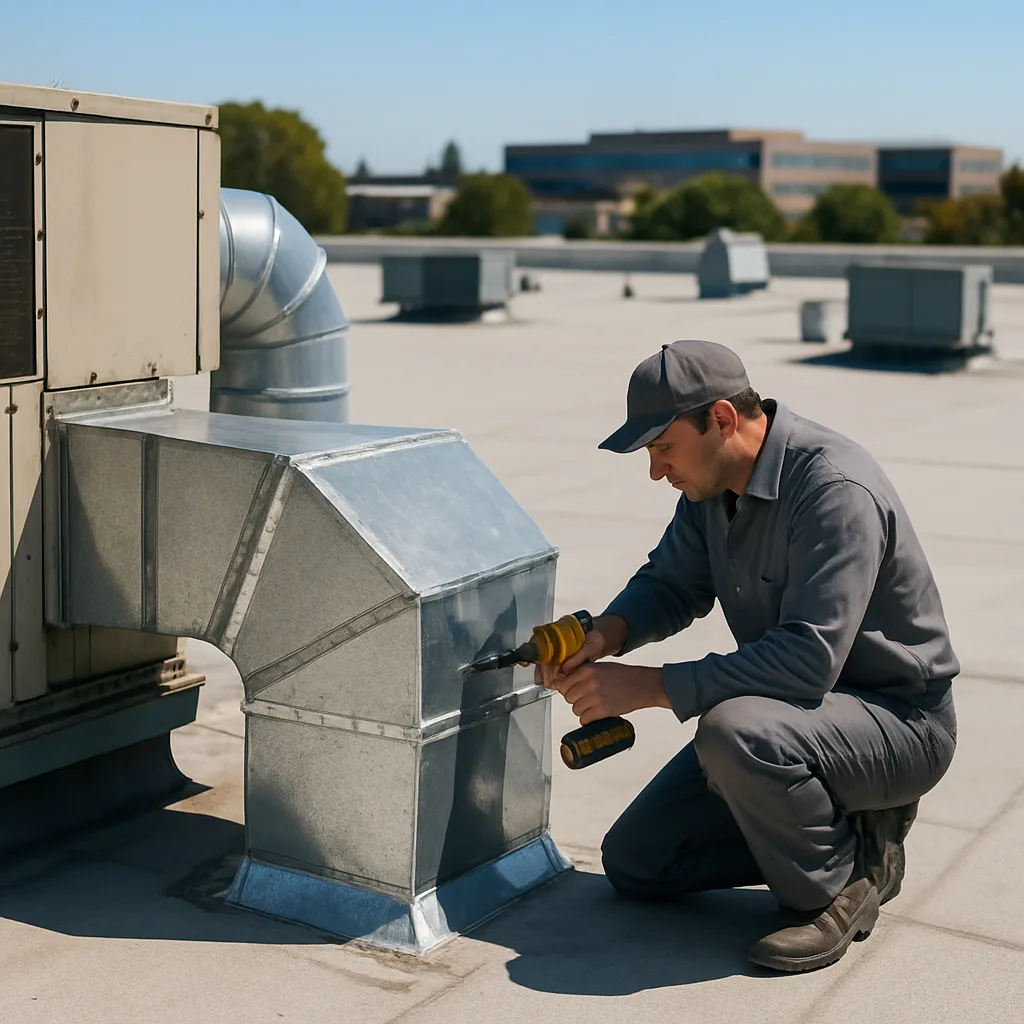
Static pressure testing and camera inspection of rooftop duct runs in Sunnyvale – catching corrosion at RTU connections before it becomes a building-wide airflow problem.
What’s Covered on This Page
- Signs Your Building’s Ductwork Is Failing
- Repair, Seal, or Replace: How to Decide
- When Duct Cleaning or Sealing Is Enough
- What Happens During a Commercial Ductwork Project
- Rooftop Units and Ductwork in Sunnyvale
- How fast can you get someone out to look at my building’s ductwork?
- What happens when a technician arrives to check my ductwork?
- Why does Sunnyvale’s weather cause rooftop duct problems?
- How do I know if my ductwork needs repair or full replacement?
- Can duct cleaning fix the uneven temperatures in my building?
Signs Your Building’s Ductwork Is Failing
Uneven temperatures between zones are often the first complaint facilities staff hear. They usually point to an airflow imbalance rather than a thermostat problem. In a typical Sunnyvale office or light industrial building, conditioned air moves from the rooftop unit through a plenum and box. It then splits into branch runs. If that connection has loosened, developed a gap, or was poorly sealed during a past retrofit, one zone gets too little air. Another may get too much. Staff may report cold front offices while the back warehouse or server room runs hot. Adjusting the thermostat does nothing because the air is not reaching the right place.
Rising utility bills without an increase in occupancy or equipment load are another strong indicator. A separated RTU-to-duct connection or deteriorated internal duct liner forces the system to run longer to satisfy thermostat setpoints. Conditioned air may be leaking into the ceiling plenum or mixing with rooftop air before reaching occupied areas. Many building owners catch this while comparing monthly utility statements. The indoor temperature may still feel acceptable even as the equipment operates well outside its normal efficiency range.
- Uneven zone temperatures that persist despite thermostat adjustments, often worse in zones farthest from the rooftop unit
- Utility bills climbing steadily over several billing cycles with no change in occupancy, hours, or equipment
- Visible corrosion, rust streaks, or pitting on duct exteriors, curb connections, or the RTU base itself
- Musty or mildew odors near supply diffusers, often signaling moisture intrusion at a leaking joint or seam
- Condensation stains on ceiling tiles below duct runs or near the roof curb where the RTU sits
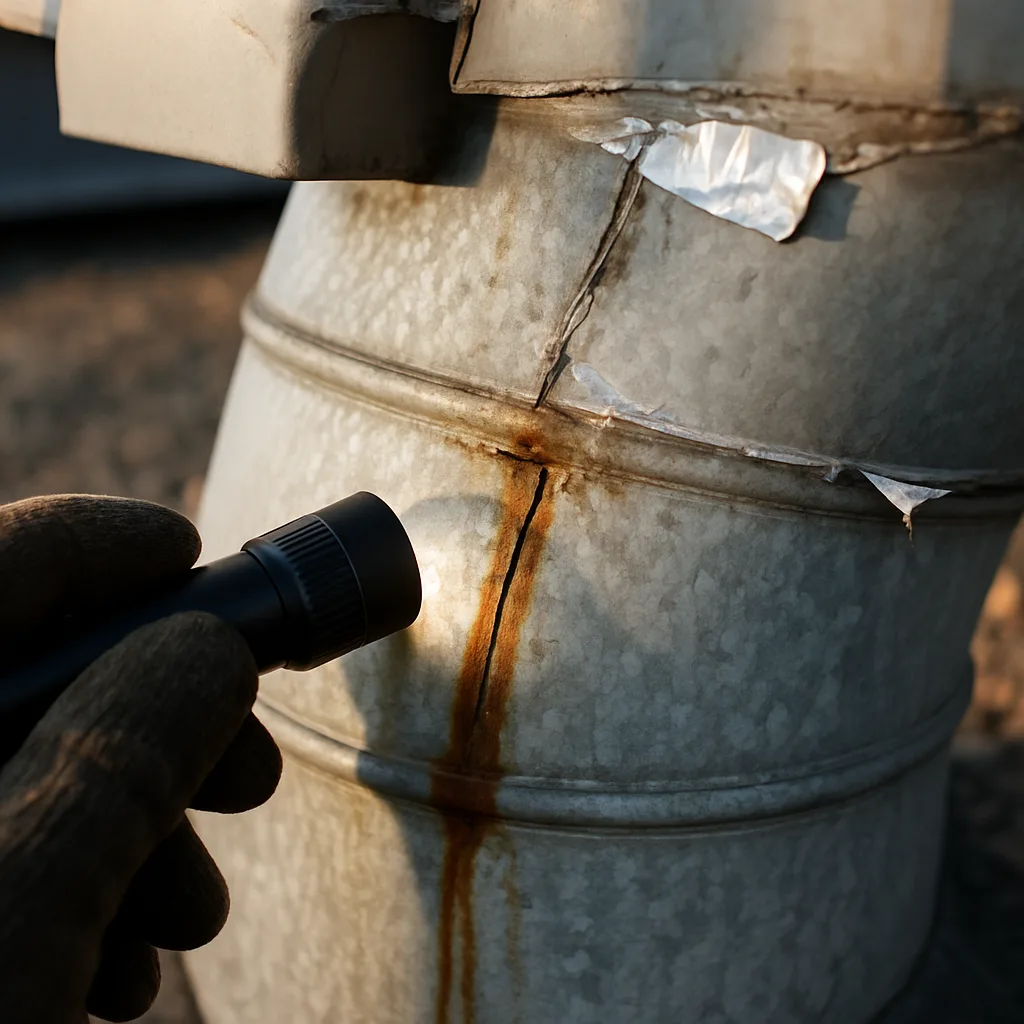
Visible corrosion deserves special attention on Sunnyvale rooftops. RTUs and their duct connections face hail, seasonal rain, and wide temperature swings that speed up metal fatigue at seams and fasteners. Leaks can also cause musty odors. These odors are often mistaken for an indoor mold problem, though condensation may be pooling inside a damaged duct joint near the curb. Generic duct checklists tend to focus on rattling or whistling sounds in long runs. The failures we see most often in this area begin quietly at the rooftop connection, so an inspection should start there.
Repair, Seal, or Replace: How to Decide
Not every duct problem calls for a full commercial ductwork replacement. Sometimes a few leaky joints are the whole story. Other times the system fights you at every turn, and sealing will not fix the underlying problem.
How do you know which problem you have? A few questions can help sort it out.
- How old is the ductwork, and was it sized for the building’s current tonnage or an older system?
- Are the leaks limited to a few joints, or scattered across entire runs and plenums?
- Is the metal rusted, crushed, or separated from hangers rather than covered by loose tape?
- Has the building’s use changed through added kitchen exhaust, cold storage, or a different tenant load?
- Are energy bills climbing even after normal maintenance?
- Do some rooms stay hot or cold regardless of the thermostat setting?
If there are only a few problem spots, sealing or spot repairs can restore normal airflow without opening the ceiling. If the whole system is undersized, corroded, or mismatched to the current layout, repairs may only buy time. We see this in buildings where equipment was added over the years without revisiting the duct design. The existing ducts were not built to support that growth.
We’ll walk the building, check static pressure, and inspect the ductwork’s condition before recommending any work. If you’re unsure whether repair or replacement makes sense, that walkthrough will give you a straight answer.
When Duct Cleaning or Sealing Is Enough
Not every ductwork concern means the system is on its last legs. Many commercial buildings develop isolated symptoms caused by routine wear rather than structural failure. Dusty supply registers, a musty smell near one vent, or a zone that never cools properly are common complaints. In many cases, the cause is less serious than a collapsed duct run or corroded sheet metal.
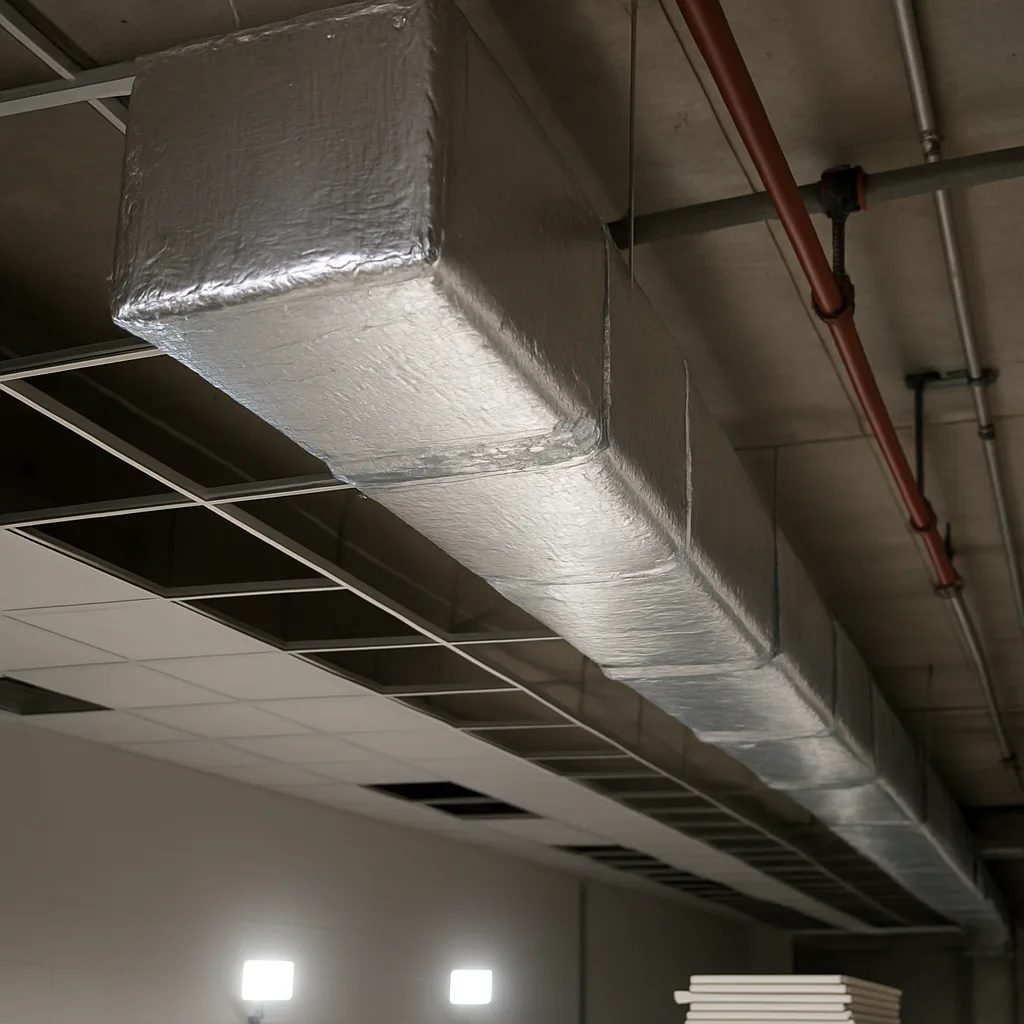
A thorough inspection should come before anyone recommends removing ductwork. Technicians use cameras and airflow testing to see what is happening inside the system instead of guessing from surface symptoms. The inspection often finds that the problem is limited to one small section rather than the entire duct system.
- Dust or debris inside supply and return lines, typically resolved with professional duct cleaning
- A single damper stuck open or closed, causing uneven airflow in one room or zone
- Minor seam separation or small gaps at joints that sealing can address without removing ductwork
- Loose or disconnected flex duct at a diffuser, often fixed with a quick reconnection
- Light surface rust on exterior duct wrap that has not damaged the metal underneath
Duct sealing solves many performance complaints. Small leaks at joints and connections let conditioned air escape into ceilings or wall cavities. You may notice weak airflow, higher utility bills, or rooms that never reach the thermostat setting. Sealing these gaps with mastic or approved tape restores system balance without disturbing the ductwork. It also takes less time and usually costs less than replacement.
Cleaning addresses a different problem. Buildings with heavy foot traffic, nearby construction, or older filtration systems can accumulate dust and particles inside the ducts. This buildup restricts airflow and may cause odor or indoor air quality complaints, but the ductwork can remain structurally sound. Professional cleaning removes the accumulation and may resolve the complaint without further work.
What matters is getting an honest assessment instead of a default recommendation. A qualified technician should explain in plain English whether you need a small sealing job or have a larger problem developing elsewhere.
Thinking about Commercial ductwork? Let’s talk.
Call Today, Get Service Today. Xtreme Air Services is ready to help.
What Happens During a Commercial Ductwork Project
Every commercial ductwork project in Sunnyvale starts with an onsite inspection and load assessment. A technician examines the existing ductwork and measures airflow at supply and return points. The technician also checks how well the equipment matches the building’s square footage and occupancy. This step matters in older offices or industrial spaces converted for new uses. Original duct sizing may not account for server rooms, dense workstation layouts, or later tenant improvements. The assessment identifies leaks, undersized trunk lines, and airflow imbalances that raise utility bills.
After the assessment, the contractor prepares a written scope covering recommended duct sizes, materials, insulation requirements, and estimated costs. The proposal should address applicable permits and inspections before ceilings or walls are closed. Local requirements vary by project, so the contractor should confirm them with the proper authority. A clear proposal lists labor and material costs separately, helping you compare bids accurately. 80 six days a week.
Scheduling comes next, and experienced commercial crews plan around your business hours. Ductwork installation may take place during evenings, weekends, or in phases across departments. This approach avoids shutting down an entire floor at once. Restaurants, labs, and businesses that depend on servers may need tighter work windows, sometimes limited to overnight hours.
Fabrication and installation follow. Sheet metal sections are cut and formed offsite or in a mobile shop for larger jobs. Crews install new trunk lines, branch ducts, and boots, then seal every joint. They also insulate runs passing through unconditioned attics or other hot areas. You can expect temporary access limits during this phase. Hallways may be blocked, ceiling tiles removed, or certain suites restricted while crews work overhead.
- Initial inspection and airflow load assessment
- Written scope proposal with permitting and cost breakdown
- Scheduling around business hours to minimize disruption
- Fabrication and installation of new or modified ductwork
- Startup and airflow testing across all zones
- Final walkthrough, documentation, and warranty paperwork
Once installation is complete, technicians perform startup and airflow testing. They check static pressure, CFM output at each register, and system balance across the building. Brief system downtime, usually a few hours, is common while crews cycle the equipment and adjust dampers. The project ends with a final walkthrough. The contractor reviews test results, provides as-built drawings, and confirms warranty terms before normal operation resumes.
Rooftop Units and Ductwork in Sunnyvale
Many commercial buildings in Sunnyvale use rooftop units rather than split systems installed in closets. That changes where a ductwork inspection begins. Retail strips and warehouse buildings often have flat or low-slope roofs, so the job starts where the unit meets the roof curb.
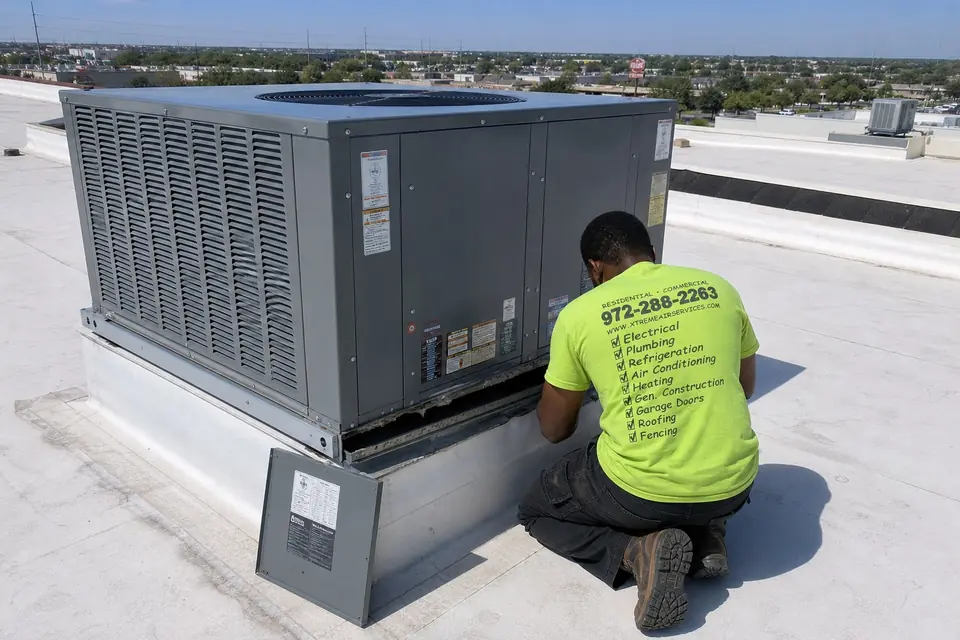
The rooftop unit pushes air through a curb into a plenum. From there, the plenum feeds branch ductwork running through the ceiling below. That connection point takes years of weather, vibration, and temperature changes. It is often the first part to fail, even when the rooftop unit is still working.
If one corner of your building runs warm while the rest stays comfortable, the problem may be at the curb connection. It is not always a bad compressor.
- Flex duct pulled loose or crushed where it meets the curb
- Rusted or gapped sheet metal connections leaking conditioned air into the ceiling space
- Insulation wrap torn or missing, causing condensation and stains on ceiling tiles below
- Undersized branch runs from an older layout that was never updated for a larger unit
Xtreme Air Services is licensed and insured, and we have found this pattern on Sunnyvale properties. If your rooftop unit was replaced without matching the ductwork below, some of the air you’re paying to cool may be leaking into the ceiling.
Frequently Asked Questions
Common questions about Commercial ductwork
How fast can you get someone out to look at my building’s ductwork?
We schedule most commercial inspections within a few business days of your call. Facilities managers often reach out after noticing uneven zone temperatures or a spike in utility bills, and we know those issues get worse the longer they sit. During the call, tell us what you’re seeing-hot back rooms, musty smells, or rising costs. That helps us bring the right tools, like cameras and static pressure gauges, on the first visit instead of a second trip.
What happens when a technician arrives to check my ductwork?
A technician starts by walking the building and talking to your staff about which zones feel off. Next, they check the rooftop unit and the connection point where it meets the duct system, since that’s where most Sunnyvale buildings develop problems first. They’ll test static pressure and may use a camera to look inside runs without opening the ceiling. You’ll get a clear explanation of what they found before any repair work begins.
Why does Sunnyvale’s weather cause rooftop duct problems?
Fog, seasonal rain, and temperature swings speed up corrosion at duct seams and fasteners on Sunnyvale rooftops. Rooftop units sit exposed to these conditions year-round, so metal fatigue at joints and curb connections shows up sooner than it would indoors. This is also why musty odors near vents often trace back to condensation pooling inside a damaged joint near the roof curb, not an indoor mold issue. Regular rooftop checks catch this corrosion before it turns into a full leak.
How do I know if my ductwork needs repair or full replacement?
It depends on how widespread the damage is, not just how old the system is. If leaks are limited to a few joints and the metal itself is sound, sealing or spot repairs usually restore normal airflow. But if rust has spread across multiple runs, or the ductwork was never sized for equipment added later, repairs may only buy a little time. A walkthrough that checks static pressure and duct condition gives you a straight answer instead of a guess.
Can duct cleaning fix the uneven temperatures in my building?
Sometimes, but only if the cause is dust or debris blocking airflow rather than a structural problem. Cleaning helps most in buildings with heavy foot traffic, nearby construction dust, or older filtration that’s let debris build up in supply and return lines. If the real cause is a stuck damper, a loosened RTU connection, or corroded metal, cleaning won’t solve it. An inspection with cameras and airflow testing tells you which one you’re dealing with before any work starts.
Ready to Get Started?
Call 972-288-2263 Today, Get Service Today.