


When Commercial HVAC Repair & Maintenance Isn’t the Right Fit for Your Building
The three kinds of commercial job we turn down, outside the radius, permit-skipping, and labor-only installs, and what we would tell you to do instead.
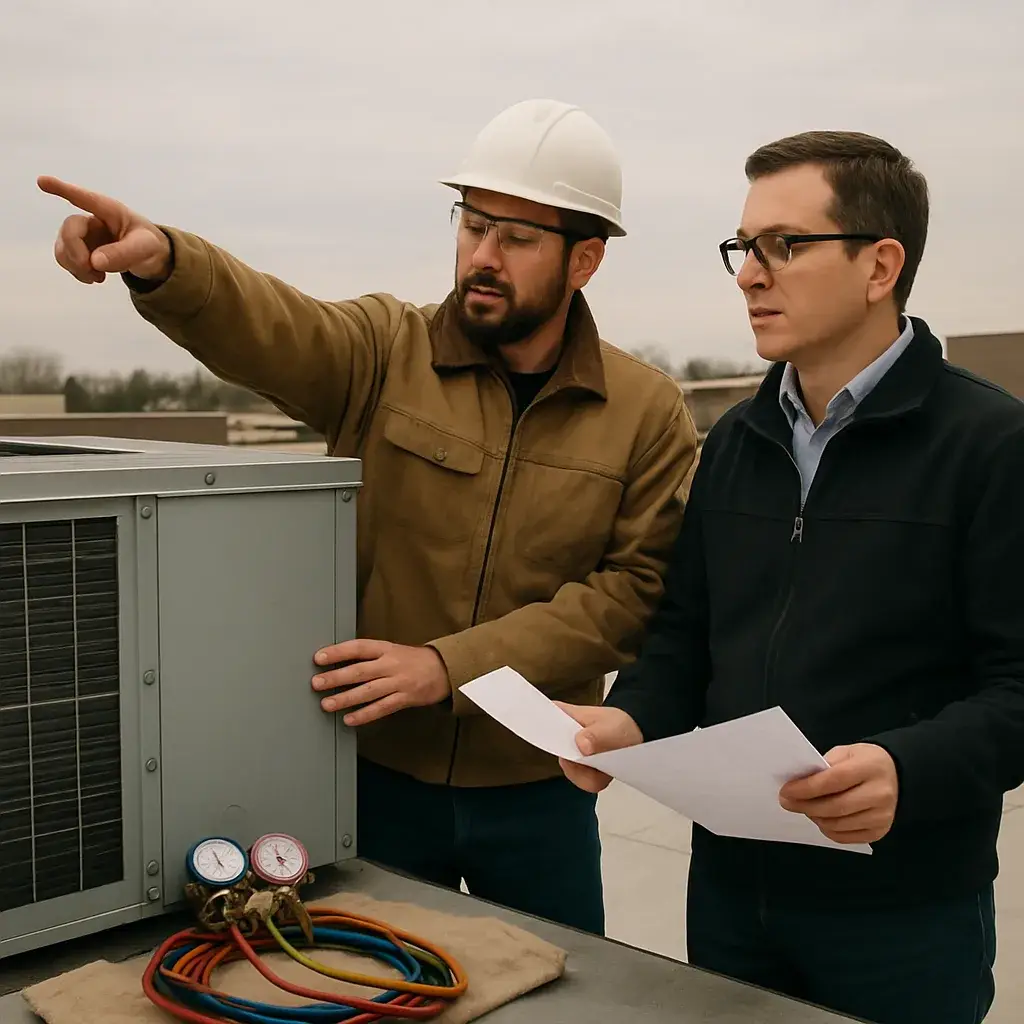
What’s Covered on This Page
- Buildings Outside Our 60-Mile Service Radius Aren’t a Good Match
- We Don’t Take Jobs That Skip Permits or Code Requirements
- We Generally Don’t Install Equipment You’ve Already Purchased Elsewhere
- What We’d Tell You to Do Instead
- Related Links
- We will sign a waiver taking on the liability. Would you skip the permit then?
- You did not install our rooftop unit. Will you still service it?
- Who actually regulates commercial mechanical work on our building?
- What could unpermitted work actually cost us later?
- Why is customer-supplied commercial equipment riskier than residential?
Buildings Outside Our 60-Mile Service Radius Aren’t a Good Match
Commercial HVAC repair and maintenance isn’t just one visit. A rooftop unit we fix today might need a follow-up check next season, or a filter swap. Maybe a warranty callback. That only works if a technician can get back to your building without spending half a day driving. So we drew a line at about 60 miles from Sunnyvale, Texas. We stick to it.
Inside that radius, we cover Dallas, Fort Worth, Plano, Frisco, Allen, Irving, and Carrollton. We also serve the communities between them. That’s close enough for us to respond fast for a repair. It’s practical for scheduled maintenance visits later on.
- Sunnyvale and the immediate surrounding area
- Dallas and Fort Worth
- Plano, Frisco, and Allen
- Irving and Carrollton
- Other communities within roughly 60 miles of Sunnyvale, Texas
If your building falls outside that circle, we’re not the right fit. We’d rather say that plainly. We won’t take a job if we know we’ll struggle to be there for the next visit. A commercial account works better with a contractor who can reach the property quickly. Not someone running a crew two hours each way. If you’re weighing whether our commercial HVAC repair and maintenance work makes sense for your building, settling that distance question first is a good idea. Do it before any diagnostic visit.
This isn’t about the building type or account size. A single rooftop unit on a small retail space gets the same answer. So does a full mechanical room on a warehouse. It’s if the address is too far out. Our recommendation is simple: find a licensed mechanical contractor based closer to the property. A shorter drive for them means a faster response for you when a unit goes down.
We Don’t Take Jobs That Skip Permits or Code Requirements
Commercial mechanical systems in Sunnyvale are regulated. Rooftop package units, kitchen exhaust hoods, boilers, and cooling towers all fall under rules from the Texas Department of Licensing and Regulation (TDLR). Many also follow local fire code. Specific requirements tie to a building’s occupancy. A restaurant kitchen hood system needs different life-safety checks than a rooftop unit serving a general office suite. The Town of Sunnyvale Building Permit & Inspection Division enforces these distinctions through permitting and inspection.
Every job we do, from a routine rooftop unit replacement to a full boiler retrofit, meets code. It’s all done by licensed technicians. When a permit or inspection is needed, we pull it. This includes gas line modifications, refrigerant circuit changes, exhaust hood suppression system tie-ins, and structural curb work on rooftop equipment. We document the work. We schedule the inspection. We make sure the finished job matches what the city’s inspector expects to see.
Sometimes a property manager or owner asks us to skip a permit. Maybe to save a week of scheduling. Or to bypass a code requirement to keep a project under budget. We turn those jobs down. This isn’t a judgment call we make case by case. It’s true even when the customer offers to sign something taking on the liability. That arrangement doesn’t protect the property, the tenants, or our technicians. Unpermitted mechanical work can void insurance, trigger fines during a future sale, and create real fire and life-safety risks. Those risks outlast any paperwork that was signed.
- Unpermitted rooftop unit work can surface during a commercial real estate transaction and delay or kill a sale
- Skipped inspections on kitchen exhaust systems can violate NFPA 96 and local fire code, jeopardizing a restaurant’s operating permit
- Boiler and vessel work without proper permits can void manufacturer warranties and liability coverage
- A signed liability waiver from a customer doesn’t hold up against city code enforcement or insurance denial after a loss
We’d rather lose a job up front. We won’t leave a Sunnyvale property owner exposed to a code violation. Or a failed inspection at resale. Or an insurance denial after a fire or equipment failure. Compliant work takes a bit longer to schedule. But it’s the only kind of work we do.
We Generally Don’t Install Equipment You’ve Already Purchased Elsewhere
It’s a common question from Sunnyvale property managers and business owners: you found a rooftop unit, ice machine, or walk-in cooler at a good price. You just need someone to hang it and wire it up. We get the instinct. But generally, we don’t take on labor-only installations of equipment we didn’t source and verify ourselves. Our workmanship guarantee is built around equipment we’ve inspected. We size it and confirm it’s compatible with your building’s electrical and structural systems. All before the first bolt goes in. When we can’t verify what’s inside the box, we can’t stand behind the installation the way our customers expect.
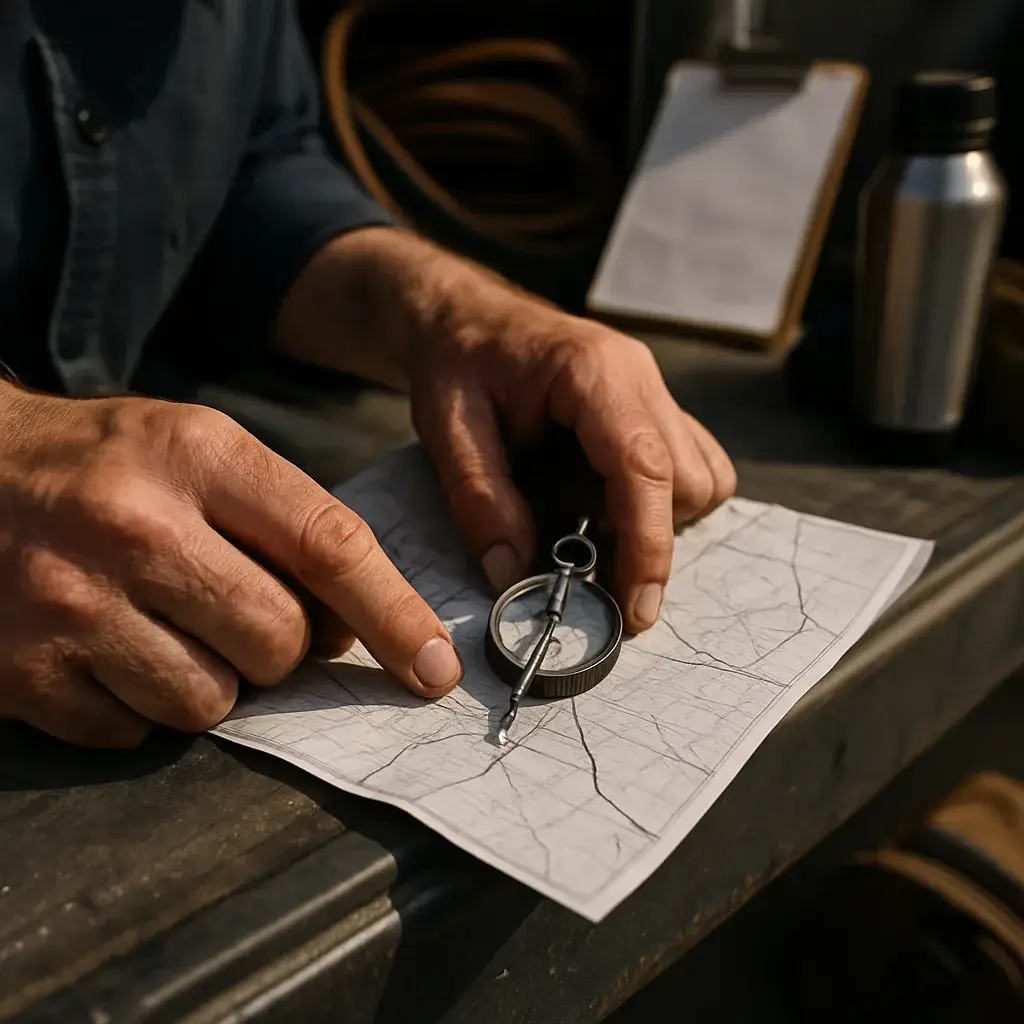
Commercial equipment carries more risk than the residential world. A rooftop package unit for an office building draws far more current. It weighs far more per square foot than a home furnace. And it has to match the roof’s structural rating, the building’s three-phase power, and local code requirements for curb height. A mismatched compressor voltage on a walk-in cooler for a restaurant isn’t just a minor issue. It can mean a failed inspection, a fire hazard, or equipment that’s dead on arrival. (No one wants that.)
- Rooftop HVAC units with the wrong voltage, phase, or tonnage for the building’s electrical service and duct layout
- Ice machines and walk-in coolers using refrigerants incompatible with existing line sets or local disposal regulations
- Boilers or water heaters exceeding the structural or venting capacity of the mechanical room
- Units missing manufacturer documentation needed to validate the factory warranty after install
This policy applies specifically to new installations of equipment purchased elsewhere. It does not apply to repair and maintenance work on equipment already operating in your Sunnyvale facility. This is true no matter who installed it or where it was purchased. If your rooftop unit is short-cycling, your walk-in cooler is running warm, or your boiler needs a seasonal tune-up, that’s exactly the kind of service call we take every week. No questions asked about the equipment’s origin.
Not sure what your Commercial HVAC repair & maintenance project needs? Ask us.
Call Today, Get Service Today. Xtreme Air Services is ready to help.
What We’d Tell You to Do Instead
Not every commercial HVAC job that comes our way is one we should take. We think a straight answer about why is more useful than a vague excuse. If your building is outside our roughly 60-mile radius from Sunnyvale, we’ll usually recommend finding a mechanical contractor licensed and based closer to your property. Rooftop units and packaged systems need follow-up visits. They need warranty service. Sometimes they need emergency response. None of that works well when a technician has to drive two or three hours each way. A local contractor can get to your building the same day something trips offline. That matters far more than who quoted the lowest price upfront.
When someone asks us to skip permits or work around code on a commercial system, we won’t do it. We’d rather explain the alternative than just decline. The City of Sunnyvale Building Division has specific permit requirements for HVAC replacement, ductwork changes, and equipment tied to fire or life-safety systems. Before hiring anyone, call the local building department. Ask what your specific job requires. It only takes one phone call. It protects you from failed inspections, insurance disputes, or having to redo work later when a buyer’s inspector or fire marshal flags it.
Customer-sourced equipment is another spot. We’d rather steer you right than install something that causes problems later on. If you found a rooftop unit online or through a supplier we didn’t select, ask the seller or manufacturer directly if they offer installation support. Get a contractor to verify compatibility with your building’s electrical service and existing ductwork. Do this before you finalize the purchase. Voltage mismatches, undersized breakers, and duct connections that don’t match the unit’s airflow rating are common, expensive surprises we see after the fact. They’re avoidable with one verification call before money changes hands.
We’d rather point you toward the right next step. Even if that means recommending someone else. We won’t take on a job we can’t stand behind with proper warranty support, code compliance, and follow-up service. If your project fits within what we do, we’re glad to take it on.
Frequently Asked Questions
Common questions about Commercial HVAC repair & maintenance
We will sign a waiver taking on the liability. Would you skip the permit then?
No. A signed liability waiver from a customer does not hold up against city code enforcement, and it does not hold up against an insurance denial after a loss. That arrangement protects nobody, not the property, not the tenants, and not our technicians. We turn those jobs down, and it is not a judgment call we make case by case.
You did not install our rooftop unit. Will you still service it?
Yes. Our policy on customer-sourced equipment applies specifically to new installations of equipment purchased elsewhere. It does not apply to repair and maintenance work on equipment already operating in your facility, no matter who installed it or where it was bought. If your rooftop unit is short-cycling or your boiler needs a seasonal tune-up, that is exactly the kind of call we take every week.
Who actually regulates commercial mechanical work on our building?
Rooftop package units, kitchen exhaust hoods, boilers, and cooling towers all fall under rules from the Texas Department of Licensing and Regulation, and many also follow local fire code. The specific requirements tie to your building’s occupancy, so a restaurant kitchen hood system needs different life-safety checks than a rooftop unit serving an office suite. The Town of Sunnyvale Building Permit and Inspection Division enforces those distinctions.
What could unpermitted work actually cost us later?
More than the permit would have. Unpermitted rooftop unit work can surface during a commercial real estate transaction and delay or kill a sale. Skipped inspections on kitchen exhaust systems can violate NFPA 96 and local fire code, which puts a restaurant’s operating permit at risk. Boiler and vessel work without proper permits can void manufacturer warranties and liability coverage. Those risks outlast any paperwork that was signed.
Why is customer-supplied commercial equipment riskier than residential?
Because the margins are bigger in every direction. A rooftop package unit for an office building draws far more current and weighs far more per square foot than a home furnace, and it has to match the roof’s structural rating, the building’s three-phase power, and local code requirements for curb height. A mismatched compressor voltage on a walk-in cooler is not a minor issue. It can mean a failed inspection, a fire hazard, or equipment that is dead on arrival.
Ready to Get Started?
Call 972-288-2263 Today, Get Service Today.