


What to Expect With EV Charger Installation
Panel capacity, when a standard outlet is not enough, what a long garage or workshop run changes, and the permit side of a home charger install.
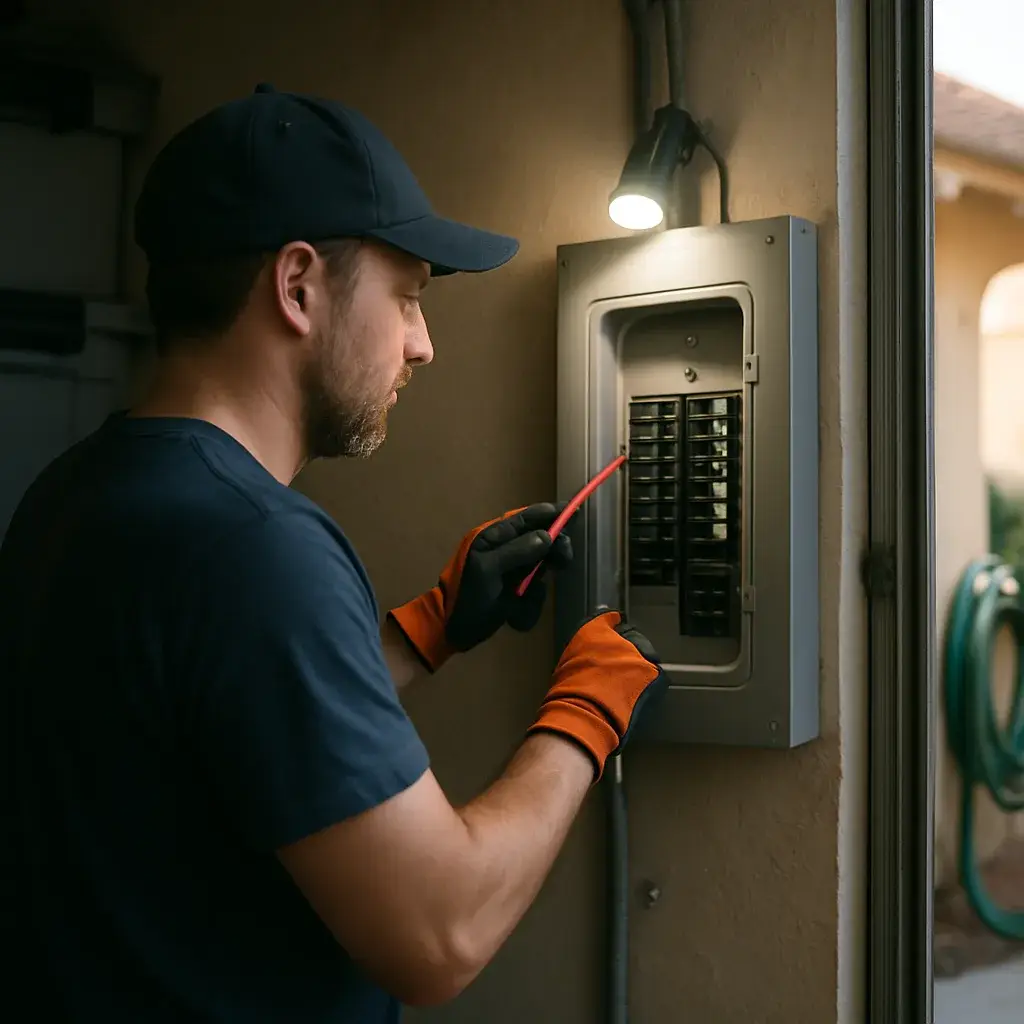
What’s Covered on This Page
- Panel Capacity Decides If You Need an Upgrade First
- When a Standard Outlet Is Enough, and When It Isn’t
- Long Garage and Workshop Runs Change the Job in Sunnyvale
- What Happens During a Home EV Charger Installation
- Permits, Codes, and Why Licensing Matters
- Charger Amperage Has to Match Your Circuit and Your Vehicle
- Older and Aluminum Wiring Can Add Steps Before Installation
- How do I know if you cover my part of Sunnyvale?
- What happens when the electrician shows up for my charger installation?
- Why do so many Sunnyvale homes need a panel upgrade before charger installation?
- Can I just use a regular outlet instead of hiring an electrician?
- How long does a detached garage or workshop charger installation take in Sunnyvale?
- Do I need a permit for a home EV charger installation in Texas?
Panel Capacity Decides If You Need an Upgrade First
Here’s the thing nobody tells you upfront. The charger itself is the easy part. Your panel is the real question mark. A Level 2 charger pulls a lot of power, and it needs its own dedicated circuit straight from the panel. If your panel’s maxed out, or it’s an older 100-amp box, there’s not always room to add that circuit without changes first.
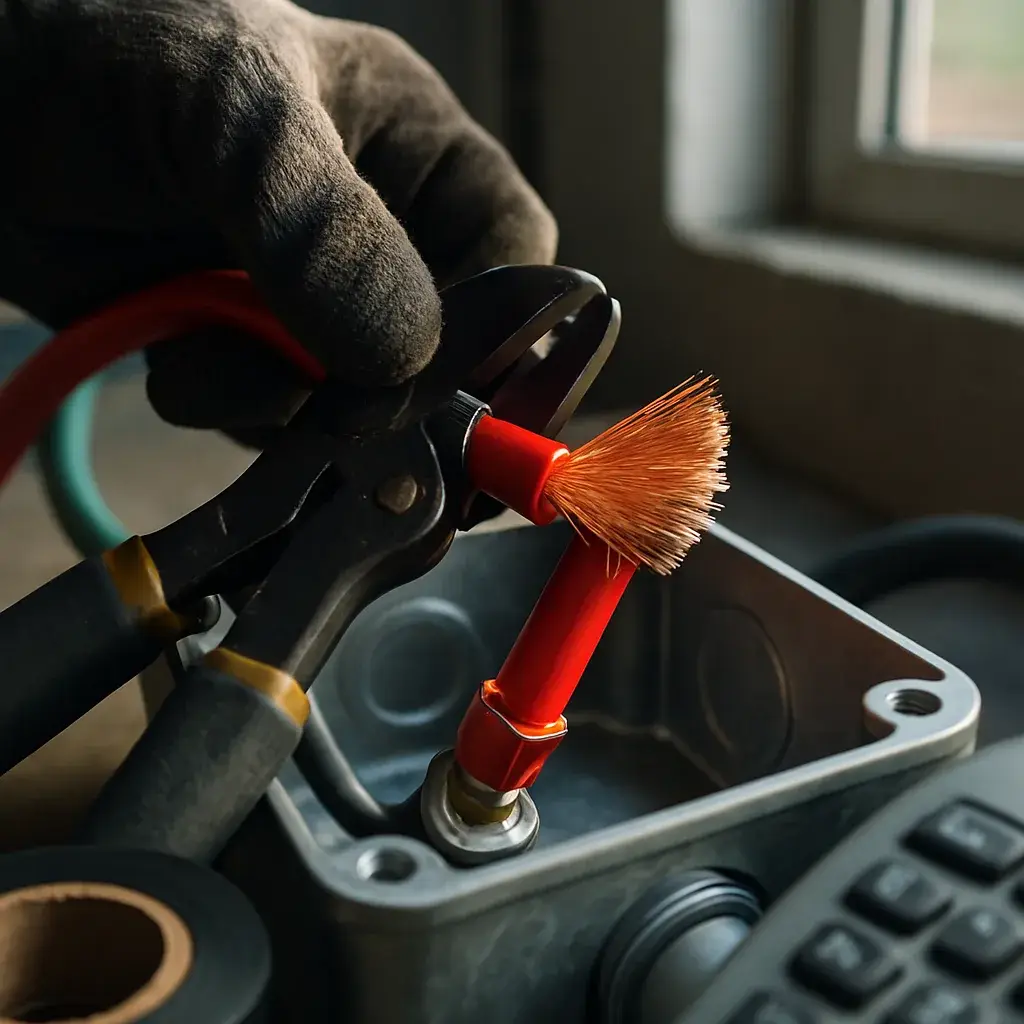
We see this a lot in Sunnyvale’s older established homes, the ones built before EV charging was even a thought. Panels from that era were sized for a smaller house with fewer appliances, not a car charging in the garage overnight. Newer construction around town usually has more headroom to work with, but we still check. Never assume.
- Panel already crowded with double-tapped breakers or no open slots
- Panel rated 100 amps or less with a full electrical load already
- Charger amperage higher than what the existing service can safely support
- Older wiring or a panel that shows rust, heat marks, or outdated components
If any of that shows up, we’ll tell you straight. A panel upgrade adds a step, and it’s a real cost factor, one of the things that moves a job toward the higher end of the range. So we look before we quote, not after.
When a Standard Outlet Is Enough, and When It Isn’t
Not every EV owner in Sunnyvale needs to call an electrician. If your vehicle came with a Level 1 charging cord, the kind that plugs directly into a standard 120-volt household outlet, you already have everything required to start charging tonight. No panel work, no permit, no dedicated circuit. The tradeoff is speed: Level 1 charging typically adds three to five miles of range per hour, which works fine for drivers with short commutes who plug in overnight and wake up to a full battery.
The math changes once your daily driving distance grows or your household adds a second EV. A Level 1 setup charging at that pace can take sixteen to twenty-four hours to refill a depleted battery, which becomes impractical for anyone commuting from Sunnyvale into Dallas or Mesquite for work. That’s the point where most homeowners start shopping for a Level 2 charger, and that’s also exactly where the do-it-yourself option ends.
Here is the clear dividing line: any project that involves opening your electrical panel, adding a new circuit breaker, running new wiring, or hardwiring a Level 2 charging unit falls under NEC Article 625, the National Electrical Code section specifically governing electric vehicle supply equipment. In Texas, that work must be performed by a licensed electrician and is regulated by the Texas Department of Licensing and Regulation. TDLR requires permits and inspections for this type of installation, and skipping that step can void your homeowner’s insurance, create fire hazards, and complicate resale disclosures down the road.
- Standard outlet, Level 1 cord: no electrician needed, just slower charging
- Plug-in Level 2 charger using an existing 240-volt outlet already installed by a licensed electrician: generally fine to use as-is
- New 240-volt circuit, breaker, or panel upgrade: licensed electrician required under NEC 625 and TDLR rules
- Hardwired Level 2 charging station: always requires a licensed electrician and permit
A quick way to check where you stand: look at your charger’s plug. If it looks like a normal three-prong household plug, you’re in Level 1 territory and can proceed without hiring anyone. If it has a thicker, twist-lock style plug or the installation instructions mention hardwiring, you’re squarely in licensed-electrician territory, and it’s worth getting a quote before buying equipment you can’t legally install yourself.
Long Garage and Workshop Runs Change the Job in Sunnyvale
Here’s something a lot of folks don’t think about until we’re standing in their garage with a tape measure. A lot of Sunnyvale properties sit on bigger lots with detached garages and workshops set back from the house, sometimes fifty or sixty feet from the electrical panel. That distance matters a lot more than the charger itself.
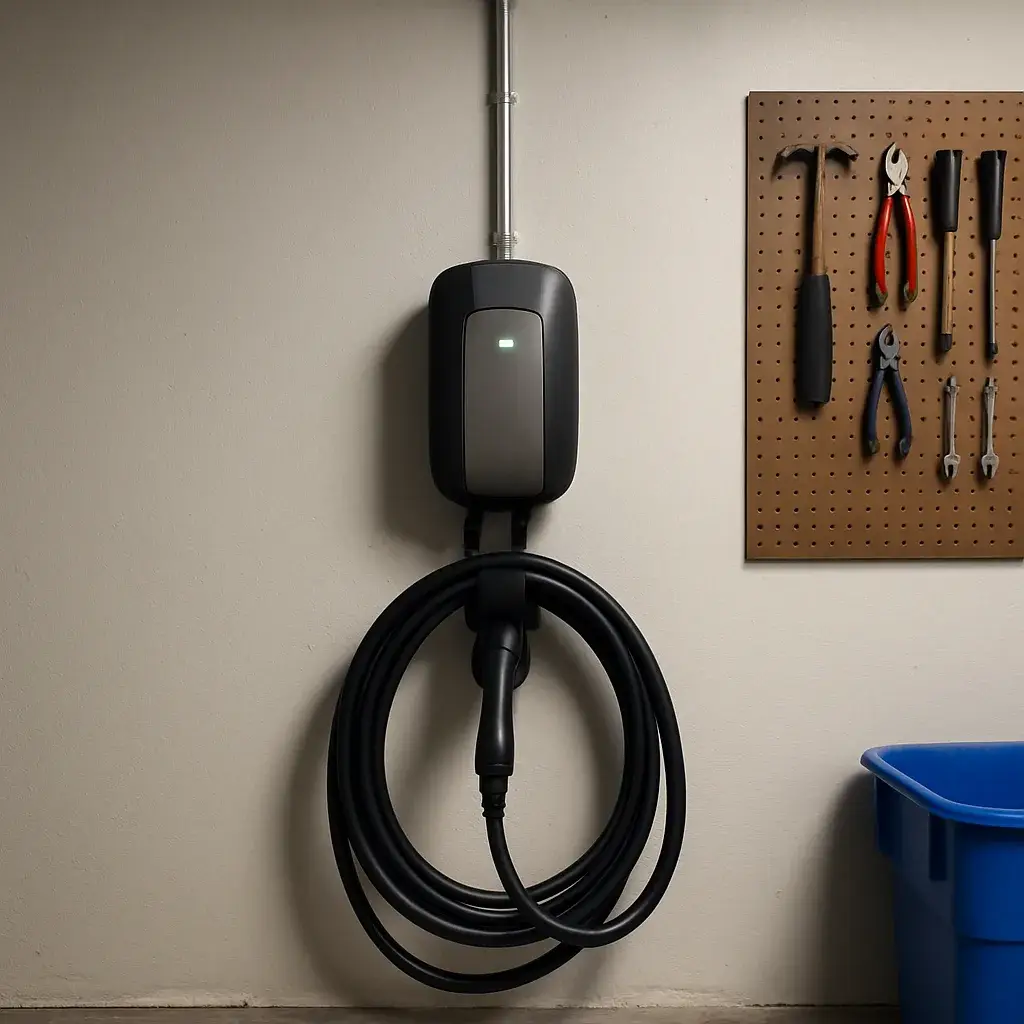
Every foot of wire between your panel and your charger adds material, labor, and sometimes a code question. Short run from an attached garage panel? Straightforward. Long run out to a detached shop with a slab floor or a covered breezeway in between? We’re now talking conduit routing, maybe drilling through brick or stucco, maybe running underground if the shortest path crosses a driveway.
We see this every single week out here. Someone calls thinking it’s a one-hour job because their neighbor’s install was quick, but their garage sits way out past the pool equipment.
- How far the charger location sits from your electrical panel
- Whether the run goes through walls, attic space, or underground
- Panel capacity, and whether it needs an upgrade to handle the new circuit
- Charger amperage, since higher amperage often means bigger wire and conduit
- Any code corrections uncovered once we open things up
None of that means a longer run is a problem, it just means the job gets scoped before anyone touches a wire. That’s why we walk the whole path from panel to parking spot before quoting anything. Nobody likes a surprise mid-install, and neither do we.
Thinking about Electric car charger installation? Let’s talk.
Call Today, Get Service Today. Xtreme Air Services is ready to help.
What Happens During a Home EV Charger Installation
Most Sunnyvale homeowners are surprised at how methodical a professional EV charger installation is. Rather than simply bolting a unit to the garage wall, a licensed electrician follows a sequence designed to protect your home’s electrical system and ensure the charger performs reliably for years. Here is what that process typically looks like from start to finish.
- Assess the electrical panel: The electrician checks your panel’s total capacity, existing circuit load, and available breaker slots. Many Sunnyvale homes built in the 1960s and 1970s have 100-amp panels that are already near capacity, so this step determines whether a simple circuit addition will work or whether a panel upgrade is needed.
- Confirm charger location and wire route: You and the installer walk the garage or driveway together to decide where the charger will mount, factoring in vehicle parking position, cable reach to the charging port, and proximity to the panel. This step also identifies whether wiring can run through an attic or crawlspace or if it needs to be routed along walls or trenched underground for detached garages.
- Run a dedicated circuit: The electrician installs a dedicated 240-volt circuit sized specifically for the charger, typically 40 to 60 amps depending on the unit. This circuit is separate from any other appliances or outlets, which is required by code and prevents nuisance breaker trips.
- Mount and connect the charger: The unit is secured to the wall at code-compliant height, wired into the new circuit, and connected to the breaker panel. Grounding and bonding are verified at this stage to meet National Electrical Code and local Sunnyvale permit requirements.
- Test and verify: Before wrapping up, the electrician tests the circuit under load, confirms the charger communicates properly with a test vehicle or diagnostic tool, and checks for correct amperage output. Many installers also pull the required city permit and schedule the final inspection at this point.
For a straightforward garage installation where the panel has room and the charger sits close to existing electrical service, this entire process often wraps up in a single day, sometimes in just a few hours. Jobs get longer when a panel upgrade is required, when wiring has to be fished through finished walls, or when the charger location demands trenching across a driveway or yard to reach a detached garage. In those cases, expect the work to span one to three additional days, plus time for the city inspection to be scheduled and completed.
Permits, Codes, and Why Licensing Matters
A home EV charger is not treated like a simple outlet swap under the electrical code. Any new circuit dedicated to vehicle charging falls under NEC Article 625, the section of the National Electrical Code that governs electric vehicle supply equipment. This article dictates conductor sizing, disconnect requirements, load calculations, and how the circuit interacts with the rest of your home’s electrical system. Because a Level 2 charger typically draws 30 to 50 amps continuously for hours at a time, code officials treat it as a significant addition to your home’s electrical load, not a minor fixture install.
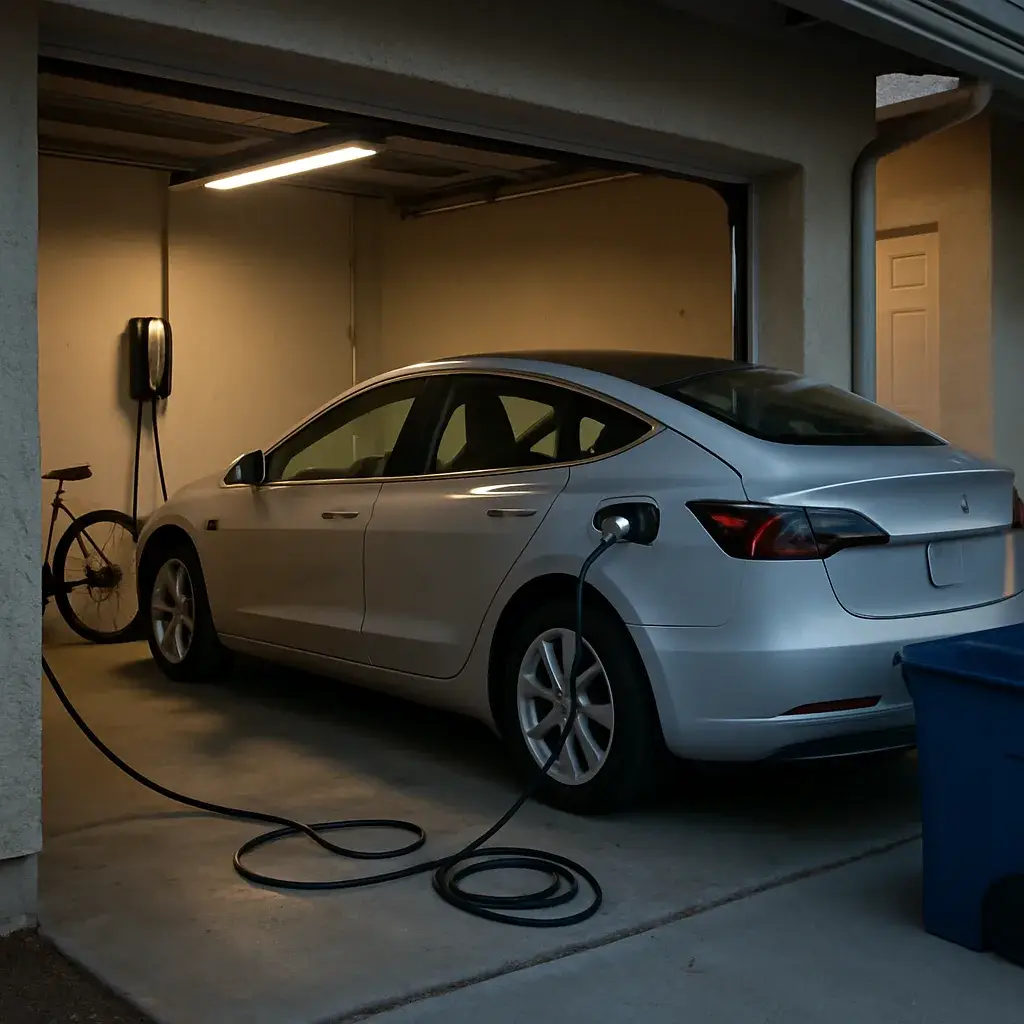
That significance is exactly why Sunnyvale’s local building and permitting authority requires a permit for the work, separate from any permit tied to a panel upgrade. Homeowners sometimes assume that if their panel already has capacity, an electrician can just add the circuit and move on. In practice, the permit covers the branch circuit and charger installation itself, and it typically requires an inspection before the charger is energized for regular use. Skipping this step can create real problems later, including insurance complications, resale issues, and difficulty getting future permits approved on the same property.
Licensing adds another layer of protection. Under the Texas Electricians Licensing Act, anyone performing this type of electrical work must hold a valid license issued by the Texas Department of Licensing and Regulation, known as TDLR. This isn’t a formality. TDLR licensing verifies that the electrician has passed code knowledge exams, carries required insurance, and can be held accountable if the work fails inspection or causes damage. Homeowners should always ask to see a current TDLR license number before work begins.
In most cases, the electrical work itself is completed in a single day. What extends the timeline is the permitting and inspection process. Submitting the permit application, waiting for review, and coordinating an inspector’s visit often take longer than pulling the wire and mounting the charger. Homeowners planning an installation should build in extra time for this step rather than assuming the project ends when the electrician packs up their tools.
- New EV circuits must comply with NEC Article 625 load and safety requirements
- A separate local permit is required beyond any panel upgrade permit
- Final inspection is typically required before the charger can be used regularly
- Only TDLR-licensed electricians are legally authorized to perform this work in Texas
- Permit review and inspection scheduling are usually the slowest part of the process, not the wiring
Charger Amperage Has to Match Your Circuit and Your Vehicle
People shopping for a home charger often notice the amperage number first. A charger might list 32 amps, 40 amps, or 48 amps. The assumption is usually that higher is better. That’s not how it works. The number on the charger has to line up with two other things. These are what your electrical panel and circuit can safely carry. And what your vehicle’s onboard charger can accept.
This happens because a Level 2 charger is a continuous load. This means it draws power for hours at a stretch. Under the National Electrical Code’s 80 percent continuous load rule, a circuit has to be sized well above the charger’s rated draw. A 48-amp charger needs a 60-amp breaker. And wire sized to match. Not just a spare slot in the panel. If the panel doesn’t have room or capacity for that, installing a high-amperage charger on it isn’t an option. Not until the panel itself is addressed.
On the vehicle side, every EV has a maximum onboard charging rate. It varies by make and model. Some cars top out around 32 amps. This is true no matter what charger they’re plugged into. Buying a 48-amp charger for a car that can only accept 32 amps doesn’t get you faster charging. It just means part of the charger’s capacity never gets used.
- Panel capacity: how much room the existing panel has for a new dedicated circuit
- Wire and breaker size: sized to the charger’s continuous draw, not just its nameplate rating
- Vehicle acceptance rate: the maximum amperage your specific EV can pull, regardless of charger size
- Future plans: a second EV or a larger charger down the road can change what circuit size makes sense now
This is the part of a job we work out before any wire gets pulled. Part of our EV charger installation process is checking panel capacity. We confirm your vehicle’s charging specs. So the circuit we install matches both. Not just whichever charger looked fastest on the shelf. Sometimes that means a smaller circuit than a customer expected. Other times it means recommending a panel upgrade first. That’s a real conversation and a real cost to weigh. It happens before committing to a charger at all.
Older and Aluminum Wiring Can Add Steps Before Installation
A lot of the homes we work on across Sunnyvale, Mesquite, and the rest of the Metroplex were built between the 1950s and the 1990s. That era of construction just wasn’t wired with a car charger in mind. The panel capacity, the wire type, and the distance from the garage all shape how the job goes.
Aluminum branch wiring shows up in some homes from the 1960s and 1970s. It’s not automatically unsafe. But it behaves differently than copper. It needs the right connectors and technique. A licensed electrician checks for it before running a dedicated circuit. Splicing aluminum and copper wrong is a real fire risk. It’s not just a theoretical one.
Panel capacity is the other big variable. A Level 2 charger draws a meaningful amount of power. An older 100-amp panel might not have room for one more dedicated circuit. Not without changes. Especially if it’s already loaded with AC, water heater, and kitchen circuits. Newer subdivisions with 150 or 200-amp service usually have more headroom.
Distance and routing matter too. A charger mounted right next to the panel is a simpler run. One on the far side of a garage or through a finished wall is more complex. Slab foundations are common all over North Texas. This means we’re routing conduit along walls or through the attic. Not trenching under a floor.
We can’t quote a firm price or timeline over the phone for every home. A house with an aluminum-wired 100-amp panel and a long conduit run is a different job. A newer home with a 200-amp panel ten feet from the garage is another. That’s why the visit includes a look at your panel and wiring. This happens before we write anything down.
If your panel needs an upgrade first, that’s a separate scope from the charger install itself. We’ll spell out both pieces before any work starts. You can see how the typical install and its cost drivers break down on our EV charger installation page.
None of this is unusual for the area. It just comes with a mix of established ranch homes and newer builds sitting on the same streets. A licensed, insured technician walks through it with you in plain terms. They do this before anything gets touched.
Frequently Asked Questions
Common questions about Electric car charger installation
How do I know if you cover my part of Sunnyvale?
We install EV chargers throughout Sunnyvale, including the older established neighborhoods and the newer subdivisions on the edges of town. Home age matters more than location, since older 100-amp panels near the center of town often need extra attention compared to newer construction. When you call, tell us your panel size and where the charger will go. That helps us plan the visit and bring the right materials the first time.
What happens when the electrician shows up for my charger installation?
We start by opening your panel and checking amperage before touching anything else. Then we walk the path from the panel to where you want the charger, measuring for conduit, wall penetrations, or underground runs if your garage sits far from the house. We explain what we find, including any panel upgrade needs, before starting work. Once you approve the plan, we run the circuit, mount the charger, and test it under load before we leave.
Why do so many Sunnyvale homes need a panel upgrade before charger installation?
Many older homes in Sunnyvale were built with 100-amp panels sized for a smaller house, not for overnight EV charging on top of everything else. A Level 2 charger needs its own dedicated circuit with real amperage behind it. If your panel is already full or showing wear like rust or heat marks, we flag it before quoting. Catching this early keeps the job from stalling halfway through.
Can I just use a regular outlet instead of hiring an electrician?
Yes, if your EV came with a Level 1 cord that plugs into a standard 120-volt outlet, you can start charging tonight with no electrician needed. It’s slower, adding about three to five miles of range per hour, which works for short commutes. Once your driving distance grows, or you’re commuting into Dallas or Mesquite daily, most people move up to a Level 2 charger, and that’s where licensed installation becomes required.
How long does a detached garage or workshop charger installation take in Sunnyvale?
It depends on how far your garage sits from the panel, since some Sunnyvale properties have detached garages fifty or sixty feet away. A short run from an attached garage is usually a quick job. A long run to a detached shop, especially one needing conduit through brick, stucco, or underground, takes longer. We walk the full path before quoting so you know what to expect before we start.
Do I need a permit for a home EV charger installation in Texas?
Yes, any work involving a new circuit, panel changes, or a hardwired charger requires a permit and inspection under Texas Department of Licensing and Regulation rules. This work falls under NEC Article 625, which covers electric vehicle charging equipment specifically. Skipping the permit can cause problems with your homeowner’s insurance and complicate things if you sell your house later. We handle the permit and inspection as part of the job.
Ready to Get Started?
Call 972-288-2263 Today, Get Service Today.