


EV Charger Installation: Repair, Reuse, or New Circuit – How We Decide
How we decide between reusing an existing circuit and running a new dedicated one – what your panel allows, and what each route costs.
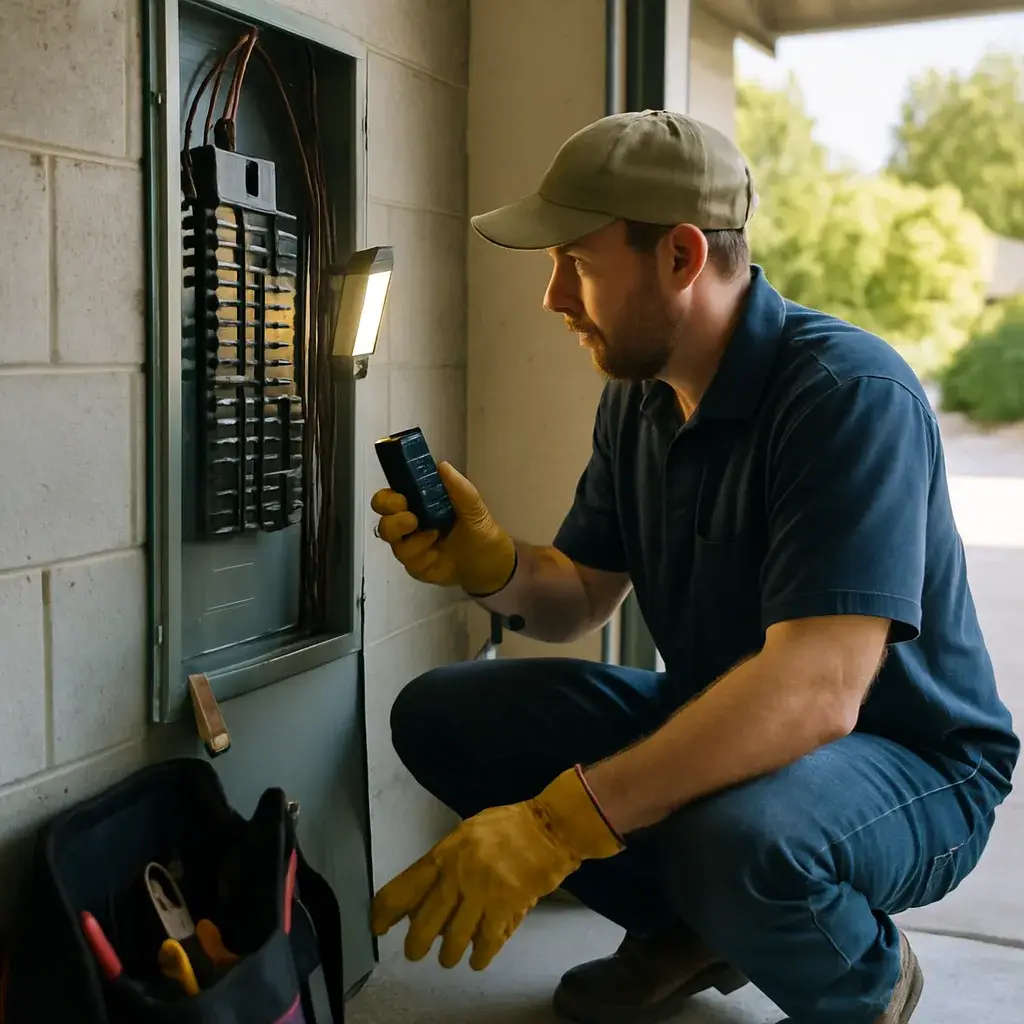
What’s Covered on This Page
- What Decides Repair vs. New Circuit
- When Reusing the Existing Setup Makes Sense
- When We’d Recommend a New Dedicated Circuit Instead
- What’s Included in the Price, and What’s Not
- How We Help You Decide Before Any Work Starts
- Related Links
- How do I know if my electrical panel can handle a 50 amp circuit?
- The previous owner left a 240 volt outlet in the garage. Can I just plug in?
- My panel is on the opposite side of the house from the garage. Does that change the price?
- Do you pull the permit, and does Oncor need to be involved?
- Should I buy the charger before you come out?
- The manual says the charger needs a dedicated circuit. Can it share the garage circuit?
What Decides Repair vs. New Circuit
A Level 2 charger always gets a dedicated circuit. That’s not optional. We assess everything around that circuit: how far your garage or driveway is from the panel, how much open capacity your panel has, and the charger’s amperage.
Distance is the biggest cost driver we see. A panel on the garage wall next to the charger is a simple run. A panel on the opposite side of the house, or in a detached structure, means more wire and conduit. Sometimes we need to route through walls or concrete. That alone can move a job from the lower end of our $900 to $1,700 typical range toward the top.
- Distance from the electrical panel to the charger location
- Whether the panel has open breaker space and amperage to spare
- The amperage the charger itself calls for
- Wall or conduit routing needed to get the wire where it’s going
- Any code upgrades or permits the job triggers along the way
Panel capacity is where a job changes shape. If your panel is full with a second HVAC system, an electric range, and a water heater, there might not be room for a 40 or 50 amp EV circuit. You might need a panel upgrade first. We won’t know that until we look at your panel. We’ll do the math on what’s already drawing power from it. That’s the limit of what anyone can tell you over the phone.
Permits and code corrections work the same way. Some Dallas area jurisdictions require a permit and inspection for a new dedicated circuit, some don’t. Either way, it’s not included in the base install price. If you want the full breakdown of what’s covered and what isn’t, our EV charger installation page walks through it line by line.
When Reusing the Existing Setup Makes Sense
Your existing panel and wiring work fine when the panel has open capacity. Also, the charger location needs to be reasonably close. That’s the short version. If your panel can handle the extra load and we don’t have to run wire through finished walls or across the yard, the job stays simple. We install a dedicated circuit, mount the charger, and do a startup test. Done in a single visit.
We’re checking the load. A Level 2 charger pulls a real amount of power. Your panel needs headroom left after your AC, water heater, and everything else running off it. We do a load calculation on-site before we touch anything, not a guess from a photo.
- A 200-amp panel with unused breaker slots and available capacity
- A garage or driveway charger spot within a normal wire run of the panel
- No aluminum wiring or outdated fuse-style panel needing correction first
- A charger amperage that fits comfortably within what’s left on the panel
A lot of homes across Sunnyvale and the surrounding DFW area were built in the 1960s through the 1990s. Many have 100-amp service. That’s where the reuse question gets real. If your AC, an electric range, and a water heater are already pulling from that panel, there may not be enough left for a 40 or 50-amp charger circuit. You might need a panel upgrade. That’s how the math works, and we’ll show you the numbers from the load calculation before you decide anything.
Distance from the panel matters too. A charger mounted right next to the panel is a different job. One on the far side of the garage or out by a detached carport takes more work. Conduit runs and drilling through a slab foundation add labor. You can see how these factors line up with typical pricing on our main service page.
None of this you have to figure out on your own. A technician can look at your panel, run the numbers, and tell you in plain terms whether your setup is ready to go or needs work first.
When We’d Recommend a New Dedicated Circuit Instead
Almost every time, yes. A charger like this draws a steady, continuous load for hours. A shared household circuit or an old garage outlet isn’t built for that. A dedicated circuit run straight from your panel is the standard we install on, not an upsell.
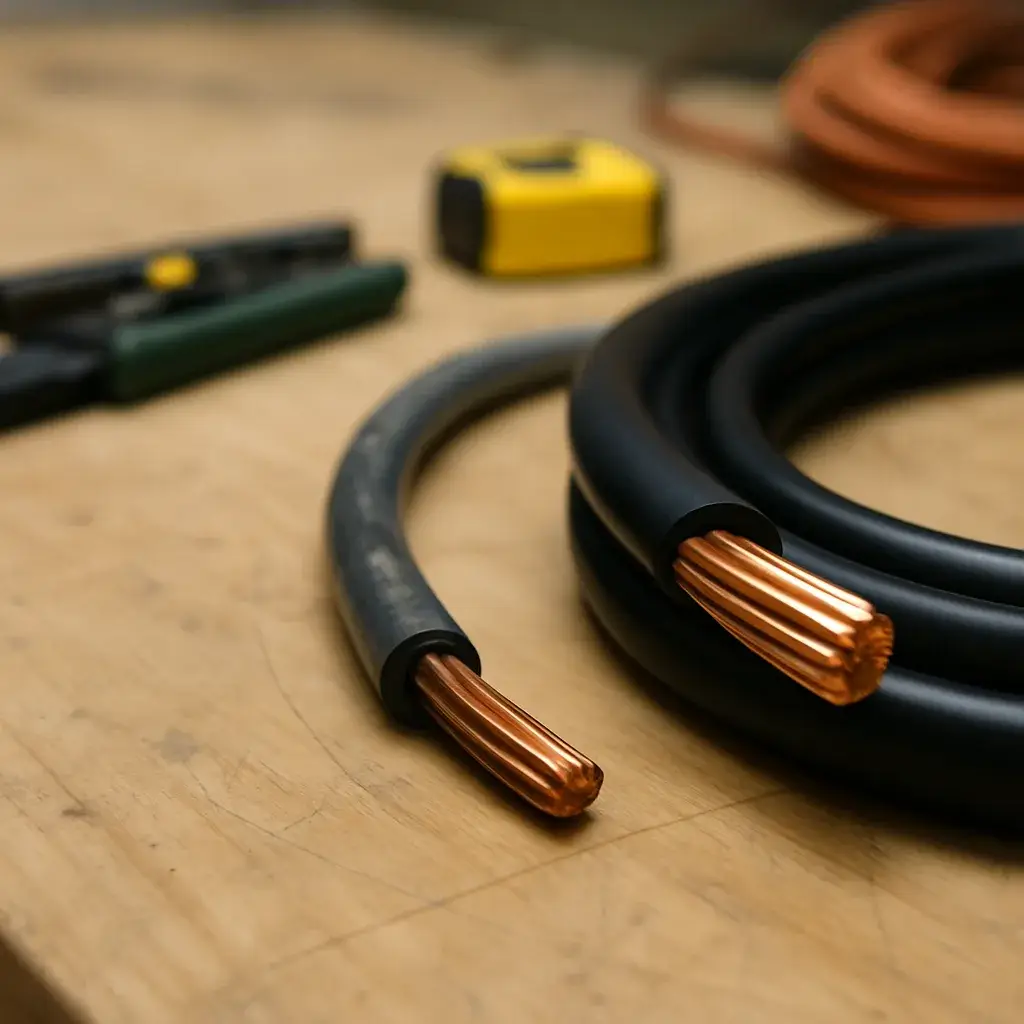
The National Electrical Code treats EV charging equipment as a continuous load. That’s why a dedicated circuit sized to the charger’s amperage is the expected setup. It’s not an option we’re picking to run up the bill.
A few things decide how that circuit gets built and what it costs. Distance from your electrical panel to the charger location matters. More wall or conduit run means more labor and material. Panel capacity matters too. If your panel has open breaker space and enough amperage headroom, we run the new circuit and you’re done. If it doesn’t, that’s a different conversation.
- How far the charger location sits from the panel, since routing through walls, attic, or conduit adds time
- Whether your panel has open capacity or needs a subpanel or panel upgrade to make room
- The amperage your charger calls for, which sets the wire gauge and breaker size
- Any code corrections older wiring or panels need before the new circuit can pass inspection
- Whether a permit is required for your property, which we handle as part of the job
Here’s the part we won’t gloss over. Our typical EV charger installation runs $900 to $1,700. That covers the dedicated circuit, mounting, and startup testing. It does not cover a panel upgrade, trenching, or code corrections if your existing wiring needs work before we can safely add the new circuit. We won’t know which bucket your job falls into until we look at your panel and the run in person.
If you’re comparing that to just plugging into an existing outlet, we’d tell you plainly that’s not something we install on. It doesn’t hold up to the charger’s continuous draw. It also won’t pass inspection where a permit applies. Our EV charger installation work is built around getting that dedicated circuit in the ground right the first time, not patching an outlet that isn’t rated for the job.
Not sure what your EV charger installation project needs? Ask us.
Call Today, Get Service Today. Xtreme Air Services is ready to help.
What’s Included in the Price, and What’s Not
A typical EV charger installation runs $900 to $1,700 for the most common job: mounting the charger, running a dedicated circuit from your panel, and testing it before we leave. Overall jobs across the DFW area range $500 to $2,500. It depends on your home and panel.
The number moves based on a few real factors. Distance from your panel to the charger location matters. Longer wire runs and conduit take more labor. Panel capacity matters too. If your panel is close to full, a subpanel or upgrade adds to the job. Charger amperage, wall or conduit routing, and any code corrections or permits also shift the price.
- Included: the dedicated circuit from your panel to the charger location
- Included: professional installation and mounting of the charger unit
- Included: startup and testing before we consider the job done
- Excluded: the charger itself, if you haven’t already supplied one
- Excluded: a panel upgrade, if your existing panel can’t support the new circuit
- Excluded: trenching for a detached garage or a longer outdoor run
- Excluded: code corrections found during the job
- Excluded: permit fees, unless we’ve stated them as part of your quote
If you show up with a charger already in hand, that’s fine. We just don’t build the equipment cost into a quote for something we didn’t supply. We’ll tell you plainly if your panel needs more room before we run a dedicated circuit. That’s a separate cost we won’t hide in the total.
A visit to look at your panel and quote the job carries a $26 to $99 service-call fee. If you move forward with the installation, that fee gets credited toward the job. So you’re not paying twice to get a firm number.
Larger installs, especially ones that need a panel upgrade, qualify for financing on approved credit. That’s worth asking about up front rather than after you’ve seen the total.
You can see how this compares against a straight panel-only fix or a full replacement on our EV charger installation page. We walk through both paths side by side.
How We Help You Decide Before Any Work Starts
An install like this runs $900 to $1,700 for most Sunnyvale-area homes. EV charger jobs overall land between $500 and $2,500. Where yours falls depends on a handful of things we check before we write a number down. We don’t quote over the phone. A technician looks at your panel and your garage or driveway setup first.
The biggest factor is how far your charger location sits from your electrical panel. A garage right next to the panel is a short run. A driveway charger on the far side of the house means more wire, more conduit, and more labor. Panel capacity matters too. Older panels sometimes need room for a new dedicated circuit, and that changes the scope of the job.
- Distance from the panel to the charger location
- Panel capacity and whether it needs an upgrade to add the circuit
- Charger amperage and what the manufacturer specs call for
- Wall or conduit routing through your garage, attic, or exterior
- Code upgrades or permits required for your property
Here’s the part we tell people upfront. If your panel doesn’t have room for a new dedicated circuit, that’s a different job than a straightforward install. And it costs more. We’d rather say that at the site visit than guess low and surprise you later. A standard install includes the dedicated circuit, mounting, connection, and testing. It doesn’t include the charger unit itself if you haven’t supplied one, a panel upgrade, trenching, or permits unless we’ve stated those separately.
We charge a $26 to $99 service call fee for the visit. That gets credited toward the job if you decide to move forward with us. Once we’ve looked at your setup, you get a flat-rate price in writing before anyone touches a wire. Financing is available on qualifying installs if that helps spread out the cost. You can read more about the work itself on our EV charger installation page, but the number you get is based on your house, not a generic estimate.
Frequently Asked Questions
Common questions about EV charger installation
How do I know if my electrical panel can handle a 50 amp circuit?
Open the panel door, look at the main breaker rating, then count the empty slots. A 50 amp charger circuit needs two adjacent open spaces and real headroom on the service. We run a load calculation during the service call visit – total connected load against the panel’s rating – because a full 200 amp panel feeding a heat pump, electric range and electric water heater is tighter than it looks. If the numbers don’t leave room, we’ll talk about a load management device before we talk about a panel upgrade. That’s usually the cheaper path.
The previous owner left a 240 volt outlet in the garage. Can I just plug in?
Not until someone confirms what’s behind it. A dryer-style outlet often sits on a 30 amp circuit, which won’t carry a 50 amp charger, and older 10-3 wire has no separate ground. We pull the receptacle, read the wire gauge, check the breaker size and confirm the ground before anything gets plugged in. If the wire and breaker match what your charger needs, reusing it lands at the low end of the $500 to $2,500 range. If they don’t, replacing the run is the fix and the old outlet comes out.
My panel is on the opposite side of the house from the garage. Does that change the price?
Yes, more than any other single factor. Wire and conduit for a 50 amp run get expensive by the foot, and the route matters as much as the distance – an attic crossing over finished ceilings, a slab foundation with no crawlspace, or a detached garage needing a trench all add labor hours. A 15 foot run inside the garage sits near the bottom of the $900 to $1,700 typical range. A 70 foot run through finished space pushes toward the top of it, or past it.
Do you pull the permit, and does Oncor need to be involved?
We pull it. Which office handles the paperwork depends on your address – the Town of Sunnyvale, Dallas County and Kaufman County each run their own process – and we file before the work starts. Oncor only enters the picture when the job needs a service upgrade, meaning a larger meter and drop. A 50 amp circuit added to an existing 200 amp service usually doesn’t trigger that. Inspection happens after the circuit is in and before you charge on it. Keep the closed permit; a buyer’s inspector will ask about that circuit later.
Should I buy the charger before you come out?
Tell us the model and its amperage when you book, because the charger’s continuous output decides the breaker and wire size, not the other way around. Most home units run on the 50 amp circuits we install most often. A higher-output charger needs a larger circuit, which usually rules out reusing anything already in the garage. Whether the unit is hardwired or plug-in changes the work at the wall too. Having it on hand at the visit means the technician quotes the real circuit instead of a likely one.
The manual says the charger needs a dedicated circuit. Can it share the garage circuit?
A charger pulls near its full rating for hours at a stretch, so nothing else can sit on that circuit – not the garage lights, not the freezer, not the door opener. Reusing existing wiring only works when that circuit already serves one thing you’ve stopped using, like a dryer or welder outlet, and the wire and breaker match what the charger needs. A shared general-purpose garage circuit is never a candidate. When there’s nothing suitable to reuse, the answer is a new dedicated run from the panel.
Ready to Get Started?
Call 972-288-2263 Today, Get Service Today.