

Furnace Safety Inspection in Sunnyvale: Know Before the Next Cold Snap
A documented safety check of burners, heat exchanger, and venting – peace of mind before winter, or paperwork before a home sale.
What’s Covered on This Page
- Warning Signs Your Furnace Needs a Safety Check
- What Happens During a Furnace Safety Inspection
- When a Filter Swap Beats a Full Inspection
- How Furnace Inspection Pricing Works
- Real Estate Sales and Seasonal Cold Snaps Both Trigger Inspections
- How long does a furnace safety inspection take?
- What should I expect when the technician arrives?
- Why do older Sunnyvale homes need extra attention during a furnace inspection?
- Can I skip the inspection and just change my filter?
- Do I need a furnace safety inspection before selling my home in Sunnyvale?
- How often should I schedule a furnace safety inspection?
Warning Signs Your Furnace Needs a Safety Check
So how do you know it’s time? Many homeowners wait until the furnace won’t turn on at all, but that’s the wrong signal to wait for.
We see this every winter. A furnace struggles quietly all fall, then has to run hard during the first cold front. A borderline issue becomes a real problem. Attic furnaces are common in Sunnyvale’s older homes. Attic heat and a cracked heat exchanger can create a serious hazard.
- A burning or metallic smell when the furnace kicks on
- Soot or dark staining around vents, registers, or the furnace door
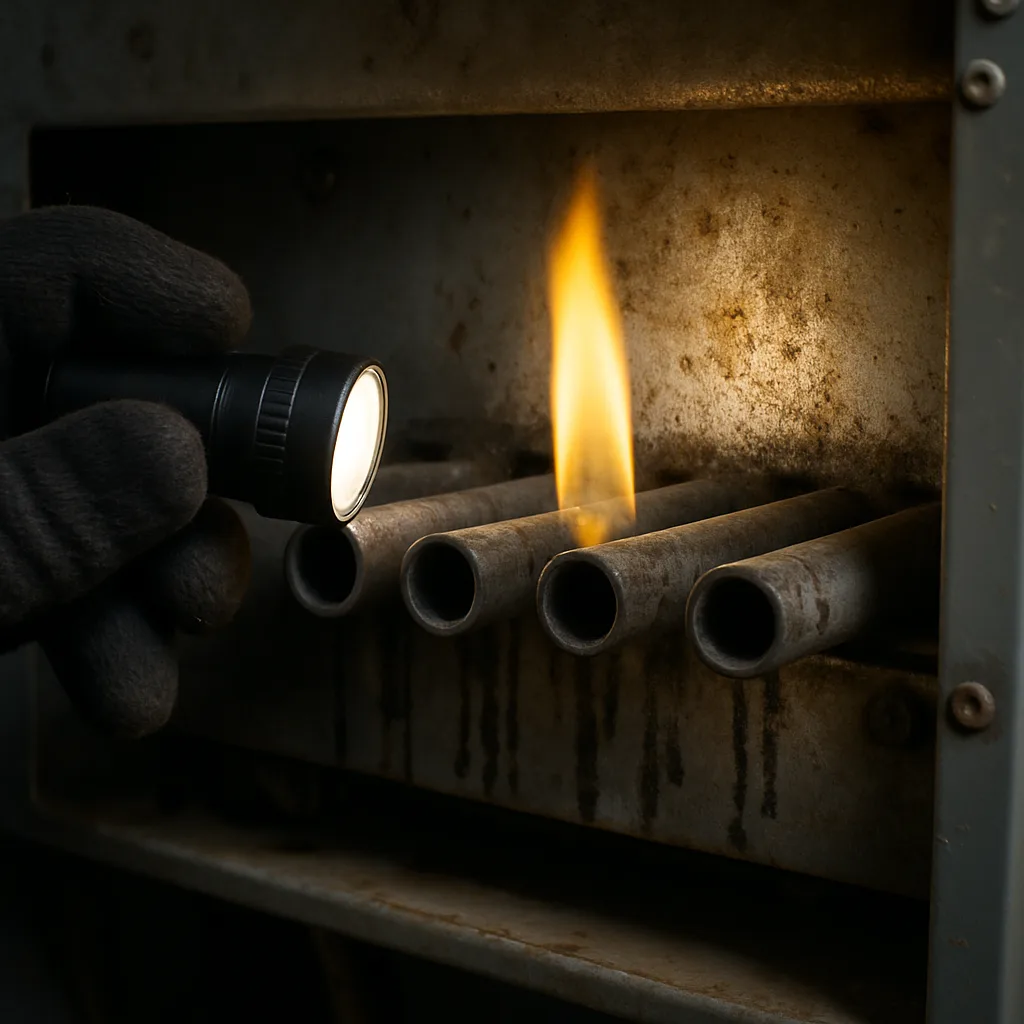
- A yellow or flickering flame instead of a steady blue one
- Headaches, nausea, or unusual drowsiness that ease when you leave the house
- Short cycling, where the furnace turns on and off more than it should
- A pilot light that keeps going out on its own
None of these signs proves there’s carbon monoxide in your air, but any one warrants a furnace safety inspection. A soot smudge could be dust, or it could point to incomplete combustion. You won’t know without a professional look, and guessing isn’t worth it.
What Happens During a Furnace Safety Inspection
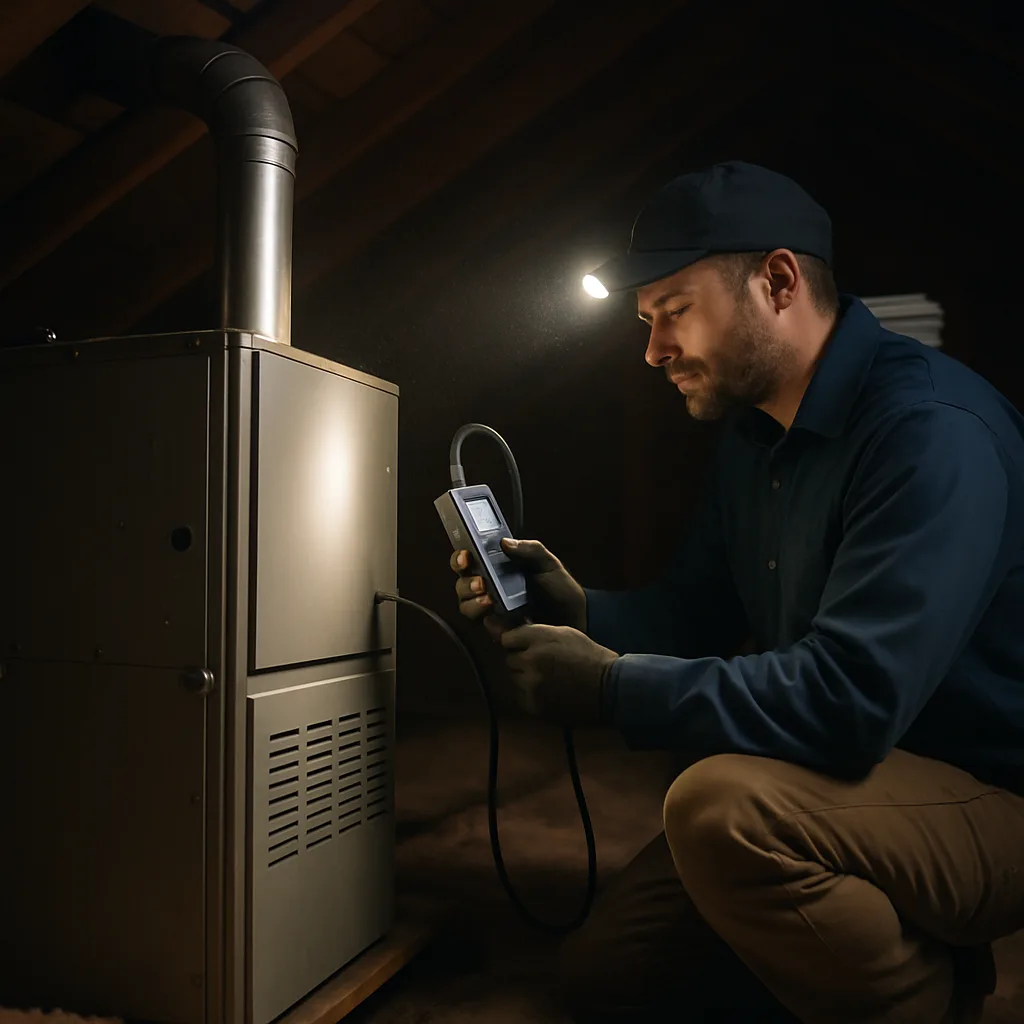
So what happens once we’re standing in front of your furnace? It’s not a mystery or a two-minute glance. We follow the same checklist each time. It helps catch small problems before they become a 2 a.m. no-heat call in January.
- We check the heat exchanger for cracks. This is the big one because a cracked exchanger can leak carbon monoxide into your air.
- We test for carbon monoxide near the unit and at supply vents.
- We look at the burners and flame pattern. Uneven or yellow flames tell us something’s off.
- We inspect the ignitor or pilot assembly and the flame sensor.
- We check the blower motor, belts, and filter condition.
- We look at the venting and ductwork for gaps or blockages.
- We hand you a written summary of our findings and anything that needs attention.
That written summary matters. You aren’t left guessing about what a technician mumbled on the way out the door. You get the findings on paper in plain terms.
The exchanger and CO levels often come back clean, and we’ll tell you exactly that. If we find a crack or rising CO level, we’ll explain what it means. We’ll also walk through your options. No repair work begins until you approve it.
Older furnaces in homes near Sunnyvale’s original lots tend to show more burner wear. That comes from their age and years of run time.
When a Filter Swap Beats a Full Inspection
Not every weak-heat complaint needs a technician. When someone reports cool air or longer run times, we ask one question first: When did you last change the filter? A clogged filter restricts airflow and makes the system work harder. It can also trip the high-limit switch and shut down the furnace. That’s a five-minute filter fix, not a safety inspection problem.
- Weak airflow from the vents but no smell, soot, or strange noise
- The furnace short cycles soon after a filter change becomes overdue
- Rooms feel uneven, but the system still fires up on its own
- You can see daylight through the filter, or it hasn’t been swapped in three months or more
If that’s your situation, grab a new filter before you grab the phone. Most homeowners can replace a furnace filter themselves, and it solves this problem more often than you might expect.
The answer changes if you smell something unusual near the unit or see soot around the vents. The same goes for a pilot light or flame that looks wrong. Those signs call for carbon monoxide testing and flame sensor cleaning by someone trained to spot a damaged heat exchanger. We’d rather suggest the inexpensive fix first than talk you into a visit you don’t need.
Have questions? We’re happy to help.
Call Today, Get Service Today. Xtreme Air Services is ready to help.
How Furnace Inspection Pricing Works
So how much does a furnace safety inspection run? Most homes fall somewhere between $75 and $250. The most common job is a straightforward on-site check with a written summary, priced between $75 and $150. That price covers the technician’s time to examine your system without rushing.
A few things can move that number up or down. An easy-to-reach furnace in a single-story home costs less to inspect than one behind ductwork in a tight closet. Cameras, leak-detection gear, or specialized meters add time and cost. Larger homes, complex systems, and difficult access can also raise the price.
- System complexity and how hard the furnace is to reach
- Property size and the number of zones or units involved
- Whether specialized equipment like a camera or leak detector is needed
- The CO and heat exchanger check, standard on every inspection we run
The service call fee for your Sunnyvale home ranges from $26 to $99. If you move forward with a repair, that fee gets credited toward the work, so you aren’t paying twice. This smaller job doesn’t usually need financing. If we find a larger problem, such as a cracked heat exchanger, financing is available for the repair or furnace replacement.
The inspection fee covers the assessment and written findings, not repair work. If we find a problem, fixing it is a separate conversation. We’ll explain the work and price before touching anything.
Real Estate Sales and Seasonal Cold Snaps Both Trigger Inspections
The phone rings most for this job at two specific times.
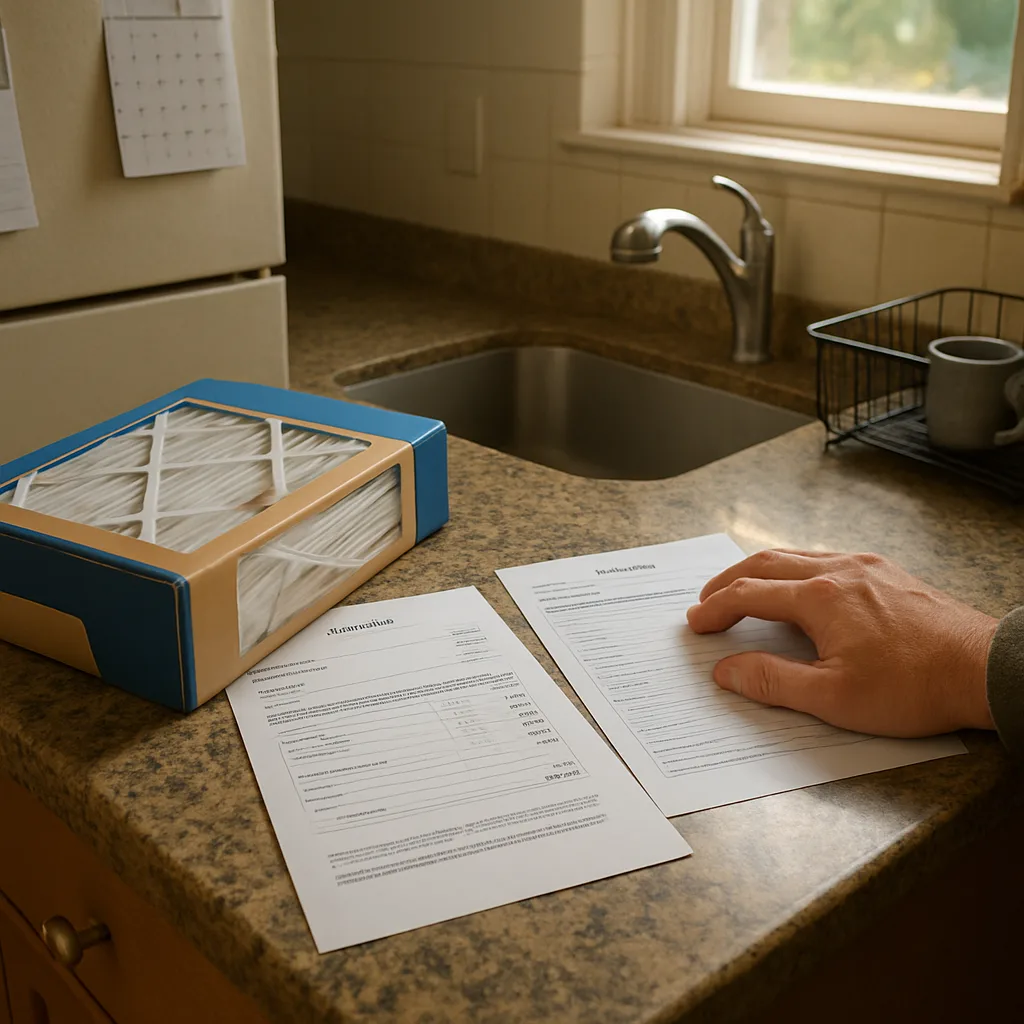
The first is during a home sale. Buyers and their agents want to avoid a surprise furnace bill six weeks after closing. A safety inspection becomes part of the checklist. Sunnyvale sellers often request one before listing to settle questions before the buyer’s inspector raises them. We’ve entered plenty of local attics where the furnace looked fine from the hallway. Once we opened the panel, the heat exchanger told a different story.
The second trigger is the weather.
North Texas doesn’t ease into winter. A furnace can sit quiet since March, then run hard during the first cold front. That’s when a cracked heat exchanger or dirty flame sensor often becomes apparent. Carbon monoxide risk can rise during the season’s first firing. That’s why the CO and heat-exchanger check matters during a cold-snap inspection. Don’t wait for the first 38-degree morning to discover a furnace problem. Book the inspection before the cold front arrives, not during it.
Frequently Asked Questions
Common questions about Furnace safety inspection
How long does a furnace safety inspection take?
Most furnace safety inspections take about 30 to 45 minutes. We check the heat exchanger, test for carbon monoxide, and look at the burners, blower, and vents. If your furnace sits in a tight closet or a hard-to-reach attic, it might take a little longer. You’ll get a written summary before we leave, so you know exactly what we found. No repair work starts without your approval first.
What should I expect when the technician arrives?
We’ll walk straight to your furnace and start our checklist right away. You don’t need to do anything to prepare. We test the flame pattern, check the ignitor and flame sensor, and test for carbon monoxide near the unit and at your vents. When we finish, we hand you a plain-language summary of what we saw. If something needs attention, we explain it before any work begins.
Why do older Sunnyvale homes need extra attention during a furnace inspection?
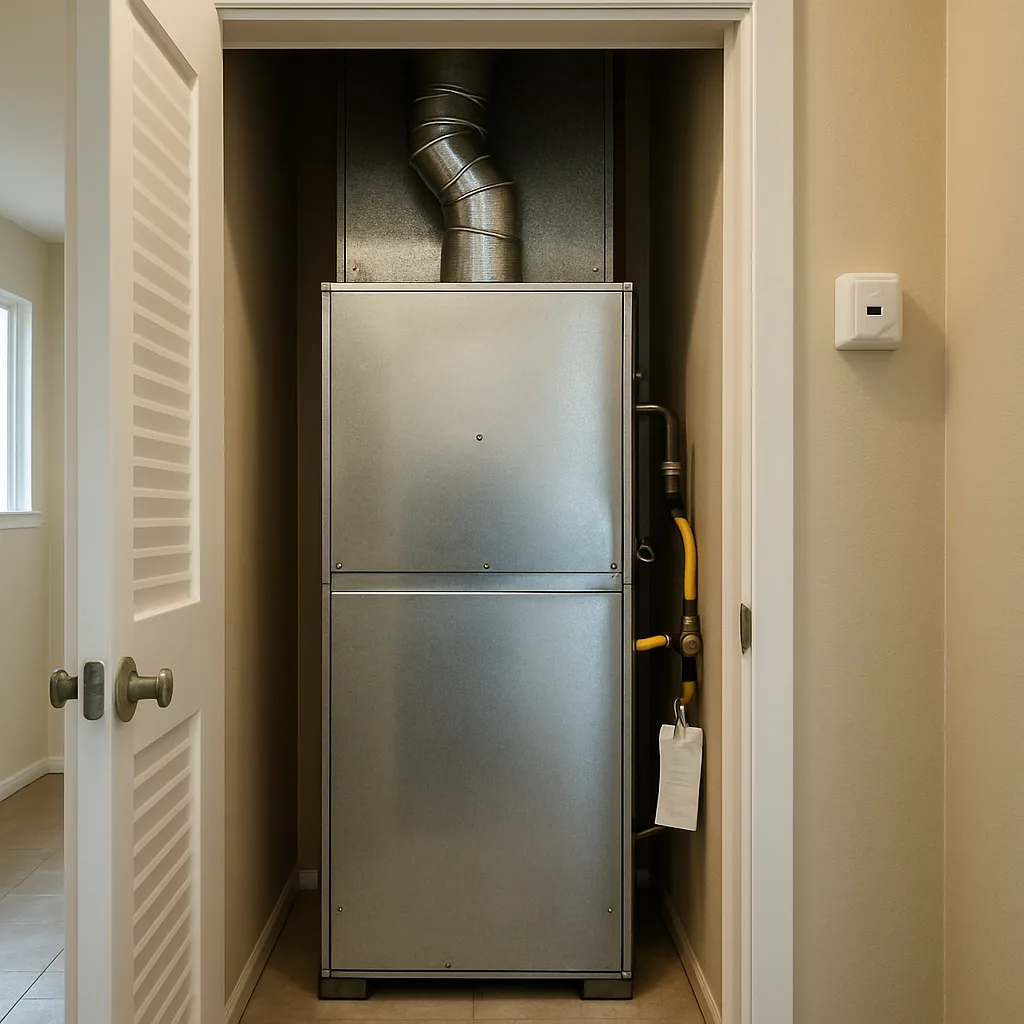
Many older homes near Sunnyvale’s town center have attic-mounted furnaces instead of closet units. Attic heat can mask a cracked heat exchanger longer than a furnace tucked in a hallway closet. That delay matters because a cracked exchanger can leak carbon monoxide into your air. Homes on Sunnyvale’s original lots also tend to show more burner wear from age and years of run time. That’s why we test CO levels at the unit and at supply vents on every visit.
Can I skip the inspection and just change my filter?
Sometimes, yes. If you notice weak airflow but no smell, soot, or strange noise, a clogged filter is often the real culprit. It restricts airflow and can even trip the high-limit switch. Swap in a new filter first, especially if it’s been three months or longer since the last change. But if you smell something odd, see soot, or notice a yellow flame, skip the filter test and call for an inspection instead.
Do I need a furnace safety inspection before selling my home in Sunnyvale?
Yes, many Sunnyvale sellers schedule one before listing their home. It settles furnace questions early instead of leaving them for the buyer’s inspector to raise later. Buyers want to avoid a surprise furnace bill weeks after closing, so a clean inspection report helps the sale move smoothly. If we do find an issue, you’ll have time to address it on your own schedule instead of during closing negotiations.
How often should I schedule a furnace safety inspection?
We recommend a furnace safety inspection once a year, ideally before the first cold snap hits. A furnace can run quietly with a small problem all fall, then get pushed hard once the temperature drops. That’s when a borderline issue turns into a real one. An annual check catches cracks, CO leaks, and worn burners before they turn into a no-heat call in the middle of winter.
Ready to Get Started?
Call 972-288-2263 Today, Get Service Today.