


Garbage Disposal Repair in Sunnyvale That Gets Your Sink Working Again
Jammed, humming, and leaking disposals repaired at the motor, splash guard, or drain flange before you buy a new one.
What’s Covered on This Page
- Signs Your Garbage Disposal Needs a Repair Call
- Repair or Replace: Making the Right Call for Your Kitchen
- Reset Before You Call: Simple Fixes to Try First
- What Happens During a Sunnyvale Garbage Disposal Repair Visit
- Keeping Your Disposal Running Between Repairs
- How fast can you get to my house in Sunnyvale for a disposal repair?
- What should I expect when the technician shows up?
- Why do so many Sunnyvale kitchens have disposal trouble after the holidays?
- My disposal hums but won’t spin. Does that mean it’s broken?
- Should I try fixing a leaking disposal myself before calling?
- How do I know if my disposal needs repair or full replacement?
Signs Your Garbage Disposal Needs a Repair Call
Garbage disposals tend to give clear signals before they quit entirely, and knowing what each sound or symptom means can save time and money. The most common complaint is a unit that hums but does not spin. This almost always points to a jammed impeller, often caused by a stubborn piece of bone, fruit pit, or fibrous vegetable matter wedged against the grind ring. The motor is receiving power and trying to turn, but something mechanical is blocking it. This is different from a disposal that produces no sound at all when the switch is flipped, which usually points to an electrical problem such as a tripped internal overload switch, a failed reset button, a bad wall switch, or wiring issues further upstream.
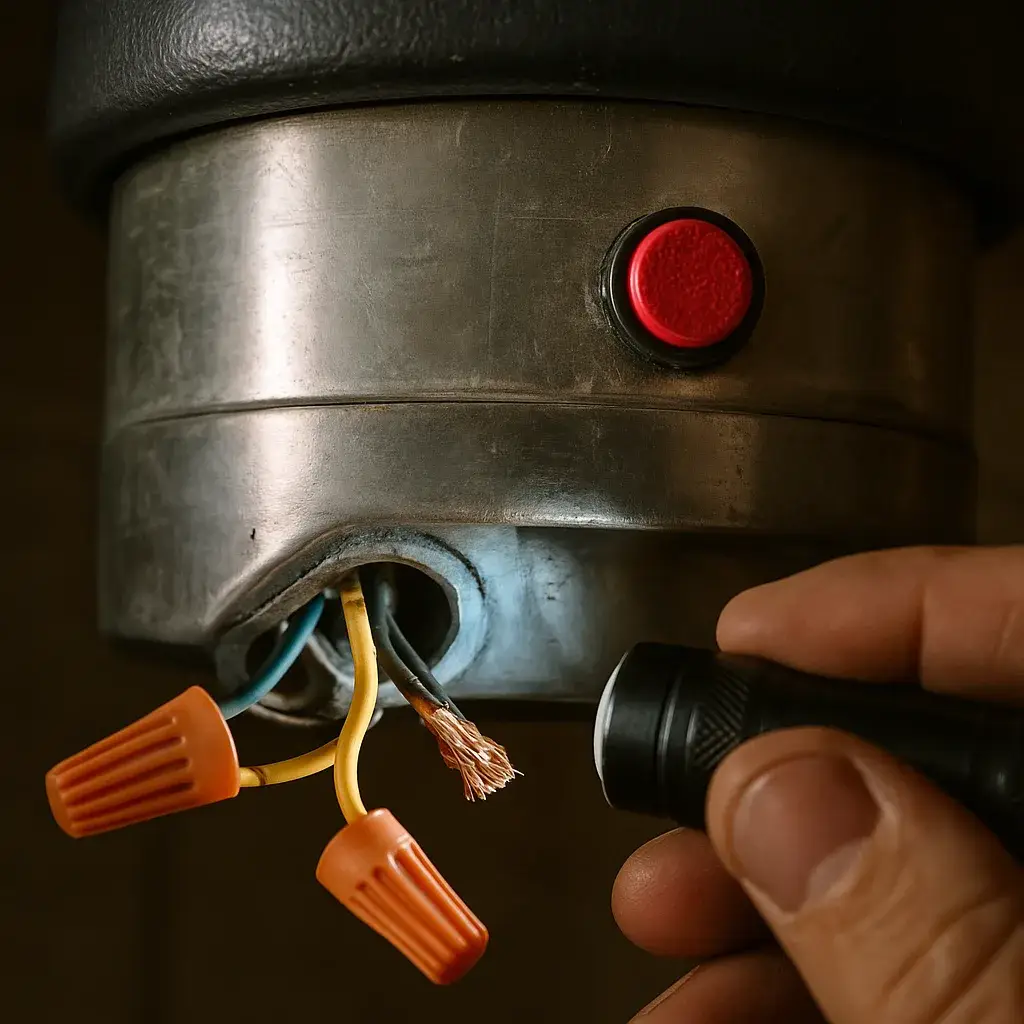
Beyond power issues, physical symptoms matter just as much. A disposal that leaks at the base is often dealing with a worn seal or cracked housing, and continuing to run it can lead to water damage under the sink cabinet. Repeated breaker or GFCI trips suggest the motor is drawing excessive current, which can mean a failing motor, a short in the wiring, or a jam that is forcing the motor to overwork itself. None of these should be ignored, since they tend to worsen with continued use.
- Humming but not spinning: typically a jam against the impeller or grind ring, not a dead motor
- No power or sound at all: usually electrical, involving the reset button, switch, or wiring
- Leaking at the base: often a worn seal, loose mounting, or cracked housing
- Repeatedly tripping the breaker or GFCI: signals excessive motor draw or a wiring fault
- Persistent foul odor: often trapped food debris, mold, or a failing splash guard trapping waste
- Grinding, rattling, or metallic noise: can indicate a loose flywheel, damaged blades, or foreign object
Foul odors that persist even after cleaning often mean debris is trapped somewhere the average scrub brush cannot reach, such as under the splash guard or inside the discharge tube. Grinding or rattling noises point to a mechanical problem, possibly a loose flywheel or an object that has worked its way past the impeller and is bouncing around inside the chamber. Any of these signs, especially in combination, are a strong indicator that a professional evaluation is worth scheduling before the issue escalates into a full replacement.
Repair or Replace: Making the Right Call for Your Kitchen
Here’s the honest answer. Most disposals we look at don’t need replacing, they need one part swapped and a reset. Usually it’s a jammed flywheel or a stuck impeller, not a dead motor. A stuck flywheel. A jammed spoon that fell down the drain. That’s usually the whole problem.
So when does replacement make sense? If the unit is leaking from the bottom, not the sink flange but the housing itself, that’s usually a cracked casing and no amount of tightening fixes it. And if the motor trips the reset button over and over, even after we clear the jam, the motor’s likely on its way out.
- Leaking from the base or housing, not just the sink seal
- Reset button trips repeatedly even after the jam is cleared
- Housing is cracked, rusted, or visibly corroded
- Unit is old enough that replacement parts are hard to find
The reset button tripping once is nothing, trip it three times in a week and something’s wrong. That’s when we start looking at the motor windings instead of just the blades. Most calls never get that far. We diagnose, clear the jam or swap the failed part, test it under running water, and you’re back to normal. If we do find a unit that’s truly done, we’ll tell you straight, no upsell, no guessing games.
Reset Before You Call: Simple Fixes to Try First
Before you pick up the phone, try this. Often, a humming disposal that won’t spin is just jammed, not broken. A dead-silent unit usually means it’s tripped, not dead. So give these a shot first.
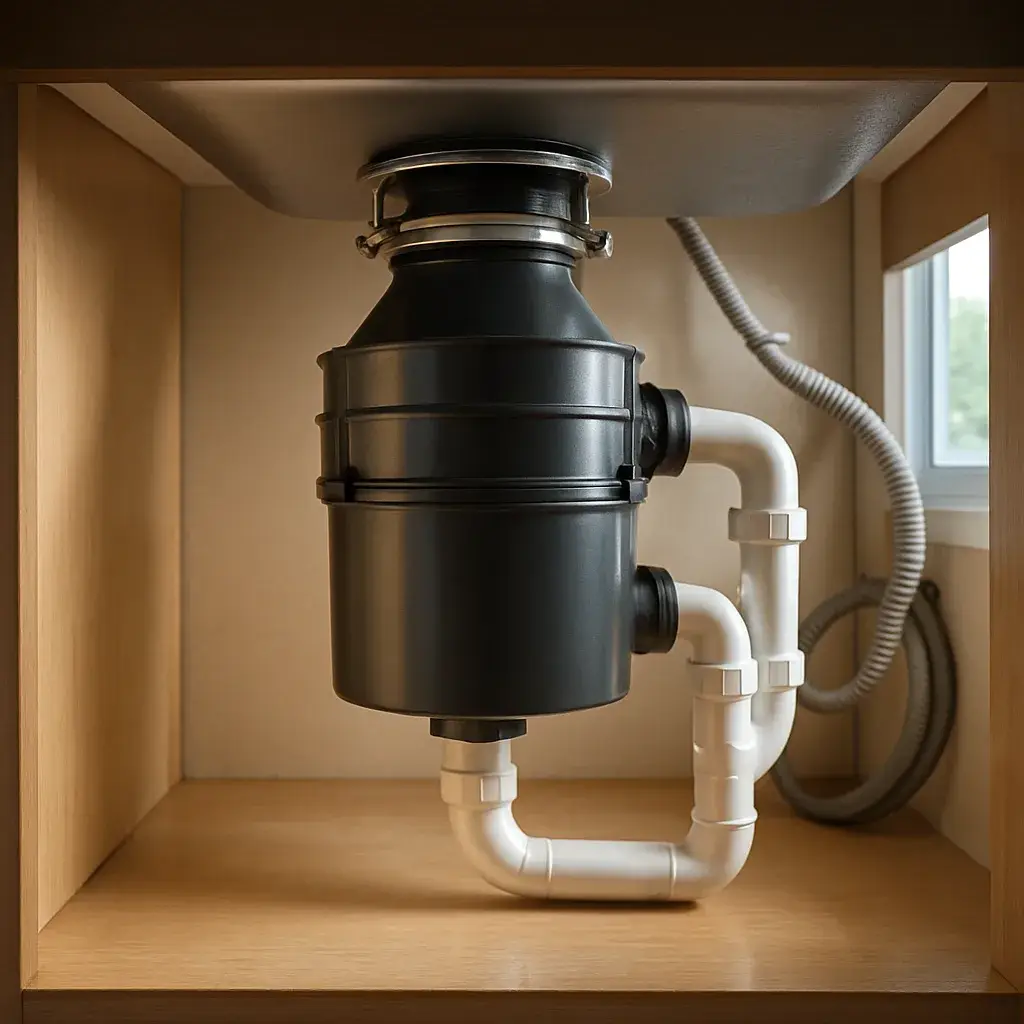
- Turn off the disposal and unplug it under the sink, or flip the breaker. Safety first, always.
- Look under the sink for a small red or black reset button on the bottom of the unit. Press it firmly. That little button trips when the motor overheats.
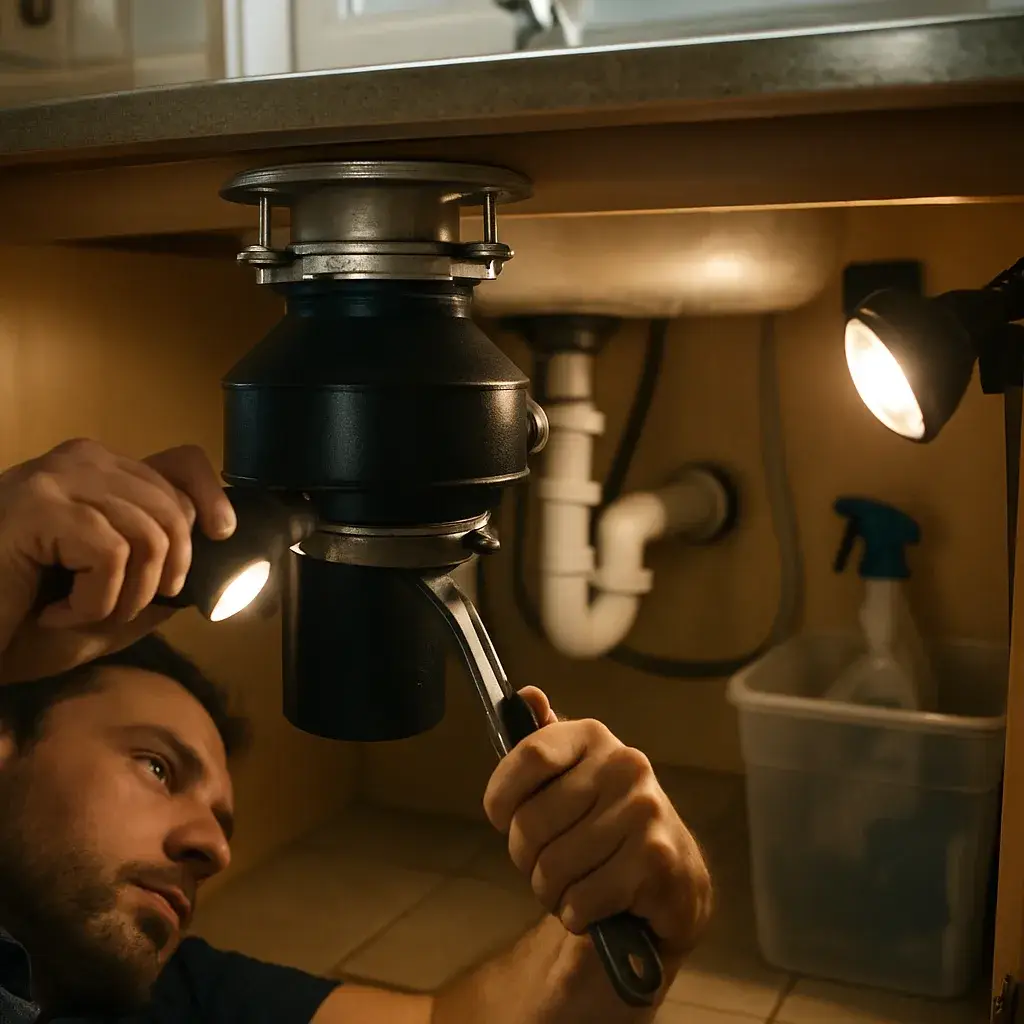
- Never put your hand down the drain. Use a flashlight and an Allen wrench in the bottom center hole to manually turn the flywheel and free up whatever’s stuck.
- Plug it back in, flip the switch, and run cold water while it spins.
- If it hums but still won’t turn, that’s a jam or a stuck motor, not something to force.
A lot of Sunnyvale kitchens run older units that just need that reset button pressed after a busy holiday cooking week, we get calls like that every fall. Did the reset button do nothing at all? That’s usually when something’s broken inside, a worn seal, a seized motor, a cracked housing, and no amount of poking with a wrench fixes that.
If you smell burning, hear grinding metal, or see water pooling under the sink, stop trying to fix it yourself. Those are signs of a bigger problem and messing with it further can turn a simple repair into a bigger mess.
Not sure what your Garbage disposal repair project needs? Ask us.
Call Today, Get Service Today. Xtreme Air Services is ready to help.
What Happens During a Sunnyvale Garbage Disposal Repair Visit
When a Sunnyvale technician arrives for a garbage disposal repair, the visit starts with a quick but thorough diagnosis. Before touching any tools, the technician asks what happened, whether the unit is humming without spinning, leaking underneath the sink, tripping the breaker, or silent altogether. These clues narrow down whether the issue is a simple jam, a worn-out motor, a failed reset button, or a cracked housing that needs full replacement.
- Power is cut at the switch and breaker before any hands go near the disposal
- The technician manually checks the flywheel with an Allen wrench to free jammed food or utensils
- Electrical connections, the reset button, and the motor are tested if the unit will not start
- A failed part, such as a seal, splash guard, or motor assembly, is replaced with a comparable or upgraded component
- Plumbing connections under the sink are inspected for leaks caused by loose mounts or cracked gaskets
Because Xtreme Air Services works on homes throughout Sunnyvale and the wider DFW Metroplex, including Dallas, Fort Worth, Plano, Frisco, Allen, Irving, and Carrollton, technicians see a huge range of kitchen setups and disposal ages during any given week. A newer build in Frisco might have a disposal barely two years old with a simple manufacturing defect, while an older Sunnyvale or Irving home might have a unit pushing fifteen years of service life with corroded internals. That regional variety means the technician arrives ready to diagnose rather than guess, carrying common replacement parts and tools suited to both brand-new and older installations.
Once the jam is cleared or the failed part is swapped in, the technician runs the disposal under live conditions rather than a quick spin test. Water is turned on at the sink, the unit is switched on, and actual food scraps or a controlled load are sent through to confirm it grinds smoothly, drains properly, and does not leak, rattle, or trip the breaker under real use. This step matters because a disposal can appear fixed when dry but reveal problems only once water and load are introduced.
Before leaving, the technician wipes down the sink area, removes any debris or packaging, and reviews what was repaired along with the final cost, consistent with the upfront pricing and same-day, background-checked service Sunnyvale homeowners are promised from the start.
Keeping Your Disposal Running Between Repairs
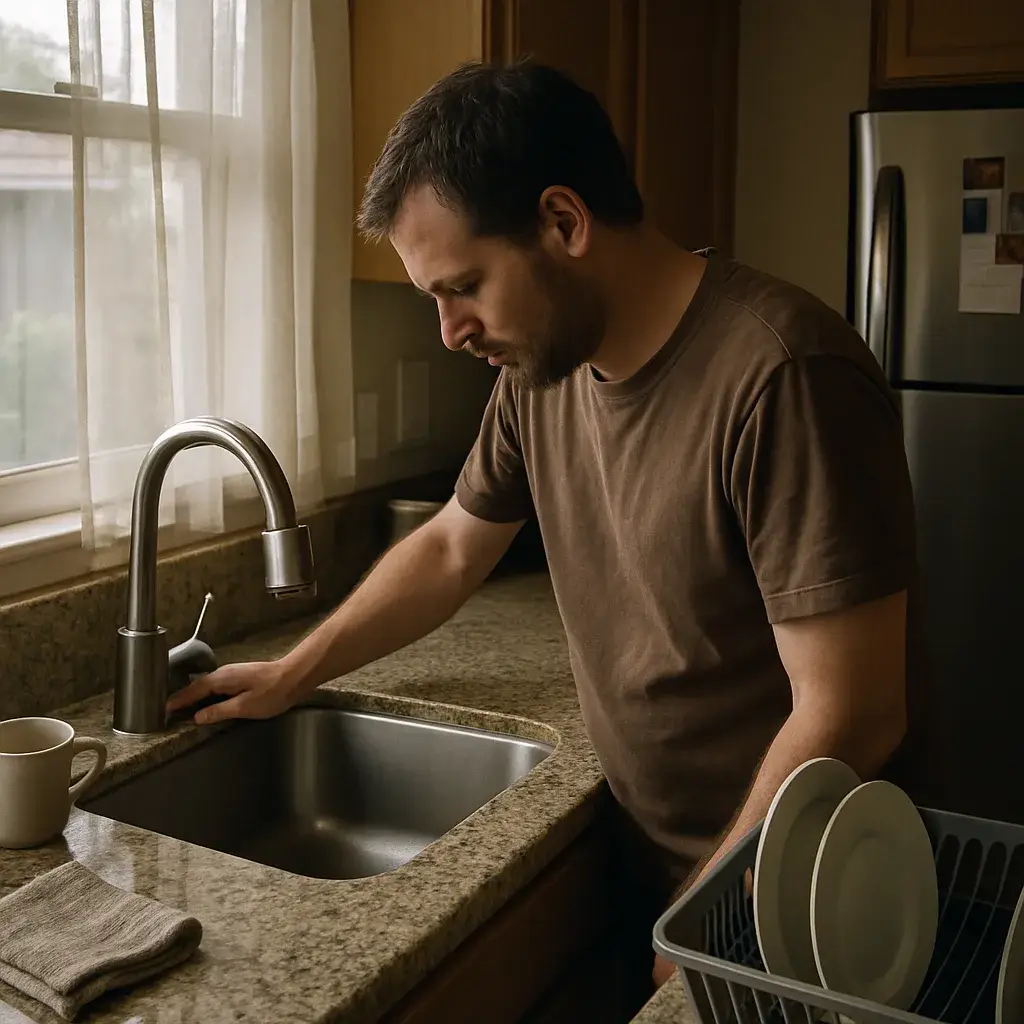
A garbage disposal repair in Sunnyvale rarely happens because the unit is defective from the factory. More often, it’s a slow buildup of habits that overwork the motor, dull the impellers, or clog the trap beneath the sink. Once your disposal is back in working order, a few simple changes at the kitchen sink can add years to its life and reduce the odds of another service call.
- Keep fibrous foods out of the drain, including celery stalks, corn husks, onion skins, and artichoke leaves, since their strings wrap around the blades and strain the motor.
- Never pour grease, cooking oil, or meat fat down the disposal. It solidifies inside the drain line as it cools, narrowing the pipe and inviting clogs even in newer Sunnyvale homes with modern plumbing.
- Run cold water for a few seconds before, during, and after each use. Cold water keeps any grease that does slip through in a solid state so the blades can break it apart and flush it away instead of letting it coat the pipe walls.
- Feed food scraps in slowly rather than dumping in a full plate at once, which gives the motor time to process material without jamming or overheating.
- Run the disposal regularly, even with just water, to prevent rust and keep moving parts from seizing up during long stretches of disuse.
It’s tempting to reach for a bottle of chemical drain cleaner at the first sign of a slow drain, but these products can quietly damage rubber gaskets, splash guards, and seals inside the disposal unit. Once those seals degrade, leaks and motor failures often follow. A better first step is a simple flush of hot water or a call to a technician who can diagnose the clog without introducing corrosive chemicals into the system.
It’s also worth understanding why hiring a licensed plumber matters beyond good customer service. Any repair work that touches your home’s supply lines or drain connections, including reconnecting a disposal after a repair, falls under the oversight of the Texas Occupations Code, Chapter 1301, which governs plumbing licensing across the state. This means the technician working under your sink isn’t just skilled, they’re operating within a legal framework designed to protect homeowners from faulty connections, code violations, and unlicensed work that could void insurance coverage.
Frequently Asked Questions
Common questions about Garbage disposal repair
How fast can you get to my house in Sunnyvale for a disposal repair?
We schedule most disposal repairs within a day or two of your call. Because a jammed or leaking disposal can get worse the longer you wait, we try to move quickly, especially if you tell us water is pooling under the sink. Older Sunnyvale homes with original kitchen plumbing sometimes need extra time to check hose connections, so mentioning your home’s age helps us plan the visit better.
What should I expect when the technician shows up?
The technician starts by asking what happened before touching any tools. You’ll be asked if the unit hums, stays silent, leaks, or trips your breaker. This narrows the problem down fast, whether it’s a simple jam, a stuck flywheel, or a failing motor. From there, the technician tests the unit under running water to confirm the fix worked before calling the job done.
Why do so many Sunnyvale kitchens have disposal trouble after the holidays?
Older Sunnyvale homes often run original disposal units that struggle with heavy holiday cooking loads. Fibrous scraps like potato peels, celery, and pumpkin guts jam the impeller easily. We see a spike in reset-button calls every fall for exactly this reason. If your disposal hums but won’t spin right after a big cooking week, it’s almost always a jam, not a dead unit.
My disposal hums but won’t spin. Does that mean it’s broken?
No, a humming disposal is almost never a dead motor. It usually means something like a bone, fruit pit, or fibrous scrap is jammed against the impeller. The motor is receiving power and trying to turn but can’t. This is a completely different problem than a silent unit, which usually points to an electrical issue like a tripped reset button or bad switch.
Should I try fixing a leaking disposal myself before calling?
You can check the mounting and flange, but a leak from the housing itself needs a professional look. Leaking at the base often means a worn seal or a cracked casing, not just a loose seal. Running a cracked unit longer risks water damage to your sink cabinet. If tightening doesn’t stop it, stop using the disposal and call before the leak spreads.
How do I know if my disposal needs repair or full replacement?
Most disposals we check need one part swapped, not a full replacement. Replacement usually makes sense when the housing itself is cracked or corroded, or when the reset button keeps tripping even after a jam is cleared. If your unit is old enough that parts are hard to find, that’s another sign it’s time to replace rather than repair.
Ready to Get Started?
Call 972-288-2263 Today, Get Service Today.