


Outdoor Faucet Repair in Sunnyvale: Stop the Drip Before It Costs More
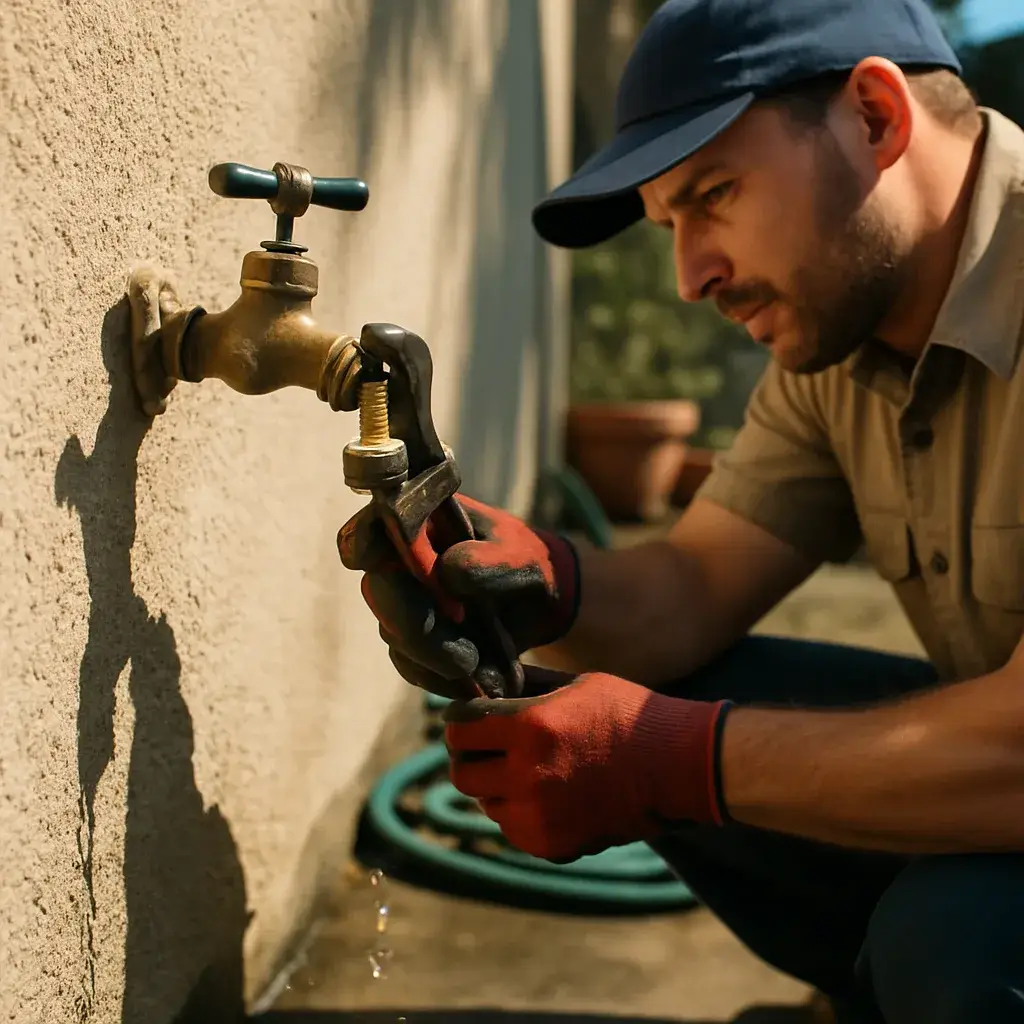
Frozen and split hose bibs replaced with freeze-resistant sillcocks, sealed properly where the line passes through the wall.
What’s Covered on This Page
- Signs Your Outdoor Faucet Needs Professional Repair
- Frost-Free vs. Standard Faucets After a Hard Freeze
- When You Don’t Need a Plumber: Hose and Nozzle Leaks
- What to Expect During Your Sunnyvale Faucet Repair Visit
- Preventing Frozen and Cracked Faucets Next Winter
- How fast can I get an outdoor faucet fixed in Sunnyvale?
- What happens when the plumber shows up to fix my outdoor faucet?
- Why did my outdoor faucet crack after a cold night in Sunnyvale?
- Do I need a plumber if water is leaking from my hose, not the faucet?
- What’s the difference between a frost-free and a standard outdoor faucet?
- Can a small drip from my outdoor faucet turn into a bigger problem?
Signs Your Outdoor Faucet Needs Professional Repair
Most outdoor faucets don’t just quit all at once. They tell you first. A slow drip after you shut the handle off tight is usually the first clue, and it’s a worn washer inside the valve.
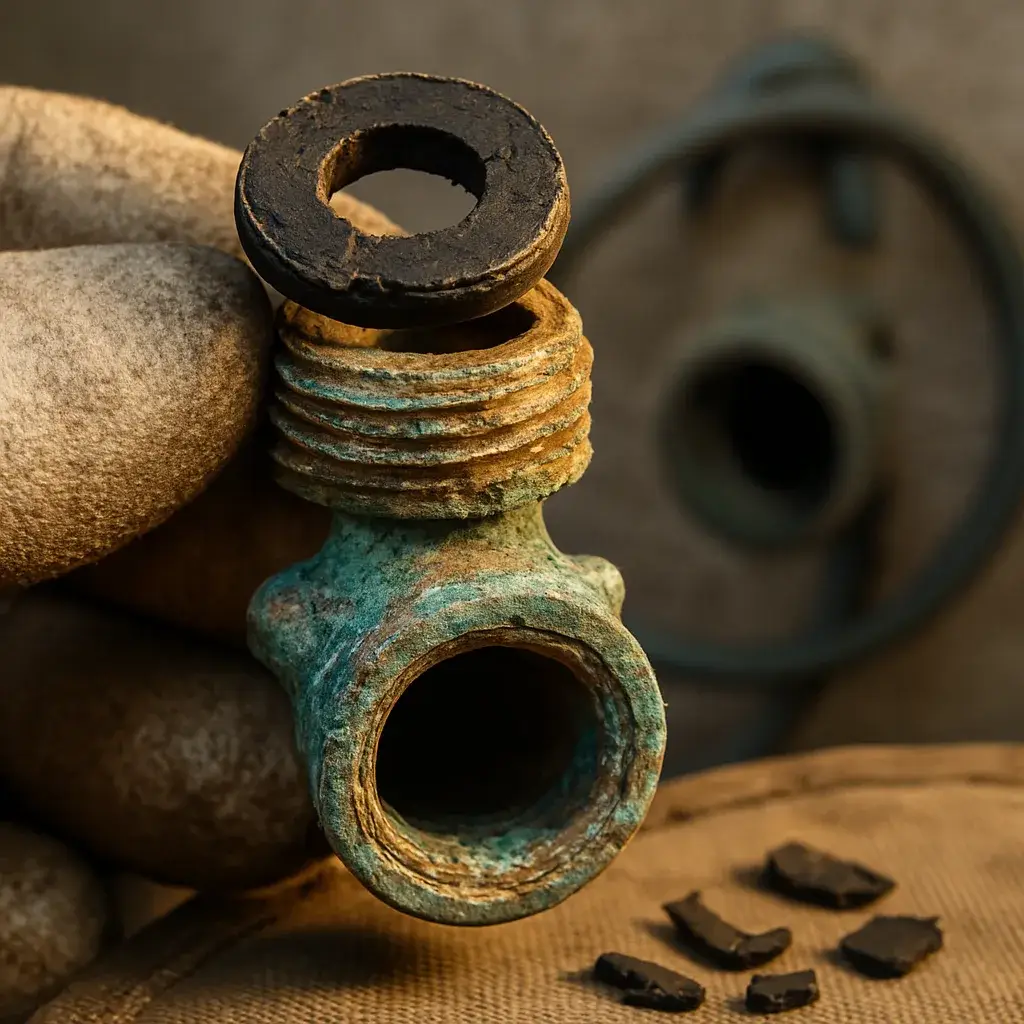
Here’s what we look for when a call comes in about a faucet acting up.
- Water still trickles out after the handle is fully closed
- A hissing or whistling sound coming from inside the wall near the bib
- Wet siding, soft drywall, or a damp spot on the wall behind the faucet
- The handle spins loose without shutting the water off at all
- Water pressure at the hose is noticeably weaker than it used to be
- The faucet cracked or split after a hard freeze last winter
That last one matters more than folks think. Sunnyvale doesn’t get deep freezes often, but when a cold front does drop temps below freezing overnight, a standard faucet with water still trapped inside can crack. You won’t see it until spring, when it finally leaks.
So if you’re standing outside staring at a puddle that shouldn’t be there, that’s not a wait-and-see situation.
Not sure if what you’re seeing counts as an emergency? A slow drip can usually wait a day or two. A wall that’s warm, soft, or discolored around the faucet can’t, that’s water getting somewhere it shouldn’t.
Frost-Free vs. Standard Faucets After a Hard Freeze
Not all outdoor faucets are built the same, and that matters a lot after a cold front rolls through Sunnyvale. A standard hose bib sits right at the wall, with almost no room between the valve and the cold outside air. A frost-free faucet, sometimes called a sillcock, has a long stem that reaches back into the warmer wall space before the shutoff valve. That extra length is the whole point. It’s designed to keep standing water out of the part exposed to freezing temps.
So why do frost-free faucets still crack sometimes? Usually it’s a hose left connected all winter. A hose traps water in the stem, and that water has nowhere to drain. Once it freezes, something’s got to give.
- Standard hose bibs freeze and crack faster because the water sits right at the exposed valve
- Frost-free faucets fail less often, but a connected hose defeats the design completely
- Older homes around Sunnyvale are more likely to still have standard bibs installed
- Wall access and faucet type both affect how straightforward the fix ends up being
This is exactly why we ask what kind of faucet you’ve got before we even head out. Faucet type is one of the real factors that affects the job, along with wall access and the condition of the pipe behind it. We’d rather know that upfront than guess at your door.
If you’re not sure which one you have, don’t stress over it. That’s genuinely something our team sorts out in minutes once we’re looking at it in person. 80 six days a week.
When You Don’t Need a Plumber: Hose and Nozzle Leaks
Not every drip means you need a plumber. Sometimes the faucet itself is fine, it’s the hose or the nozzle that’s worn out.
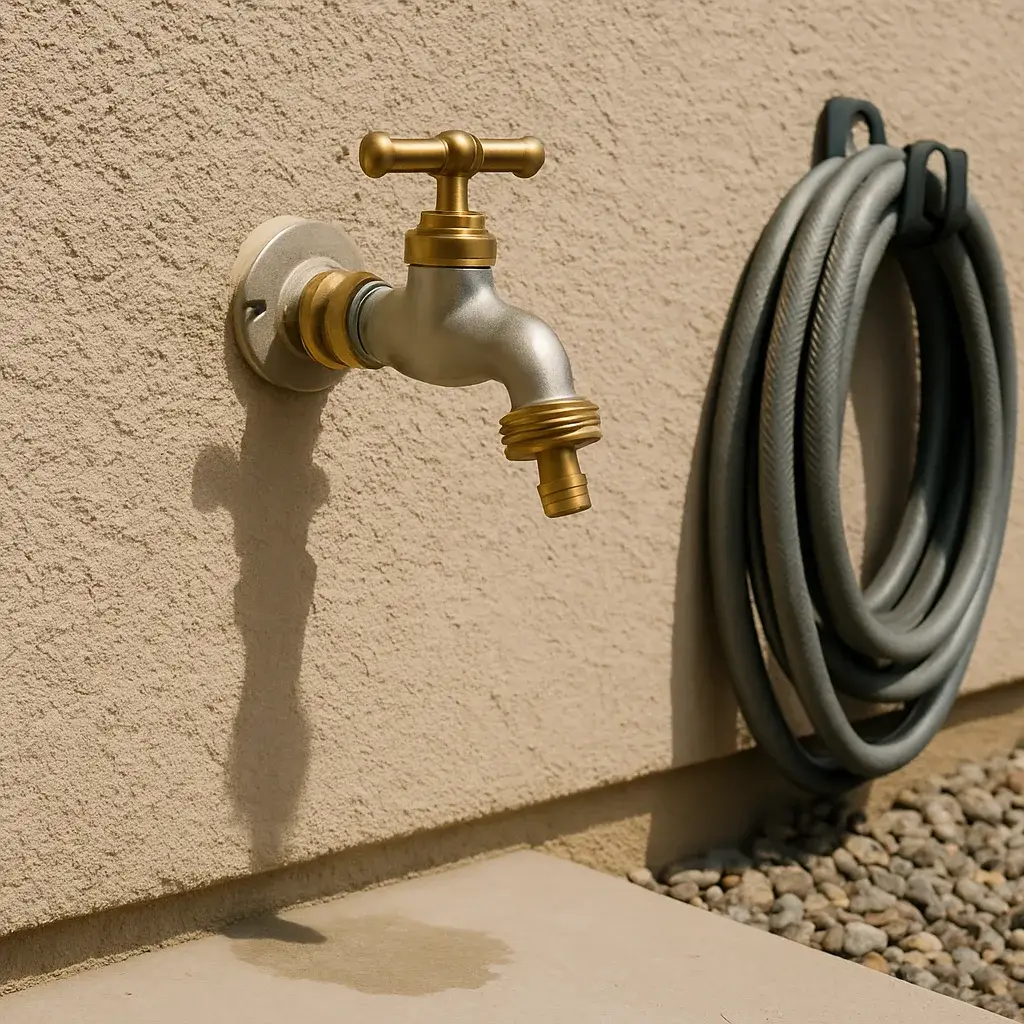
Here’s a scenario we hear a lot. You hook up the hose, water sprays out around the connection, and you assume the faucet’s shot. Usually it’s the rubber washer inside the hose end, not the faucet. Swap the washer, maybe five bucks at a hardware store, and the leak’s gone.
- Water leaking only where the hose screws onto the faucet, not from the faucet body itself
- A cracked or worn spray nozzle dripping at the trigger
- A loose hose connection you can hand-tighten and the leak stops
- Water pooling only when the hose is attached, dry when it’s off
Try this before you pick up the phone. Detach the hose completely and run the faucet by hand for a minute. Dry. No drip anywhere on the faucet body or handle? Your faucet’s healthy, the hose or nozzle just needs replacing.
But if water’s coming from the faucet body itself, around the handle, or from inside the wall when you turn it on, that’s a different story. That points to a worn valve seat or a cracked pipe, and no amount of hose swapping fixes that.
So check the easy stuff first. It costs you nothing but a few minutes, and honestly, we’d rather you save the money on a five-dollar washer than pay a service call for something you could’ve fixed yourself.
Need help with Outdoor faucet repair?
Call Today, Get Service Today. Xtreme Air Services is ready to help.
What to Expect During Your Sunnyvale Faucet Repair Visit
So what happens when we show up? Nothing complicated. A tech pulls into your driveway, walks the yard with you, and takes a look at the faucet before touching a single tool.
- We check the faucet type first. A lot of the newer builds around Sunnyvale have frost-free hose bibs, and those repair a little differently than the standard kind.
- We turn off the water and check pipe condition behind the wall. Good pipe means a straightforward swap.
- We remove the old faucet and install the standard replacement part, included in the repair.
- We turn the water back on and test it under pressure, twice if we have to, just to be sure.
- We clean up the work area and walk you through what we did before we leave.
Most calls get fixed on the first visit. That’s not a guess, that’s just how these jobs usually go, the faucet’s leaking or frozen and the fix is direct.
If the service-call fee applies to your visit, it runs $26 to $99, and it gets credited toward the repair if you move forward with us.
You won’t get charged extra because it’s a Saturday or six in the evening. Nights and weekends cost the same as any weekday, no overtime tacked on.
Preventing Frozen and Cracked Faucets Next Winter
Here’s the thing about North Texas winters, they don’t ease in. One week it’s 70 degrees, the next a cold front drops us into the 20s overnight. That swing is exactly what cracks a standard hose bib. Water sitting in the pipe freezes, expands, and splits the metal from the inside. You won’t even know until spring when you turn it on and water sprays everywhere.
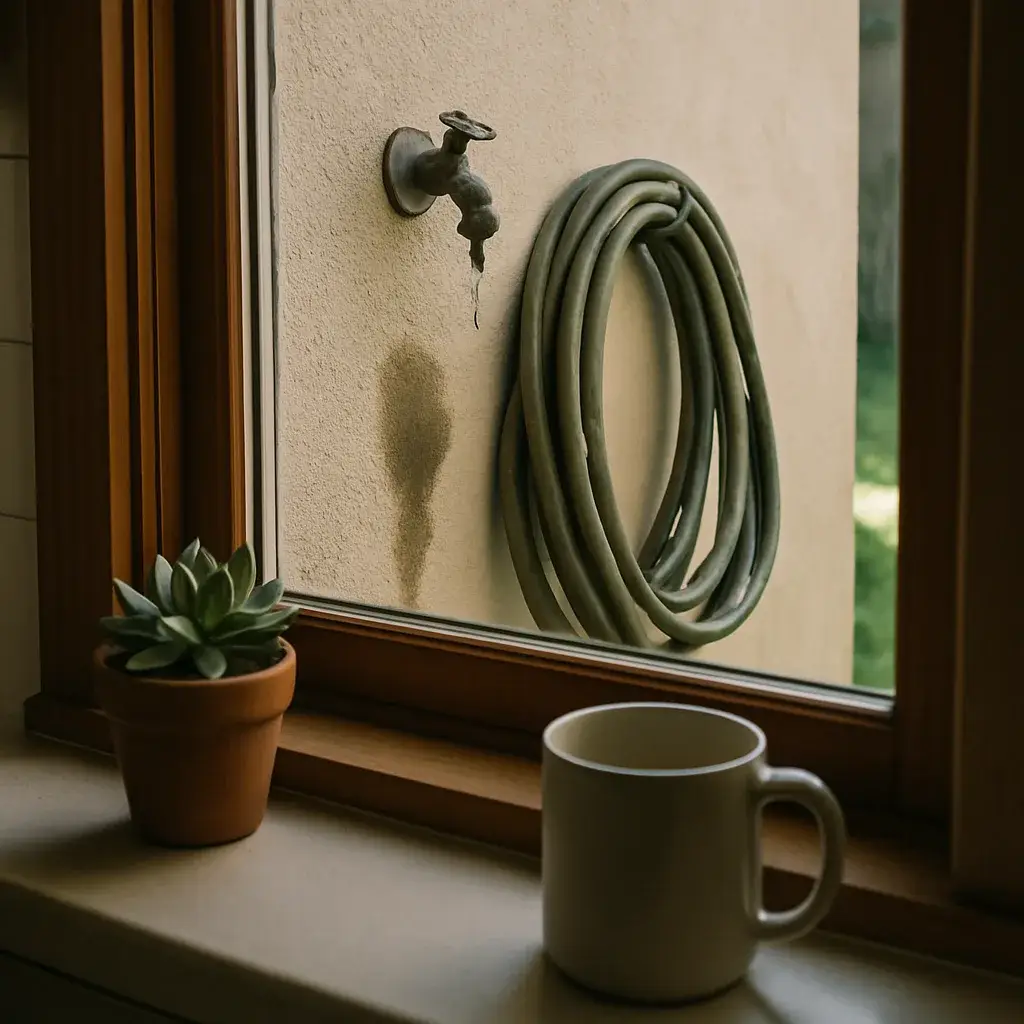
So what helps? A frost-free faucet is the biggest upgrade, it sits further back in the wall so the shutoff point stays inside the warm part of your house. But even a frost-free faucet can fail if a hose stays connected all winter, trapping water at the tip.
- Disconnect and drain every hose before the first hard freeze.
- Shut off any interior valve feeding that faucet, if your home has one.
- Cover the faucet with an insulated foam cover, they’re cheap insurance, really.
- Check older Sunnyvale homes with standard faucets each fall, these are the ones we see split most often.
- Ask about upgrading to a frost-free faucet during a repair visit instead of replacing the same part again next year.
We see the same handful of addresses call back every February. Same faucet, same crack, same fix. It’s avoidable.
Frequently Asked Questions
Common questions about Outdoor faucet repair
How fast can I get an outdoor faucet fixed in Sunnyvale?
Most outdoor faucet repairs get scheduled and finished within the same day you call. We ask a few quick questions about your faucet type and the leak before we head out, so the tech shows up ready with the right parts. Nights and weekends are treated the same as weekdays, so you’re not stuck waiting until Monday for a leak that’s soaking your siding. If water is getting into the wall behind the faucet, tell us right away. That moves you up the list.
What happens when the plumber shows up to fix my outdoor faucet?
The tech walks the yard with you first and looks at the faucet before touching any tools. From there, we check the faucet type, shut off the water, and look at the pipe condition behind the wall. If the pipe looks good, it’s a straightforward swap with a standard replacement part. We test the repair under pressure, sometimes twice, then clean up and walk you through what we did. Most outdoor faucet calls get fixed on that first visit.
Why did my outdoor faucet crack after a cold night in Sunnyvale?
A cracked faucet after a freeze usually means water was trapped inside when temps dropped below freezing overnight. Sunnyvale doesn’t freeze often, but when a cold front does hit, a standard hose bib sitting close to the outside wall has almost no protection. Frost-free faucets handle this better because the shutoff sits deeper in the warmer wall space. You often won’t see the crack until spring, when it starts leaking as the ice thaws out.
Do I need a plumber if water is leaking from my hose, not the faucet?
No, not usually. If the leak is only where the hose screws onto the faucet, the problem is often a worn rubber washer inside the hose end or a cracked nozzle, not the faucet itself. Detach the hose and run the faucet by hand for a minute. If it stays dry, your faucet is fine. Only call if water comes from the faucet body, the handle, or from inside the wall when you turn it on.
What’s the difference between a frost-free and a standard outdoor faucet?
A frost-free faucet has a long stem that reaches back into the warmer wall space before the shutoff valve, so standing water drains out and away from freezing temps. A standard hose bib sits right at the wall with almost no buffer, which is why it cracks faster in a cold snap. Older homes around Sunnyvale are more likely to still have the standard type installed. Knowing which one you have helps us bring the right part on the first visit.
Can a small drip from my outdoor faucet turn into a bigger problem?
Yes, a slow drip is usually the first sign of a worn washer or seat inside the valve, and it rarely fixes itself. Left alone, that same leak can soak into the wall behind the faucet, leading to soft drywall or damp siding over time. A cold snap can make it worse fast if water gets trapped inside a cracked line. A drip can usually wait a day or two, but a warm or soft wall around the faucet needs a look right away.
Ready to Get Started?
Call 972-288-2263 Today, Get Service Today.