


Generator Maintenance: How We Help You Decide Between Repair and Replacement
How we weigh age, run hours, parts availability and load-test results to tell you honestly whether to service your generator or replace it.
What’s Covered on This Page
- The Short Answer on Repair vs. Replace
- The Factors That Decide the Call
- What’s Included in a Generator Maintenance Visit (and What’s Not)
- When We’d Recommend Repair
- When We’d Recommend Replacement
- How do I know whether to repair or replace my standby generator?
- What do people get wrong most often when weighing repair versus replacement?
- When would you tell me to replace instead of taking my repair money?
- Does the maintenance visit fee factor into a repair-or-replace decision?
- Will you work on a generator I bought used or that someone else installed?
The Short Answer on Repair vs. Replace
Most standby generators do not need replacement. They need maintenance. A generator is a small engine sitting outside in North Texas heat, humidity, and the occasional ice storm, and like any engine, it needs regular oil and filter changes, a look at the battery and connections, and a real test of the transfer switch and start sequence. When we come out for maintenance, that is usually what fixes the problem, or keeps one from showing up during the next outage. Sunnyvale storm season is what usually exposes it.
It gets more complicated when a generator has gone years without service and starts showing more than normal wear. If the engine has serious hours on it, if we find repeated corrosion inside the control panel, or if the unit fails to hold a load test even after a tune-up, replacement starts to make sense. We do not make that call from a maintenance visit alone. A maintenance visit covers an inspection, an oil and filter service, and a test of the transfer and start sequence. If we find something during that visit that needs correction, we quote it separately, and that is when the repair-versus-replace conversation starts. We have it at your Sunnyvale property, with findings in hand.
Here is the part that trips people up: a generator that starts fine on a quick test can still fail when it needs to carry your whole house during a real outage. That is why the load test and performance check matter as much as the oil change. We have seen units that ran fine for thirty seconds under no load and then struggled the moment the transfer switch put real demand on them. Regular maintenance is what catches that gap before a storm does. (By the way, that is the part people tend to skip.) Sunnyvale units sit idle most of the year, which makes it matter more.
For most homeowners in Sunnyvale, Rockwall, Forney, and the rest of DFW, the recommendation is simple: keep up with maintenance visits so small issues stay small. A generator that has been maintained on schedule rarely needs a replacement decision made in a hurry. One that has been ignored for several years is more likely to need bigger work, and that is a separate conversation from what a maintenance visit covers. That holds across Sunnyvale as much as anywhere we work.
We will not use a routine maintenance call to push a replacement. If your generator needs corrective work beyond the standard service, we will show you what we found and quote that work on its own, separate from the maintenance visit itself. You decide from there. Our Generator Maintenance in Sunnyvale service is built around that routine inspect-and-service work specifically, not around steering you toward a bigger purchase. Same on every Sunnyvale call.
So the short answer: repair, in the form of ongoing maintenance, is the right call for the vast majority of standby generators, especially ones getting serviced on a normal schedule. Replacement is a conversation for older units with real mechanical wear, repeated failures, or units that cannot hold a load test, and even then it is decided case by case, not assumed. We decide it standing in your Sunnyvale yard.
The Factors That Decide the Call
When we are standing in front of a standby generator, the repair-or-replace question comes down to a handful of things, not a gut feeling. Age and hours run are the first two we check. A generator that has logged a lot of hours during storm season or extended outages wears differently than one that has mostly sat idle. We also look at what parts are failing. A bad battery, a clogged fuel filter, or a dirty air filter is routine and easy to fix during a maintenance visit. A cracked engine block or a failing transfer switch is a different conversation.
Brand and parts availability matter more with generators than with a lot of home equipment. Some manufacturers stop supporting older models after a certain number of years, and once parts get hard to source, a repair can take weeks instead of days. We will tell you if that is the situation with your unit rather than quote a repair on a part we cannot get quickly. Parts lead time is the same whether the unit sits in Sunnyvale or Rockwall.
Accessibility plays into cost too. A generator tucked against the house with easy panel access takes less labor than one we have to work around landscaping or tight clearances to reach. That is part of why our maintenance pricing has a range: generator size and brand, hours of runtime, and accessibility all move the number. Sunnyvale lots run deeper than most Metroplex suburbs, which affects access.
Here is the part most people do not think about until we are standing there: how the generator has been maintained matters as much as its age. A ten-year-old unit that has had regular oil and filter service, and been load tested every so often, is usually in better shape than a five-year-old unit that has never been touched. Skipped maintenance is one of the more common reasons we end up recommending repair work beyond a routine visit, not because the generator is bad, but because small things went unaddressed long enough to become bigger ones. That is the most common Sunnyvale pattern we see.
We would tell you plainly if your unit is a repair candidate versus one where the smarter move is planning for replacement. If a $150-$300 maintenance visit turns up a part that needs replacing, we quote that separately and let you decide. We do not push replacement on a generator that is running fine just because it is a few years old. Not on a Sunnyvale job, not anywhere.
One thing we will not do is install a customer-supplied generator we did not source, because our workmanship warranty only covers equipment we can stand behind. If you are weighing a used unit someone is selling you, that is worth knowing before you buy it, not after we have been called out. For newer installs, we can walk through generator sizing and consultation so what goes in from the start fits your home’s actual power needs, which cuts down on the kind of strain that leads to early failures. We size Sunnyvale installs off the panel, not a rule of thumb.
If you want a plain answer on your specific unit, our Generator Maintenance visit is where that conversation starts, and it is the same visit whether the answer ends up being routine service or a bigger repair estimate. Either way you get it in writing at your Sunnyvale address.
What’s Included in a Generator Maintenance Visit (and What’s Not)
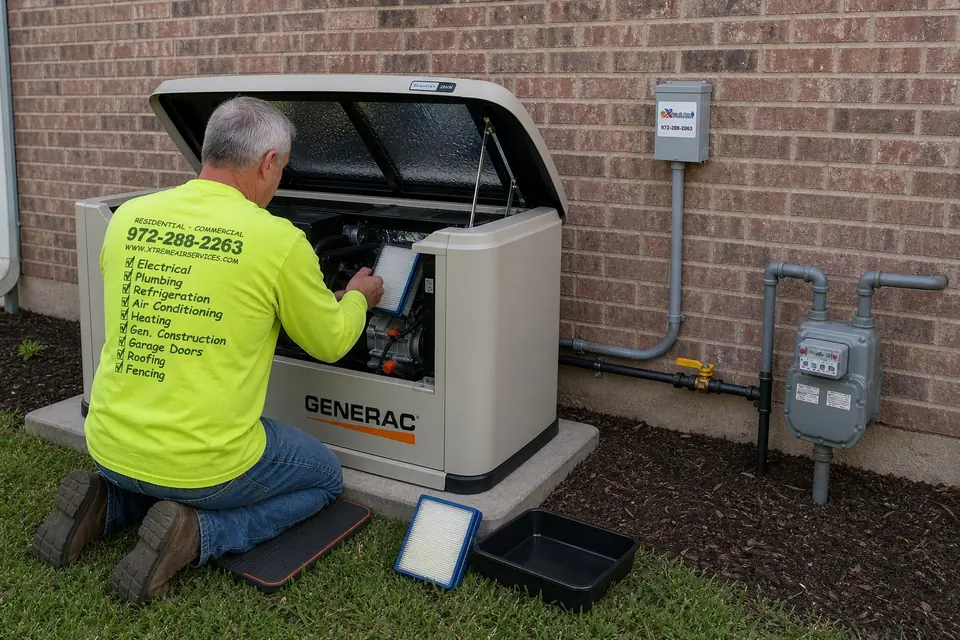
A standard generator maintenance visit runs $150 to $300 for most standby units, and that price covers three things: a full inspection, an oil and filter change, and a performance and safety check. That is the whole job on a routine visit. We check the battery, the connections, the fuel system, and we run the transfer switch through its paces to confirm it will kick on when the power drops. That is the whole point on a Sunnyvale standby unit.
What is not included is any repair work we find while we are out there. If the battery is weak, if a belt is cracked, or if the transfer switch is hesitating, we will tell you and quote that separately. We do not fold surprise repairs into a flat maintenance price, because that is how homeowners end up with a bill that does not match what they were told on the phone. You get the number for the visit itself, and if something needs fixing beyond that, you get a written quote before we touch it. Every Sunnyvale job works that way.
A few things move the price inside that $150 to $300 range. A big whole-home standby unit takes longer to service than a smaller one. Generators with a lot of runtime hours on them, the ones that got worked hard during an outage, usually need more attention than a unit that has mostly sat idle. Where the generator is installed matters too. A unit tucked behind landscaping or up against a fence takes more time to access than one sitting out in the open on its pad. And whether this is a one-time visit or part of an ongoing maintenance plan changes things as well, since a plan lets us track the unit’s history and catch small stuff before it turns into a bigger job. Sunnyvale customers on a plan see fewer surprises.
If you call us out and it turns out you need actual repair work instead of routine maintenance, our service-call fee is $26 to $99, and that fee gets credited toward the repair if you move forward with us. So you are not paying twice just to find out what is wrong. Financing is not typically part of a maintenance visit since the cost is small, but it is available if the visit turns into a bigger repair or a full replacement. Sunnyvale homeowners get that credit like anyone else.
Our workmanship guarantee covers what we install and maintain, and that only works if we know the unit’s history and can source parts for it. Most of our generator maintenance work is on units we have serviced before or standby systems that came from a dealer we can verify. If you are not sure what kind of maintenance plan makes sense for your setup, our Generator Maintenance page walks through the annual service options we offer across the DFW area.
Watch Our Video
See How We Handle Generator Maintenance in Sunnyvale
Xtreme Air Services — Serving Sunnyvale and surrounding areas
Proudly serving Sunnyvale – reach out anytime.
Call Today, Get Service Today. Xtreme Air Services is ready to help.
When We’d Recommend Repair
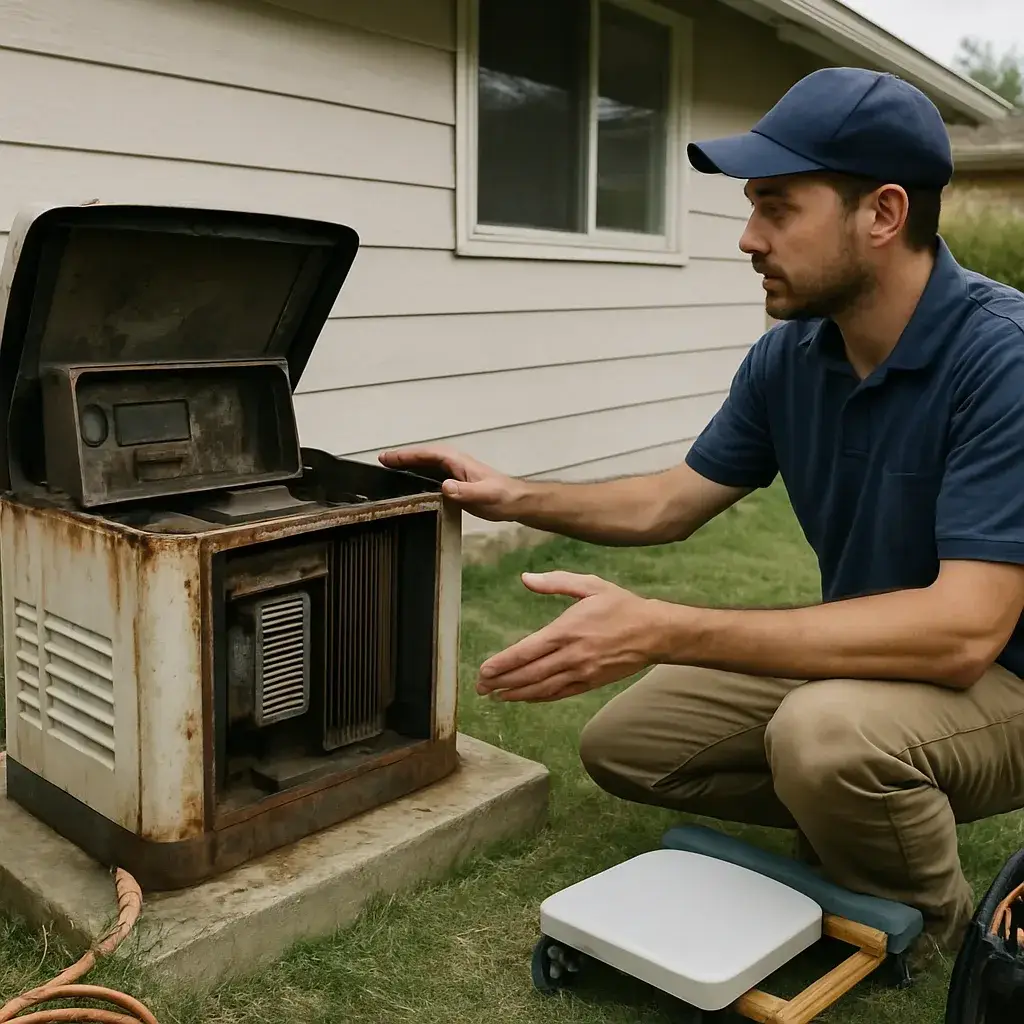
Most of the time, if your generator starts, runs, and transfers power the way it should, a repair or a straight maintenance visit is the right call. We would recommend repair over replacement when the core engine and generator head are sound and the issue is isolated: a weak battery, a fouled fuel line, a bad transfer switch component, or a control board that is throwing a fault code but has not taken the whole unit down with it. Those are the common Sunnyvale repair items.
A routine generator maintenance visit runs $150 to $300 and covers a full inspection, an oil and filter change, and a test of the transfer and start sequence along with a performance and safety check. That price is not a repair quote, it is the checkup itself. If we find something during that visit, a failing part or a sensor out of spec, we quote the fix separately before touching anything else. We do not fold repair costs into the maintenance fee because that would hide what you are paying for. We keep Sunnyvale quotes split that way on purpose.
Generator size and brand play into this. A smaller portable or a residential standby unit with a common Kohler or Generac configuration usually has parts we can source and get running again fast. Runtime hours matter too: a generator with a few hundred hours on it that has been serviced on a normal schedule is a very different conversation than one that has run thousands of hours with gaps in its maintenance history. Accessibility factors in as well, a unit tucked in an easy side-yard pad takes less labor than one buried behind fencing or landscaping that has grown up around it. Older Sunnyvale properties hit that more often.
Here is a real distinction worth knowing. If you call us for a one-time visit versus enrolling in ongoing service, the price and what we catch early can look different. A generator on a regular maintenance schedule tends to show small problems while they are still small, a stiff transfer switch, a battery losing charge, before they turn into a no-start situation during a storm. That is just how mechanical wear tends to show up when somebody is looking at it on a schedule. Sunnyvale storm season rewards that habit.
If we find the generator will not hold a load test, or the engine has significant internal wear on top of an aging unit, we will tell you that plainly rather than quote you a repair we do not think is worth the money. That is part of why we charge a $26 to $99 service-call fee up front; it is credited toward the repair if you move forward with us, but it also means our diagnosis is not tied to convincing you to buy something bigger. You get a written, flat-rate quote before any work starts, so the repair-or-replace decision is yours to make with real numbers in front of you. That is how a Sunnyvale visit ends, every time.
When We’d Recommend Replacement
Most of the time, a standby generator that gets regular maintenance just needs the small stuff: oil and filter changes, a look at the transfer switch, a check on the start sequence. That is what our generator maintenance visit covers, and it is usually enough to keep a unit running for years. Replacement is a different conversation, and we do not bring it up unless the facts point that way. We do not lead a Sunnyvale visit with a sales pitch.
The first flag is hours and age. A standby generator that has logged heavy runtime through repeated storm outages, or one that has been in service well past what its manufacturer rated it for, starts showing wear in places a filter change cannot fix: worn bearings, a tired engine block, wiring insulation that has gone brittle. When we are out doing a maintenance visit and see that kind of wear pattern, we will tell you what we found and what it means before we talk about next steps. You see the Sunnyvale findings first.
The second flag is repeat visits for the same problem. If a generator needs a repair call, gets fixed, and then needs another repair call for a related issue within a short stretch, that pattern matters more than any single fix. One repair is normal wear. A string of them on the same unit usually means the parts around the failure are aging out together, not just the one part we replaced. A pattern like that on a Sunnyvale unit changes the math.
The third flag is the load test itself. Part of a proper maintenance and load testing visit is confirming the generator can carry your home or business load, not just start and idle. A unit that starts fine but will not hold a real load under test has a problem that goes past routine service, and that is a conversation we will have with you directly, in plain language, with our findings in front of you. We do that in plain language at your Sunnyvale home.
Parts availability plays into it too. Older generators, especially units that have been discontinued by their manufacturer, can get harder to source parts for over time. If a repair means waiting weeks on a part, or if the part is not made anymore, that changes the math on repair versus a new install. Sunnyvale or not, parts availability is parts availability.
We do not have a fixed age or hour count where we tell every customer to replace. Every property, load demand, and unit history is different, and a generator that gets serviced on schedule can outlast one that gets neglected, even at the same age. What we do is walk you through what we found during your visit, tell you what a repair would involve, and if replacement makes more sense, we can walk you through backup power assessment and generator sizing so you are not guessing at what your home or business needs. We do not push a new unit on a generator that is holding its load and passing inspection just because it has been around a while. That answer does not change for a Sunnyvale address.
See our full generator maintenance service in Sunnyvale for what the complete job involves.
Frequently Asked Questions
Common questions about Generator Maintenance in Sunnyvale
How do I know whether to repair or replace my standby generator?
We look at how the generator has performed on a load test, not just its age. A unit that starts fine but struggles under real demand points toward bigger issues. One that holds a load test and has a normal maintenance history usually just needs the standard service. We won’t make a repair-or-replace call from age alone, and we won’t make it without seeing the unit run under load first.
What do people get wrong most often when weighing repair versus replacement?
People assume age is the deciding factor, but maintenance history usually matters more. A generator that’s had regular oil and filter service and occasional load testing often has more life left than a newer one that’s been ignored. Skipped maintenance is one of the more common reasons a repair conversation gets bigger than expected, not because the unit is bad, but because small issues sat unaddressed.
When would you tell me to replace instead of taking my repair money?
We’d point toward replacement if a generator has serious engine hours, repeated corrosion in the control panel, or can’t hold a load test even after a tune-up. Those are case-by-case calls, not automatic ones, and we won’t push a replacement on a unit that’s simply a few years old but running fine. If your unit is closer to that bigger-wear category, we’ll say so plainly during the visit.
Does the maintenance visit fee factor into a repair-or-replace decision?
Yes, the standard visit runs $150 to $300 and covers the inspection, oil and filter service, and a performance and safety check. If we find something during that visit that needs correction, we quote it separately so you can weigh that cost against the age and condition of your unit. Any service-call fee, which runs $26 to $99, gets credited toward that repair if you move forward with it.
Will you work on a generator I bought used or that someone else installed?
We can service it, but our workmanship warranty only covers equipment we’ve sourced ourselves. That’s worth knowing if you’re considering buying a used generator secondhand, since installation quality and part sourcing affect what we can stand behind later. If you’re looking at a new install instead, we handle generator sizing and consultation so the unit fits your home’s power needs from the start.
Ready to Get Started?
Call 972-288-2263 Today, Get Service Today.