


Generator Maintenance in Sunnyvale: Keep Your Standby Power Ready Year-Round
Scheduled upkeep that keeps standby power dependable year-round, from battery swaps to filter changes between annual visits.
What’s Covered on This Page
- Why Standby Generators Need Regular Maintenance
- Seasonal Generator Maintenance Timing in Sunnyvale
- What a Full Generator Maintenance Visit Includes
- Self-Test Pass Doesn’t Mean Fully Serviced
- Simple Checks You Can Do Yourself vs Jobs for a Licensed Technician
- How soon can I get a generator maintenance visit scheduled in Sunnyvale?
- What happens when a technician comes out for a generator maintenance visit?
- Why do Sunnyvale generators sometimes have animal nests inside the housing?
- How often should I schedule generator maintenance?
- If my generator passes its weekly self-test, does it still need maintenance?
- What happens if my technician finds a problem during a maintenance check?
Why Standby Generators Need Regular Maintenance
A standby generator sits quiet for months at a time. That’s the point. It’s there for the day you need it. But an engine that never runs still has moving parts, oil that breaks down, and a battery that slowly loses its charge. Generator maintenance is what separates a generator that fires up on cue from one that just sits there, dead, the one time it matters.
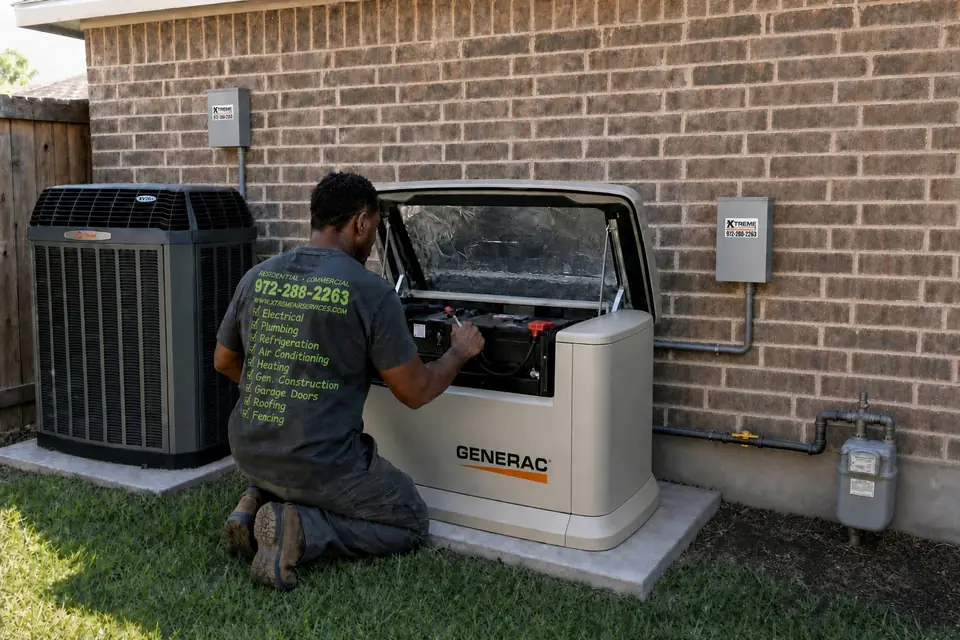
Sunnyvale weather swings hard. Summer heat pushes the grid to its limit, and a bad storm rolling through can knock the power out for hours. That’s when your standby unit is supposed to kick in automatically. We’ve shown up to homes where the generator hadn’t run in over a year, the oil had gone thick and dark, and the battery couldn’t turn the engine over. The owner had no idea because nobody told them it needed a checkup.
Small engines are a lot like the one in your car. Oil breaks down. Filters clog with dust and debris. A transfer switch that hasn’t been exercised in months can hesitate right when the power drops. None of that shows up unless someone looks.
Most of the generators we find in bad shape aren’t broken, they’re just neglected. A little regular attention keeps small issues small. Skip it long enough, and a $200 fix turns into a $2,000 repair, or worse, a generator that never starts during the outage it was bought for.
So maintenance isn’t busywork. It’s the difference between backup power you can count on and an expensive box in your yard.
Seasonal Generator Maintenance Timing in Sunnyvale
Timing matters more than most folks think. Run your generator maintenance at the wrong time of year, and you’re basically hoping the unit works when you need it. We tell customers around Sunnyvale to think in two windows: late summer and late winter — the same seasonal logic our Generator Installation Service in Sunnyvale team applies when sizing and placing a new unit. Here’s why.
North Texas summers push standby generators hard. Grid strain from AC demand means more brownouts and rolling outages, and that’s exactly when your unit needs to fire up without hesitation. Scheduling generator maintenance in August or September, right before the first cold front rolls through, catches any wear from a long hot season before it becomes a failure. If your generator sat unused all summer because the power never went out, that’s still a problem. Fuel can go stale, batteries can weaken, seals can dry out. It doesn’t take an outage to cause damage.
Then there’s winter. Ice storms hit North Texas harder than people expect, and when the grid gets stressed in freezing weather, that’s not the moment to discover your transfer switch is sticking. A late winter or early spring check, once the worst of the cold has passed, makes sure everything that got tested by a real outage is still in good shape.
Some homeowners split the difference and do generator maintenance twice a year. Others tie it to something they’ll remember, like changing furnace filters or checking storm shutters. Either way works. What doesn’t work is letting two or three years slide by. We see units that haven’t been touched since installation, and often that’s when a customer finds out the hard way it won’t start. If you want the full picture on install timing and setup, our generator installation service page walks through what goes into getting a standby unit ready before it’s ever tested by weather.
What a Full Generator Maintenance Visit Includes
So what happens when a tech shows up for generator maintenance? Let’s walk through it. Knowing what to expect makes the whole thing feel less like a mystery and more like routine upkeep, the same as an oil change for your car.
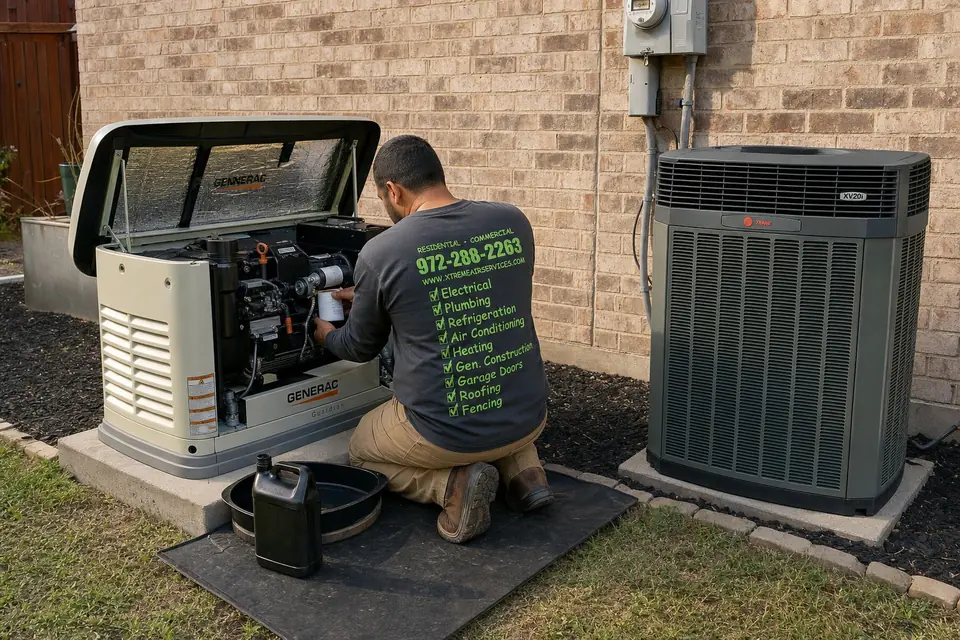
A full visit starts with a walk-around. We check the enclosure, the exhaust, the fuel connection, and look for anything obvious: corrosion, animal nests, loose panels. Sunnyvale sits close enough to open land that we do find critters in generator housings more than you’d expect.
- Inspect the battery, connections, and charging system
- Change the oil and filter
- Check air and fuel filters, replace if needed
- Test the transfer switch and start sequence
- Run the unit under load and check output
- Check for leaks, unusual noise, or vibration
- Review the control panel for stored fault codes
That’s the full inspection, oil and filter service, and performance and safety check included in a standard visit. If we find something during that check, a worn part, a weak battery, a fault code that keeps popping up, we’ll quote that repair separately before touching it. Nobody likes surprise charges tacked onto a bill, and we’re not going to be the ones to hand you one.
Most maintenance visits land in the $150 to $300 range, and that covers the standard service, not corrective repairs. There’s also a $26 to $99 service call fee, and it gets credited toward the repair if you move forward with us.
Most of the time, the whole visit takes under an hour. Quick, thorough, and you’re back to having real peace of mind about your backup power.
Proudly serving Sunnyvale – reach out anytime.
Call Today, Get Service Today. Xtreme Air Services is ready to help.
Self-Test Pass Doesn’t Mean Fully Serviced
Most standby generators run a self-test every week. Seven minutes, engine fires up, transfer switch clicks, then it shuts back off. Green light. All good, right? Not exactly. That test tells you the unit can start and run for a few minutes under no load. It doesn’t tell you if the oil is breaking down, if the battery has enough reserve to crank through a real outage, or if the fuel line has a slow leak building pressure loss.
We get calls almost every week from folks who swear their generator “just passed its test” the day before a storm knocked out power, and then it wouldn’t carry the house. It’s often the same story: stale fuel, a weak battery, or an air filter clogged from sitting in a garage or side yard collecting dust and pollen.
Here’s the thing about self-tests. They check for basic function, not full-load performance. A generator can start fine and still fail the moment your AC compressor, well pump, and refrigerator all try to draw power at once during an actual blackout. Sunnyvale sees its share of spring storm outages, and that’s exactly when a generator that “passed its test” gets asked to do real work for the first time in months.
So what confirms a generator’s ready? A real maintenance visit. Oil and filter changed on schedule, battery load-tested, transfer switch and start sequence checked under real conditions, not just a weekly blip.
Think of the self-test as a smoke detector chirp. It tells you the thing is alive. It doesn’t tell you the battery inside is good for three more years.
Watch Our Video
See How We Handle Generator Maintenance in Sunnyvale
Xtreme Air Services — Serving Sunnyvale and surrounding areas
Simple Checks You Can Do Yourself vs Jobs for a Licensed Technician
You don’t need us for everything. Some stuff around a standby generator is just common sense, and you can knock it out yourself in five minutes.
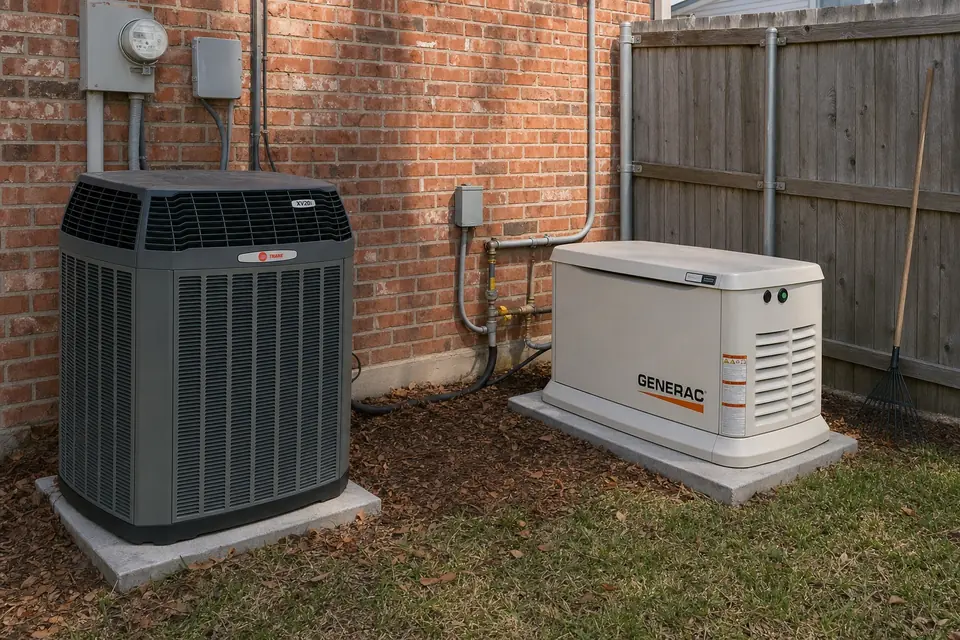
Check the fuel or gas supply line for obvious damage. Look at the exterior for grass clippings, leaves, or nesting bugs blocking the vents. This happens a lot on units tucked against a fence line in older Sunnyvale neighborhoods where lawn crews mow right up to the pad. Glance at the control panel for any error codes or warning lights. Listen for the weekly self-test. Most units run a short exercise cycle automatically, and if you hear it firing up and running smooth, that’s a good sign. Wipe down the cabinet and clear debris so air can flow.
Here’s where you stop and call someone. Anything involving the transfer switch, internal wiring, the fuel line connection, or the actual start sequence needs a licensed technician. So does low oil pressure, a battery that won’t hold charge, or a generator that runs rough under load. We see this every week: a homeowner hears a weird click during the self-test and just lets it go because the unit “still seems to run.” That’s usually an early warning sign, not nothing.
Opening the cabinet on a generator that’s under load or connected to gas can be genuinely dangerous.
If your unit hasn’t been serviced in the last year, or you’re not sure what that weekly test noise is supposed to sound like, that’s a sign to get it checked rather than guess. Our licensed and insured technicians handle the transfer switch testing, the fuel connections, and the load testing, the parts you shouldn’t be touching yourself.
Frequently Asked Questions
Common questions about Generator Maintenance in Sunnyvale
How soon can I get a generator maintenance visit scheduled in Sunnyvale?
Most visits can be booked within a few days, and sooner if a storm is on the way. We know Sunnyvale summers strain the grid and winter ice storms can hit fast, so we work to get to you before bad weather rolls in. If your unit hasn’t been checked in over a year, call now rather than waiting for the next outage. Waiting too long is how small issues turn into no-start situations.
What happens when a technician comes out for a generator maintenance visit?
A technician starts with a walk-around of the enclosure, exhaust, and fuel connection, then moves into the battery, oil, filters, and transfer switch. We run the unit under load and check for leaks, noise, or fault codes stored in the control panel. Most visits take under an hour. If we find a worn part or weak battery, we’ll quote that repair separately before doing any work.
Why do Sunnyvale generators sometimes have animal nests inside the housing?
Sunnyvale sits close enough to open land that critters look for warm, quiet spots to nest, and a generator enclosure fits the bill. We find nests, chewed wiring, and debris more often than homeowners expect, especially in units that sit unused for months. A basic visual check during maintenance catches this before it turns into a wiring problem or a blocked vent that keeps the unit from starting.
How often should I schedule generator maintenance?
Most homeowners do well with maintenance twice a year, once in late summer and once in late winter. Summer heat pushes the unit hard during peak grid demand, and winter storms test parts like the transfer switch. If twice a year feels like too much, tie one visit to something you already remember, like changing furnace filters, so it doesn’t slip by for two or three years.
If my generator passes its weekly self-test, does it still need maintenance?
Yes, a passing self-test does not mean your generator is fully serviced. That test only shows the unit can start and run for a few minutes with no load on it. It won’t catch stale fuel, a weak battery, or a clogged air filter, the exact problems we see when a generator fails during a real outage the day after it passed its test.
What happens if my technician finds a problem during a maintenance check?
We’ll stop and quote that repair separately before touching anything, so there are no surprise charges on your bill. This might be a worn part, a weak battery, or a fault code that keeps showing up on the control panel. Catching these issues during a routine visit is what keeps a small fix from turning into a bigger repair down the road.
Ready to Get Started?
Call 972-288-2263 Today, Get Service Today.