If your heat pump is blowing cold air, it’s usually one of two things: a normal defrost cycle or comfort effect, or a fixable problem with your thermostat, filter, or airflow. Start by confirming the thermostat is set to HEAT with the fan on AUTO, then check the filter. Most cold-air complaints trace back to something you can fix in under fifteen minutes, though a frozen outdoor coil or a refrigerant fault means it’s time to call a technician.
TL;DR:
- Most cold air from a heat pump results from simple issues like dirty filters, closed vents, or incorrect thermostat settings, which homeowners can fix quickly.
- Short defrost cycles and minor brief cold blasts are normal during winter weather, but prolonged freezing or rapid ice buildup indicate potential refrigerant or defrost control problems that require professional attention.
- Restricted airflow due to debris, closed vents, or leaky ductwork is the leading cause of a heat pump blowing cold air, not mechanical failure, and regular maintenance can prevent it.
- Persistent cold air despite DIY checks often points to refrigerant leaks, stuck reversing valves, or electrical faults, all of which need certified HVAC technicians for proper repair.
- Routine seasonal maintenance, including filter replacement and system inspections, significantly reduces the risk of cold-air issues during winter.
Table of Contents
- Why Is My Heat Pump Blowing Cold Air?
- Is a Brief Cold Blast Normal During Defrost Mode?
- Could Airflow or a Dirty Filter Be Causing This?
- When Does Cold Air Mean a Refrigerant or Valve Problem?
- How Do I Check My Supply and Return Air Temperatures?
- When Should You Call an HVAC Technician?
- What Maintenance Prevents Cold-Air Problems Next Winter?
- A Publisher’s Note From the Field
- Get a Diagnostic Visit From Xtreme Air Services
- Sources
- FAQ
Why Is My Heat Pump Blowing Cold Air?
Run through this checklist before you assume the worst. Each step takes a minute or two, and together they resolve the majority of no-heat calls homeowners make.
- Check the thermostat mode. Confirm it’s set to HEAT, not COOL, and the fan is on AUTO rather than ON. Smart thermostats sometimes have an installer setting for heat pump plus auxiliary heat that gets left misconfigured, which can prevent backup heat from engaging at all.
- Bump the setpoint up a few degrees, then wait 10 to 15 minutes before checking the supply air again. Heat pumps ramp up slowly, and jumping to conclusions too fast is the most common false alarm.
- Check both breakers. The air handler and the outdoor condenser run on separate circuits, and a single tripped breaker on either side stops heat production. Swap in fresh thermostat batteries while you’re at it.
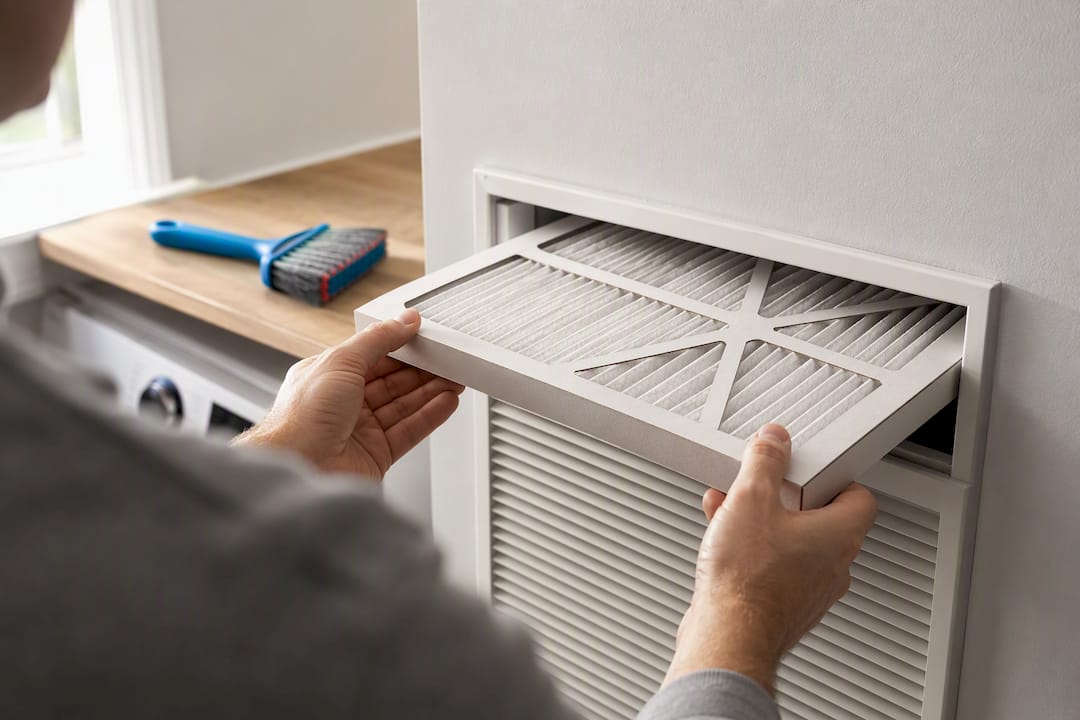
- Pull the air filter and hold it up to a light. If you can’t see through it, replace it. Also walk your registers and open any that got closed, and clear leaves or debris from around the outdoor unit without chipping at any ice you see.
If the system still feels cold after all four steps, move on to figuring out whether you’re watching a defrost cycle or something more serious.
Is a Brief Cold Blast Normal During Defrost Mode?
Yes, for a few minutes at a time. Heat pumps pull warmth from outdoor air even in winter, and that process frosts up the outdoor coil in cold, humid weather. The system periodically reverses itself, running like an air conditioner for a short stretch to melt that frost off the coil, and that’s when you’ll feel a brief cool draft indoors and sometimes see steam rising off the outdoor unit. Carrier’s own troubleshooting guidance confirms this cool-air moment is a normal part of how the system protects itself in freezing conditions.
A normal defrost cycle lasts a matter of minutes, not extended periods. Watch for warning signs like defrost mode lasting much longer than normal or defrost cycles repeating frequently throughout the day.
- Ice that returns almost as fast as it melted the last cycle.
If you see thick ice that won’t clear or a coil that refreezes right after defrosting, switch the system to emergency heat (or OFF) and let it thaw fully before running it again. If the ice comes back within a day, that pattern usually points to low refrigerant, restricted airflow, or a defrost control failure, and it’s a call-a-pro situation.
Could Airflow or a Dirty Filter Be Causing This?
Airflow problems are the single most common reason a heat pump feels like it’s blowing cold instead of warm. Restricted airflow from a clogged filter, closed registers, or leaky ductwork is a leading cause of cold-air complaints, and it makes sense once you understand the mechanics. A heat pump moves heat gradually across a coil rather than generating a blast of hot air the way a furnace does. Choke off the air moving across that coil, and the temperature rise you’d normally feel drops fast, sometimes enough to freeze the coil itself.
- Pull and inspect the filter monthly during heating season; replace it if it’s visibly gray or clogged.
- Walk every supply and return vent in the house. A closed register or a piece of furniture blocking a return starves the whole system.
- Look for cold spots near duct runs in the attic or crawlspace, which often signal a leak or disconnected section.
One habit trips up more homeowners than any single mechanical fault: leaving the thermostat fan switch on ON instead of AUTO. A continuously running blower pushes air across the coil even between heating cycles, and that unheated air feels distinctly cool even though the system is working fine.
Pro Tip: Check your air filter and airflow habits the same way you would for a furnace acting up. The symptoms and fixes overlap more than most people expect.
When Does Cold Air Mean a Refrigerant or Valve Problem?
Some causes require licensed hands, no way around it. If your heat pump keeps blowing cold air after every DIY check comes up clean, one of these three mechanical faults is likely behind it.
- Low refrigerant. Hissing sounds near the lines, an oily residue at fittings, or a coil that ices up repeatedly are all signs of a leak. Diagnosing and repairing refrigerant charge issues requires EPA Section 608 certification, so this is not a DIY repair under federal law, and any technician recharging your system needs that credential.
- A stuck or failed reversing valve. This is the component that switches the system between heating and cooling. When it fails, the unit can get stuck in cooling mode or deliver a noticeably weaker supply temperature even while running in “heat.”
- Electrical and control faults. A miswired thermostat, a failed contactor, or a dead outdoor fan motor can all mimic a heating failure. These carry real shock and fire risk, which is exactly why they belong to a licensed technician rather than a weekend project.
If you suspect a refrigerant leak, stop running the system and get it inspected. Running a heat pump low on charge for too long can damage the compressor, turning a repair into a replacement.
How Do I Check My Supply and Return Air Temperatures?
Grab a basic thermometer or an infrared temperature gun and follow these steps to get real numbers instead of guessing.
- Set the thermostat to HEAT and the fan to AUTO, then leave the system running undisturbed for 10 to 15 minutes.
- Measure the air coming out of a supply register close to the air handler.
- Measure the air pulled in at a nearby return grille.
- Subtract the return temperature from the supply temperature to get your delta T (ΔT).
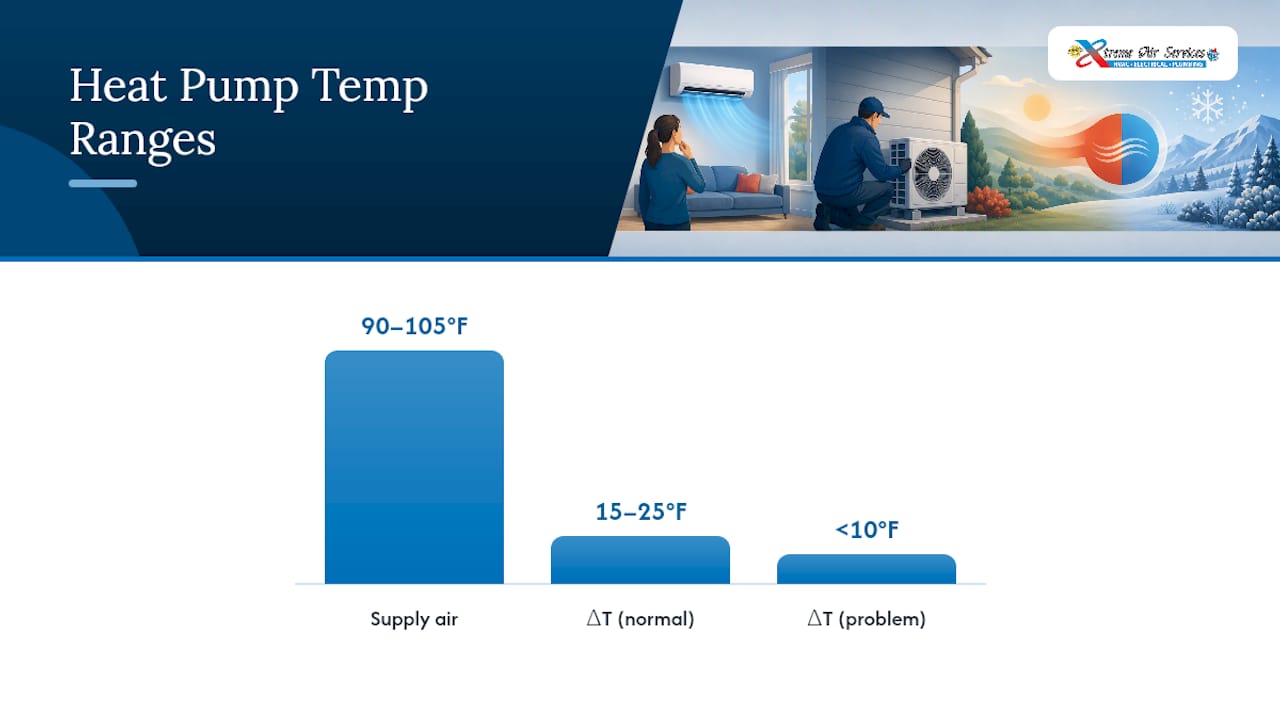
Pro Tip: Supply air typically runs between 90°F and 105°F on a properly functioning heat pump, with a ΔT of roughly 15 to 25°F. A ΔT under 10°F points to an airflow restriction or a refrigerant charge problem rather than a defective unit.
Write down your supply temperature, whether auxiliary or emergency heat kicked in, and anything unusual about the outdoor unit. A technician can diagnose faster with that information already in hand.
When Should You Call an HVAC Technician?
Call sooner rather than later if you notice any of these:
- Thick ice on the outdoor coil that won’t clear, or ice that keeps coming back within hours of a defrost cycle.
- The outdoor fan isn’t spinning at all while the compressor runs.
- Breakers keep tripping when the system starts.
- You’ve run every DIY check and the system still won’t produce warm air.
A technician’s visit typically covers confirming the thermostat’s heat pump and auxiliary heat setup, testing the defrost control board and reversing valve, running leak detection on the refrigerant circuit, and checking static pressure and airflow (CFM) through the ductwork. Some of these fixes wrap up in one visit. Others, like a reversing valve swap or a slow refrigerant leak, take longer because parts have to be sourced or ordered first.
What Maintenance Prevents Cold-Air Problems Next Winter?
A few habits cut your odds of a repeat call dramatically. Most service calls for heat pumps not heating trace back to routine maintenance gaps like a dirty filter or debris buildup around the outdoor coil, not major mechanical failure.
- Replace filters regularly during heating season and keep the outdoor unit clear of leaves, snow, and yard debris.
- Schedule an annual tune-up, and keep the thermostat fan on AUTO rather than running it continuously through winter.
- If your area sees frequent hard freezes and your system struggles every winter, ask about a cold-climate or variable-speed model built for exactly that.
A Publisher’s Note From the Field
Most of the calls we get about a heat pump blowing cold air end with a filter swap, a thermostat correction, or clearing debris off the outdoor coil. Proper diagnosis is always recommended before touching refrigerant, and any recharge work must follow EPA rules by law.
— Xtreme
Get a Diagnostic Visit From Xtreme Air Services
A professional service can get you a straight answer faster than a string of guesswork repairs, because technicians diagnose the actual cause instead of swapping parts and hoping. If you’ve worked through the checklist above and your heat pump is still blowing cold air, that’s the point to stop troubleshooting and get eyes on the system. Technicians handle heat pump repair, refrigerant leak detection, reversing valve and control board replacement, and ongoing maintenance plans that catch these issues before they turn into a no-heat emergency in January.
If the problem persists after your own checks, schedule a diagnostic visit for heat pump repair. For homeowners who want to avoid the whole scenario next season, our HVAC maintenance plans cover filter changes, coil inspections, and the seasonal tune-up that catches a failing part before it strands you without heat.
Sources
- Heat Pump Not Heating? Here’s How to Troubleshoot — Carrier
- Heat Pump Troubleshooting Guide (DIY vs Professional) — FilterBuy
- Common Reasons for Your Heat Pump Not Heating — Trane
- ‘Cold Blow’ from heat pump supply air — Green Building Advisor
FAQ
How Do I Stop My Heat Pump From Blowing Cold Air?
Set the thermostat to HEAT with the fan on AUTO, replace the filter if it’s dirty, and check both breakers. If the outdoor coil is thick with ice or the cold air persists after those checks, the fix likely needs a licensed technician.
Why Is My Heat Pump Blowing Cold Air but Not Cooling My House Either?
This points to something beyond a normal defrost cycle, usually a stuck reversing valve, low refrigerant, or a control board fault. All three require a certified technician, since refrigerant work legally requires EPA Section 608 certification.
How Do I Fix Heat That’s Blowing Cold Air?
Start with the basics: thermostat mode, fan setting, filter, and breakers. If those check out and the supply air still measures below the normal 90°F to 105°F range, the system likely has an airflow restriction or a mechanical fault that needs professional diagnosis.
Can a Heat Pump Handle Extreme Outdoor Temperatures?
Heat pumps lose heating capacity as outdoor temperatures drop, and older or standard models can struggle significantly below freezing, which is when auxiliary or emergency heat strips are designed to kick in. Cold-climate and variable-speed heat pumps are built specifically to perform better in sustained low temperatures.
Does Xtreme Air Services Repair Heat Pumps That Won’t Stop Blowing Cold Air?
Yes. Xtreme Air Services diagnoses and repairs heat pump issues ranging from refrigerant leaks to reversing valve and control board failures, and offers maintenance plans to catch these problems before they leave you without heat.