


Emergency / No-Heat Furnace Repair in Allen
When the heat quits, know whether it's an emergency tonight or can wait until morning – and what a repair visit involves.
What’s Covered on This Page
- Is Your No-Heat Furnace a True Emergency
- Quick Checks Before You Call for Emergency Repair
- What Happens During an Emergency Furnace Visit
- What a No-Heat Emergency Call Costs
- Why Licensed, Same-Day Response Matters for No-Heat Calls
- How do I keep my house warm while I wait for the technician?
- Why does my furnace blow cold air instead of heat?
- How much does a typical HVAC service call cost?
Is Your No-Heat Furnace a True Emergency
When the house is getting colder and the furnace won’t kick on, you want to know one thing. Can this wait, or do you need help tonight? Here’s how to tell, along with a few honest checks that might save you a service call altogether.
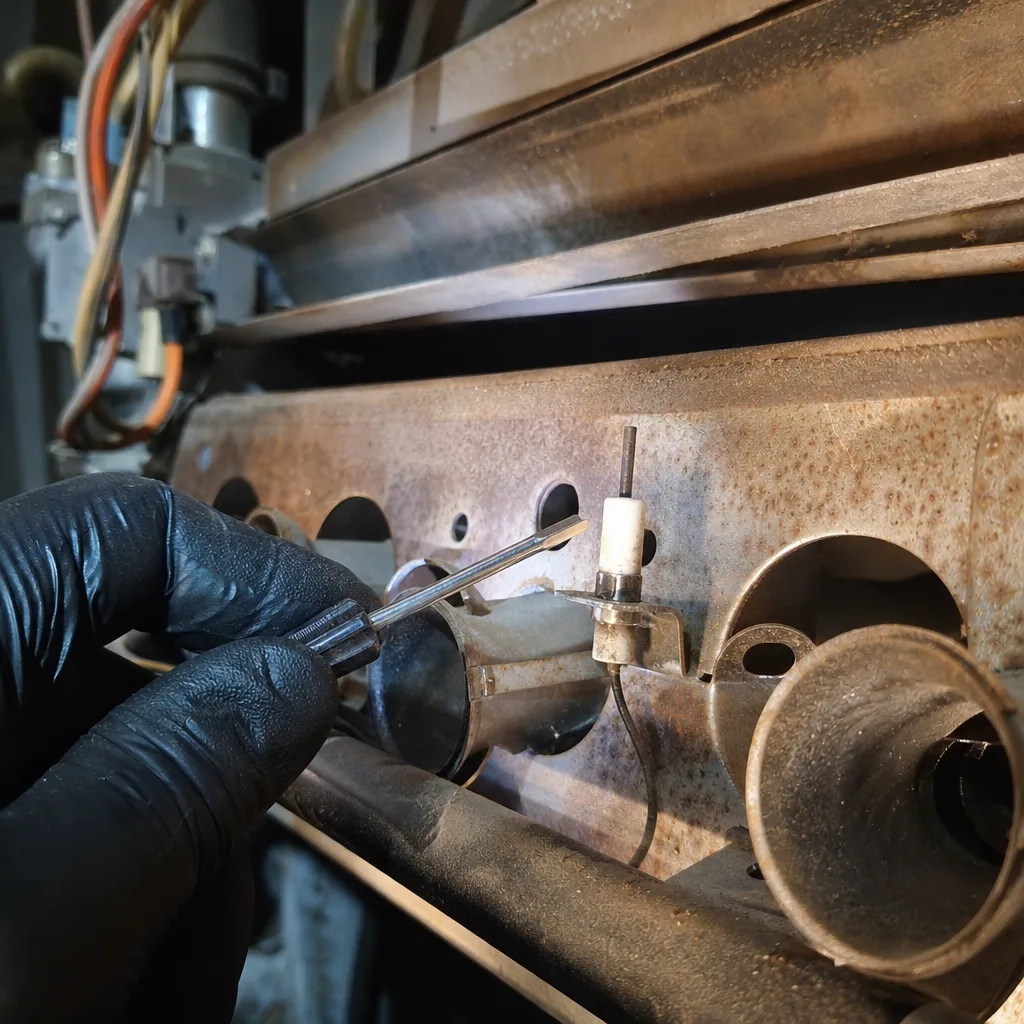
Call for same-day help if any of these are true:
- A cold front is moving through Allen and overnight lows are heading toward freezing. North Texas freezes can come on fast, and a house without heat can drop quickly. That puts your comfort and your water pipes at risk.
- You’ve got a baby, an older family member, or someone who’s sick at home. Their safety comes before saving a few dollars.
- The furnace starts, then shuts off over and over, or it runs but only blows cold air.
- You hear grinding or banging, or you notice a burning smell that doesn’t go away after the first few minutes of a heating cycle.
- You’ve tried the simple checks below and the heat still won’t come on.
Before you call anyone, take five minutes and check these. They’re real fixes, and we’d rather you save the trip if one of them works:
- Thermostat: Make sure it’s set to Heat, not Cool or Off, and set a few degrees above room temperature. If the screen is blank, swap in fresh batteries.
- Breaker: Look in your electrical panel for a tripped breaker marked furnace or HVAC. Flip it fully off, then back on once.
- Furnace switch: Most furnaces have a power switch nearby that looks like a regular light switch. It’s easy to bump it off by accident, especially if your furnace sits in the attic and someone was up there storing holiday boxes.
- Filter: A badly clogged filter can choke airflow until the furnace shuts itself down. If yours is gray and packed with dust, replace it.
- Front panel: If the furnace door isn’t fully closed, a safety switch can keep the system from running. Make sure the panel is seated tight.
If one of those brings the heat back and the furnace keeps running normally, you’re done. You don’t need us tonight. If the breaker trips again right away, or the furnace starts and quits within minutes, stop resetting it. That points to a part that’s failing, and it’s time for a technician.
There’s one exception to everything above. If you smell gas or your carbon monoxide alarm is sounding, don’t try to troubleshoot the furnace. Get everyone out of the house, then call your gas company or 911 from outside. Once the home has been cleared as safe, we can come out and find out what went wrong.
For everything else, timing shouldn’t keep you from calling. A furnace that quits at 10 p.m. on a Saturday costs the same to fix as one that quits on a Tuesday afternoon. We don’t charge extra for nights or weekends, so you never have to choose between a warm house and a fair price.
Quick Checks Before You Call for Emergency Repair
If the thermostat, breaker, and filter checks above didn’t bring the heat back, there are a few more things worth a look. None of them need tools. Even if they don’t solve it, what you notice will help our technician find the problem faster once they’re at your door.
- Gas to the house: If you have a gas furnace, check whether a burner on your gas stove will light or whether the water heater is still making hot water. If your other gas appliances are out too, the problem is probably the gas supply, not the furnace. Call your gas company first.
- The status light: Many furnaces have a small light behind a little window on the lower panel. When something’s wrong, it blinks in a pattern. Count the blinks and write the number down. The chart that explains each code is often printed on the inside of the panel door.
- Vents and returns: Walk through the house. Closed supply registers, or a return grille blocked by a couch or a stack of boxes, can starve the furnace of air until it shuts itself off.
- Outside vent pipes: High-efficiency furnaces usually vent through two white plastic pipes on a side wall or the roof. If leaves, a bird’s nest, or ice from a hard freeze block one of them, the furnace can shut down as a safety step. Clear anything you can reach from the ground. Don’t climb onto an icy roof.
- Water near the furnace: High-efficiency furnaces make water as they run and drain it away through a small line. If that line clogs, a switch can shut the furnace off. Water pooling around the unit or sitting in the drain pan is the clue. Fixing it is usually a repair call, but it’s a big help to mention it.
If one of these turns out to be the cause, say you cleared a blocked vent pipe and the heat came back and stayed on, you’re all set. You don’t need us.
If the heat’s still out, jot down a few quick details before you call. It takes two minutes and helps us figure out what’s likely wrong and what parts to bring:
- What the furnace is doing: no sound at all, clicking with no flame, a flame that lights and then quits, or a blower that runs but pushes cold air
- The blink code from the status light, if you saw one
- Whether it’s a gas or electric furnace, and where it sits: attic, hall closet, or garage
- About how old the system is, if you know
- When it stopped, and anything that happened right before, like a power outage or a storm
A lot of North Texas homes have the furnace up in the attic. If yours does, clear a path to the attic ladder and switch on the attic light if it’s safe to do so. On a cold night, those few minutes saved mean your heat comes back sooner.
What Happens During an Emergency Furnace Visit
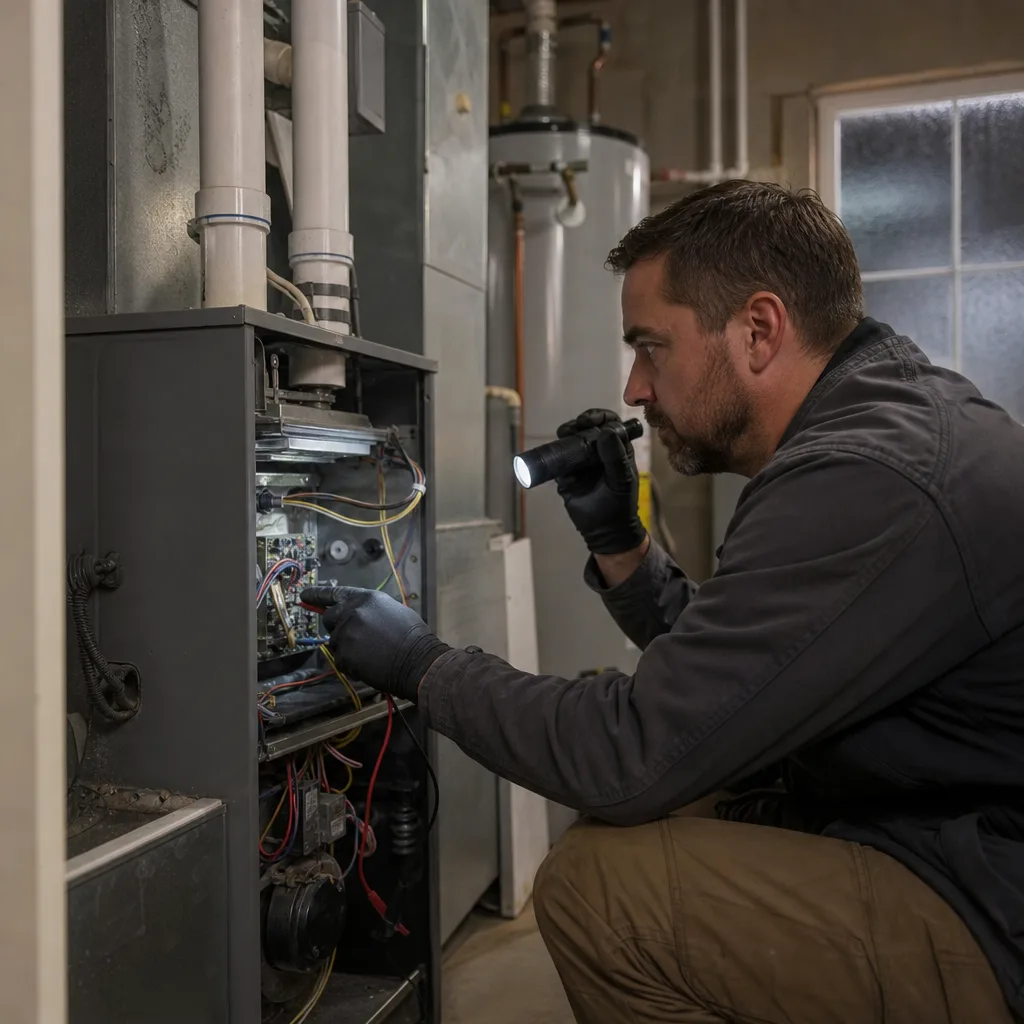
Once you’ve called, here’s what the visit looks like, so nothing catches you off guard. The person at your door is a licensed and insured technician who’s been background-checked and drug-tested. That matters when someone’s walking through your home late on a cold night.
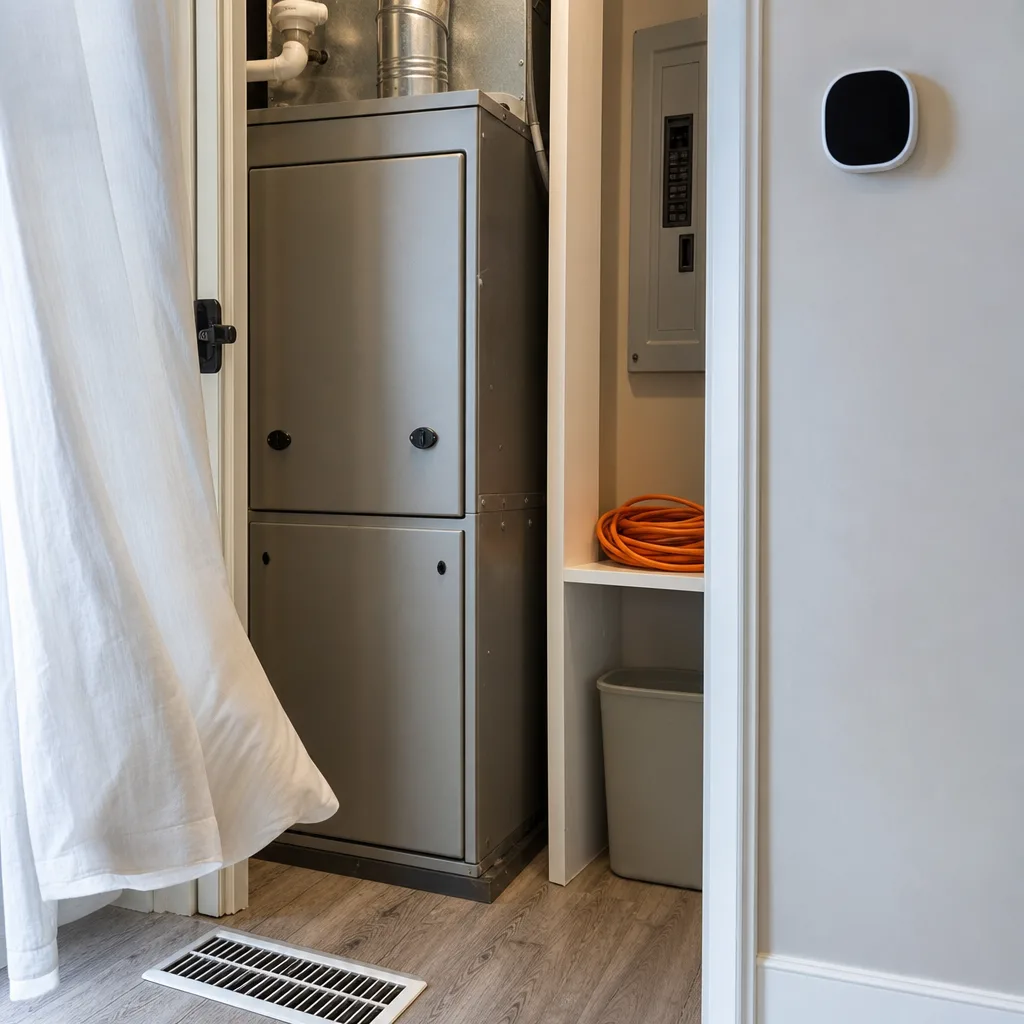
- Find what failed. Your technician starts with what you noticed, like the clicking, the flame that lights and quits, or the blink code you wrote down. Then they test to locate the part that’s failed. Testing beats guessing, because guessing is how people end up paying for parts they didn’t need.
- Explain it and price it before any work starts. You’ll hear what broke and why, in plain English. You’ll also get an upfront flat-rate price to approve first. There’s no meter running while the tech works. The $26-$99 service-call fee is credited toward the repair if you go ahead with us.
- Repair or replace the part. With your okay, the technician fixes or swaps out the failed part. Diagnosis, labor, and the standard replacement part are included in the price you approved.
- Verify the heat. The job isn’t done when the new part goes in. Your technician tests the system to make sure it runs correctly, lighting, heating, and shutting off the way it should.
- Clean up. Cleanup is part of the job, so you’re not left with dust or old parts by the furnace.
So what usually breaks? On a gas furnace, the common culprits are small parts that wear out over time. An ignitor is the part that lights the gas, and it can crack and stop glowing. A flame sensor is a thin metal rod that confirms the flame is lit. When it gets coated with grime, the furnace lights and then shuts itself off a few seconds later. A control board is the furnace’s brain, and it can fail after a power surge. A blower motor can give out and leave the burners with nowhere to send the heat. Each of these sounds serious, but it’s often a fix you can get on the same visit.
Sometimes the tech finds more than one problem. If a second part has failed too, or the repair needs a major component, a code upgrade, or a permit, those aren’t part of the standard repair. They’re quoted separately, and you decide what to do before anything else gets done. You stay in control of the bill the whole way.
Every so often, the honest answer is that a big repair on an older furnace doesn’t make sense. If that’s where things land, your technician will lay out your choices so you can weigh a repair against furnace replacement. Financing is available on larger repairs and replacements, though it isn’t usually needed for a smaller fix like an ignitor or flame sensor. Either way, nobody will pressure you into a decision tonight. If you’d like to sleep on it, that’s your call.
Have questions? We’re happy to help.
Call Today, Get Service Today. Xtreme Air Services — Allen is ready to help.
What a No-Heat Emergency Call Costs
Most no-heat repairs with Xtreme Air Services run between $200 and $525. That’s the range for the most common job: finding the one part that failed, repairing or replacing it, and making sure the furnace runs correctly again. Most calls are a single common failure fixed on the first visit, so for a lot of households, that’s the whole bill.
Across all of our emergency furnace repairs, the typical range is $200 to $900. The jobs at the higher end are the ones where more went wrong, not the ones that happened at a worse hour.
Here’s what moves your price up or down:
- How bad the failure is. A dirty flame sensor is a smaller job than a burned-out control board.
- The part itself. Some parts cost more than others, and some are easier to get than others.
- Your furnace’s age and brand. Parts for older or less common units can cost more or take longer to track down.
- More than one failure. If a second part has given out too, that adds to the job.
- Timing. In this trade, after-hours calls often cost more. With us, they don’t. A 2 a.m. repair is priced like a Tuesday afternoon one.
You’ll also have the $26-$99 service-call fee, and that gets credited toward the repair if you go ahead with us. You’ll know the total before any work starts, and anything beyond the standard repair gets its own quote.
If you’re calling around tonight, you deserve to compare apples to apples. Whoever you call, ask these questions before anyone comes out:
- Is there a trip or service-call fee, and does it count toward the repair?
- Do you charge more for nights, weekends, or holidays?
- Will I get a set price to approve before work starts, or are you billing by the hour?
- What does the price include? Diagnosis, labor, the part, testing, cleanup?
- If you find a second problem, will you stop and ask me before fixing it?
Hourly billing isn’t wrong, but it’s hard to plan around when you can’t see how long the job will take. A flat-rate price you approve up front means a tricky part or a cramped attic won’t add to your bill halfway through.
The point is simple. A no-heat night is stressful enough without wondering what the bill will look like. With a clear range, a fee that’s credited back, and no penalty for calling late, you can make the call as soon as you need it instead of shivering until morning to save money.
Call 469-299-8996
Watch Our Video
See How We Handle Emergency / no-heat furnace repair in Allen
Xtreme Air Services — Allen
Why Licensed, Same-Day Response Matters for No-Heat Calls
When your heat’s out, two things matter most: who shows up, and how soon. A furnace isn’t just another appliance. On a gas furnace, the repair is right next to the gas valve, the burners, and the vent pipe that carries exhaust out of your home. You want the person working on those parts to be licensed and accountable.
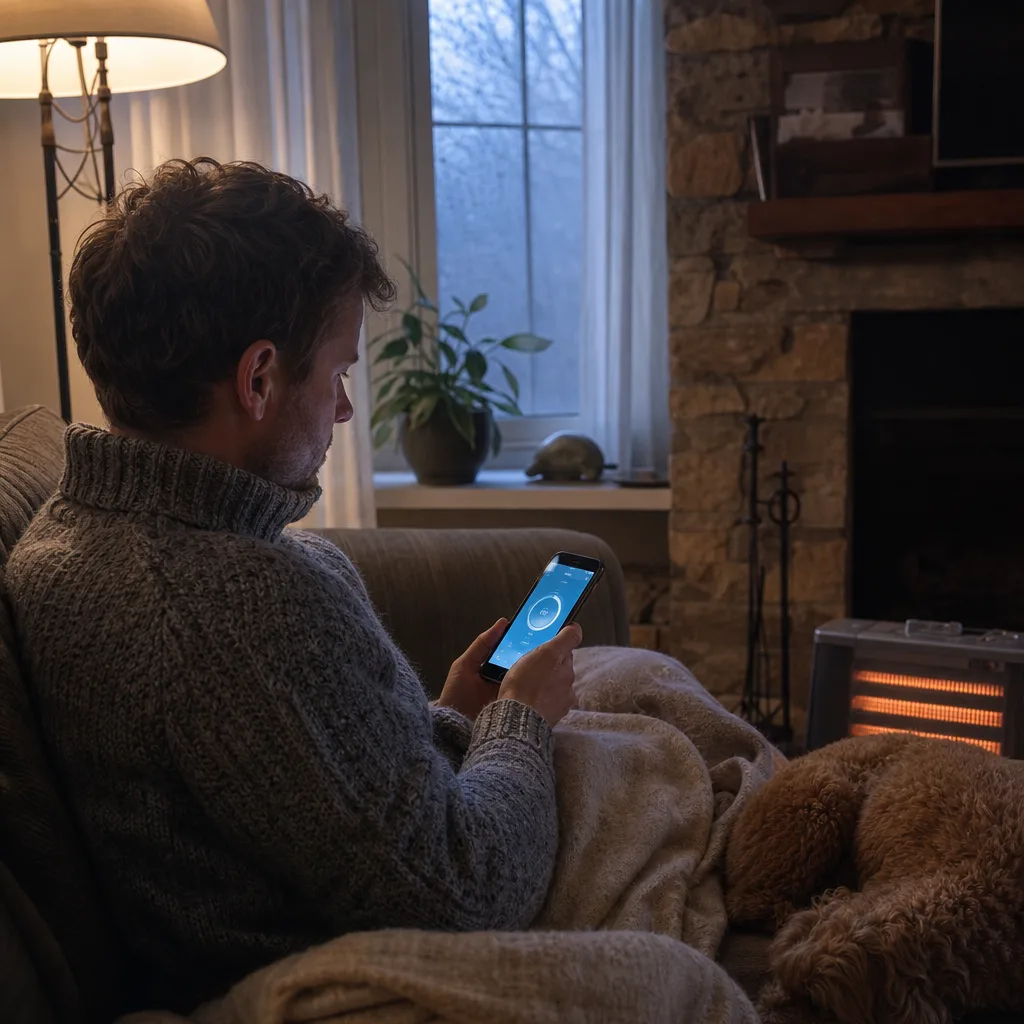
In Texas, HVAC contractors are licensed through the Texas Department of Licensing and Regulation. Our HVAC license number is TACLA29023C, and you’re welcome to look it up before we get there. A licensed technician checks more than whether warm air is coming out of your vents. They check that the burners light cleanly, that exhaust leaves the house the way it should, and that the furnace’s safety switches still do their job.
That last part matters most on a cold night, because cold nights are when people take shortcuts. Furnace safety switches shut the system down when something’s wrong, like poor airflow or a blocked vent. Bypassing one might get the heat running tonight, but it hides the real problem. We’d rather find the cause and fix it right the first time, so you’re not calling again in two days.
Same-day service matters because of what the cold does to the rest of your home. In a lot of North Texas houses, the furnace and some of the water lines run through the attic. During a hard freeze, those attic lines and the pipes in outside walls are the first to feel the drop once the heat goes out. Getting your heat back today, not next week, helps protect your pipes as well as your family’s comfort.
Sometimes the cold has already left a second problem behind. Since we’re one trusted team for HVAC, plumbing, and electrical, you don’t have to find another company in the middle of a freeze:
- A pipe that froze and split can be handled with our burst pipe repair service.
- A furnace breaker that keeps tripping may need electrical troubleshooting, not just a furnace part.
- If you’d like extra peace of mind once the heat’s back, we also offer carbon monoxide testing and furnace safety inspections.
You also deserve some proof before you let someone into your home late at night. Xtreme Air Services is family-owned and a Trane Comfort Specialist. We’ve earned a 4.8-star reputation across more than 2,900 reviews on Google, Angi, and HomeAdvisor, and our work is backed by our 100% satisfaction guarantee. Our technicians are background-checked and drug-tested, and they’ll treat your home like family.
Call now
Frequently Asked Questions
Common questions about Emergency / no-heat furnace repair
How do I keep my house warm while I wait for the technician?
Close off unused rooms and gather everyone into one smaller space to hold heat better. Use blankets and layers, and run ceiling fans in reverse low if you have them, since this pushes warm air near the ceiling back down. Avoid using your oven as a heater, since that’s a carbon monoxide risk in a closed house. If temperatures are dropping toward freezing, let a few faucets drip to help protect pipes until your heat is back on.
Why does my furnace blow cold air instead of heat?
Cold air from your vents usually means the blower is running but the burners aren’t lighting, or they’re shutting off right after they start. A dirty flame sensor is a common cause, since it can make the furnace light and then quit within seconds. It can also mean the thermostat is set to fan instead of auto, so check that first. If the air stays cold after your quick checks, that points to a part that needs a technician.
How much does a typical HVAC service call cost?
Service call fees in this trade are usually a separate charge just to have a technician diagnose the problem, before any repair work happens. With us, that fee runs $26 to $99, and it’s credited toward your repair if you move forward with the fix. Ask any company you call whether their fee counts toward the repair, since that changes what you pay once the job is done.
Ready to Get Started?
Call (469) 299-8996 Today, Get Service Today.